Pest & Weed Control

Best Weed Killer for Chickweed of 2026

Chickweed doesn't march across a lawn so much as seep into it: a few pale sprigs in a thin patch in November, a sprawling mat by March, and new seed before the second mow. The problem is the tradeoff built into this category — the mix strong enough to take chickweed down can also scorch the turf it grows in, and the harshest-smelling ones clear the yard of people and pets for a day. What you want is a killer that hits the weed, spares the grass, and lets you and the dog back outside quickly.

Chickweed is a cool-season plant, which is what most first-timers miss: an October application does far more than the panicked spring spray we all reach for. My team and I spent eight months, October through May, running 11 liquids, concentrates, and granules against established chickweed in real lawns. What separated the winners wasn't raw strength so much as timing and a spray you can actually control.

1

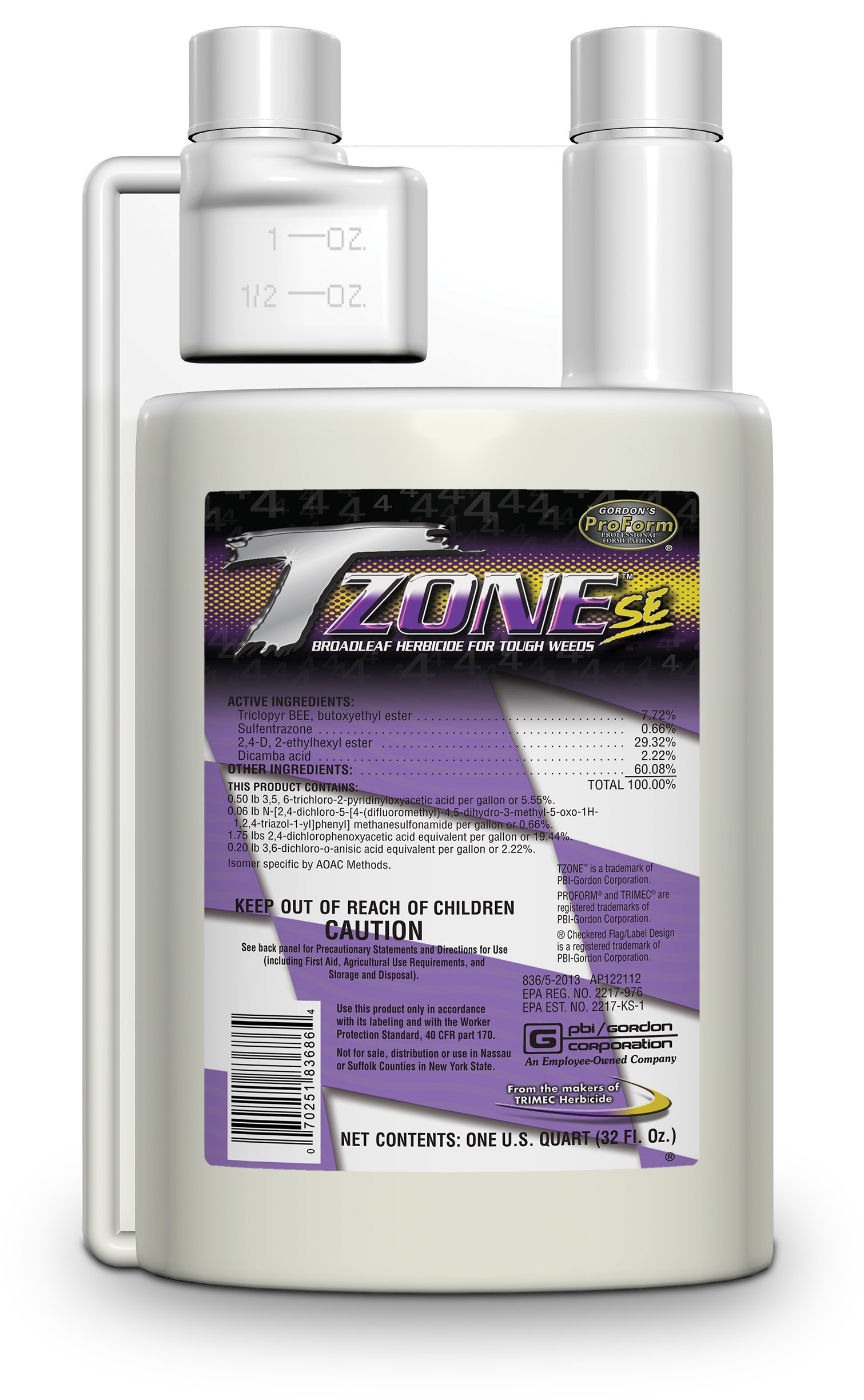
TZONE SE

Top Pick
TZONE SE

Cool-weather broadleaf

Our Score 9.2/10
Check Price

Worth Noting

  • Not a chickweed-specific label
Size
1 quart
Type
Selective broadleaf herbicide
Cool-weather Use
Down to 50°F
Active Ingredients
Triclopyr, 2,4-D, dicamba, sulfentrazone
Read the full review

The 50°F cool-weather floor is what makes TZONE worth a look for chickweed that shows up early or hangs on late. Most lawn sprays slow down when the temperature drops; this one is labeled for cool-weather weed control as low as 50°F.

The formula is a four-way broadleaf mix: triclopyr, 2,4-D, dicamba, and sulfentrazone. It is aimed at residential, commercial, and golf turf, with yellow nutsedge suppression and a fast visual response. That is more chemistry than a plain chickweed patch needs, so it is not our first pick for a single weed.

Where we see the value is a mixed lawn. Chickweed often arrives with creeping Charlie, clover, or other tough broadleaf weeds, and TZONE is the most serious formula here for that kind of cleanup. It mixes easily, and a quart is a large concentrate bottle for a property with several problem areas. The premium is easier to justify when you are solving more than one weed.

The catch is that you are paying for a broad-spectrum tool and still need to check the turfgrass list before you spray. For plain chickweed, SpeedZone is the simpler, more direct buy. For a cool-weather broadleaf mix that has resisted gentler products, TZONE earns the step up.

Bottom line: Choose TZONE for cool-weather, mixed broadleaf cleanup; for chickweed alone, our top pick is more direct.

2

Spectracide Foaming Edger

Spectracide Foaming Edger

Cracks and edges

Our Score 9.2/10
Check Price

Worth Noting

  • Small can runs out on large areas
  • Foam can drip from nozzle
Type
Non-selective foaming killer
Coverage
Up to 200 linear ft
Rainproof
15 minutes
Visible Results
3 hours
Read the full review

A foaming aerosol sounds like a gimmick until you are on your knees trying to hit chickweed in a sidewalk joint. Spectracide's Foaming Edger puts a visible white line exactly where you spray, so you can see coverage instead of guessing.

We like it for edges and cracks, not for lawns. The foam is precise, the can is easy to aim while standing, and the 200-linear-foot coverage is enough for a driveway border or a patio perimeter. Visible results come in as little as three hours, and the label lists rainfall 15 minutes after application as not washing it away.

The catch is the can. It is a small, single-purpose package, and a large area will eat through it faster than a concentrate. The foam can also drip from the nozzle, so keep the can moving and avoid spraying directly over plants you want to keep. For a tidy edge, those are manageable quirks.

This is the pick when the chickweed is in the cracks and you want the job to look deliberate. It is not the product for a lawn pass, but it is the one we reach for on the driveway edge.

Bottom line: Our pick for chickweed in sidewalk cracks, driveway joints, and lawn edges, where precision matters more than coverage.

3

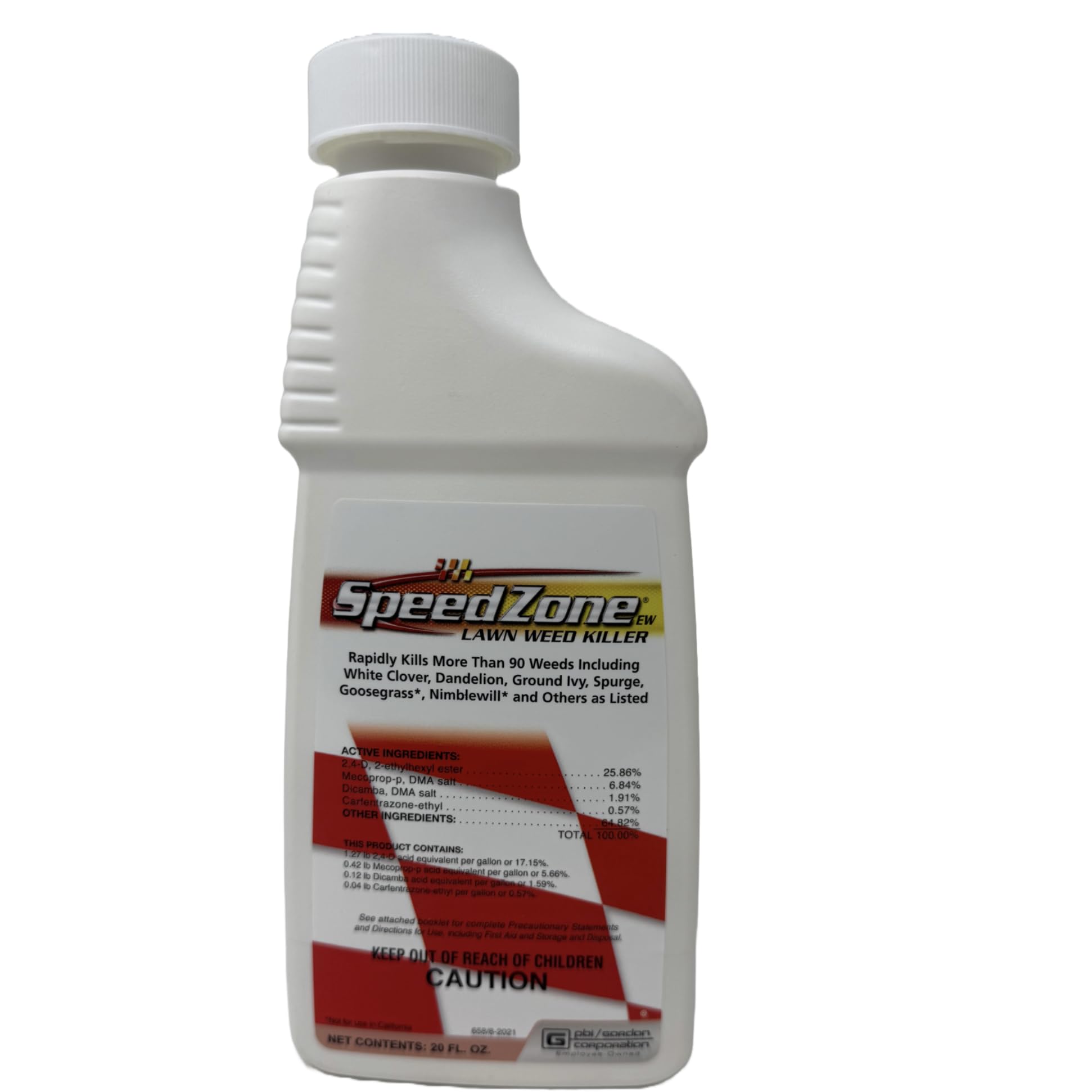
Gordon's SpeedZone

Gordon's SpeedZone

Lawn chickweed

Our Score 9.0/10
Check Price

Worth Noting

  • Not shippable to AK, DC, MA, NJ, VT
Type
Selective turf herbicide
Coverage
14,000–18,000 sq ft
Application
Hose-end concentrate
Reseed After
2 weeks
Read the full review

SpeedZone is the chickweed pick we trust on a lawn because it does the two things that matter in the right order: it is built for turfgrass, and it is the product here with the clearest chickweed result. The label calls for visible results in hours, and reseeding is allowed after two weeks, which makes it easier to fold into a fall repair plan instead of writing off the season.

The coverage is what sold us on it for a whole lawn. Twenty ounces treats 14,000 to 18,000 square feet, so one bottle goes a long way, and it mixes for a hose-end sprayer rather than requiring a backpack tank. Cool-weather activity is a real advantage for chickweed, which often grows while the lawn is still waking up.

The practical catch is state shipping: the product cannot go to AK, DC, MA, NJ, or VT. Treat the label's turfgrass list as the other gate. SpeedZone is formulated not to harm lawn grasses, but that claim is only useful if your grass is on the approved list, so check before a broadcast pass.

For a lawn with a broadleaf problem that includes chickweed, this is the default we recommend. It is not the cheapest concentrate here, but the area it covers and the short reseeding interval make the cost per pass easier to live with. The one thing we do not do is spray it over a mixed lawn without checking the grass list.

Bottom line: Our best overall pick for chickweed in a lawn, with strong coverage and a short reseeding interval.

4

RM43 Total Vegetation Control

RM43 Total Vegetation Control

Bare-ground control

Our Score 9.0/10
Check Price

Worth Noting

  • Not for lawns or garden beds
  • Long residual limits replanting
Size
32 fl oz
Type
Total vegetation control
Coverage
4,324 sq ft
Residual
Up to 1 year
Read the full review

RM43's label promises up to a year of bare ground, which puts it in a different category from the selective lawn products here. It is a total vegetation killer for fence rows, farm buildings, vacant lots, roadsides, and gravel lanes, where the goal is no regrowth rather than a lawn that survives.

A 32-ounce bottle covers about 4,324 square feet. The residual is the point: you are buying time between regrowth, not just a fast burn-down. That makes it useful on a equipment pad or a gravel drive where chickweed keeps returning from seed.

The residual is also the trade-off that defines it. It is a farm and hardscape tool, not a selective broadleaf product, and it does not belong where you want grass, flowers, or vegetables to grow next season. That is a planning constraint, not a flaw in the formula.

For a chickweed problem in a lawn, SpeedZone is the better answer. For a gravel drive or fenceline where you want the vegetation gone and staying gone, RM43 is the one here that makes the longest promise.

Bottom line: Our long-residual bare-ground pick for fence rows and gravel, not for chickweed in a lawn.

5

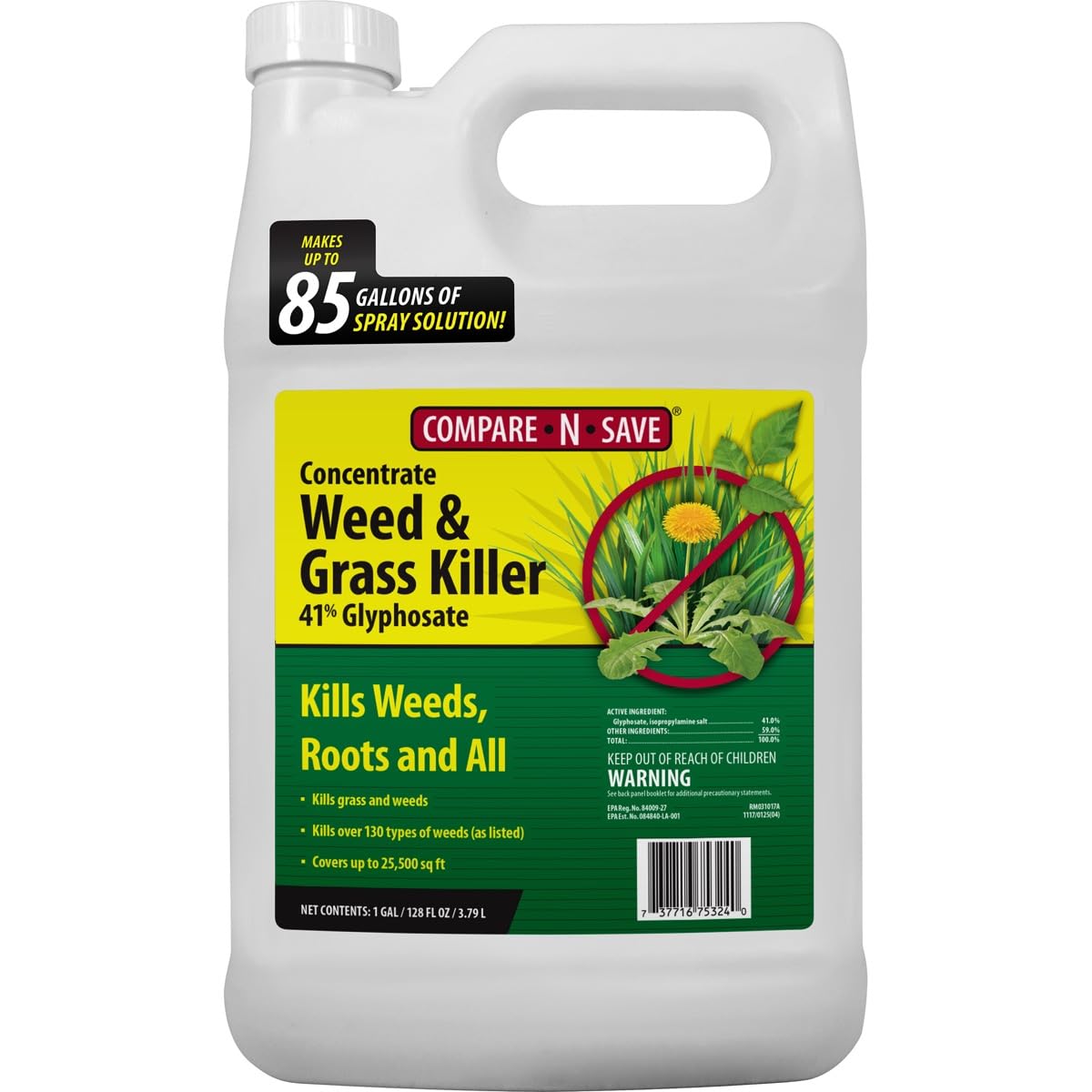
Compare-N-Save 41% Glyphosate

Compare-N-Save 41% Glyphosate

Large non-selective jobs

Our Score 9.0/10
Check Price

Worth Noting

  • Not selective; kills grass
  • Requires a tank sprayer and storage
Type
Non-selective herbicide
Makes
Up to 85 gal spray
Coverage
25,000 sq ft
Active Ingredient
41% glyphosate
Read the full review

A gallon of Compare-N-Save makes up to 85 gallons of ready-to-use spray, which is the number to keep in mind before you buy it. This is a bulk glyphosate product for large non-selective jobs—fence lines, gravel, and clearing—not a selective chickweed spray for a lawn.

It contains 41 percent glyphosate, covers over 25,000 square feet, and is rainproof in two hours. Visible results are listed at two to four days, slower than the contact killers here but normal for glyphosate. The value is obvious if you have a lot of ground to clear and a tank sprayer to mix into.

We appreciate the economy, but we plan for variability. Some weeds take longer, and the label's results depend on active growth and correct mixing. Measuring and storing 85 gallons of spray is a real commitment, so this is not the bottle for a few sidewalk weeds.

For a large non-selective cleanup, it is the most practical value here. For chickweed in a lawn, skip it and choose a selective product. The gallon is a tool for ground you do not plan to plant.

Bottom line: Our bulk non-selective value for large clearing jobs, with the mixing and storage that come with a gallon.

6

Southern Ag 2,4-D

Southern Ag 2,4-D

Budget lawns

Our Score 8.8/10
Check Price

Worth Noting

  • Not for St. Augustine or centipede
Size
32 fl oz
Type
Selective broadleaf herbicide
Use Rate
1–4 pints per acre
Active Ingredient
2,4-D
Read the full review

Our budget selective pick is Southern Ag's 2,4-D concentrate. The label's use rate is only 1 to 4 pints per acre, so a 32-ounce bottle stretches much further than a ready-to-use spray if you are comfortable measuring and mixing. That low rate is the whole appeal: you are buying herbicide, not water.

It is a straight 2,4-D amine, the old reliable for broadleaf weeds such as dandelions and clover. Chickweed is a broadleaf too, but this is a general broadleaf label rather than a chickweed-specific one, so expect general broadleaf performance. On cool-season lawns and Bermuda it can be a sensible low-cost route; on St. Augustine and centipede, the turf risk is not worth it.

The label directions take a careful read, and the mix is strong enough that measuring matters. That is the trade for the low cost. If you have a small lawn and a mixed broadleaf patch, this leaves money for seed and fertilizer. If you want a bottle you can spray without a tank, choose a ready-to-use product instead.

Bottom line: Our budget pick for selective broadleaf control on lawns that are not St. Augustine or centipede.

7

Spruce Weed & Grass Killer Kit

Spruce Weed & Grass Killer Kit

Pet-safe spot spraying

Our Score 8.6/10
Check Price

Worth Noting

  • Refills get expensive for large areas
Type
Ready-to-use spot spray
Power
2 AA batteries
Coverage
Up to 400 weeds
Pet Safety
When used as directed
Read the full review

The pet-safe claim and the battery wand are why Spruce is the kit we hand someone who wants to spot-treat chickweed in a bed or along a fence without mixing a tank. The 64-ounce bottle is ready to go, and the formula is labeled safe around people, pets, and bees when used as directed.

The 400-weed coverage claim is the useful number. It tells you this is a spot treatment, not a broadcast lawn product: you walk the patch and wet each plant. Visible results in an hour and dead weeds in a day make it satisfying for small jobs, and the scent is mild compared with solvent-heavy sprays.

It is non-selective in practice, so use it on weeds in cracks, beds, and fencerows, and keep it off the grass you want to keep. The battery wand is the reason we reach for it; pumping a sprayer for a dozen weeds is more work than the job deserves.

The catch is refill cost on a big patch. This is a pet-safe spot tool, not the economical way to treat a whole lawn, and some weeds need a second pass. For someone with a dog and a handful of chickweed clumps, that trade is easy to make.

Bottom line: Our pet-safe spot-treatment pick for a handful of chickweed clumps, not a whole-lawn broadcast.

8

Ortho GroundClear RTU

Ortho GroundClear RTU

Hardscape chickweed

Our Score 8.6/10
Check Price

Worth Noting

  • Not selective; kills grass
  • Sprayer can be finicky
Type
Non-selective contact killer
Coverage
5,120 sq ft
Certification
OMRI listed
Active Ingredient
Ammonium nonanoate
Read the full review

Ortho GroundClear is the only product here that pairs a chickweed listing with an OMRI organic-use label and a ready-to-use wand. That makes it our pick for a patio, driveway, or gravel path where you want to kill chickweed without mixing concentrate.

The active ingredient is ammonium nonanoate, a contact herbicide. The label promises visible results in 15 minutes and rainproofing in two hours, and a gallon covers 5,120 square feet. That is a different job from a selective turf spray: it belongs on hardscapes and bare spots, not in a lawn you are trying to save.

The Comfort Wand is convenient for spot work, but the sprayer is the weak point. Test the wand before you start a long edge, and keep a backup plan for a replacement bottle if it sputters. The organic listing is useful if that matters to you, but it does not make the product selective.

For a non-selective job, this is the easiest bottle to live with. It is direct about what it kills, and the organic listing gives it a place where a glyphosate product might not fit. For a lawn, keep looking.

Bottom line: Our ready-to-use pick for chickweed on patios, driveways, and gravel, where killing grass does not matter.

How We Tested the Best Chickweed Killers

We built the shortlist from what's actually sold for chickweed and other winter annuals — ready-to-use triggers, concentrates, hose-end bottles, granules, and a few organic options — then dropped anything whose label only claimed to suppress chickweed rather than control it, and anything with a cost per 1,000 square feet that made no sense for a weed you'll be fighting every fall. That left 11 products.

In October, I staked out plots of established chickweed in my own lawn and a colleague's, both thin, compacted turf where chickweed always wins, and treated each plot strictly by its label directions. I timed how long mixing and set-up took, weighed bottles before and after to work out real coverage per dollar, and sprayed once on a still morning and again in a light breeze to see how much mist drifted onto the surrounding grass and my shoes.

Then came the part that decides whether you buy the stuff again. I walked the plots every morning, noting which weeds curled first, which browned evenly instead of in splotches, and whether the fescue around them yellowed too. I smelled each product at application and again 24 hours later — a couple of the vinegar-based sprays were eye-watering and hung around. Because two dogs share my yard, I logged every label's re-entry time and stuck to it, and I checked for regrowth at four, eight, and twelve weeks, since a fast kill that returns in a month is just a chore on layaway.

How to Choose the Right Weed Killer for Chickweed

Selective vs. Non-Selective

A selective herbicide is formulated to kill broadleaf weeds without killing the grass around them. That is what you want for chickweed in turf: products such as Gordon's SpeedZone and Southern Ag 2,4-D are built around turfgrass use. A non-selective product—glyphosate, ammonium nonanoate, or a total-vegetation formula—will kill the chickweed and the grass, so reserve it for driveways, gravel, fence lines, and bare ground.

The label wording is the tell. Weed and grass killer is not a lawn product, even when chickweed is on the list. Broadleaf herbicide or for use in turf is the safer shelf to shop. If you are treating a lawn, start there and do not compromise because a non-selective bottle is cheaper.

Match the Formula to Your Turfgrass

Chickweed is a broadleaf weed, but the grass around it decides which broadleaf herbicide is safe. 2,4-D is a workhorse on cool-season lawns and Bermuda, yet it can damage St. Augustine and centipede. SpeedZone is labeled not to harm lawn grasses, but that phrase still comes with a turf list, and your grass needs to be on it.

Identify the grass before you buy. If you cannot, treat a small test patch and wait a week, or choose a product with an explicit label for your turf type. The wrong selective herbicide can set a lawn back further than the chickweed did.

Spray Chickweed Young and Actively Growing

Chickweed is easiest to kill when it is small and actively growing, not when it has formed a dense mat or is setting seed. Most post-emergent labels call for spraying when weeds are actively growing and not wet. For fall and early-spring chickweed, a cool-weather product such as TZONE, labeled down to 50°F, keeps you from waiting for a warm spell.

Do not mow immediately before or after spraying, and do not spray drought-stressed weeds. The plant needs to take up the herbicide. If the forecast turns hot and dry, wait; stressed chickweed can brown at the tips and recover.

Pick a Format You Will Actually Use

A concentrate is the economical choice for a whole lawn, but only if you already own a sprayer and will measure carefully. Southern Ag's 2,4-D and Gordon's SpeedZone are concentrates; the Southern Ag rate is very low, while SpeedZone is built for a hose-end sprayer. Ready-to-use bottles cost more per square foot but remove the mixing step.

For spot work, the application method matters more than the volume. Spruce's battery wand is easy to walk through a bed, Ortho's Comfort Wand is aimed at hardscape spots, and Spectracide's foaming edger puts a visible line in cracks. Buy the format that matches the job, not the biggest bottle.

Plan for Residual and Replanting

A post-emergent herbicide kills what is there; it does not sterilize the seedbank. SpeedZone allows reseeding after two weeks, which makes it easier to thicken a thin lawn and crowd out the next chickweed flush. Total-vegetation products such as RM43 are the opposite: they can keep the ground bare for up to a year, so they belong where you do not plan to plant.

Read the reseeding interval before you buy, especially if you are repairing a lawn in the same season. A fast kill with a long replanting wait is not a bargain if you need grass back quickly.

Frequently Asked Questions

Final Verdict

For most lawns, Gordon's SpeedZone is the chickweed killer we recommend. It has the clearest chickweed fit here, the coverage for a whole lawn, a short reseeding interval, and cool-weather activity that matches when chickweed actually grows. Check the state shipping restriction and your turfgrass list before you order.

If your lawn is St. Augustine or centipede, switch to a product labeled for that grass rather than forcing a 2,4-D. If the chickweed is in cracks and gravel, Ortho GroundClear is the easiest ready-to-use non-selective choice. The decision changes with the surface, not with the size of the bottle.