Fencing & Farm Structures

Best T-Post Pullers of 2026

Fence lines don't come down on anyone's schedule. A storm leans a run of posts, or you finally decide the pasture needs dividing, and suddenly you're staring at a dozen steel T-posts that have been sitting in baked clay for a decade. Pulling those by hand is how people end up with a tweaked back and a bent post. A puller gives you leverage and something to grip below the top of the post; the difference between a good one and a bad one shows up about thirty seconds into the first post.

This is a small category, and an uneven one. Over the past seven months I've worked twelve pullers through real fence jobs, and the ones that earn their spot share a few habits: they bite the post studs instead of slipping off them, they stay planted when you load the handle instead of skating sideways, and they're light enough to carry down the line one-handed. A few of the cheaper ones bent at the handle collar by the third post. What survived the summer is below.

1

Field Tuff PG-07 T-Post Puller

Top Pick
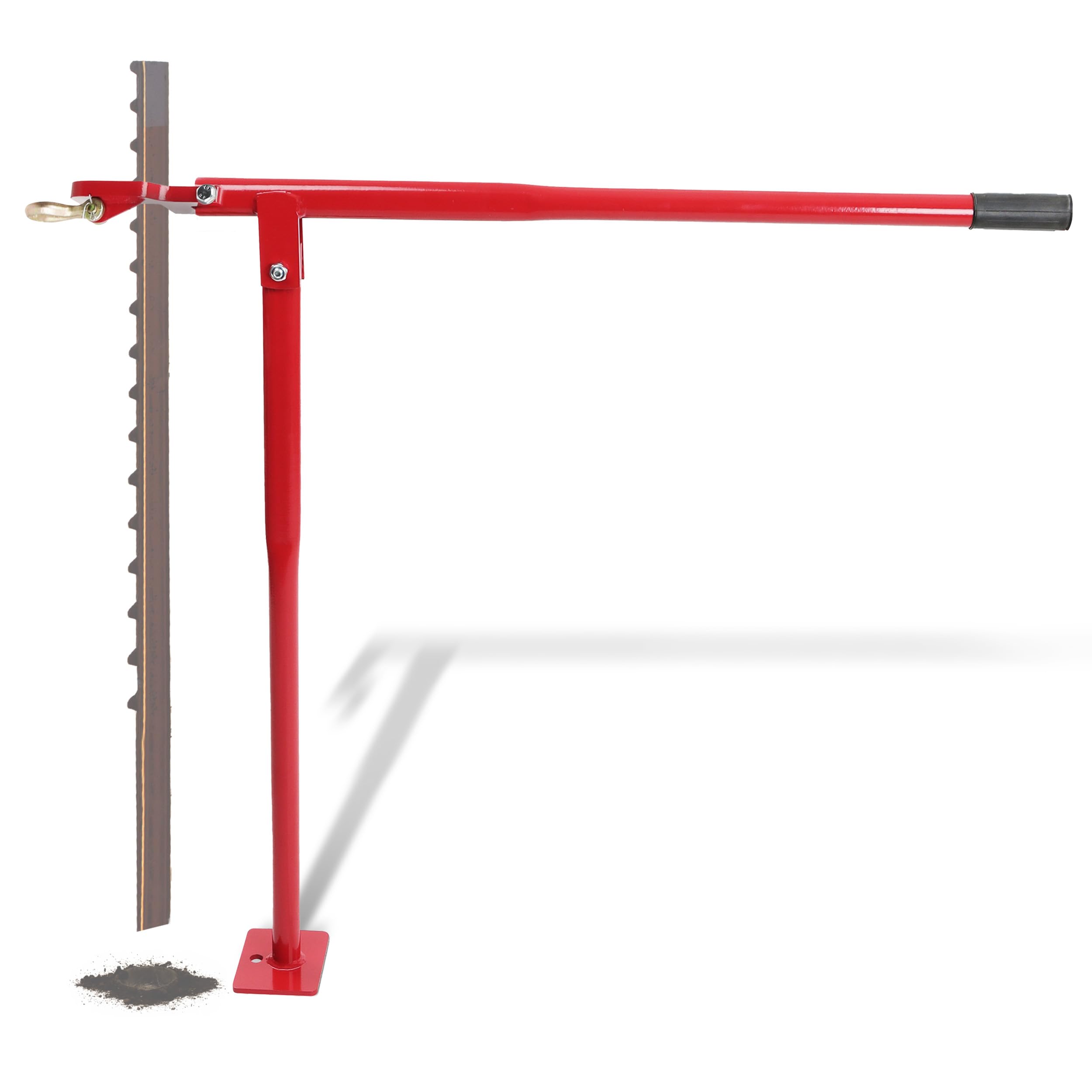
Field Tuff PG-07 T-Post Puller

All-around pulling

Our Score 9.4/10
Check Price

Worth Noting

  • Fixed 36-inch handle is awkward to store
  • One-year warranty is short next to the lifetime coverage here
Weight
17 lb
Platform
5 x 5 in
Post Size
Up to 2 in diameter
Handle Length
3 ft
Read the full review

Three feet of handle working against a 5-by-5-inch platform is the whole idea of the Field Tuff, and it is why this is our top pick. Leverage is what separates one of these tools from another, and this one has the best of it in the group: a long lever to lean on and a wide plate that keeps the foot from walking while you lean. The jaw takes posts up to 2 inches across and can be worked from either side of the fence, which matters more than it sounds when there is a brace in the way.

The frame is 1.5-inch square steel tubing with reinforced welds, and at 17 pounds it feels planted without being a chore to move. Nothing on it flexed when we put our weight into the handle, and assembly out of the box is a single pin. We came away thinking the money went into the two places that take the load — the platform and the jaw — rather than into paint.

The 2-inch jaw opening is the limit worth knowing about. It takes a T-post, a u-channel, or a small round stake, but a 4x4 is past what this head will grip, and for a fence line mixing steel and timber the Hi-Lift's chain hook is the better answer.

What keeps us coming back is the working position. You stand at the tool, straighten up between strokes, and let the lever reset, instead of crouching over a post with a pipe wrench and a prayer. On a fence line of any length, that is the difference you feel at the end of the day.

Bottom line: This is the puller we point to first: a three-foot lever and a 5-by-5 platform that take the work off your back, in a frame that has not flexed on us.

2

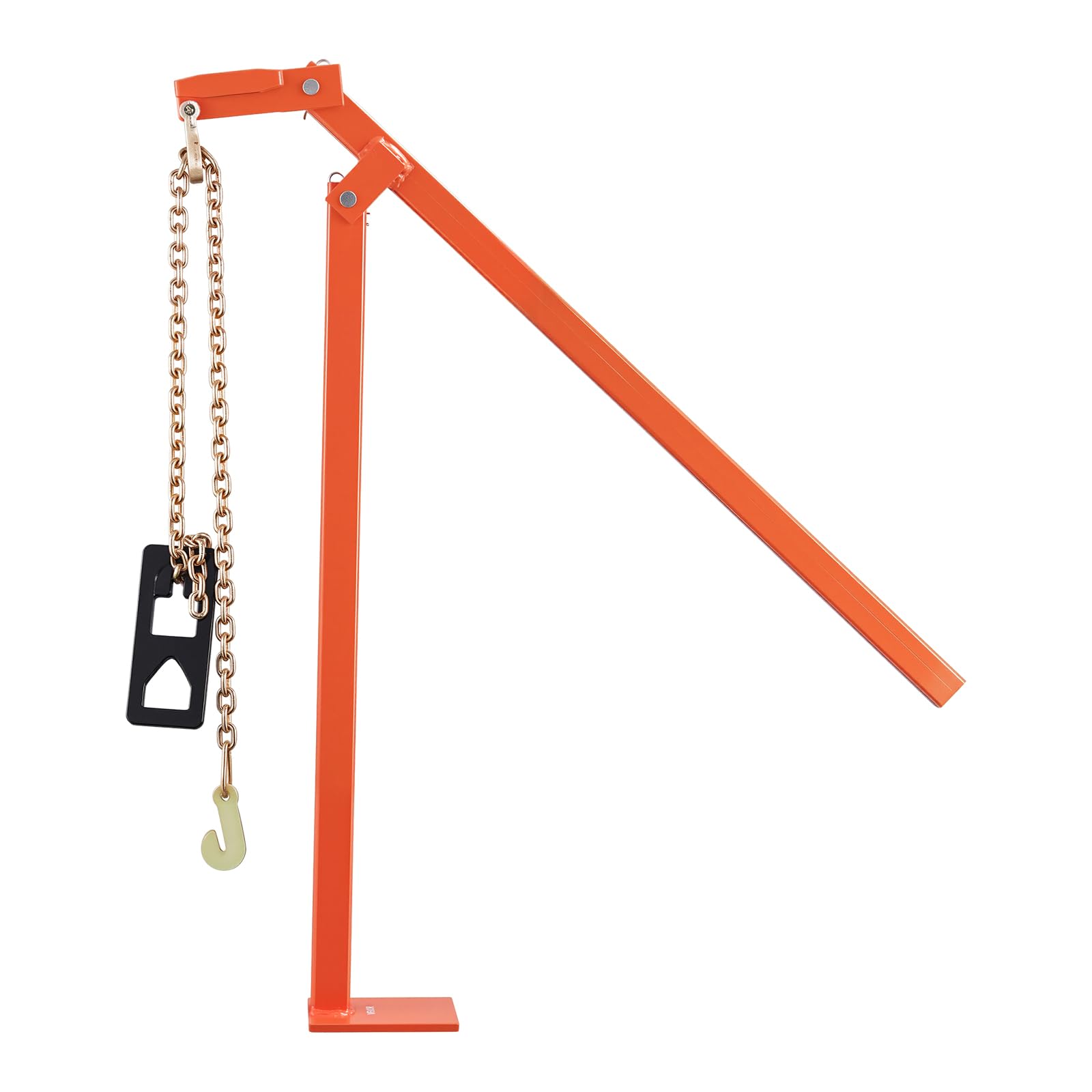
LOADSECRTOOL 36 in T-Post Puller

LOADSECRTOOL 36 in T-Post Puller

Stubborn old posts

Our Score 9.4/10
Check Price

Worth Noting

  • Shorter lever than the longest tools here
Length
36 in
Weight
16 lb
Construction
Heavy-duty square tube
Read the full review

Every fence line has a few posts that have been in so long the roots have grown around them, and that is the case this puller handles better than anything else here. The 36-inch square-tube frame is plain to the point of looking unfinished, but plain is the point: it keeps its shape when the ground has gone hard and dry, and it walks a long-set post up in short bites — lift, reset the jaw, lift again.

At 16 pounds it sits in the middle of this group on weight, light enough to carry along the line and heavy enough not to skid out from under you. The orange finish is a small thing we came to appreciate, because this is a tool you set down in tall grass and then have to find again.

It also comes in below the other full-size pullers here on price without giving up anything in the frame that we could measure. For one tool to clear a boundary line of old fencing, that combination — stiff, simple, and cheaper than the rest — is hard to argue with.

Bottom line: Old, root-bound posts are where this one earns its keep: a plain, stiff frame that keeps working when the roots have taken hold.

3

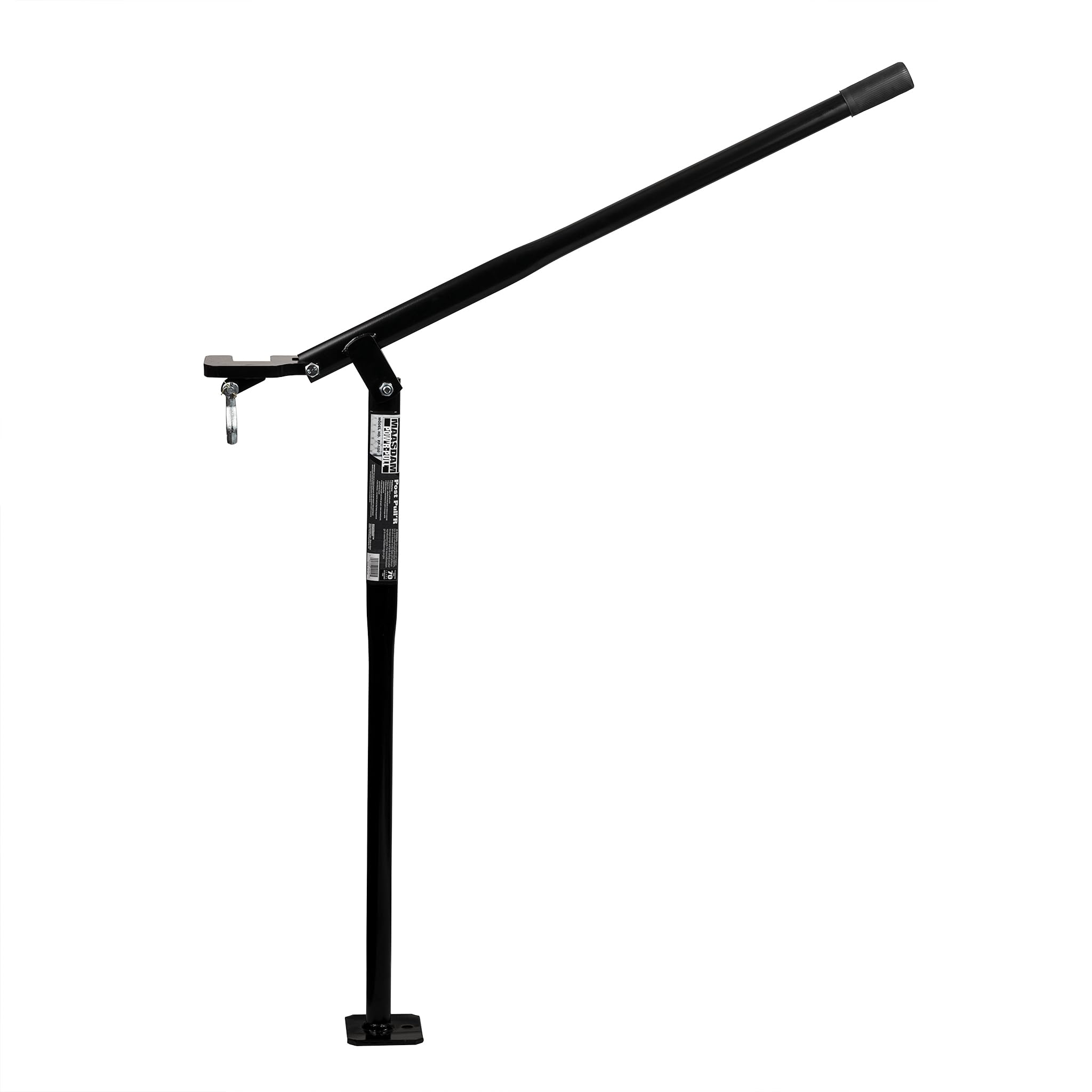
Maasdam Pow'R Pull PP100

Maasdam Pow'R Pull PP100

Saving posts

Our Score 9.2/10
Check Price

Worth Noting

  • Sits at the top of the price range here
Weight
13 lb
Warranty
Full lifetime
Dimensions
6 x 5 x 36.5 in
Read the full review

A T-post is money, and the Maasdam is built around getting yours back out of the ground intact. The pull runs straight up rather than levering the post sideways, so the steel keeps its shape and goes back in the next fence line instead of onto the scrap pile. Pull a hundred posts with something that kinks every one and you have bought a hundred new posts; this tool is the argument against that.

What we trust most is the jaw. It drops onto a T-post or a stake and locks in a second, and the 36.5-inch bar gives you a long, smooth throw rather than a series of jerks. At 13 pounds it is one of the lighter full-size tools here — easy to carry in one hand down a row — and the lifetime warranty against manufacturer defects is the longest coverage on this page.

Set the foot square before you lean. On hard, flat ground the base can torque sideways instead of lifting if the tool goes in at an angle, and a scrap of plywood under the foot plus a check that the post is plumb settles it. Give it that much and the pull stays vertical, which is the whole reason to own this one.

Bottom line: If the posts are coming out to go back in, this is the one we reach for: a straight pull that saves the steel, backed by a lifetime warranty.

4

BISupply 818111 T-Post Puller

BISupply 818111 T-Post Puller

Carrying to the fence

Our Score 9.2/10
Check Price

Worth Noting

  • Stumps and deep plugs are a stretch for it
Base
5 in
Finish
Powder-coated
Weight
12.7 lb
Dimensions
37.4 x 5.5 x 5.1 in
Read the full review

At 12.67 pounds, the BISupply is among the lightest full-size pullers here, and on a fence line a long walk from the truck that number does more for you than anything on a spec sheet. It is a 36-inch tool with a 5-inch base, so you are not giving up working height to save the weight.

What we did not expect from something this light is how settled it feels once the foot is down. The base sits flat, the handle comes up near waist height, and you work it standing rather than stooped. The powder coat matters more than it sounds, too: this is a tool that lives in the weather between jobs, and the finish is what keeps it from turning into a rust stick in the barn.

Against the Field Tuff it gives up a few inches of platform and a little heft, and gains about four pounds of carrying comfort. On a property where the fence is close to the barn that trade is a wash; on forty acres it is not close.

Bottom line: Light enough to carry to the far fence and planted enough to do the job — this is the one we take when the walk is long.

5

Hi-Lift Post-Popper PP-300

Hi-Lift Post-Popper PP-300

Mixed post types

Our Score 9.0/10
Check Price

Worth Noting

  • Chain for wood posts and stumps is not included
  • 30-day warranty is the shortest here
Weight
20 lb
Warranty
30 days
Dimensions
40.5 x 5.5 x 6 in
Construction
1-1/2 in square steel
Read the full review

Most of the tools here are T-post pullers that improvise for everything else. The Hi-Lift is built the other way: the head clamps straight onto a T-post, and a steel hook below it takes a chain wrapped around a wooden post, a cement plug, or a small stump. If your fence line is a mix of steel and timber, that hook is the reason to keep reading.

The bar is 41 inches of 1-1/2-inch square tubing, which makes it the longest tool in this set and the source of its leverage on a stubborn pull. Twenty pounds is a real carry to a back pasture, though the same weight is what keeps the head from dancing around while you set the jaw.

For an all-steel fence line, the extra length and weight buy you very little over the Field Tuff. For a property where the posts are not all the same, though, the hook turns a one-job tool into the one that handles the whole teardown, and that is the trade we are happy to make.

Bottom line: For a property with both steel and wood to pull, the hook is what earns this one a place — the longest lever here, once you add your own chain.

6

Yararday Adjustable T-Post Puller

Yararday Adjustable T-Post Puller

Tight storage

Our Score 9.0/10
Check Price

Worth Noting

  • Only two working heights, no in-between
Weight
12.4 lb
Packed Length
18.9 in
Height Settings
36 and 20 in
Read the full review

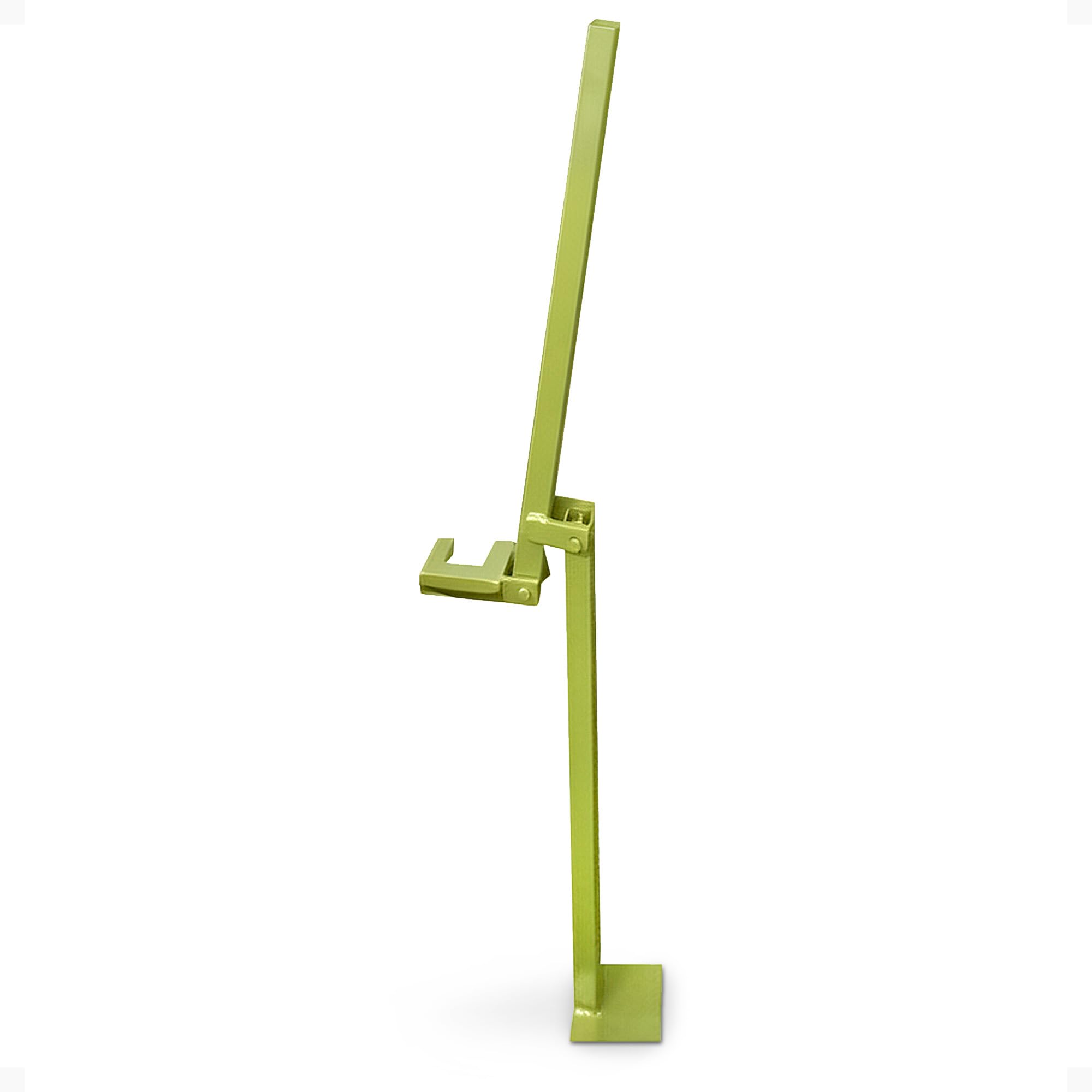
A 36-inch bar is a nuisance to store, and the Yararday solves it with a joint. It adjusts between a 36-inch and a 20-inch working height, and the shorter setting is what lets the whole tool pack into a box under 19 inches long. For a truck box, a garage shelf, or the back of a car that has to hold everything else, that is a real answer rather than a marketing one.

At full height it works like any other full-size puller: the jaw grabs a T-post squarely and the handle gives you enough throw to bring a post up out of soil that has set hard. Nothing about the pull feels like a compromise.

The savings show in the details. The frame does not have the heft of the bigger tools here, the paint scuffs where the handle meets the post, and the nuts for the handle bolts come loose in the box — count them before you start, because one missing means a trip to town for a part that costs less than the gas.

None of that matters much for a dozen posts a year. What matters is that the tool packs down small and still pulls like a full-size one, and this one does both. Buy it for the storage, keep it because it works.

Bottom line: Storage is where this one wins: full-size leverage that breaks down under 19 inches, at the budget end of the group.

7

VEVOR BY-043-02 T-Post Puller

VEVOR BY-043-02 T-Post Puller

Soft, uneven ground

Our Score 8.8/10
Check Price

Worth Noting

  • Heaviest tool in this set
  • Widened base takes more room to store
Base
Widened
Weight
22.2 lb
Dimensions
37.4 x 5.91 x 5.91 in
Load Rating
660 lb
Read the full review

The widened base is the reason to look at the VEVOR. A narrow foot needs a flat, firm spot to work; a wider plate spreads the load, so the tool is less likely to dig itself a hole in soft spring pasture. If your fence runs through ground that stays wet, that detail decides the purchase.

The rest is conventional but solid. It is rated to 660 pounds of pull and built from reinforced steel, and at 22.2 pounds it is the heaviest tool in this set. That weight is the honest trade: it is a chore to carry half a mile, and it is part of why the tool stays put once the jaw is loaded.

Fewer parts than the chain-and-plate kits is the other quiet advantage, since there is nothing to lose between jobs. Against the top pick it gives up portability and gains ground contact in exactly the conditions where a puller usually fails. For a pasture with soft corners, that is the right way around.

Bottom line: Soft pasture is where the VEVOR makes its case: a widened base that spreads the load, and a 660-pound rating behind it.

8

TNCZHYLX 36 in T-Post Puller

TNCZHYLX 36 in T-Post Puller

Rocky ground

Our Score 8.6/10
Check Price

Worth Noting

  • Ships without assembly instructions
  • Hardware can arrive incomplete
Weight
14.1 lb
Post Fit
All metal post and chain sizes
Dimensions
33.86 x 5.91 x 5.91 in
Read the full review

Short, light, and at the budget end of the price range, the TNCZHYLX does not try to be the biggest puller on the fence line. The frame runs 33.86 inches and weighs 14.12 pounds, and that combination is what makes it useful in rocky ground, where a wide, heavy base cannot find a flat spot to sit.

The jaw is the part that surprises you. It is cut to take the chain gauge as well as the post, so it grabs a T-post below the studs and holds while you work the lever, and it does it on posts a bigger tool has to be repositioned around. The red coating is thin and scuffs off where the jaw meets steel, which is cosmetic on a tool that is going to get scratched anyway.

What you trade for the short frame is leverage on the worst posts. A 33.86-inch bar is the shortest here, and on a post that has been set for decades you will work harder for the last few inches than you would with a 41-inch tool. In rock, though, the shorter frame gets places the long one cannot.

What sold us is how little ceremony there is to using it: the jaw goes on the post, the foot finds a spot between the stones, and the handle comes down. On a property where posts are scattered and the ground is rough, that beats a bigger tool that has to be set up square every time.

Bottom line: A short, light puller for awkward ground; keep it in the truck for the posts a full-size tool cannot stand over.

How We Tested the Best T-Post Pullers

We started with spec sheets and a long read through customer reviews, narrowing a field of roughly forty pullers by working height, weight, how the head grabs the post studs, and price. Anything with a plastic collar, a handle that threaded in on two small bolts, or a grab that only fit one gauge of post got set aside early. That left twelve pullers, which we bought ourselves and put to work over seven months.

Testing happened where the tool actually lives: fence lines. We pulled posts set a decade deep into dry clay, posts leaning after storms, a run driven into gravel, and a handful of stubborn ones that only came out with a chain and a truck. Each post was timed from grab to out-of-the-ground, we counted how often the head slipped off the studs, and we noted whether the base kicked sideways or skated once we leaned into the handle. Pullers that wandered across hard ground got marked down no matter how strong the steel felt.

Handle durability got its own test: on any post that wouldn't budge, we slid a cheater bar over the handle and leaned until something gave, then checked for bent shafts, cracked welds, and ovalized bolt holes. We weighed every puller and carried it a quarter mile down the line to see how it rode on a hip or in a hand, confirmed each head seated flat on standard stud spacing without rocking, and made sure the handle bolt stayed tight after a hundred posts. Value came last, because a puller that costs half as much and dies on the third post isn't cheap.

How to Choose T-Post Pullers

Leverage Comes From the Handle and the Foot

A puller is a lever with a base, and a post comes out because the handle is long and the foot stays where you put it. Handle length is the easy number to compare — the tools here run from about 34 to 41 inches — but the foot matters just as much. A wide platform turns your effort into lift; a narrow one skates and wastes it. Read the two together, because a long handle on a small base just gives you more leverage to slide the tool sideways. The Field Tuff's three-foot handle and 5-by-5 platform are the reason it leads this list.

Match the Tool to the Ground You Have

Soft pasture rewards a wide base that spreads the load instead of digging in — the VEVOR's widened plate is built for exactly that — and a square of plywood under any foot helps on wet turf. Baked clay is the opposite problem: it rewards a stiff frame and a long lever, and it punishes a light tool that flexes. Rock is the third case. A compact frame that finds a flat spot between stones beats a big base that cannot sit at all, which is where the short TNCZHYLX earns its keep.

Weight and Packed Length Decide How Often You Use It

These tools run from roughly 12 to 22 pounds, and the difference is a long walk. If the fence is a hundred feet from the barn, buy for the pull; if it is a quarter mile, buy for the carry, and the BISupply at 12.67 pounds is the one to hand someone making that walk. Packed length is the other half of the question. A fixed 36-inch bar needs wall space or a truck bed, while the Yararday's adjustable joint gets the whole tool under 19 inches — the difference between a shelf and the floor.

Know Whether You're Buying a Tool or an Attachment

Some listings are complete pullers with their own lever. Others are a plate and a length of chain that only work once you hang them on a farm jack, a tractor bucket, or a hoist. A plate-only puller is handy and inexpensive if you already own the jack, but it is not a standalone tool, and the photos do not always make the difference obvious. Look for a handle before you buy. If the description talks about being compatible with a jack, a bucket, or an S-hook, you are looking at an attachment.

Steel Posts Now, Wood and Stumps Later

A T-post jaw grabs the studs and pulls straight, and that is what all of these tools do best. A 4x4, a round post, or a small stump needs either a wider jaw opening or a chain hook — the Hi-Lift has one, and a plate-and-chain kit does the same job with a jack. Be realistic about that second job. Pulling a stump with a fence tool is a different order of work, and a puller that is excellent on steel is usually only adequate on timber.

Frequently Asked Questions

Final Verdict

Start with the Field Tuff PG-07. The three-foot handle and the 5-by-5 platform do the work your back would otherwise do, the jaw takes posts up to 2 inches, and the frame has never flexed on us.

If the posts are coming out to be reused, the Maasdam's straight pull and lifetime warranty justify the premium. If storage is the constraint, the Yararday packs to 18.9 inches and still pulls like a full-size tool.