Tree & Forestry Care

Best Splitting Mauls of 2026

A splitting maul is a simple tool that fails in expensive, annoying ways: a handle that splinters by February, a head that works itself loose, an edge so blunt out of the box that the first swing just bounces off the round. The difference between a maul you curse and one you reach for usually comes down to a few ounces, an inch of handle, and a factory edge that actually bites.

We spent eight months putting 10 mauls through clean ash and knotty storm-damaged oak, and the good ones separated from the frustrating ones quickly. A heavier head is not automatically a better splitter, a long handle only helps if you can keep it on line, and the extras — a flat poll for driving wedges, a pick on the back — are worth paying for only if you'll actually use them. The mauls that won out cost about what the ones we set aside did, so value came down to execution, not price tag. Here's how they sorted out.

1

Fiskars Pro IsoCore 8 lb

Top Pick
Fiskars Pro IsoCore 8 lb

All-around firewood

Our Score 9.6/10
Check Price

Worth Noting

  • Heavy 10.4-pound package tires you out
Warranty
Lifetime
Handle Length
36 in
Head Material
Forged steel
Overall Weight
10.4 lb
Read the full review

The shock-absorbing handle is the first thing we noticed, and it is the reason this Fiskars became our default. A maul sends a hard jolt through your palms when the head lands, and the IsoCore handle takes enough of that sting out that we could keep swinging without regripping after every round. The 36-inch handle gives the head a long arc, and the forged steel head has the heft to open a seasoned round instead of bouncing off it.

The blade geometry is the other half of the story. The head is designed to drive in and then release, so you are not fighting the maul out of every log. We found it most useful on mixed firewood, where you do not know whether the next round will pop cleanly or need a second hit. The protective sheath is basic but welcome, and the lifetime warranty is the part that seals it for us: this is a maul you can use hard without treating it like a museum piece.

The textured grip is a small thing we appreciated: it stays secure in a gloved hand and does not chew up your palms between rounds. This is a full-size tool, not a camping axe, and it wants a clear swing path and a chopping block at a comfortable height. The head, handle, and grip all feel built for repeated impact.

Bottom line: We recommend the Fiskars Pro IsoCore as the default full-size maul for mixed firewood: it splits with authority, damps shock well, and carries a lifetime warranty.

2

Gransfors Bruk Splitting Maul 450

Gransfors Bruk Splitting Maul 450

Premium heirloom

Our Score 9.2/10
Check Price

Worth Noting

  • Wood handle needs oil and dry storage
Edge
Convex
Head Weight
7 lb
Handle Length
31.5 in
Handle Material
Wood
Read the full review

A 7-pound head on a 31.5-inch handle is not the biggest maul here, but it may be the best-balanced one in this group. The Gransfors Bruk arrives with a convex edge that is sharp enough to bite into a round without a wind-up, and the wood handle has a lively feel that composite handles cannot match. The leather sheath and the axe book are nice touches, but they are not why you buy it.

We think it is the most enjoyable maul to swing in this group, and the one that makes a knotty round feel less like a fight. That balance is the real luxury: the head does not feel like it is dragging the handle through the swing. It is also the pick for someone who splits enough to care about the feel of the tool, not just the speed of the job.

The premium is steep, and this is not the maul we point a first-time firewood cutter toward. What you are paying for is the balance, the edge, and the fit and finish that make it a pleasure to handle. If you want a tool you keep for decades and enjoy using, the Gransfors earns its price.

Bottom line: Choose the Gransfors Bruk if you want a beautifully balanced, razor-sharp maul and the craftsmanship is worth the premium to you.

3

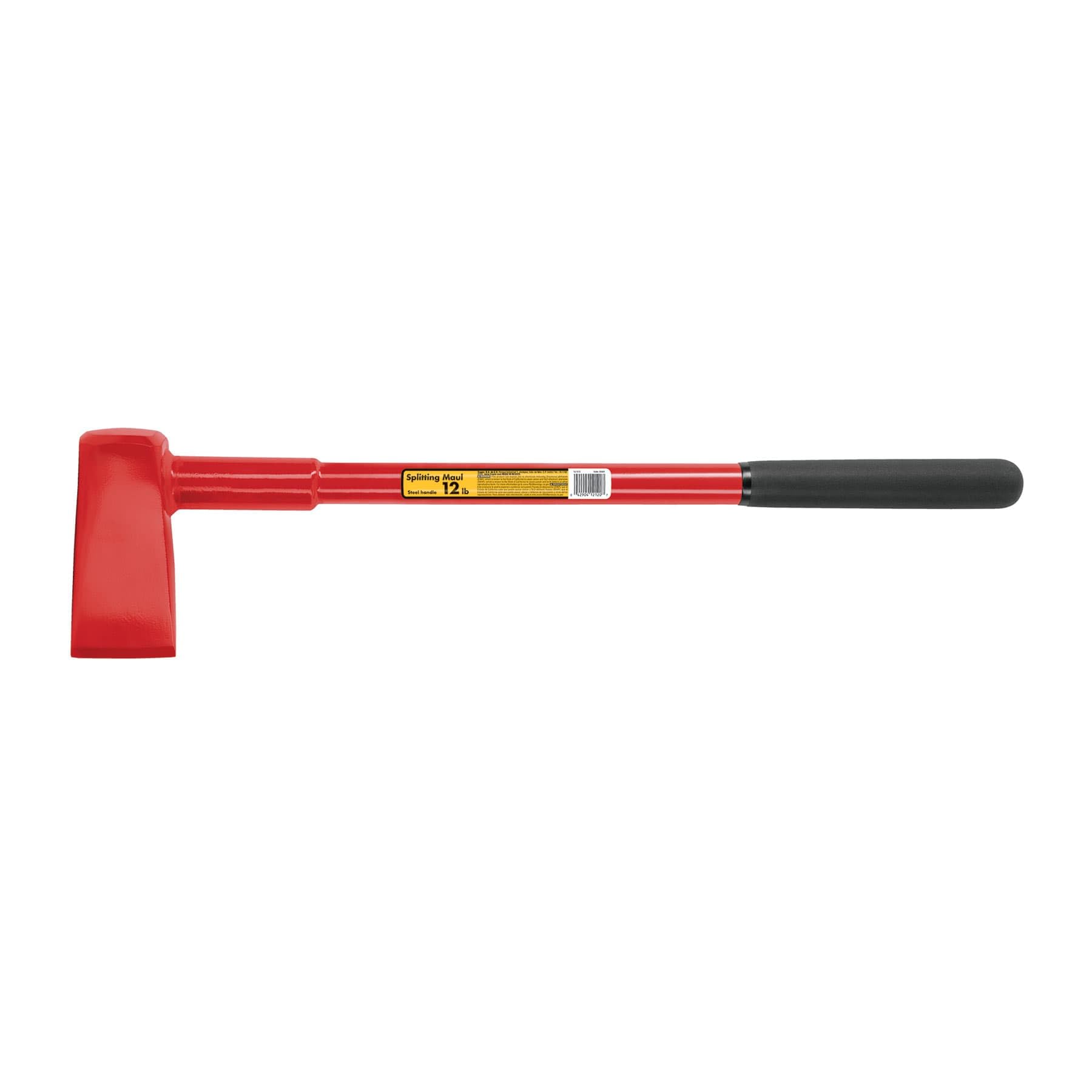
Truper 12 lb Steel-Handle Maul

Truper 12 lb Steel-Handle Maul

Big stubborn rounds

Our Score 9.0/10
Check Price

Worth Noting

  • Short 27-inch handle limits leverage
  • Factory edge can be blunt
Edge
Convex
Head Weight
12 lb
Handle Length
27 in
Handle Material
Steel
Read the full review

The 12-pound head is the whole point of the Truper TJ-12T. This is a maul for the rounds that laugh at an 8-pounder, the ones with a knot or a crotch that send a lighter tool bouncing. The steel handle is stiff and unsentimental, and the whole thing feels like it was built to be beaten on.

We found it most useful when we stopped trying to swing it like a normal maul. Let the head do the work, keep your aim honest, and it drives through big logs with fewer strikes. The 27-inch handle keeps the package compact and puts the mass close to you, which is helpful in a tight splitting area.

This is not the maul for a long session of small kindling, and it is not the one we hand to someone who has never split wood. It is a specialist for big, stubborn rounds and for someone who can control the weight. The steel handle and the sheer mass make it feel like a tool that will outlast the woodpile, and the steel does not care about weather.

Bottom line: Choose the Truper 12-pound maul for the biggest, nastiest rounds, where its mass does the work and a shorter handle keeps the swing compact.

4

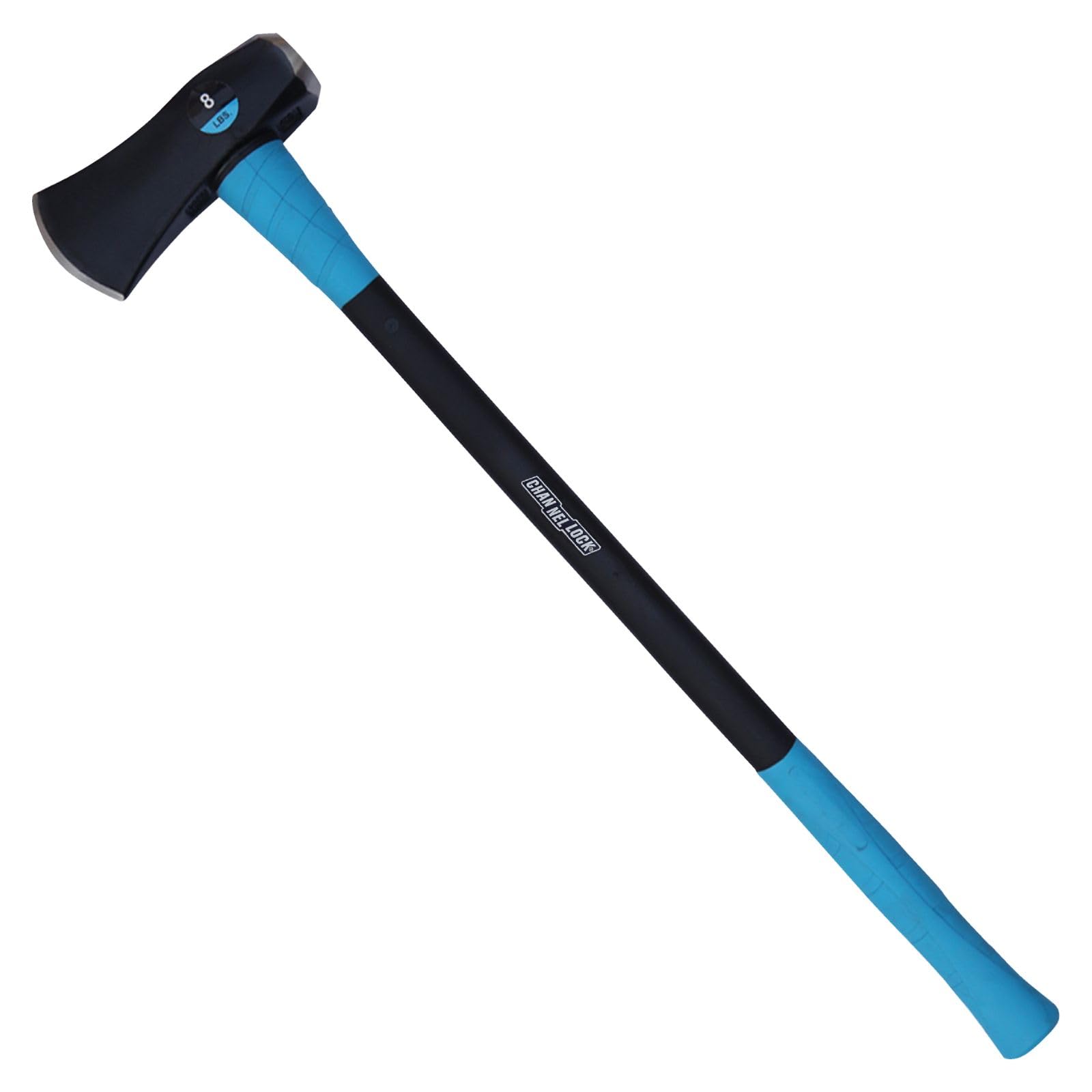
Channellock German-Style Maul

Channellock German-Style Maul

German-style swing

Our Score 9.0/10
Check Price

Worth Noting

  • Heavy 10.7-pound package tires you out
Head Weight
8 lb
Handle Length
36 in
Overall Weight
10.7 lb
Handle Material
Fiberglass/steel
Read the full review

The German-style head on the Channellock is a little more traditional than the wing-shaped mauls here. That shape gives it a planted feel when it lands, with a broad cheek that opens a round instead of needling into it. The 36-inch handle and 8-pound head put the mass where you expect it, and the contoured grip is comfortable without feeling squishy.

On large logs, it did the quiet, unglamorous work we want from a maul: it drove in, opened the round, and did not need a fight to come back out. The forged carbon steel head arrives with a workable edge, and the fiberglass-and-steel handle has a stiff, direct feel. This is not a delicate tool, and it does not pretend to be.

We think it is the pick for someone who likes a traditional German-style maul and wants a full-size tool without paying custom-axe money. It is not a delicate tool, and it does not pretend to be. For big logs and a deliberate swing, it feels like a lot of maul for the money.

Bottom line: The Channellock is a solid German-style choice for big logs if you want a traditional 8-pound maul with a long handle and do not mind the weight.

5

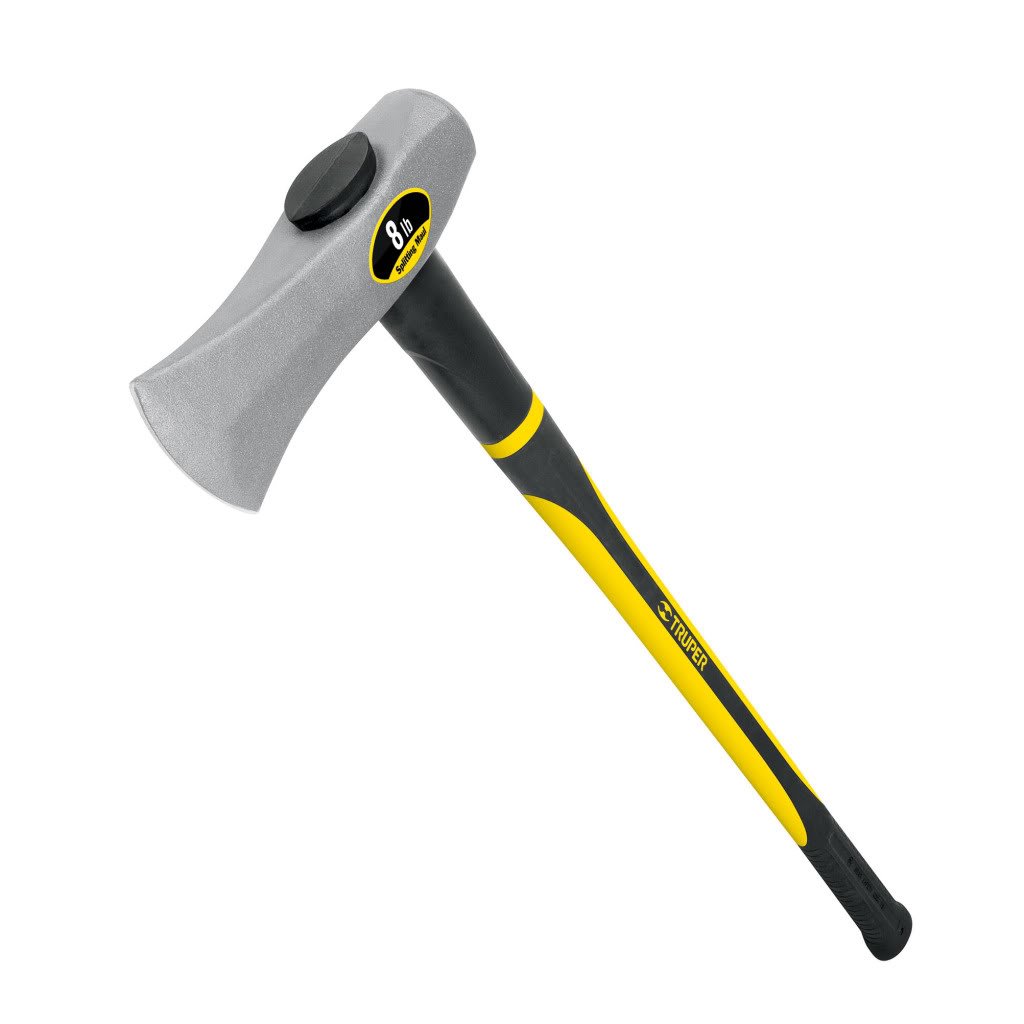
Truper 8 lb Fiberglass Maul

Truper 8 lb Fiberglass Maul

Budget full-size

Our Score 8.8/10
Check Price

Worth Noting

  • Handle durability is a concern under hard use
Edge
Wedge
Head Weight
8 lb
Handle Length
36 in
Handle Material
Fiberglass
Read the full review

The overstrike guard above the grip is the detail we noticed first on the Truper 30958. It is a sensible addition on a fiberglass-handled maul, because the area just above your hand is where a missed swing does its damage. The 36-inch handle and 8-pound head make it a full-size tool, not a compact kindling splitter.

The 8-pound head and 36-inch handle give it a full-size swing, and the double-injected fiberglass handle feels stiff rather than whippy. The rubber grip stays put, and the wedge-shaped edge opens a seasoned round without a lot of fuss. It is not the most refined maul here, but it has the basics right.

We think it is the value pick of this group for someone who wants a full-size maul without paying full-size money. It has the weight and the handle length to do real work, and the overstrike guard is a thoughtful touch at this price. If you split a few cords a year and want a spare maul or a first full-size tool, it earns a place. The fiberglass handle also does not care about weather, which makes it an easy tool to leave in the shed.

Bottom line: The Truper 30958 is the budget full-size maul we point to for occasional splitting, as long as you accept that the handle is the weak point.

6

Estwing 8 lb Hickory Maul

Estwing 8 lb Hickory Maul

Classic wood feel

Our Score 8.6/10
Check Price

Worth Noting

  • Heavy 9.5-pound package tires you out
Head Weight
8 lb
Handle Length
36 in
Head Hardness
50–55 HRC
Handle Material
Hickory
Read the full review

The hickory handle gives this Estwing a different feel from the composite-handled mauls here. It is warm and solid in the hand, and the 36-inch length gives you room to swing without feeling like you are reaching. The head is forged and hardened to 50–55 HRC, so it should stand up to repeated impact.

We liked the traditional feel, and we think that matters if you split by hand for the pleasure of it as much as for the firewood. The 8-pound head has enough mass to break down oak rounds, and the long handle lets you build speed before the head lands. It is not as forgiving as the Fiskars on shock, but the hickory does a decent job of taking the edge off.

The hickory handle is the part that asks something of you: it wants oil and a dry place, and it will not shrug off being left out in the rain. If you want a tool that feels like a traditional axe and you do not mind that bit of upkeep, this is a satisfying choice. The thick handle and forged head give it a solid, workmanlike feel that we appreciated.

Bottom line: Pick the Estwing if you want a full-size maul with a classic hickory handle and a forged 8-pound head, and you do not mind the upkeep.

How We Tested 10 Splitting Mauls Over Eight Months

We started with 30-odd mauls sold at hardware stores, farm-supply chains, and a handful of small makers, then narrowed the field by head weight, handle length and material, and price, keeping the 10 that represented a genuine spread of choices. Each arrived with its factory edge, so the first test was paring a strip of newsprint, followed by counting swings to halve a 16-inch ash round.

Testing happened where the wood was: my backyard splitting block, a friend's farm through the fall, and a pile of storm-damaged oak a neighbor was glad to hand over. Sessions ran 30 to 45 minutes, and we split straight-grained ash, stringy elm, and knotty oak that had no business being split by hand. For each round we counted swings, noted whether the head buried and had to be wrestled free or popped the round clean, and checked how the edge held after a strike into a knot. Mauls with a flat poll got used to drive a wedge, which showed us whether that face was finished well enough to take a beating.

After every session I twisted each head by hand at the eye, checking for movement and for a gap where the head meets the handle — a couple showed daylight there before we ever swung them. Overstrikes got logged too, along with splintering, finish wear, and whether the edge rolled or chipped. Every maul was weighed on a kitchen scale and measured from the top of the grip to the top of the head, and we noted where it balanced, how it felt at the top of the swing, and whether it stayed put when we set it against the block. At the end, each result got set against what the maul cost.

How to Choose Splitting Mauls

Match the head to the wood, not the catalog

For mixed firewood, a 7- or 8-pound head on a 31- to 36-inch handle is the sweet spot: enough mass to open a seasoned round, enough length to build speed, and not so much weight that your aim falls apart after twenty swings. A 12-pound head like the Truper TJ-12T earns its place on big, stubborn rounds, but it is a specialist. If you mostly split small, straight logs, a lighter maul will feel quicker and safer. The trap is assuming more weight always means more splitting; if you cannot control the swing, the extra mass works against you.

Handle length and material change the whole feel

A 36-inch handle gives you leverage and keeps the head away from your shins; a 27-inch handle is more compact and puts the mass closer to your body, which can help in a tight splitting area but costs you swing speed. Wood handles, like the hickory on the Estwing, feel lively and absorb some vibration, but they want oil and dry storage. Fiberglass and steel handles shrug off weather and overstrikes, though they can transmit more shock. Choose wood for feel and upkeep, composite or steel for a tool that lives in the shed.

Look at the edge geometry, then plan to touch it up

A splitting maul is not a felling axe. You want a convex or wedge-shaped edge with thick cheeks that opens the round and releases, not a thin razor edge that buries itself and sticks. Many new mauls arrive sharp enough to work and blunt enough to need a few passes with a file; the Gransfors Bruk is the exception here, arriving closer to razor-sharp. Keep a file handy, follow the existing angle, and do not grind the edge thin. The first swing should bite; the second should pop the round.

Check the handle-to-head connection and the warranty

The head is only as good as the connection to the handle. Look for a forged head, a secure wedge or riveted assembly, and an overstrike guard if you tend to swing hard. A lifetime warranty, like the one on the Fiskars, is worth more on a maul than on almost any other hand tool because the work is all impact. Before you buy, check the return policy and whether the maker covers handle breakage; that is the failure that takes a maul out of service.

Frequently Asked Questions

Final Verdict

The Fiskars Pro IsoCore is the maul we recommend first for most people. It has the length, the head geometry, and the shock absorption to handle a mixed woodpile without turning every round into a fight, and the lifetime warranty makes the value case easy. If you want a traditional wood-handled maul, the Estwing is the one; if your rounds are huge and stubborn, the Truper 12-pound maul earns its keep.