Ponds & Water Gardens

Best Solar Pond Aerators of 2026

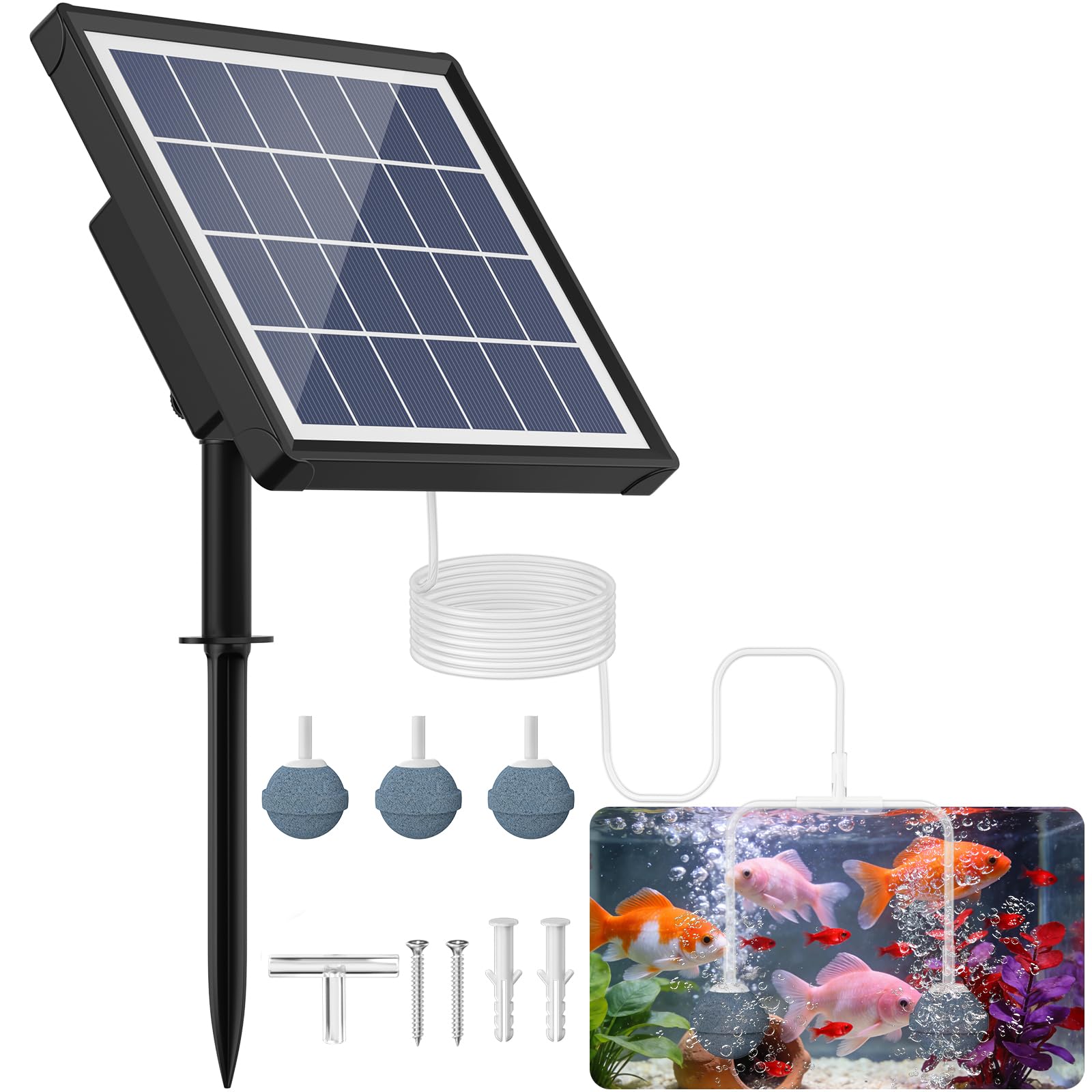
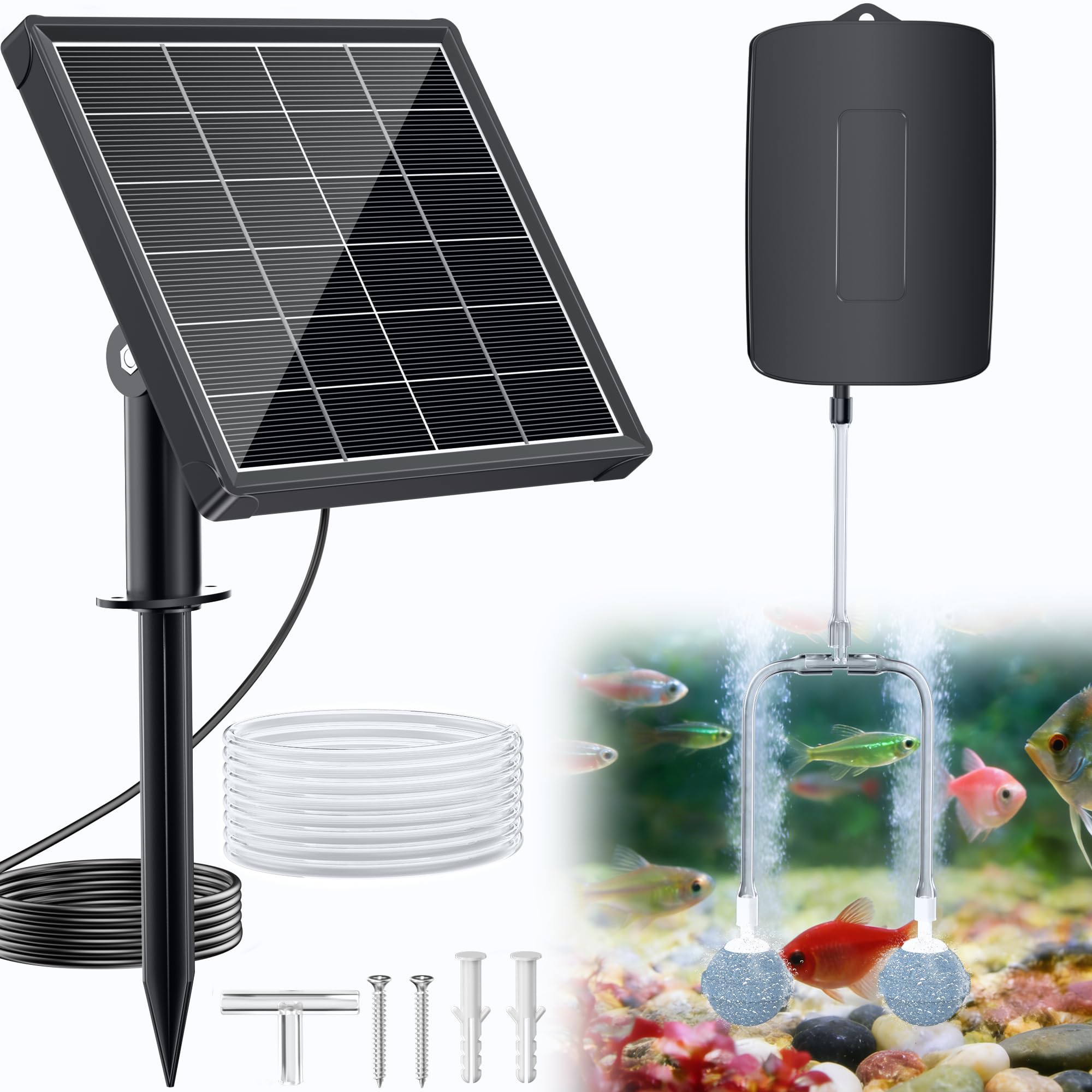
The first hot week of summer is when a pond tells the truth. Algae moves in, the water goes flat, and if you keep fish they start hanging at the surface at dawn, waiting for something. A solar aerator is usually that something: a panel charges a pump, the pump drives air down to a diffuser, and the bubbles coming up keep the water turning over and oxygenated — no trench, no electrician, no utility bill.

We've kept 11 of them running over the past eight months, from floating all-in-one units to panel-on-a-stake kits with a stone-weighted diffuser, and the differences show up on the first stretch of gray weather, when a weak battery quietly quits and the surface goes still again. Setup matters more than the spec sheet suggests; a unit that takes two people and an hour to get air moving is a unit that ends up in the shed. Sizing is the other trap. Match the pump to your pond's depth and fish load, not just its footprint, or you're aerating the top inch of a very deep hole. The picks below are the ones that kept bubbling.

1

Biling Solar Pond Aerator

Top Pick
Biling Solar Pond Aerator

Small yard ponds

Our Score 8.0/10
Check Price

Worth Noting

  • No published airflow rate or battery capacity
Modes
Strong, soft, cycle
Power
2.5 W
Warranty
1 year
Solar Panel
Separate from pump
Read the full review

The hour that decides whether a pond aerator was worth buying is not the sunny one. It's the stretch before dawn, when plants have stopped producing oxygen, decaying leaves are still consuming it, and the fish are crowded into whatever is left. The Biling handled that stretch more convincingly than anything else here: it banks charge through the day and keeps the stone bubbling in the dark, which is the whole reason to buy a solar aerator instead of a fountain pump.

Two details put it on top of units with bigger numbers on the label. The solar panel separates from the pump body, so the panel goes on the fence or the shed roof where the sun actually lands while the pump stays at the water's edge — 2.5 watts in real sun beats a larger panel in the shade of your own reeds. The second is the pair of indicator lights on the pump, one for the mode and one for the battery. You can walk past on a February afternoon and know whether it's charged enough for the night, rather than finding out at sunrise.

There are three modes — strong, soft, and a cycle — and the cycle is the one we leave it on overnight. Strong mode is for July and for showing the pond off; the intermittent setting trades a little surface movement for hours of extra coverage. Setup is short: pump, panel, airline, no tools. Biling also backs it with a one-year warranty and a thirty-day return window, more cover than the rest of this group offers.

Where it stops is at 2.5 watts, the low end of this set. In a pond much past a few hundred gallons, or one carrying a heavy koi load, step up to the 4-watt POPOSOAP and put the extra air where it counts. For a water garden, a small wildlife pond, or a patio tub, this is the right size — and it's the one we'd hand to someone who wants to stop thinking about it after the stake goes in.

Bottom line: Our pick for a small yard pond: the Biling keeps the stone bubbling overnight and its indicator lights tell you it will, which is worth more than a bigger wattage number.

2

POPOSOAP 4W Solar Pond Aerator

POPOSOAP 4W Solar Pond Aerator

Shaded pond banks

Our Score 8.0/10
Check Price

Worth Noting

  • Panel and pump must be staked and routed separately
Power
4 W
Battery
2200 mAh
Air Tube
8.8 ft with two connectors
Included
Three air stones, ground stake
Read the full review

Most ponds worth aerating are not in full sun all day. There's a tree, a fence, a shed — something that shades the water for half the afternoon — and that is exactly the situation this POPOSOAP is built around. The 4-watt panel stakes into the ground wherever the light is good and feeds the pump body at the water's edge, so shade over the pond stops being a reason not to aerate it.

It's the most powerful unit in this group, 4 watts paired with a 2200 mAh battery and the three modes the rest of the field uses: strong, soft, and cycle. Strong visibly moves the surface; cycle keeps a modest stream going after dark. The box is the fullest kit here — three air stones, an 8.8-foot tube, two connectors, a ground stake, and a panel that comes off the pump.

The arithmetic to watch is stones against output. Three stones share one pump, so each column comes out thinner than a single stone would, and a tank that looks under-aerated on a three-stone kit often just needs one stone instead of three. We were also struck by how little an overcast afternoon slowed it — a dull day still produced bubbles, which matters far more in a shaded garden than any peak reading in full sun.

What you accept for that flexibility is a two-piece installation: a panel to stake, a pump to site, and a tube to route between them. On a bank that sees sun from morning to evening, that's fiddling for no gain, and the one-piece NFESOLAR is the tidier answer. On a pond under trees, it's the difference between an aerator that works and one that sits in the shade all day doing nothing.

Bottom line: The one to choose when trees shade the pond: a 4-watt panel you can put in the light and a 2200 mAh battery that carries the stone past sunset.

3

NFESOLAR 2W Solar Pond Aerator

NFESOLAR 2W Solar Pond Aerator

Deep stone placement

Our Score 8.0/10
Check Price

Worth Noting

  • Modest airflow at 0.8 liters per minute
  • Minimal setup instructions
Power
2 W
Airflow
0.8 L/min
Battery Backup
2200 mAh, up to 32 hrs
Max Water Depth
3.3 ft
Read the full review

Depth is the figure that decides whether a stone is aerating a pond or just polishing the top inch of it, and it's the number most listings leave out. This NFESOLAR gives one: a maximum water depth of 3.3 feet, the deepest rating in this group by a wide margin. On a two-foot tub, or a pond that shelves away from the bank, that is the difference between bubbles at the bottom and bubbles near the surface.

It does that on 2 watts, with a 2200 mAh battery rated for up to 32 hours and a 10-foot hose — the longest tube here, which gives you room to move the pump away from the splash line. Controls are deliberately simple: low and intermittent modes plus an on/off switch. Two air stones come in the box, and the panel can be staked in the ground, screwed to a wall, or laid flat. It also arrives with enough charge to start bubbling the day you set it up.

What we didn't love is the paperwork and the plumbing. The directions are thin enough that you'll work out the routing yourself, and the tube kinks if you coil it tightly, so plan the run from panel to pond before the stake goes in. Wetting the end of the tube before you push it onto the barb saves a lot of swearing. Output once running is honest rather than dramatic — 0.8 liters a minute is modest, and a heavily stocked pond will want the 4-watt POPOSOAP instead.

Where this one earns its slot is the combination nobody else here offers at the price: a published depth rating, a full night's battery, and the longest hose in the group. If your pond is shallow, your stone needs to reach the bottom, and you'd rather not spend much finding out whether solar aeration works for you, this is the low-risk way in.

Bottom line: Pick this one if your stone has to sit deep or your budget is tight: a 3.3-foot depth rating, a 32-hour battery, and 10 feet of hose.

4

NFESOLAR 3W All-in-One Aerator

NFESOLAR 3W All-in-One Aerator

Tanks and tubs

Our Score 8.0/10
Check Price

Worth Noting

  • Panel and pump must sit together in full sun
Power
3 W
Battery
2200 mAh
Air Tube
8.9 ft with T connector
Included
Three air stones, ground stake
Read the full review

One piece. That's the argument for this NFESOLAR: the panel and the pump are the same sealed body, 6.2 by 5.5 by 2.2 inches, with the airline running out of it to the stone. No cable between a panel on the fence and a pump at the water, no second thing to stake, nothing to disconnect when you want to move it. For a stock tank, a patio tub, or a hydroponic reservoir on a sunny deck, that is the least fuss in this guide.

It carries three air stones on an 8.9-foot tube with a T connector, has the same strong, soft and intermittent switch as the rest of the field, and runs on a 2200 mAh battery. We ran ours on soft and intermittent and found the bubble output steady and the noise low enough to sit beside with a coffee — the integrated body keeps the pump hum at the pond rather than at the patio table.

The integrated body also decides where the whole unit lives. It has to be in the sun itself, so if the sunny spot is on the far bank and the deep end is in shade, you're choosing between the two, and 8.9 feet of tube is the hard limit on how far the stone can reach from there. A separated panel like the POPOSOAP's solves that; this one trades it away for tidiness.

One thing worth knowing before you connect everything: run all three stones and the split comes out uneven, with one bubbling harder than the others however carefully you space them. Two stones on the T, or one on a straight run, gives a much more even curtain — and on a 200-gallon tub, one good stone is plenty. Judged that way, this is the most convenient unit here, and the one that ends up in the back of the truck for the stock tank.

Bottom line: The simplest setup here — one sealed unit, three stones, and no cable — provided your pond's sunny corner is the corner you want bubbles in.

5

POPOSOAP 3W Solar Pond Aerator

POPOSOAP 3W Solar Pond Aerator

Budget setups

Our Score 8.0/10
Check Price

Worth Noting

  • 1500 mAh battery is the smallest in this group
Power
3 W
Battery
1500 mAh
Air Tube
8.5 ft with T connector
Included
Three air stones, ground stake
Read the full review

The parts bag is where this one makes its case. Three air stones, 8.5 feet of tube with a T connector, a ground stake, and a solar panel that comes off the pump body — at the lowest price of anything in this guide. If you already know you want the panel away from the water and more than one stone to work with, this is the cheapest way to get both.

The 3 watts and the three-mode switch put it in line with the rest of the group, and the pump body is small enough at 5.5 by 5.1 by 2 inches to tuck behind a rock at the water's edge. The panel stakes independently, so the pump can sit in the shade of the bank while the panel takes the sun — the arrangement that matters most in a garden where the only open sky is over the lawn.

What you give up is overnight capacity. The battery is 1500 mAh, the smallest here, so plan on the intermittent setting if you want bubbles until sunrise; strong mode will drain it long before then. While we haven't had this one through a full winter, the layout is the same separated-panel arrangement we trust elsewhere, and for a small pond on a budget the trade is worth making — just don't expect it to match the 2200 mAh units at dawn.

Bottom line: The value route to a separate panel and three stones — just accept the smaller battery and put it on the intermittent setting overnight.

How We Tested the Best Solar Pond Aerators

We started with every solar aerator we could find that ships with its own panel, then cut the list by rated air output, battery type, and whether the manufacturer published a pond-size rating at all. A few claimed a quarter-acre on a panel the size of a paperback; those went. That left 11 units, which we ran for eight months, from the first warm week of spring through the cold snap in late fall.

Each unit went into water rather than a test tank. We ran them in a half-acre farm pond stocked with bluegill and catfish, a 300-gallon backyard koi pond, and a galvanized stock tank we keep filled for the horses — three very different jobs, since the farm pond needs volume moved and the stock tank needs muck kept off the bottom. Setup I timed solo with a stopwatch, from box to first bubble, and noted any step that clearly wanted a second set of hands. After that we mostly left them alone, which is what a pond owner actually does.

Battery life got recorded the unglamorous way: I wrote down the hour the panel stopped producing on an overcast afternoon and the hour the pump went quiet, then checked whether it came back on its own the next morning. Bubble production we judged at the surface — how wide the boil spread, whether it thinned out as the diffuser sat deeper, and whether the airstone clogged with algae inside a month. A handheld dissolved-oxygen meter, dropped at the same two spots each week, told us whether any of it was doing real work.

Durability is where the cheaper units separated. Ours sat through hail, a gust front, and four months of unfiltered sun, and we checked for crazed panels, cracked floats, stiff tubing, and pumps that needed a nudge to restart. Value came down to whether you could buy a replacement battery or diffuser at all.

How to Choose Solar Pond Aerators

Airflow and depth, not wattage

Every pump here is rated around 0.8 liters per minute, a modest stream that keeps a small pond's surface moving and its fish comfortable. What varies is how deep that stream can be pushed, because water resists air. Only one of our picks publishes a depth rating at all — the NFESOLAR 2W, at 3.3 feet. If a listing gives you no depth, site the stone a foot or so down and expect less the deeper you go.

The stones divide the same supply. Three stones on a T connector are not three times the aeration; they split that 0.8 liters a minute three ways. One stone in a small pond, two at most, gives a stronger column than three thin ones, so decide how many you actually need before you judge a pump's output.

What happens after dark

Dissolved oxygen is lowest just before sunrise, which makes the battery the point of the whole purchase rather than a bonus. Read capacity and mode together: 2200 mAh is the common figure in this group, with one unit at 1500, and an intermittent or cycle setting can roughly double how long a charge lasts compared with running strong all night.

Where a listing gives hours, treat them as best-case for the gentlest mode. Where it gives none, plan on the cycle setting overnight and check the bubbles at dawn for the first week — that tells you more about your pond's real coverage than any box figure.

A separate panel or a one-piece unit

A panel that separates from the pump can chase the sun — onto a fence, a shed roof, wherever midday light lands — while the stone stays where the fish are. A one-piece body is tidier, quicker to move, and has no airline running across the lawn, but the whole unit has to sit in the sun, which then fixes how far the stone can reach on its tube.

Walk your pond at noon before you decide. If the sunny spot and the deep spot are the same place, the all-in-one is simpler; if they aren't, pay for the separated panel.

Siting it so it keeps running

These are air pumps, not submersibles: the body sits on a stake or the bank and only the stone goes in the water. Keep the pump clear of standing water and splash, and run the tube in a gentle curve — kinked airline is the usual reason for weak bubbles on day one. Leave enough slack to lift the stone out for a rinse, and keep a spare so a clog never costs you a week of aeration.

Frequently Asked Questions

Final Verdict

For a small yard pond with fish in it, the Biling is the one to buy. It treats the night as the main event: stored charge, a stone that keeps bubbling until morning, and indicator lights that tell you the state of things before you go to bed.

If your pond sits under trees, choose the POPOSOAP 4W instead and put its panel where the light actually is. And if your stone needs to sit three feet down in a shallow, open pond, the NFESOLAR 2W does that for less than either.