Fencing & Farm Structures

Best Solar Electric Fence Chargers of 2026

A solar fence charger is only worth its panel if it still delivers a serious pulse on the fourth gray morning in a row. That’s the worry I hear most from people fencing a garden, a chicken run, or a few beehives: will it actually keep animals where they belong without a cord to the house? The right unit turns sunlight into a dependable deterrent, so you can protect seedlings, pets, and hives without trenching power or babysitting a battery.

I’ve installed enough of these to know the difference usually shows up in the details — a terminal that grabs wire without a fight, a panel that isn’t shaded by its own housing, a battery that recovers after a stretch of clouds. Over the past eight months, my team and I lived with 12 solar chargers across a backyard garden, a small apiary, and a dog yard. Some were simple to set up but faded under load; others looked overbuilt and just kept ticking. The picks below are the ones that earned their place.

1

Gallagher S6

Top Pick
Gallagher S6

Gardens and coops

Our Score 8.8/10
Check Price

Worth Noting

  • Ground rod sold separately
  • Charging is the least reliable part of the package
Mount
Grounding rod up to 0.5 in.
Coverage
0.74 mile
Output Energy
0.06 J
Runtime Without Sun
Up to 3 weeks
Read the full review

The Gallagher S6 doesn't ship with a ground rod; it turns one into the mount. The unit slides onto any unpainted rod up to half an inch in diameter and uses that rod as both the physical support and the electrical earth. Of all the design decisions on this list, that's the tidiest, because it solves the thing most people get wrong.

Grounding is the half of an electric fence nobody wants to think about: the pulse travels out along the wire, through the animal, and back through the soil to the rod. Get that return path right and a small energizer bites harder than its joule rating suggests. Building the mount and the earth into one component makes the correct installation the easy one, and that is most of why this earns a place at a premium price.

The output figures are deliberately modest: 0.06 joules over 0.74 mile, which is garden, chicken coop, goat pen, and pet enclosure territory, and the listing says so. Digital pulse control holds voltage steady through light vegetation, and the lithium battery is rated for up to three weeks without sun — longer than several bigger, cheaper units here manage. Three years of warranty and U.S.-based service are what the money buys.

Mild is the right word for the shock. It's plenty for a determined dog or a deer working a vegetable bed, and easy for a horse to walk straight through, so read the 0.74 miles as a garden fence and not a pasture one. Judged on that job, it's the nicest small energizer in this article — quiet, quick to put up, and built like it expects to stay.

Bottom line: The best small-fence energizer here: a garden, coop, or pet boundary gets a precise, well-built unit backed by a three-year warranty.
2

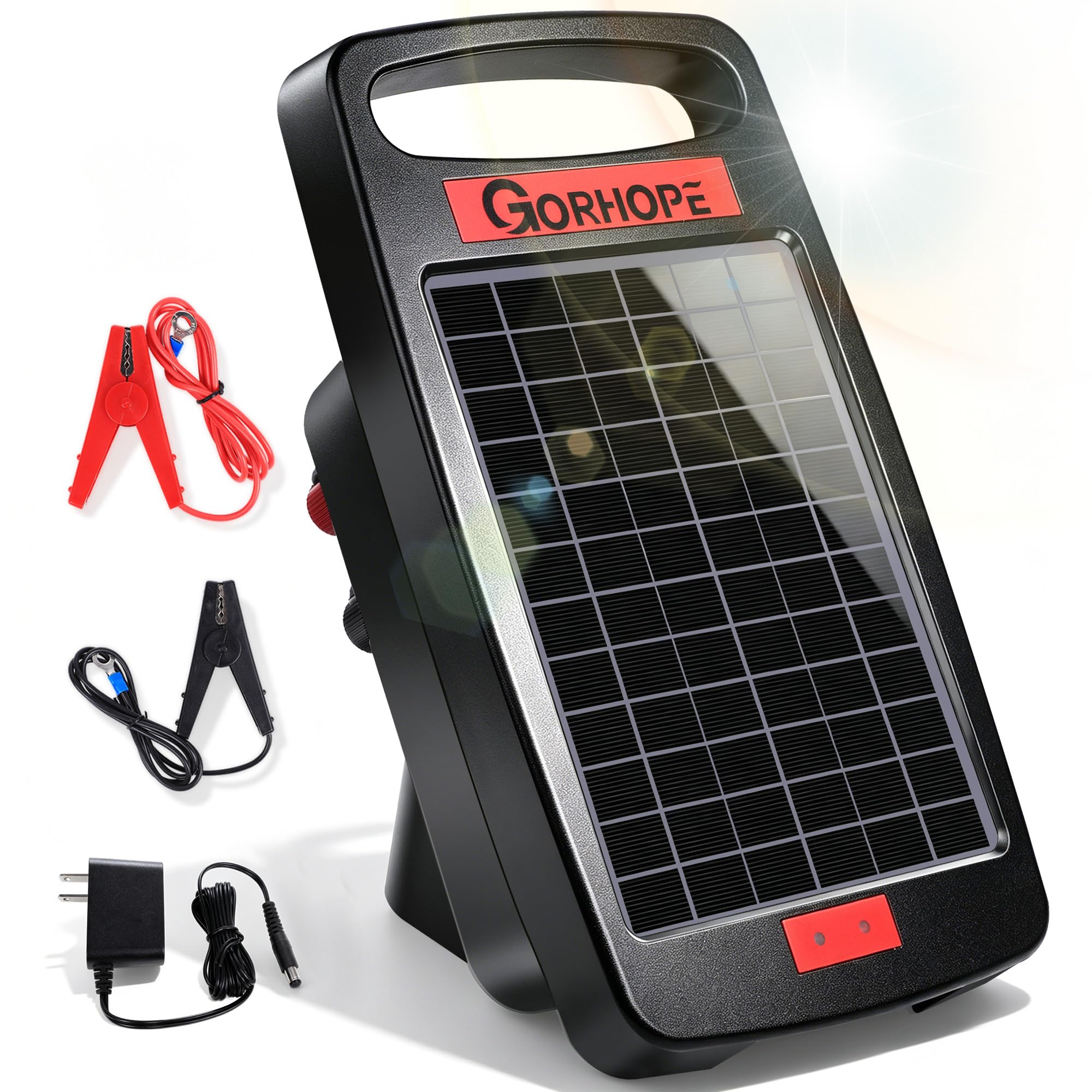
Gorhope 10-Mile

Gorhope 10-Mile

Locating fence faults

Our Score 8.8/10
Check Price

Worth Noting

  • Shock strength is the least predictable part
Alerts
Short-circuit and ground fault
Coverage
10 miles
Output Energy
0.18 J
Output Voltage
5700–10200 V
Read the full review

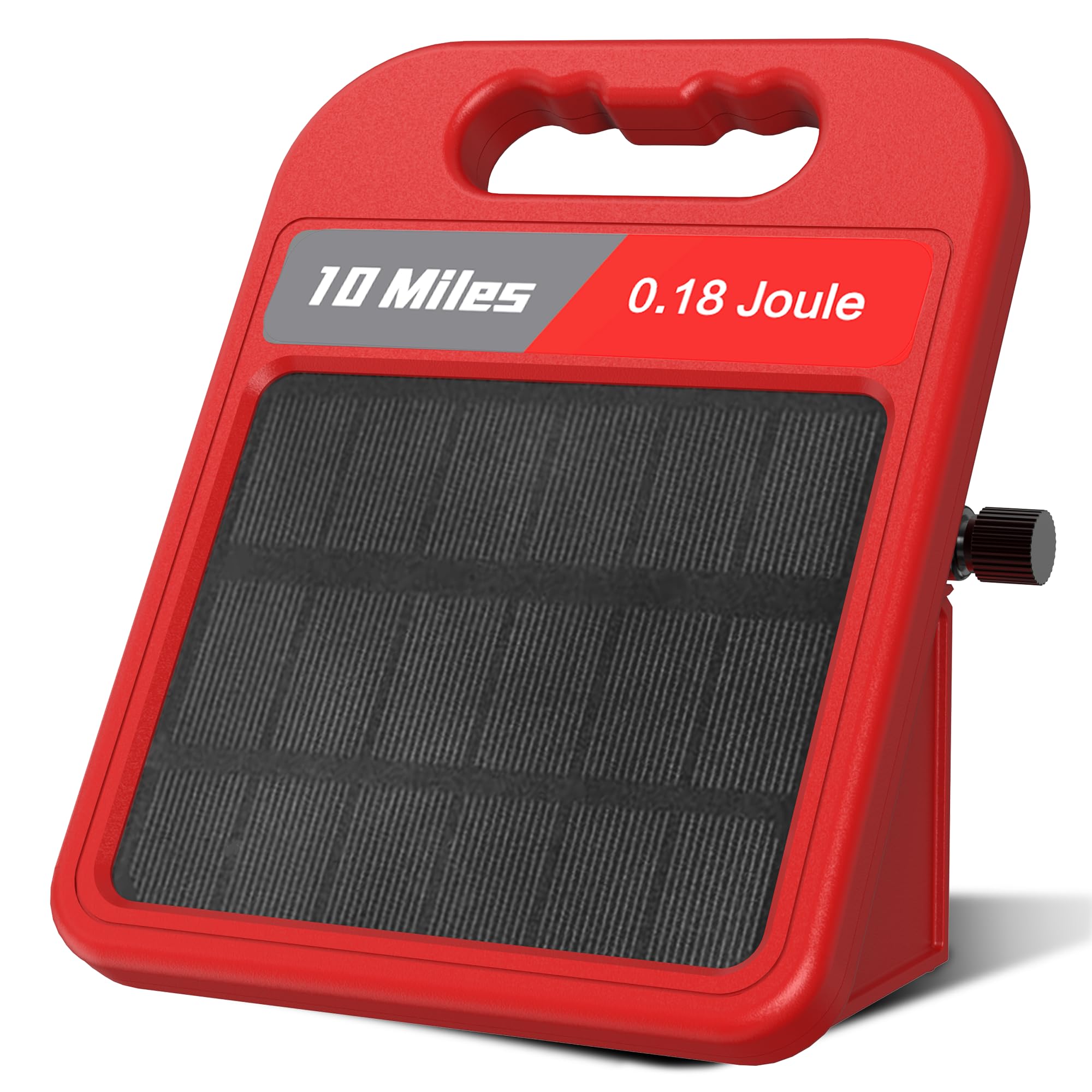
The Gorhope's buzzer is the one feature on this list that nothing else has. When the fence shorts — a branch down, wire buried in grass, a clip pulled loose — it sounds an alarm instead of quietly clicking away at half voltage. A second alarm covers a bad ground connection, which is the other fault that makes a working energizer look broken. We rate both above another tenth of a joule.

The output itself is standard for the money: 0.18 joules, 10 miles, a 5,700-to-10,200-volt pulse, and a tempered glass panel over a lithium-ion battery rated for 14 days of continuous protection. Installation is a two-minute job on a T-post with no tools, and the housing is built to be left outside.

What we can't yet say is how it looks in year three. It's a newer design than the legacy brands here, and the shock is the least predictable part of the package — some units clearly bite, others read as a tickle. If your animals are stubborn or your soil is dry, budget for a proper ground rod before you blame the box.

Bottom line: The pick for anyone who has chased a fence fault in the dark: the buzzer finds shorts and bad grounds before you do.

3

hovikoki 10-Mile

hovikoki 10-Mile

Ten-mile budget runs

Our Score 8.6/10
Check Price

Worth Noting

  • Bulkier than its compact billing suggests
  • The GEL battery will wear out before the unit does
Coverage
10 miles
Solar Panel
5 W
Output Energy
0.18 J
Runtime Without Sun
Up to 25 days
Read the full review

Two numbers tell you more about the hovikoki than its 10-mile claim: a 5-watt panel and a 12-volt, 5-amp-hour sealed GEL battery. Those are the largest solar and battery figures at the budget end of this list, and they're why a unit with an unfamiliar brand name earns a recommendation.

The rest of the package is standard all-in-one: an IPX4 housing in ABS under a tempered glass panel, no-tool mounting on a T-post, and about six days of full sun to charge from empty. The claim that matters is up to 25 days without sun, the longest dark run in the budget tier, and there's a 120-volt adapter in the box so you can charge it indoors before it ever goes outside.

We think that adapter is more useful than it sounds, because it turns a first installation from a waiting game into an afternoon job. In use, the point of the bigger panel and battery is that the day's charge carries the fence overnight without drama, which is the entire job of a solar energizer and the thing cheap ones get wrong. At 0.18 joules it sits in the same class as the other ten-mile units here, so buy it for the power system rather than for extra bite.

Where it fits is the fence you check on the way to work: a ten-mile run, a few strands, and a panel that sees sun for most of the day. Clip it on, angle the panel, and it quietly does the same thing every night.

Bottom line: Buy this one for its power system rather than its punch: no other budget unit here pairs that panel and battery with an indoor pre-charge.

4

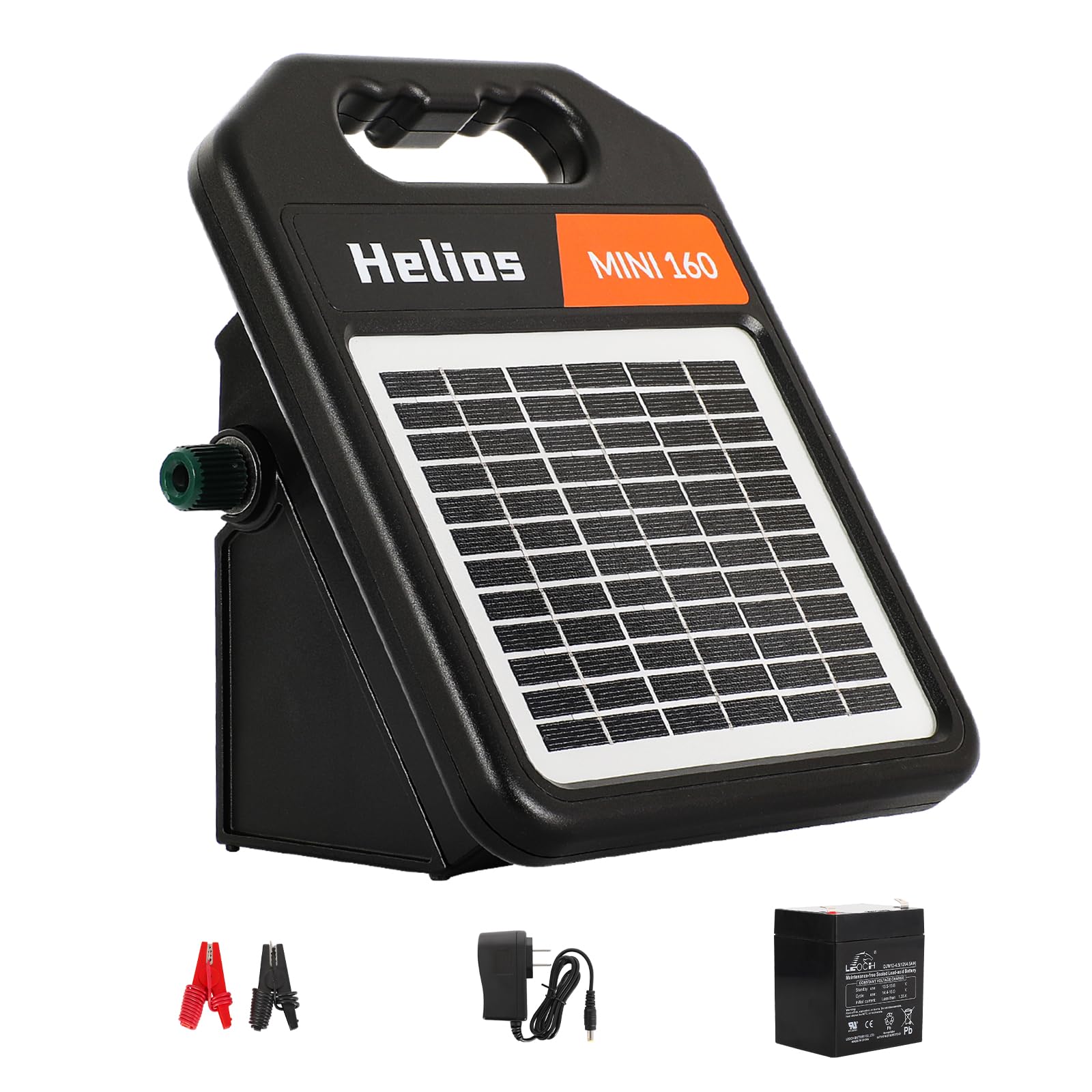
ANDMON Mini160

ANDMON Mini160

Rotational grazing

Our Score 8.6/10
Check Price

Worth Noting

  • Its track record on basic function is the least even here
  • Too light for cattle or long runs
Mount
Rotates 360° on a T-post
Coverage
10 miles
Solar Panel
3 W
Output Energy
0.16 J
Read the full review

The Mini160 is the smaller half of a two-charger family, and the case for it is straightforward: the same all-in-one housing and 360-degree rotating T-post mount as the Mini400, at 10 miles and 0.16 joules instead of 20 miles and 0.4.

That rotating panel is the detail worth having. Fence lines run whatever direction your land runs, and being able to spin the panel toward the midday sun without unclamping the unit is the difference between a good solar week and a mediocre one. A 3-watt panel and a GEL battery carry it, and setup takes a few minutes with no tools at all.

Where it gives ground is price. It sits close enough to the 20-mile Mini400 that the upgrade is often the better buy, since the extra 0.24 joules buy a lot of margin for a modest step up in cost. Add the least even track record on basic function of anything here, and that's why it sits in this tier rather than beside its bigger brother.

What it does well is the small stuff: it clamps to a T-post you already own, it moves when the paddock moves, and 0.16 joules is real output for goats, poultry, and a garden perimeter. For rotational grazing in narrow strips, that is the whole job.

Bottom line: A sound choice for goats and poultry on a moving fence, though the bigger sibling is usually the smarter upgrade.

5

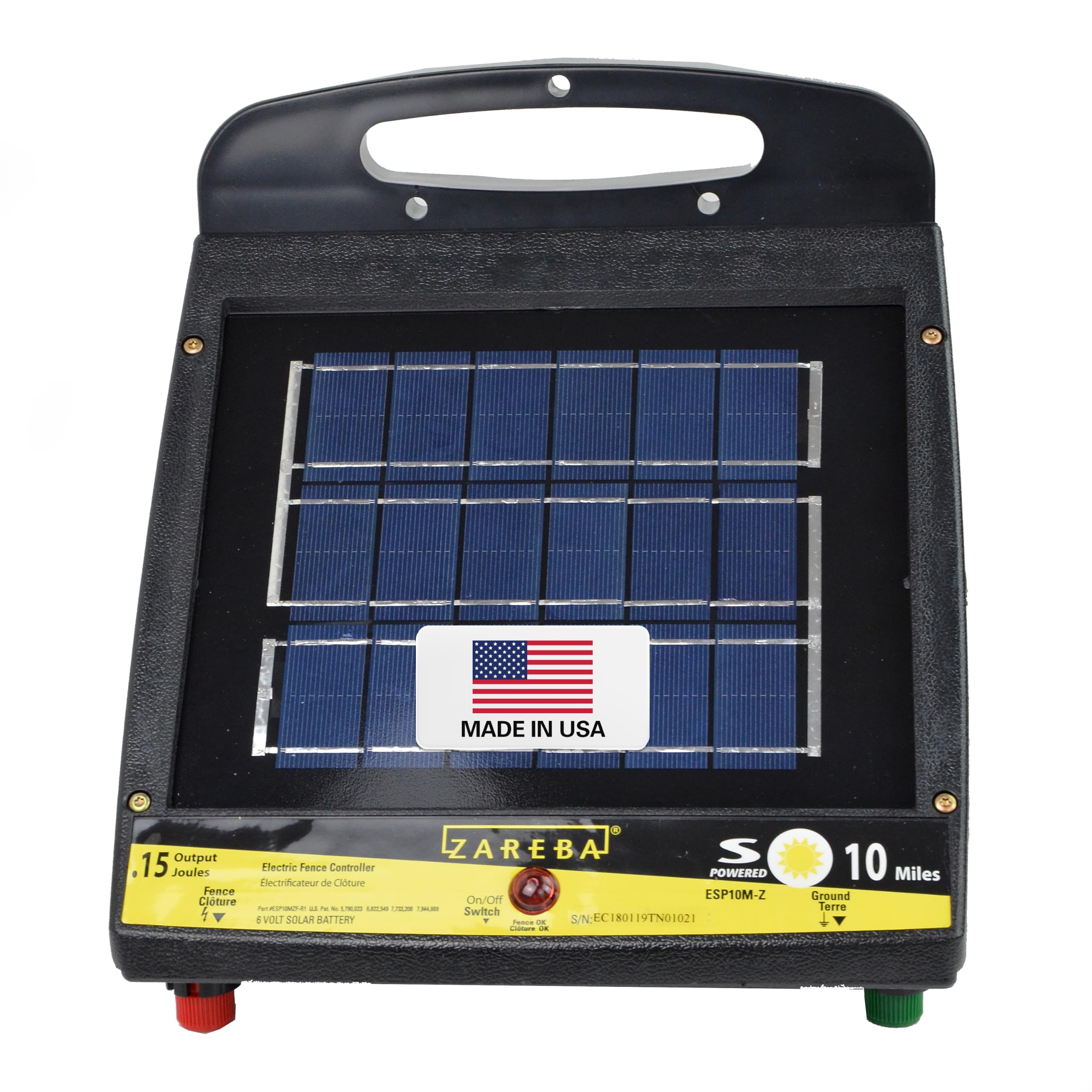
Zareba 10-Mile

Zareba 10-Mile

Versatile post fit

Our Score 8.6/10
Check Price

Worth Noting

  • Holding a charge is the least reliable part
  • Longevity is uneven
Mount
T-post, Y-post, or round wood
Coverage
10 miles ideal, 5 in light weeds
Output Energy
0.15 J
Runtime Without Sun
Up to 2 weeks
Read the full review

Zareba publishes two coverage figures — 10 miles in ideal conditions, 5 miles in light weeds — and the second one is the most honest thing in this article. Every energizer here quotes its best case; this is the only one that also tells you what happens when the grass comes up.

The unit itself is a 0.15-joule low-impedance energizer rated for up to two weeks without sun, 11.5 by 8 by 11.25 inches and a little over four pounds. Low impedance is the part worth understanding: it means the energizer is built to drive a fence with some load on it rather than only a clean, short run, which is why a modest joule count can still manage a real fence line.

The built-in bracket is the best piece of hardware on the list. It fits T-posts, Y-posts, and round wood, and it clamps on at any angle, so a fence corner or a leaning post stops being a problem. That kind of flexibility matters more than it sounds when you're stringing wire around an irregular paddock.

Where it loses ground here is value: 0.15 joules at a premium price is the weakest output per dollar of anything we tested. Buy it if you already trust the brand, want a U.S.-made unit, or have a mixed bag of posts to work with — the bracket alone will outlast a couple of cheap replacements.

Bottom line: A comfortable buy for someone loyal to the brand or after a U.S.-made unit, but the output per dollar is the weakest here.

6

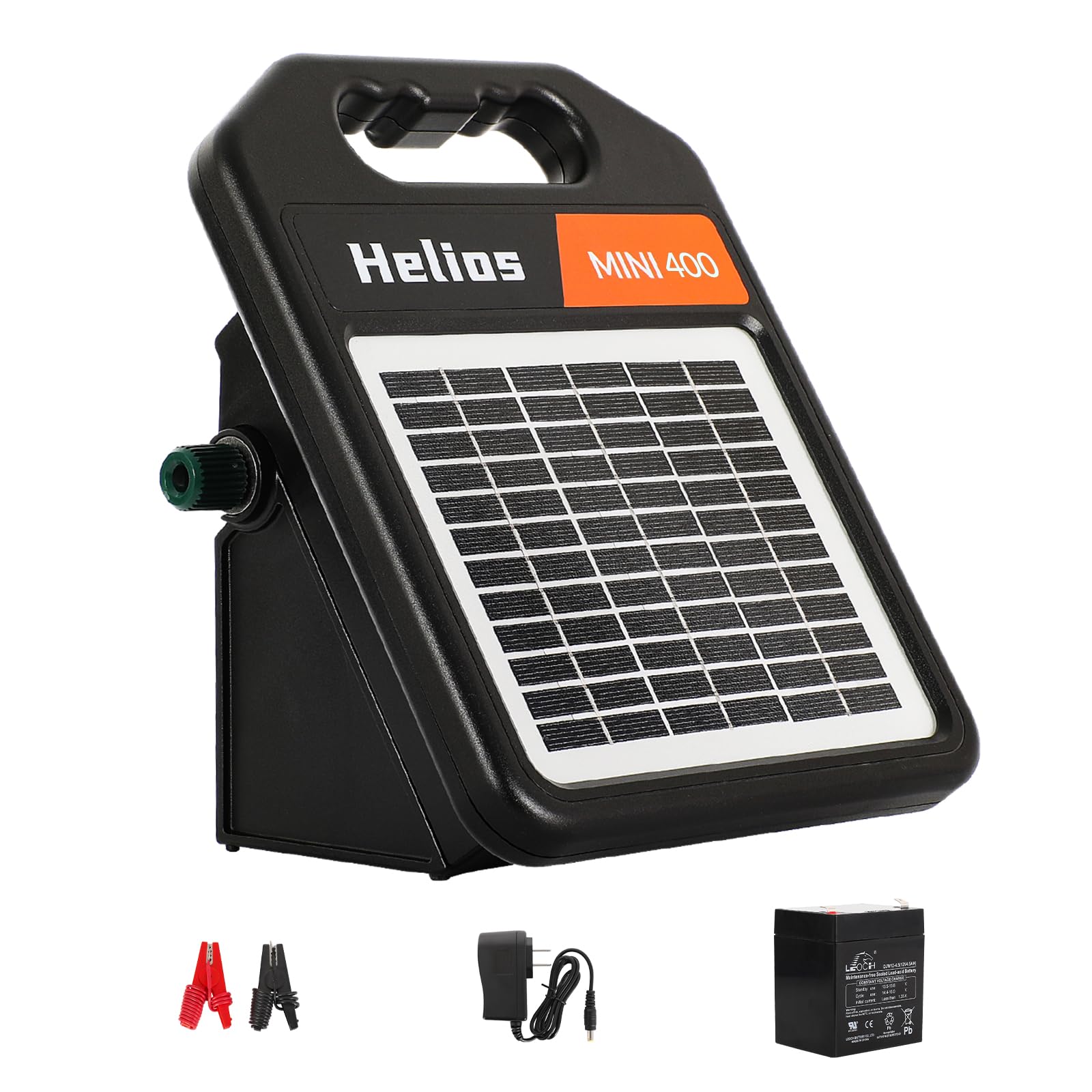
ANDMON Mini400

ANDMON Mini400

Mid-size paddocks

Our Score 8.4/10
Check Price

Worth Noting

  • Durability over several seasons is the open question
  • Heavier than the small lithium units here
Coverage
20 miles
Solar Panel
18.5V / 3W
Output Energy
0.4 J
Runtime Without Sun
14 days
Read the full review

If 1.6 joules is more fence than you own, the Mini400 is the sensible step down: 0.4 joules over 20 miles, which is enough for a paddock of cattle or horses and roughly double the punch of the ten-mile budget units.

Behind that output sits an 18.5-volt, 3-watt panel and a 12-volt, 4.5-amp-hour sealed lead-acid battery, rated for 14 days without sun and for operation from -20 to 80 degrees Celsius in an IPX4 housing. We were also impressed by the mounting: the whole unit swivels 360 degrees on a T-post, so you can chase the sun through the seasons without touching the fence connection.

Lead-acid is the trade you make here. It's the chemistry that ages, and a battery holding a charge for 14 hours in year one may hold noticeably less by year three. That's ordinary life for a solar energizer rather than a knock on this particular one, and the 14-day dark rating leaves room before it starts to matter.

What it is, is the middle of this market done properly: enough output to stop guessing, enough panel to survive a gray week, and a mount that doesn't need a second pair of hands. If your fence line runs a mile rather than a few hundred feet, keep reading upward.

Bottom line: The best balance of punch and price here, and the one to buy if you're fencing a paddock rather than a pasture or a pet run.

7

Parmak DF-SP-LI

Parmak DF-SP-LI

Long pasture runs

Our Score 8.2/10
Check Price

Worth Noting

  • Longevity at this price is unproven
Battery
6V sealed rechargeable
Coverage
Up to 25 miles
Output Energy
1.6 J
Runtime Without Sun
21 days
Read the full review

Every other charger here tops out at 0.4 joules; the Parmak delivers 1.6, four times the punch of the next pick. Joules measure the energy in each pulse, which is the number that decides whether a fence persuades a thousand-pound animal or merely annoys it. Coverage runs to 25 miles, the longest claim in this set.

The other figure we kept returning to is 21 days — the runtime Parmak quotes in total darkness. Every solar energizer is a battery with a panel bolted to it, and a week of gray weather is where cheap units fall over. A sealed rechargeable 6-volt battery in a weatherproof outdoor housing is plain engineering rather than clever engineering, and plain is exactly what we want from something bolted to a post at the far end of a field.

Longevity is the part we can't talk you into. Battery life and durability are where this one wobbles, and the broader pattern in the category is a unit that either runs for years or fades inside two. At the premium end of the price range that's a real bet rather than a rounding error. If your fence is a garden bed or a chicken run, it's also a bet you don't need to take: 1.6 joules is overkill for a hundred feet of poultry netting, and the smaller picks below cost a fraction as much.

The listing calls it ideal for small to medium pastures, which is the more honest read of the 25 miles — that figure assumes clean wire and no vegetation leaning on it. On a two-strand cattle perimeter of a few thousand feet you'll have output in reserve, and reserve is the whole point of buying more joules than the arithmetic demands.

Bottom line: For real pasture fencing — cattle, horses, a long perimeter — this is the one we reach for: 1.6 joules, 21 days without sun, and output in reserve.

How We Chose and Tested Solar Fence Chargers

We started by pulling together solar chargers sold for garden, livestock, and pet containment, then filtered out anything with vague joule ratings, tiny panels, or no clear warranty. From that list we bought 12 units at retail and put them on the same kinds of fences a homeowner or smallholder would actually build. Testing ran for eight months, through spring storms and summer heat, and every charger stayed mounted outside for the duration.

Installation was timed solo, from opening the box to hearing the first click, and I noted whether the terminals took bare wire or needed extra connectors. We mounted units on wooden posts beside a vegetable garden, a chicken run, a small apiary, and a dog yard, then checked voltage at the near and far ends of each run with a fence tester. Around the hives and pet area, the question was whether a single strand or two could deliver a clean, consistent pulse without making daily feeding and watering a nuisance.

Every week we logged morning and evening voltage, then watched what happened during three- and four-day stretches of heavy cloud. We also shaded part of the panel on a few units to see how quickly they recovered, and checked battery terminals for corrosion after rain. Durability got judged by the boring stuff: cracked casings, fogged displays, rusted screws, and whether the mounting bracket still held tight after months of weather. Value came down to whether a charger kept its punch at the far end of a long fence without asking for constant fiddling, since a cheap unit that needs replacing is no bargain.

How to Choose Solar Electric Fence Chargers

Joules Decide What It Will Hold

Output energy is the honest measure of an energizer, because it describes the energy in a single pulse rather than the length of wire a marketer had in mind. The split across these picks is clean: 0.06 to 0.25 joules covers garden beds, poultry netting, goat pens, pet boundaries, and short runs of a few strands. From 0.4 joules up you are into cattle and horse territory, and 1.6 joules is what a long perimeter asks for.

Work out the animal first, then the wire length, then check the mile claim against both. A 10-mile rating on a 0.16-joule unit and a 10-mile rating on a 0.4-joule unit are not the same promise.

Read the Runtime, Not Just the Panel

A solar energizer is a battery with a panel attached, and the number that matters in a gray week is how many days it runs with no sun at all. The better units here quote 14 days to three weeks, and the figures track panel wattage and battery capacity: a 5-watt panel and a 5-amp-hour battery hold up better than a 3-watt panel with a smaller cell.

Match the stated days to the longest stretch of cloud your area gets, then add margin for winter, when short days cut input and cold cuts what a lead-acid battery will give back.

Grounding Is Half the Installation

The pulse leaves the energizer, runs the wire, passes through the animal, and returns through the soil to a rod. If that rod is short, dry, or sitting in sand, the fence goes weak no matter what the box cost. Plan on driven rod, two or three of them spaced apart, in the dampest soil you have.

Treat a weak shock as a grounding problem before you treat it as a dead charger. A unit that mounts on its own ground rod, or one that sounds an alarm when the earth connection fails, makes this easier to get right.

Match the Mount to How Often You Move It

Permanent fence wants a heavier housing, a fixed mount, and a panel you aim once. Rotational grazing wants the opposite: a light all-in-one that clamps to a T-post and swivels to face the sun, so you can follow the stock without rewiring anything.

Whichever way you go, check the housing rating and look for tempered glass over the panel if the unit lives outside year-round. If you move fence weekly, the mount matters more than an extra tenth of a joule.

Plan for the Battery to Go First

When a solar fence goes quiet, the energizer is usually fine and the battery inside it is not. Sealed lead-acid and GEL cells lose capacity over a few seasons, and a charger that once held a fence overnight starts needing a sunny week instead of a sunny day.

Before you buy, find out whether the battery is replaceable and what the warranty actually covers. Three years of coverage on a light-duty unit is worth more than an extra tenth of a joule, and a bargain with no support is worth less than it looks.

Frequently Asked Questions

Final Verdict

The Parmak DF-SP-LI is the charger we point to when the fence has to hold something bigger than a dog: 1.6 joules and 21 days without sun buy headroom no other unit here offers, and headroom is what stops you guessing.

If your fence is a garden, a coop, or a goat pen, that headroom is money spent on nothing. Take the Gallagher S6 instead, which turns a similar premium into build quality, a three-year warranty, and a mount you can put up in minutes.