Soil & Fertilizer

Best Smart Weather Stations of 2026

A smart weather station is supposed to answer a simple question — what's happening outside my house right now — without making you squint at a plastic dial. The catch is that these things live or die on unglamorous details: whether the sensors pair on the first try, whether the app stays connected after a week, and whether the readings match the world outside your window. Over the past eight months, I've lived with a dozen smart weather stations, from compact indoor-outdoor models to full sensor arrays, and the right one turns daily guesswork into a glance at your phone.

Setup is where most shoppers start: if the outdoor sensor, display, and phone app don't all talk to each other within 15 minutes, that's a strike. Accuracy matters just as much — a station that runs two degrees warm or misses a passing shower is worse than no data. I also watched for display readability from across the kitchen, connectivity that survives a Wi-Fi hiccup, and how the hardware held up through sun, rain, and a couple of freezes. The picks below earned permanent spots on my fence post.

1

Ambient Weather WS-2902

Top Pick
Ambient Weather WS-2902

All-around home use

Our Score 8.8/10
Check Price

Worth Noting

  • Wi-Fi setup can be fussy on 2.4GHz
  • Console loses contrast at an angle
Power
Solar sensor, AC console
Display
Color LCD
Connectivity
Wi-Fi
Sensor Suite
Wind, rain, temperature, humidity
Read the full review

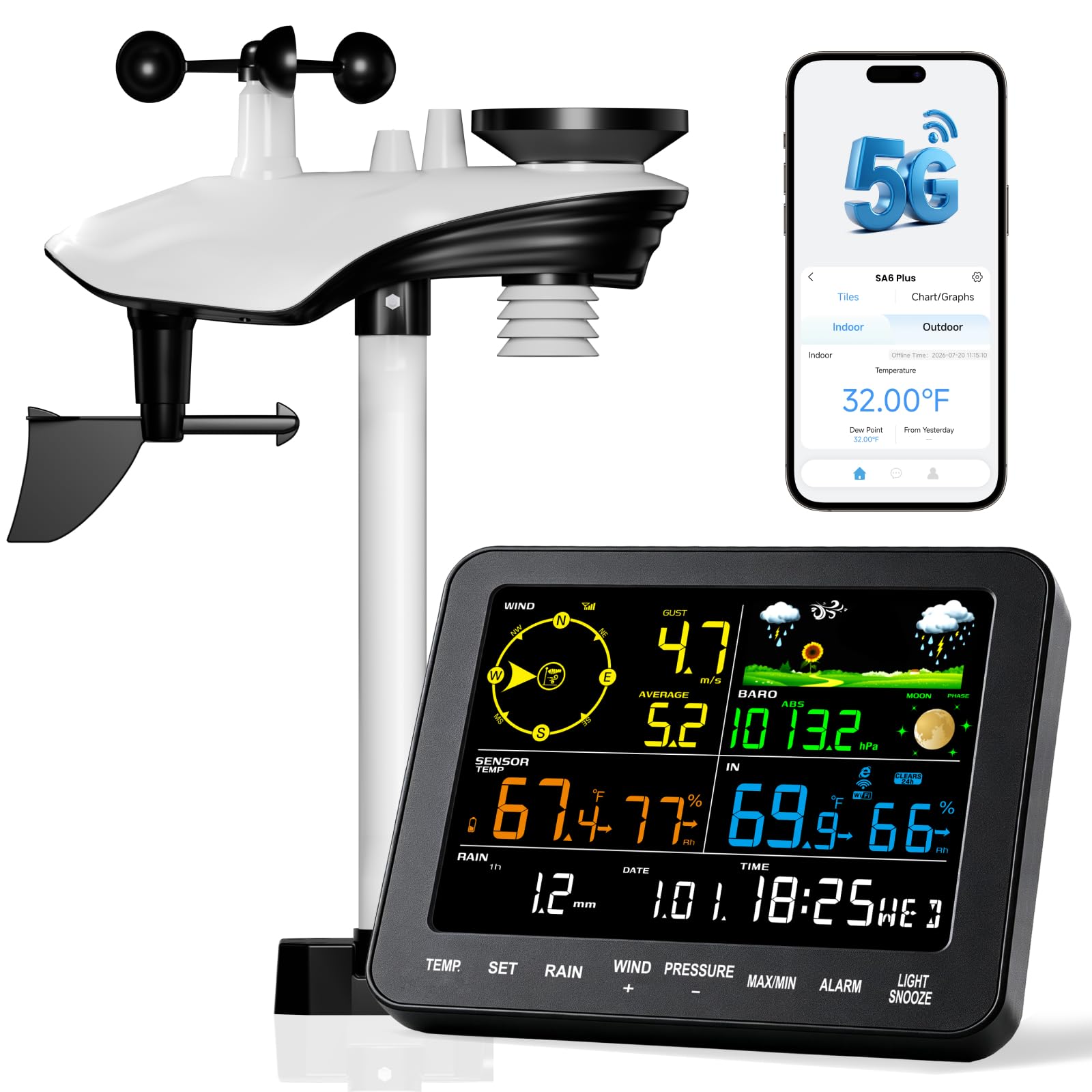
The WS-2902 is the closest thing here to a complete starter kit: a solar-powered outdoor array that measures wind, rain, temperature, and humidity, plus a color console and a Wi-Fi app that puts the same readings on your phone. That combination is why it sits at the top of this group. You get the full set of backyard measurements without buying a separate rain gauge or wind sensor, and the app can send alerts or trigger smart-home routines through Alexa, Google Home, and IFTTT.

Setup follows a familiar pattern: pair the console, mount the array on a pole, and join your Wi-Fi network. The outdoor unit runs on solar with three AAA batteries as backup, and the console plugs into AC power. We appreciate that the station keeps a local console in the box; it means you can glance at current conditions without opening an app, and you have a second place to check the readings.

The measurements are broad rather than exotic: wind speed and direction, rainfall, temperature, humidity, and pressure, with a rain cup that needs to stay level and clear. The Ambient Weather Network connection is optional, so the station works as a local setup or a shared online station. For a first serious station, that flexibility matters more than a longer feature list.

Bottom line: We recommend the WS-2902 to anyone who wants a complete backyard station without jumping to a premium price: it pairs a full wind-and-rain array with a color console and a genuinely useful app.
2

Sainlogic 5G/2.4G AI

Sainlogic 5G/2.4G AI

Big-screen forecasting

Our Score 8.8/10
Check Price

Worth Noting

  • Instructions are hard to follow
Display
8.5-inch LCD
Connectivity
5GHz/2.4GHz Wi-Fi
Data Storage
2 years
Sensor Suite
UV, rain, wind, temperature
Read the full review

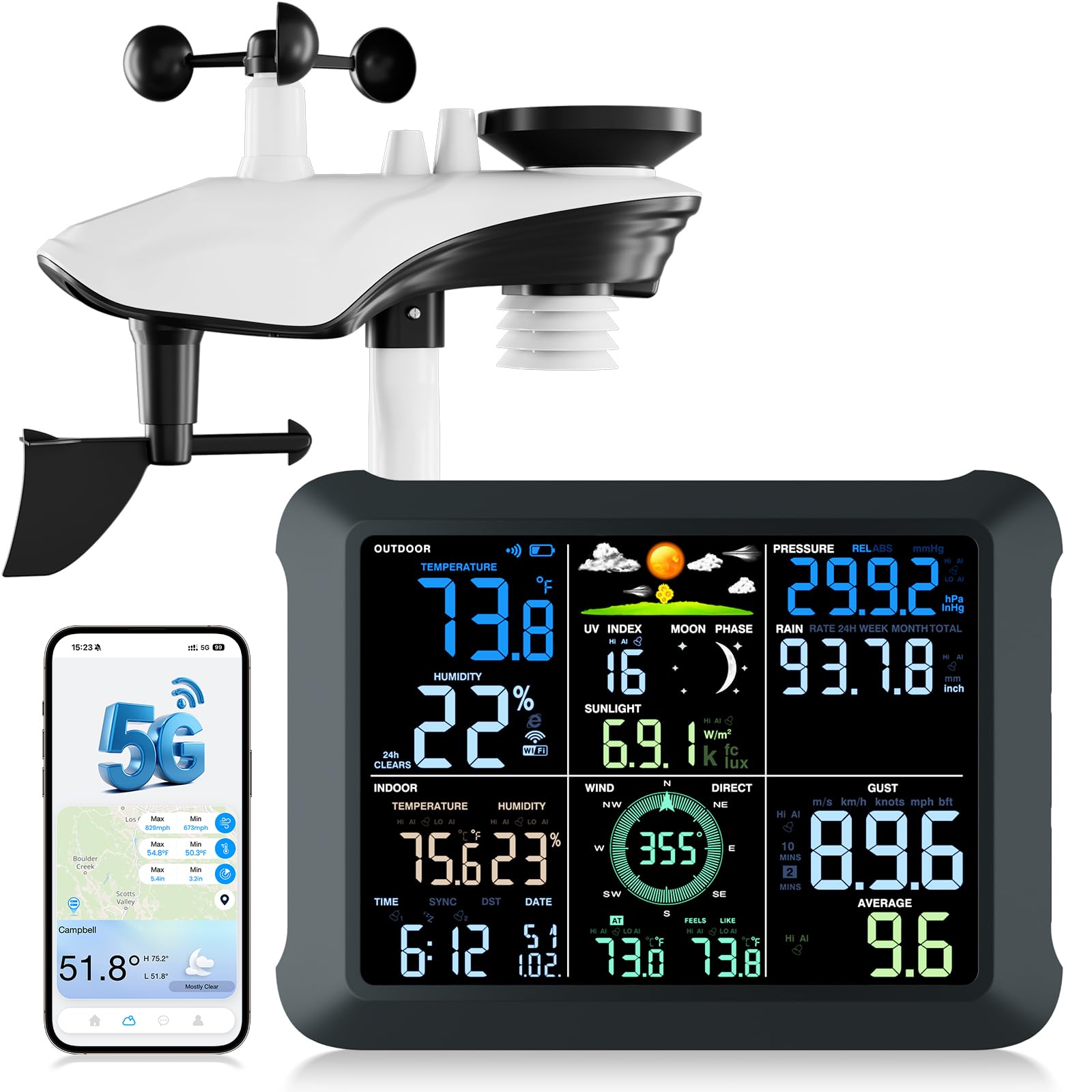
The 8.5-inch display is the first thing you notice, and it is the reason to pick this Sainlogic over the smaller, cheaper station in the same range. The screen is wide enough to show the forecast, wind, rain, UV, and indoor/outdoor readings without cycling through pages, and the wide-angle panel is easier to read from across a kitchen than the compact consoles here.

The sensor package is well rounded. It covers UV, rain, wind, temperature, and humidity, and the rain gauge has a built-in bubble level to help you get it set flat. Dual-band Wi-Fi is a genuine convenience: the station can join 5GHz or 2.4GHz, which removes the most common setup headache. The console stores two years of history and exports it, so you are not dependent on a subscription for a basic record.

The app adds forecasts and alerts, and the station can share readings with online weather networks. We treat it as the big-screen value pick rather than the default for a fully exposed roof. If you want a console you can read at a glance and a sensor set that covers the essentials, it earns the spot.

Bottom line: We like this Sainlogic for its big, readable console, dual-band Wi-Fi, and full sensor set; it is the value choice for a kitchen or mudroom where the screen gets watched.

3

Tempest Weather Station

Tempest Weather Station

App-first households

Our Score 8.4/10
Check Price

Worth Noting

  • Rain totals can miss light precipitation
Power
Solar
Display
None, app only
Sensor Suite
Wind, rain, UV, lightning
Wind Sensing
Ultrasonic
Read the full review

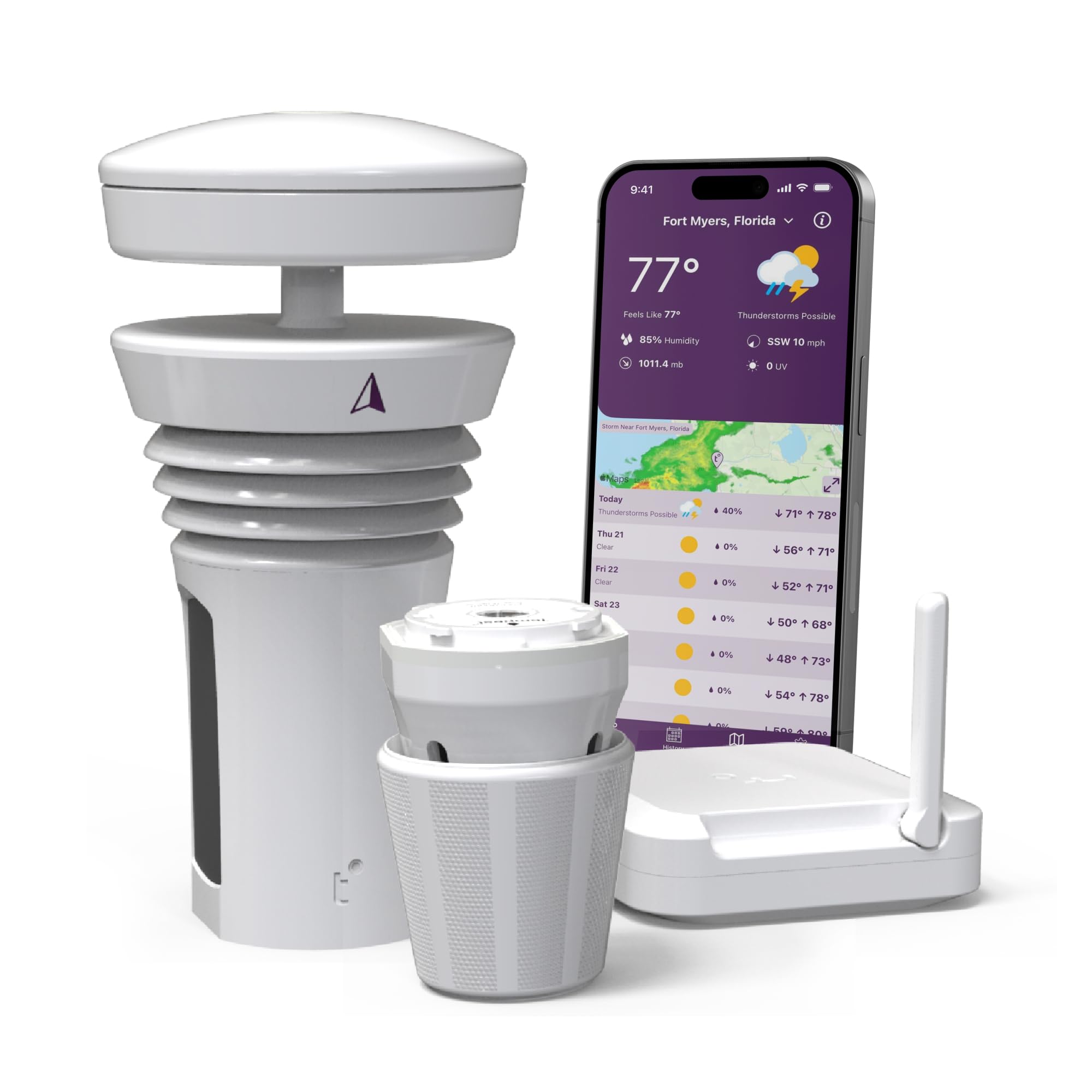
The Tempest looks less like a weather station and more like a single white instrument you bolt to a pole: one solar-powered unit, no moving parts, and no console in the box. It measures wind, rain, UV, solar radiation, lightning, and pressure, and sends everything to the app. We think that is a strength for phone-first households, not a compromise.

The no-moving-parts design is the real draw. There are no cups to freeze or vanes to bend, and the unit transmits over 1,000 feet, so you can put it where it gets clean wind. Setup is quick: mount it, open the app, and connect. The solar panel handles everyday charging, though the internal battery is not designed for user replacement, which is worth knowing before you mount it out of reach.

The app is where the station lives. It shows current conditions, history, and alerts, and it can tie into smart-home routines. We like the breadth of readings—lightning detection is rare in this group—and the three-second updates make the wind reading feel current rather than stale. The app is also the only place to see the readings, so a network outage is more disruptive than it is on a console station. If you want the readings and the alerts on your phone, it is the cleanest app-first choice here.

Bottom line: The Tempest is our pick for phone-first households that want a clean, no-moving-parts station and do not need a wall console; just accept that rain is its least reliable reading.

4

ECOWITT Wittboy Pro HP2564

ECOWITT Wittboy Pro HP2564

Rain-focused gardens

Our Score 8.4/10
Check Price

Worth Noting

  • Premium price for the sensor technology
Display
7-inch TFT
Connectivity
Wi-Fi
Rain Sensing
Haptic piezoelectric
Wind Sensing
Ultrasonic
Read the full review

The haptic rain sensor is the conversation piece here: there is no tipping bucket, just a piezoelectric plate that detects the impact of drops. That design removes a common mechanical failure point, and it pairs with an ultrasonic wind sensor that has no cups or vanes to freeze or snap.

The WS90 array is compact and easy to mount, and the 7-inch TFT console is bright enough to show every sensor at once. We like that the system is expandable: the console can pair with other Ecowitt sensors, so you can add soil moisture, lightning, or extra temperature readings later. Setup is straightforward, and the station can send readings to Weather Underground and other networks.

Rain accuracy is where we hesitate. The haptic sensor is clever, but totals can run high or low against a manual gauge, especially in light rain, and that is the measurement most gardeners want to trust. The console is also better up close than across a room; the numbers get small at a distance. Those caveats do not erase the appeal of a no-moving-parts station that grows with your garden, but they do make it a specialist rather than the default.

Bottom line: Pick the Wittboy Pro if you want a rain-focused, expandable station with no moving parts and do not mind paying for the sensor technology; it rewards a gardener who likes data.

5

Sainlogic SA9

Sainlogic SA9

Budget smart setup

Our Score 8.4/10
Check Price

Worth Noting

  • Console feels basic next to pricier picks
Connectivity
5GHz/2.4GHz Wi-Fi
Data Storage
2 years
Sensor Suite
Rain, wind, pressure, temperature
Transmission Range
443 ft
Read the full review

This is the station we point to when the budget is the first filter and you still want a real Wi-Fi weather station, not a basic wireless display. The SA9 covers indoor and outdoor temperature and humidity, barometric pressure, wind speed and direction, and rainfall, and it stores two years of readings locally.

The 443-foot transmission range is more than enough for most yards, and dual-band Wi-Fi lets it join either 5GHz or 2.4GHz. The local export is a real plus: you can pull two years of readings into Excel without paying for a cloud plan. The claimed ±0.2°C temperature accuracy is a spec-sheet figure, not a promise about your backyard, but the Swiss sensor chip is a better starting point than the bare-bones sensors on the cheapest models in this group.

The app is where you will spend most of your time, and the two-year history is the feature that keeps it useful after the novelty wears off. We see the SA9 as the budget station for someone who wants the readings and the history without paying for a premium console. That makes it a sensible first station for a gardener who wants a record without a monthly fee.

Bottom line: The SA9 is the budget station we point to when you want dual-band Wi-Fi and two years of history without paying for a premium console.

6

Ambient Weather WS-5000

Ambient Weather WS-5000

Exposed, windy sites

Our Score 8.2/10
Check Price

Worth Noting

  • Priciest station in this group
  • Wi-Fi can drop and need reconnecting
Display
TFT color LCD
Update Rate
5 seconds
Connectivity
Wi-Fi
Wind Sensing
Ultrasonic, no moving parts
Read the full review

The ultrasonic wind sensor is the reason to move up to the WS-5000: there are no cups or vanes to spin, stick, or snap off, and the station updates every five seconds. That makes it the pick for a roof or open field where mechanical anemometers take a beating.

The rest of the package holds up, too. The TFT color console is crisp and shows a lot at once, and the separate indoor/outdoor thermo-hygrometer gives you a room reading alongside the outdoor array. Setup is the same Ambient routine as the WS-2902: pair the console, mount the sensor, connect Wi-Fi. The rain cup is still a conventional catch cup, so it needs a level mounting spot and occasional cleaning.

The WS-5000 is a specialist, not the default. The ultrasonic sensor and faster updates are the upgrade, not a completely different app or a bigger sensor suite. If wind accuracy in exposed conditions is the main reason you want a station, the no-moving-parts design is worth the step up. If you mainly want rain totals and a general backyard picture, the WS-2902 covers more of the same ground. It is the station we choose when the wind sensor has to survive a winter of gusts and ice.

Bottom line: Choose the WS-5000 if wind data matters most and you want an ultrasonic sensor with nothing to freeze or snap; it is the premium pick for exposed, gusty sites.

7

VEVOR 7-in-1

VEVOR 7-in-1

Casual backyard watching

Our Score 8.2/10
Check Price

Worth Noting

  • Plastic housing feels fragile
  • Screen is hard to read in daylight
Display
7.5-inch VA
Connectivity
Wi-Fi
Sensor Suite
Rain, wind, sunlight, temperature
Transmission Range
492 ft
Read the full review

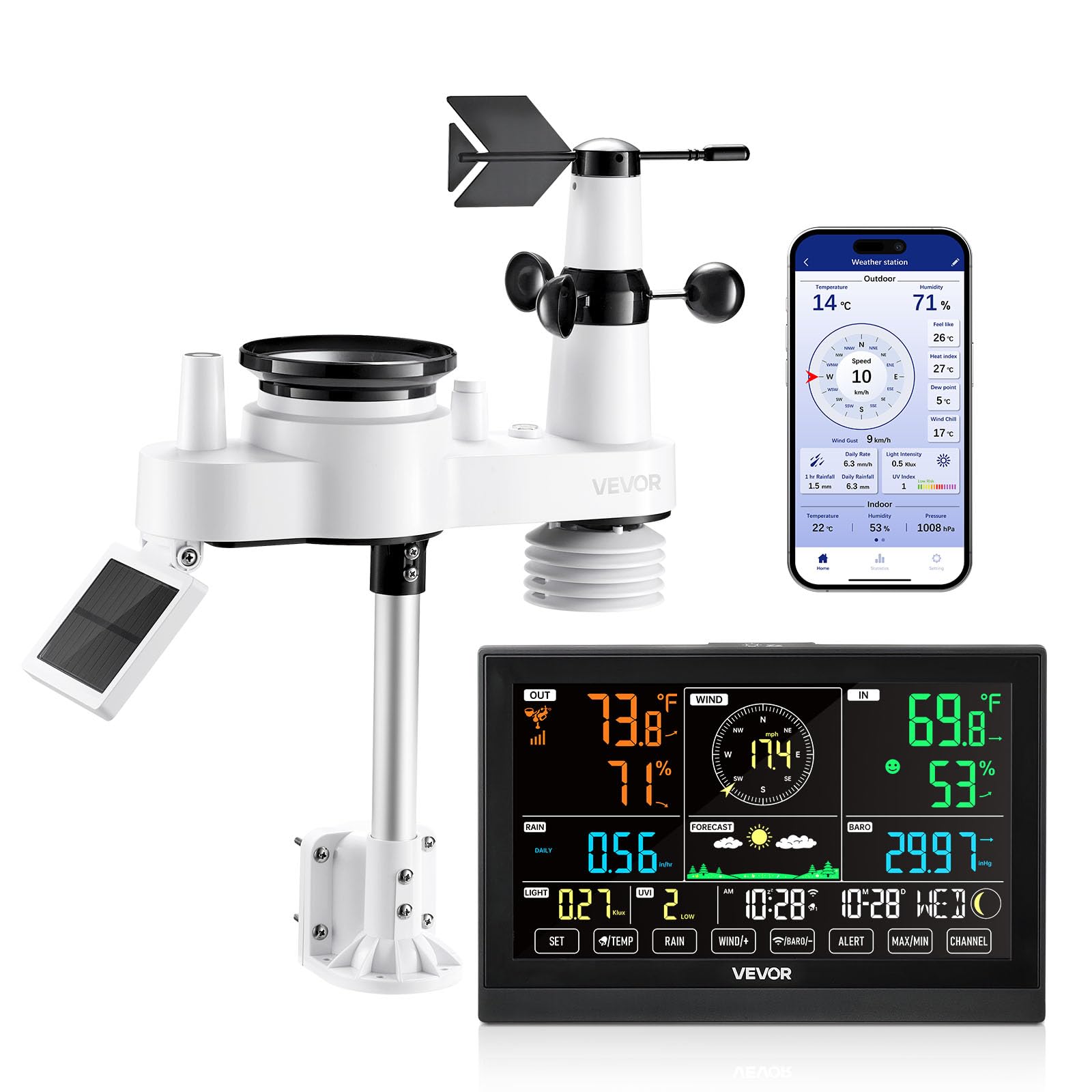
The 7.5-inch screen is the hook: this is the biggest display at the budget end of the group, and it gives you the forecast and current readings in one wide panel. The outdoor sensor is a seven-in-one unit covering temperature, humidity, rain, wind, and sunlight, with a solar panel to reduce battery changes.

We appreciate the simple app setup. The station joins Wi-Fi through the Smart Life app, and the 492-foot transmission range gives you plenty of mounting options. The display has four brightness levels, which helps at night, and the bubble level on the sensor helps you get the rain funnel flat. For a casual backyard station, the big screen is the feature that makes it pleasant to live with.

The rain gauge and wind sensor are the weak spots. The gauge can fail to register or show accumulation, and wind speeds can read off, which matters if you want a record rather than a rough idea. If you mainly want temperature, humidity, and a big forecast panel, those trade-offs are easier to accept; if rain totals and wind history are the point, spend more.

The VEVOR makes sense as a budget display for a garage or kitchen, where the big screen and simple app are the daily draw. The forecast panel is the part you will look at every day, and it does that job without asking much of you.

Bottom line: The VEVOR is for a casual backyard watcher who wants a big screen at the lowest price; do not choose it if rain totals or wind records are the point.

How We Tested Smart Weather Stations

We started by pulling together a shortlist of a dozen smart weather stations — models with outdoor sensors, indoor displays, and app connectivity — then cut anything that required a subscription for basic data or had a history of pairing complaints. Each station arrived at my house, where I set it up solo at the kitchen counter: unboxed it, installed the batteries, paired the sensor to the display, and connected it to my phone's Wi-Fi, timing each step. If setup stretched past 15 minutes or needed a second person, I noted it.

Once running, each station lived outside on my fence post and deck rail for the full eight-month test, through summer heat, fall rain, and the first freezes of winter. I checked readings against a nearby official weather service and my own handheld thermometer, logging where temperature, humidity, wind, and rainfall drifted. I also watched the app for dropouts — whether it reconnected on its own after a router reboot or went silent until I reset the station.

Display and durability got equal attention: I read the indoor screen from the couch, in dim light and bright morning sun, and checked whether the outdoor sensor fogged up, cracked, or faded after weeks of UV. For value, I asked whether the extra sensors and app features actually changed how I used the station, not just padded a spec sheet. The stations that scored best were the ones I stopped thinking about — they just kept reporting.

How to Choose Smart Weather Stations

Start with the app and remote access

Smart means more than a station that happens to have Wi-Fi. The useful question is whether the app stays connected, sends alerts, and keeps a history you can check when you are away. A console that shows the current wind speed but loses its network connection is not much help from the road.

Look for an app that supports the alerts you need and a station that can share readings with a service you already use. The Ambient and Sainlogic models here all include app access; the difference is how much history and automation you get. If you want smart-home triggers, check for Alexa, Google Home, or IFTTT support before you buy.

Match the sensors to your questions

Wind, rain, UV, and lightning are not equally important to every buyer. If you want to know whether to hang laundry or water the garden, temperature, humidity, and rain matter most. If you are tracking storms or sailing, wind speed and direction move to the top. UV and solar radiation are useful for gardening and sun exposure, but they are not essential on every station.

The rain sensor deserves special attention. Tipping buckets and haptic sensors both have trade-offs: buckets can clog, haptic plates can miss light rain. If rain totals are the main reason you want a station, choose a design you can clean and calibrate; if wind is the priority, an ultrasonic sensor avoids cups that freeze or snap.

The display still earns its place

A station with a beautiful app can still leave you squinting at a console. Check the display size, the viewing angle, and whether the screen is bright enough for the room where it will live. A big screen is not automatically better if the numbers are small or the layout is cluttered; a smaller console with clear type can be easier to live with.

We treat the console as a glanceable backup, not the main event. The WS-2902 and Sainlogic AI model both put the essentials on a color screen, while the Tempest skips the console entirely. If you like checking the weather on your way out the door, a console is worth having; if you always have your phone, it is optional.

Plan for mounting, power, and lifespan

An outdoor array needs a stable pole, a clear view of the sky, and a power plan. Solar panels reduce battery changes, but most arrays still use backup batteries, and the console usually needs an outlet. Put the sensor where wind and rain are not blocked by a wall, tree, or roofline; a pretty station in a sheltered corner will give you pretty unreliable readings.

The outdoor sensor is the part most likely to need attention first. Check the warranty, whether replacement sensors are sold separately, and how easy the rain funnel and wind cups are to clean. A station that costs less up front but needs a new sensor in a year is not the better value.

Frequently Asked Questions

Final Verdict

For most buyers, the Ambient Weather WS-2902 is the smart station we recommend first. It combines a complete wind-and-rain sensor array, a color console, and an app that can alert you or trigger smart-home routines, and it does so at a midrange price that makes it the easiest default in this group.

If you live in an exposed, windy spot and want no moving parts, the WS-5000 is the upgrade. If you never want a console on the wall, the Tempest is the app-first alternative.