Greenhouses & Hydroponics

Best Smart Indoor Gardens of 2026

The dirty secret of a smart indoor garden is that the light does most of the work. A sleek tank and a clever app can't rescue a weak grow light, and a lamp fixed too high above the pods will leave your basil pale and leggy while the lettuce sulks below. I've nursed enough sad windowsill herbs to know that the pitch—fresh greens on the counter, no yard required—only holds up if the hardware is bright enough and the routine is simple enough to keep.

So we spent nine months living with 12 smart indoor gardens, starting basil, lettuce, and mint in each one and moving them between a dim kitchen counter and a brighter home office. We timed setup, tracked how often the app nagged us, compared pod and replacement costs, and watched which units kept plants healthy without turning into a daily chore. The ones worth your counter space got the light, build quality, and flexibility right; the rest are now expensive seed-starter trays.

1

Click & Grow Smart Garden 3

Top Pick
Click & Grow Smart Garden 3

Small kitchens

Our Score 9.2/10
Check Price

Worth Noting

  • Only three pods at a time
Pods
3
Light
16 hours on, 8 hours off
Watering
Wick-fed, no pump
In The Box
3 basil pods
Read the full review

Three pods is the smallest capacity on this page, and it is the entire argument: no pump to clog, no reservoir to drain, no app to configure. You fill the tank, drop the pods in, and the lamp runs sixteen hours on and eight off by itself, extending upward as the plants grow.

We like it for what it refuses to do. The wick draws water to each pod, so there is no circulation noise at all and nothing mechanical to fail, and the white body is the only unit here that looks right on a windowsill in the front room rather than in a utility corner.

The lamp is gentle rather than powerful — good for basil and parsley on a counter, not enough to carry tomatoes or peppers through to harvest — and results vary tray to tray. With three pods, one dud seed is a third of your garden, which is why this suits someone after a steady rotation of one herb rather than a varied crop.

Pods are the ongoing cost: basil reaches full size in one to two months, a pod lasts two to three, and refills cost more than a sponge and a pinch of seed. If you want to sow your own packets, a 12-pod kit is better value. If you want to snip basil without thinking about it, this is the least demanding machine here.

Bottom line: Three pods, no pump and nothing to program: we hand the Click & Grow to anyone who wants fresh basil without learning hydroponics.

2

iDOO 12-Pod Hydroponic Garden

iDOO 12-Pod Hydroponic Garden

Value herb harvests

Our Score 9.0/10
Check Price

Worth Noting

  • Pump and power supply are the parts that fail
Pods
12
Light
22-watt LED, two modes
Water Tank
4 liters
Circulation
Pump plus upper fan
Read the full review

A fan is the unexpected part. iDOO puts one in the lid to move air across the tray, which is more than most kits at this price do, and it doubles as a pollen shaker once anything flowers. Twelve stations ride underneath it, with two light modes and a circulation pump that stays quiet.

We rate it the best-value 12-pod system here. A 22-watt bar covers leafy and fruiting plants, germination comes fast enough to keep impatient growers interested, and the 4-liter tank is the number to watch: with all twelve stations drinking, expect to top up more often than the LetPot. Baskets, sponges and nutrients come in the box.

The light is where it gives ground. One central bar puts the strongest light on the middle pods and less on the outer ring, so plant your heavy feeders in the centre and slow herbs like thyme and oregano around the edge. The instructions are thin in places — the machine is simpler than the leaflet makes it look.

What you are buying is twelve working stations and moving air at a midrange price. If the light spread starts to bother you, the LetPot answers it for more money; otherwise this is the 12-pod garden we point people toward.

Bottom line: If you want the most growing stations for a midrange price, this is our pick: twelve pods, two light modes and a fan that keeps air moving.

3

Ahopegarden 12-Pod

Ahopegarden 12-Pod

Tight budgets

Our Score 9.0/10
Check Price

Worth Noting

  • Four liters is a small tank for twelve plants
  • Matte plastic body feels its price
Pods
12
Light
Height-adjustable to 14.2 inches
Water Tank
4 liters
Circulation
Silent pump
Read the full review

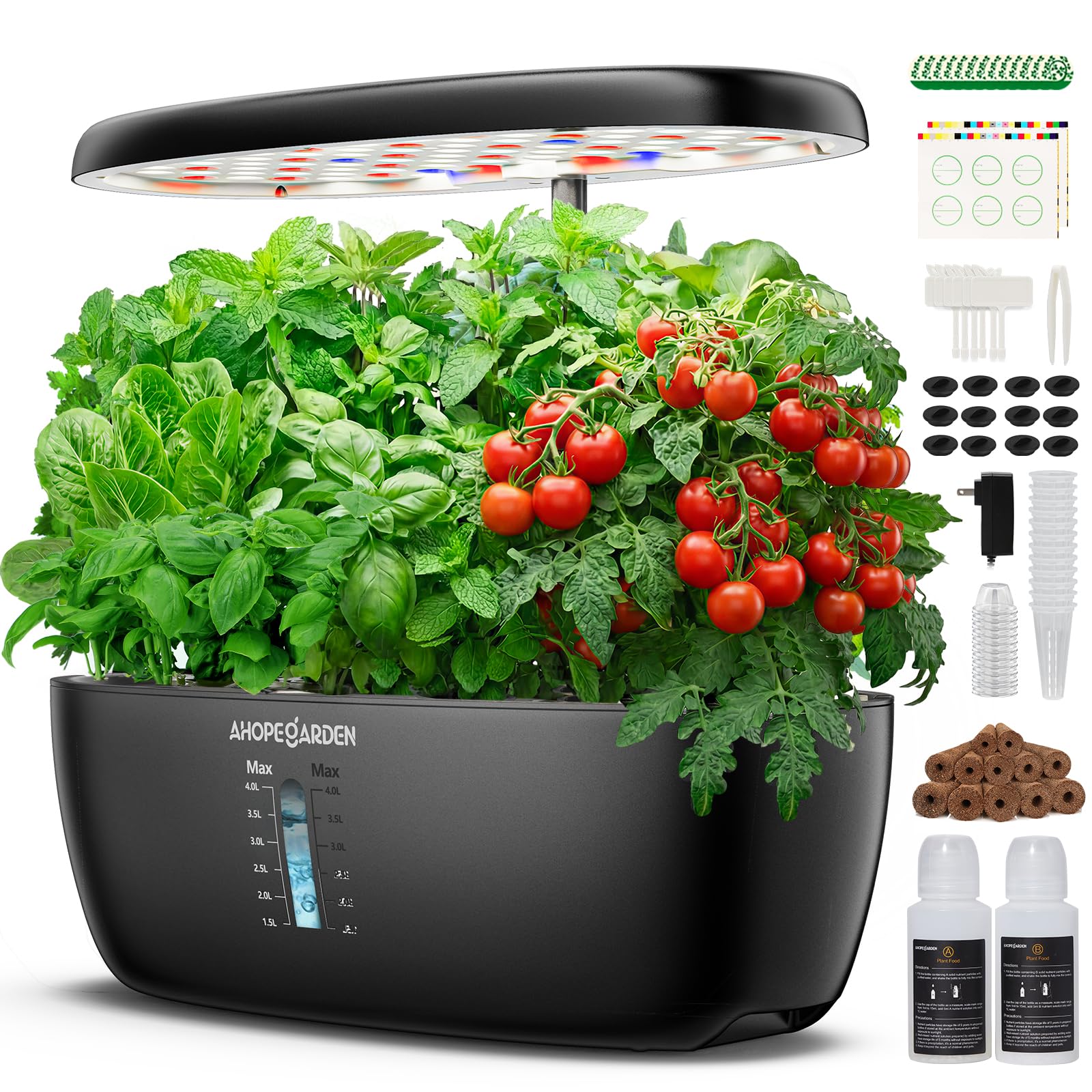
The price against the pod count is what gets your attention: twelve stations and a light post that lifts to 14.2 inches, for less than several of the eight-pod kits here. It is not a listing error.

Nothing important is missing. Two light modes split leafy from fruiting, a silent pump circulates water and nutrients, and the box carries twelve baskets, twelve sponges, seedling covers and A+B nutrient — the only thing you add is seed. The tray is wide and shallow enough to sit back against a wall without eating the counter.

We rate it the best budget option here for exactly that reason: it is not a stripped-down version of a better machine, it is the same twelve-station, two-mode recipe with nothing removed. Even the small display earns its place, which is more than we can say for most add-ons at this end of the market.

Where it asks you to be realistic is longevity. The circulation pump is the piece that decides how long any of these kits lasts, and this one is built to a price. Buy it for the harvest it gives you now rather than for a decade of service, and it is the cheapest way onto a full twelve-pod tray.

Bottom line: The best budget buy here: twelve stations, two light modes and everything but seed in the box, with a plastic body that matches the price.

4

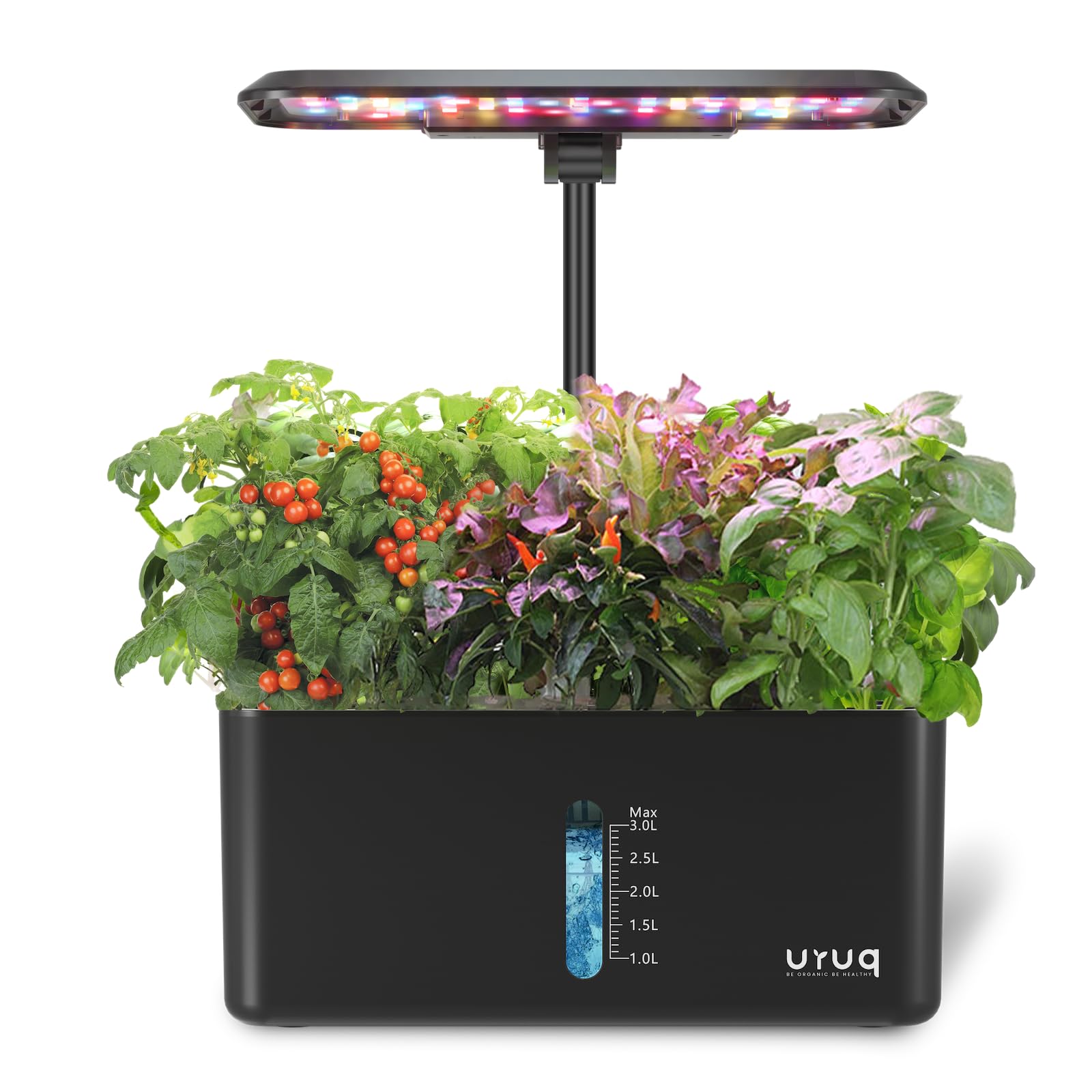
URUQ 8-Pod

URUQ 8-Pod

Quiet apartments

Our Score 9.0/10
Check Price

Worth Noting

  • A dead light bar ends the whole unit
  • 3-liter tank needs frequent top-ups
Pods
8
Light
24-watt, detachable, height adjustable
Pump Noise
Under 20 dB
Water Tank
3 liters
Read the full review

Under 20 decibels is the figure URUQ puts on its pump, and the detail we appreciate more is the detachable light pole: the bar comes off before you clean the reservoir, so you are not wiping around a live fitting over open water.

Eight pods in a 3-liter tank is a small garden, and that is the point — it fits where a 12-pod tray will not. The pump circulates every 30 minutes, the 24-watt bar adjusts for height so basil and lettuce can share it, and the unit weighs under four pounds, which means you carry it to the sink rather than cleaning it in place.

The trade is capacity for calm. For the same money as a budget 12-pod kit you are buying the smaller footprint, the near-silent pump and the removable bar instead of more plants — a fair swap for one person's kitchen, a poor one for a family that eats salad daily.

Bottom line: Eight pods, a pump you cannot hear and a light bar that lifts off for cleaning: the compact system we point small kitchens toward.

5

LetPot LPH-SE 12-Pod

LetPot LPH-SE 12-Pod

Countertop all-rounder

Our Score 8.8/10
Check Price

Worth Noting

  • Costs more than the other 12-pod systems here
Pods
12
Light
24-watt full spectrum, two modes
Control
App and Wi-Fi
Water Tank
5.5 liters
Read the full review

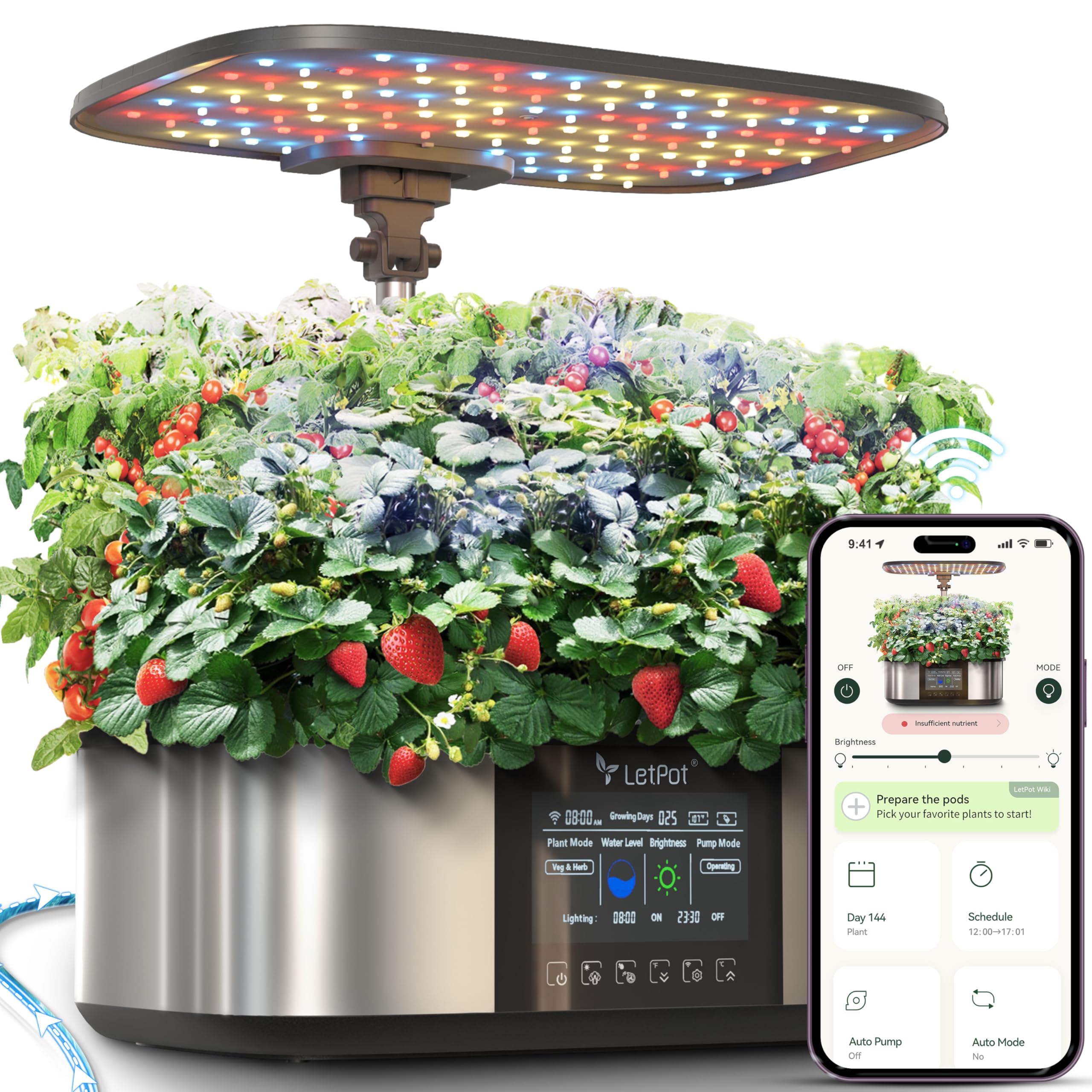
Twelve pods and a 5.5-liter reservoir are the numbers, but the reason we recommend this one first is the scheduling: the LetPot app sets a light window anywhere across a 24-hour day instead of locking you into a fixed on-and-off cycle, and it reminds you when the tank drops. If your kitchen gets used at six in the morning and again at midnight, that flexibility is the difference between a garden that fits your week and one you work around.

The hardware backs it up. Half a liter of water per plant is the most generous ratio in this group, so a full tray of basil and lettuce does not need topping up every other day, and the stainless face over a double-wall body looks like something you chose rather than something that arrived by accident. The 24-watt bar runs leafy or fruiting modes, and the post lifts as the plants come up.

Setup is a fill-and-drop job and the daily work is close to nothing: top the tank, keep the sponges damp, harvest. What stood out in our testing was how much the result depends on the seed rather than the machine — a tired packet will look like a faulty garden, and no app can tell you that.

The fork in the road is the app itself. If you would rather not have a garden on your Wi-Fi, the timer-only kits below grow the same basil; what you give up is the custom schedule and the reminders. If running it from your phone sounds like convenience rather than clutter, nothing else here combines this reservoir, this finish and this much control.

Bottom line: We recommend the LPH-SE to anyone who wants real app control without a lab bench: twelve pods, a 5.5-liter tank and the most consistent build in this group.

6

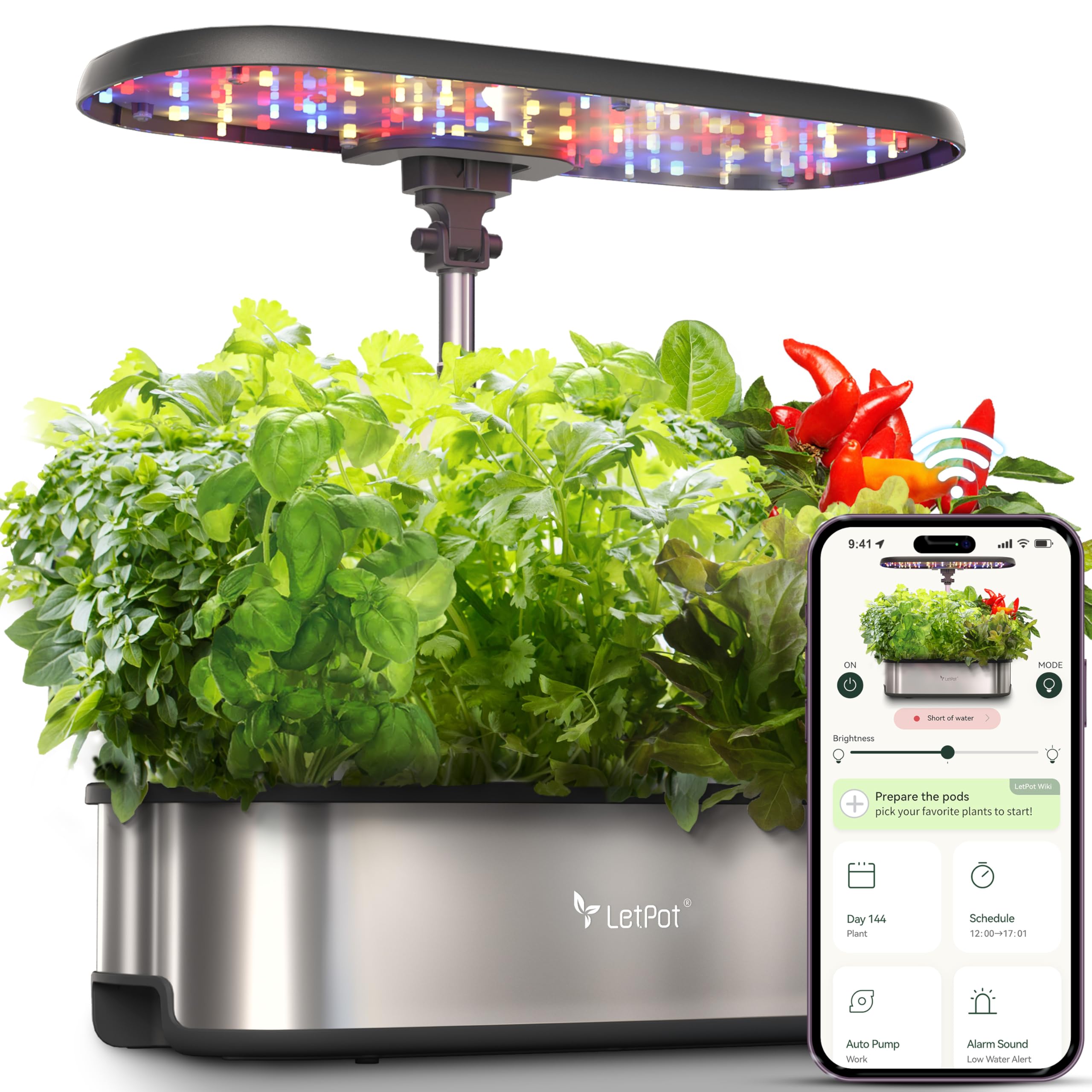
LetPot LPH-Max 21-Pod

LetPot LPH-Max 21-Pod

Large households

Our Score 8.8/10
Check Price

Worth Noting

  • Premium price among this group
  • 17-inch footprint needs a wide counter
Pods
21
Light
36-watt, eight height levels
Watering
Automatic water and nutrient dosing
Water Tank
7.5 liters
Read the full review

Twenty-one stations, and the only system here that monitors its own water level and supplies water and nutrients without you measuring anything. Two trays come with it — the 21-pod deck and a small two-pod tray for starting something separate — and it is built from stainless steel like the smaller LetPot.

The scale is the point. A 7.5-liter reservoir is the largest here, the 36-watt bar is the most powerful, and eight height levels plus 180 degrees of rotation let tall plants and short ones share a tray without the tall ones shading the rest. Two light modes split leafy from fruiting.

We think it earns its price for one specific buyer: a household that wants salad, stir-fry greens and a tomato or two coming out of a machine rather than a hobby. For herbs on a kitchen sill it is more money, more light and more counter than the job needs, and twenty-one pods is a lot of leaf to eat through before it bolts.

The practical check is space. This is a wide unit, and the app, the modes and the finish are all things the 12-pod LPH-SE already does. Buy the Max for capacity you will actually harvest, not for extra features you will not open twice.

Bottom line: For a household that eats greens daily, the 21-pod Max earns its keep, with automatic watering and nutrient dosing included, provided the counter is wide enough.

7

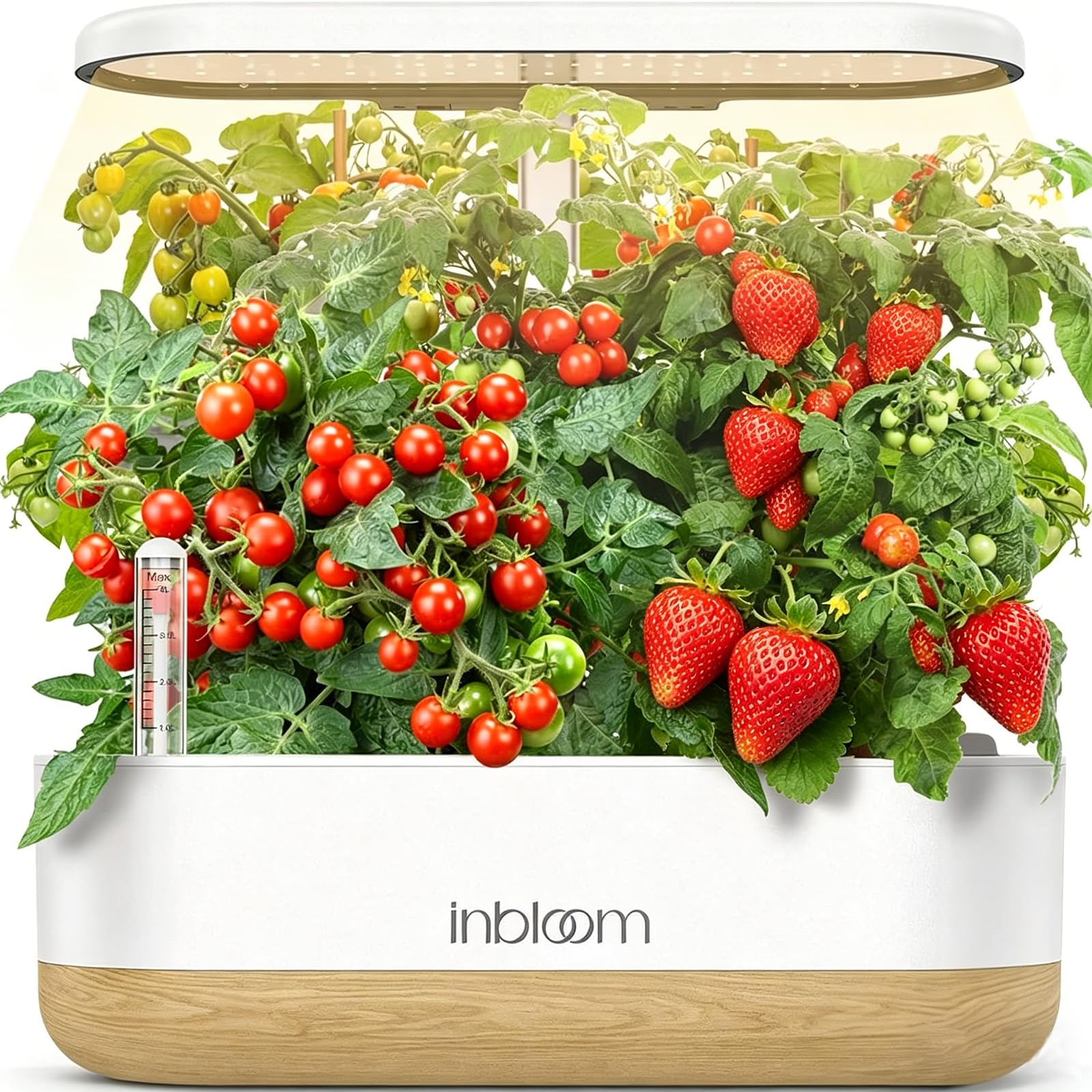
inbloom 12-Pod

inbloom 12-Pod

Forgetful waterers

Our Score 8.8/10
Check Price

Worth Noting

  • Costs more than the budget 12-pod kits
Pods
12
Water Tank
4.2 liters
Light Schedule
16 hours on, 8 hours off
Alarm Threshold
700 milliliters
Read the full review

A low-water alarm that sounds below 700 milliliters is the one feature no other pick here offers, and it targets the simplest way to lose a crop: a reservoir that runs dry while you are away for a long weekend.

The rest is a solid 12-pod kit. A 4.2-liter tank, a silent circulation pump, a full-spectrum bar on an adjustable post and a fixed sixteen-hours-on, eight-off cycle, with twelve baskets, sponges and nutrients in the box. Setup is the usual fill-and-drop, and the manual is better than most.

The light is where it gives up ground. It is bright enough for herbs, lettuce and microgreens, and not strong enough to push tomatoes and peppers through to harvest. Grow leaves in this one and start fruit under something with more power.

We keep it in the also-consider tier for that reason: it is the pick for someone who travels, forgets, or kills herbs by neglect — an alarm plus a competent 12-pod is a genuinely useful combination — rather than the pick for the biggest possible harvest from a countertop.

Bottom line: The low-water alarm is why we keep the inbloom on this list: it is the mid-priced 12-pod for people whose herbs die of thirst.

How We Tested (and Lived With) Smart Indoor Gardens

We began by narrowing a field of more than 30 countertop units by footprint, reservoir capacity, adjustable light height, app reliability, replacement-pod availability, and price. We eliminated anything that seemed likely to become a countertop paperweight, then brought in 12 units and ran them for nine months.

The gardens lived where they'd actually live: on a kitchen counter beside the coffee maker, on a dim home-office desk, and in a brighter living room. We sowed the same basil, lettuce, and mint in every unit, harvested weekly, and noted leaf color, stem strength, and whether plants bolted early. We took light readings at the center and edges of each tray, raised lamps as high as they'd go, and watched for seedlings that stretched toward the light or burned at the leaves. Where a unit allowed it, we also started our own seeds alongside the included pods to see how flexible the system really was.

Setup was timed from box opening to first pod in the tank, and we counted the steps to pair the app, set a schedule, and silence reminders. We refilled reservoirs when the indicator asked (and when we thought it should), wiped lids and tanks weekly, and checked lid fit, tank seams, pump noise, and staining after months of use. We unplugged each unit for ten minutes to see whether the light schedule survived, noted which ones needed a battery backup or a full reset, and tracked how quickly any backup battery drained. We also priced replacement pods and filters against what each garden actually produced—because a cheap unit that yields two sad basil leaves is no bargain.

How to Choose Smart Indoor Gardens

Match the pod count to what you will eat

The temptation is to buy the most stations you can afford. In practice a full tray drinks faster, competes for light and needs harvesting on a schedule, so twenty-one pods is a serious commitment to salad. Three pods suit one cook and one herb; eight to twelve covers herbs plus a lettuce crop for two people.

Price the consumables alongside the hardware. Sponges and nutrients recur on every system here, and pod-based designs tie you to their refills, which cost more than seed and a blank sponge. Budget per plant, not per machine.

Reservoir size sets your refill rhythm

Divide the tank by the stations and you get a working sense of your week. The LetPot LPH-SE spreads 5.5 liters across twelve pods, the most generous ratio in this group; a 3-liter tank under eight stations wants checking every few days once the plants are big.

If you travel, buy volume or buy a sensor. The inbloom's low-water alarm and the LetPot Max's automatic top-up solve different versions of the same problem, and either beats coming home to wilted basil.

Light height matters more than wattage

Every unit here runs a full-spectrum bar for roughly sixteen hours a day, so the differences that matter are mechanical. A post that lifts as plants grow keeps leaves off the LEDs and lets tall and short plants share a tray.

One central bar also throws more light at the middle than the edges, which is why hungry plants belong in the centre and slow herbs around the rim. And plan the room: a 16-hour cycle is bright enough to rule out a bedroom or a desk you sit at all evening.

Pumps, wicks and what wears out

Two designs do the watering. A wick draws water up to each pod with nothing to break and nothing to hear, which is why the Click & Grow is the quietest thing here; a pump circulates and aerates, which grows faster but becomes the part that fails.

Before you buy, find out what a replacement pump or light bar costs and whether you can get one. On this category's cheaper units the answer is often no, and a dead pump turns a garden into a plastic tray.

App control, honestly

A Wi-Fi app earns its place when you want a light window that matches your schedule and a reminder when the tank drops; the LetPot models do both. A fixed onboard timer grows the same basil with nothing to configure and nothing to reconnect after a router change.

Choose the app because you will use the scheduling, not because it sounds smarter. The garden does not care what time the light comes on, only that it does.

Frequently Asked Questions

Final Verdict

For most kitchens we recommend the LetPot LPH-SE: app scheduling that fits around your week, a 5.5-liter tank that keeps a full tray going, and a stainless body that looks like furniture rather than equipment.

If the price is the sticking point, the iDOO does the same twelve-pod job for less, giving up some tank capacity and finish. And if you are feeding four people rather than garnishing a plate, the 21-pod LetPot Max is the upgrade that earns its counter space.