Tree & Forestry Care

Best Rope for Pulling Down Trees of 2026

The tree that keeps you up at night is rarely the straight one — it's the one leaning over the shed, the fence, or the neighbor's driveway. A rope is what turns that into a controlled operation: anchor high in the trunk, run the line down to a come-along or a hitch, and steer the fall toward open ground. The wrong rope makes things worse than doing nothing, because a line that snaps, stretches like a bungee, or slips its knot under load puts you and everything beneath the tree in the wrong place.

I've spent the past eight months pulling with 12 different ropes, from soft double-braids to stiff rigging lines, and the gaps between them show up fast once a trunk is under load. The first thing new buyers get wrong is stretch: a little give is welcome when you're dragging brush, but on a leaner, every inch of stretch is stored energy waiting to snap back. The picks below are the ones whose knots stayed put, whose jackets survived bark and stumps, and which a couple of us were happy to climb on when a limb needed setting from above.

1

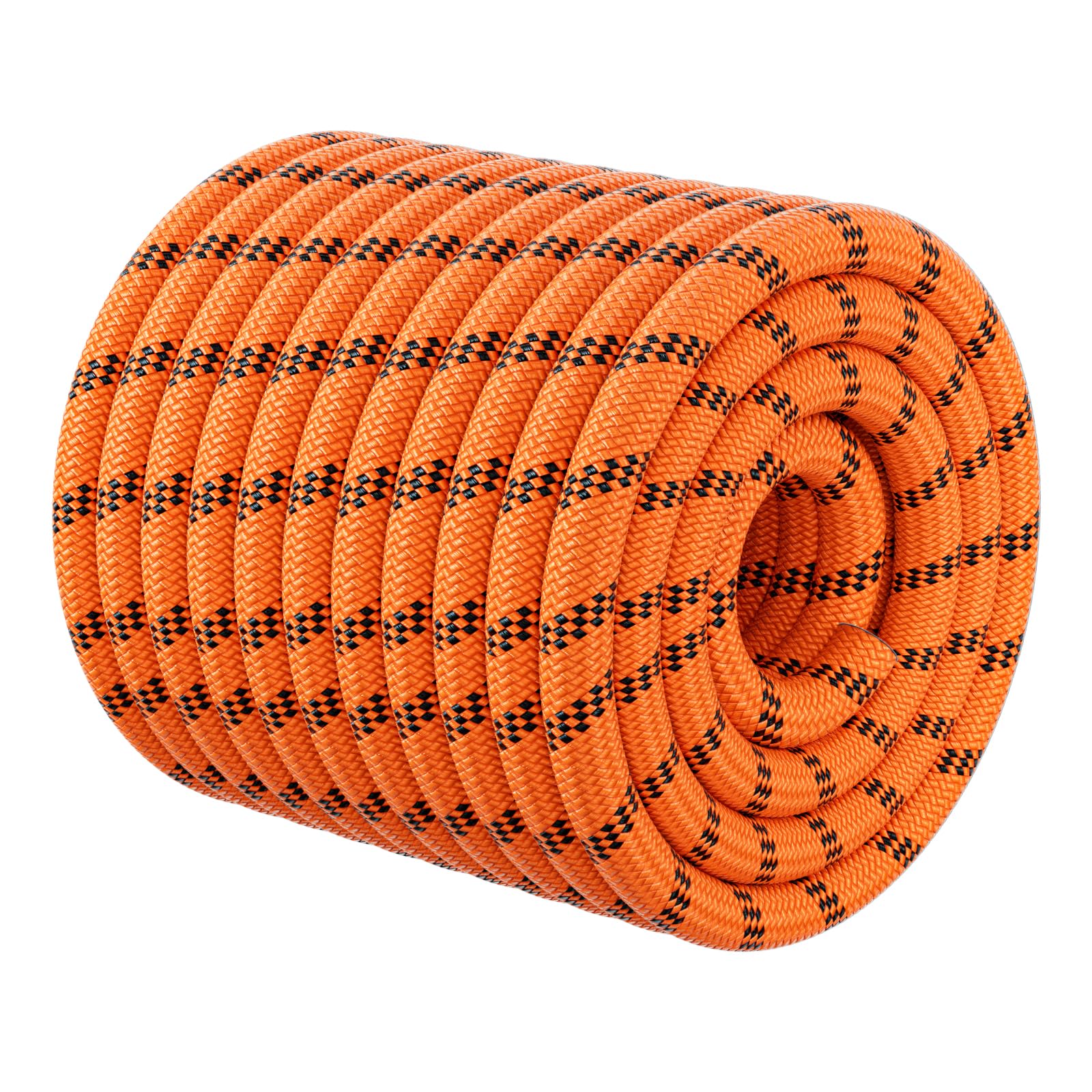
DerziNet Double Braided Rigging Rope

Top Pick
DerziNet Double Braided Rigging Rope

Small yards

Our Score 10.0/10
Check Price

Worth Noting

  • No breaking strength published
Core
72-strand polyester
Length
100 ft
Diameter
3/4 in
Construction
Double braid
Read the full review

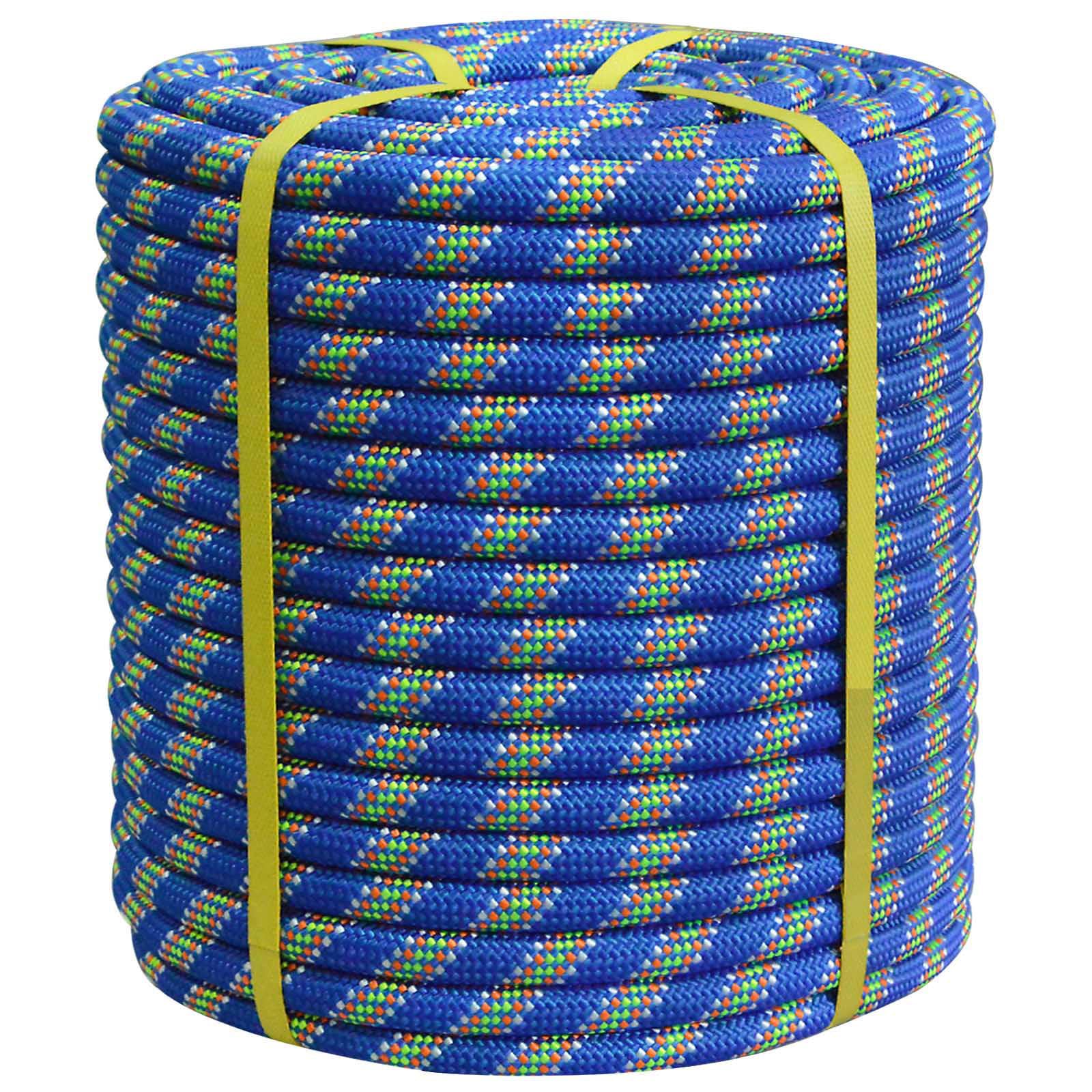
A hundred feet of 3/4-inch rope sounds like a compromise until you've worked a yard where the fence sits 40 feet from the trunk. Long rope in a tight drop zone is a liability — it piles up, it snags on shrubs, and you spend the pull managing line instead of watching the hinge.

The construction is what earns it a place. A double-braided polyester sheath over a 72-strand core makes a finer, tighter weave than the 48-strand ropes that dominate this group, and the twisting process is meant to keep it flexible. That bears out in the handling: stiff out of the coil, then workable after a few pulls, which is more than the thick ropes usually manage.

For a small property this is the 3/4-inch rope we point people to — full-size mass for pulling, a hundred feet so the surplus never becomes the problem, and a braid tight enough to hold its shape when you drag it around a corner. What it doesn't give you is a number: no breaking strength is published anywhere on the listing, so treat it as a pulling and steering line rather than as rigging over a roof, where you need to know what the rope will take before you commit. Tie a bowline in it after a few pulls and you can feel the weave have given a little; that's the break-in, not wear.

Bottom line: For a small property with a tight drop zone, the short 3/4-inch coil is the sensible buy: full-size mass, no surplus line to manage, and a tight braid that takes abuse.
2

HOKINETY Double Braided Rigging Rope

HOKINETY Double Braided Rigging Rope

Everyday yard felling

Our Score 9.6/10
Check Price

Worth Noting

  • Coils with small kinks that need working out
Length
120 ft
Diameter
3/4 in
Construction
48-strand double braid
Tensile Strength
12,000 lb
Read the full review

Against the VEVOR's 220-foot coil, this is the tidier proposition: 120 feet of 3/4-inch rope, in a coil one person can carry to the stump and flake out alone. On a lot where the fence sits 40 feet from the trunk, that's the length that does the whole job without leaving a hundred feet of surplus to manage at the anchor.

The listing is loose with its numbers — 8,200 pounds in one field, 12,000 in another, and no working load anywhere — so we plan to the smaller figure and treat roughly 800 pounds as the safe pull. That still covers the work these get bought for: putting tension on a leaner, holding a limb on a lowering line, taking the first steady load while someone finishes the hinge.

What puts this near the top of the group is how it handles. The 48-strand double braid is tight enough to shrug off bark and block friction, and it stays workable in a way most 3/4-inch static ropes don't, though a knot stiffens as it closes. For outfitting one property for a season of felling, this is where the money goes: full 3/4-inch strength, a length a single person can manage, and a braid that comes back for more after a wet spring.

Bottom line: Our pick for a normal yard: full 3/4-inch strength in a 120-foot coil one person can carry, provided you plan to the lower of its two strength figures.

3

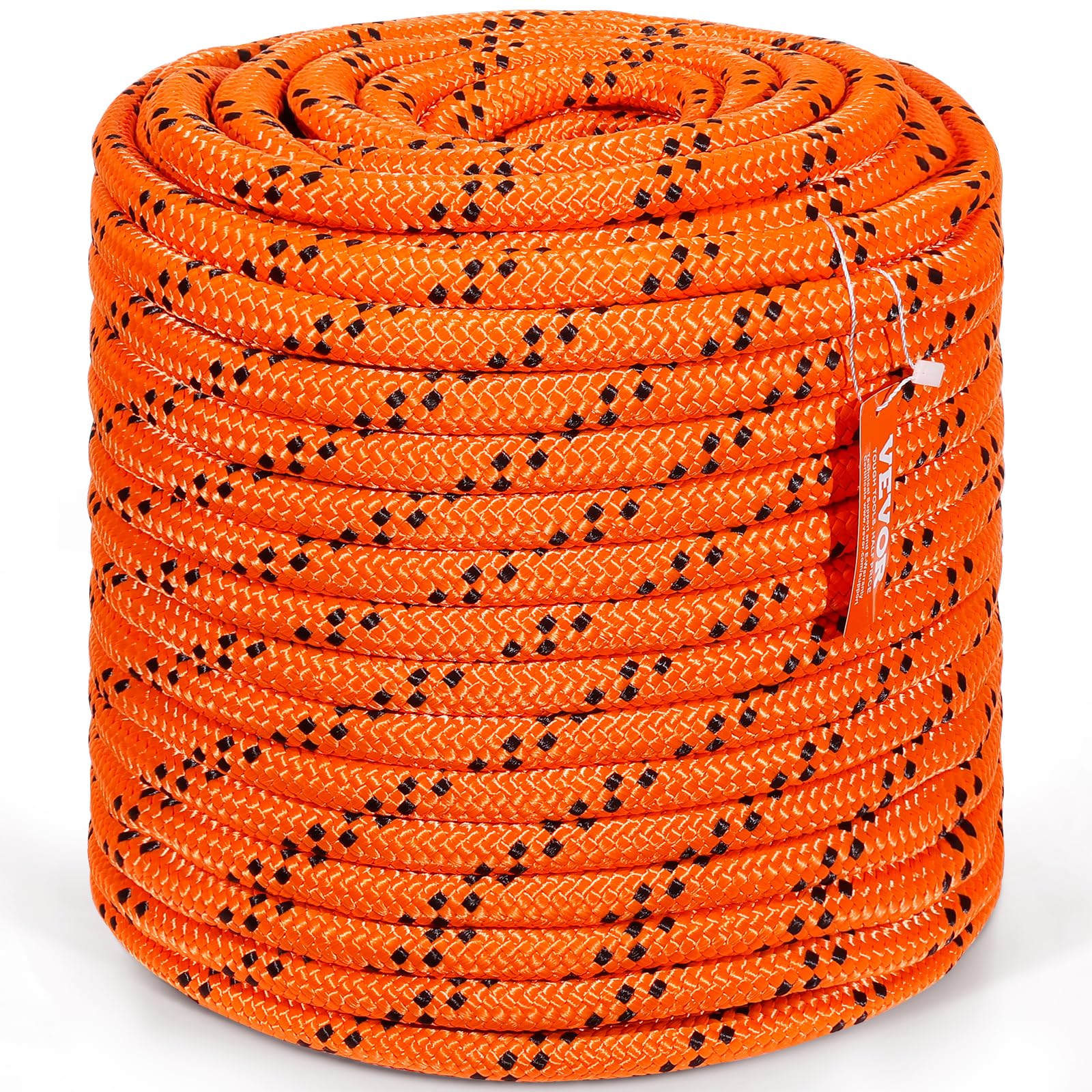
VEVOR Double Braided Polyester Rope

VEVOR Double Braided Polyester Rope

Long-distance heavy pulls

Our Score 9.2/10
Check Price

Worth Noting

  • Diameter can measure under the 3/4-inch label
  • 26 lb coil is a two-hand job to flake out
Length
220 ft
Diameter
3/4 in
Working Load
3,833 lb
Breaking Strength
20,000 lb
Read the full review

Twenty thousand pounds is the headline; 3,833 is the number that matters. VEVOR prints a suggested working load on this rope — no other 3/4-inch line in this group does — so you know before you start that a come-along, a snatch block, and a leaner are all well inside the job. We rig to the lower figure, and it's a relief not to derive it ourselves.

Then there's the reach. Two hundred and twenty feet lets you set an anchor well back from the trunk, run the line through a block, and stand outside the drop zone while someone else makes the cut, which is the entire point of a pull line. On a big oak it covers a redirect without a second purchase; on a small job you simply don't uncoil all of it.

The cost of all that is bulk. The coil runs about 26 pounds and takes two hands and a clear patch of ground to flake out, so it lives on a hook in the shed rather than in a pack, and a tight 3/4-inch braid is not a rope you tie quickly with gloves on. Neither matters much when you're pulling from a fixed anchor, which is what this rope is for, and both would irritate you if you were hauling it up a ladder.

The double braid is doing quiet work here as well. The cover takes the bark and the block friction while the core carries the load, which is why this construction holds up in rigging instead of fuzzing out after a season. Heat-sealed ends mean it goes to work the day it arrives.

Bottom line: We recommend it as the default for anyone pulling a tree from a distance: the most strength and reach here for the money, with a working load printed on the label.

4

X XBEN Braided Polyester Arborist Rope

X XBEN Braided Polyester Arborist Rope

Budget limb work

Our Score 9.2/10
Check Price

Worth Noting

  • Cover fuzzes and frays sooner than tighter braids
  • Breaking strength about half the 9,000 lb half-inch lines
Length
120 ft
Diameter
1/2 in
Material
Polyester
Breaking Strength
5,174 lb
Read the full review

The bottom of this group's price range buys a half-inch rope rated at 5,174 pounds — roughly half what the 9,000-pound half-inch lines here claim — and the listing muddies it further by also showing an 8,626-pound line weight. Plan to the smaller number: about 500 pounds of working load at a 10:1 factor, which is a come-along's job, not a truck's.

That constraint decides who the rope is for, and it's a fair trade at the price. It's enough to steer a leaner, run a pull line out to a limb, or drag brush out of the way; it isn't enough for lowering heavy timber over a roof. Buy it as a utility puller for a small property and nothing here beats it on value; buy it expecting the 9,000-pound lines' performance and the number will disappoint you before the rope does.

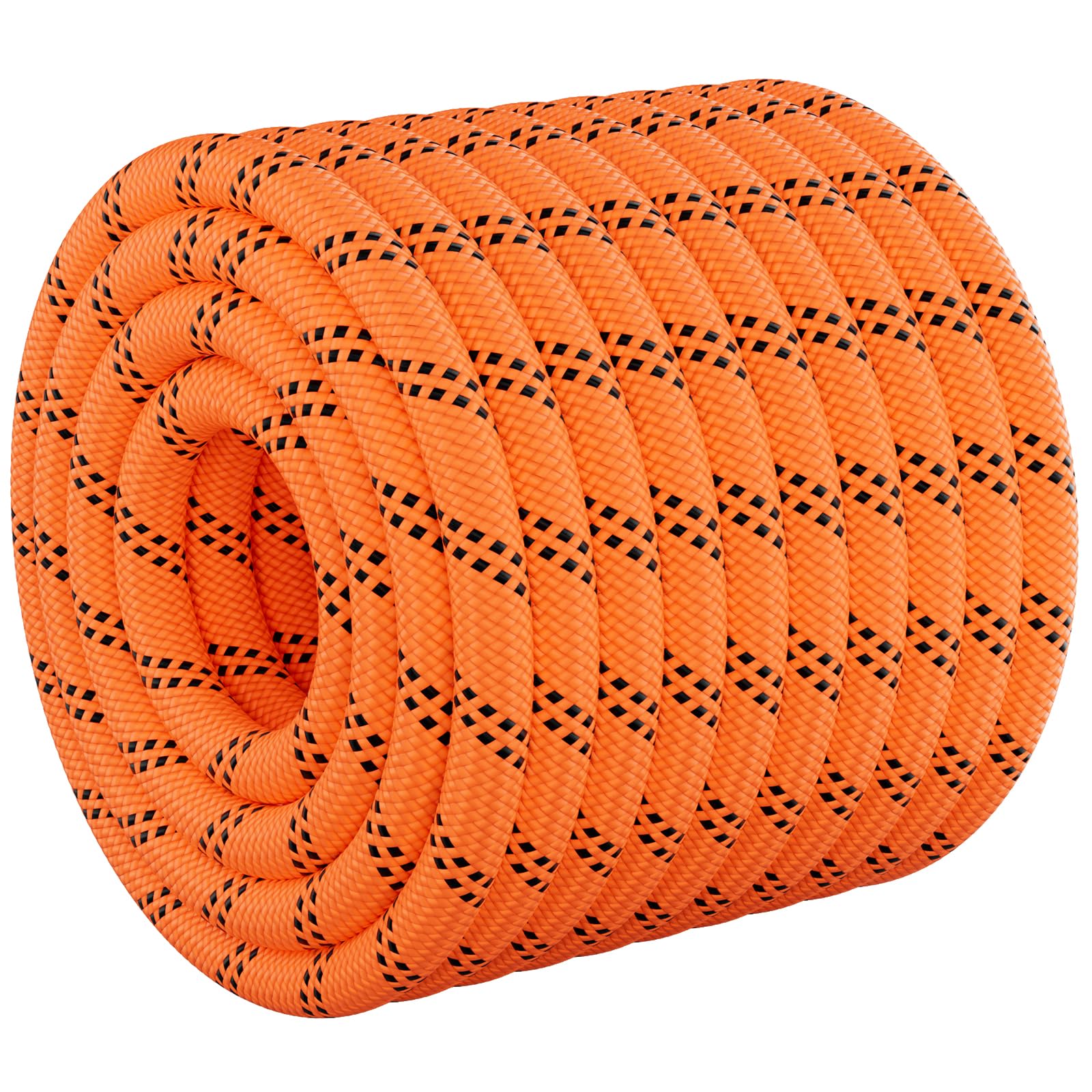
The sheath is where the savings show. The 48-strand cover handles bark well enough, but it fuzzes and frays earlier than the tighter half-inch braids in this group, so run a gloved hand down the length before each pull instead of assuming last season's rope is this season's rope. Heat-sealed ends mean it works the day it lands, and the orange is easy to spot in long grass.

Bottom line: Spend the least and get a real half-inch pulling line, as long as you keep it to limb work and stay clear of heavy lowering.

5

Ezjsdltech Polyester Arborist Rigging Rope

Ezjsdltech Polyester Arborist Rigging Rope

Easy-knot limb work

Our Score 9.2/10
Check Price

Worth Noting

  • 710 lb working load limits it to limb and drag work
Length
150 ft
Diameter
1/2 in
Working Load
710 lb
Breaking Strength
7,100 lb
Read the full review

Flexibility is the first thing you notice, and it's most of why this one is here. Bend a bowline into most half-inch bull ropes and you're fighting the braid; this line takes the knot and gives it back without a wrestling match. With cold hands, in the dark, halfway down a slope, that is not a small thing.

Seven thousand one hundred pounds of breaking strength puts it a step below the 9,000-pound half-inch lines in this group, which lands it in the limb-and-drag-line class rather than the heavy-blocking class. For pulling a leaner, hauling brush, or running a line out to a limb you're about to drop, that's plenty, and the maker is straightforward about where the limit sits.

The 150 feet is generous at this price, and the 48-strand core over a polyester sheath gives it enough body to survive being dragged. Hot-melt ends mean no whipping and no tape — it goes to work straight out of the coil. It's also the rope we hand someone who has never rigged a pull line before, because a knot that seats easily is the part beginners get wrong.

Bottom line: The one we reach for when the knot matters more than the last thousand pounds — flexible, easy to tie, and honest about a 710-pound working load.

6

Lopevex 1/2-Inch Static Rope

Lopevex 1/2-Inch Static Rope

Truck pulls

Our Score 9.0/10
Check Price

Worth Noting

  • Stiff braid is slow to bend into knots
  • Diameter can run narrow of a true half inch
Length
150 ft
Diameter
1/2 in
Material
Polyester
Breaking Strength
9,000 lb
Read the full review

A vehicle on the far end of the line is this rope's job: half an inch of polyester with 9,000 pounds of static strength, light enough to walk through a gate with and long enough to run from a bumper to a crown 40 feet up. Set the anchor, take up tension slowly, and let the truck do the work while you watch the hinge.

Length is the argument for it over the shorter half-inch lines here. A hundred and fifty feet gives you room to set the anchor back and run through a block without adding a second rope to the rig, and there's still enough tail to tie off at the bumper without improvising.

Stiffness is the honest complaint. The braid doesn't drape and doesn't want to take a bend, which makes a bowline at the tree a two-handed job the first few times, though it does soften with use. Measure the diameter when it arrives, too, before you marry the line to a block or a hitch sized for a true half inch.

Where this one lands: a solid half-inch puller with more length than the certified Glfcai line and a lower price than the 3/4-inch coils, held back only by the fact that no working load is printed anywhere on it. Apply the 10:1 rule and it does everything the shorter half-inch ropes here do, with more rope left over.

Bottom line: We like it for truck pulls and long runs: 9,000 pounds of static half-inch over 150 feet, light enough to carry, stiff enough to make you work at the knot.

7

Glfcai 3/4-Inch Arborist Rope

Glfcai 3/4-Inch Arborist Rope

Heavy static rigging

Our Score 9.0/10
Check Price

Worth Noting

  • Hard to splice at 3/4 inch
  • Difficult to knot when new
Length
150 ft
Diameter
3/4 in
Material
Polyester
Breaking Strength
20,000 lb
Read the full review

Stiffness is the first thing to say about 20,000 pounds of 3/4-inch polyester, because it decides whether the rope suits you. This one is board-stiff: bowlines take two hands and a knee, figure-eights are a fight, and if your plan involves a lot of knot work at the anchor, this is the wrong rope.

What the stiffness buys is a serious static line. Twenty thousand pounds of breaking strength across 150 feet, a 48-strand sheath over a high-tenacity polyester core, and almost no elongation when the load comes on — you feel the tension move into the tree rather than watching the line stretch and spring.

It sits at the top of this group's price range, and the coil matches: a wheelbarrow job rather than something you tuck under an arm. That's the honest tax on 3/4-inch rope at this length, and it's part of why the VEVOR — same strength, more rope, less money — takes the top slot instead.

Where this one belongs is on a heavy pull that gets tied once and left: a redirect through a block, a line to a winch, a trunk you're steering away from a building. Splicing at this diameter is a workshop job rather than a driveway one, so plan on knots, and seal any cut end with a hot knife before the braid splinters.

Bottom line: A serious static line for heavy pulls that get tied once and left, though the stiffness makes any knot work a chore.

8

Glfcai 1/2-Inch Arborist Rigging Rope

Glfcai 1/2-Inch Arborist Rigging Rope

Documented load limits

Our Score 8.8/10
Check Price

Worth Noting

  • Stiff braid is slow to knot at first
Length
150 ft
Diameter
1/2 in
Working Load
900 lb
Breaking Strength
9,000 lb (ASTM F2116)
Read the full review

The certification line is what stopped us: ASTM F2116 construction, a 9,000-pound minimum breaking strength, and — rare in this group — a stated 900-pound working load derived from a 10:1 safety factor. Every other half-inch rope here hands you a big breaking number and leaves you to work out what's actually safe to hang on it.

That transparency is worth paying for, and it's why this is our pick whenever the pull has something valuable at the far end. Nine hundred pounds is a conservative working figure for a half-inch bull rope, and it means a homeowner with a come-along doesn't have to guess whether 9,000 pounds means 9,000 pounds of pull. It doesn't. It means about a tenth of that, and this is the only half-inch line in the group that says so on the label.

The rest of the package holds up. A hundred and fifty feet covers most residential pulls with enough left over to set the anchor back from the tree, and the 48-strand high-tenacity sheath over a static core is built for bark and block friction rather than for looks. Low elongation is the point: a pull feels like a pull instead of a bungee, so you can read how much tension is on the tree by watching the line. The braid arrives stiff and takes a few pulls to come round, and the ends arrive sealed, so there's nothing else to do before the first pull.

Bottom line: Buy this one when you want the load rating spelled out — a certified 9,000-pound line with a 900-pound working load, in a lighter rope than the 3/4-inch picks.

How We Tested Tree-Pulling Ropes

We started with arborist supplier catalogs and the forums where people who fell trees for a living argue about rope, then filtered by working load limit, diameter, and whether the available lengths suited backyard distances — most of us are pulling across 40 or 50 feet, not rigging a crane. That left 12 ropes, which we used over eight months.

Testing happened where the work happens: a dead elm leaning over a shed, a storm-damaged pine hung up in younger trees, and a string of smaller jobs where a trunk needed persuading off a fence line. We tied a running bowline or a timber hitch high, ran the line to a come-along or a truck hitch, and pulled in stages, marking the rope against a stake to see how far the mark crept under load. We noted which knots held cleanly and which seized so hard they had to be cut, how much the sheath fuzzed after being dragged over bark and gravel, and whether a stiff rope fought every wrap.

Handling got judged in the coil, not on paper — how easily each rope fed through a figure-eight, whether it kinked when we flaked it out, and whether the extra length was genuinely useful or just heavy to carry. Two of us climbed on the lighter, suppler options to set anchors, which quickly separated ropes that are pleasant in a harness from ones that are strictly for pulling. At the end of eight months we weighed what each one cost against how it looked and felt, because value in this category is measured in seasons, not dollars per foot.

How to Choose the Right Rope for Pulling Down Trees

Start With the Working Load

Breaking strength is the point at which a new rope fails in a straight laboratory pull. What you rig to is a fraction of it, and a tenth is the usual safety factor for arborist work — which turns a 9,000-pound line into a 900-pound working load. Two ropes in this group state that figure outright, the VEVOR at 3,833 pounds and the Glfcai half-inch at 900. For everything else, do the division yourself and write the answer on the coil with a marker, because it decides whether a limb is safe to lower over a fence.

Match the Diameter to the Pull

Half-inch rope in this class runs from roughly 5,000 to 9,000 pounds of breaking strength; three-quarter-inch runs from about 12,000 to 20,000. The bigger line is not automatically the better buy. It's heavier, it's stiffer, and past a point it stops being something one person can handle alone at the stump. Our rule: half-inch for limb work, pull lines, and steering a leaner; three-quarter-inch when the trunk is coming down beside something you can't replace. Buying once for a property with both jobs, start with the half-inch — the thick coil is a purchase you make for a specific tree.

Length Is a Safety Decision

The point of a pull line is to be somewhere else when the tree comes down. A hundred feet ties you to the stump; a hundred and fifty lets you set an anchor behind a shed; two hundred and twenty lets you run through a block and stand in the driveway. Buy for the distance between the trunk and your safe standing spot, not for the height of the tree. And count the cost of surplus: every extra fifty feet is another fifty to flake out, coil, and trip over on the walk back.

Stretch, Stiffness, and What a Knot Costs You

A static rope doesn't bounce, which is exactly what you want when you're steering a trunk: you feel tension move into the wood instead of watching the line load up and spring back. The trade is handling, because tight static braids arrive stiff and a stiff rope is a slow knot. Tie a bowline at the tree and an anchor hitch or a pair of half hitches at the bottom rather than anything fussier, and assume any knot costs you a chunk of the rope's strength — a bend is where a line fails. Where the rig allows it, a splice beats a knot, though at three-quarter inch that's a bench job.

Frequently Asked Questions

Final Verdict

The VEVOR is the rope we recommend. It's the only one here that states its working load, and it backs that up with 20,000 pounds of breaking strength and enough length to keep you clear of the drop zone — the three things that matter most when a tree is coming down near something you want to keep.

If 220 feet of 3/4-inch rope is more than your property can use, the HOKINETY does the same work in a coil one person can manage, and the Glfcai half-inch is the pick when you want that printed working load in a lighter line.