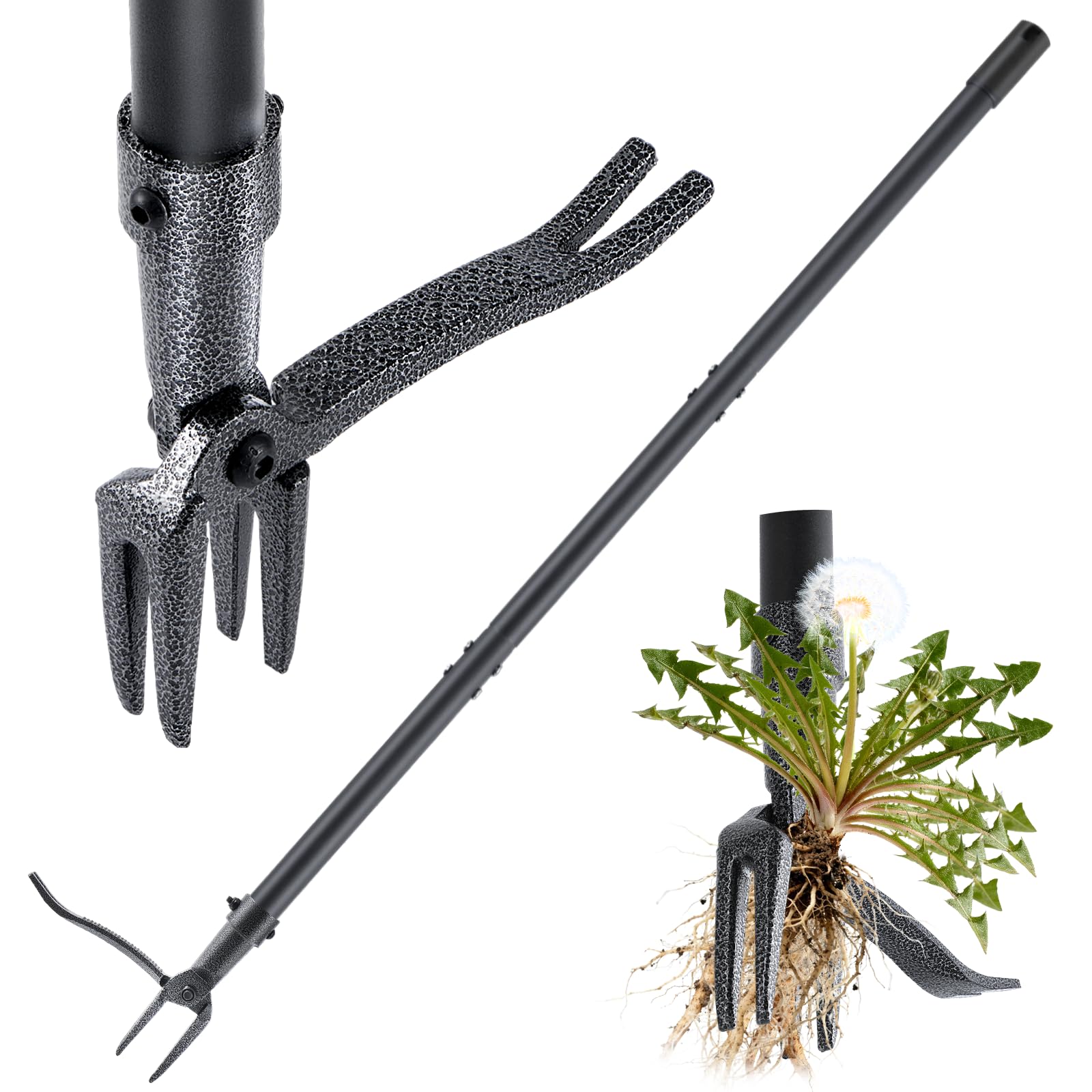
Root Slayer 22011 Shovel
Top Pick
What We Like
- Slices roots and clay with a serrated V-tip
- Heavy steel build with a lifetime guarantee
- Doubles as a planting and transplanting shovel
Worth Noting
- Five pounds and 45 inches to manage
- Leaves a larger hole than a claw puller
- Blade
- 13-inch serrated carbon steel
- Handle
- 45-inch steel shaft
- Weight
- 5 lb
- Tool Type
- Root-cutting shovel
Read the full review
The 13-inch serrated blade and inverted V tip are what earn the Root Slayer the top spot. This is not a weeder for dandelions in a manicured lawn; it is the tool for the root that has already beaten a trowel, a spade, and your patience. The carbon-steel blade is powder-coated, the shaft is resin-encased steel, and the whole tool weighs five pounds. We like the weight here because it lets the blade do the work when you are levering under a shrub or slicing through a mat of roots.
In our testing, the V tip is the part that matters. A flat shovel has to chop its way through a root; the serrated edges and pointed center let you rock the blade into the root zone and cut as you go. That makes it a better fit for clay, packed soil, and established shrubs than the stand-up pullers here. It is also a genuinely useful planting shovel, which is why it stays in the bed rather than the shed.
The trade-off is size and cost. At 45 inches and five pounds, it is a two-handed digger, not something you carry around the yard for a few weeds. It also leaves a bigger hole than a claw puller, so it suits planting and transplanting better than spot-weeding a lawn. The lifetime guarantee is reassuring given the premium price.
If your problem is a dandelion in soft turf, a stand-up puller will be faster and leave less mess. If your problem is a woody root, a buried stump, or clay that laughs at a spade, this is the one we choose. The five-pound weight is the price of that capability, and we were happy to trade it for a blade that does not flinch.
Bottom line: We recommend the Root Slayer as the best tool here for woody roots, clay, and stubborn shrubs, provided you want a digging shovel rather than a lawn weeder.