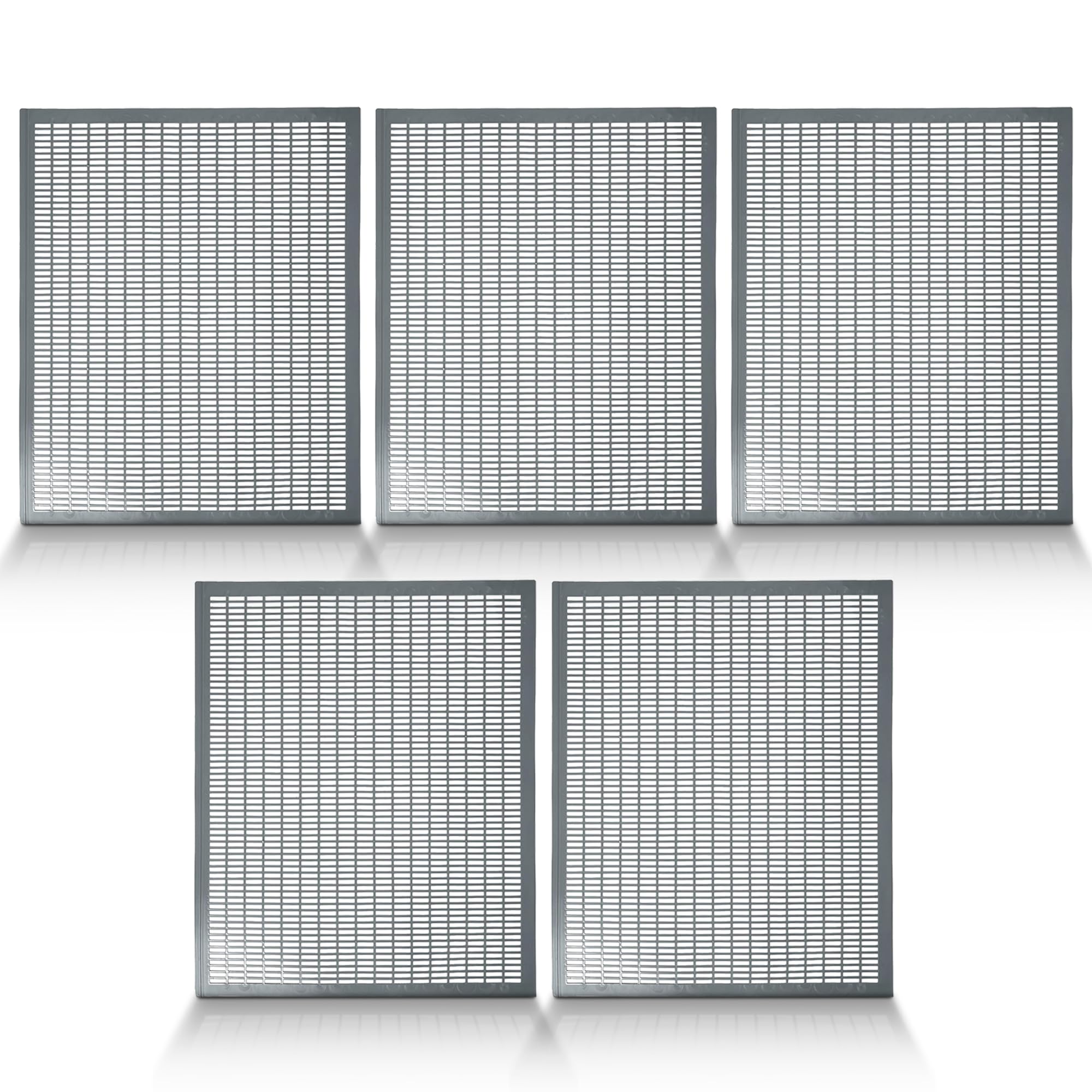
Foxhound Plastic 4-Pack
Top Pick
What We Like
- Sits inside a 10-frame box without overhang
- Rounded edges are easier on workers
- Cuts down to nuc and top-bar width
- Four sheets cover several hives
Worth Noting
- Plastic needs a gentler scraper than welded wire
- Cutting
- Cuts down for nucs and top-bar hives
- Material
- Plastic
- Hive Size
- 10-frame Langstroth
- Pack Size
- 4
Read the full review
The edges on these sheets are rounded rather than sheared square, and that one detail explains our recommendation better than any specification. Workers cross a rounded opening without catching a wing, and the sheet slides out with bare fingers once propolis has set around it. Four arrive stacked and flat, with nothing to straighten before the first super goes on.
Fit is where an excluder earns its keep, and this one sits inside a standard 10-frame box with no overhang. That matters more than it sounds. A sheet that laps over the rim holds the super up off the box, and the sliver of gap underneath is exactly the sort of space a queen will find. It also gives the bees a lip to glue, which turns a two-second box lift into a two-minute pry.
The plastic is thin enough to cut, and Foxhound says so outright: trim one down for a five-frame nuc or a top-bar hive and three full sheets stay in service on the big boxes. Thin cuts both ways. Lift a sheet by one corner and it will bow, so take it by two, or slide a hive tool underneath and keep the blade flat.
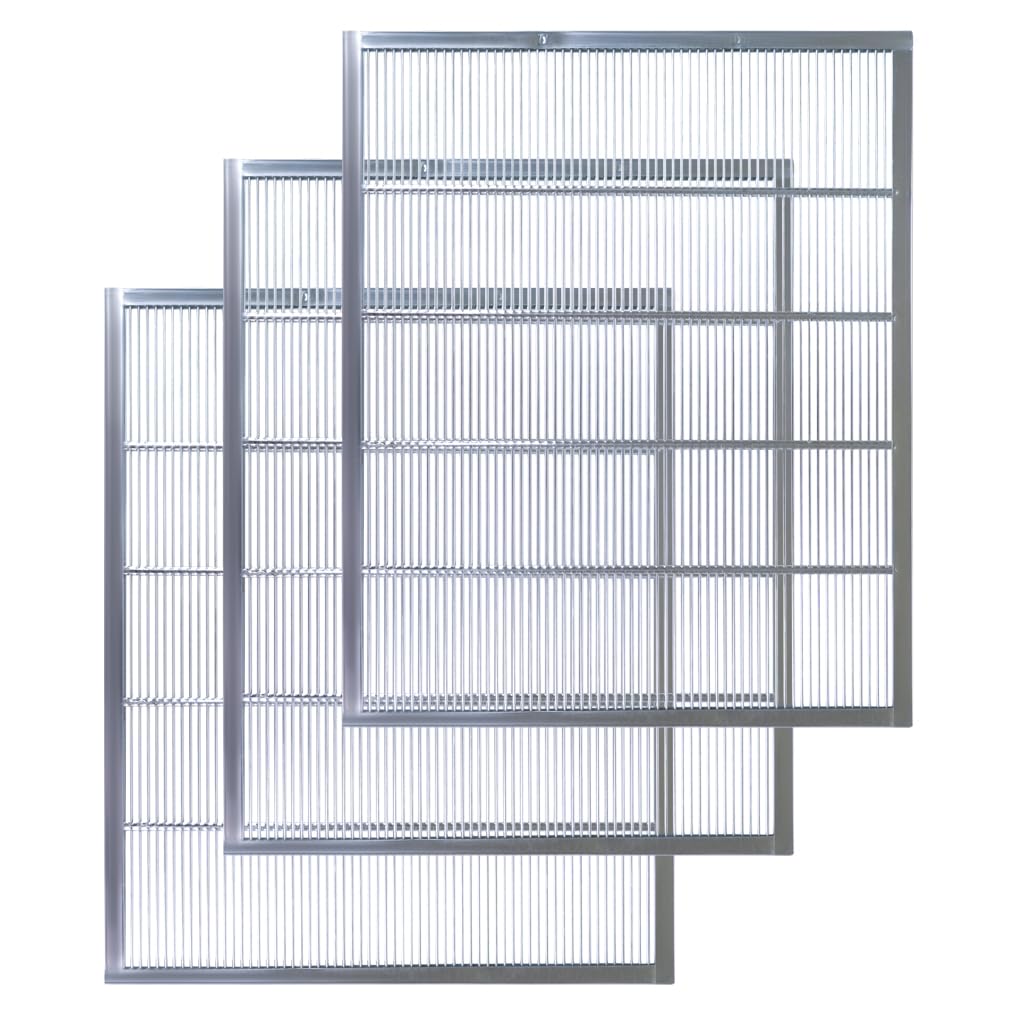
Between the fit, the edges and the four-to-a-pack count, this is the set we hand to a beekeeper with two or three 10-frame hives and no strong feelings about materials. The fourth sheet usually ends up on a split, or lent to whoever is short one on a Saturday. If you want metal instead, the Mann Lake welded two-pack is the next place we point.
Bottom line: Our default for standard 10-frame hives: sheets that sit flush, edges that let workers through cleanly, and enough of them in the pack to cover a split.