Beekeeping

Best Bee Feeders of 2026

A bee feeder should solve a problem, not create one. If it lets bees drown, grows mold by the second week, or tips over in a gust, it is worse than leaving the hive to forage. A good one bridges the nectar gap in early spring or during a dry spell without turning your garden into a hazard. We have spent the last five months with 14 feeders, from simple inverted jars to tray-style designs, and the differences show up fast.

The best models were not the most complicated. They had shallow, textured landing zones, lids that sealed tight, and seams that did not weep sticky syrup down the side. Capacity mattered more than I expected—a feeder that needs refilling every morning quickly becomes a chore, and a chore gets skipped. Value came down to whether the construction justified the price and how often I had to clean it. The picks below are the ones that kept bees safe and kept working.

1

KOHAND Jar Entrance Feeders, 12 Pack

Top Pick
KOHAND Jar Entrance Feeders, 12 Pack

Many hives

Our Score 9.6/10
Check Price

Worth Noting

  • Jars are sold separately
Mount
Hive entrance
Jar Fit
Mason, plastic or glass jars
Pack Size
12 feeders
Dimensions
5.1 x 3.15 x 2.5 in
Read the full review

Twelve feeders in one box is the entire argument. If you keep more than two or three hives, this set covers all of them with spares left over, and it works out cheaper per hive than buying entrance feeders in pairs the way most of us do.

What we like beyond the count is how little there is to go wrong: a one-piece plastic body with a perforated lid, no moving parts, no vacuum chamber to seat correctly, nothing to lose in the grass. Fill a jar, screw the lid on, push it into the entrance. None of it is clever, and that is exactly the appeal for a piece of kit you handle with gloves on.

The catch is the jars, which are not in the box. The set is only as good as what you screw it onto, and the lids are sized rather than universal: a wide-mouth jar will not take a small lid, and a set of twelve is useless if nothing in your cupboard fits. Check the mouth on the jars you actually own before you commit to a dozen, and keep a few spare lids with your extracting kit.

Bottom line: Buy this set if you are feeding a yard full of hives: twelve simple jar feeders, one order, and almost nothing to break.
2

Lehman's Stoney Acres Top Feeder

Lehman's Stoney Acres Top Feeder

10-frame hives

Our Score 9.4/10
Check Price

Worth Noting

  • Fits 10-frame hives only
  • Over seven pounds empty and awkward to lift
Material
Unpainted pine
Hive Size
10-frame
Reservoirs
Two, with wooden floats
Outside Dimensions
20 x 16.25 x 4.5 in
Read the full review

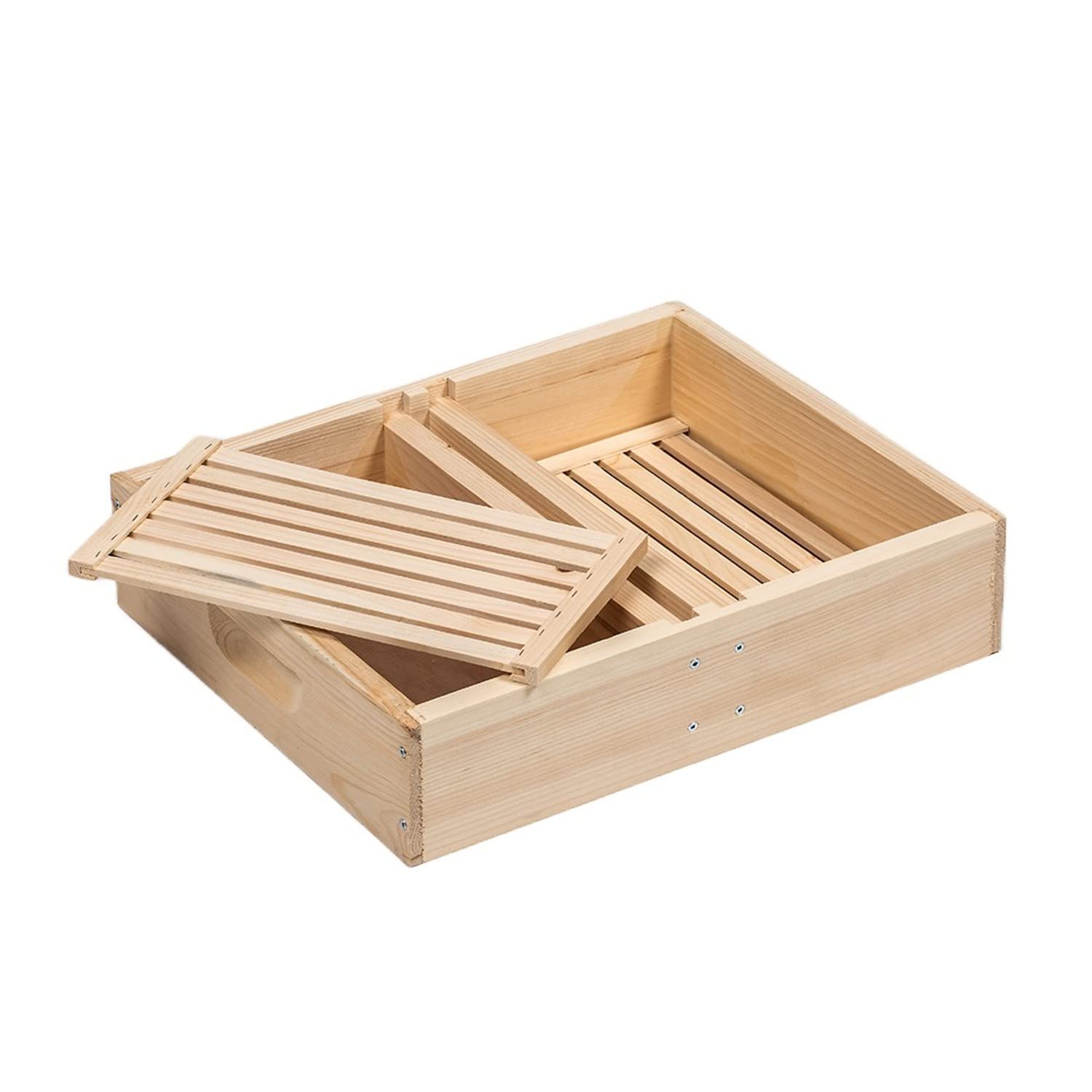
Most top feeders in this guide are plastic trays with a cup sunk into the middle. This one is a pine box with two open reservoirs, and it sits on top of the hive in place of the inner cover, with your outer cover over it.

The detail that makes it work is the floats. Each reservoir has a wooden platform that rides down as the syrup goes, so the bees always have something dry to stand on and the syrup is never a bare open pool. It is the same principle as the ladders in a good frame feeder, done in wood, and it is why we are comfortable leaving this on a hive for weeks at a time rather than checking it every evening.

What you pay for here is construction. The box is screwed pine, thick enough to sit square on a hive box instead of warping at the corners, and it is the feeder on this list we expect to be scraping and repainting rather than replacing. Filling is a jug and a two-minute job, and because the reservoirs are open you can read the level without lifting anything apart.

Check two things first. It is built for 10-frame equipment, and at 20 by 16¼ by 4½ inches and a bit over seven pounds empty, it is the heaviest thing here; on a tall stack you will feel it every time you lift it clear. Bare wood also holds moisture, so empty the reservoirs and let them dry before storage or you will find mold waiting in spring.

Bottom line: For a beekeeper who wants to feed without taking the hive apart, this is the top feeder we point to first, and the one built to last the longest.

3

BeeCastle Bee Pro Frame Feeder

BeeCastle Bee Pro Frame Feeder

Everyday hive feeding

Our Score 9.0/10
Check Price

Worth Noting

  • Every refill means opening the hive
  • Gives up two or three frames of brood space
Ladders
Two, grooved
Box Type
Deep boxes
Capacity
6.5 L
Frame Space
2 to 3 frames
Read the full review

Six and a half liters is the number that decides this one. That is enough syrup to keep a strong colony going for days rather than hours, and it comes out of your brood box: the feeder hangs in the space of two or three deep frames, with two ladders running down into the reservoir.

We are happy to give up that frame space. The ladders are the reason — grooved plastic the bees can grip all the way down to the syrup, so they drink instead of swimming, and a colony feeding hard does not pile up and drown at the surface. Sitting inside the box also means the syrup is not on offer to every wasp and drifting bee in the neighborhood, which is the standing problem with anything hung on the entrance. It arrives assembled, fills from the top, and comes apart for cleaning without a fight, and the two ladders mean bees reach the syrup from both ends rather than queuing at one opening.

The honest cost is the refill: every top-up means opening the hive, which is a minute of smoke and some disturbance for the colony. With a reservoir this size you are doing it far less often than you would with a jar, and in a ten-frame box with a strong colony that exchange is worth making every time. In a nuc or a struggling split it is closer to even, because two frames of brood space and the warmth around them are exactly what a small colony cannot spare.

One thing to measure before you order: this is built for deep boxes. At just under 19 inches long and 9 inches tall, it wants a deep — put it in a medium and the top stands proud with the cover off — so check the depth of the box you plan to feed, not the one you happened to carry out to the apiary.

Bottom line: Our default feeder for most hobby hives: a big reservoir, grooved ladders that keep bees out of the syrup, and nothing hanging on the entrance for robbers to find.

4

Foxhound Entrance Feeder, 2 Pack

Foxhound Entrance Feeder, 2 Pack

Quick entrance top-ups

Our Score 8.8/10
Check Price

Worth Noting

  • Plastic jars can go brittle and crack
  • Metal lids can rust
Mount
Entrance or inside a box
Capacity
8.75 cups (70 fl oz) each
Pack Size
2 feeders
Dimensions
5 x 3.5 x 8.5 in
Read the full review

An entrance feeder is the least elegant way to feed bees and, for one or two hives in a backyard, often the most convenient — and these are the ones we keep coming back to, because each jar holds 70 fluid ounces. That is more than twice what most entrance feeders take, which is the difference between topping up once and topping up three times in a week.

The setup is the classic one done properly. Fill the jar, screw on the perforated lid, invert it into the entrance slot, and vacuum pressure holds the syrup against the holes so it seeps rather than pours. The jars are sized for Boardman-style bases, and the clear plastic lets you read the level from a few feet away without crouching down at the entrance.

The cautions are the ones that come with the position rather than the product. An entrance feeder is a billboard: ants find it, and so do bees from other colonies when the flow is off, so a shaded entrance beats a sunny one and a feeder you can see from the house beats one you forget. The jars are plastic and the lids are metal, so a winter outdoors makes the plastic brittle and the lids rusty; these are a few seasons of service, not an heirloom.

They also work standing inside an empty box, which is a useful trick in a dearth, but the jar is 8½ inches tall — measure the clearance under your cover before you try it in anything shallower than a deep.

Bottom line: The entrance feeder we recommend: 70 ounces a jar, a clean vacuum seal, and two in the pack so one refills while the other feeds.

5

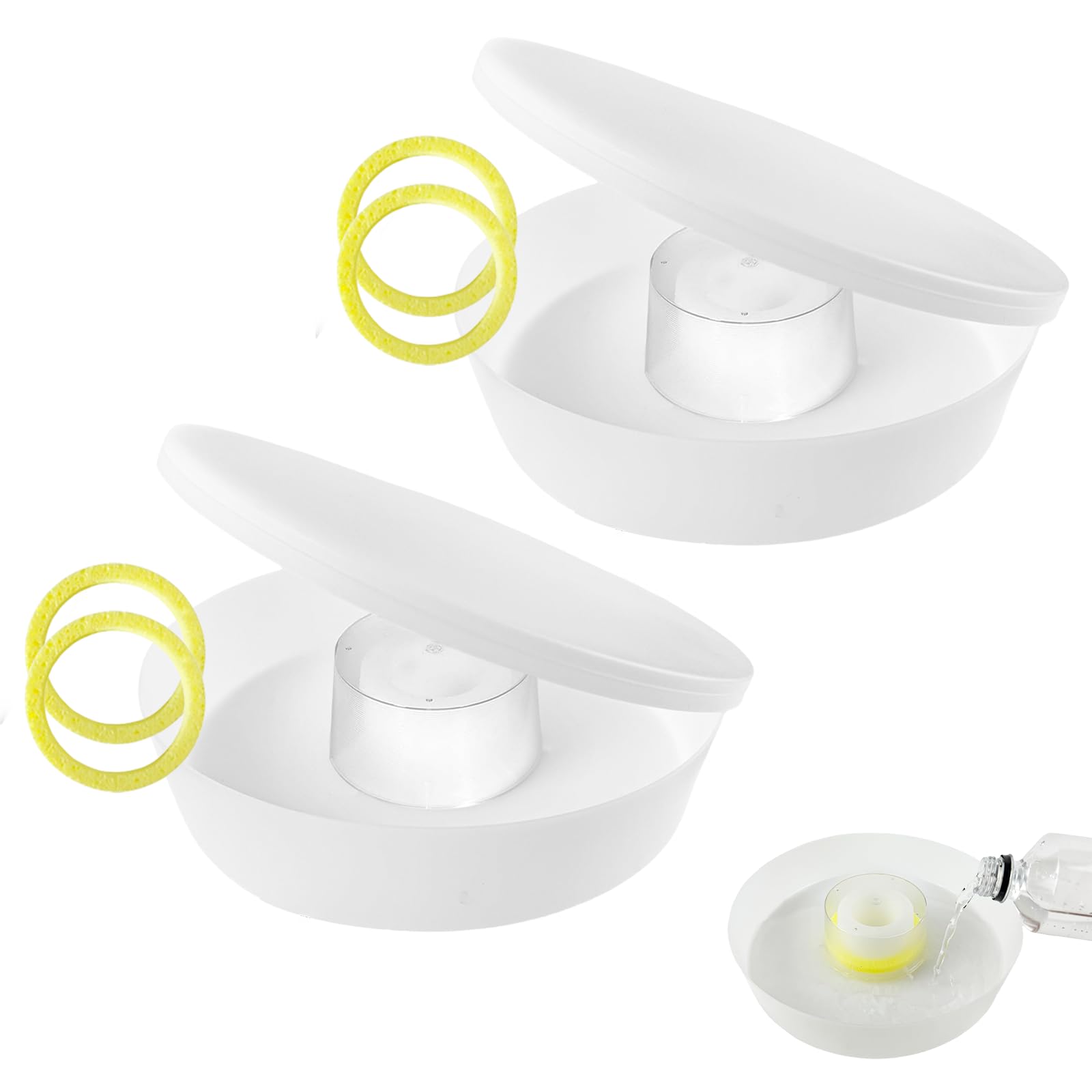
KAGZ Rapid Top Feeder, 2 Pack

KAGZ Rapid Top Feeder, 2 Pack

8-frame hives

Our Score 8.6/10
Check Price

Worth Noting

  • Foam rings get chewed and need replacing
  • Half a gallon is a short supply for strong colonies
Fits
8- and 10-frame hives
Capacity
1.8 L (approx. 1/2 gallon)
Pack Size
2 feeders
Dimensions
10.31 x 10.31 x 2.24 in
Read the full review

Two foam rings per feeder are the upgrade in the name, and they are worth understanding before you buy. The idea is simple: bees land on the ring instead of in the syrup. The catch is equally simple, because bees chew foam — the ring that saves them from drowning is also the piece most likely to be torn apart and pulled into the reservoir, and once it is gone you are back to bare plastic.

Set that aside and the design is sound. It is a shallow tray, a bit over 10 inches square and 2¼ inches deep, that sits on top of the hive under your outer cover, with a clear cup in the middle and a cone the bees work their way down. The closed lid keeps robbers out, which matters more than anything else with a top feeder, and the shallow profile means a standard cover still closes over it — something you cannot say for the big wooden top feeders.

We like it best for 8-frame hives, where the larger top feeders either overhang the box or demand a super you do not own. It spans both 8- and 10-frame Langstroth equipment, it is light enough to lift with one hand, and the two-pack means one can soak while the other is on the hive.

Half a gallon is the other limitation, and it bites in fall, when a strong colony takes down that much in a couple of days. This is a feeder for topping up a growing colony in spring rather than carrying a big hive through a dearth — for the former it is genuinely convenient, and you will be in the box anyway.

Bottom line: A neat half-gallon top feeder that fits either box size, as long as you accept the foam drowning rings as a part that gets replaced.

6

Aetwhy 6.5L Frame Feeders, 2 Pack

Aetwhy 6.5L Frame Feeders, 2 Pack

Two-hive setups

Our Score 8.6/10
Check Price

Worth Noting

  • Pine sides need dry storage between seasons
Capacity
6.5 L each
Pack Size
2 feeders
Dimensions
19.09 x 2.32 x 9.17 in
Frame Space
1 to 2 frames
Read the full review

Two 6.5-liter frame feeders in one order is a genuinely useful thing for anyone running a pair of hives, and it is the reason this pair earns a place. On the specifications it does what our top pick does: a trough that hangs in the deep box, two internal ladders with grooves cut into them, and a reservoir large enough that filling becomes a weekly job rather than a daily one.

The difference is the shape. At 2.32 inches wide it is narrower than our top pick, and the listing puts it at one to two frames of space rather than two to three. In a ten-frame box, that extra frame of brood left in place matters, and it is the main reason we would look at this pair for a colony that needs every cell it has. The body is plastic with pine boards, an old-fashioned way to build one of these, and the wood gives the sides a stiffness that thin plastic alone does not.

Wood is the thing to think about. Pine sides want to be dry: empty the feeder, let it air out properly, and store it indoors between seasons. Leave one full of syrup in a shed over winter and you will meet mold in spring. Otherwise the design is the same proven shape as the other frame feeders here, and a narrower body holding the same volume is a trade worth taking seriously.

Bottom line: A sensible pair for someone feeding two deep-box hives: two 6.5-liter frame feeders with less brood space given up than most.

7

Mann Lake Top Hive Feeder

Mann Lake Top Hive Feeder

Large apiaries

Our Score 8.6/10
Check Price

Worth Noting

  • Bees can drown in the reservoir despite the screen
  • Nearly eight pounds before it holds anything
Weight
7.58 lb
Hive Size
10-frame
Reservoir
One-piece plastic with steel screen
Package Dimensions
20.5 x 16.6 x 5.8 in
Read the full review

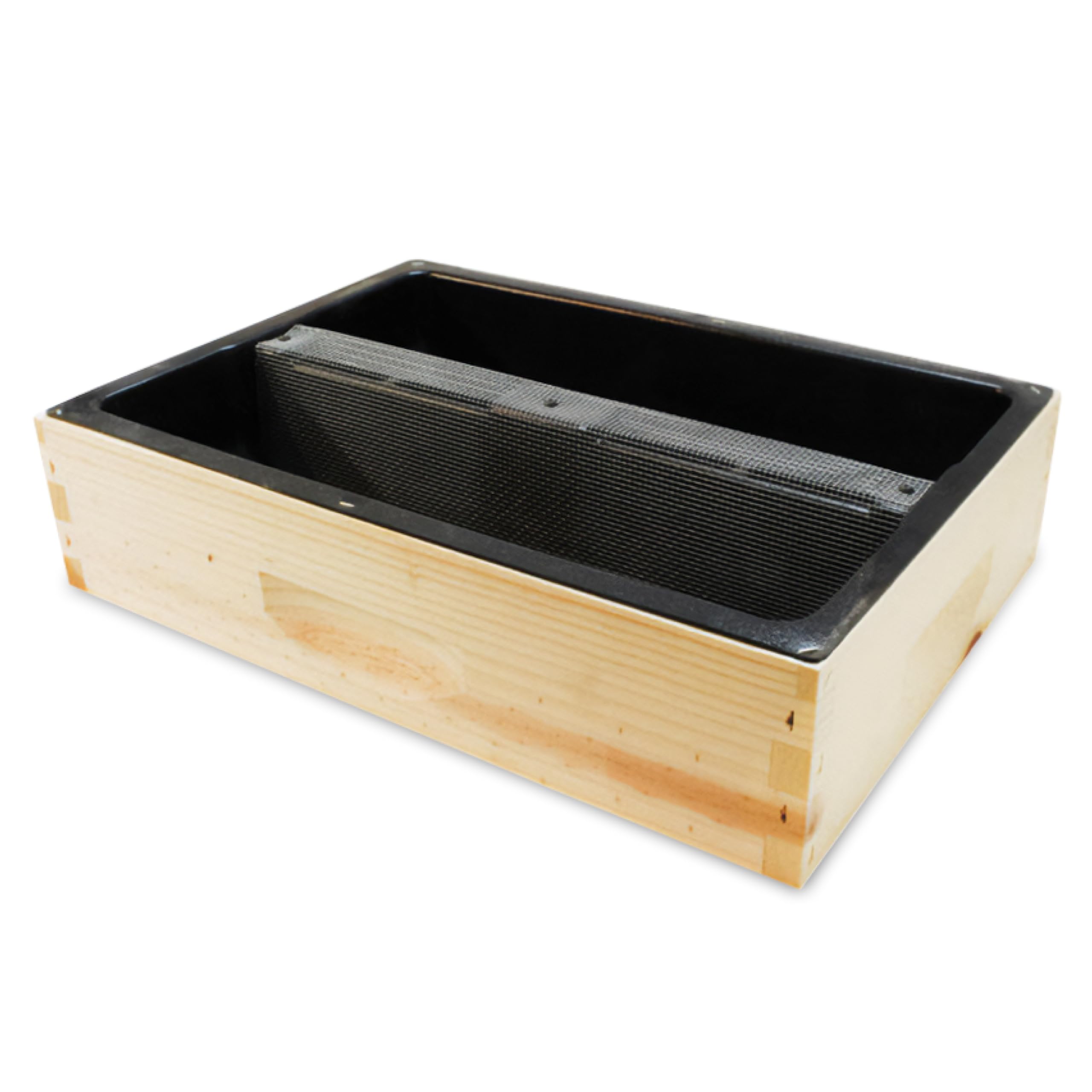
This is not a feeder you buy for one hive. It is a full wooden super with a plastic reservoir inside, 20½ by 16½ by 5¾ inches, and it adds a box of height to the stack before you have put a drop of syrup in it.

For several hives in one place, the arithmetic works. You fill from the top without opening the brood chamber, the reservoir is a single molded piece with no seam to drip, and the volume is large enough that a full load lasts a long stretch rather than a day. The wood super sits on standard 10-frame equipment, and having a box rather than a tray means the reservoir is not going anywhere in wind.

The screen is where our enthusiasm cools. A galvanized steel screen is supposed to keep bees out of the syrup, and it does not do that reliably; drowning is the recurring problem around this design, and bee safety is the weakest dimension of any feeder here. If you buy it, look into the reservoir every time you walk the hives and do not leave it running for weeks unattended. Running a bead of food-grade sealant where the screen meets the plastic is the sort of small job that turns it from a worry into a tool.

That leaves a narrow but real role: a fixed site with a lot of hives, where one big fill beats six small ones and somebody is around to keep an eye on it. For two hives behind a garden shed, the smaller top feeders are less trouble and kinder to the bees.

Bottom line: Choose it for a large apiary where fewer refill trips matter more than bee losses, and only if you are there to check the reservoir often.

How We Tested Bee Feeders

We started by pulling together feeders from beekeeping suppliers and garden retailers, then narrowed the field by design: an access point bees could use without falling in, a lid that fit securely, and a reservoir we could clean without disassembling ten parts. Materials and capacity eliminated a few more—thin plastic that flexed at the seams, or bowls so small they would need daily attention. That left 14 feeders, which we ran for five months from early spring through late summer.

Each feeder went into one of two settings: my backyard, where morning sun hits the fence line, and a nearby community garden plot with heavier afternoon shade. I filled them at dawn, checked them again in late afternoon, and counted two things—bees actively feeding and bees drowned in the reservoir. I also noted how quickly the syrup disappeared, which told me whether the feeder was actually being used or just leaking.

Every week I emptied and cleaned each unit, then looked at the parts that wear first: lid threads, feed ports, and seams. I filled each one, tilted it over a sink, and watched for drips at the lid and port fit. Feeders stayed outside through rain and heat, and I checked for warping, cracks, and fading. At the end, I compared construction and refill frequency against what each feeder cost per season to judge value.

How to Choose Bee Feeders

Start with where the syrup sits

Entrance feeders hang a jar at the door. They are the cheapest and the quickest to check, and they are also the most exposed, because ants, wasps and bees from other colonies all find an open jar at the front of a hive. Top feeders sit above the colony and let you refill without opening anything, at the cost of height and a little more drowning risk in the tray. Frame feeders live inside the brood box, out of reach of robbers, but they take frame space and every refill means opening up.

Two hives in a garden, and you want to glance at the level on the way past: an entrance feeder is fine. Half a dozen hives and a bad back: a top feeder. A new package or a weak colony you are watching daily: a frame feeder, where the syrup sits warm and close.

Capacity is really a refill schedule

A reservoir's size means nothing until you translate it into trips. Six and a half liters in a frame feeder and half a gallon in a top feeder are different sorts of week, especially in a fall dearth when a strong colony empties a small feeder fast. The trap is buying the biggest number on the page: a full entrance jar hangs heavy off the front of the hive, and a reservoir you cannot reach without dismantling the stack is worse than a small one at arm's height.

Drowning is a design question

Bees drown when the syrup is an open pool with nothing to stand on. The fixes are grooved ladders, wooden floats, textured cones and cups, and metal screens, and none of them is fully reliable: foam rings are edible and get chewed, a screen only helps while it sits tight and clean, and a float guards only the part of the reservoir it covers. Look for a surface that stays below the syrup line as the level drops, not just a ledge at the top, and check the guard every time you fill.

Fit comes before every other specification

None of the rest matters if the feeder will not sit on your hive. Frame feeders are built for deep boxes and stand about nine inches tall; drop one into a medium and the cover will not go back on. Top feeders come in 8-frame, 10-frame and universal sizes, and the shallow ones let a standard outer cover close over them. Entrance feeders depend on the width of the entrance, whether you run a reducer, and the thread of the jar you are screwing on.

The off-season decides how long it lasts

Feeders live outdoors, and that is what finishes most of them: plastic left through a frost goes brittle, and a jar that cracks in March is a jar you replace. Syrup left standing ferments in heat and molds in the cold, so empty and rinse anything you are not using. Wooden feeders need to dry out properly between seasons or they grow mold in storage. A feeder you clean and store dry is a feeder you get several seasons out of.

Frequently Asked Questions

Final Verdict

Start with the BeeCastle frame feeder if your hives are deep boxes. Six and a half liters inside the brood box, grooved ladders instead of an open pool, and nothing hanging on the entrance for a robber to find — it is the least fuss for the most bees, and the cheapest way to feed a colony properly.

If your kit is 10-frame and you want to top up without taking the hive apart, the Lehman's top feeder is worth the premium: wooden floats, screwed pine, and a box built to be repainted rather than replaced. And for two hives you only ever want to feed from the outside, the Foxhound entrance feeders handle that with the least trouble.