Planters & Plant Supports

Best Planter Urns of 2026

A planter urn looks lovely empty. It's the full version that causes trouble: 40 pounds of soil and a boxwood later, a heavy cast-stone piece needs a dolly to budge an inch, and a light one goes skidding across the porch in the first spring gust. That trade-off between sturdiness and weight is the whole decision, and it usually comes down to material, how wide the base sits, and whether drainage was designed in or drilled as an afterthought. Get it right and you have something that holds its ground through weather and still moves when you decide the entry needs rearranging.

I've drowned more plants in pretty pots than I'd like to admit, which is why drainage sat near the top of our list through eight months of testing 12 urns left out in rain, wind, and a hard freeze. One tip before you buy: listed dimensions are almost always taken at the widest flare, so measure the actual planting opening against your nursery pot. The ones below look right from the street, feel solid when you thump them, and go together without a fight.

1

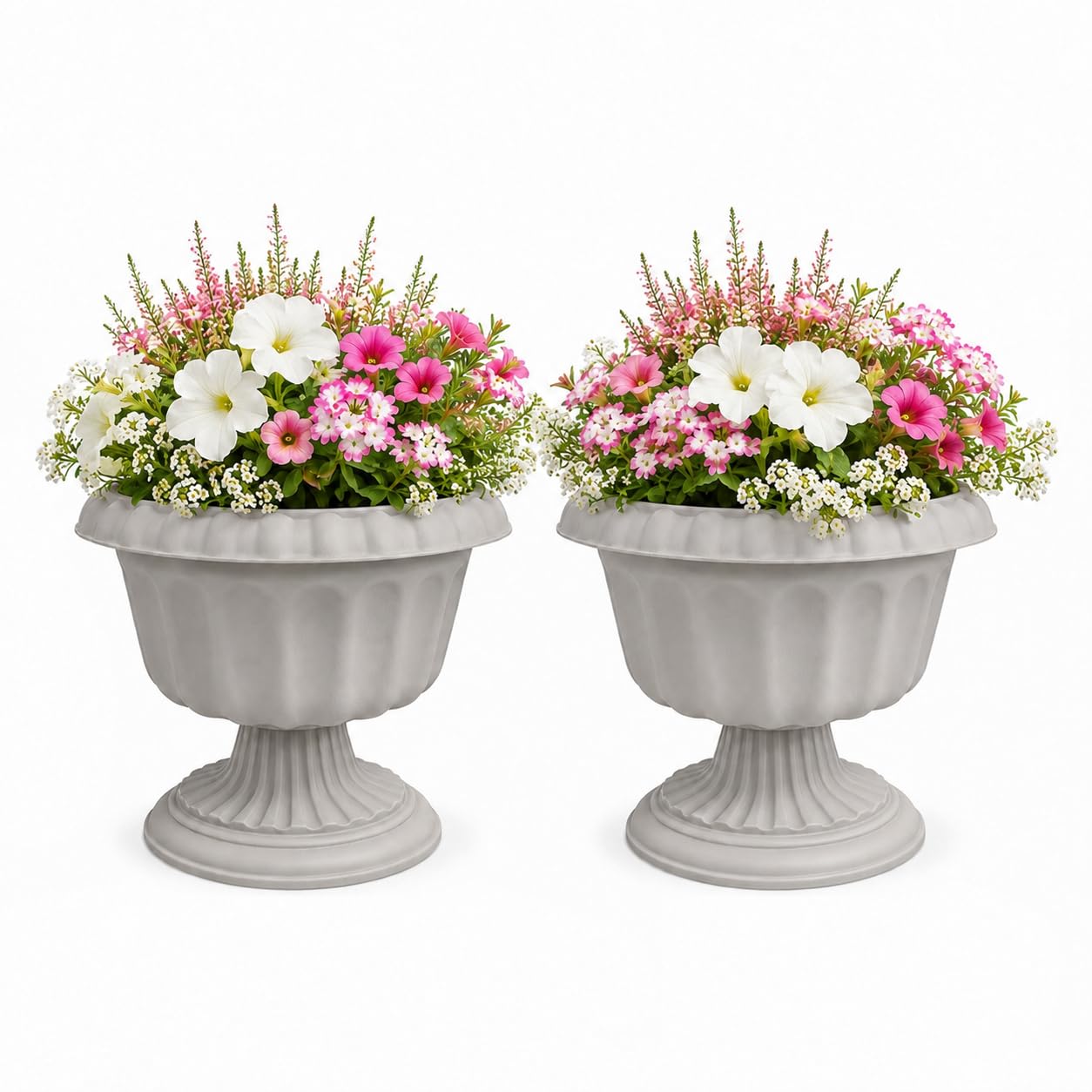
Southern Patio Utopian Urn, 2-Pack

Top Pick
Southern Patio Utopian Urn, 2-Pack

Matching step pairs

Our Score 9.2/10
Check Price

Worth Noting

  • No drainage holes out of the box
Set
2 planters
Drainage
None; drillable
Overall Size
14"D x 14"W x 13.75"H
Planting Depth
10.5 inches
Read the full review

The finish is the trick. From three feet away these read as cast stone — a matte, faintly mottled gray with the fluted body of a garden ornament — and the UV coating is what keeps them that color through a summer of sun instead of fading to chalk.

Fourteen inches across and just under fourteen tall, with 10.5 inches of planting depth, which is more root room than any of the small urns here give you. That depth is why we like them on a step: a decent fern or a compact annual won't be rootbound by July, and you can plant straight into the bowl rather than fiddling with a liner.

What settles it for a matched pair is that they're genuinely identical — same height, same tone, same fluting — and they slip together in seconds with the base locating cleanly underneath the bowl. Light enough to carry two at once, which is not something we can say about the terra-cotta urn.

There are no drainage holes, and that's the thing to plan for. The plastic is thin enough that a standard bit goes through the base in seconds; if drilling isn't for you, drop a nursery pot inside and lift it out to water. For faux arrangements on a covered porch the sealed bowl is actually an advantage — no drips on the step, no staining.

Bottom line: We choose this pair when two entryway urns must match exactly and shrug off the weather — just plan on drilling the bases or lining them.
2

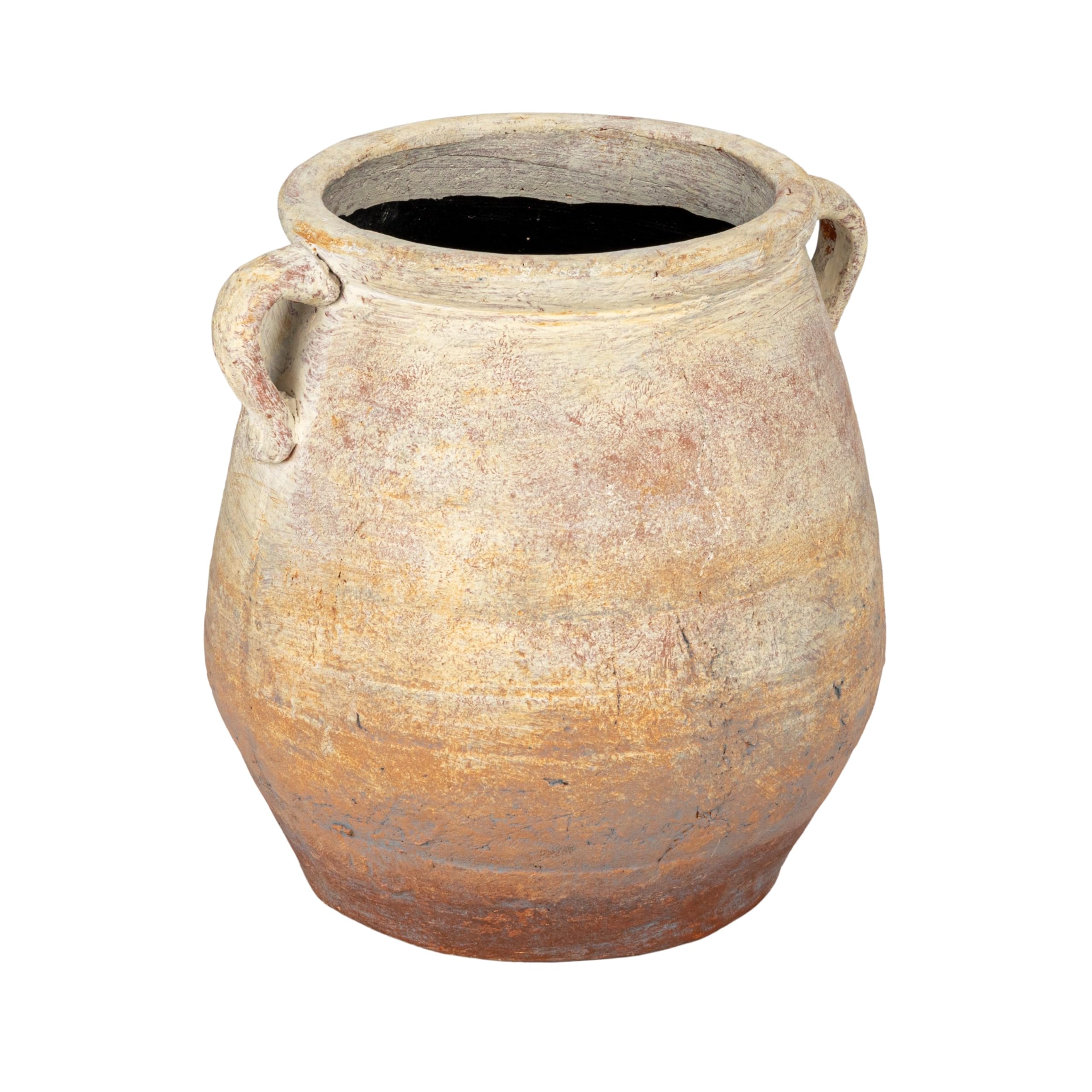
Creative Co-Op Terra-Cotta Urn

Creative Co-Op Terra-Cotta Urn

Windy entries

Our Score 9.2/10
Check Price

Worth Noting

  • Whitewash coverage varies from piece to piece
Weight
17.6 lb
Material
Terra-cotta
Overall Size
13"D x 13.5"W x 13.75"H
Soil Capacity
19.4 liters
Read the full review

Seventeen and a half pounds before a single scoop of soil — that's the number that makes this urn worth considering. Real terra-cotta in a 13-inch body has enough mass that a gust doesn't move it, and unlike the plastic urns here it doesn't need a layer of gravel to behave. If your porch is the windy side of the house, start here.

The whitewash is the other half of the appeal. It's applied unevenly on purpose, so the urn looks like something that's been sitting in a garden for a decade rather than something that arrived in a box, and the texture gives a plain green plant something to sit against. It's a warm beige rather than a bright white, which suits brick and stone better than a painted porch anyway.

Terra-cotta is porous, which is the trade-off you're accepting. It breathes, roots are happy in it, and it also soaks up water, so a saturated urn left out through a hard freeze can spall or crack. Empty it or move it under cover before the first hard freeze, and put a saucer under it indoors so moisture doesn't wick onto a wood floor. It's heavy when full, too — set it on a caddy before you fill it, not after.

Size is the other place to think twice. Thirteen and a half inches across with 19.4 liters of soil is a serious planter for one plant, not two, and it's at its best holding a single strong specimen — an olive, a boxwood, a big fern. If you want small urns to flank a door, this isn't the shape; if you want one piece anchoring a corner, it's the one whose weight and finish we trust most.

Bottom line: We point anyone with a windy porch at this one: real terra-cotta mass, 19.4 liters of root room, and a finish that already looks ten years old.

3

Austram Stone-Resin Urns, Set of 2

Austram Stone-Resin Urns, Set of 2

Formal entrances

Our Score 9.2/10
Check Price

Worth Noting

  • Long-term finish wear is unproven
Weight
8.1 lb
Drainage
Removable plug
Overall Size
16"D x 16"W x 21.5"H
Soil Capacity
5 gallons
Read the full review

Stone powder blended with recycled resin is the material here, and it's why these read as carved rather than molded: the surface is matte, faintly granular, and holds a shadow the way real stone does. At 21.5 inches tall with a 16-inch opening they're the widest of the tall urns in this group.

Five gallons of soil, a removable drainage plug, and eight pounds empty — a combination that behaves well on a covered porch. Leave the plug in and the base stays sealed for an indoor display; pull it and a porch pot drains properly. The pedestal profile is what sells them: a tapered foot, a defined shoulder, and a rim that reads as turned rather than extruded.

What we can't vouch for is the finish over time. A stone-resin composite resists chipping by design, and nothing about the texture suggests a coating that will flake, but this design hasn't been in gardens as long as the cheaper urns and the long-term answer isn't in yet. If you're buying for a house you'll stay in for a decade, that's the one open question, and it's why this pair sits below the top pick.

What they earn is a place on a formal front elevation: black, tall, symmetric, with the stone texture that makes a painted porch look finished. Set either side of a door, they do the work of architectural salvage. The premium is real, and it buys the only set here that looks like it was carved.

Bottom line: If your entry needs a matched pair that looks carved rather than molded, this is the most convincing stone-look set we cover.

4

Trygoal Tall Urn Planters, Set of 2

Trygoal Tall Urn Planters, Set of 2

Back decks

Our Score 9.2/10
Check Price

Worth Noting

  • Shallow 6.69-inch planting depth
Material
HDPE plastic
Overall Size
19.69"D x 15.75"W x 23.62"H
Planting Depth
6.69 inches
Opening Diameter
15.74 inches
Read the full review

Twenty-three and a half inches of height, and the only urn here with a water reservoir built into its base. The bottom section holds water, which adds weight where you want it, and the two-piece structure is designed so the bowl drains without the roots sitting in it.

The bowl is shallower than the height suggests — 6.69 inches of planting depth inside a 15.74-inch opening — which makes this a display urn more than a growing container. A nursery pot of mums, a spiral topiary in a liner, or a good faux arrangement is what it's for. A shrub with ambition would be cramped.

HDPE is the right plastic for outdoors: it resists going brittle in cold, and the sandblasted petal texture keeps the surface from looking like a bucket. The fluted, trophy-like body is more playful than the straight-sided urns in this group, which is why we like it on a garage corner or a back deck where a formal urn would look fussy.

So it's a specific buy: you're paying for height, a matched pair, and a base that stretches the watering on a hot porch. If the planter is going to hold something with real roots, a deeper single bowl like the Root & Vessel is a better home. If you want two tall silhouettes that shrug off a dry week, nothing else here does that job.

Bottom line: We send people to this pair when height and a self-watering base matter more than deep roots — nothing else here stands this tall.

5

Root & Vessel Classic Urn, 19-Inch

Root & Vessel Classic Urn, 19-Inch

Front porches

Our Score 9.0/10
Check Price

Worth Noting

  • Thin plastic walls flex when handled
Weight
1.9 lb
Drainage
Optional punch-out holes
Overall Size
19"D x 19"W x 19"H
Soil Capacity
4 gallons
Read the full review

Four gallons of soil in a 19-inch body, for less than any other tall urn in this group — that's the case for the Root & Vessel Classic, and it's a strong one. It's the size most people picture when they say garden urn: a flared bowl on a footed base that lifts the planting off the ground, so a fern or a topiary reads as a specimen rather than a pot plant.

We rate it the best default here because it solves the two things that sink cheap urns. The bowl is deep enough to keep roots cool through a hot afternoon, and drainage is your call rather than the factory's — punch out the discs in the base for a porch pot, or leave them sealed and drop in a liner for a sunroom. Nothing about the design is precious, which is exactly why it works beside a front door, on a patio, or in the corner of a kitchen.

At 1.9 pounds empty it's the lightest tall urn of the eight, and a two-piece plastic body that light will move in a gust if you plant it and walk away. Put a couple of inches of gravel or sand in the bottom before the soil goes in; that ballast is the difference between an urn that stays upright through a storm and one that doesn't. Once it's loaded it behaves, and moving it afterwards is a two-hand job.

Where it beats the stone-look urns is honesty. The finish reads as cast stone from the sidewalk and as molded plastic up close, and it isn't pretending otherwise. That's fine by us: the silhouette is what does the work at porch distance, and four gallons of soil for this kind of money is why we hand it to most people who ask.

Bottom line: We recommend the Classic Urn as the default: it's the cheapest way here to get a genuinely urn-sized planter, and its punch-out drainage works indoors or out — just weight the base first.

6

Worth 22-Inch Urn Planters, Set of 2

Worth 22-Inch Urn Planters, Set of 2

Tall porch entries

Our Score 8.8/10
Check Price

Worth Noting

  • Color runs warmer and more tan than shown
  • Painted finish can blister and crack outdoors
Weight
4.3 lb
Drainage
Drilled hole with rubber plug
Material
PP plastic
Overall Size
15.7"D x 15.7"W x 21.7"H
Read the full review

If you're flanking a front door, you need two urns of the same size or the whole entry reads lopsided, and this is the pair we reach for: a touch under 22 inches tall, a 15.7-inch span, and enough presence to sit either side of a door without looking like afterthoughts. Symmetry is the entire job here, and the wrong pair is worse than no pair at all.

The detail we didn't expect to care about is the base. It screws into the bowl at the narrow point rather than sitting under it as a separate foot, so the two pieces behave like one when you carry it and when it fills with wet soil. The bottom also comes drilled, with a removable rubber plug: keep it in for a sealed indoor display, pull it for a porch pot, and one planter covers both jobs.

Empty, it's a bit over four pounds, so a loaded bowl is what keeps it planted — a layer of gravel under the soil makes it stable in wind that would take a lighter urn over. Once it's full it doesn't budge, and the wide foot spreads the weight on a wooden step instead of digging into it.

The finish is where the money went: the surface has a fine grain rather than a gloss, and it reads as aged stone from the sidewalk. Against the Austram composite it's the less convincing pair up close — and the one we point at when the budget matters more than a decade of finish.

Bottom line: We pick this pair when two matching urns have to frame a door — tall enough to matter, stable once ballasted, and convincing as stone from the walk.

7

Arcadia Classic Urn, 10 x 12-Inch

Arcadia Classic Urn, 10 x 12-Inch

Tables and sills

Our Score 8.8/10
Check Price

Worth Noting

  • Small 8.5-inch opening limits planting
  • No drainage holes; base must be drilled
Drainage
None; drillable
Overall Size
10"D x 10"W x 12"H
Planting Depth
7 inches
Opening Diameter
8.5 inches
Read the full review

Ten inches wide, twelve tall, with an 8.5-inch opening and seven inches of soil depth: this is a tabletop urn, and the small print matters more than usual here. Ordered as a tabletop piece it's a lot of urn for very little; ordered as a porch planter, that eight-and-a-half-inch opening will disappoint.

What we appreciate most is how much of the classic silhouette survives at this size. The fluting is crisp, the brushed copper finish is convincing at arm's length, and the two pieces slip together without tools or a wobble. Set beside the plain gray plastic urns here, it looks like the one that cost more.

It's plastic and it feels it. The walls flex, it weighs almost nothing, and on a windy sill you'll want a stone or a handful of gravel in the base to hold it. The copper is a surface finish rather than a through-color, so a scrape on a hard edge shows lighter underneath.

Where it earns its place is in multiples. Grouped with a clipped topiary, a trailing ivy, and a candle, the copper version looks collected rather than matched, and the low spend means three of them isn't a decision. It's the small urn we reach for when a surface needs weight at the bottom of a plant rather than a statement.

Bottom line: For sills, shelves, and tabletop groupings, this is the urn we recommend: the classic shape and a copper finish that looks pricier than it is.

8

Usocik Pedestal Urns, 2-Pack

Usocik Pedestal Urns, 2-Pack

Balconies and gates

Our Score 8.8/10
Check Price

Worth Noting

  • No pre-drilled drainage holes
Drainage
None pre-drilled
Overall Size
11.6"D x 11.6"W x 11.6"H
Soil Capacity
5 liters
Opening Diameter
9.8 inches
Read the full review

Eleven and a half inches tall, under a pound each, and sold as a pair: these are the urns for a balcony, a pair of steps, or a console that needs two matching objects rather than one big one. The stone-gray finish has a fine texture to it, closer to concrete than to the smooth plastic of the cheapest urns.

The two pieces connect with a twist-lock rather than a slip fit, which matters more than it sounds — a locked base doesn't part company when you pick the planter up by the bowl. Assembled, the pair feels more solid than their weight suggests, and the opening is a hair under ten inches, nearly the full width of the pot, so planting is easy.

The concrete look earns its keep up close as well as at a distance: the surface has a fine cast to it, and the base is detailed enough that it doesn't read as a separate molded cup. Indoors, a liner is the way to go — set a nursery pot in the bowl and lift it out to water, which keeps furniture dry and lets you swap plants with the season.

Where the pair makes sense is exactly where a 22-inch urn won't fit: a balcony railing, a pair of narrow steps, either side of a garden gate. Five liters of soil covers herbs, annuals, or a small fern, and the twist-lock base means you can carry them in for winter without the foot dropping off in the hallway. Buying two is the whole point at this size.

Bottom line: For balconies and side steps where a big urn won't fit, we like this matched pair — light, concrete-look, and locked together properly.

How We Chose and Tested These Urns

We built a shortlist of about 60 urns, starting with brands we'd bought from before and the ones that kept surfacing in customer reviews, then filtered by material, price, and the sizes people actually shop for, roughly 12 to 22 inches tall. Anything with a sealed interior, a base noticeably narrower than the body, or a listing that never stated the planting dimensions got cut early. Twelve made the final list, and they've been in rotation for eight months.

Each one was planted with the same soil mix and either a nursery boxwood or a flat of annuals, then set where urns really live: a front porch, a back patio, a windy balcony, and one indoor entryway. We weighed them empty and again full, rocked each one to see how much it gave, and ran a hose at full pressure for two minutes to watch how fast water moved through the drainage hole and saucer. We also measured every planting opening against the listed size, and most came in smaller than advertised, sometimes by more than an inch.

Assembly got timed, since several arrive in pieces with bolt-on bases, screw-in feet, or separate liners. Every couple of weeks we checked for fading, hairline cracks, rust at the seams, and chalky bloom on the finish, and noted which ones still looked good from the sidewalk and matched their photos. Because a planter you can't move is a planter you stop using, we shifted each one onto a dolly, up steps, and across gravel, and judged whether the price still felt earned by month three.

How to Choose Planter Urns

Buy by the opening, not the name

The size on the box is usually the widest outside measurement, and the planting hole is smaller — sometimes much smaller. The Arcadia 10-inch urn has an 8.5-inch opening and seven inches of soil depth; the Southern Patio 14-inch gives you 10.5 inches of depth inside a body barely wider.

Depth is the figure that decides what survives. Under eight inches suits annuals, herbs, and topiary in a liner; ten inches and up will carry a small shrub or a fern through a hot summer. Check the root ball of what you intend to plant before you fall for a silhouette.

Plan for ballast before you plan for plants

Almost every urn here is hollow plastic, and empty weights in this group run from under a pound to about four and a half. A tall, light urn catches wind at the bowl, and the fix isn't a heavier planter — it's two inches of gravel or sand in the base before the soil goes in, which lowers the center of gravity and gives surplus water somewhere to collect.

If you want mass without the gravel, buy mass: the terra-cotta urn is heavy enough to sit out a gale on its own, and the stone-resin composite is closer to that than to the plastic.

Decide where the water goes

Most urns ship sealed. Some have punch-out discs, some arrive drilled with a removable plug, and some have nothing at all. Outdoors, water has to leave or the bowl becomes a pond and the roots rot; indoors, water has to stay, so keep the plug in and set the plant in a nursery liner you can lift out to water at the sink.

The plugged designs are the most flexible of the three, which is why we lean toward them for anything that moves between a porch and a sunroom. Where there's no hole and no plug, drilling a base is a one-minute job on thin plastic.

Match the material to your weather

Painted plastic is the value play and the finish is the wear item. UV-coated surfaces hold their color; unbuffered paint chalks, and on a couple of the cheaper sets it chips along the rim after a season. Terra-cotta is the opposite trade — heavy, porous, and beautiful, and it wants to be emptied or moved under cover before a hard freeze.

Stone-resin composites split the difference: real stone texture, reasonable weight, and a price above plastic. Pick by which failure you'll tolerate, because every one of these will fail at something eventually.

Check how the two pieces meet

Tall urns arrive in two parts, and the joint is where a load of wet soil does its damage. A base that screws or twist-locks into the bowl behaves like one piece; a base that simply sits underneath can part company the moment you lift the planter by the rim.

Look for a locking joint on anything over about 14 inches tall, and lift from the base regardless — the rim of a thin-walled urn is the first thing to crack.

Frequently Asked Questions

Final Verdict

The Root & Vessel Classic Urn is the one we point most people to. Four gallons of soil in a 19-inch body for less than any other tall urn here, drainage you can open for the porch and seal for the sunroom, and a silhouette that does its work from the sidewalk. Set an inch or two of gravel in the base before you fill it and it stays put through a windy week.

If your entry is exposed and you want mass without ballast, the whitewashed terra-cotta urn is the upgrade worth making — heavier, better looking up close, and a single-plant piece rather than a pair.