Planters & Plant Supports

Best Plant Labels of 2026

Every spring I make the same mistake: I sow six varieties of tomato into identical trays, tell myself I'll remember which is which, and then spend June squinting at faded popsicle sticks. A plant label is a two-dollar fix for that problem, but only if it survives watering, sunlight, and your own handwriting. The wrong ones snap at the point, slide out of damp soil, or go blank by the time the first true leaves show up. The right ones do quiet, unglamorous work for years, which is exactly what you want from something you'll write on a hundred times.

Over four months this spring, my team planted, labeled, and replanted 18 different sets, from thin plastic stakes to wood, bamboo, copper, and a few that stick straight onto the pot. Here's what nobody tells a first-time seed starter: the material matters less than the surface you write on. A glossy face sheds marker with the first watering, while a slightly rough, matte one holds pencil through an entire season. Below are the labels that earned their spot in my trays, plus notes on which jobs each one suits best.

1

Dalzom 300-Piece Plant Labels

Top Pick
Dalzom 300-Piece Plant Labels

Seedlings and pots

Our Score 9.6/10
Check Price

Worth Noting

  • 4-inch stake sits low in deep containers
Material
PVC plastic
Label Size
4 x 0.62 in
Labels Per Pack
300
Marker Included
Dual-tip permanent pen
Read the full review

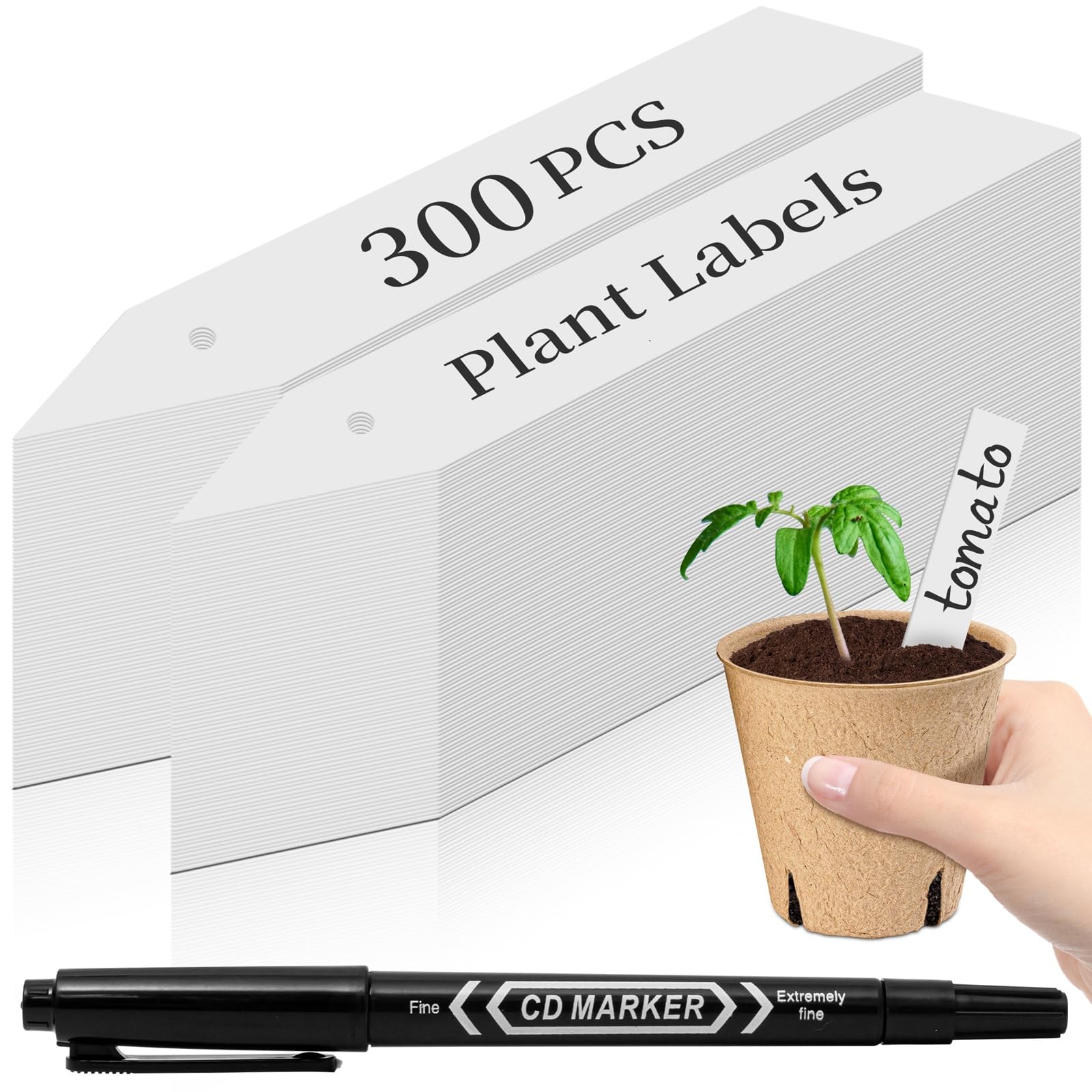
Every plastic label on this list does the same basic job, so the one we reach for first is the pack that gets the small things right. Dalzom's 300-count gives you a 4-inch label with a 0.62-inch face, blank on both sides, and a dual-tip pen: fine at one end for a cultivar name, bold at the other for a row heading. For seed trays, nursery pots, and herb planters, it's the best all-round pack here.

The writing is what earns that. The face takes marker ink instead of letting it bead, and the names stayed legible through a normal season of watering, which is more than the cheapest tags in this group manage. Both sides are blank, so a label that finished with this year's tomatoes can carry next spring's basil on the reverse.

The face is only 0.62 inch wide, so a long botanical name like Solanum lycopersicum needs abbreviating or a second line, and big handwriting eats the space faster than you expect. That's the trade for 300 labels and a pen at a mid-range price, and for trays, pots, and herbs it's the right one.

Bottom line: We think this is the pack to buy for seed trays and pots: 300 labels, a dual-tip pen that works, and writing that stays put.

2

TDHDIKE 500-Piece Plant Labels

TDHDIKE 500-Piece Plant Labels

Bulk sowing

Our Score 9.4/10
Check Price

Worth Noting

  • Included pen runs dry before the labels do
Material
PVC plastic
Label Size
4 x 0.62 in (10 x 1.6 cm)
Labels Per Pack
500
Marker Included
Double-ended permanent pen
Read the full review

Five hundred labels sounds excessive until you've sown four tomato varieties, three basils, and a row of beans in one weekend. TDHDIKE's box costs about what the 300-counts here cost and gives you 500 white PVC labels at 4 by 0.62 inches, plus a pen with a fine tip at one end and a bold tip at the other.

The dimensions are standard for good reason: long enough to stand proud of a 4-inch nursery pot, narrow enough to sit between cells in a starter tray without knocking its neighbours over. Both faces are matte and blank, which is where the fine tip earns its keep — cultivar on one side, sowing date on the other.

Where it gives ground is the plastic. These are among the thinnest labels here, and in firm or stony garden soil they bend before they penetrate; water the ground first, or keep them for pots and trays where nothing pushes back. Make that trade and it's the best value in this guide by a distance, because nothing else here puts a name on 500 plants for the money.

Bottom line: We recommend it for a full tray shelf: 500 labels at the lowest cost per label here, provided your soil is soft.

3

Emboss-O-Tag Aluminum Plant Tags

Emboss-O-Tag Aluminum Plant Tags

Trees and shrubs

Our Score 9.4/10
Check Price

Worth Noting

  • Wire fixing only; there is no push-in stake
Material
Aluminum
Attachment
6-inch wires
Label Size
1 x 3.3 in
Labels Per Pack
50
Read the full review

If the thing you're labeling is a tree, a blueberry bush, or a rose you plan to keep for a decade, a push-in plastic stake is the wrong shape. Emboss-O-Tag's labels are 1 by 3.3-inch aluminum plates that hang from a 6-inch wire looped around a trunk or branch, so the name moves with the plant instead of sinking into the soil beside it.

The clever part is how you write on them. A ballpoint pen, a pencil, or a stylus pressed hard embosses the aluminum, and an impression in metal doesn't fade, wash off, or need redoing after a wet winter. You can write on both sides without the mark showing through, so one tag carries the cultivar on the front and the planting year on the back.

Fifty tags and fifty wires come in the pack, enough for a small orchard or a shrub border, and the wire twists by hand without tools. The look is utilitarian — a silver tag on a wire loop reads as plant nursery rather than cottage garden — so we keep them for the fruit trees and the labelled collection, not the pot by the front door.

Bottom line: Our pick for trees and shrubs: aluminum tags you emboss with a ballpoint, hung on wire so the name never sinks into the soil.

4

Darfukei 300-Piece Plant Labels

Darfukei 300-Piece Plant Labels

Budget seed starting

Our Score 9.4/10
Check Price

Worth Noting

  • Thin plastic flexes in root-bound soil
Material
PVC plastic
Label Size
4 x 0.62 in
Labels Per Pack
300
Marker Included
Permanent pen
Read the full review

The cheapest way here to get 300 labels is Darfukei's box, and we still recommend it, with one swap. The labels are the familiar 4 by 0.62-inch PVC shape: pointed end, blank on both sides, a lightly textured face that takes ink. What you're trading against our top pick is the pen.

That pen is the part to plan around. It can dry out partway through the box, so write with the garden marker you already trust and treat the included one as a spare for touch-ups. The face itself behaves: marker ink sits on the texture rather than beading, and the labels slide into damp compost without complaint.

Volume is the point. Three hundred labels means a cell for every seed, a spare for the pot you forgot, and enough left over to send seedlings home with neighbours, at a cost per label that's close to the lowest here. If you sow every few weeks from late winter into summer, this is the box to keep on the shelf.

Bottom line: We rate this the best budget box: 300 labels with a textured face that takes ink, bought for the labels rather than the pen.

5

Delatanus 6-Inch Plant Markers

Delatanus 6-Inch Plant Markers

Deep pots

Our Score 9.2/10
Check Price

Worth Noting

  • Can go brittle after a season in strong sun
Width
0.6 in
Length
6 in
Thickness
1 mm
Labels Per Pack
100
Read the full review

A 4-inch label disappears in a 12-inch patio pot: the name ends up below the rim, and you're crouching to read it every time you water. Delatanus answers that with length rather than width — a plain white stake 6 inches tall and 0.6 inch wide, 1 mm thick, with a pointed end and a small hole near the top.

That 1 mm is the number that matters. These push into damp compost without bowing and stay upright through a summer of watering instead of leaning into the foliage the way thinner tags do. You supply the marker, which at this price is a fair trade: the money went into the plastic rather than a pen that dries out by June.

Six inches also buys clearance, so the name sits above a bushy herb or a pepper plant instead of under it, and the extra length holds its place in a garden row where a shorter stake gets lost between leaves. For a summer of vegetables and cut flowers, that's the length we want; for anything permanent, look to the metal picks.

Bottom line: For deep pots and tall plants, we reach for these: 6 inches of stiff plastic that keeps the name above the rim.

6

Bravex Stainless Steel Plant Labels

Bravex Stainless Steel Plant Labels

Long-term beds

Our Score 9.2/10
Check Price

Worth Noting

  • Only 25 markers at the highest price here
Height
10.75 in
Material
Stainless steel 304
Label Area
3.74 x 1.39 in
Labels Per Pack
25
Read the full review

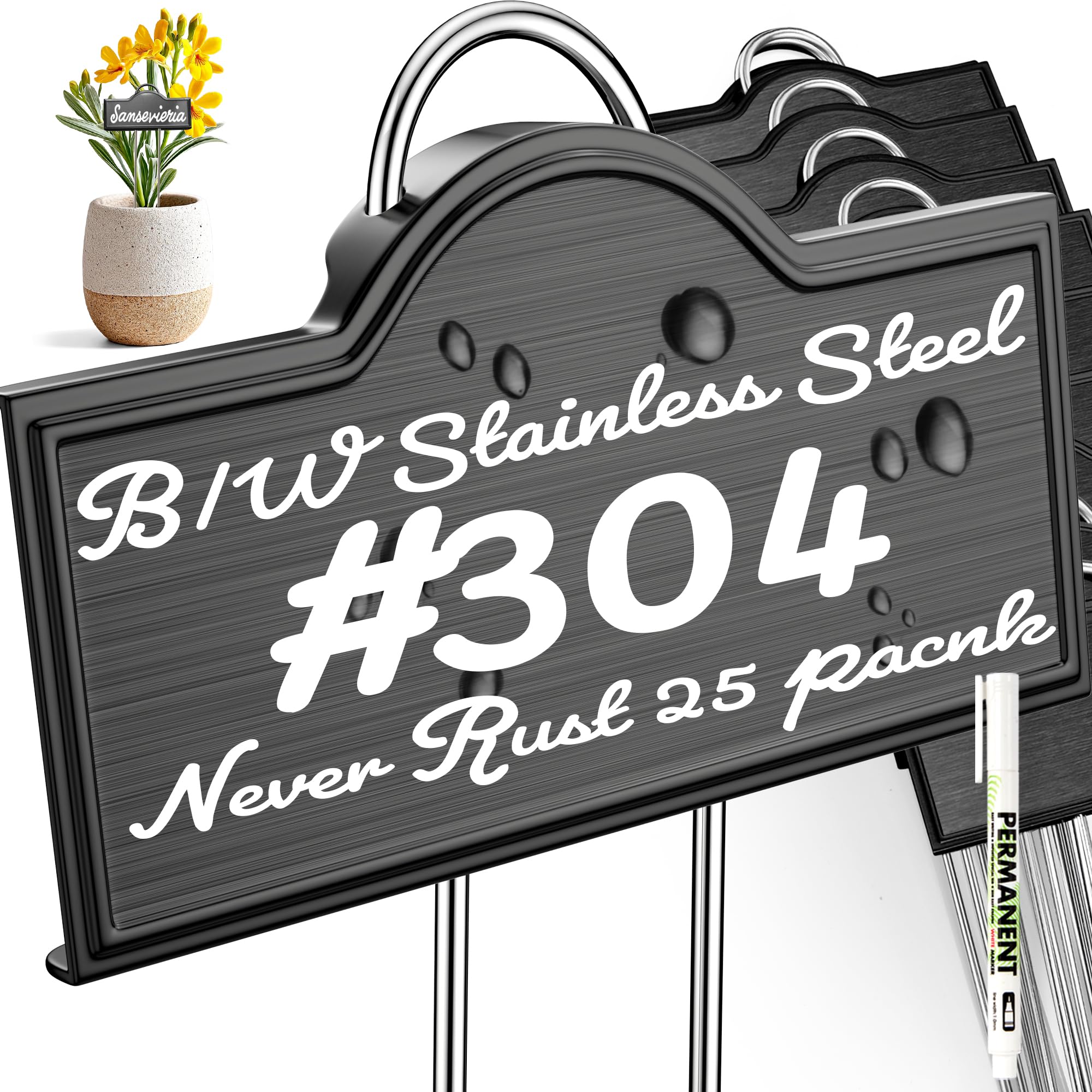
The Bravex markers are the only labels here that make a bed look better. Black titanium-coated stainless, an arched plate tilted about 25 degrees, and two long prongs that push into the soil: from the path you read the plant name without bending, which is the small luxury you're paying for.

The plate is a real writing surface at 3.74 by 1.39 inches, big enough for a Latin name on one line and the common name under it. Each marker arrives with a peel-off film over the face so it doesn't get scratched before it reaches the garden, and the prongs are long enough to hold in clay that bends plastic stakes.

Stainless doesn't hold marker ink the way plastic does. The included fine-tipped pen writes cleanly and rubbing alcohol takes it off if you change your mind about a name, but a season in the sun can leave you with a blank plate; an oil-based paint marker or a printed strip from a label maker lasts far longer, and the plate is big enough for either.

This is the most expensive pack in this guide and it holds 25 markers, which is a herb bed or a small border rather than a whole garden. What you get is a label you leave in place for years, reposition without snapping, and read standing up — worth it for the bed by the kitchen door, overkill for a 200-cell seed tray.

Bottom line: For a bed we actually look at, these earn their place: stainless markers you read standing up, with a paint pen doing the writing.

7

KINGLAKE T-Type Plant Tags

KINGLAKE T-Type Plant Tags

Vegetable rows

Our Score 9.2/10
Check Price

Worth Noting

  • Thin stake kinks in firm or stony ground
Shape
T-type
Material
PVC plastic
Label Size
6x10cm (2.36x3.96 inch)
Labels Per Pack
100
Read the full review

The head is the reason to consider these: 2.4 inches of blank white plastic above a 4-inch stake, wide enough for a variety name and a sowing date on one line, or three short lines if you write small. Nothing else at the cheap end of this guide gives you that much room.

The T-shape is the other half of the design. It pushes into a pot or a soft bed without a dibber and sits steady once it's in, and the wide head doesn't lever itself out the way a narrow stick can. Both faces are matte, so a Sharpie goes on cleanly and doesn't skate.

Be realistic about what you're buying: these are a one-season row marker. A hundred of them label a whole vegetable patch, the head is easy to read at a glance, and the price means you can use them freely rather than hoarding them. The ink can fade over a hot summer, so go over the ones that matter with a paint marker halfway through the season.

Bottom line: We like these for labeling a whole vegetable row: a wide head you can read at a glance, cheap enough to use 100 in a season.

8

Mr. Pen 100-Piece Plant Labels

Mr. Pen 100-Piece Plant Labels

Small gardens

Our Score 9.2/10
Check Price

Worth Noting

  • Ink lifts off the smooth face outdoors
Material
PVC plastic
Label Size
4 x 0.8 in
Labels Per Pack
100
Marker Included
Black garden marker
Read the full review

The cheapest pack here is also the widest-faced: 100 labels at 4 by 0.8 inch, with a black garden marker in the box. Where our top pick gives you three labels for every one of these, these give you a face a third wider, and for a lot of gardeners that's the better trade.

A 0.8-inch face takes a full cultivar name without abbreviating and leaves room for a date underneath, and the smooth surface lets a Sharpie glide. The 4-inch length and pointed end suit the same nursery pots and starter trays as everything else here.

The included marker writes dark and dries fast enough that it doesn't smudge — better than the pen in most cheap packs. An oil-based garden pen holds on this face noticeably longer, so use one for anything staying outside, and give the ink time to dry before the pot goes back on the shelf.

A hundred labels suits a balcony of herbs or a dozen tomato plants, and the wide face is genuinely easier to read from a few feet away. It isn't the pack for a 200-cell sowing session or for a name you want to read again in three years; the 300-counts cost a little more and go a lot further.

Bottom line: We suggest this pack for a small garden: the widest face here at the lowest price, as long as you accept the ink fades.

How We Tested the Best Plant Labels

We started with the labels sold by seed companies, the ones on the shelf at the garden center, and the sets with the most reviews online, then narrowed by material, pack size, and price per label. A 100-pack of thin plastic looks like a bargain until half of them crack, so we counted what you actually get and what each label costs. That left 18 sets, which we used from February through June in indoor seed trays, raised beds, windowsill herb pots, and a crate of dahlias waiting to be stored.

Half of every label got a permanent marker and half a No. 2 pencil, so we could see which pairing survived. Labels went into damp seed-starting mix and were watered overhead daily; we checked weekly for smearing, fading, and ink that wiped away under a thumb. Some soaked in a bucket for two days to see whether wood swelled, bamboo split, or marker lifted off the surface. We noted whether a full cultivar name fit on the face and whether a marker tip could reach the corner of a small label without knocking it loose.

For sturdiness, we pushed each one into a packed seed cell and a clay pot, noting which bent, which snapped, and which had edges sharp enough to catch a finger. We measured thickness along the way: thin labels flexed and a few cracked at the point, while the thickest ate up real estate in a two-inch tray. Adhesive and wrap-around styles went onto both dry pots and freshly watered ones, and we checked after a week and again at the end of the season for curled corners and peeling. The sets that stayed outside in full sun all summer were inspected in July for yellowing and brittleness.

How to Choose Plant Labels

Match the stake length to the container

Label length decides whether you can read your own handwriting in August. A 4-inch label suits a 4-inch nursery pot, a seed tray, or a herb planter; drop one into a deep patio pot and the name sits below the rim. The fix is length, not width: the Delatanus stakes clear the rim at 6 inches, and tall metal markers put the name at knee height so you read it from the path.

Before ordering, picture the label in a filled pot. If it would sit lower than the rim, buy longer. Four inches is right for trays and small pots; six inches and up is right for anything you would call a planter.

Material: plastic, bamboo, or metal

PVC labels are the workhorse — waterproof, inexpensive, good for one to three seasons, with the thinnest gauges bending in firm ground. Bamboo looks warmer, but it goes brittle and in humid conditions it can grow mold that makes the writing illegible, which is why we left it out of our picks. Aluminum and stainless steel last years and take pencil, paint marker, or embossing, at several times the price.

Our rule: plastic for annual sowing and seed trays, metal for perennials, trees, and anything you want to label once and forget.

The marker decides whether the name survives

Labels are sold as waterproof and they are — the ink usually isn't. The pen in the box is the first thing to fail: it dries out, fades in strong sun, or lifts off a smooth face after a few waterings. Oil-based garden markers and paint markers hold far longer than a standard permanent marker, pencil works well on aluminum, and a ballpoint embossed into metal never comes off at all.

Test before you commit a tray: write two labels, water one and leave the other in the sun for a week, then check both.

Shape: stake, T-tag, or wire

Straight stakes push into a pot and disappear between plants. T-tags lift a wide head above the soil and are easier to read at a glance, though thin ones kink in stony ground. Wire-hung aluminum tags are the only sensible choice for a trunk or a shrub that will outgrow a stake, because the label moves up the plant instead of being left behind in the soil.

Match the fixing to the job: pots and trays take any of them, open ground wants a thicker stake, and anything woody wants wire.

Frequently Asked Questions

Final Verdict

For most gardens the Dalzom 300-pack is the one to buy. It's the best balance here of a face that takes ink, a pen that actually writes, and a count that carries you through a sowing season without a second order, and it sits in the middle of the price range rather than the top.

Two requirements change the answer. Deep patio pots need the six-inch Delatanus stakes so the name clears the rim, and a bed or a tree you want labeled for years needs metal — the Bravex stainless markers if you read them from the path, the Emboss-O-Tag wires if there's a trunk involved.