Soil & Fertilizer

Best Peat Pellets for Seedlings of 2026

The frustrating part of seed starting isn't sowing the seeds—it's keeping them evenly damp without turning the tray into a swamp. A peat pellet is meant to solve that: a compressed disk that expands with water and gives each seed its own little nursery. But pellets that look identical in the bag can behave very differently once wet—some swell into a tidy cylinder and hold together, while others slump into a soggy mound the moment you touch them. The right one delivers steady moisture, a stable root zone, and enough size to get seedlings through their first few weeks.

I've started enough tomatoes on my kitchen counter to be picky. Over four months, my team and I hydrated and planted 14 varieties, comparing expansion, moisture retention, and germination. A cheap pellet that germinates well is a bargain; a pack of cracked disks is not. The picks below earned their shelf space.

1

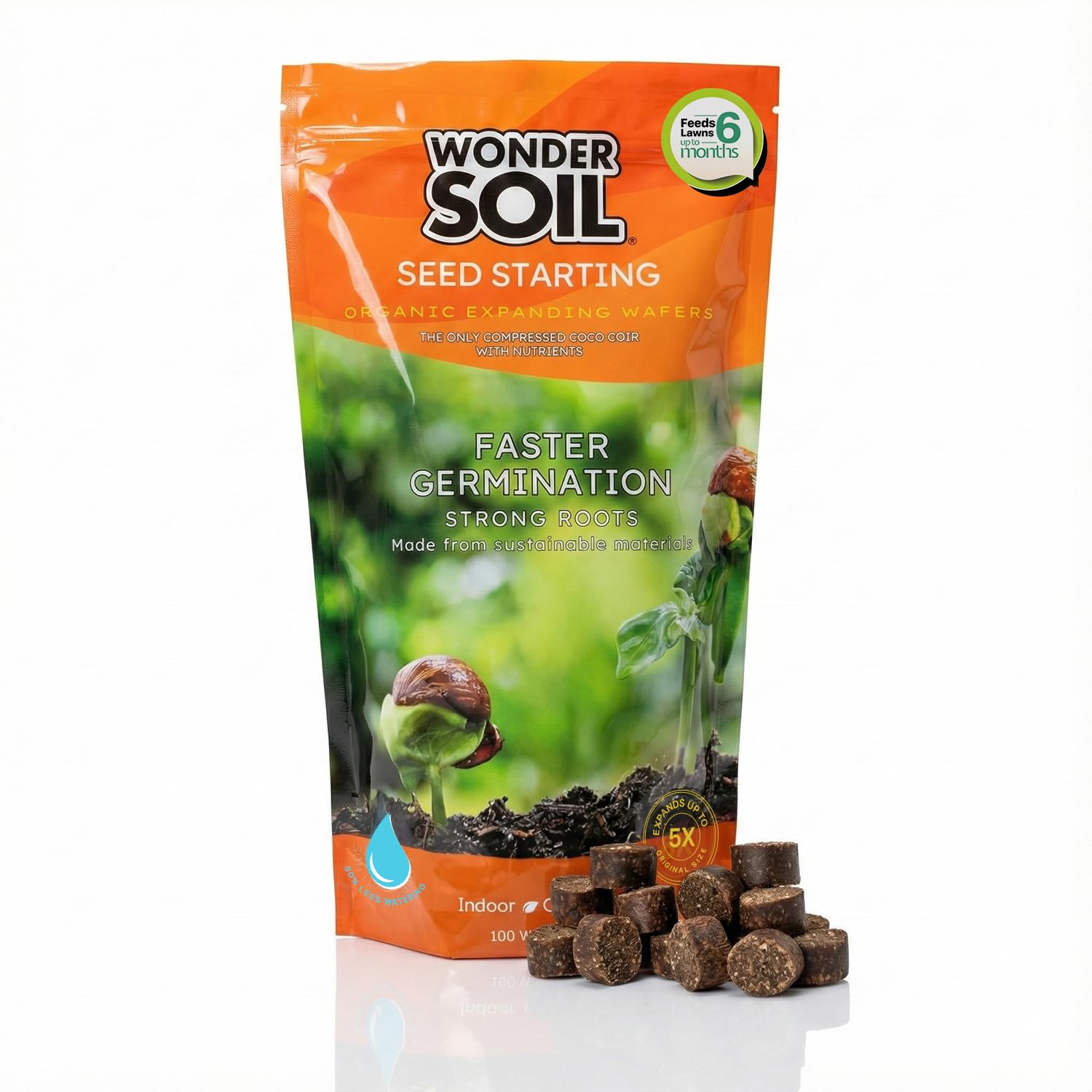
Wonder Soil Coir Seed Pellets, 100 ct

Top Pick
Wonder Soil Coir Seed Pellets, 100 ct

Peat-free starting

Our Score 9.0/10
Check Price

Worth Noting

  • Highest cost per pellet in this group
  • Wafers can expand unevenly
Count
100
Expansion
4 times its size
Pellet Type
Coco coir
Added Nutrients
Worm castings, kelp, mycorrhizae
Read the full review

These aren't peat. The wafers are coco coir, charged with worm castings, kelp and mycorrhizae, and that's why we kept them in the roundup: it's the only pellet here that arrives with a nutrient load rather than a blank medium, and the one to choose if you'd rather not dig up bog for your tomatoes.

Add water and a wafer swells to several times its compressed size into a pale plug that holds moisture well. Watering in place matters more here than with peat: set the wafer in its cell first and add water there, because a fully swollen puck is awkward to tuck into a small cell and can crack the walls of pulp pots as it expands.

Size is the thing to weigh. These are dime-sized discs, the smallest starting point here by a distance, which suits basil, thyme, lettuce and anything potted on within a few weeks. A tomato will outgrow one in a fortnight. Think of them as a nursery for small seeds and a reason to delay the first feed, not a plug for a plant that's staying a while.

Bottom line: The pick if you're avoiding peat: coir wafers that arrive charged with nutrients, small enough for herbs and early potting-on.

2

Jiffy J4 Refill Peat Pellets, 25 ct

Jiffy J4 Refill Peat Pellets, 25 ct

No-tear transplanting

Our Score 8.8/10
Check Price

Worth Noting

  • Only 25 per pack; priciest peat pellet here
Count
25
Netting
Cornstarch-derived
Biodegradable
Yes
Read the full review

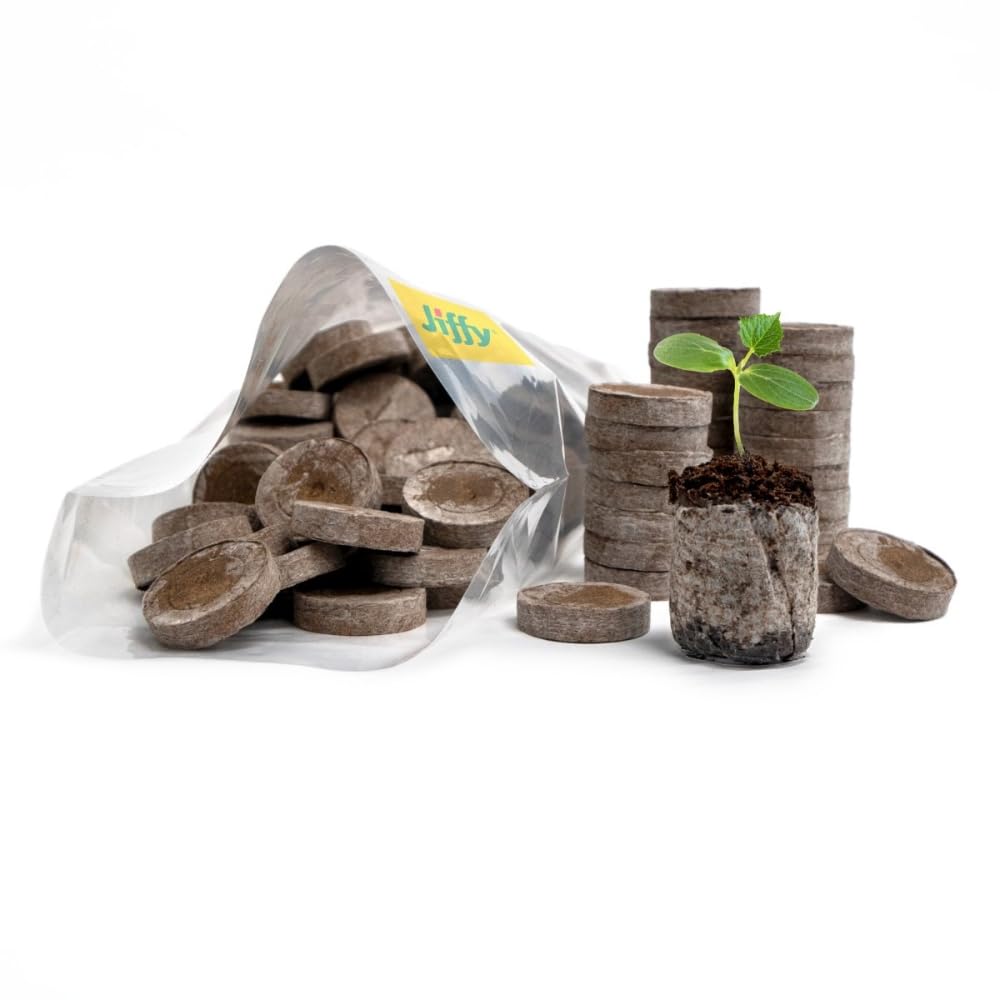
The netting is the reason to look at these at all. Jiffy makes it from cornstarch rather than the plastic mesh on its standard pellets, and that changes transplant day: the plug goes into the ground whole, roots push out through a fibre that breaks down, and nobody crouches over a bed afterwards picking threads out of the soil. We noticed it most with plants that sulk when their roots are disturbed.

Everything else behaves the way a compressed peat pellet should. Warm water and the disc swells into a self-contained pot with a dimple on top for the seed; keep it damp and the roots fill the plug in a couple of weeks. Because the mesh is meant to stay put, there's no fiddling at the far end — a real convenience when you're carrying dozens of starts out to the garden on a hot afternoon and want to be finished.

It's sold as a refill, which suits anyone who already runs a Jiffy tray or strip and just wants fresh pellets each spring. The catch is the pack size. Twenty-five goes fast if you're filling a flat, and per pellet this is the most expensive peat option we covered. For six tomato plants and a windowsill of herbs it's money well spent; for a whole kitchen garden, buy the hundred-count and accept the plastic mesh.

Bottom line: Worth the premium if you plant the whole plug: the cornstarch netting breaks down in the ground instead of lingering around the roots.

3

Jiffy 36 mm Peat Pellets, 100 ct

Jiffy 36 mm Peat Pellets, 100 ct

Most seed varieties

Our Score 8.6/10
Check Price

Worth Noting

  • Bag can arrive short of 100
Count
100
Netting
Built-in netting
Pellet Size
36 mm
Read the full review

Thirty-six millimeters is a decision most people make without realizing they're making it. It's a middle size — wide enough for a tomato or a pepper to build a root ball before it needs potting on, narrow enough to drop into a standard cell tray without squeezing. Sow thyme or lettuce in one and there's room to spare; sow a squash and you'll be potting on inside a fortnight.

What struck us first was the netting. It holds a soaked plug together while you poke a planting hole with a pencil, and it keeps the medium from slumping when you bottom-water a whole tray. Softer pellets in this group go floppy and lean; these keep their shape, and by the time the roots reach the mesh the plug lifts out in one piece. A hundred in a bag works out among the lowest costs per pellet here, and the discs sit flat and dry in a drawer until you need them, so buying in bulk isn't the commitment it looks like.

The mesh is plastic, and it doesn't vanish in the ground. We plant it for small seedlings and tear the bottom open for anything with a fat root ball, so a swelling stem doesn't get pinched. Germination has been as variable as germination always is — a stalled tray usually means cold, sodden or old seed rather than a bad pellet — but the seedlings that do come up transplant cleanly, and that's the part you're buying.

Bottom line: Our default for a full flat: 36 mm fits standard cell trays, the netting keeps soaked plugs intact, and no other hundred-count here costs less.

4

MAQIHAN 35 mm Peat Pellets, 50 ct

MAQIHAN 35 mm Peat Pellets, 50 ct

Small gardens

Our Score 8.2/10
Check Price

Worth Noting

  • 35 mm gives larger seedlings limited root room
Mesh
Degradable mesh
Count
50
Pellet Size
35 mm
Compressed Thickness
12 mm
Read the full review

Before water, these are twelve millimeters thick. A stack of fifty takes less room in a shed drawer than a paperback, which is the quiet advantage of every compressed pellet but matters more here, because this is a small pack you can keep on a shelf and dip into across a season.

Warm water gets them swelling in a few minutes, and they hold moisture well once they're open — a tray of basil or lettuce sits happily without going bone dry or sour. What they don't do is sit neatly. Soaked plugs come out of the bag slightly irregular and rounded at the base, and in a wide cell they'll lean or topple the first time you water from above.

A snug tray fixes it. Drop the pellets into close-fitting cells before you add water, let them swell where they'll stay, then press each base flat with a fingertip; after that they behave like any other plug. Fifty pellets for the smallest outlay in this group is the pack we hand to someone starting their first season, or trying a seed they've never grown before.

Bottom line: A good first pack: fifty 35 mm pellets at a small outlay, enough to try a new seed without committing to a hundred.

5

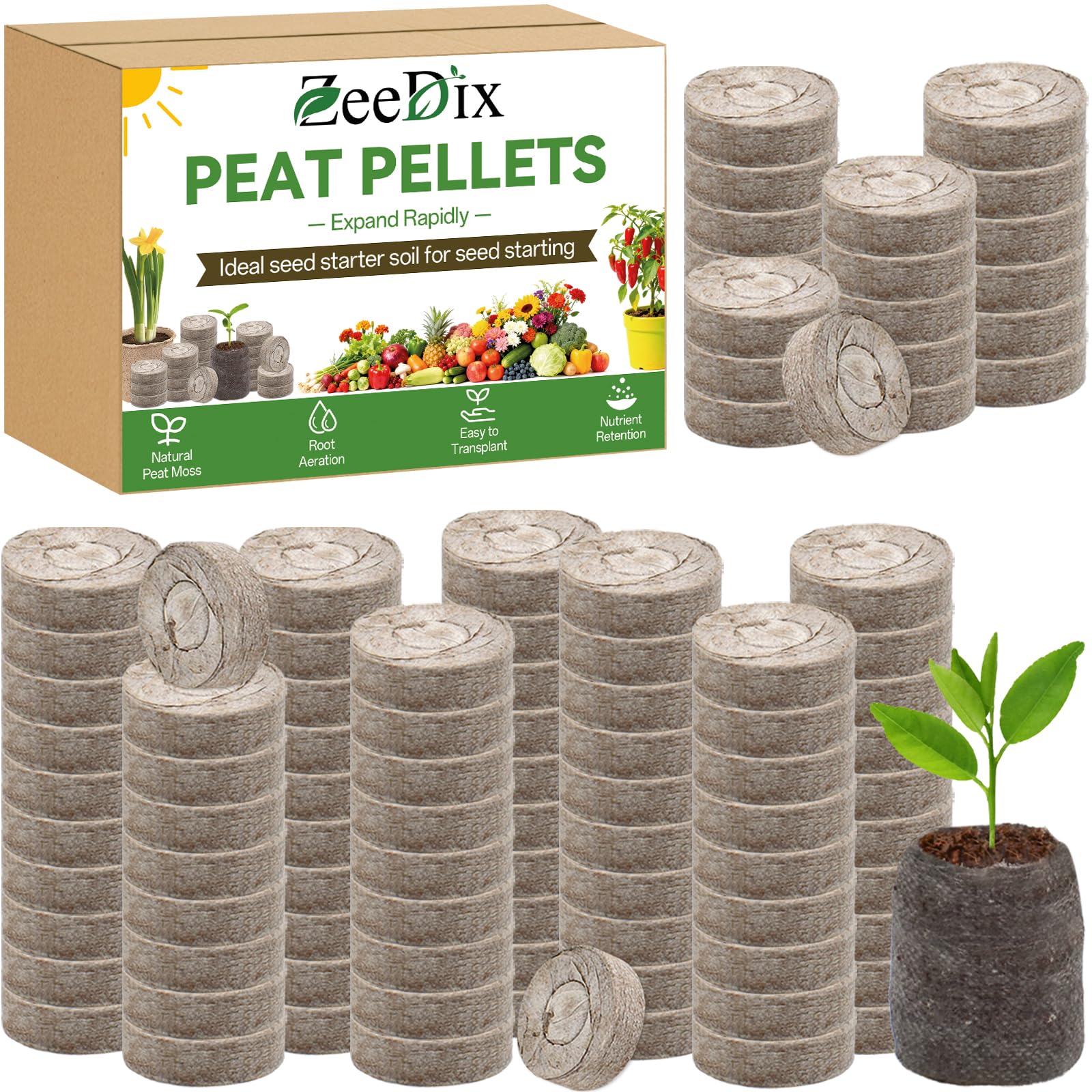
ZeeDix 30 mm Peat Pellets, 200 ct

ZeeDix 30 mm Peat Pellets, 200 ct

Bulk sowing

Our Score 8.0/10
Check Price

Worth Noting

  • Narrowest peat pellet here at 30 mm
  • Pucks can arrive squashed in the wrap
Count
200
Material
Sphagnum peat moss
Pellet Size
30 mm
Read the full review

Two hundred pellets in a single box is the largest count here, and the arithmetic is the argument. Per pellet this is the cheapest thing in the group — cheap enough that a few duds don't sting — which makes it the obvious buy when you're sowing a cutting garden, a row of sunflowers or a whole bed of zinnias in one sitting.

What that money buys is a smaller, softer plug. At 30 mm these are the narrowest peat pellets we covered: fine for herbs, lettuces and flowers that go out young, cramped for a tomato that wants six weeks indoors. Soaked ones don't always stand on their own, either, and in a loose flat you'll find them on their sides by the second watering.

Give them a tray that does the standing. Drop the pellets into close-fitting cells before you water, let them swell where they'll stay, then press each base flat with a finger — after that they hold. Skip that step and you'll spend the season righting leaning plugs every time you fill the watering can.

Open the box and check it before a sowing day, not after. Pellets that arrive green at the edges or crumbling are a real risk with bulk packs at this price, and a quick sort when the box lands is the difference between a full flat and a patchy one.

Bottom line: The bulk box for a big sowing: two hundred pellets at the lowest cost per pellet here, provided your tray holds them upright.

How We Tested the Peat Pellets

We started with more than 40 peat pellet options sold in garden centers and online, then narrowed the list by size, price per pellet, netting, and how often reviewers mentioned expansion and germination. From that pool, we chose 14 varieties and tested them over four months.

Testing happened on a kitchen counter, a sunny windowsill, and a basement shelf under a shop light—the three places I actually start seeds. We hydrated each pellet per its package directions and watched how fast it absorbed water, whether it expanded into a full cylinder, and whether it stayed firm when we fluffed the surface. Every couple of days we lifted each tray and felt the pellet at the root zone; pellets that dried unevenly, shrank from the tray walls, or wobbled when moved got marked down.

We sowed tomato, basil, and marigold seeds into each variety and tracked germination dates plus seedling size for six weeks. At the end, we counted how many pellets per pack were usable out of the bag, checked whether roots stayed contained, and lifted seedlings to see if the pellet tore apart in the process. We compared cost per usable pellet, not just the pack price, because cracked or undersized disks turn a bargain into waste.

How to Choose Peat Pellets for Seedlings

Match the diameter to your tray cells

Nearly every disappointment with a pellet traces back to diameter. A 30 mm plug dropped into a 36 mm cell rattles around, dries at the edges and tips over the first time you water from the top; the same pellet in a snug cell behaves perfectly. Our rule is simple: buy the diameter your tray already takes, and if that's a standard 36 mm insert, buy 36 mm pellets.

Smaller discs are for herbs, cuttings and starts that will be potted on within a few weeks, not for a tomato you plan to hold indoors for six. Read the compressed thickness on the listing carefully, too. 'Compact' describes the dry disc in the bag, not the finished plug you'll be watering.

Check what holds the plug together

Every netted pellet is a compromise between staying intact while wet and letting roots out afterwards. Plastic mesh holds a soaked plug together beautifully and then lingers in the ground; a cornstarch-based netting, like the one on Jiffy's refill pellets, gives up a little strength in the tray in exchange for breaking down after transplant.

If you plant the whole plug and want nothing to peel, pay for the mesh that disappears. If you tear the bottom open anyway, plastic is fine and usually the cheaper way to buy a hundred.

Buy a count you'll actually sow

Work back from your tray rather than forward from the price: one pellet per cell, plus a few spares for seed that never comes up. A bulk box is the cheapest per pellet, but only if you'll sow most of it in one season. Leftovers keep, they just don't improve, and a bag opened in a humid shed will swell and cake.

Then count the bag when it arrives. Packs have come up short of the number on the label, which is a far smaller problem before you've planned a whole flat around them.

Peat or coir, and whether you need to feed

Peat is the traditional base: it holds water, it's consistent, and it's essentially blank, so a seedling lives on the seed's own reserves until the first true leaves, when a half-strength feed is due. Coco coir wafers are the peat-free route, and some arrive charged with worm castings or kelp; that buys another week or two before feeding starts but doesn't remove the need for it.

Neither medium germinates measurably faster in ordinary home conditions. Choose on the material you want to buy, then plan your feeding around what's already in the wafer.

Frequently Asked Questions

Final Verdict

For most people, the Jiffy 36 mm hundred-count is the pellet to buy. It fits standard cell trays, the netting keeps a soaked plug in one piece, and a hundred covers a full flat of vegetables without a second order.

Pay the premium for the Jiffy refill pack if you want the netting to break down in the ground and you're only sowing a couple of dozen starts. If your spring runs to a windowsill and a few pots, the fifty-count MAQIHAN pack is the sensible size; if it runs to whole beds, the ZeeDix box is the one.