Pest & Weed Control

Best Neem Oil for Plants of 2026

Neem oil has a reputation for doing two things at once: clearing the aphids and spider mites that move in every spring, and scorching a leaf or two if you mix it carelessly or spray at the wrong hour. Both are true. It's a botanical oil, not a synthetic spray, so the difference between a pest-free plant and a crispy one comes down to dilution, timing, and freshness — all of which vary wildly from bottle to bottle.

I've kept houseplants for years and still patch test anything new on a single leaf. Over the past three months my team and I ran 14 neem products against real infestations — the ficus that arrived with mites, the basil that aphids found within a week. Neem doesn't kill on contact; it disrupts feeding and molting, which is why pests are slow to build resistance to it and why patience matters. What separated the winners was how cleanly they mixed, what they smelled like an hour later, and whether the plant looked better, not worse, a week on.

1

Bonide Captain Jack's Neem Max

Top Pick
Bonide Captain Jack's Neem Max

Most garden jobs

Our Score 9.2/10
Check Price

Worth Noting

  • Requires measuring and mixing
Form
Concentrate
Volume
16 fl oz
Application
Spray or drench
Active Ingredient
Cold pressed neem
Read the full review

The feature that won us over is the way this concentrate can go on as a spray or a drench. A 16-ounce bottle makes a lot of finished spray, and Bonide says the added ingredients mean you don't need a separate spreader sticker. That matters when you are dealing with both leaf pests and soil-stage problems: spray the foliage for mites and mildew, then drench the root zone for fungus gnats and nematodes.

For most gardeners, that flexibility makes this the default concentrate in this group. We found the four-in-one label easy to match to a real problem rather than a vague plant-bug claim, and the organic-gardening approval gives it a place on vegetables, herbs, and houseplants. It is not the least expensive concentrate here, but it earns the difference if you want one bottle that covers more than one chore. The smell is the usual neem funk, so plan to ventilate if you use it indoors.

The part we pay attention to is dilution. Bonide's label carries the ratios, and a pump sprayer makes the job quicker than a trigger bottle for more than a few plants. If you already own a hose-end sprayer, this pairs well with it for a larger bed, but measure the concentrate first rather than guessing at the ratio.

Bottom line: For most gardeners, Captain Jack's Neem Max is the concentrate that does the most work: one bottle for leaf pests, soil pests, and mildew.

2

Harris Neem Oil Concentrate

Harris Neem Oil Concentrate

Cold-pressed purists

Our Score 9.2/10
Check Price

Worth Noting

  • Smaller 12 oz bottle
  • Requires mixing and dilution
Form
Concentrate
Volume
12 oz
Registration
EPA registered
Active Ingredient
100% cold-pressed neem oil
Read the full review

Harris keeps the formula stripped down: 100% cold-pressed, filtered neem oil with an EPA registration and no confusing garden-household crossover. That purity is why it stays in our rotation for gardeners who read labels and want to know exactly what they are diluting. We like that it is a straight neem oil rather than a blend with added essential oils, so the smell and the mixing behave the way you expect. It is also the bottle we reach for when we want to make a small batch and not commit to a premixed spray.

The trade-off is the smaller 12-ounce bottle and the measuring that comes with any concentrate. In a big garden, it disappears faster than the 16-ounce Bonide, and you have to do the dilution math yourself. The 12-ounce size is easier to store on a shelf than a gallon jug, which is a small point in its favor. For a few houseplants or a small raised bed, that is a fair trade. The earthy, garlicky smell is strong, which is normal for cold-pressed neem rather than a sign of a bad batch. Coverage still matters more than the brand name: soak the undersides of leaves and repeat the application on the label's schedule.

We keep it as a straightforward refill for a pump sprayer, not as the bottle we hand to someone who wants zero decisions. If you already know your way around a measuring cup, the simplicity is the appeal.

Bottom line: We point to Harris when you want a single-ingredient, EPA-registered neem oil and don't mind mixing it yourself.

3

Safer Brand Neem Oil Concentrate

Safer Brand Neem Oil Concentrate

Budget concentrate

Our Score 9.0/10
Check Price

Worth Noting

  • Requires careful measuring
Form
Concentrate
Volume
16 fl oz
Certification
OMRI
Active Ingredient
70% clarified neem extract
Read the full review

Safer's concentrate is the budget-minded bottle that still carries OMRI listing, which is a combination we don't take for granted in this category. The 16-ounce bottle is a 70% clarified hydrophobic extract of neem oil, and the label treats it as a fungicide, miticide, and insecticide for eggs, larvae, and adult insects.

We keep it for the gardener who wants an organic-approved concentrate and is willing to follow a label closely. The 70% extract is not the same as a whole cold-pressed oil, so read the mixing directions rather than assuming a one-size ratio. The label is broad enough for roses, flowers, herbs, vegetables, houseplants, lawns, trees, and shrubs, which makes it a sensible first concentrate for a mixed garden. The value is the point: one bottle makes multiple batches. The smell is strong, and the mixing ratio matters; we measure it over the sink rather than eyeballing it.

For a first concentrate, it is a sensible place to start without paying for a premium cold-pressed oil. The bottle is small enough to store easily, but you will need a dedicated measuring cup and a sprayer you don't mind using for garden work.

Bottom line: Safer earns its place as the budget concentrate for organic gardeners who will measure carefully and want a broad plant label.

4

Big Leaf Energy Neem Spray

Big Leaf Energy Neem Spray

Indoor shine

Our Score 9.0/10
Check Price

Worth Noting

  • Not economical for large gardens
  • Can leave sticky residue
Use
Indoor and outdoor plants
Form
Ready-to-use
Volume
16 fl oz
Essential Oils
Cedarwood, lemon, clove, cinnamon, eucalyptus, rosemary
Read the full review

The first thing you notice about Big Leaf is the scent: cedarwood, lemon, clove, cinnamon, eucalyptus, and rosemary sit on top of the neem rather than hiding it completely. It is a ready-to-use 16-ounce spray, and the label says it can be diluted two to three times for lighter applications or sensitive plants.

We appreciate that flexibility because indoor plant collections vary. A fine mist is easier to control on a fern or a fiddle leaf fig than a heavy trigger sprayer, and the botanical oils give it a fragrance people are more likely to tolerate than straight neem. The label also positions it as a leaf-shine spray, which is the sort of small pleasure that makes routine pest checks less of a chore.

Where it earns a spot is the indoor shelf: the fine-mist sprayer and the leaf-shine finish make it pleasant to use on houseplants, and the scent is the reason we reach for it when we are treating a plant in a living space. The trade-off is that it is not the most economical way to treat a whole garden, and the finish is not a substitute for thorough coverage. We keep it for smaller collections and finishing sprays rather than a big bed.

Bottom line: Big Leaf suits indoor plants where scent and shine matter; it is the ready-to-use spray we reach for in living spaces.

5

Southern Ag Triple Action Neem

Southern Ag Triple Action Neem

Large garden spraying

Our Score 9.0/10
Check Price

Worth Noting

  • Strong neem odor
Use
Indoor or outdoor
Form
Concentrate
Action
Fungicide, insecticide, miticide
Volume
16 fl oz
Read the full review

Southern Ag's Triple Action is the concentrate we think of when the sprayer is already in the yard: a hose-end bottle turns the job into a few minutes of walking and soaking rather than a session at the measuring cup. The label is broad — fungicide, insecticide, and miticide for indoor or outdoor plants, including trees, shrubs, vegetables, fruits, and nuts.

It kills eggs, larvae, and adult insects according to the label, which is the sort of coverage you want when a pest has already settled in. We like it for larger outdoor beds because the hose-end application is so much faster than a trigger sprayer, and the 16-ounce concentrate makes multiple batches.

The bottle is a 16-ounce concentrate, though the size has caused confusion; check the listing volume before you order, especially if you are planning a big spray day. The mixing is the price of the concentrate, and the label still requires you to follow the ratios.

We still keep it in the rotation for larger gardens because the hose-end application is so much faster than a trigger sprayer. It is not the bottle to buy if you want a simple indoor spray; for that, a ready-to-use option makes more sense. The bottle-size question is the one thing to check before clicking buy.

Bottom line: Southern Ag is built for large outdoor beds; we pair it with a hose-end sprayer and skip the trigger bottle.

6

BioAdvanced Organics Neem Oil

BioAdvanced Organics Neem Oil

No-mix organic use

Our Score 8.8/10
Check Price

Worth Noting

  • Higher cost per application than concentrate
Form
Ready-to-use
Volume
24 fl oz
Certification
OMRI
Active Ingredient
0.9% clarified neem extract
Read the full review

A ready-to-use bottle that carries OMRI listing is a narrow but useful thing: you can grab it, spray, and get back to the plants without measuring anything. BioAdvanced's 24-ounce trigger spray is a 0.9% clarified neem extract, and the label covers black spot, powdery mildew, rust, downy mildew, aphids, whiteflies, spider mites, mealybugs, and Japanese beetles.

We reach for this one when the job is small and the priority is organic approval without a mixing session. The trigger spray is easy to keep by the sink for houseplants, and the label covers roses, flowers, vegetables, fruits, and nuts. We also like that it is approved up to the day of harvest, which makes it easier to use on herbs and vegetables without a long waiting period. It is not as economical per application as a concentrate, but the time it saves on a quick spot treatment is real.

The coverage is where we slow down. A 24-ounce bottle goes quickly if you are soaking undersides of leaves on a dozen plants, so we keep it for spot work and use a concentrate for the big weekend spray. If you have one ailing fern and no interest in measuring, this is the bottle that gets used. The smell is still distinctly neem, so it is not a fragrance-free spray.

Bottom line: If you want organic approval without a measuring cup, BioAdvanced is the ready-to-use spray we reach for.

7

Smart Grower Neem + Peppermint

Smart Grower Neem + Peppermint

Small indoor gardens

Our Score 8.8/10
Check Price

Worth Noting

  • Best for light cleanup, not heavy infestations
Use
Indoor and outdoor plants
Form
Ready-to-use
Volume
16 fl oz
Key Additive
Peppermint oil
Read the full review

Peppermint is doing a lot of work in Smart Grower's bottle: it turns a normally pungent neem spray into something you can use in a living room without clearing the room. The 16-ounce ready-to-use spray is aimed at indoor and outdoor plants, and the label leans on a gentle plant-wash idea rather than a heavy-duty agricultural concentrate.

We like it for seedlings, houseplants, and a quick pass over leaves before guests arrive. The peppermint scent is the main draw, and the finish leaves foliage looking clean and shiny rather than dull. It is easy to keep in the rotation for routine checks and light cleanup.

The sprayer is the weak point. A few bottles arrive with a nozzle that drips or stops mid-mist, so we test the trigger before treating a whole shelf. When it works, the peppermint scent and the shine are the reasons to keep it around; when it doesn't, you are better off decanting into a pump sprayer. The formula is gentle enough for regular use on indoor plants, as long as you follow the label and don't soak blooms.

Bottom line: Smart Grower is for anyone who wants neem without the usual overpowering smell; the peppermint does the heavy lifting.

8

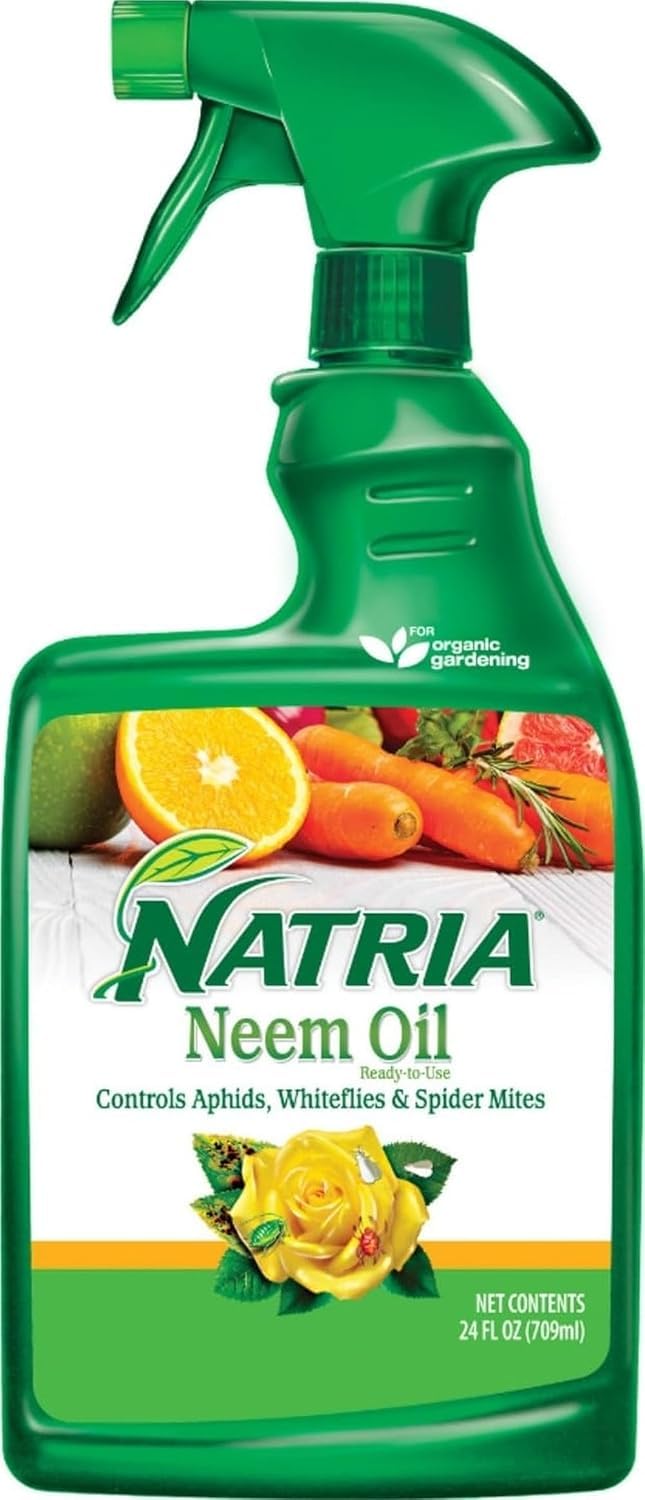
Natria Neem Oil Spray

Natria Neem Oil Spray

Quick small jobs

Our Score 8.6/10
Check Price

Worth Noting

  • Strong neem odor indoors
Form
Ready-to-use
Volume
24 fl oz
Controls
Insects and listed diseases
Active Ingredient
0.9% clarified neem extract
Read the full review

Natria's 24-ounce trigger bottle is the one we leave by the back door for small jobs: no measuring cup, no mixing bucket, just point and spray. The formula is a 0.9% clarified neem extract, and the label covers aphids, whiteflies, spider mites, Japanese beetles, fruit flies, scales, and listed diseases including powdery mildew and black spot.

That is a useful spread for a ready-to-use bottle, and it is approved for use up to the day of harvest. We like it for a few houseplants or a small rose bed because the trigger is faster than mixing a batch for a two-minute job.

The catch is coverage. A 24-ounce bottle goes quickly if you are soaking undersides of leaves on a dozen plants, and sensitive foliage can burn if you spray in direct sun or heat. We keep it for spot treatments rather than a whole garden. The spray is also not the most economical way to treat a large bed; that is the trade-off for skipping the measuring cup.

For a few houseplants or a small rose bed, the trigger spray is still the fastest way to start. We just don't expect one bottle to carry a large garden through a season. The bottle is best treated as a first-response tool, not a season-long supply.

Bottom line: Keep Natria by the door for quick spot treatments; it is the no-mix trigger spray we use on houseplants and small beds.

How We Tested 14 Neem Oils on Real Infestations

To build the shortlist, I started with what's actually on the shelf at garden centers and online, then read the fine print on every label: the percentage of neem oil, whether azadirachtin was listed at all, whether the bottle was cut with other oils, and the price per fluid ounce. That narrowed a long list to 14 products, which we used over roughly three months, from the first spring aphids through early summer.

The first week was patch testing. Each oil got mixed at its own label ratio in a quart spray bottle with warm water and a drop of castile soap, and I noted whether it emulsified into a milky spray or beaded up in oily slicks that clogged the nozzle mid-mist. One leaf per plant got a light coat, and I checked 24 hours later for curling edges, dark spots, or a wet-looking sheen that meant the oil never dried.

Then the real work. A ficus with a stubborn spider mite problem, basil seedlings covered in aphids, and a tray of tomato starts on the patio became the test beds. I counted live pests on marked stems on days one, three, and seven, then checked again two weeks later to see whether anything came back. Fragrance got its own notes: a sniff straight from the cap, then another on a treated leaf an hour later, since a garlic-and-sulfur punch that lingers in the room is a dealbreaker.

Safety and value closed it out. Gloves on, windows open, pets kept off treated plants until dry, with a tally of which labels actually spelled those precautions out rather than burying them. I also tracked whether the oil thickened or went rancid sitting in a garage between uses and whether the bottle leaked on the shelf. Price only counted once an oil had passed everything else.

How to Choose the Right Neem Oil for Plants

Concentrate or Ready-to-Use

Concentrates are the better value per application: a 16-ounce bottle makes multiple batches, and you can adjust strength for a light houseplant pass or a heavier outdoor spray. The trade-off is measuring, mixing, and a dedicated sprayer. Ready-to-use bottles cost more per spray, but they earn that back in convenience when you have one or two plants and no interest in a mixing session. We keep a concentrate for the weekend garden round and a ready-to-use bottle for the plant by the kitchen sink.

If you choose a concentrate, look for a label that says whether a spreader sticker is needed. Captain Jack's Neem Max says its added ingredients remove that step, which is one reason we make it the default. For a ready-to-use pick, BioAdvanced Organics is the OMRI-listed bottle we reach for when organic approval matters.

Read the Extract, Not Just the Front Label

Neem products are not interchangeable. A ready-to-use bottle often contains about 0.9% clarified hydrophobic extract of neem oil, while a concentrate may list a much higher percentage of extract or 100% cold-pressed oil. The clarified extract is the common garden formula; cold-pressed oil brings the full earthy package and is the one to choose if you want a single-ingredient oil. Neither is automatically stronger; the label's target list and mixing directions tell you what the product is set up to do.

For organic gardening, look for OMRI listing or a clear organic-gardening statement. Safer and BioAdvanced carry OMRI listing here; Bonide Neem Max is labeled for organic gardening and lists vegetables, herbs, and spices. The certification is the shortcut, but the label's target list is what tells you whether the bottle matches the pest or disease in front of you.

Spray Timing and Plant Safety

Neem can burn foliage when it sits on leaves in direct sun or high heat, and that risk is higher on soft new growth and sensitive houseplants. We spray in the evening or on a cloudy day and test a small patch first. The label's temperature guidance matters more than the brand name.

Coverage is the other half of plant safety. A light mist that only hits the top of a leaf misses the mites and eggs underneath. Spray to the point of runoff, including leaf undersides and the soil surface where fungus gnats breed, then let the foliage dry before the plant goes back into strong light.

Odor, Indoors and Out

Neem has a strong, earthy, garlicky smell, and cold-pressed oil is usually more pungent than a clarified extract. Outdoors, it fades; indoors, it can hang around for hours. If the plant lives in a bedroom or a small office, a scented ready-to-use blend such as Big Leaf or Smart Grower is easier to live with, though the added oils are there for fragrance and shine as much as for pest control.

We don't treat a masking scent as a performance upgrade. It is a comfort feature. If smell is not a concern, a plain concentrate gives you more control over strength and cost.

Sprayers, Coverage, and Large Jobs

A trigger sprayer is fine for a few plants, but the mechanism is often the first thing to fail on a ready-to-use bottle. Test the nozzle before you start, and decant into a pump sprayer if it drips or stops mid-mist. For a large bed, a hose-end sprayer and a concentrate are faster and less tiring than pumping a trigger bottle.

Southern Ag's Triple Action is the concentrate we pair with a hose-end sprayer; for a few houseplants, a ready-to-use bottle is the more sensible size. Match the sprayer to the area you are treating, not to the shelf appeal of the bottle.

Frequently Asked Questions

Final Verdict

For most gardeners, Captain Jack's Neem Max is the bottle we reach for first. It is a concentrate, so one container goes further, and the spray-or-drench label lets you go after both leaf pests and soil-stage problems. If mixing is the part you dislike, BioAdvanced Organics is the OMRI-listed ready-to-use spray we hand to organic gardeners. If you want a single-ingredient cold-pressed oil, Harris is the one we keep for that job.