Poultry & Livestock

Best Livestock Hoof Trimming Tools for Goats, Sheep, and Horses

A dull or badly balanced hoof trimmer doesn't just slow you down—it can leave a ragged edge, bruise a sole, or turn a ten-minute trim into a two-person wrestling match. The right tool puts clean, controlled cuts within reach, so you can shape the hoof without fighting the animal or your own grip. We spent eight months testing 12 hoof trimming tools on goats, sheep, and a few cattle, and the differences showed up fast.

Some nippers and knives arrived sharp but lost their edge after a few sessions; others felt balanced in the hand yet were too bulky to carry to the back pasture. I learned to check the hinge action, the handle shape, and how the tool sat in my palm before I ever touched a hoof. The best values weren't the cheapest or the most expensive—they were the ones that stayed sharp, felt secure, and let me trim efficiently without over-gripping. A good hoof trimmer should match your livestock's hoof size and your own hand strength, and the picks below cover that range.

1

Hoof Boss Electric Goat Trimmer

Top Pick
Hoof Boss Electric Goat Trimmer

Goat herds

Our Score 9.4/10
Check Price

Worth Noting

  • Corded design needs a nearby outlet
Warranty
1 year
Operation
One-handed
Power Source
110V plug-in
Discs Included
Coarse, medium, fine
Read the full review

The first thing the Hoof Boss changes is how long you spend bent over a goat. The plug-in motor removes material with the coarse disc, the medium disc handles routine shaping, and the fine dome disc cleans up the sole. Having three discs in one kit is what makes the tool useful beyond a single pass.

For anyone trimming a herd alone, the one-handed operation is the real selling point. We found the reduced hand strain matters more than the spec sheet suggests: you are not squeezing manual nippers through hoof after hoof, and the trimmer keeps the animal moving through the chute faster. The balance is good enough to follow a hoof wall without bracing the tool with your other hand.

At a premium price, this is the pick for a goat keeper who trims often enough to make speed worth paying for. The one-year warranty is worth registering, and the balance of the tool is the one thing to check in your own hand before a long session. It is a specialist tool, not a replacement for a manual kit if you also keep sheep with very small feet or horses.

Bottom line: We choose this electric trimmer when a goat herd makes speed matter: three discs, one-handed control, and far less hand strain.

2

Mriuuod 12-Inch Hoof Rasp

Mriuuod 12-Inch Hoof Rasp

Shaping and finishing

Our Score 9.4/10
Check Price

Worth Noting

Cut
Fine and coarse
Length
12 inches
Material
Carbon steel
Item Weight
1.17 lb
Read the full review

The two-sided cut is what makes a dedicated 12-inch rasp worth carrying after the nippers have taken the bulk off. One side is coarse for moving material and the other is fine for smoothing the wall, and the length gives you a longer stroke than the short rasps that come in mini kits.

The carbon steel and rubber handle are the right combination for a job that is more about rhythm than force. We like the non-slip grip when your hands are sweaty or the hoof is wet, and the 12-inch file is long enough to flatten a sole without constantly repositioning. It is not a substitute for a nipper; it is the finishing tool that makes the nipper's work look clean.

At just over a pound, it is easy to carry in a tote with the rest of your kit, and the two-sided cut means you do not need a second file for cleanup. If you are building a kit piece by piece, this is the one we add before another pair of shears. The handle is the part that makes it feel less like a hardware-store file.

Bottom line: We keep this rasp for shaping and cleanup: a long 12-inch stroke, two cut sides, and a handle that stays put when the hoof is wet.

3

CRNHIGY Goat Hoof Scissors

CRNHIGY Goat Hoof Scissors

Goats and sheep

Our Score 9.2/10
Check Price

Worth Noting

  • Not enough leverage for horse hooves
Handle
Non-slip
Spring
Included
Blade Material
High carbon steel
Overall Length
8 inches
Read the full review

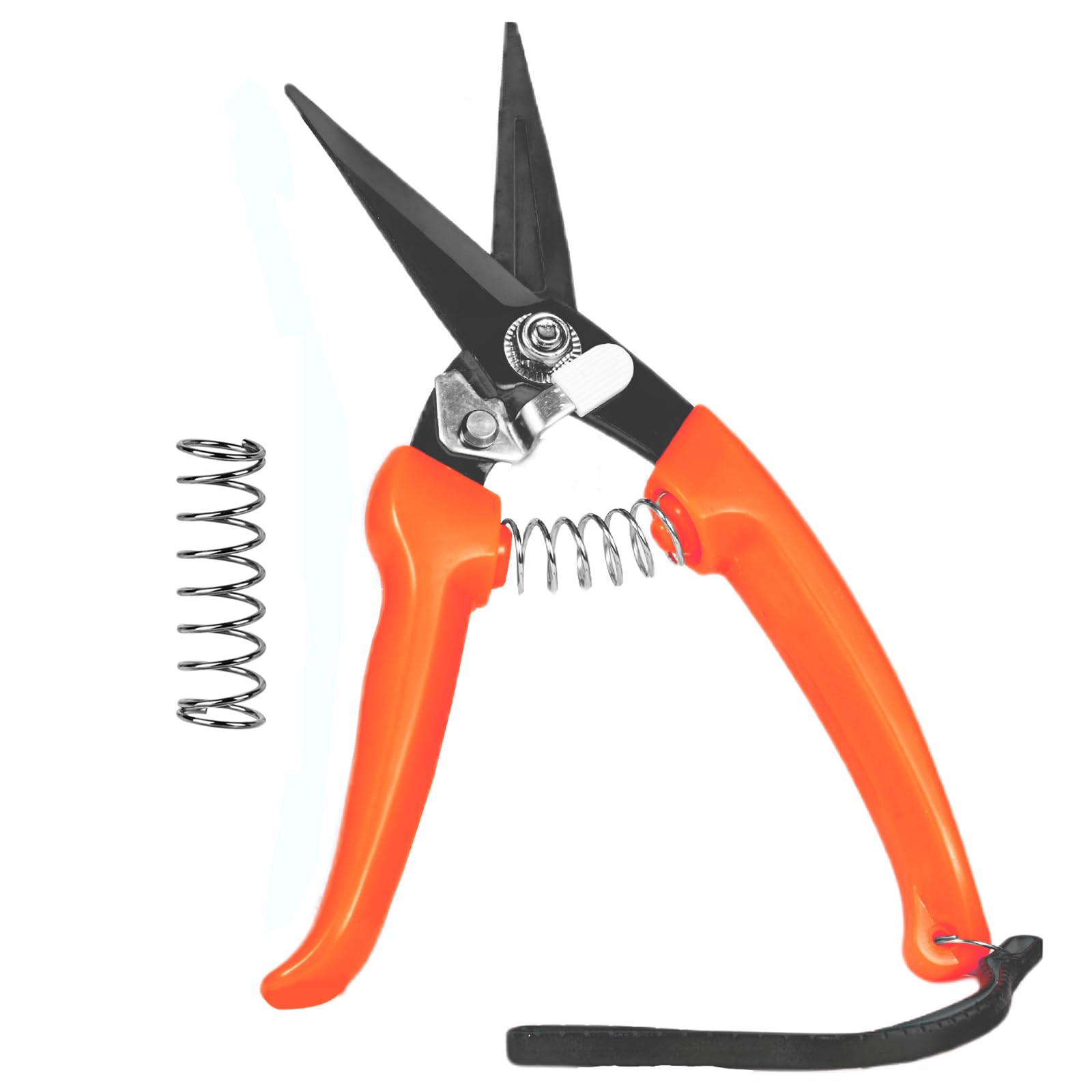
The clean cut these 8-inch shears make on an overgrown goat hoof is the reason we reach for them first. The curved blades take small bites, the spring reopens them between cuts, and the non-slip handles give you enough control to follow the hoof wall without fighting the tool. We used them on a squirmy animal because the one-hand operation is less intimidating than a full nipper.

The stainless steel and simple pivot are the reason they hold up: there is less to go wrong than with a multi-piece kit, and they wipe clean after a muddy session. They are not the tool for a horse or a thick-walled cow; the short handles do not give you the leverage, and the blades are designed for smaller hooves.

At the budget end, this is the pair we keep coming back to for quick touch-ups. The grip is the one thing to test in your hand before a long session; a non-slip handle still has to fit your palm. The spring does most of the work, and that is the part that makes a long session feel shorter.

Bottom line: We hand this pair to anyone trimming goats or sheep: sharp curved blades, a spring that saves your grip, and a budget price that makes a spare easy.

4

HNONPW 14-Inch Farrier Kit

HNONPW 14-Inch Farrier Kit

Mixed livestock

Our Score 9.0/10
Check Price

Worth Noting

  • Edges may need sharpening before first use
Storage
Storage bag
Item Weight
5.17 lb
Nipper Length
14 inches
Tools Included
6 pieces
Read the full review

The 14-inch nippers are the first thing to notice, and they are why this kit works for a mixed herd. The long handles give you leverage on a thick hoof wall, so you are not fighting the tool on a cow or a big horse. The set also covers the sequence — nip, rasp, pare — without sending you back for a missing piece.

We like the bag more than we expected: it holds the six pieces and the brush, and it keeps the sharp edges from rattling around in a tack room. The rubber-handled rasp is the piece we reached for most; the coarse side moves material and the fine side cleans up the edge. For a first full-size kit, that combination is more useful than a fancy handle on one tool.

The cutting edges are the weak point. The knife and nippers can arrive less sharp than the dedicated tools here, and a few passes on a stone make the first trim easier. If you want a kit that is ready out of the box, this is not the one; if you do not mind a little setup, it is the most complete full-size set in this group.

Bottom line: For a mixed herd, this is the kit we reach for first: full-size 14-inch nippers, a rasp, a knife, and shears in one bag.

5

Loaged 8-Inch Farrier Kit

Loaged 8-Inch Farrier Kit

Small stock

Our Score 9.0/10
Check Price

Worth Noting

  • Only sized for small animals
  • Edges can arrive dull
Storage
Zipper bag
Item Weight
1.94 lb
Nipper Length
8 inches
Tools Included
7 pieces
Read the full review

This is the kit to buy for a pen full of goats, pigs, or mini horses. The 8-inch nippers are scaled for smaller hooves, and the set includes the rasp, knife, shears, brush, and gloves, plus a zipper bag that keeps everything together. At under two pounds, it is the one we grab for a quick trip to the pen.

The smaller nippers are easier to place on a goat hoof than a 14-inch pair, and the shorter handles fit into tight spaces around a small hoof. The rasp is the piece that earns its place after the nippers; the shears are there for cleanup, and the gloves are a nice extra if you are working with a nervous animal.

What we like is the organization. The zipper bag has a handle and enough room for the gloves and brush, so the kit stays together in the truck or tack room instead of scattering across the bench. For a smallholder with a few goats, that convenience is worth more than another blade in the set.

Bottom line: For a pen of goats, pigs, or mini horses, we like this compact kit: scaled-down nippers, a useful rasp, and a bag that keeps everything together.

6

YAHIKI Hoof Knife

YAHIKI Hoof Knife

Detail work

Our Score 8.8/10
Check Price

Worth Noting

Sharpener
Included
Blade Type
Double-edge loop
Item Weight
7.8 oz
Handle Material
Wood
Read the full review

The loop blade and front guard are what make this hoof knife useful for the tight work around the sole and frog. The curved double-edge blade lets you pare in either direction, and the loop shape gives you a clear view of the edge while you work.

We like the wooden handle's front guard, which keeps your hand behind the blade when you are working in a tight spot. That guard is a small detail, but it is the kind of thing you notice when a hoof shifts and you are glad your fingers are not any closer to the edge.

The included flat sharpener is practical because a working knife needs maintenance, and a few passes before the first hoof are part of owning one. The blade is the part to inspect on arrival: check for nicks and make sure the edge is even before you put it to a hoof.

For a horse keeper who already has nippers and a rasp, this is the useful upgrade over the knife in a budget kit. The handle is comfortable and the guard adds control, and the sharpener means you can keep the edge usable between trims. It is a detail tool, not a whole trimming set, and that is exactly why it earns a place.

Bottom line: We like this as the detail upgrade for horse keepers who already have nippers and a rasp: a guarded loop blade, a wood handle, and a sharpener included.

7

QWORK 14-Inch Hoof Nipper

QWORK 14-Inch Hoof Nipper

Thick hooves

Our Score 8.6/10
Check Price

Worth Noting

  • Heavy at 824 g for small hooves
Length
14 inches
Material
Alloy steel, carbon steel
Item Weight
1.82 lb
Handle Material
Plastic
Read the full review

If you already have a rasp and knife and only need the nipper, this 14-inch pair gives you the leverage of a full-size tool without buying another kit. We like the plastic grips for a long session, and the cutting head is wide enough to take a useful bite from a thick hoof wall.

The steel is the question mark. This nipper can work well on hard, foundered hooves, and it can also arrive dull enough to crush rather than cut. The difference usually shows up on the first hoof: if the jaws do not slice cleanly, stop and sharpen or return them before you fight the tool.

For a budget nipper, the 14-inch size is the reason to choose it over the 8-inch models here. It gives you the leverage for a thick-walled hoof, and the wide head takes a bigger bite than a mini nipper. Check the edge before the return window closes; that is the whole gamble with this one.

Bottom line: If you already own a rasp and knife, this is the nipper we add for thick hooves: 14-inch leverage, with an edge worth checking on arrival.

How We Tested Livestock Hoof Trimming Tools

We started by pulling together a shortlist of trimmers, nippers, knives, and rasps from brands that show up in farm-supply shops and livestock forums, then narrowed it by species suitability, handle material, and size. We ended up with 12 tools and used them over eight months on goats, sheep, and a small group of cattle. Testing happened in the morning before feeding, when hooves are dry and the animals are calm, and again after a muddy week when we needed to see how grips and hinges handled grit.

Out of the box, we shaved a thin slice of horn from a trimmed hoof and noted whether the blade caught, skipped, or required extra pressure. Each tool then went through at least 20 trims—some closer to 40—so we could check for rolled edges, loose hinges, and handles that twisted under force. We also passed each one from hand to hand to see where the weight sat; a tool that felt light on the shelf could turn nose-heavy after an hour. For ease of use, we trimmed one-handed while holding a hoof, paying attention to whether the grip slipped or forced us to over-grip.

To judge portability and size, we packed every tool into a canvas tote and carried it to the back pasture, noting bulk and weight, then tried each jaw opening on goat, sheep, and calf hooves to see where it fit or felt clumsy. We cleaned and stored them the way most people would—wiping off debris, checking hinges, and leaving them in a bucket—and watched for rust or stiffness. Finally, we compared what each tool could handle against its price bracket, because a bargain that dulls after two trims costs more in the long run.

How to Choose Livestock Hoof Trimming Tools for Goats, Sheep, and Horses

Match the nipper to the animal

A 14-inch nipper is not automatically better than an 8-inch one; it is a leverage decision. Long handles let you cut through a thick horse or cattle hoof, while a shorter pair is easier to place on a goat or sheep and less tiring when you are working close to the ground. If your herd is mixed, start with the 14-inch kit and add a small pair for the smallest animals. If you only keep goats and sheep, the 8-inch kit is the more natural fit.

The trap is a kit that claims wide application but ships small nippers. Check the nipper length and the maker's own animal list before you buy; a mini kit can be perfect for goats and still be the wrong tool for a horse.

Decide between a kit and individual tools

Kits are the sensible first purchase because they give you the nipper, rasp, knife, and shears in one go, plus a bag to keep them together. The compromise is that the edges are not always equal: the nipper may be fine while the shears feel like an afterthought. If you already own a good rasp, buying a separate nipper or knife puts more of your budget into the tool you actually use. Build a kit first, then replace the weakest piece with a dedicated tool when it starts to annoy you.

Manual or electric

Manual tools are quieter, lighter, and ready without power, which makes them the default for occasional trimming and mixed species. A plug-in electric trimmer earns its keep when you are trimming a goat herd regularly: the motor removes material faster and spares your hands, but it is a fixed-worksite tool rather than something you carry to a far pasture. The Hoof Boss is the electric option here, and it is a specialist purchase rather than a replacement for a manual kit.

Check the edge before the first hoof

Sharpness is the most common weak point in a new set, and it is the one that changes how the tool feels in use. A dull nipper crushes the hoof wall instead of slicing it, and a dull knife makes you push harder than you should. Before the first trim, inspect the edge for nicks and test it on a soft wood offcut. If it drags, hone it or return it. A sharpener is cheap insurance, and a knife that comes with one is easier to keep workable.

Plan for control, storage, and cleanup

Handles matter as much as the cutting head. A spring-loaded shear reopens itself and reduces hand fatigue, a front guard keeps your fingers behind a knife blade, and a non-slip grip helps when the hoof is wet. Storage is part of the system, too: a bag with a handle keeps the tools together and keeps sharp edges away from other gear. Wipe metal tools dry after use, and store the electric trimmer with its cord untangled and its discs protected.

Frequently Asked Questions

Final Verdict

For most mixed herds, the HNONPW 14-inch kit is the one we recommend: the 14-inch nippers give you leverage on thicker hooves, and the rasp, knife, and shears cover the rest of the trim without buying each piece separately. If your animals are all goats, sheep, or pigs, the Loaged 8-inch kit is easier to place, and the CRNHIGY shears are the budget pair we keep for quick touch-ups. Go electric with the Hoof Boss only if trimming a goat herd is a recurring job that justifies the premium.