Birding & Garden Decor

Best Hummingbird Feeders of 2026

A hummingbird feeder should bring birds to the window, not a sticky drip trail to the deck. The right one holds nectar without leaking, stays steady in a gust, and comes apart for a real scrub. I’ve watched pretty feeders cloud up by midsummer or swing so wildly that even the resident hummer moves on. Over the past five months, my team and I hung 14 feeders, filled them on the same schedule, and noted which ones drew repeat visitors and which ones just looked good.

The standouts shared unglamorous traits: a lid that seated cleanly, a base that didn’t weep, a size that fit the traffic, and a shape that was easy to refill and clean. Value mattered: a cheap feeder that cracks or leaks by August costs more in nectar and patience than a sturdier one. The picks below cover window mounts, hanging styles, and windy spots, chosen for how they held up and how easy they were to live with. I’ll point out where each one shines and where it needs attention.

1

Grete Gotye Glass Hummingbird Feeder

Top Pick
Grete Gotye Glass Hummingbird Feeder

Bird watching

Our Score 9.4/10
Check Price

Worth Noting

  • Listed capacity does not match what it holds
Perch
360° ring
Material
Glass
Feeding Ports
5
Port Material
Metal
Read the full review

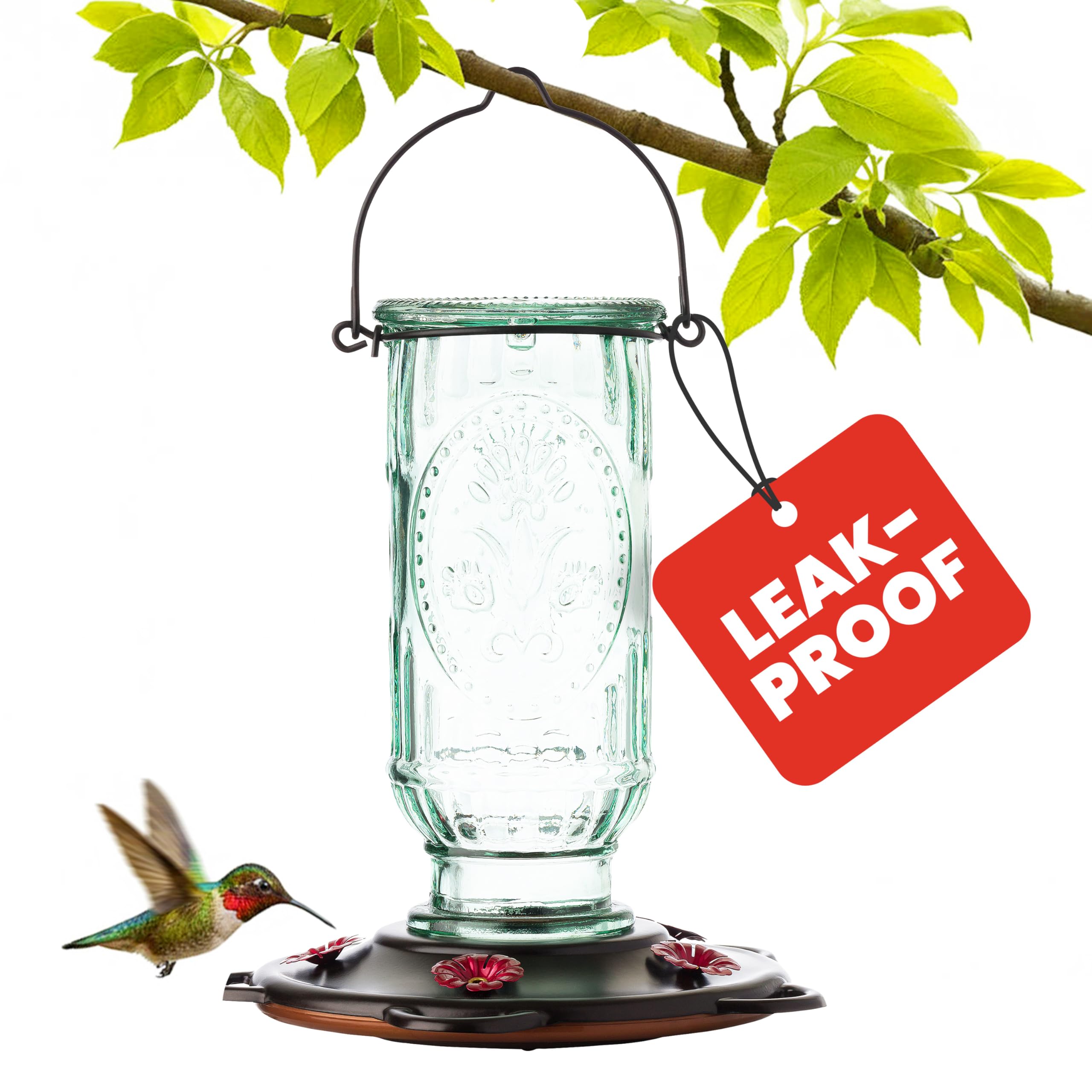
The birds at this feeder sit down. A full perch ring runs around the base, so hummingbirds land, fold their wings and stay a while instead of hovering and darting off, which makes this the one we reach for when we want to watch rather than glance.

Ignore the capacity headline. The title says 26 fluid ounces, the listing's own capacity field says 1.6 pounds, and what turns up is a small feeder, much closer to two cups than the number on the label. We minded less than we expected, because the wide mouth makes a refill a quick job and the gasket under the base has kept it from dripping when it swings.

The metal flowers are a step up from plastic petals, the red glass does the attracting without dye in the syrup, and the retro shape looks deliberate rather than cute. Hang it where you will actually see it — a feeder that keeps birds in place has earned a better spot than the back corner of the yard.

Bottom line: Our pick for the chair by the window: birds perch and stay, and the red glass attracts them — just do not buy it for the capacity on the label.
2

Kingsyard Glass Hummingbird Feeder

Kingsyard Glass Hummingbird Feeder

Everyday yard feeding

Our Score 9.2/10
Check Price

Worth Noting

  • Six ports drain 16 ounces fast in peak season
  • Glass is heavy full and vulnerable to knocks
Ant Moat
Included
Material
Glass
Feeding Ports
6
Nectar Capacity
16 oz
Read the full review

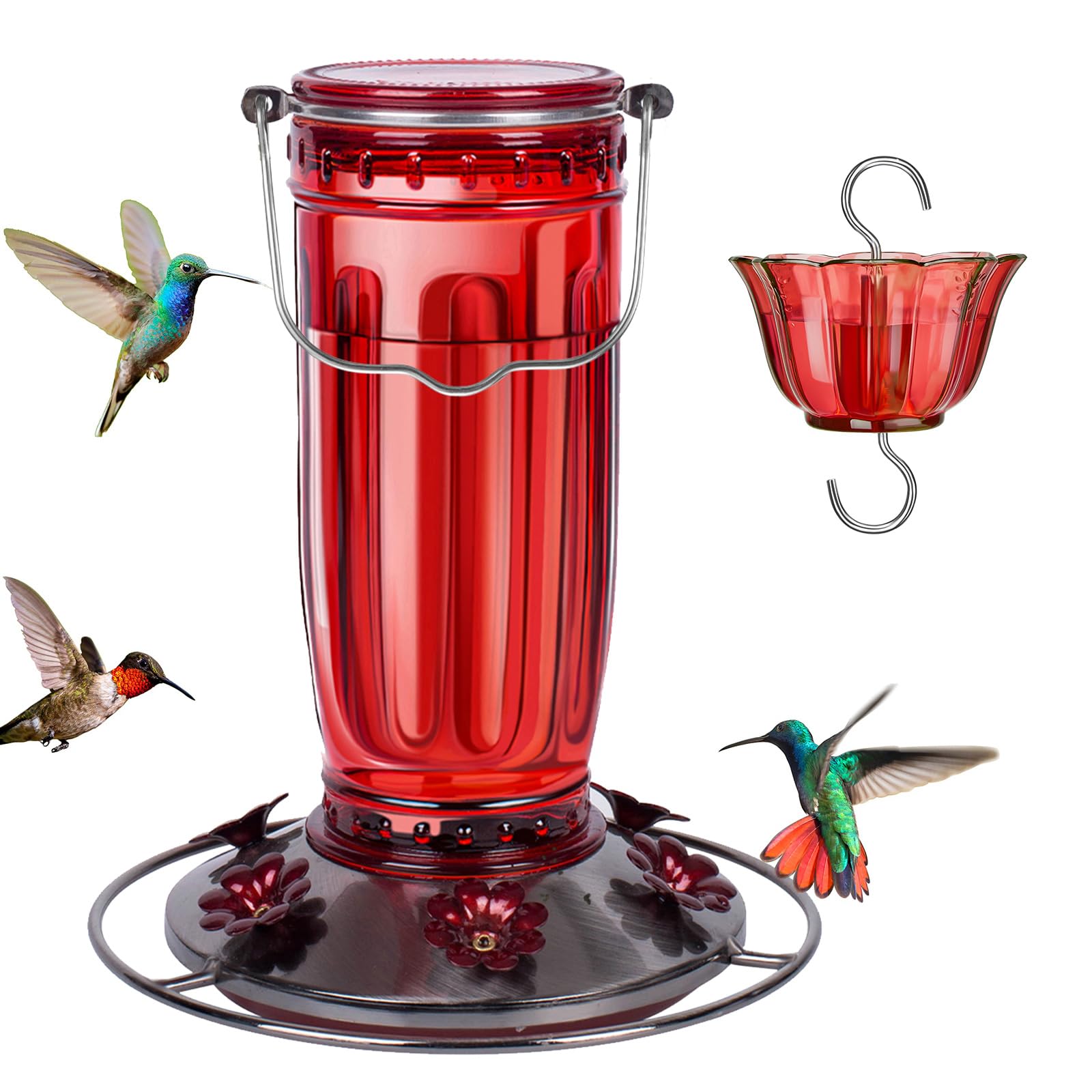
Six ports on a 16-ounce bottle is the ratio that won us over. The glass feeders here tend to offer either a reservoir worth filling or enough flowers to keep a crowd from squabbling, and the Kingsyard is the one that gets both roughly right: with stations spread around a full circle, a single territorial male cannot sit on the whole feeder the way he can on a four-port base.

The bottle mouth is wide enough for a brush and the base comes off entirely, so nothing sits in a seam you cannot see. We also like that the ant moat rides above the feeder on the stainless hook instead of being molded into the lid — it holds a useful amount of water and you can check the level from the ground.

Small things earn their place too. The flower ports are metal rather than the soft plastic petals on cheaper feeders, the perch ring actually gets used, and the gasket at the base has stayed dry through windy weeks. Red glass does the attracting on its own, so there is no reason to tint the nectar.

What it does not have is volume, and the glass is heavy when you are carrying it full across a yard. The perch arms are also the lightest part of the assembly, so hang it clear of anything it can swing into during a storm. Ours has stayed true, and this is the feeder we point friends to first.

Bottom line: For most yards this is the feeder we recommend: six ports, a bottle you can scrub, and an ant moat that holds enough water to matter.

3

More Birds Bird Health+ Ruby Feeder

More Birds Bird Health+ Ruby Feeder

Small porches

Our Score 9.2/10
Check Price

Worth Noting

  • 10-ounce reservoir needs refilling every few days
Ant Moat
Built-in
Material
Glass and plastic
Feeding Ports
4
Nectar Capacity
10 fluid ounces
Read the full review

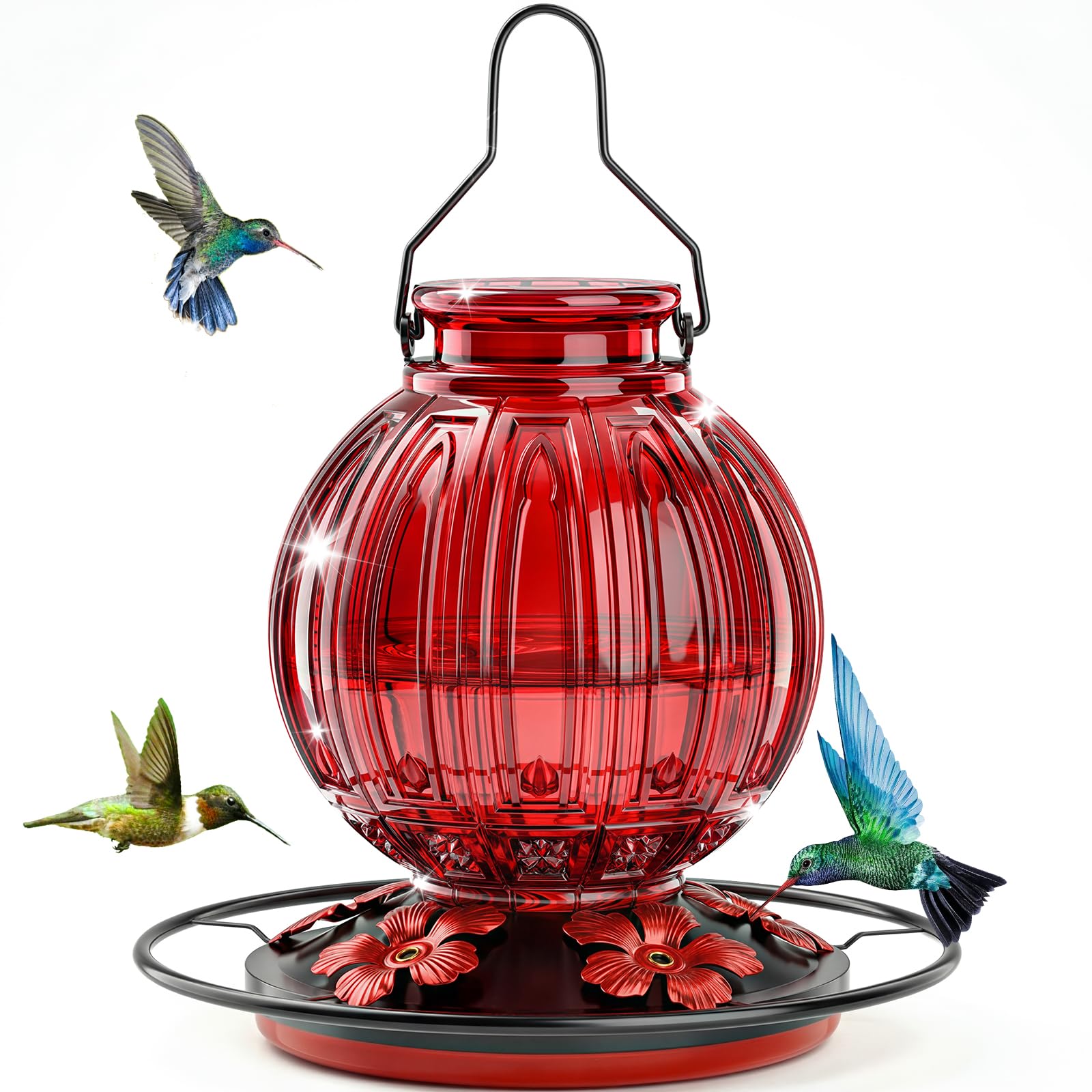
The Ruby is what we hang when the spot is small: a porch corner, a short hook off a railing, a bracket that will not carry a 20-ounce bottle. Ten ounces of nectar and a four-port base keep the whole thing narrow, and the red glass looks better against a post than any plastic feeder in this group.

It comes apart in two pieces, bottle and base, with no hidden channel for old syrup to sit in, which is most of the reason we forgive its size. The ant moat is molded into the feeder body instead of riding above it on a separate cup, so there is nothing extra to fill or misplace, and the perches around the base let the birds settle rather than hover.

Handle the base with a little care: seat it straight and stop at hand-tight, because the plastic threads are the part that gives if you crank the bottle down hard. Do that and the Ruby is tidy and cheap to live with, and it is the feeder we suggest to someone who wants glass on a small hook without much fuss.

Bottom line: We like it for porches and short hooks — just plan on refilling it more often than the big bottles here.

4

Jealoeur Hummingbird Feeder

Jealoeur Hummingbird Feeder

First feeder

Our Score 9.2/10
Check Price

Worth Noting

  • Filling means inverting and twisting the base
  • Acrylic scratches and hazes more than glass
Ant Moat
Built-in
Material
Acrylic and stainless steel
Feeding Ports
6
Nectar Capacity
18 oz
Read the full review

It is the least expensive feeder on this page, and it does not behave like it: an 18-ounce body, six ports around a perch ring, a built-in moat and a stainless hook, all of it light enough to carry full in one hand.

Up close it reads as acrylic — a thinner wall and a flatter shine than the glass feeders here — but hanging in a tree at any distance it looks like red glass. Nothing about it feels flimsy, so the trade is looks and scratch resistance rather than structure.

The moat sits at the top and holds enough water that you can check the level without crouching, and the feeding holes are only about 3 mm across, small enough that a bee has to work at it. Six ports on 18 ounces is a sensible balance for a yard with a handful of regulars.

What we did not expect at this price was how little we had to fuss with it: it hangs level, it does not drip, and the birds found it. If you are putting up a first feeder, or adding a third to a yard that is already busy, this is where we start.

Bottom line: We point first-time buyers here: six ports, a working ant moat and an 18-ounce body, with acrylic standing in for glass.

5

More Birds Vintage Glass Feeder

More Birds Vintage Glass Feeder

Garden decor

Our Score 9.2/10
Check Price

Worth Noting

  • Highest price in this group
Material
Glass and metal
Feeding Ports
5
Nectar Capacity
20 fluid ounces
Read the full review

Hanging this one is a decorating decision as much as a birding one. Aqua glass with an embossed vintage bottle shape, five red metal flowers and copper-toned trim — from the far end of the yard it reads as an antique, and it is the feeder visitors notice before they notice the birds.

It works, too. Twenty ounces is a real reservoir, five ports is enough for a busy week, and the flat bottle with its wide mouth fills from a pitcher and comes apart into three pieces for cleaning. The glass stays clear, which matters more than it sounds when you are checking nectar levels from across a patio.

Our reservation is the base: a flat plastic seat against metal, and if it is not perfectly flush it seeps. Set it on a level surface, tighten it squarely, and look for a bead at the seam before you hang it — do that and the Vintage is a pleasure to own. It is also the priciest feeder of these picks, and the hardware is not quite the equal of the glass.

Bottom line: It is the feeder we hang when the garden matters as much as the birds — 20 ounces, easy cleaning, and the highest price in this group.

6

Gbekery Glass Feeder, 2 Pack

Gbekery Glass Feeder, 2 Pack

Two hanging spots

Our Score 9.2/10
Check Price

Worth Noting

  • Bees and wasps can still reach the ports
  • 10 ounces per feeder empties quickly
Pack
2 feeders
Material
Glass
Feeding Ports
6
Nectar Capacity
10 ounces each
Read the full review

Two feeders arrive in one box, each a 10-ounce glass bottle with six ports, a perch and a hook. That is the whole pitch, and it is a good one if you have two hanging spots and no interest in paying glass money twice.

Each one comes apart to the last piece — wide mouth, removable base — so cleaning is a short job rather than a bottle-brush fight, and the glass feels more substantial than the price suggests.

The ports are the weak point. Six open flowers per feeder give bees and wasps a way in, and on a hot afternoon these drew more of them than the Kingsyard hanging a few feet away. The hooks are included and both bottles hang level, which is more than we can say for some single feeders here.

Where the pair earns its place is as a matching set: two small glass feeders that look like they belong together, one at each end of a porch, light enough to carry full in one hand. If you only want one feeder, buy a bigger single; if you want two, this is the least painful way to get them.

Bottom line: We like the pair for two hanging spots — glass, six ports each, for roughly what one glass feeder costs.

7

First Nature Wide-Mouth Flower Feeder

First Nature Wide-Mouth Flower Feeder

Crowded yards

Our Score 9.0/10
Check Price

Worth Noting

  • 32 ounces can spoil before a quiet yard empties it
Perches
Built-in
Material
Plastic
Feeding Ports
10
Nectar Capacity
32 oz
Read the full review

If your problem is too many hummingbirds rather than too few, this is the feeder the rest of the list does not answer. Ten ports ring a wide red base, there is a perch for every one of them, and 32 ounces of nectar is roughly three times what the compact glass feeders hold.

Filling takes a pitcher and no funnel, because the fluted reservoir has a genuinely wide mouth, and the two-part base twists apart so you can get at the ports from both sides. The plastic is the point: lighter than glass when full, and it bounces instead of shattering when a gust dumps it off the hook. The yellow flower ports are meant to put bees off the red base, and they are push-in pieces worth checking now and then since they can work loose.

We reach for it when capacity is the constraint, and we have learned to carry it by the base rather than the hanger — the halves separate if you lift a full reservoir by the top. That is a habit rather than a fault, and it is the only adjustment this feeder asks of you.

Bottom line: We reach for it when the yard is crowded: ten ports and 32 ounces handle a rush better than anything else here, and the plastic shrugs off knocks.

8

eWonLife Saucer Feeder, 2 Pack

eWonLife Saucer Feeder, 2 Pack

Fast cleaning

Our Score 8.8/10
Check Price

Worth Noting

  • Plain plastic look beside the glass feeders
  • Sold only as a pair
Pack
2 feeders
Style
Saucer
Feeding Ports
5
Nectar Capacity
16 ounces each
Read the full review

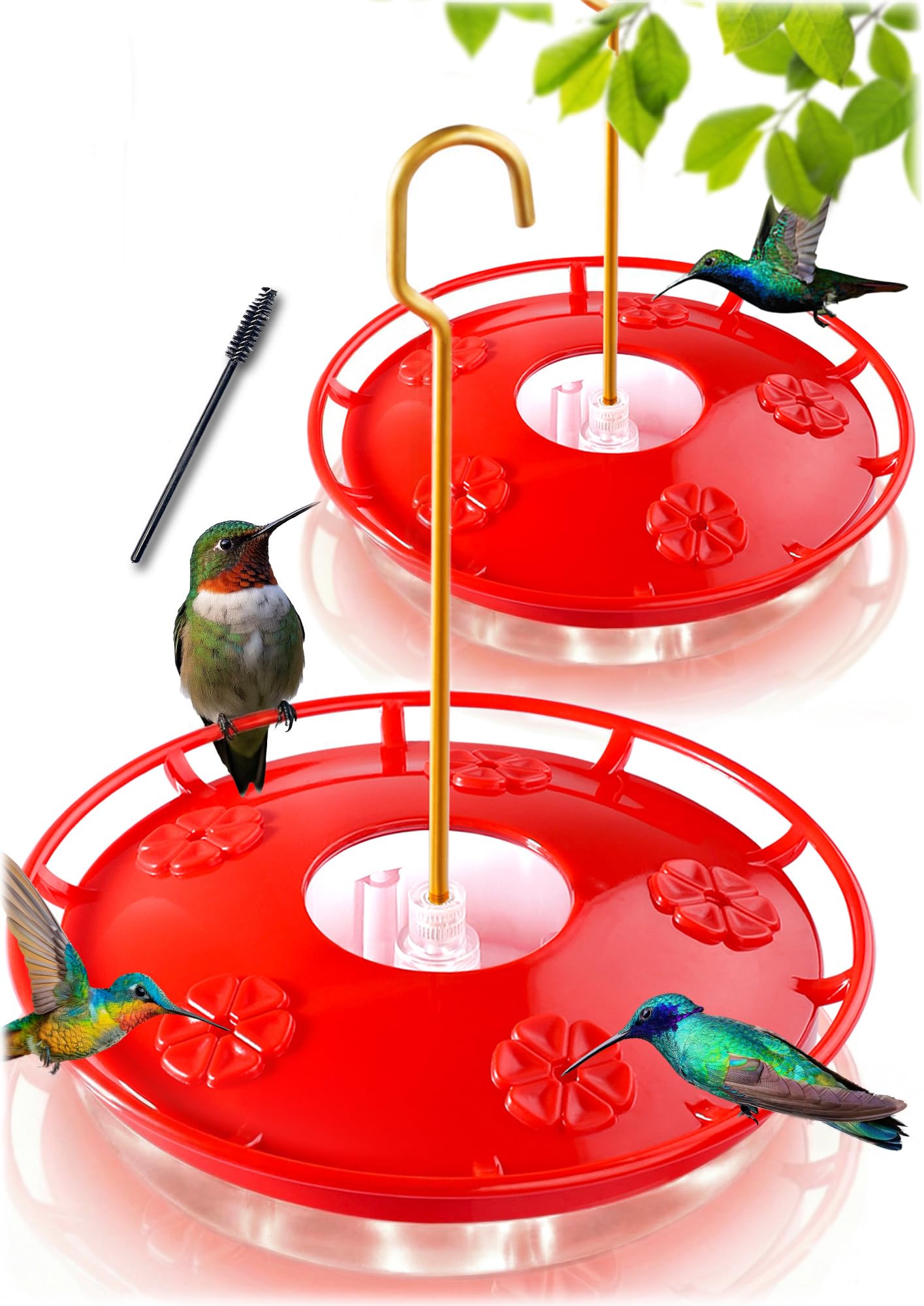
Every bottle feeder here asks the same thing of you: unscrew, invert, scrub a curved wall, screw it back without cross-threading. The eWonLife saucers skip the whole sequence. The red cover pops off, the tray is a flat dish you wipe in one pass, and there is no bottle to wash at all.

Two feeders in the box turned out to matter more than we expected — one on the deck and one at the far end of the garden, or a clean one swapped in while the other soaks. The five ports sit raised on the lid so birds feed from above the nectar rather than dipping their faces into it, and the ant moat is built into the cover.

A saucer does have a trade-off: the tray is shallow and open, so hard rain can top it up through the ports and a gust can slosh it. Hang it under an eave or on the sheltered side of a post and that stops mattering. It is also the plainest feeder of the group, and the one that goes up for the birds rather than for the garden.

Bottom line: The one we hand anyone who dreads cleaning: a flat tray, no bottle, and two feeders in one purchase.

How We Tested Hummingbird Feeders

We started with a long list of feeders and narrowed it by capacity, port shape, mounting style, replacement-part availability, and price relative to how much nectar each one held. Then we ordered 14 and ran them through five months of ordinary backyard use, not a lab bench. Each went outside in the same setup: one on a shepherd’s hook in full sun, one clamped to a deck rail, and one suction-cupped to a kitchen window.

We filled every feeder with the same 4:1 nectar on the same schedule and logged how quickly hummingbirds found it, how often they returned, and whether ants or wasps arrived first. After each refill, we hung the feeder over a clean paper towel for an hour and checked for drips, then repeated that after rain and a windy afternoon. We cleaned each one with warm soapy water and a bottle brush, timing how long it took to reach the corners and whether the parts went back together without a fight.

Along the way, we watched for cracks, fading, loose seams, and brackets that let a full feeder tip. We compared what each model demanded in refills, cleaning time, and replacement parts against its cost, since a feeder that needs replacing every season is no bargain. The best ones held a full batch without weeping, stayed level through gusty afternoons, kept their looks on the porch, and made us want to refill them instead of dreading the chore.

How to Choose Hummingbird Feeders

Cleaning comes before anything else

Nectar ferments and grows mold within days in warm weather, so the right feeder is whichever one you will actually take apart on a Tuesday. Look for a mouth wide enough for a bottle brush, a base that comes completely free, and no narrow channel between the port plate and the reservoir where old syrup hides. A saucer skips the bottle entirely, which is why we point people who know they will procrastinate toward the eWonLife pair. The trap is the charming narrow-necked bottle: if a brush will not pass the neck, that feeder gets rinsed, not cleaned.

Match capacity to your traffic

Ten ounces suits a porch with a pair of regulars; 32 ounces suits a yard where the feeder empties in a day. Buy for the birds you actually see rather than the crowd you are hoping for, because nectar you pour out is nectar you paid for twice. A small feeder changed often beats a big one left standing, and in a heat wave that is not a small point. The First Nature's 32 ounces is a genuine solution to a busy yard and a chore in a quiet one.

Ports and perches decide who gets to eat

Four ports is the working minimum; six to ten spreads the traffic when a territorial male claims the feeder as his own. Perches matter as much as ports, since a hummingbird that can sit feeds longer and burns less energy hovering, and a full ring around the base gives the birds at the back somewhere to wait. Watch the arrangement too: flowers spread around a circle are much harder for one bird to guard than four lined up on a single side.

Ant moats and bee guards, and what they cannot do

An ant moat is a cup of water the ants have to cross, and it works only while it holds water, so a dry moat is decoration. Fill it every time you refill the feeder and top it up after rain. Bee guards are the small flowers over the ports; they keep honeybees from reaching the nectar but do not stop wasps, and the push-in kind can work loose. Narrow ports help more than any accessory bolted on top.

Material, and where feeders fail

Glass cleans best and stays clear for years, but it is heavy when full and it chips at the neck. Plastic survives being blown off a hook and costs less; acrylic looks like glass and takes a knock, though it hazes with hard scrubbing. Whatever the body, the threads where the base screws on are the part that fails first, so seat the base square and stop at hand-tight. Hang the feeder where it cannot swing into a branch or a wall, and check the hanger once a season.

Frequently Asked Questions

Final Verdict

The Kingsyard is the feeder we recommend to most people, because it gets the three things that decide whether a feeder earns its hook: enough ports to spread the traffic, a bottle you can scrub properly, and an ant moat that holds enough water to be worth filling.

If your yard is already crowded, the First Nature's ten ports and 32 ounces solve a problem the Kingsyard does not. And if you know you will put off cleaning, buy the saucer pair instead — a feeder you actually wash beats a prettier one you don't.