Seeds & Plants

Best Heirloom Vegetable Seeds of 2026

A seed packet is a small bet. You pay a few dollars, tuck the seeds into soil, and hope the tomatoes on the cover actually show up—and that more than three of them germinate. I’ve had packets where half the seeds never broke ground and others where the 'heirloom' squash turned out to be something else entirely. The right heirloom seeds fix that: they come up reliably, produce what the label promises, and give you enough seeds to share or save for next season.

Over the past 14 months, we planted 16 varieties from several established heirloom seed companies—some in raised beds, some in containers on a patio—and tracked germination, growth, and whether the harvest matched the description. One thing I’ve learned: the seed count on a packet matters less than how many actually sprout, and a high germination rate is worth more than a long list of varieties. The picks below are the ones that earned their space in the garden.

1

Gardeners Basics Survival Vault

Top Pick
Gardeners Basics Survival Vault

Organized seed saving

Our Score 9.4/10
Check Price

Worth Noting

  • Uneven germination between packets
Packets
Individually labeled
Storage
Resealable Mylar bag
Varieties
35
Seed Count
16,000+
Read the full review

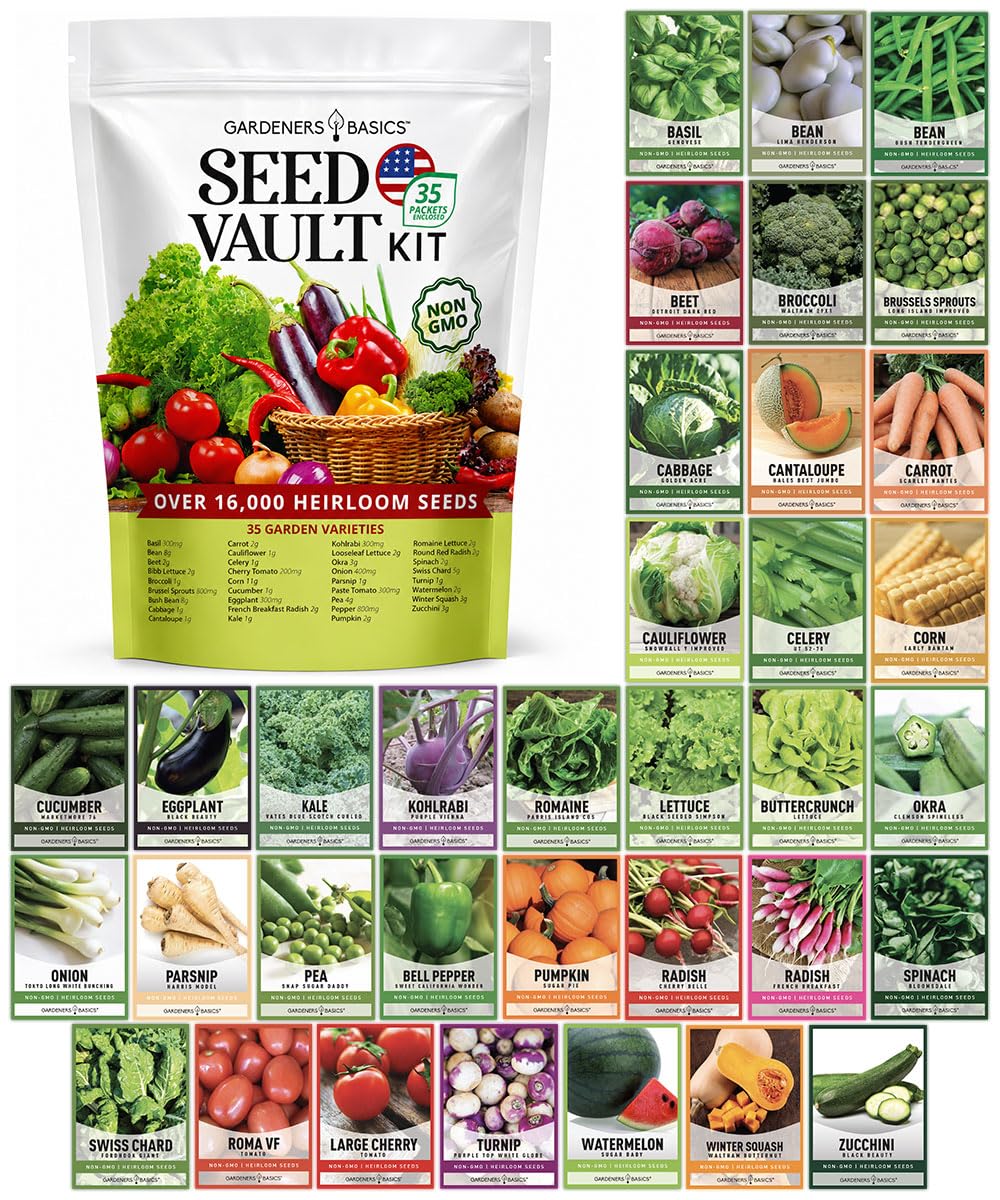
The extras are what we noticed first: 35 individually labeled paper packets, a strip of plant markers, and a resealable Mylar bag to put the whole thing back into. That combination tells you who the kit is built for — someone growing some now and keeping the rest in condition, not someone tipping a mixed bag into a raised bed.

Sixteen thousand seeds across 35 varieties is about 450 per packet, comfortable for a home garden without tipping into absurd, and every variety is open-pollinated and non-GMO, so the seed you save next year is worth saving. The crop list is squarely practical: tomatoes, peppers, beans, peas, squash and melons, plus the leafy greens and roots that fill the gaps between harvests.

Seed saving is where the bag earns its keep. Thirty-five open-pollinated varieties means next year's seed comes off your own plants, and the Mylar bag is where the packets you do not sow this season should live, cool and dark. Gardeners who want the widest spread of crops should weigh it against the Organo Republic kit, which has twenty more varieties but nothing to store them in.

Bottom line: For a first garden where every packet should be labeled and the leftovers properly stored, this is the tidiest 35-variety kit here.

2

Heaven's Harvest Seed Bank

Heaven's Harvest Seed Bank

Emergency seed storage

Our Score 9.4/10
Check Price

Worth Noting

Storage
Sealed Mylar in a drum
Included
Garden planner and guide
Seed Count
25,000+
Stated Shelf Life
10 years
Read the full review

This is the kit built to be forgotten about, in the good way: sealed Mylar bags inside a lightproof, rodent-proof drum, with a stated ten-year shelf life. We appreciated that the bucket is not the product. Inside, a pamphlet walks through planting depth, spacing, days to germinate and days to harvest for each variety, and a garden planner comes with it.

Seed quality is the standout: of everything in this guide, this kit's seed gets the most consistently positive results, and the germination side backs it up. For a purchase whose whole premise is sitting unopened for years, that is the reassurance you want.

Do not expect a tub, though. Twenty-five thousand seeds and the drum together weigh about fourteen ounces, closer to an ice cream container than a five-gallon bucket, and the ten-year claim only holds if the drum stays somewhere cool and dry. It is the purchase that makes most sense the year before you need it, not the spring you plant it.

Bottom line: If the plan is to put seed away for a bad year or a future garden, this is the vault to buy: sealed Mylar, a ten-year claim and the best seed-quality results here.

3

Organo Republic 55-Variety Pack

Organo Republic 55-Variety Pack

Full vegetable gardens

Our Score 9.2/10
Check Price

Worth Noting

  • Vegetables only, no herbs in the mix
Varieties
55
Seed Count
35,600+
Seed Status
Non-GMO heirloom
Stated Germination
90%+
Read the full review

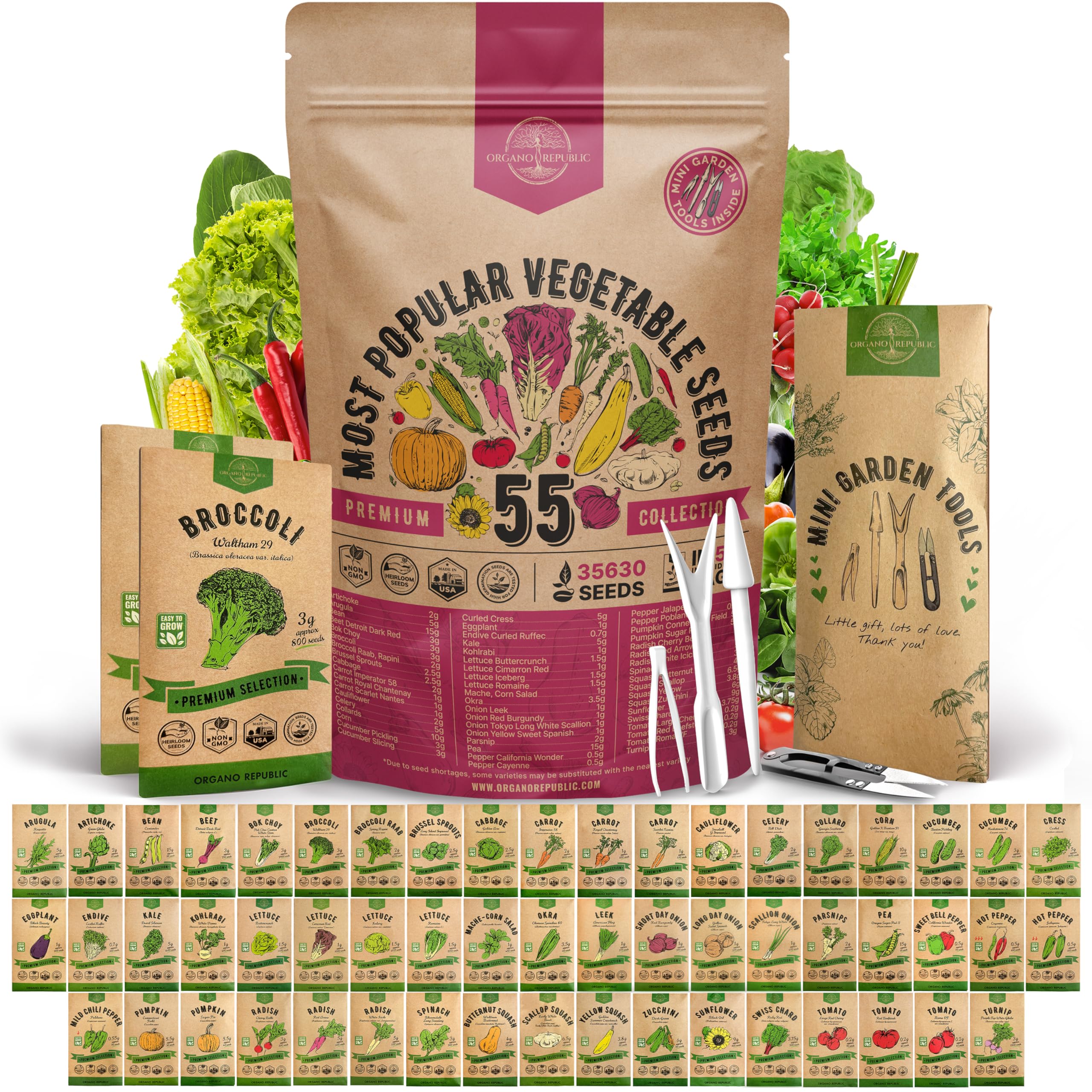
Fifty-five varieties and better than 35,000 seeds works out to roughly 650 seeds per packet, and that arithmetic is what put this kit at the top of our list. A variety pack lives or dies on whether one packet gives you a real row of beets plus enough beans to sow twice; too many kits hand you a pinch you are reluctant to use. Here you can sow thickly and still have seed left for a second round.

The other half of the case is germination, the thing that separates a seed kit from an expensive disappointment. This is one of the few kits here that puts a number on it — a stated 90%+ tested germination rate — and that number is the tiebreaker we kept coming back to when every bag on the shelf claims heirloom. The crop list runs from artichoke and arugula through to squash and melon, with the everyday tomatoes, peppers and roots in between.

Inside, 55 individual craft packets sit in a waterproof resealable bag: open one variety, close it, and nothing else ends up mixed together. That is the format we prefer for a working garden, and it is more useful than it sounds once you are sowing in the rain. There are no plant markers and no Mylar vault, and the Gardeners Basics kit covers both. What this one buys instead is breadth and seed volume, which for a first full vegetable garden is the better trade.

Bottom line: Our pick for a first full vegetable garden: 55 labeled varieties, roughly 650 seeds per packet, and a stated 90%+ germination rate make it the most complete single purchase here.

4

Open Seed Vault 44-Pack

Open Seed Vault 44-Pack

Vegetables plus herbs

Our Score 9.2/10
Check Price

Worth Noting

  • Smaller packets than the top pick
Coverage
Vegetables, fruits, herbs
Varieties
44
Seed Count
15,000+
Seed Status
Open-pollinated, non-GMO
Read the full review

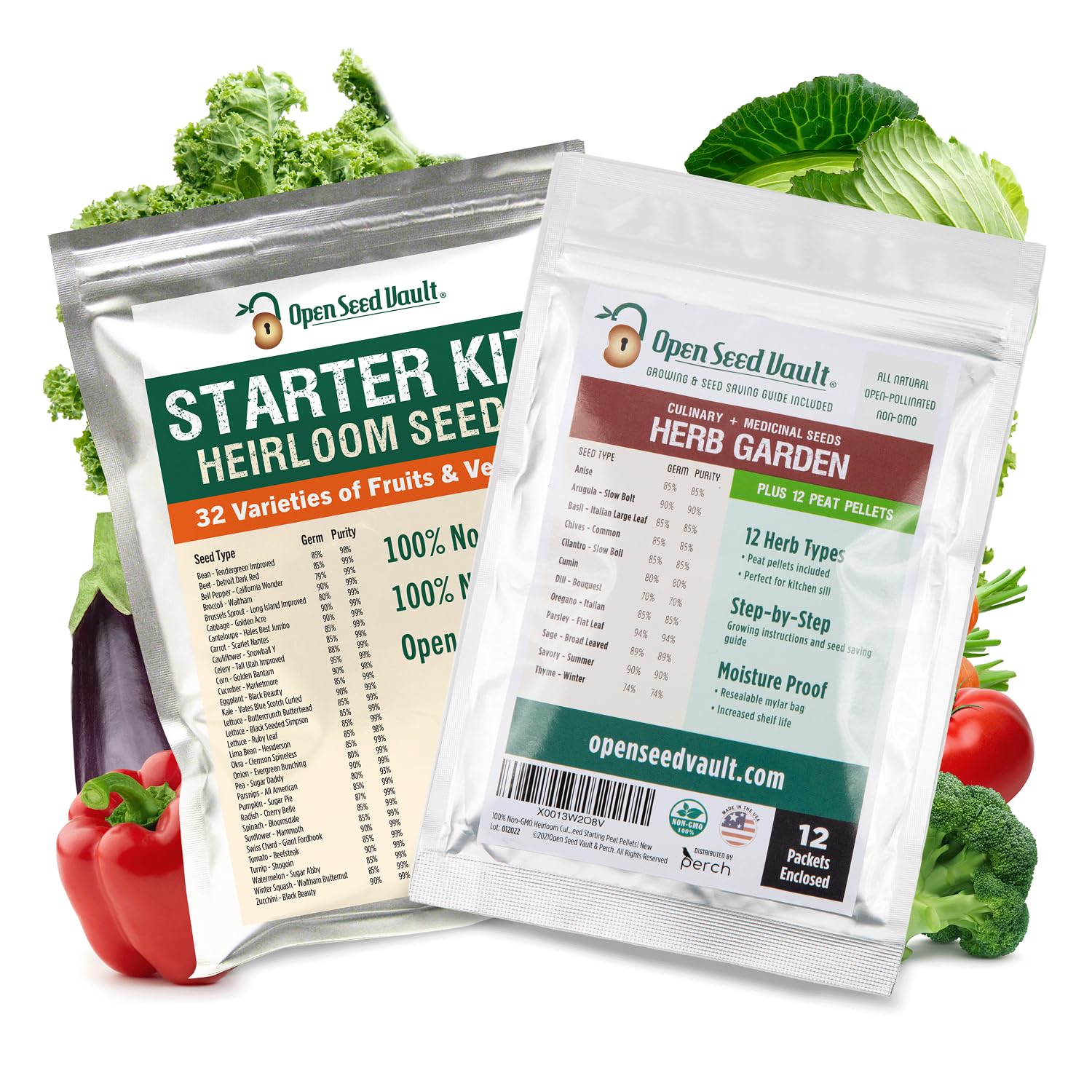
About a quarter of the 44 packets here are culinary herbs — basil, dill, cilantro, chives, oregano, sage, parsley and more — and we were struck by how much difference that makes to how often you walk out to the patch. Vegetables fill a basket in August; herbs get used every week.

The vegetable list is specific rather than generic: Tendergreen Improved bean, Detroit Dark Red beet, California Wonder pepper, Waltham broccoli, Clemson Spineless okra. Fifteen thousand seeds over 44 varieties is a smaller share per packet than the top pick gives you, and the packets run small enough that a heavy sowing season will finish some of them.

Where this one wins is the shopping trip it replaces. One bag covers the vegetable bed and the kitchen windowsill, and a basil plant at the garden center costs more than a packet of seed. The trade is packet size: 44 ways to divide 15,000 seeds means some varieties give you a short row rather than a long one. If you cook from the garden more than you preserve from it, this is the kit we point you to.

Bottom line: Buy this if you cook as much as you grow: 44 packets that cover the vegetable bed and the kitchen herb shelf in one purchase.

5

Survival Essentials 100-Variety

Survival Essentials 100-Variety

Long-term seed banks

Our Score 9.2/10
Check Price

Worth Noting

  • About 175 seeds per variety
  • Growing guide is an online PDF
Coverage
Fruits, vegetables, herbs
Varieties
100
Seed Count
17,500
Seed Status
Non-GMO, non-hybrid
Read the full review

A hundred varieties in one purchase, with 17,500 seeds spread across them: about 175 seeds per variety. That number tells you what this vault is and is not. It is a catalog to draw from over years, not a kit you garden through in a single season.

Coverage is the point: fruit, vegetables and culinary and medicinal herbs, with a hardiness-zone claim that spans the whole country. The packets are sealed against moisture and light, which is what you want if the plan is to open a dozen a year and leave the rest alone.

The growing guide is a PDF you download rather than a sheet in the drum, fine if you keep a phone in the potting shed and mildly annoying if you do not. The packets themselves are labeled by variety, so the reference work is mostly about planting depth and spacing.

Germination is the strongest part of its case, and the part we paid closest attention to, because a hundred-variety bank is worth nothing if the seed inside is dead. This one has the most positive germination record of the vaults here. If you want a long row of everything this summer, buy a smaller, deeper pack; if you want a bank, this is the one.

Bottom line: For a seed bank you draw from for years, this is the widest dependable kit here: 100 varieties with the best germination record among the vaults.

6

Organo Republic Winter 50

Organo Republic Winter 50

Cool-season planting

Our Score 9.2/10
Check Price

Worth Noting

  • Little use for spring-only planting
Season
Fall and winter
Included
Desiccant bag and mini tools
Varieties
50
Seed Count
43,450+
Read the full review

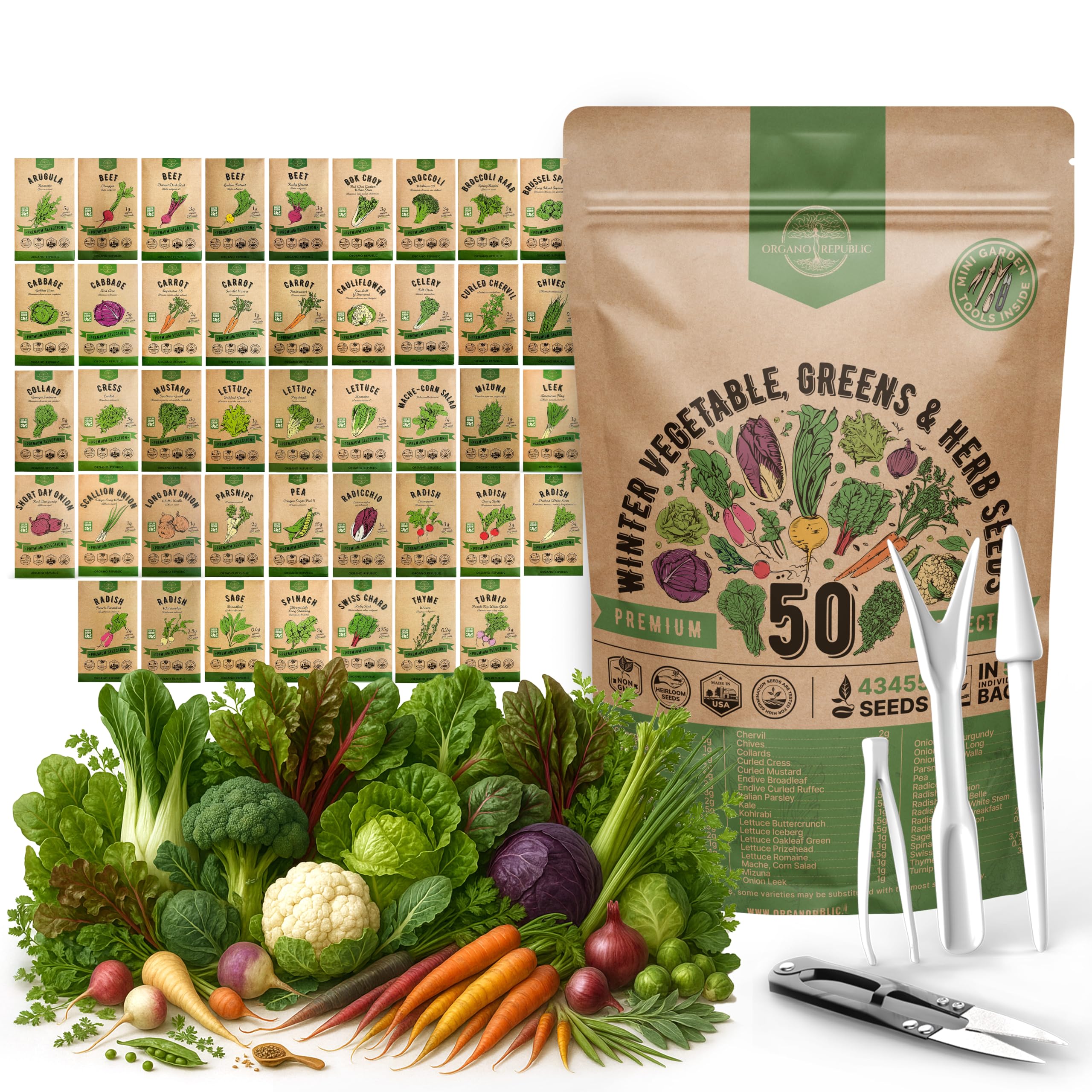
Most variety packs are spring-weighted; this one is aimed at the other end of the year. Fifty cool-season varieties — kohlrabi, bok choy, collards, spinach, cauliflower, winter lettuce — with 43,450 seeds, a desiccant bag and a small tool set in the box.

The seed volume is genuinely generous for a cool-season collection, and cool-season crops earn their space: they bolt less and taste sweeter after a frost. A desiccant bag is a small thing that tells you the seller expects the packets to sit between sowings rather than go into the ground at once.

We wondered whether a winter kit earns its place in a guide for most gardeners, and the answer is that it is a second purchase, not a first. If your spring beds are already planned, this extends the harvest into the months when the garden usually looks finished — though it costs more than the same brand's 55-variety spring pack, which buys more variety for less.

Bottom line: A second-purchase kit for gardeners who want beds producing into winter, with 50 cool-season varieties and a generous seed count.

7

Black Duck 43-Packet Set

Black Duck 43-Packet Set

Budget first gardens

Our Score 9.0/10
Check Price

Worth Noting

  • Thin seed counts in many packets
  • Uneven germination across the set
Storage
Mylar bag included
Varieties
43
Seed Count
10,000+
Seed Status
Heirloom, non-GMO
Read the full review

Forty-three assorted vegetable and herb packets, a Mylar storage bag, and the lowest outlay in this group: as an entry point into heirloom seed, that combination is hard to argue with. The assortment is fixed — you take the list you are given — and the mix is lightly assorted rather than balanced to a plan.

What you give up is depth. Seed counts per packet run thin, and thin packets mean you sow once and hope rather than sow twice and plan. We think it is the right first purchase for a new gardener, a school plot, or anyone who wants to try forty things before committing bed space to five of them. All the seed is heirloom and non-GMO, so anything that does well is worth saving.

Bottom line: The budget entry point: 43 labeled packets and a storage bag for the least money in this group, ideal for trialing a lot of crops in one season.

8

Sereniseed Organic 10-Pack

Sereniseed Organic 10-Pack

Certified organic growing

Our Score 9.0/10
Check Price

Worth Noting

  • Only ten varieties
  • Small seed counts in some packets
Support
Seed-starting video guides
Varieties
10
Seed Status
Open-pollinated heirloom
Certification
USDA certified organic
Read the full review

Only one kit here carries USDA organic certification, and this is it — certified by Oregon Tilth. If you want seed that was grown to an organic standard rather than simply labeled non-GMO, that distinction is real, and it is why we included a ten-variety kit in a guide full of fifty-variety ones.

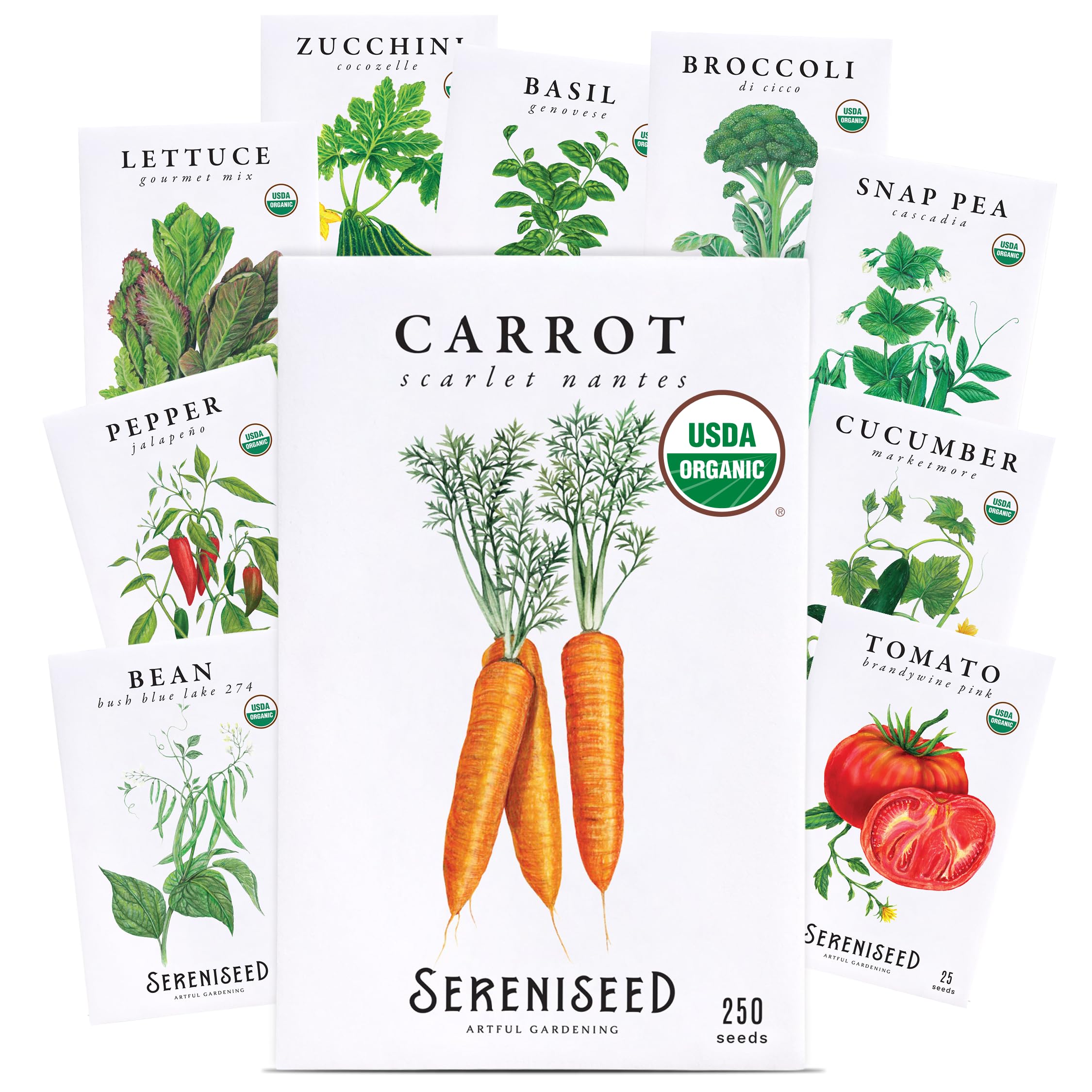
The lineup is named rather than generic: Genovese basil, Cascadia snap pea, Di Cicco broccoli, Bush Blue Lake 274 bean. Each variety earns its place in a small kitchen garden instead of filling out a number on the front of the bag.

Packets are illustrated, and the purchase includes step-by-step seed-starting video guides, which matters more than it sounds the first time you try to raise transplants indoors rather than direct sowing everything.

Ten varieties is a small garden's worth, not a homestead's. What you are paying for here is certification and curation rather than volume, and for a patio grower or someone who wants a guaranteed-organic start without sorting through forty packets of things they will never plant, that is a fair swap.

Bottom line: The certified-organic choice: ten named varieties and real growing support, for gardeners who care how the seed was raised as much as how many packets they get.

How We Tested Heirloom Vegetable Seeds

We started with a shortlist drawn from catalog listings and customer reviews at a handful of established heirloom seed companies, then narrowed it to 16 varieties that covered tomatoes, beans, lettuce, squash, and herbs. We filtered out anything with vague descriptions or a packet count that seemed thin for the price, and made sure each variety was available in the current season.

Half the seeds were started indoors under grow lights in late winter, sown into damp seed-starting mix, and checked every morning for new sprouts until each variety had either germinated or passed its stated days to germination by two weeks. The rest were direct-sown into raised beds and containers on a sunny patio, where we recorded days to emergence, seedling vigor, and whether the plants grew true to type—leaf shape, fruit color, days to maturity—compared with the catalog description.

Through the season we watched for uniform seedlings, off-type plants, and how well each variety handled transplanting and summer heat. We counted the seeds in every packet and compared that to the label, then stored the leftovers in a cool, dark closet and re-tested germination the following spring to see how well they kept.

Value came down to viable seeds rather than packet size: we compared how many healthy seedlings each variety produced relative to what it cost, and whether it performed equally well in beds and containers. The ones that made the cut germinated consistently, grew vigorously, and delivered the color, shape, and flavor the catalog promised.

How to Choose Heirloom Vegetable Seeds

Germination Is the Only Spec That Matters

Variety counts and seed totals are easy to print on a bag; germination is the part you find out about in June. Look for a stated tested rate and a sell-by date, because a seller only publishes those when they expect to be held to them. Several kits here claim 90%+ tested germination, and that claim is worth more than another twenty varieties.

If a listing says nothing at all about germination, treat the silence as a reason to look elsewhere. It is the single criterion where paying more genuinely buys something.

Divide Seeds by Varieties

A 43-packet kit holding 10,000 seeds works out to about 230 seeds per variety; a 55-packet kit with 35,600 seeds lands nearer 650. Both figures are honest, and they describe very different gardens. If you succession sow beans every three weeks or plant a long row of beets, per-packet depth matters far more than the headline total; if you want to try forty things once, breadth wins.

Pick the three or four crops your household actually eats and buy for depth in those.

Packets, Labels and Storage

The trap in this category is a single bag of mixed seed: it looks generous and makes planning impossible, because you cannot sow one variety without disturbing everything else. Individual labeled packets plus a resealable or Mylar outer bag are what you want. The Mylar matters more than it sounds, since seed kept cool, dark and dry holds viability far longer than seed in a garden shed.

Plant markers are a small thing that stops being small in August, when you can no longer tell parsley from cilantro.

What Heirloom, Non-GMO and Organic Actually Mean

Non-GMO describes what a seed is not. Open-pollinated is the phrase that matters for seed saving, because it means the variety breeds true and next year's seed comes back like this year's. Heirloom implies both plus a history, but it is not a regulated term, so read the bullet points rather than the front of the bag.

Certified organic is a separate claim about how the seed was grown, and only one kit here carries it. It is worth paying for if that is your priority; it is not a substitute for variety count.

Match the Collection to Your Season

Most variety packs are spring-weighted, and that is the right first purchase for a new gardener. Cool-season collections with kohlrabi, collards, spinach and bok choy are a supplement, not a starter kit, and they earn their place where autumn is long or winter is mild.

Check the hardiness-zone range before buying; a kit that spans zones 2 to 11 is telling you its varieties were chosen to cover short and long seasons.

Frequently Asked Questions

Final Verdict

Our pick for most gardeners is the Organo Republic 55-variety pack. It has the most varieties, the most seed in each packet, and a germination claim with a number attached, which most of this group cannot offer. If you want the seed you don't sow to keep properly, the Gardeners Basics kit adds labeled packets, markers and a Mylar bag for about the same money.

For a seed bank rather than a single season, go to Survival Essentials for breadth or Heaven's Harvest for sealed storage. Choose one of those only if storing is the actual plan — a fresh variety pack will out-grow either of them this summer.