Seeds & Plants

Best Flower Seeds of 2026

A flower seed packet is a small gamble. You tear open the foil, sow tiny specks into potting mix, and spend the next few weeks squinting at bare soil, wondering if anything is happening. A good packet rewards you with color in weeks; a bad one leaves you with a half-empty tray and a bad mood. I've spent the past growing season with 18 varieties — from foolproof cosmos to fussier perennials — and the gap between a great packet and a mediocre one is wider than you'd think.

The seeds themselves matter, but so does what's printed on the packet: seed count, days to germination, and whether the photo is honest. Some varieties sprout in four days; others sulk for three weeks. The best picks below earned their place by germinating reliably, growing vigorously, and producing flowers that actually looked like the catalog. They also offer real value — not just the cheapest packet, but the most blooms per dollar. Here's what grew well, and what I'd sow again.

1

Sweet Yards Zinnia California Giants

Top Pick
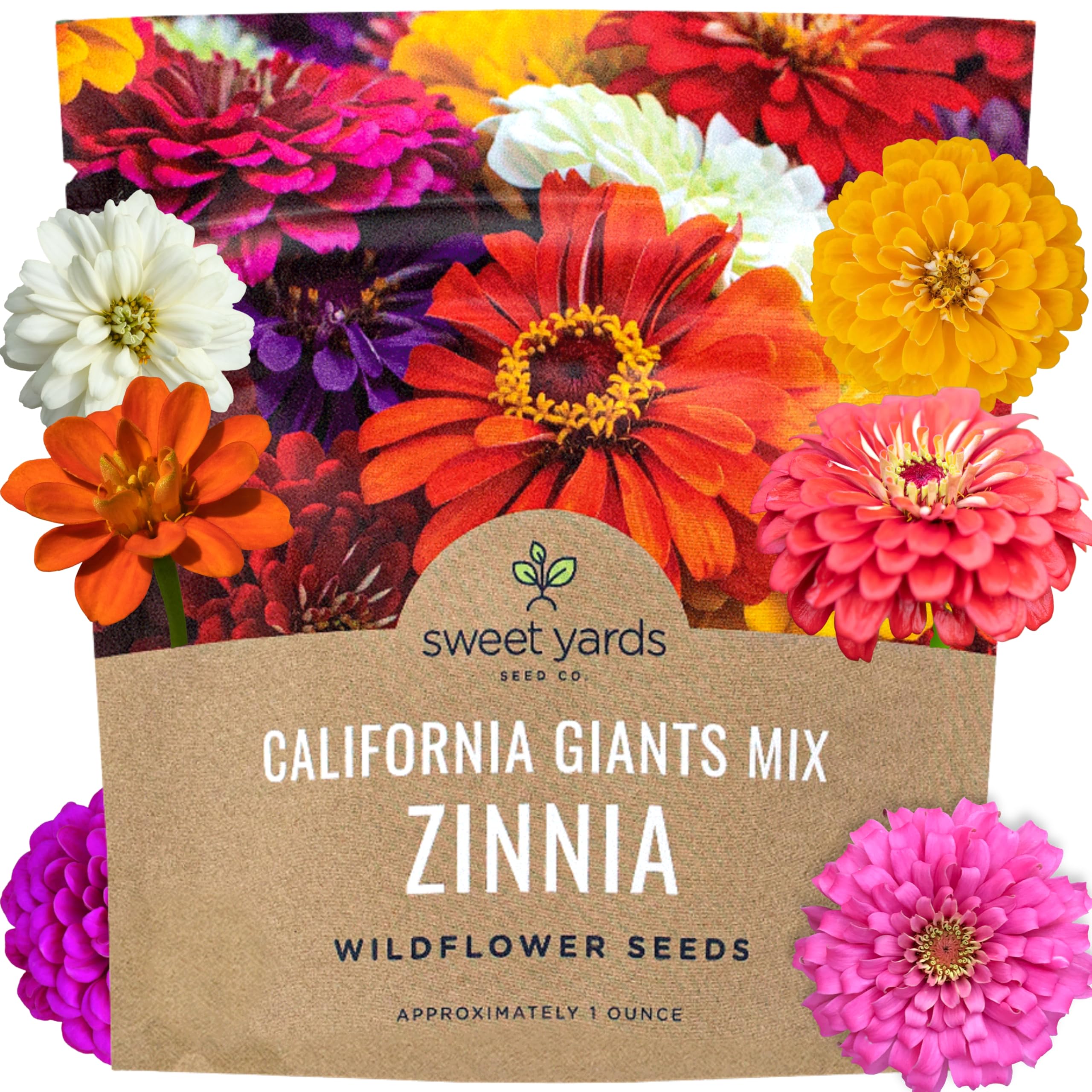
Sweet Yards Zinnia California Giants

Cutting gardens

Our Score 9.0/10
Check Price

Worth Noting

  • Blossom size varies from plant to plant
  • Annual in most zones, so you buy seed each spring
Coverage
About 75 square feet
Seed Count
3,000+
Packet Size
1 oz
Mature Height
4 feet
Read the full review

Zinnias are the flower we give to people who insist they kill everything, and the California Giants mix is the packet we hand them. One ounce holds roughly 3,000 seeds — enough, by the seller's coverage math, for about 75 square feet — and the plants open into five-inch doubles in red, pink, purple, orange, yellow and white. Take a stem and the plant answers with more, which is why a single sowing keeps producing right up to the first frost.

Sowing is about as simple as it gets. Scatter or dibble the seed in after the last frost in full sun, keep the ground damp while it comes up, and then stand back. Plants run to about four feet, tall enough to pick from without stooping and sturdy enough that they rarely need staking. The bag reseals and carries full planting instructions, which matters if you sow half now and want the rest next spring. We have grown fussier flowers that gave back less.

Against the wildflower mixes here, this is the cultivated option: a row you can walk down with scissors rather than a meadow you look at from the porch. That is the reason it is our default. Most people asking for flower seeds want something worth looking at and something worth cutting, and one inexpensive packet of zinnias gives them both.

Bottom line: Three thousand seeds, five-inch doubles and a plant that keeps producing after you cut it — this is the packet we hand to anyone who wants flowers without a project.
2

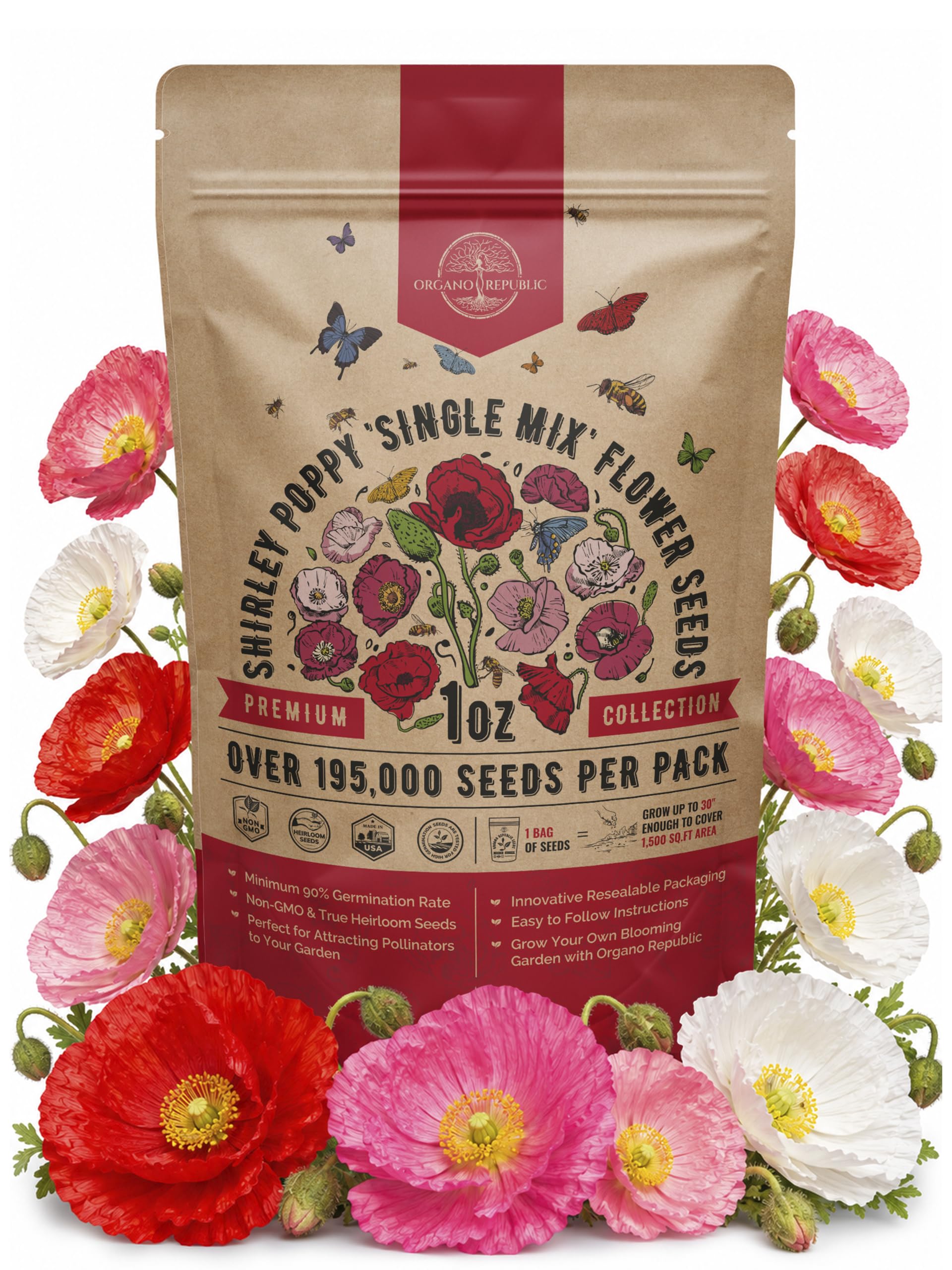
Organo Republic Shirley Poppy

Organo Republic Shirley Poppy

Budget meadow color

Our Score 9.0/10
Check Price

Worth Noting

  • Flowers last only a day or two in a vase
Seed Count
195,000
Packet Size
1 oz
Mature Height
30 inches
Hardiness Zones
3–9
Read the full review

An ounce of poppy seed is a startling amount, and Organo Republic packs it in a foil-lined pouch with a zip top rather than a paper envelope — the right call for seed this fine. Poppy seed is closer to dust than to seed, so plan to cut it with sand or cornmeal to see where it lands, and sow thin. The 195,000 figure sounds like a stunt until you see how small each seed is.

Shirley poppies want to be sown where they will flower. They are tap-rooted and sulk when moved, so scatter on the surface and press the seed down; it needs light to germinate, which means barely covering it. They also take partial sun, which makes them one of the few picks here that will perform along an east-facing fence or under a high canopy of leaves.

The timing is what sells them to us. Sow in spring and they flower in the gap before the zinnias get going, and if you leave the last pods to dry and split, they seed the ground for the following year. Plant them where you will walk past them — a path edge, a driveway strip, the front of a border you see from the kitchen window — rather than in a cutting bed.

Bottom line: 195,000 seeds in a waterproof resealable pouch, partial-shade tolerance and a soft mix of pinks, whites and reds — the most flower for the money in this guide.

3

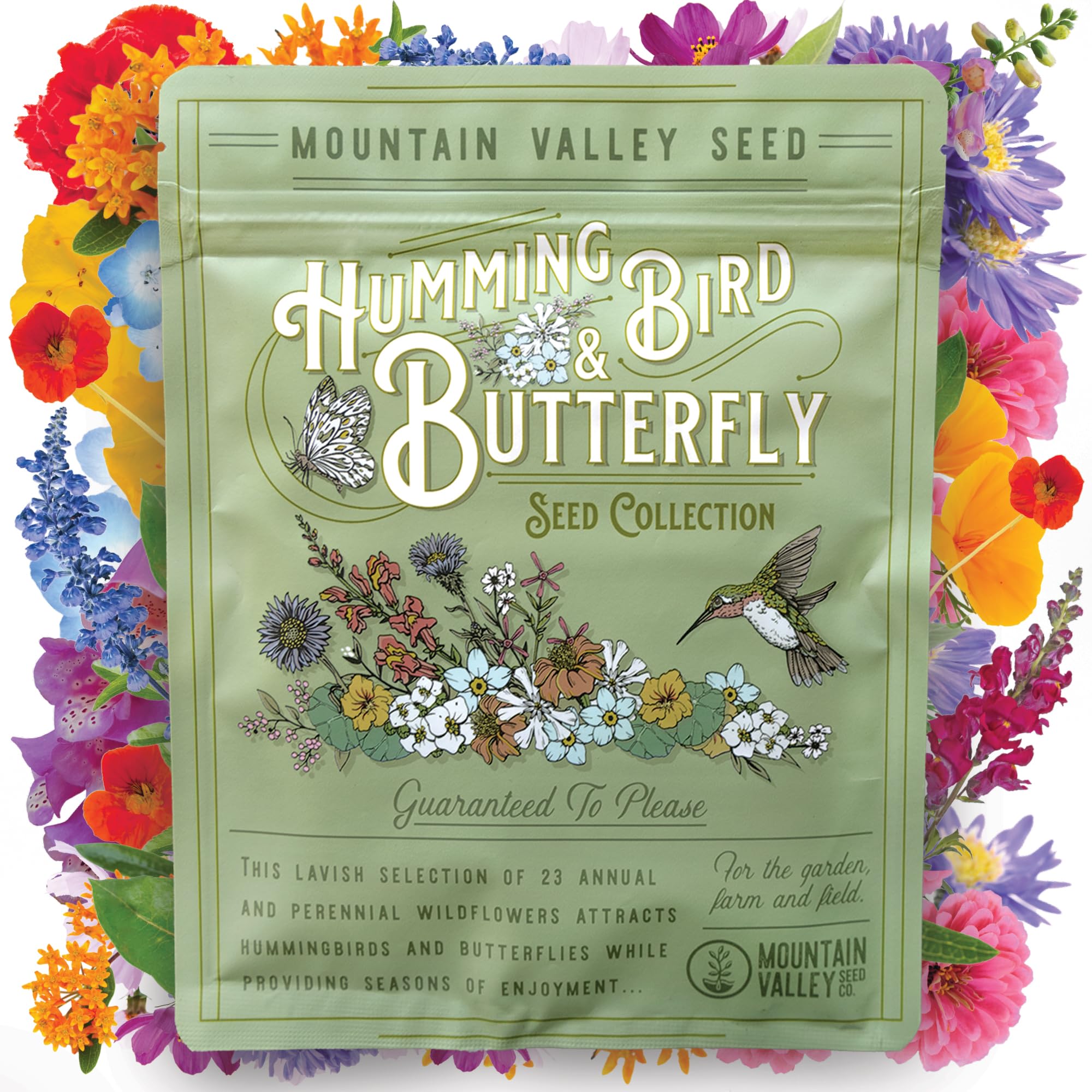
Mountain Valley Wildflower Mix

Mountain Valley Wildflower Mix

Large rough areas

Our Score 8.8/10
Check Price

Worth Noting

  • Species balance varies from bed to bed
Species
23 annuals and perennials
Seed Count
80,000+
Packet Size
2 oz
Read the full review

Some gardens need a packet and some need a bag. If you are staring at a bank of rough grass, a field edge or a long strip along a driveway, this is the biggest bag in the guide: two ounces, 80,000-plus seeds, 23 annual and perennial species, including butterfly milkweed, columbine, snapdragon, aster and cosmos.

The packaging is better than it needs to be — an 8-by-6 envelope, hand-illustrated, with a resealable top. That zip earns its keep when you have sown half and want the rest next spring, and the illustration is a nice touch if this is going to someone with a field as a gift.

What you control is seed-to-soil contact. Clear the ground, scratch the surface, sow, then press or roll rather than bury, because most of these species need light to germinate. Do not ask the mix to fight established grass; a meadow sown into a lawn is a donation to the lawn.

We recommend it for scale. It is the pick here when what you want is a ragged, changing meadow rather than a neat border, and when planting the area by hand simply is not going to happen — the seed is cheap enough per square foot to sow thick and let the ground sort it out. For a small bed, a single-species packet gives you a better show.

Bottom line: Eighty thousand seeds across 23 species in a resealable illustrated bag — the pick here when the job is a bank, a field edge or a strip too big to plant by hand.

4

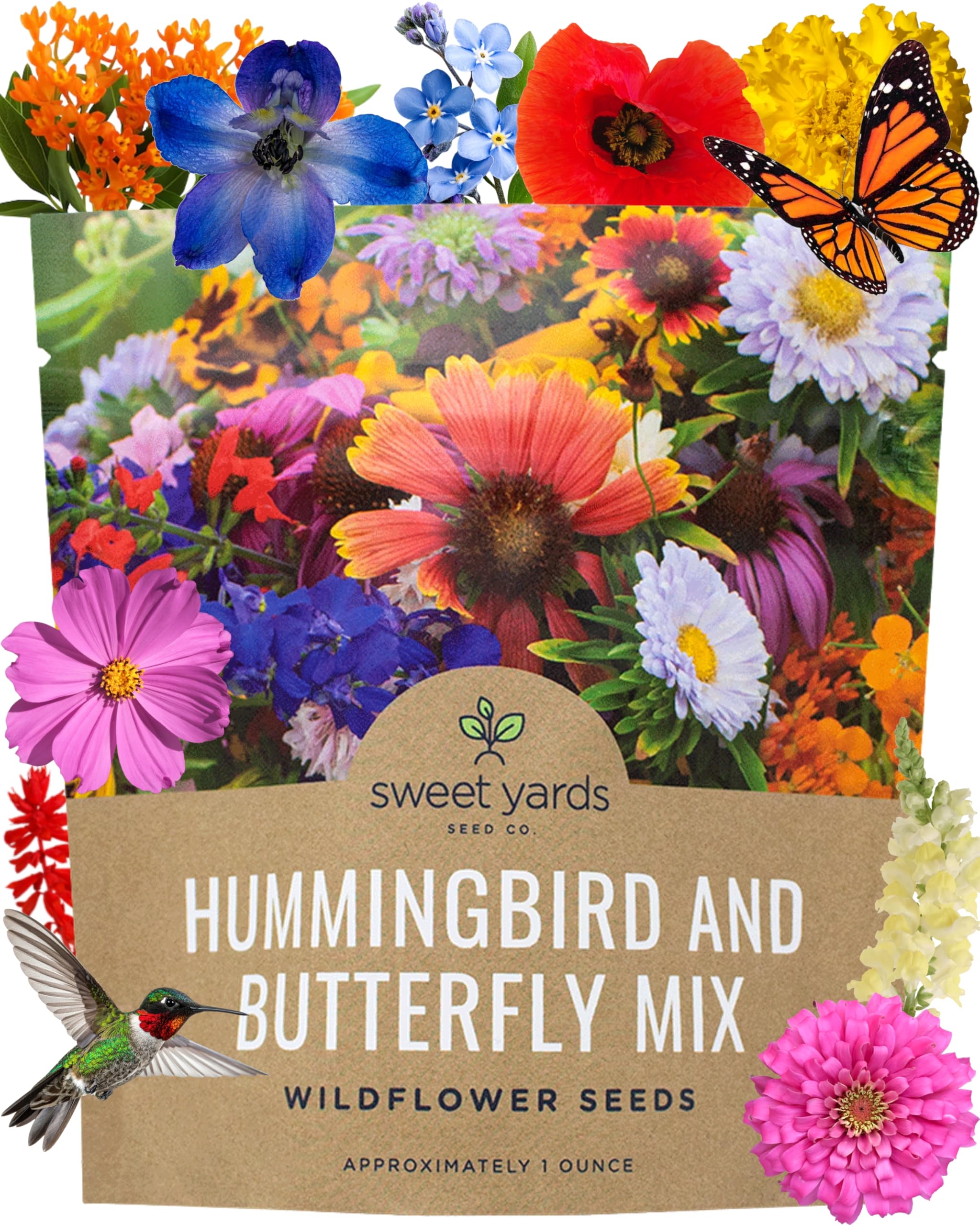
Sweet Yards Wildflower Butterfly Mix

Sweet Yards Wildflower Butterfly Mix

Pollinator meadows

Our Score 8.6/10
Check Price

Worth Noting

  • One packet covers only about 100 square feet
Species
23 annuals and perennials
Coverage
About 100 square feet
Seed Count
7,500+
Packet Size
1 oz
Read the full review

Where the zinnia packet gives you a cutting row, this one gives you a meadow. A single ounce carries 23 annual and perennial species and, by the seller's reckoning, covers about 100 square feet, and it is meant to be scattered rather than planted in neat lines. Clear a patch, rough up the surface so the seed has something to hold, scatter, and water.

We like wildflower mixes for the awkward places — a slope you cannot mow, the strip behind the shed, the corner where the hose lives. The catch with the whole category is that germination is uneven by nature, which is why the 30-day refund matters more here than it does on a single-species packet. It is a fair backstop for a blend where the fast annuals appear in a week and the slower perennials take their time.

What you are buying is variety and a low bar for effort, not a designed border. Expect the annuals to carry the show while the perennials knit together underneath, and expect a different balance of species than your neighbor gets, because soil and weather decide as much as the packet does. Sow in full sun, off the lawn, and do not ask it to compete with established grass — that is the one thing a meadow mix cannot do.

Bottom line: Twenty-three species in a single ounce, a refund if the seed fails, and color that brings in butterflies and hummingbirds — this is the packet we sow when the point is wildlife.

5

Seed Needs Milkweed Variety Pack

Seed Needs Milkweed Variety Pack

Monarch habitat

Our Score 8.6/10
Check Price

Worth Noting

  • Modest seed count in each packet
  • Some species bloom only in their second year
Packets
5
Bloom Period
Summer
Hardiness Zones
3–10
Planting Period
Fall to early spring
Read the full review

If you are planting for monarchs, the caterpillar is the customer rather than the butterfly, and that changes what you buy: milkweed foliage is the only thing monarch larvae eat. This collection gives you five species — showy milkweed and pink and white swamp milkweed among them — each in its own labeled packet, so the swamp types can go in the low, damp corner and the showy type up on the dry bank.

Separate packets are the detail we appreciate most. Milkweed seed wakes up best after a stretch of cold and damp, and sowing outdoors in late fall lets the weather do that work; if you start indoors instead, the notes on each packet tell you what that species wants. One blended mix would have been simpler and would have thrown away the chance to site each species properly.

Plant more than looks reasonable. Caterpillars chew milkweed down to bare stems, and a stand that looks generous in June can be stripped by August, so a second patch or a mix of early and late species keeps the food coming. Give them full sun and room to spread. These are perennials, and a well-sited clump widens every year.

Bottom line: Five asclepias in separate labeled packets, with sowing notes on every one — this is the practical way to plant a monarch patch that feeds caterpillars and adults alike.

6

Seed Needs Edible Flower Pack

Seed Needs Edible Flower Pack

Kitchen garnishes

Our Score 8.6/10
Check Price

Worth Noting

  • Small packets, better for pots than beds
Packets
7
Varieties
Pansy, nasturtium, calendula, chives and more
Bloom Period
Summer to fall
Read the full review

The other Seed Needs assortment in this guide is for the monarch gardener; this one is for the kitchen. Seven individually packed varieties — Swiss giants pansy, Johnny jump up, wild bee balm, jewel nasturtium, common chives, borage and Pacific beauty calendula — all of them edible, most of them annual.

Garnishing is the honest use. Pansy petals on a cake, nasturtium flowers and leaves with a peppery kick in a salad, borage flowers frozen into ice cubes, calendula petals scattered over rice for color. If you have ever bought a plastic clamshell of edible flowers at a grocery store, you know what those cost; one windowsill pot of nasturtium changes the arithmetic.

One rule travels with edible flowers: eat only what you grew yourself, from seed you can identify, and never anything that has been sprayed. Keep the pots away from the treated lawn, rinse before serving, and use the flowers the same day you pick them.

We rate this as a project pack rather than a garden's centerpiece. It is the pick here for someone who wants color on a plate and does not need a flowerbed, and the separate packets let you start with one pot of nasturtium and see how it goes. Sow a second packet three weeks after the first if you want flowers through the summer rather than a glut in July.

Bottom line: Seven labeled packets of flowers you can actually eat — pansy, nasturtium, calendula and more — for cooks who want color on a plate rather than a border.

7

Home Grown Mammoth Sunflower

Home Grown Mammoth Sunflower

Statement plantings

Our Score 8.4/10
Check Price

Worth Noting

  • One variety, so no color mix
Seed Count
520
Light Needs
Full sun
Bloom Period
Spring to fall
Hardiness Zones
2–11
Read the full review

The packet's promise is up to 12 feet, and even half that is taller than anything else in this guide. Mammoth is the old-fashioned giant — thick stems, heavy heads, seed the birds will queue for once you have finished admiring it — and 520 seeds is enough for a hedge with plenty left over to give away or to sow a second, later row.

Height brings a problem with it: leverage. A stem that tall caught side-on by wind goes over, and once a sunflower leans there is no staking it straight again. We sow ours in a block rather than a single row so the plants brace each other, and we keep that block away from the corner where wind funnels between buildings. Thin to the spacing on the packet; crowded stems come out thinner and fall harder.

Sunflowers are also the easiest thing here to raise from seed, which is part of why we keep one in the guide. They do not transplant happily, so direct-sow once the soil has warmed, water while they establish, then leave them alone. At the end of the season you can cut the heads and hang them for the birds, or leave them standing and let the garden feed itself through winter.

Bottom line: One variety, 520 seeds, and a fence line that turns into a wall of yellow — we plant this when the garden needs a headline rather than a bouquet.

8

Home Grown English Lavender

Home Grown English Lavender

Fragrant perennial borders

Our Score 8.4/10
Check Price

Worth Noting

  • First-year plants stay small
Seed Count
1,500+
Bloom Period
Spring to fall
Mature Height
2 feet
Hardiness Zones
4–9
Read the full review

Lavender from seed is a test of patience, and any packet promising otherwise is doing you no favors. English lavender 'Vera' is the fragrant, cold-hardy kind that survives zone 4 winters and dries well for sachets, but the seed comes up slowly and unevenly, and it wants a spell of cold before it will move at all.

The 1,500 seeds in the packet are your margin for that. Sow far more than you need, give the sown tray a few weeks in the refrigerator, then bring it out to a warm, bright windowsill and wait. Once plants are up they are compact, around two feet, and they want sun and sharp drainage — dig grit into the planting hole if your soil holds water.

What keeps lavender in this guide is the return. Almost nothing else here gives you scent, stems for drying and a border humming with bees from one sowing, and the plants are perennial and long-lived beside the annuals on this list. A scrappy first season buys you a border that is still there years later.

Buy it with the right expectations rather than the wrong ones. If you want flowers in eight weeks, the zinnias are the better packet; if you want a low hedge along a sunny path that you brush past on the way to the car, this is the one — and the extra fussing happens once, at the start.

Bottom line: Slow, fussy seed and a modest first year, then a scented border that comes back every season — worth the patience.

How We Chose and Grew the Best Flower Seeds

We began by pulling together more than 60 flower seed varieties sold by major retailers and specialty growers, then narrowed the list by reading germination rates, days to bloom, and packet size. We eliminated anything with vague or missing growing information, and we made sure to include a mix of annuals, perennials, cutting flowers, and pollinator-friendly blends. The final 18 varieties were sown in late winter and grown through a full season.

Seeds were started indoors under grow lights in cell trays, then transplanted into raised beds and a mix of patio containers. We also direct-sowed a few varieties according to packet instructions to compare. Each packet was sown on the same day, and we counted every seedling that emerged, noting how many days it took. We checked daily for damping off, leggy stems, and uneven sprouting. Once plants were in the ground, we tracked how quickly they reached first bloom and how many stems they produced over the season. Every flower was compared to the packet photo for color, petal count, and size.

To assess value, we counted the seeds in each packet and divided the price by the number of healthy plants that made it to bloom. We also noted whether the packet's stated seed count matched what we found. At the end of the season, we rated each variety on overall garden performance — did it bloom reliably, hold up in heat, and look good without fuss? The winners weren't always the fastest or the cheapest; they were the ones that delivered on their promises.

How to Choose Flower Seeds

Buy fresh seed with a guarantee behind it

Germination is where flower seed succeeds or fails, and it is the one thing you cannot judge through the packet. Look for a seller who states the season the seed was packed for and stands behind the result — Sweet Yards refunds within 30 days if nothing comes up, which is the clearest signal in this group that the seller expects the seed to grow.

Beyond that, buy roughly what you will sow this year. Seed loses vigor in a hot shed, and an envelope that has sat through two summers is a bet rather than a plan. Sow thick and thin later; a generous sowing is cheaper than a second spring.

Match the species to the ground, not the photograph

Sun, drainage and height decide more than color does. Lavender wants sharp drainage and sulks in wet clay, swamp milkweed wants the low corner that would drown a zinnia, and Shirley poppies take partial sun where most of these need full sun all day.

Height matters as much. A sunflower that reaches 12 feet belongs against a fence or a wall, not in the middle of a bed you walk through. Check the hardiness zone before you fall for a perennial, then put the right plant in the right place rather than the other way around.

Do the coverage math before you order

Seed counts are estimates, but the coverage figure tells you what a packet will actually fill: about 75 square feet for the zinnia packet, about 100 for the Sweet Yards wildflower mix, and a great deal more for a bulk bag.

The trap is buying for the image — a meadow on the packet is often a quarter acre of sowing. Measure the bed, divide by the coverage, and buy that many packets, then add one for the birds and the bad week.

Expect the first year to look like nothing much

Annuals flower within a couple of months of sowing, which is why a zinnia or poppy bed delivers the first summer and why mixing annuals into a perennial planting is worth the effort. Perennials put their first season into roots; a wildflower patch sown in spring can look like weeds until the following spring.

If you need color this year, lean on annuals and treat the perennials as an investment. And do not dig up a mix in July because it looks leggy — give it a second spring before you judge it.

Frequently Asked Questions

Final Verdict

Zinnias are the answer for most people: 3,000 seeds, five-inch doubles, and a plant forgiving enough to grow in a bed you neglect for a week. Sow the Sweet Yards packet once and you have cut flowers for the season.

The exception is scale. If the ground is a bank or a field edge rather than a bed, the Mountain Valley wildflower mix covers it, and the Seed Needs milkweed collection is the one to buy when monarchs, not bouquets, are the point.