Garden Tools

Best Hedge Shears of 2026

A neatly clipped hedge is one of the few garden jobs you can see from the street: a crisp face, a sharp corner where the top meets the side. The disappointment arrives a week later, when the cut leaf ends turn brown and the hedge looks chewed instead of trimmed. That's usually the blade's fault, not yours — dull or misaligned shears crush stems instead of slicing them, then turn a 30-foot hedge into an arm workout.

I've borrowed enough neighbors' shears to know regret sets in by the second row. Over the past growing season we ran 12 pairs through months of real clipping, and the differences never showed in product photos — they showed in how the blades met, how the handles lined up, and how heavy the tool felt after 20 minutes. Something first-timers rarely expect: telescoping handles help on tall hedges but add a joint that can flex. The picks below are the ones that stayed sharp, stayed tight, and earned their keep.

1

Okatsune 7744ai Type 60

Top Pick
Okatsune 7744ai Type 60

Boxwood and detail work

Our Score 9.6/10
Check Price

Worth Noting

  • Short reach for hedges above shoulder height
Weight
28.1 oz
Blade Length
6.9 in
Cutting Width
30 mm
Overall Length
21.1 in
Read the full review

A 6.9-inch blade is short next to the 10-inch edges on the Fiskars and the Tabor, and that number kept the Type 60 on the bench for longer than it should have. One pass along a boxwood edge settled it. Length isn't what makes these cut; the grind is. The Okatsune takes a thin, clean bite and finishes the cut instead of tearing it, so the hedge face comes out crisp rather than bruised. The steel is a hard Japanese alloy, the handles are oak, and the pivot runs on square bolts that stay where you set them.

The surprising number is the weight: 28.1 ounces, more than the aluminium-handled shears here. They don't carry like it. The balance sits close to the pivot, so the blade leads and your wrist does very little work, and we trimmed for the better part of an hour without the ache a heavier telescoper leaves behind. We also found ourselves looking for one more shrub to tidy, which is not a thing hand tools usually make us do.

The short handle is the real trade-off. On a hedge that tops your shoulder you'll be reaching for the last few inches, and the Tabor's extension will finish that job faster. Where the Type 60 wins is everything from chest height down: boxwood, yew, small shrubs and topiary, plus the use we didn't expect, cutting back a clump of ornamental grasses, where the compact blade gets into the middle without shredding the outer stems.

The handles are straight and symmetric, so a left-handed gardener gets the same grip and the same sightline down the blade, which isn't true of every shaped handle in this guide. Ours get wiped down and hung up dry after each session, and the edge still takes a thumbnail. Buy a file with them and it will keep doing that.

Bottom line: If you trim hedges by hand more than twice a season, this is the pair we point you to: the cleanest edge in this group, near-perfect balance, and less wrist work than anything else here.
2

ARS HS-KR1000

ARS HS-KR1000

Daily professional use

Our Score 9.6/10
Check Price

Worth Noting

  • Costs far more than any other shear here
Blades
Replaceable
Weight
1.72 lb
Blade Length
18 cm
Overall Length
25.7 in
Read the full review

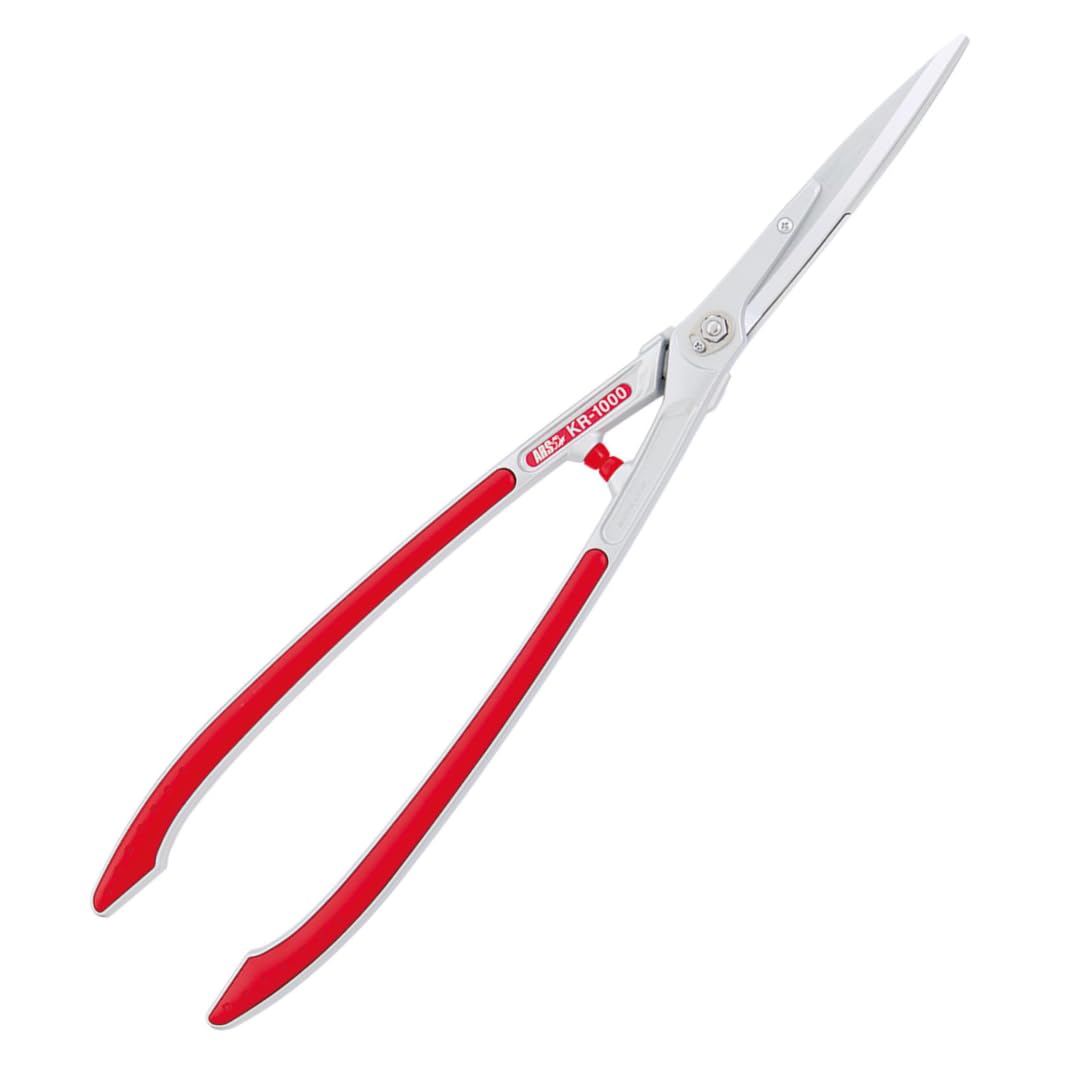
Some tools are worth buying because the wear part is replaceable, and the ARS is the clearest case here. The blades unbolt and swap, the pivot adjusts, and the 25.7 inches of handle and steel around them is built for a working life several edges long.

The 18-centimeter blade is where the money goes. It's flat-ground and thin behind the edge, so it takes a bite rather than a crunch, and it holds that edge long enough that you stop thinking about it mid-job. We noticed the difference on older, woodier hedges, where a cheaper shear starts to skate across the stems instead of cutting them.

At 780 grams it isn't the lightest shear here, and it doesn't need to be. The mass sits where your hand does, the rubber bumpers take the jolt out of every close, and nothing accumulates over an hour of clipping, which is the real definition of an all-day tool.

All of that explains the price without making it small. For a few weekends a year, the Okatsune does most of the same work for a fraction of the outlay and you won't miss the replaceable blades. If you're paid to be in the border, the ARS pays you back in edges you don't have to sharpen and a tool you won't be replacing.

Bottom line: For anyone who clips hedges for a living, the ARS justifies its price: replaceable flat-ground blades, 780 grams, and an edge that lasts a full day.

3

Spear & Jackson Razorsharp Geared

Spear & Jackson Razorsharp Geared

Long border sessions

Our Score 9.4/10
Check Price

Worth Noting

  • Reach falls short of the extendable picks
Action
Geared
Blades
PTFE-coated carbon steel
Weight
1.61 lb
Overall Length
22.44 in
Read the full review

At 730 grams the Razorsharp is roughly half the weight of a steel-handled telescoper, and that's the whole argument. Long borders are a repetition problem, a hundred small cuts rather than one big one, and a light shear with a geared pivot keeps the hundredth cut as easy as the tenth. The gearing multiplies your squeeze without adding length, so the tool stays compact.

That length, 22.44 inches, is the compromise. It's a comfortable working height for a border or a low hedge and noticeably less reach than the 33-inch extendables once a hedge gets tall. Where it shines is boxwood and yew at waist height: hardened carbon-steel blades under a PTFE coating, so sap wipes off with a rag, and aluminium handles with non-slip grips that we found stayed put through a wet morning.

The geared action takes a little getting used to. There's extra travel in the handles before the blade bites, and the first few cuts feel soft if you're used to a direct drive. Ten minutes later it disappears, and what's left is a shear you can use all afternoon. Keep a file handy, because the coating wears off the bevel first and that's where the edge goes.

Bottom line: At 730 grams it's the lightest pair here, and the gearing keeps it cutting when your grip starts to fade, which makes it our choice for long stretches of border.

4

Kimura Pro 22-Inch

Kimura Pro 22-Inch

Sappy, thicker growth

Our Score 9.2/10
Check Price

Worth Noting

  • Fixed handles limit reach on tall hedges
Weight
1.65 lb
Gearing
Up to 3x leverage
Blade Steel
Japanese SK5
Overall Length
22 in
Read the full review

Sap is what turns a good shear into a dragging one halfway through a laurel. The Kimura's PTFE coating is the answer: clippings slide off instead of welding to the blade, and the action stays smooth for the whole session rather than the first twenty minutes of it.

Under the coating is Japanese SK5 steel, sharp in the way that matters for hedging. It slices green stems rather than crushing them, and a crushed stem is what leaves a brown edge on a boxwood a fortnight later. The geared pivot is rated at up to three times the leverage of a plain one. We couldn't measure that, but we could feel it on stems that would have stalled a direct drive, and at 750 grams the shear is light enough that the gearing isn't cancelled out by the weight of the tool.

Twenty-two inches and a 20-centimeter blade put it mid-pack for reach: fine on a waist-high box hedge, no use at the top of a six-footer. Fixed handles mean no collars to check, which counts for something on a tool you'll pick up weekly, and the TPR grips are soft without feeling spongy.

Bottom line: A geared 22-inch shear that weighs about as much as the premium picks, with a coated Japanese-steel blade that keeps sappy growth from sticking to it.

5

Corona HS 3950

Corona HS 3950

Mixed reach and power

Our Score 9.2/10
Check Price

Worth Noting

  • Heavier than the fixed-length shears here
Bumper
ShockStop
Warranty
Limited lifetime
Blade Material
Forged high-carbon steel
Handle Extension
15 in to 26 in
Read the full review

The HS 3950 sits between the fixed shears and the long telescopers: its handles run from 15 inches out to 26, which is enough to get over a shrub without turning the tool into a pole. For a garden with a bit of everything, a low box hedge, a few leggy shrubs, an overgrown corner, one tool that does all of it has obvious appeal.

The forged high-carbon blades are the part we rate highest. There's a heft and a bite to the cut that the cheapest shears here don't have, and the ShockStop bumper between the handles does real work, taking the sting out of the close so the jolt doesn't travel up your arm.

The collars are the weak point. The cutting motion can rotate a handle and unlock it mid-session, so set the length you need, lock both hard, and check them again after a few cuts; done that way, the extension is genuinely useful. The rest of the tool is old-fashioned in the good sense, with a plain pivot bolt you can tighten and a limited lifetime warranty behind it.

Bottom line: A capable one-tool answer for a mixed garden: forged carbon-steel blades, a shock-absorbing bumper, and handles that extend to 26 inches for shrubs just out of reach.

6

GARTOL 23-Inch Wavy Blade

GARTOL 23-Inch Wavy Blade

Budget green growth

Our Score 9.2/10
Check Price

Worth Noting

  • One-year warranty, the shortest here
Warranty
1 year
Blade Steel
High-carbon steel
Blade Length
9 in
Overall Length
22.6 in
Read the full review

The wavy edge is the first thing you notice, and it's the right thing to have spent money on. Those shallow curves trap a twig against the blade so it can't skate away, and on shrubs with fine, whippy growth that's the difference between a clean cut and a ragged one.

At 22.6 inches with a 9-inch blade it reaches a little further than the Okatsune and less than the extendables, which makes it a good middle tool for a mixed border. High-carbon steel blades, a flower-shaped tension bolt you can tighten as the pivot wears, and shock-absorbing bumpers under the grips: the feature list of shears that cost more.

The grips are where the savings show. They're comfortable in a bare hand, but the rubber is thin over the steel tube and there's less cushioning than on the Fiskars or the Kimura, so after twenty minutes on a big shrub we noticed the handles rather than the hedge.

Cutting is what you're paying for and the cutting is good, which is why this stays on the list despite the plain fittings. For a first pair, a rental property, or shears that live in a bucket by the shed, it's more tool than the price suggests. Trim all afternoon every weekend and the difference goes to the Okatsune.

Bottom line: A lot of shear for the money: a 9-inch wavy blade, an adjustable pivot and a comfortable grip, as long as you're cutting green growth rather than old wood.

7

Tabor Tools B212A

Tabor Tools B212A

Tall, overgrown hedges

Our Score 9.0/10
Check Price

Worth Noting

  • Heavy with the handles fully extended
Weight
1,470 g
Blade Edge
Wavy
Handle Range
25 in to 33 in
Blade Material
Carbon steel
Read the full review

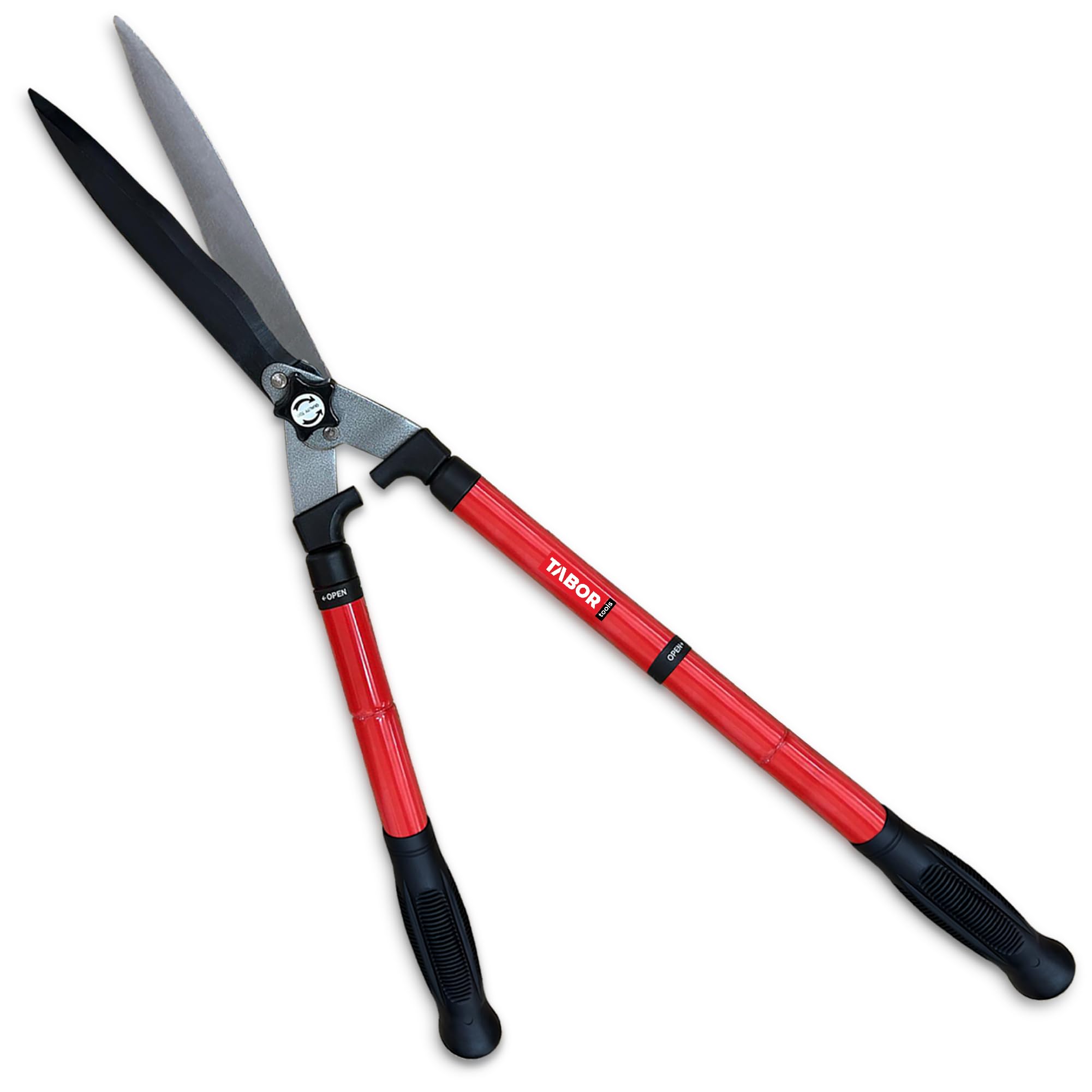
Every hedge has a top third that makes you wish you were taller. The B212A solves that with two telescoping steel handles running from about 25 inches out to 33, and the detail that matters is that they adjust independently. Extend one side only and you can sweep across a border and back without dragging your knuckles through the bed.

The wavy carbon-steel edge is the second good idea. Those shallow curves catch a stem that a straight blade would push aside, so an awkward twig gets cut rather than skipped, and the leverage from the longer handles carries it through. We were also pleased by the flower-shaped tension bolt: a quarter turn tightens the pivot when the blades start to feel slack, which is more adjustment than most shears here give you.

Each handle locks with a twist collar, and a collar that isn't firmly seated can rotate loose partway through a cut. We set both, checked them again after the first few cuts, and had no trouble after that. Do the same and the reach is worth the fiddling.

What it isn't is a detail tool. The long handles put the blades a good distance from your hands, and shaping a small box ball with them is clumsy next to the Okatsune. Buy it for the overgrown hedge at the back of the lot, not for topiary.

Bottom line: The one to buy when the top of the hedge is above your eyeline: independent telescoping handles, a wavy blade that holds twigs, and leverage that carries the cut through.

8

Fiskars Power-Lever Extendable

Fiskars Power-Lever Extendable

Cheap long reach

Our Score 9.0/10
Check Price

Worth Noting

  • Tiring to hold at full extension
Warranty
Lifetime
Blade Edge
Serrated, self-sharpening
Blade Length
10 in
Handle Range
25 in to 33 in
Read the full review

Reach is the expensive part of a hedge shear, and the Fiskars is the exception. Both handles telescope from 25 inches to 33, the blade runs 10 inches, and we found the low-friction coating does what it claims: green stems slide off the blade instead of gumming up the way they do on an uncoated edge.

The serrated, self-sharpening blade is genuinely clever for the money. The two edges dress each other as they pass, so the shear keeps cutting without you stopping to file it, and it carries a lifetime warranty. This is the pair we keep by the back door for five-minute tidy-ups.

What it isn't is a precision tool. The action is heavy, the blade lock needs a deliberate press rather than a flick, and gloved hands make that worse. Set against that, it starts every cut without fuss and the price leaves room for a decent file and a pair of gloves. For two shrubs and a driveway hedge, you'll be finished before any of this registers.

Bottom line: The cheapest way to get 33 inches of reach, with a self-sharpening blade and a lifetime warranty, just expect your shoulders to know about it.

How We Tested Hedge Shears Through a Full Growing Season

We started by gathering more than 40 models sold at major retailers and specialty garden suppliers, then narrowed to 12 based on blade material, handle construction, stated weight, adjustable or telescoping handles, and price — dropping anything that felt like a disposable tool dressed up as a serious one. Every pair that made the cut was used for one full growing season, roughly eight months of spring growth, summer heat, and fall cleanup.

Testing happened where hedges actually live: a long privet hedge along a driveway, a boxwood border that needed tight straight edges, an overgrown forsythia that had gotten away from its owner, and low parterre work that demanded precision more than power. We timed how long it took to run a 30-foot stretch, then looked closely at the cut ends — clean slices versus crushed, frayed stems — and checked the same spots a week later for browning. To judge sharpness, we opened each session on green wood and noted when a pair started sliding off stems instead of biting.

Weight and handle alignment got their own scrutiny. We weighed every pair on a kitchen scale, then used it overhead for a full 20 minutes to see where fatigue set in. Sighting down the blades and squeezing the handles shut showed which pairs scissored, gapped, or drifted out of alignment after a few weeks of use. With extending models, we raised, locked, cut, and collapsed the handles over and over to see whether the joint wobbled under load. Value was judged at the end rather than the start — shears that needed resharpening mid-season or loosened at the pivot didn't earn their price.

How to Choose Hedge Shears

Reach comes before everything else

A 21-inch shear and a 33-inch telescoper share a name and almost nothing else. Fixed shears in the low twenties give you the most control and the least weight, which is why our own preference for anything shaped by eye runs to the fixed 21- to 23-inch tools. Telescoping handles earn their keep when the top of the hedge is above your eyeline.

The trap is that extension adds weight at the far end and introduces a lock. A collar that works loose mid-cut is worse than a tool that was always short. If you buy telescoping, extend both handles, seat the collars firmly and check them again after the first few cuts.

Weight, balance and gearing

The figure on the listing is only half the story. A heavier shear balanced near the pivot feels lighter in use than a light one that's blade-heavy, because the blade does the work instead of your wrist. We take a balanced 780-gram shear over a blade-heavy lighter one every time. Weight bites hardest when your arms are out in front of you, which is exactly what the top of a tall shrub demands.

Gearing is the other lever. A geared pivot multiplies your squeeze, so a compact 750-gram shear can cut stems that would stall a heavier direct drive. Hold any shear at arm's length before you commit to it, not at your waist.

Blade steel, coating and the pivot

Pay for hardened steel and a coating before you pay for extra features. Hardened carbon steel takes a keener edge and holds it longer than mild steel, and a PTFE or low-friction coating stops sap welding to the blade while giving some rust protection between sessions.

A tension bolt is worth having: when the pivot loosens with use, a quarter turn brings the blades back to a clean shear instead of a pinch. Replaceable blades, as on the ARS, are the difference between a tool you keep for a decade and one you replace when the edge goes.

Handles, grips and shock absorption

Handles are where a cheap shear announces itself. Steel tube under a thin rubber sleeve is fine for ten minutes and punishing for an hour. Shock-absorbing bumpers between the handles do more for comfort than any grip material, because they stop the blades banging shut and driving that jolt into your wrist and shoulder.

Straight, symmetric handles work for either hand; shaped ones favour the right. If someone in the house gardens left-handed, ambidextrous handles are worth looking for.

Frequently Asked Questions

Final Verdict

Start with the Okatsune Type 60. It has the sharpest edge and the best balance in this group, and the short blade leaves the kind of finish on a boxwood that makes a whole garden look maintained. If your hedge tops your shoulder, change the answer to the Tabor B212A: its independent telescoping handles get you over the top without a ladder, and the wavy blade holds thin growth that a straight edge pushes aside.

Professional, all-day clipping is the one case where the ARS earns its premium, and the Spear & Jackson is the pair to reach for when a long border is the job and your arms are the limiting factor.