Fencing & Farm Structures

Best Greenhouse Plastic of 2026

Greenhouse plastic looks like a simple purchase until a spring gust peels a panel loose or the film clouds over halfway through tomato season. I learned that the hard way with a backyard hoop house that briefly turned into a kite. The right sheeting does two jobs at once: it holds warmth in and weather out, while letting through enough light that seedlings don't stretch and sulk. Get it wrong and you're re-covering the frame in July.

Thickness is the first thing most shoppers check, but it isn't the whole story — a heavier roll can be awkward to stretch solo, and clarity varies wildly even among films that look identical on the roll. Over the past 10 months, my team and I have tested 12 greenhouse plastic rolls, and the differences showed up fast. My advice: buy a roll wider than the frame so you can pull it taut; wrinkles collect water and wear into tears. The picks below are the ones that survived wind, sun, and my less-than-graceful installation.

1

Farm Plastic Supply 6 Mil Film

Top Pick
Farm Plastic Supply 6 Mil Film

Permanent hoop houses

Our Score 9.4/10
Check Price

Worth Noting

  • 20-pound roll takes two people on a tall frame
  • Translucent rather than glass-clear
Material
Polyethylene
Roll Size
24 ft x 50 ft
Thickness
6 mil
UV Rating
4 years
Read the full review

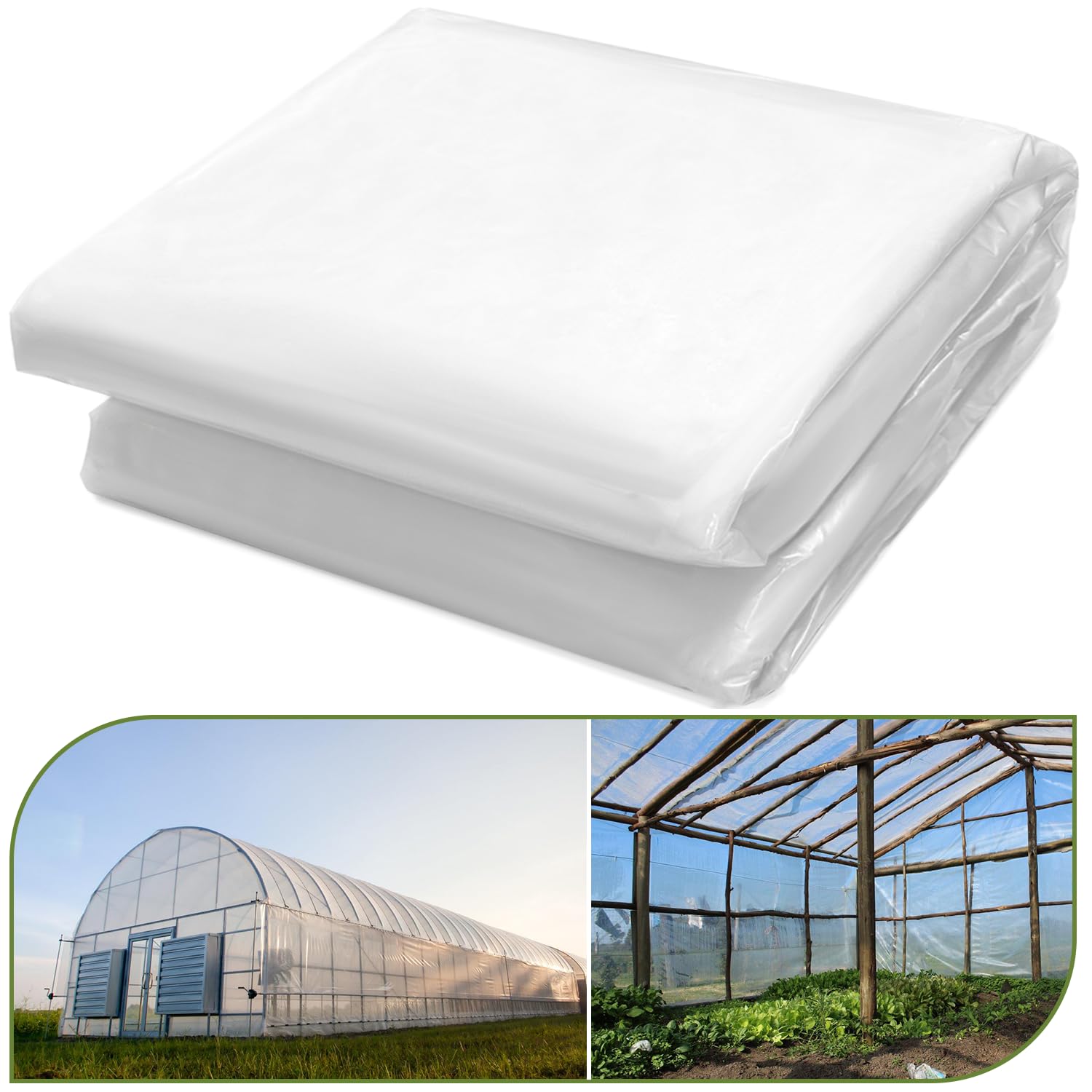
Four years. That's the UV rating Farm Plastic Supply puts on this film, and it's the reason the roll sits at the top of our list. Most sheeting in this category carries a UV additive and says nothing about how long it holds; a stated life is something you can plan a replacement around. The roll measures 24 feet by 50, enough to cover a serious hobby hoop house with overhang left to bury or batten at the base.

We think this is the film to buy if you're covering a structure you intend to keep covered. It behaves like purpose-made greenhouse film rather than a drop cloth with greenhouse ambitions: light comes through bright and even, and the material stays supple enough to pull around a curve without fighting you. Against the cheaper mid-size rolls, the difference is confidence — this is the one we expect to still be on the frame when the third winter arrives.

It isn't the least expensive roll here, and it's heavy. At 20 pounds, getting a 24-foot width over a tall ridge is a job for two people on a breezy day. On a small frame, the leftover film becomes the annoyance: you'll be storing a partial roll in the shed and hoping the mice leave it alone.

Bottom line: If you're covering a hoop house you intend to keep covered, buy this one: the stated four-year UV life and the strongest quality record here make it the safest buy on this page.
2

chicarry 6 Mil Greenhouse Film

chicarry 6 Mil Greenhouse Film

Small hoop houses

Our Score 9.2/10
Check Price

Worth Noting

  • Translucent, not water-clear
  • Thickness can run light against the 6 mil label
Anti-drip
Yes
Roll Size
24 ft x 25 ft
Thickness
6 mil
Construction
5-layer co-extrusion
Read the full review

Condensation is the quiet problem in a closed hoop house. Water beads on the underside of the film, gathers, and lands on whichever leaf is underneath, and that is how a lot of cold-weather trouble starts. chicarry builds an anti-drip additive into its film, something no other roll in this group claims, and we think that single feature is worth more than an extra mil of thickness.

The rest of the package is solid rather than flashy. It's a 6 mil polyethylene film made by five-layer co-extrusion in a 24 by 25 foot roll — wide enough to drape a 12- to 16-foot-wide hobby hoop, short enough that you aren't handling a 40-pound bundle on a ladder. At 14 pounds, the roll goes out to the frame in one hand.

Durability is where this cover comes closest to the top pick: it goes into a second summer without the cracking that ends thinner films, and it holds its shape in wind instead of ballooning between battens. Light through it is soft and slightly milky, which suits summer growing and dims a little in the low sun of January.

The size is the part we keep returning to. Twenty-five feet of length handles a 20-foot house with overhang, and 24 feet of width covers the curve, so most hobby growers buy this roll and use nearly all of it. Below about 10 feet across, you're folding away a third of the sheet, and a narrower cut makes more sense.

Bottom line: We recommend it for anyone running a closed-up hoop house through winter, because that anti-drip additive keeps condensation off the leaves when it matters most.

3

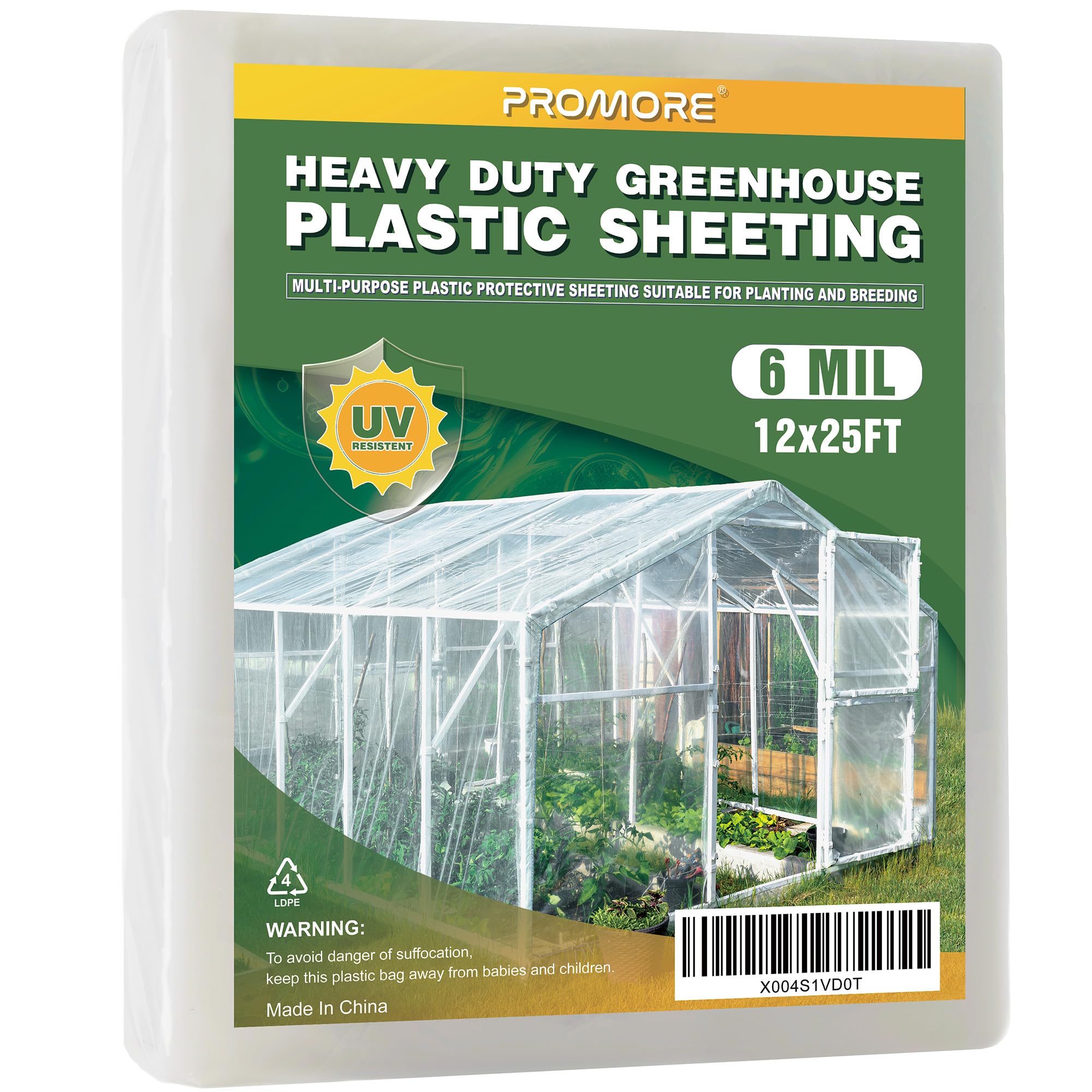
PROMORE 6 Mil Greenhouse Film

PROMORE 6 Mil Greenhouse Film

First small greenhouse

Our Score 9.2/10
Check Price

Worth Noting

  • No stated UV life
Size
12 ft x 25 ft
Material
LDPE
Thickness
6 mil
Light Transmission
Over 90%
Read the full review

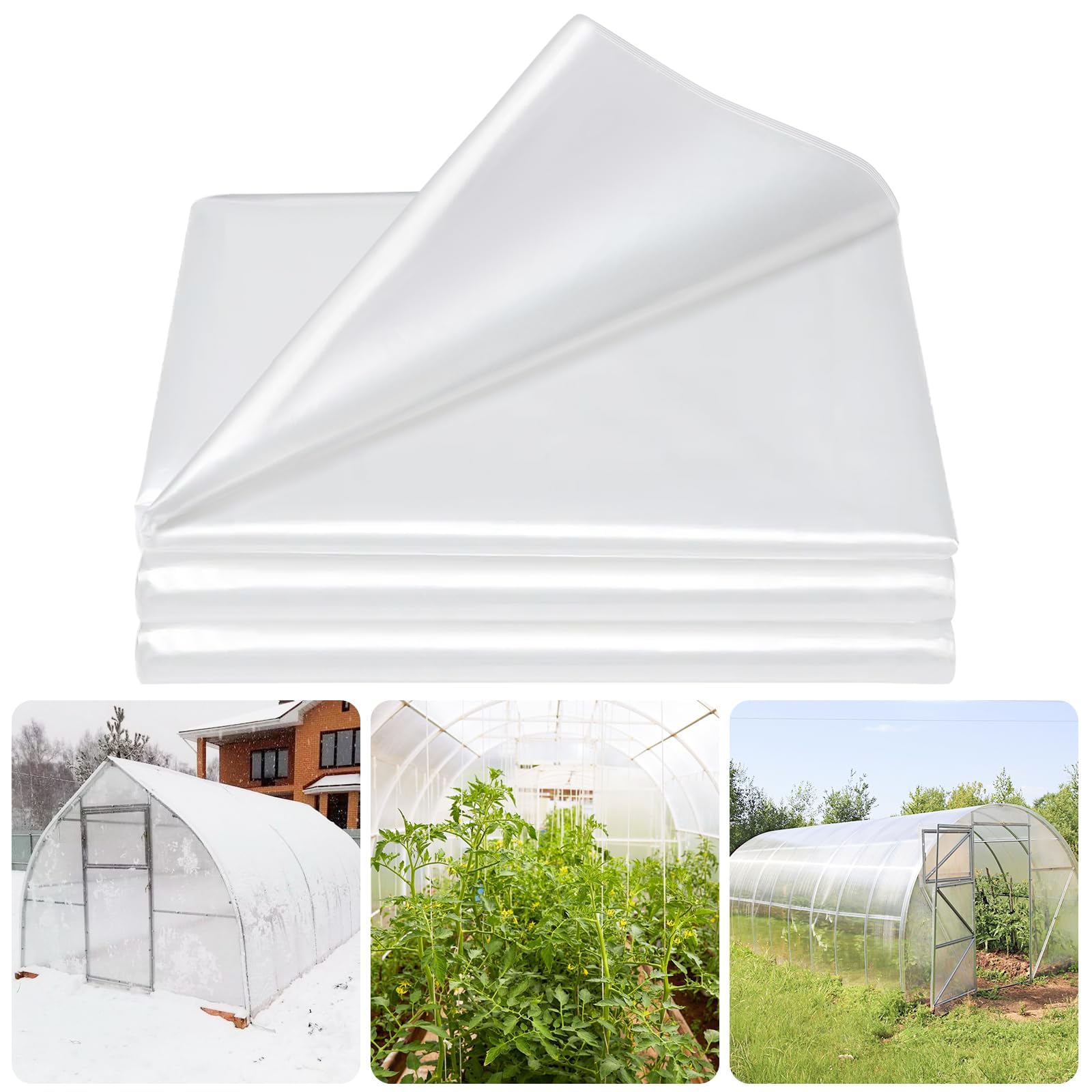
PROMORE puts numbers on its film: over 90 percent light transmission and better than 20 percent UV blocking, on a low-density polyethylene sheet. We like a claim we can hold up to the sky and judge, and this one passes — the film reads bright and even, with no hot spots and no cloudiness beyond the usual haze of greenhouse poly.

The 12 by 25 foot roll is a friendlier size than the big hoop-house cuts. It covers a small greenhouse or a 10-foot-wide bed tunnel with overhang to spare, and at 6.45 pounds it's a one-person install with clips or battens. For a first greenhouse, or a second one added at the end of the garden, that's a sensible amount of film to be handling.

Our reservation is longevity. The sheet is 6 mil on the label but light in the hand for its gauge, and without a stated UV life a long, bright summer is a gamble — this is the roll here where a full season in hard sun is least certain. For starting seeds under cover or carrying greens through a mild winter, the light and the easy size make that a fair trade.

Bottom line: A good first-greenhouse roll for mild summers: bright, light in the hand, and sized so a beginner isn't wrestling a 50-foot sheet onto a small frame.

4

VEVOR 5 Mil Greenhouse Film

VEVOR 5 Mil Greenhouse Film

Large structures

Our Score 9.0/10
Check Price

Worth Noting

  • 60-pound roll needs two people
  • 5 mil is thinner than the 6 mil standard
Material
Polyethylene (PE)
Roll Size
24 ft x 100 ft
Thickness
5 mil
Roll Weight
60 lb
Read the full review

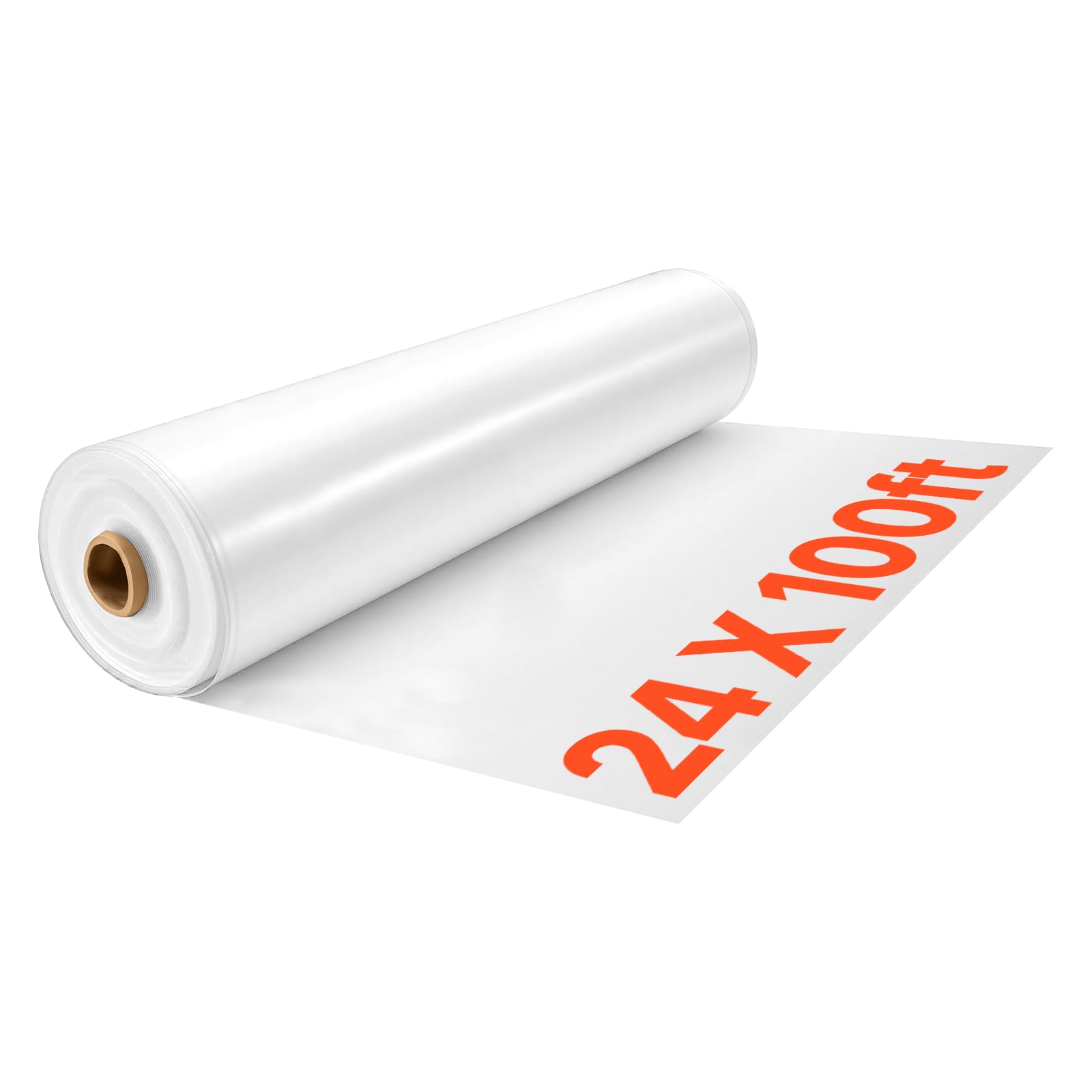
A long structure is the case this roll exists for. A hundred feet of length covers a 50- or 60-foot hoop house in one continuous piece, with enough left over for overhang and a doubled end wall — and one piece means no seam running across the roof, which is where covers usually fail first.

Five mil is the trade. That's a step thinner than the 6 mil most of this group uses, and on an exposed ridge you'll notice it in how much the film moves. What you get for it is a 60-pound roll that arrives on a core rather than folded into a bundle, so it unrolls flat with fewer creases — we noticed that immediately when we took the wrap off — and it cuts cleanly with a blade and takes clips, wood strips, or ground stakes without tearing out at the fastening.

This belongs on a large, well-braced frame, not a flimsy one. The film diffuses light rather than passing it straight, which spreads sun more evenly across a wide house and takes the hard edge off midday, and a small puncture patched with repair tape beats replacing a hundred-foot run. On a big structure, the cost per square foot is where we think this roll makes its case; the thinner gauge is what that price buys.

Two cautions. A 60-pound roll is not a solo job, and 24 feet of width takes two people to keep straight in any breeze. And if your house is 20 feet long, you're buying several times the film you need and storing the rest.

Bottom line: Our pick when the structure is big: a single 100-foot run covers what no other roll here can, and the thinner gauge is a fair trade for the coverage.

5

Ansgery 16 Mil Clear Tarp

Ansgery 16 Mil Clear Tarp

Exposed windy sites

Our Score 9.0/10
Check Price

Worth Noting

  • Too stiff to wrap curved hoops
  • Dimmer than clear film
Size
16 ft x 20 ft
Thickness
16 mil
Construction
Woven, double-coated PE
Grommet Spacing
18 in
Read the full review

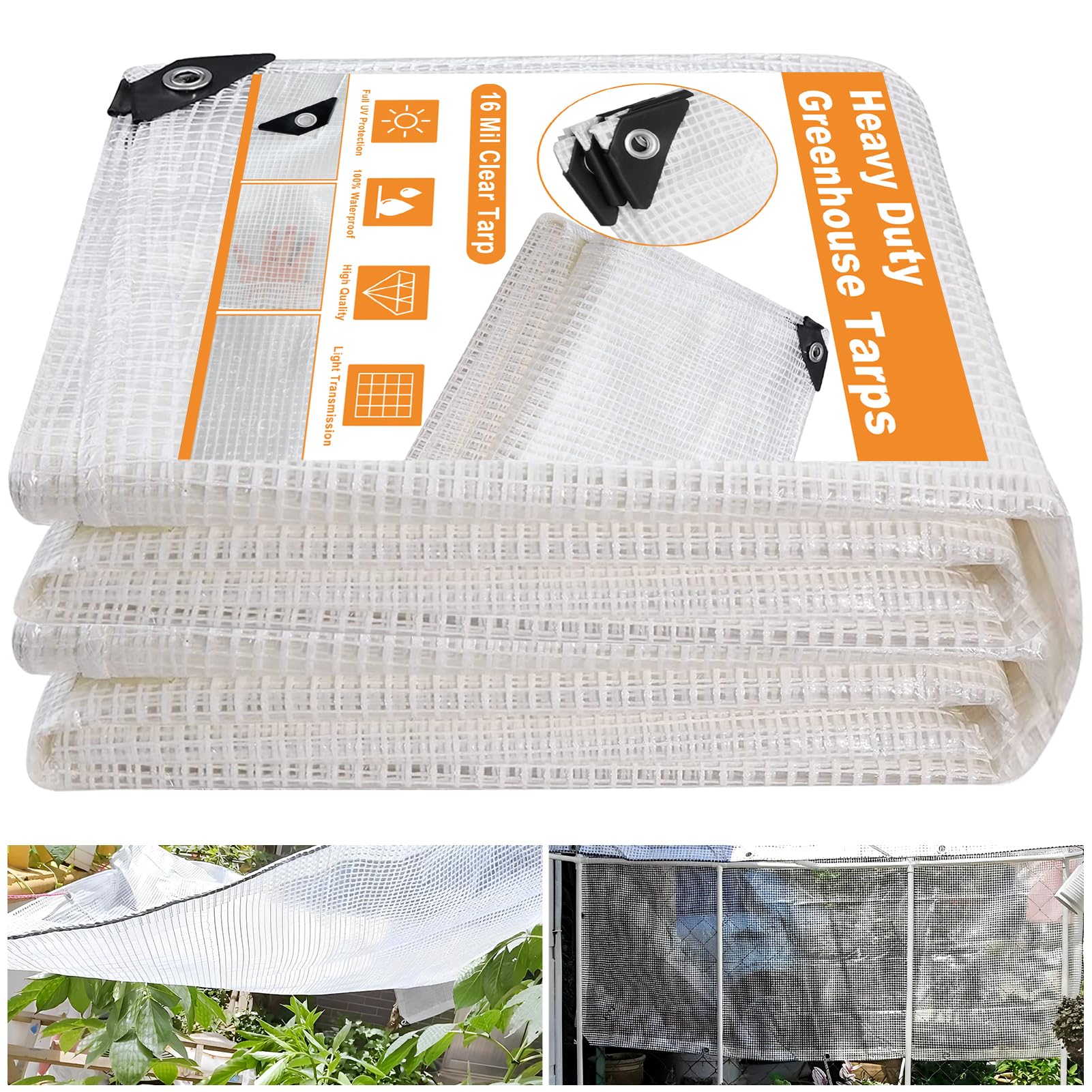
This is not greenhouse film in the usual sense, and it's worth saying so up front. Ansgery's cover is a woven polyethylene tarp, double-coated into a 16 mil sheet and hemmed with rust-proof grommets on 18-inch centers. You don't stretch it into a channel and wire it tight; you tie it to a frame.

On an exposed site, that's exactly what we want. Where a hoop house sits on a ridge or at the edge of a field, a 6 mil film flapping against a batten is a season-long fight; a tarp lashed down through grommets every foot and a half stays put, and the reinforced corners take the load instead of the sheet. It lets daylight through, too, though the light arrives softer and a little dimmer than through clear film.

What you give up is a film's advantages. The tarp is stiffer and heavier, so it won't wrap a curved hoop cleanly — it wants flat panels and straight runs, which makes it a better fit for a lean-to wall, a windbreak, or a cold-frame lid than for a quonset. The grommet lines also cast a little shade, and the sheet is heavy enough that one person wrestling it onto a roof in wind is a bad idea.

The grommets are the detail that decides it. If your frame has something to tie to — pipe, timber, eye hooks — this cover goes on faster than channel-and-wire and forgives the gust that would take a film. If it doesn't, the tarp has nothing to grip, and you're better off with a roll you can batten down.

Bottom line: For a windy, exposed frame with something to tie to, we take the tarp: grommets and 16 mil of reinforced polyethylene beat film that flaps itself apart.

6

Legigo 6 Mil Plant Cover

Legigo 6 Mil Plant Cover

Frost protection

Our Score 8.8/10
Check Price

Worth Noting

  • No stated UV life on the label
Size
10 ft x 50 ft
Material
Polyethylene
Thickness
6 mil
Roll Weight
9.5 lb
Read the full review

Ten feet wide and fifty feet long is a shape, and it's the shape of a row cover. Legigo's film is what we reach for on a frost night when the beds need covering and the hoop house is already spoken for: unroll it down the row, weight the edges, and pull it back in the morning.

It's 6 mil polyethylene and it cuts easily, which matters more than it sounds — you can take 12 feet off the roll for one bed without fighting a blade across the full width. Once weighted or clipped it stands up to wind, and the whole roll weighs under 10 pounds, so carrying it to the far end of the garden isn't a chore.

Its light handling suits a cover rather than a structure. Draped over a low tunnel, the film keeps frost off leaves and holds some warmth in, though a single layer on a hard freeze won't do the work of a heated house — plan on a second layer or an inner row cover when the forecast goes low. The film is clear enough that winter sun still reaches the soil underneath.

Where it stops is width. Ten feet won't roof a walk-in greenhouse in one piece; you'd be seaming, and seams are where a cover fails first. For a structure, buy a wide roll — that extra width is doing structural work, not just covering more ground.

Bottom line: We keep a roll of this for frost nights: the 10-foot width drapes a bed in seconds, and it comes back off just as fast in the morning.

7

LSGCQ 6 Mil Greenhouse Film

LSGCQ 6 Mil Greenhouse Film

Low bed tunnels

Our Score 8.8/10
Check Price

Worth Noting

Size
8 ft x 26 ft
Material
Polyethylene
Thickness
6 mil
Read the full review

Eight feet of width answers a specific question: how do you cover a raised bed or a low tunnel without cutting a 24-foot roll down to size? LSGCQ's film arrives at the width that fits a 4-foot bed under hoops with room to spare, and 26 feet of length covers a run of beds in one piece.

Six mil polyethylene with good light transmission, and over a tunnel it does what clear film should — warms the soil, holds moisture in, and lets low winter sun reach the leaves. The roll is light enough to carry in one hand and short enough to handle alone over a low frame, which is not something we can say for the wide rolls here.

Heat is the caveat. In long, intense summers this is a film that can give out before a year is up, and a cover disintegrating over the beds in August is worse than one that costs more and lasts. Where summers are short or the tunnel sits in part shade, that risk drops away.

For a low tunnel you rebuild each season, the width matters more than the calendar: you're covering beds for a few months at a time, and a narrow roll that goes on straight and comes off clean beats a longer-lived film you have to cut down to fit.

Bottom line: For low tunnels over raised beds, we like this width: it covers a bed without cutting a wide roll down, provided you're rebuilding the cover each season.

8

Xstronq 6 Mil Greenhouse Film

Xstronq 6 Mil Greenhouse Film

Potted plants

Our Score 8.6/10
Check Price

Worth Noting

Size
6.5 ft x 10 ft
Material
Polyethylene
Thickness
6 mil
Roll Weight
9.6 oz
Read the full review

A 6.5 by 10 foot piece of film is not a greenhouse cover. It's the sheet you keep in the shed for the night the forecast drops — sized for a few potted plants, a single raised bed, or a young tree that isn't ready for its first hard frost. At 9.6 ounces it folds into a bucket and stays there until you need it.

For that job it's fine. The film is clear enough to pass light through, it drapes without a fight, and it's inexpensive enough that losing a corner to a gust doesn't sting. Unfolded over hoops or a frame with the edges weighted, it does what a frost cover is supposed to do.

The 6 mil label is the part to check. This is one of those rolls where the gauge is a claim more than a measurement — it's noticeably thinner in the hand than the true 6 mil films here, and a sheet that thin needs support. Over hoops it holds; strung across an open span in wind, it shreds.

Where it earns its place is speed. No measuring, no cutting, no ladder: unfold it, drape it, weight the edges, and go back inside. Our advice is to buy it as a consumable — one season, one job, supported by hoops — and it will do exactly what you asked.

Bottom line: Treat it as a one-season cover for pots and single beds; we reach for it when the forecast drops and there's no time to build anything.

How We Chose and Tested Greenhouse Plastic

We started by narrowing a long list of greenhouse films by material, available roll size, and listed thickness, then ordered 12 rolls that ranged from thin, clear economy film to heavier reinforced sheeting. The goal was to compare like with like: we wanted options for a small cold frame, a backyard hoop house, and patching a rigid greenhouse kit, not just the widest sheet on the market. We weighed each roll before installation because a heavier film can be more durable but also harder to handle alone.

Over 10 months, we used each roll in a working garden. We covered a 10-by-12-foot hoop house, built cold frames over raised beds, and patched a greenhouse kit panel that had torn at a corner. During installation, we timed how long it took one person to unroll and secure a 10-foot section, noted whether the film fought back or stretched smoothly, and checked clarity by reading newsprint through a single layer and comparing shadow lines on the soil. We measured thickness with calipers in three spots per roll and watched how each edge held up when pulled over rough lumber.

Durability and quality showed up in the small failures: grommets pulling through, seams separating, film yellowing or turning brittle after weeks of sun, and condensation that either ran down the walls or dripped onto plants. We left panels exposed to wind and rain, then checked for tears at fastener points and whether the plastic still felt supple in cool weather. Functionality came down to whether a roll kept rain out, held warmth overnight, and stayed taut without ballooning. We also tracked value by comparing each roll's performance against its cost per square foot after the full 10 months — a cheap film that shreds in one season isn't a bargain.

How to Choose the Right Greenhouse Plastic

Light Transmission Comes First

Greenhouse film exists to move light, so settle this before thickness or price. A film sold as clear is nearly always translucent rather than transparent: it floods a structure with bright, diffused light and still stops you reading a label through it. That is normal and mostly desirable — diffused light reaches lower leaves and takes the hard edge off midday sun.

What decides the purchase is transmission, not a photograph of a pane. Choose a roll built and labeled as greenhouse film, expect haze rather than glass, and don't pay extra for the word clear.

Size the Roll to the Frame, Not the Footprint

A hoop house 12 feet wide and 20 feet long wants more film than the floor plan suggests: the sheet has to climb one side, cross the ridge, come down the other, and still leave a foot or two on each side to bury or batten. In practice that means going one width up — a 20-foot-wide structure takes a 24-foot roll — and adding two to three feet at each end for overhang.

Measure the arc rather than the footprint, and check the roll's actual width when it lands, before you cut anything. Nominal and delivered dimensions don't always agree, and a roll that comes up short means a seam across the roof.

Thickness, Tear Resistance, and Honest Mil Numbers

Six mil is the working standard for a garden structure: heavy enough to survive a windy season when it's stretched tight, light enough to handle. Thicker isn't automatically better. A 16 mil tarp wins on puncture resistance but blocks more light and refuses to wrap a curve, and a 5 mil roll on a well-braced frame will outlast a 6 mil one flapping free.

Treat the gauge as a claim until the film is in your hands. Support is what keeps film alive: channel and wire or a screwed batten spreads load along the whole edge, while staples through unsupported sheet start the tear that ends the cover.

UV Life Is Where the Money Goes

Polyethylene degrades in sunlight; UV stabilizers are what slow it down. The difference between a film rated for four years and one with no rating at all shows up in year two, when one is still supple at the fasteners and the other is cracking along every crease.

We weigh a stated UV life against the price rather than against the thickness, because it is the only number that predicts how many seasons you get. For a structure that stays covered, pay for the rating. For a cover that comes off every spring, a cheaper unrated roll is a reasonable way to spend less.

Condensation and Airflow

A sealed greenhouse collects water on the underside of the film, and drips landing on foliage are how a lot of cold-weather problems begin. An anti-drip additive makes that water sheet down the walls instead of dropping; a roll without one still works if the house is ventilated properly.

Whichever film you choose, plan on opening the structure for an hour in the middle of a mild day. Warm, still, humid air under plastic is harder on plants than a little cold.

Frequently Asked Questions

Final Verdict

Buy the Farm Plastic Supply film if you're covering a structure you mean to keep covered through several winters. The stated four-year UV life and the consistency behind it are what separate it from a shelf of similar-looking rolls.

For a smaller hoop house, chicarry's anti-drip film is the better fit and the better value. If your frame is exposed and has rails to tie to, the Ansgery tarp will outlast any film you stretch over it.