Fencing & Farm Structures

Best Greenhouse Flooring of 2026

Greenhouse flooring is really a drainage and grip decision dressed up as a decorating one — it's the layer that decides whether water drains away from your pots or pools under them, and whether you stay upright while hauling a full watering can. I learned that the hard way the spring I unrolled a cheap rubber mat and spent the whole season chasing it back into place after every soak. The right floor underfoot fixes three things at once: drainage, traction when everything is wet, and a surface that won't rot, fade, or slide out from under you in humid air.

Looks matter too, since you stare at that floor every day, but the real test comes when the glass is fogged and the gravel is soaked. Over nine months we laid 12 different floors in working greenhouses — gravel, interlocking tiles, rubber mats, wood decking, and a few hybrids — and the gaps showed up fast: edges that curled within a week, surfaces that turned slick the second a can tipped, and one cheerful color that washed out to pale pink by midsummer. The picks below are the ones that stayed put, stayed grippy, and still looked presentable after a full season of dirt and damp.

1

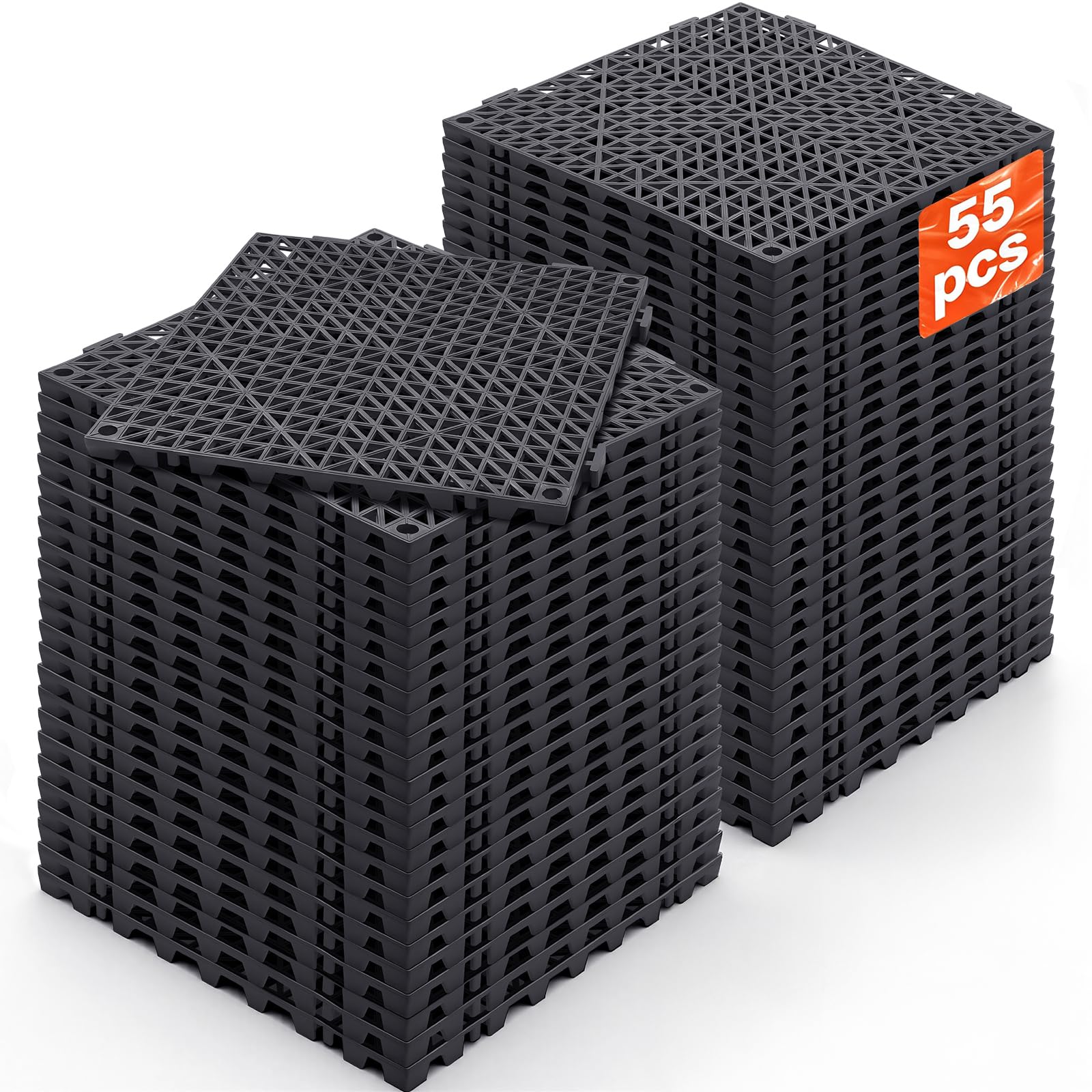
VEVOR 55-Piece Drainage Tiles

Top Pick
VEVOR 55-Piece Drainage Tiles

Full greenhouse floors

Our Score 9.2/10
Check Price

Worth Noting

  • Color can vary between boxes
Coverage
55 sq ft
Material
PVC
Tile Size
12 x 12 in
Drainage Pins
0.6 in
Read the full review

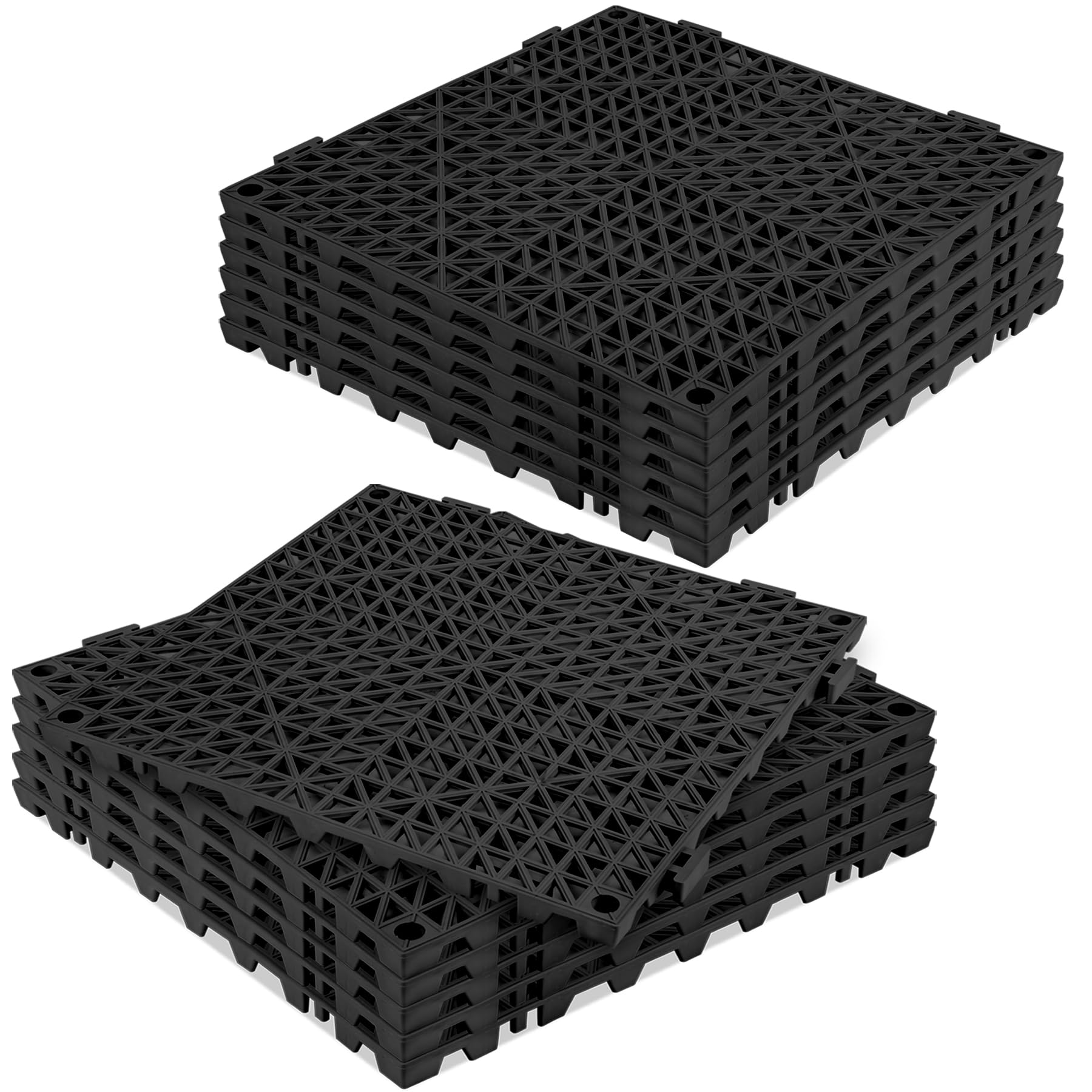
For most greenhouse floors, this is the kit we recommend first. Fifty-five 12-inch tiles cover about 55 square feet, enough for a working aisle and a couple of potting zones in a small greenhouse, and the 0.6-inch support pins give water and soil somewhere to drop instead of pooling underfoot. The design suits the job better than a flat mat because the walking surface stays above the wet layer, so a hose-down does not leave you standing in a puddle.

The soft PVC has enough give to take the edge off standing at a bench, though it is not a cushion-mat substitute. We liked that the tiles cut with ordinary tools, which matters when the greenhouse has posts, a step, or a wall that is not square. The 21.2 kg box is a two-trip job to move; open it near the door and carry the tiles in stacks rather than hauling the whole thing down an aisle.

The trade-off is weight and permanence. This is not the set you shake out and hang on a hook; once the tiles are down, they are a floor. That is the point for a greenhouse, where a loose mat can creep underfoot and catch a boot heel. If you need something you can pull up every season, a smaller modular pack is easier to handle.

What kept it at the top is the combination of coverage, drainage, and a surface that stays put in the wet, gritty conditions a greenhouse creates. We also appreciate that the same design works in a shed or mudroom, so an extra box is not wasted.

Bottom line: For a working greenhouse floor, we recommend this 55-tile set: it drains well, covers a useful area, and stays put underfoot.

2

Jocoevol 60-Piece Interlocking Tiles

Jocoevol 60-Piece Interlocking Tiles

Large greenhouse floors

Our Score 9.2/10
Check Price

Worth Noting

  • No edge pieces included
Coverage
60 sq ft
Material
Polypropylene
Tile Size
12 x 12 in
Drainage Pegs
0.65 in
Read the full review

Sixty 12-inch tiles is the number that makes this set worth a look for a larger greenhouse. That is about 60 square feet in one box, enough to run a full floor rather than a patch, and it saves you from matching color batches across several small packs. The polypropylene construction is the practical part: it is made for hose-downs, resists fading, and has 0.65-inch support pegs that leave room for water and grit to fall through.

We choose this one when the floor is big enough that a 12-tile pack leaves you short. The pegs are a touch taller than our top pick's, and the material feels like the tougher choice for a garage or a busy greenhouse aisle. One box covers more before you have to splice in a second order, which is the whole reason to go large.

The catch is the perimeter. The kit does not include edge pieces, so the last row can show exposed connectors against a wall unless you trim carefully or add a finishing strip. For a big, wall-to-wall greenhouse floor, that is a small planning step rather than a deal-breaker. If your space is small, the 60-tile box is more than you need and harder to store between seasons.

Bottom line: We choose this one when the greenhouse floor is large enough that a 12-tile pack leaves you short.

3

MYFAMIREA 12-Pack Drainage Mats

MYFAMIREA 12-Pack Drainage Mats

Small greenhouse aisles

Our Score 9.0/10
Check Price

Worth Noting

  • Only about 12 sq ft per pack
  • Strong new-plastic smell
Drainage
Open grid
Material
PVC
Tile Size
11.8 x 11.8 in
Tile Count
12
Read the full review

The open-grid design is what makes this set interesting for a greenhouse with a rough base. Each 11.8-inch tile snaps into the next, and the mesh underside gives you a flat walking surface without requiring a poured slab. We like that the pack is small enough to lay a single aisle first, see how the drainage behaves, and then decide whether to order more. If your greenhouse sits on crushed rock, the grid spans small dips instead of rocking over them.

Our pick for a first greenhouse aisle: the 12 tiles snap together easily, cover an aisle-sized patch, and let air move underfoot, which helps a damp floor dry. The PVC cuts with scissors around posts, and the open pattern rinses clean without trapping much grit. We appreciated that the pieces are light enough to move after a layout change, and the same tile works under a potting bench or at the doorway where boots come in.

Bottom line: Our pick for a first greenhouse aisle: the 12-tile pack snaps together easily and lets air move underfoot.

4

ToLanbbt 12-Pack Interlocking Mats

ToLanbbt 12-Pack Interlocking Mats

Budget wet patches

Our Score 9.0/10
Check Price

Worth Noting

  • Covers only about 12 sq ft
  • Tiles can slide unless anchored
Material
PVC and rubber
Thickness
0.55 in
Tile Size
11.8 x 11.8 in
Tile Count
12
Read the full review

The low-cost role is the first thing to understand about this set. Twelve 11.8-inch tiles give you a small wet-area floor, and the 0.55-inch PVC-and-rubber mat has drainage holes and a beveled edge, so it works at a doorway or a runoff zone without a raised deck. For a greenhouse, that makes it a budget patch rather than a whole-floor answer.

The beveled edge is a small detail we appreciate: it gives the mat a finished lip instead of an abrupt drop at the threshold. The material has some flex, so it sits over minor unevenness without cracking, and the tiles can be trimmed with heavy-duty scissors. If you are covering a narrow aisle or just want to keep a hose-down area off a wet slab, it is enough to make a difference.

We see it as a budget-friendly 12-tile set for small wet areas, provided you plan to anchor the perimeter. The weak point is the interlocking hold: a loose island of tiles can slide or separate at the edges, so a wall, frame, or trim strip matters more here than with the stiffer kits. Put it in a contained spot and it earns its keep; leave it floating in the middle of a busy aisle and you will be straightening it.

Bottom line: We see it as a budget-friendly 12-tile set for small wet areas, provided you anchor the perimeter.

5

THYOI Acacia Deck Tiles

THYOI Acacia Deck Tiles

Dry decorative areas

Our Score 8.8/10
Check Price

Worth Noting

  • Wood finish can fade in damp
  • Joints can loosen under traffic
Coverage
30 sq ft
Material
Acacia wood
Thickness
0.75 in
Tile Size
12 x 12 in
Read the full review

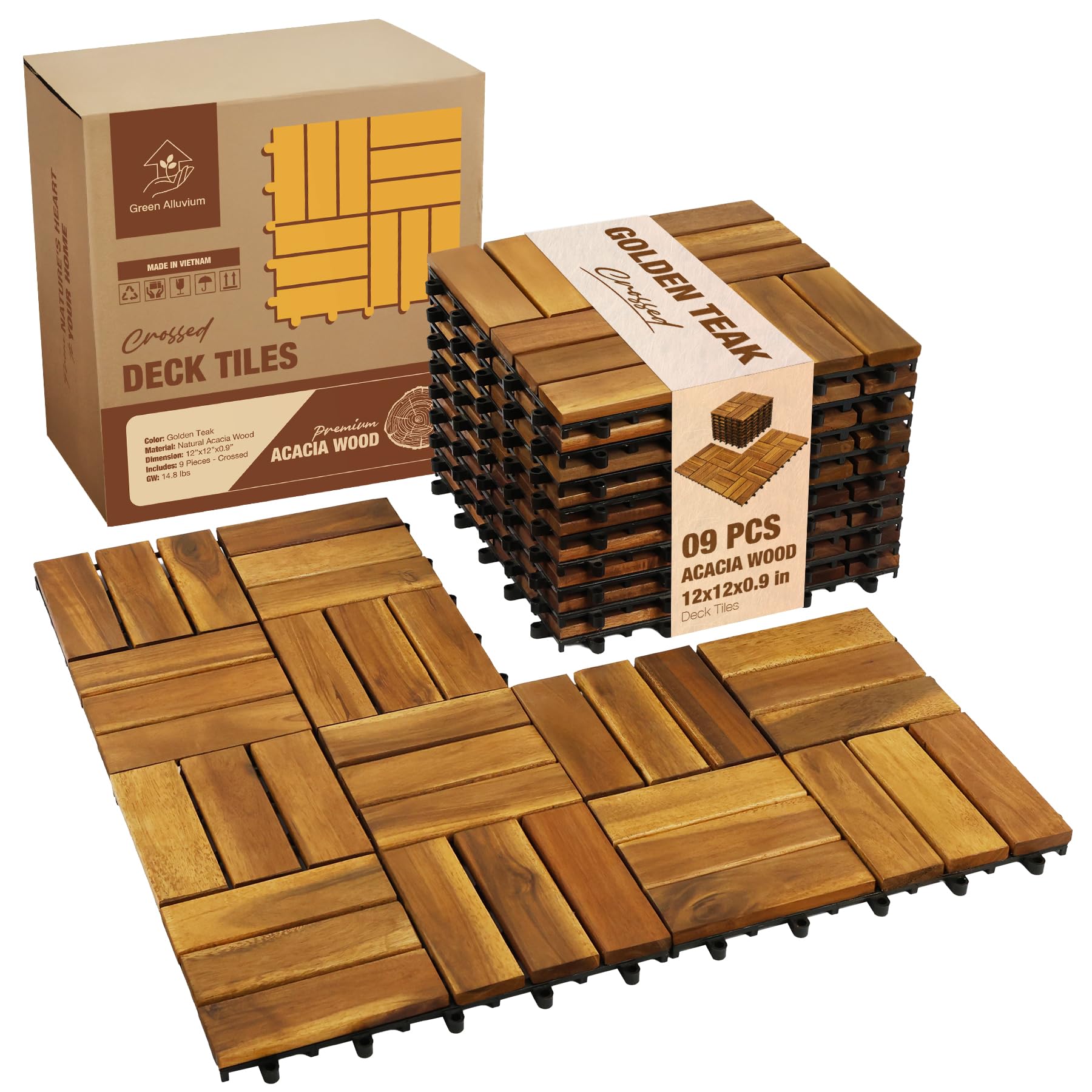
The acacia finish is the reason to consider this set, not the reason to build a wet greenhouse floor with it. Thirty 12-inch tiles cover about 30 square feet, the slats have gaps for drainage, and the snap-lock base assembles without tools. We recommend the THYOI tiles for a covered, dry greenhouse room where looks matter more than constant moisture. The crossed pattern reads as a designed floor rather than a utility mat, which is why it suits a sunroom or a display bench.

We liked the warmth the wood brings to a potting area, and the 0.75-inch thickness gives it more presence underfoot than a thin plastic mat. It is also easy to lay in a straight run and cut around a simple edge. The base has enough flex to follow a flat slab, but not to fix a crowned or broken one. Treat it as a finish surface, not a wet-room floor: if you hose the floor down, choose PVC or polypropylene instead.

Bottom line: We recommend the THYOI tiles for a covered, dry greenhouse room where looks matter more than constant moisture.

6

GREEN ALLUVIUM Acacia Deck Tiles

GREEN ALLUVIUM Acacia Deck Tiles

Small dry corners

Our Score 8.6/10
Check Price

Worth Noting

  • Tiles can separate under foot traffic
  • Wood finish suffers in constant damp
Coverage
9 sq ft
Material
Acacia wood
Thickness
0.9 in
Tile Size
12 x 12 in
Read the full review

The pre-oiled acacia and tool-free base make this a tempting small upgrade: nine 12-inch tiles cover about 9 square feet, and the interlocking base clicks together without nails or adhesive. It is the kind of set you can put down in a corner, stand back, and decide whether the wood look belongs in your greenhouse.

The 0.9-inch thickness gives the tiles a solid, finished feel, and the linseed-oil finish means they arrive ready to lay. We like the idea of a natural surface in a dry potting room, where the wood warms up a concrete slab and hides a stained corner. The small box is also easy to store if you only need a decorative patch.

We like this small acacia set for a decorative, covered corner, not for a wet greenhouse floor. It is a low-commitment way to try the wood look in a dry staging area, and the pre-oiled finish saves a step on day one. For a floor that sees hose water, choose a PVC tile instead.

Bottom line: We like this small acacia set for a decorative, covered corner, not for a wet greenhouse floor.

7

Goovilla 9-Pack Deck Tiles

Goovilla 9-Pack Deck Tiles

Light-duty covered spots

Our Score 8.4/10
Check Price

Worth Noting

  • Snap joints can work loose
  • Light plastic lacks heft
Coverage
9 sq ft
Material
Plastic
Thickness
0.75 in
Tile Size
12 x 12 in
Read the full review

The lightweight plastic build is the first thing you notice: nine 12-inch tiles, 0.75 inches thick, with snap connectors and a drainage pattern. That makes this a temporary floor for a small covered greenhouse corner, a shed, or a balcony where you want to cover a damp slab without spending a lot.

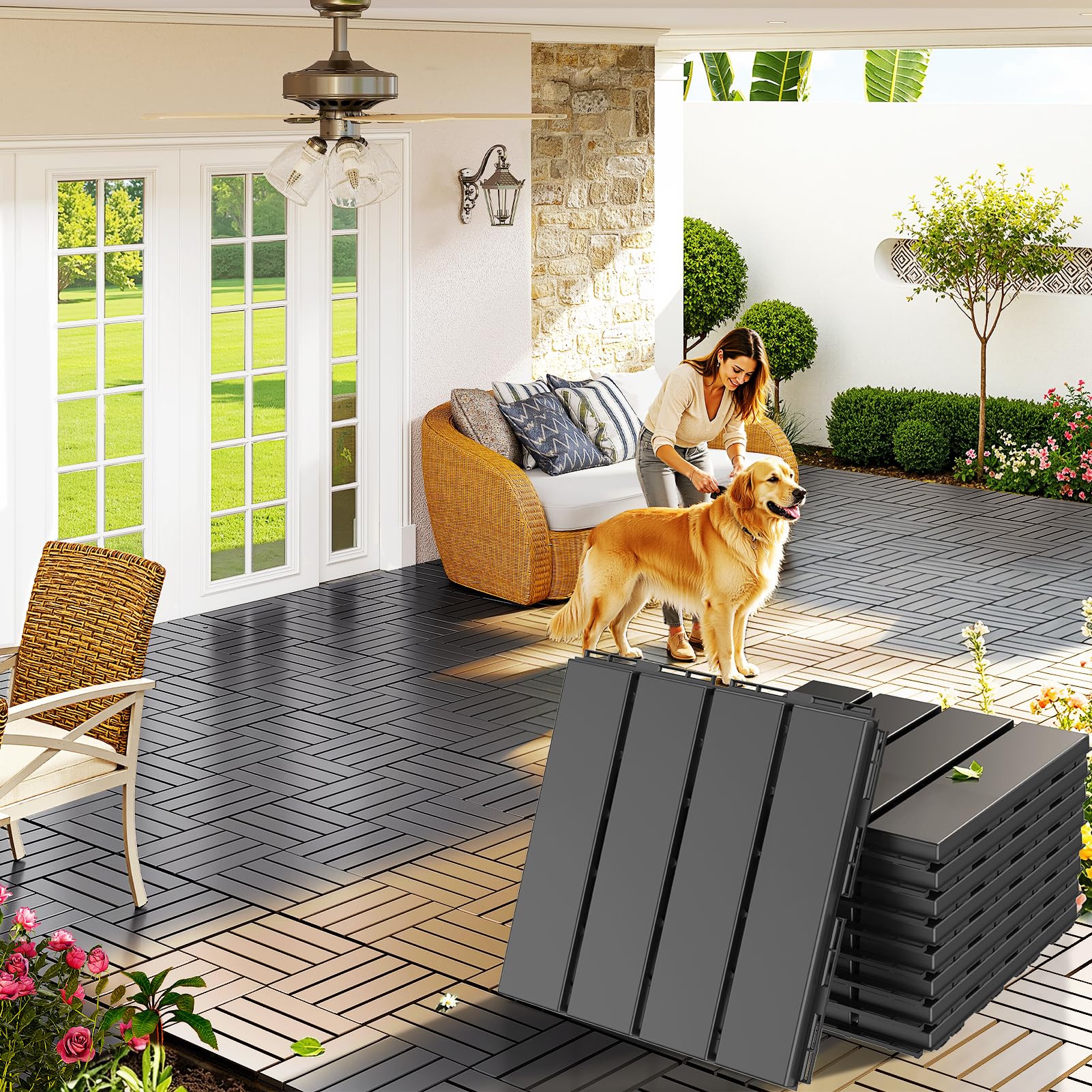
The upside is handling. The tiles are easy to carry, cut, and reposition, and the dark gray finish hides dirt between cleanings. We found the low weight useful when we wanted to test a layout before committing to a larger kit; you can lay a few tiles, walk on them, and move them without much fuss.

The compromise is stability. The light plastic can work loose at the snap joints under foot traffic, and it does not have the heft of the PVC kits here. That is acceptable for a spot under a bench or a covered corner you rarely walk on; it is not what you want down the middle of a busy greenhouse aisle.

We rate this as a light-duty, budget option for a small covered area, not a floor for constant wet traffic. It earns a place because it is cheap, easy to cut, and good for a quick visual fix; it loses to the drainage mats on stability and long-term wear. If you need a floor you can hose down every week, spend more on a PVC or polypropylene kit.

Bottom line: We rate this as a light-duty, budget option for a small covered area, not a floor for constant wet traffic.

How We Tested Greenhouse Flooring Through a Full Growing Season

We started by gathering every style we could find and filtering by material, coverage per roll or box, price per square foot, and whether it could be cut with a utility knife instead of a saw. That narrowed the field to 12 floors, which we installed in working greenhouses — mine and two colleagues' — and lived with for nine months, from the first seed trays in late winter through a summer of twice-daily watering.

Each install was timed solo with a stopwatch running, because most people fit a greenhouse floor alone on a Saturday. We cut around posts and door frames, noted whether the job needed anything beyond a knife and a straightedge, then checked a week later for edges that had lifted or crept. Grip got tested the way it actually fails: we flooded each floor with a watering can, crossed it in wet rubber boots, and watched where water pooled instead of draining away.

For the rest of the season we treated each floor like a floor — wheelbarrow loads of soil, pots dragged across it, dropped trowels, spilled fertilizer, and a hose-down every few weeks. At the three-month mark we lifted sections to see what was happening underneath: trapped damp, mildew, rust, or nothing at all, and we compared every surface against a day-one photo at the end to catch fading. We also paid attention to the unglamorous details, like whether a broom actually cleared soil from the gaps, whether pots sat level, how the color held up against muddy boots, and whether the cost per square foot made sense for a space that sits somewhere between a shed and a lawn.

How to Choose the Right Greenhouse Flooring

Start With Coverage, Not Tile Count

A 12-inch tile is roughly one square foot, so a 9-pack covers about 9 square feet and a 55-pack covers about 55. Measure the aisle and potting zone separately, then add about 10 percent for cuts around posts and edges. For a full floor, one large box such as the VEVOR 55-piece or Jocoevol 60-piece set saves you from matching color batches across several small packs. For a first aisle or a small bay, a 12-tile pack is enough to try the surface without committing the whole budget. Check the stated tile size too, because some sets use 11.8-inch squares.

Drainage Depth Is the Quiet Deciding Feature

Drainage tiles work by holding the walking surface above the wet layer, so the support height matters more than the hole pattern alone. The VEVOR tiles use 0.6-inch pins, the Jocoevol set uses 0.65-inch pegs, and the ToLanbbt mats are 0.55 inches thick; all give water somewhere to go, but taller supports leave more room for soil and leaf litter before a rinse is needed. In a greenhouse, that clearance also lets air move under the floor, which helps a damp aisle dry. If your base is uneven gravel or crushed rock, an open-grid tile is more forgiving than a flat deck tile.

Grip and Interlocking Hold

A textured top only helps if the tile stays where you put it. Interlocking lugs do most of the work, but they can creep at the perimeter, especially when the floor is a loose island rather than a wall-to-wall installation. Plan to trim the last row tight to the frame or add an edge restraint; that is the difference between a floor and a mat that walks out of place. The ToLanbbt set is the one to watch here: its drainage and value are strong, but the interlocking hold is the mixed part. For a high-traffic greenhouse aisle, put stability ahead of a lower entry price.

PVC, Polypropylene, or Wood?

For a working greenhouse, we put PVC and polypropylene ahead of wood. They tolerate hose-downs, resist rot, and do not need re-oiling; the trade-off is a firmer, more plastic feel underfoot and, sometimes, a new smell that needs airing. Wood deck tiles look warmer and can work on a covered, dry potting area, but constant humidity is hard on them. The THYOI and GREEN ALLUVIUM acacia sets are best treated as decorative surfaces for a dry greenhouse room rather than a wet floor. If you want the look of wood without the upkeep, accept that you are choosing appearance over the easiest cleanup.

Cutting, Cleaning, and Edges

Most PVC and polypropylene tiles cut with scissors, a utility knife, or a fine-tooth saw, so trimming around posts is a homeowner job rather than a contractor job. Wood tiles need a wood blade and a straight edge, and some sets do not include edge pieces, which leaves exposed connectors at the wall. Cleaning is the other long-term cost: a hose and a stiff brush handle most soil, but fine grit can lodge in the holes. Lift a tile every so often to check what is collecting underneath, especially near a potting bench.

Frequently Asked Questions

Final Verdict

For most greenhouse floors, the VEVOR 55-piece set is the one we recommend: it covers a useful area, drains through 0.6-inch pins, and has the most convincing balance of stability and cleanup in this group. If your footprint is larger, the Jocoevol 60-piece set gives you one-box coverage; if you are starting with a single aisle, the MYFAMIREA 12-pack is the easier commitment. Keep the wood tiles for a covered, dry staging area.