Outdoor Power Equipment

Best Gas Lawn Mower of 2026

The grass is ankle-high, the first warm Saturday has landed, and the mower that ran fine in October won't catch. Gas mowers earn their keep in exactly that moment — thick spring growth, wet grass, a slope that stalls a battery — but only if it starts on the first or second pull and the deck slices clean instead of tearing. One that mulches well, holds its speed uphill, and goes together without a video tutorial turns a two-hour argument back into a chore.

I've pushed enough stubborn mowers to be picky about this. Over the past eight months, my team and I ran seven gas mowers through a full season, from the first muddy cut in April to leaf mulching in November, and the gap between a good one and a cheap one shows up fast. Something nobody tells a first-time buyer: on a normal suburban lot, deck height adjustment and wheel size change your cut more than horsepower does. The picks below are the ones that kept starting.

1

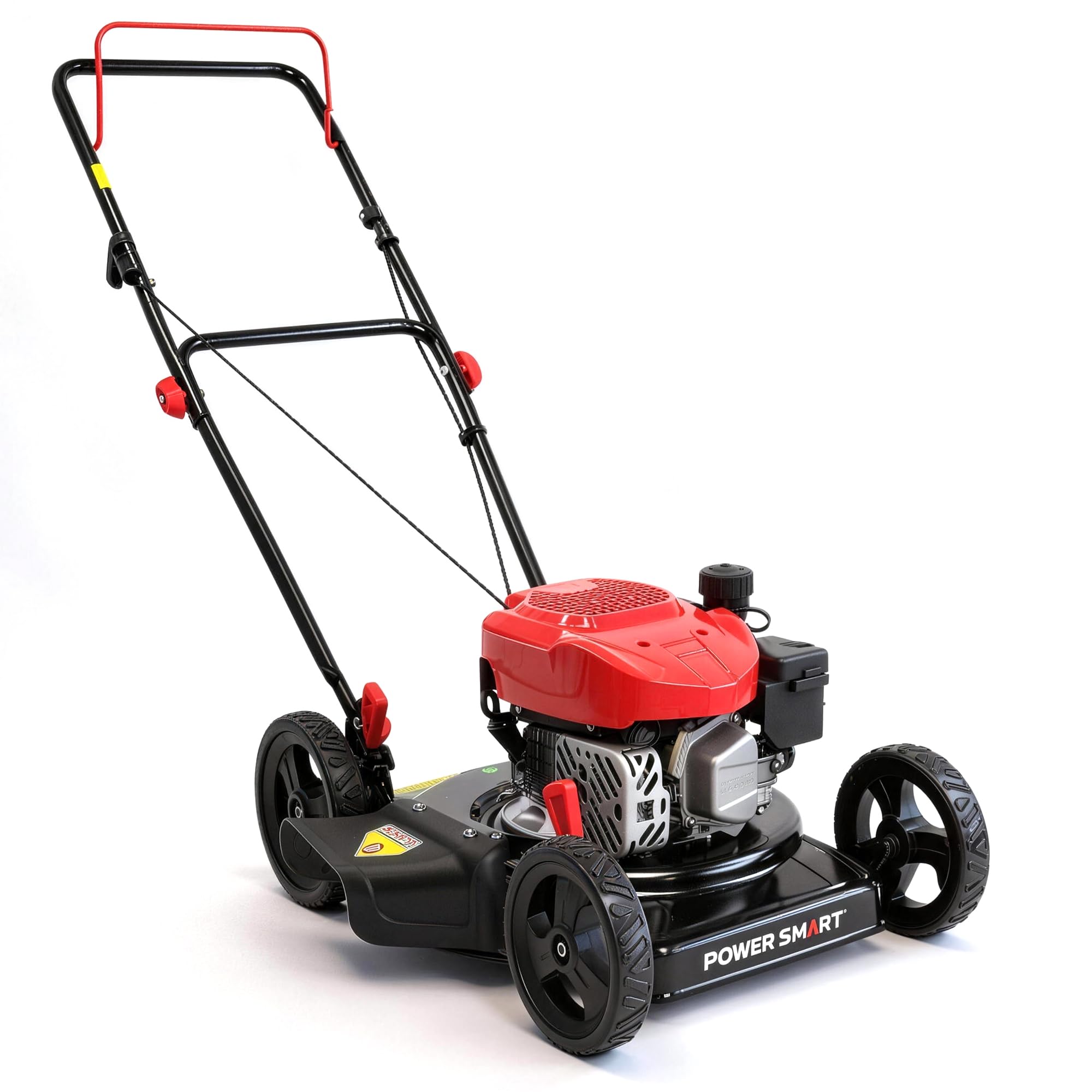
PowerSmart EasyCut 18-Inch

Top Pick
PowerSmart EasyCut 18-Inch

Small yards

Our Score 8.6/10
Check Price

Worth Noting

  • Side-discharge only, so no bagging or mulching
  • Clippings can build up under the deck
Engine
144cc 4-cycle OHV
Weight
58.4 lb
Cutting Width
18 inches
Cutting Heights
1.5 to 3.9 inches
Read the full review

The strip between the fence and the shed is where a mower earns its keep or gets abandoned, and an 18-inch deck is why this PowerSmart gets into places a 22-inch mower will not. At 58.4 pounds it is easy to lift over a curb, pivot around a birdbath, and shove back into the corner of a garage. That, more than any single number on the box, is why it is our pick for small, cluttered yards.

It is also the easiest mower here to live with on a first Saturday. The 144cc engine uses an automatic choke and a primer rather than a manual choke, so a cold start is a prime and a pull rather than a technique. The height lever runs from 1.5 to 3.9 inches — the highest top setting of the push mowers here — and the 7-inch front and 8-inch rear wheels roll over roots without the deck digging in.

Where it surprised us is on slopes. Fifty-eight pounds is light enough that a moderate hill mowed across the face is manageable, where a 95-pound mower turns the same slope into a wrestling match, and the deck follows the ground instead of fighting it. Pair it with a yard that takes half an hour, a shed you have to lift it into, and a few trees to mow around, and the small deck stops being a compromise and starts being the point.

Bottom line: For a small, cluttered yard and a shed you lift the mower into, this 18-inch, 58-pound push mower is the easiest one here to own.
2

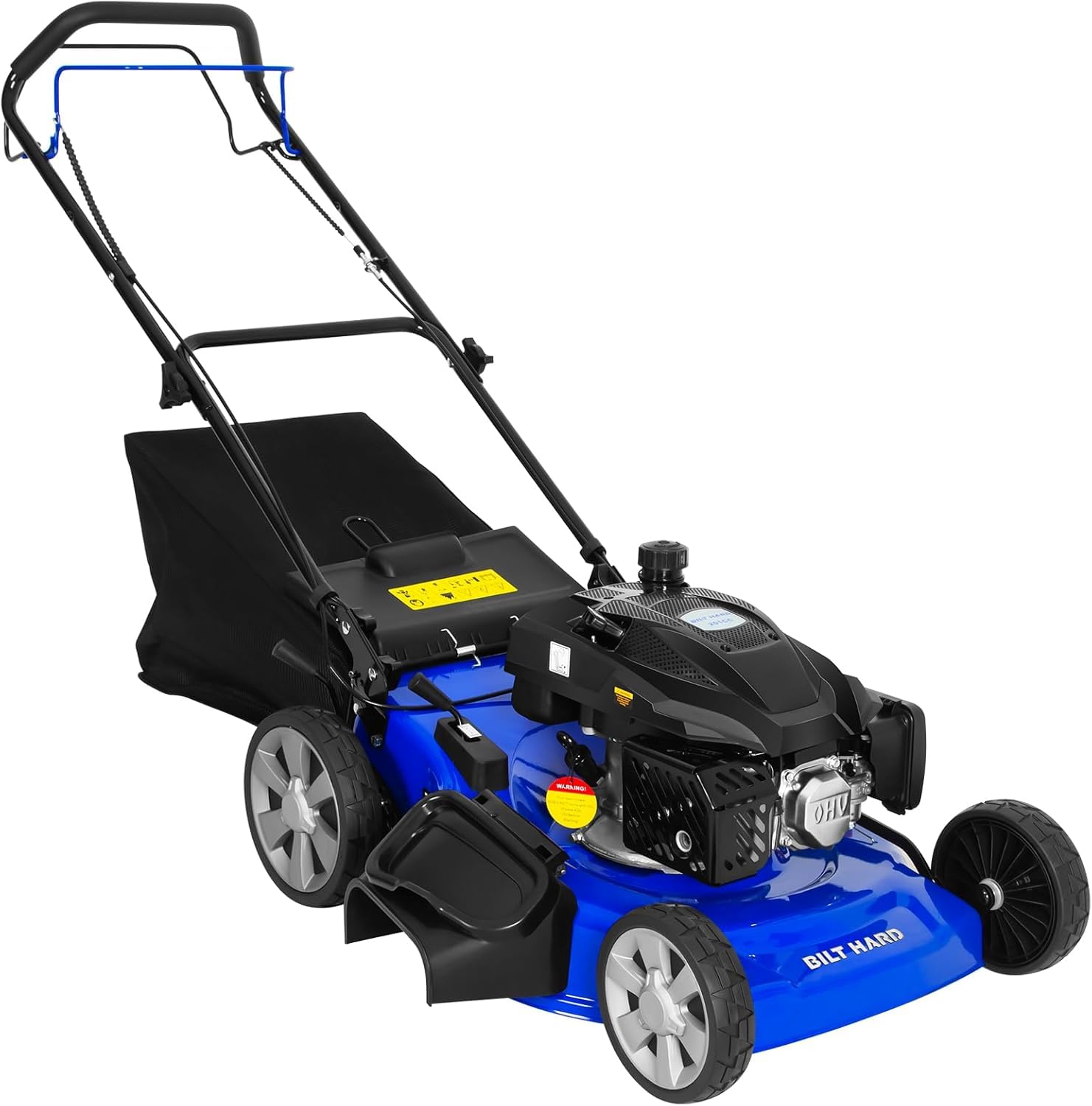
BILT HARD 21-Inch Self-Propelled

BILT HARD 21-Inch Self-Propelled

Bagging and mulching

Our Score 8.2/10
Check Price

Worth Noting

  • 89.2 pounds makes loading and storage a chore
Engine
201cc, 9.0 ft-lb torque
Weight
89.2 lb
Cutting Width
21 inches
Cutting Heights
1.2 to 3.75 inches, 8 positions
Read the full review

Eight cutting heights, one lever, and a range that starts at 1.2 inches — the height adjustment is the first thing that impressed us on the BILT HARD. A single lever moves all four wheels together, so going from a summer 3-inch cut to a shorter trim before winter takes five seconds instead of a pin moved at each wheel.

The deck is a proper 3-in-1: mulch, bag, or side discharge, with a plug and rear chute that swap without tools. What you give up for the price is pace control. This is a single-speed self-propelled system, so the mower walks at one pace and you walk at it; around beds and tight corners you let the drive lever go and push through, and for those few seconds you are the transmission.

For bagging, that fixed pace is less of a problem than it sounds. A steady ground speed keeps the load on the deck even, and a chute that is not surging and slowing is a chute that clogs less. The 201cc engine publishes 9.0 ft-lb of torque, the highest figure in this group, which is what bails you out when the grass got away from you. Bagging is also where we think the 21-inch deck earns its keep: wide enough to leave a clean stripe, narrow enough to slip between a fence and a bed.

Bottom line: Our bagging pick: three cutting modes, eight heights on one lever, and the most torque here, as long as you can live with a single walking speed.

3

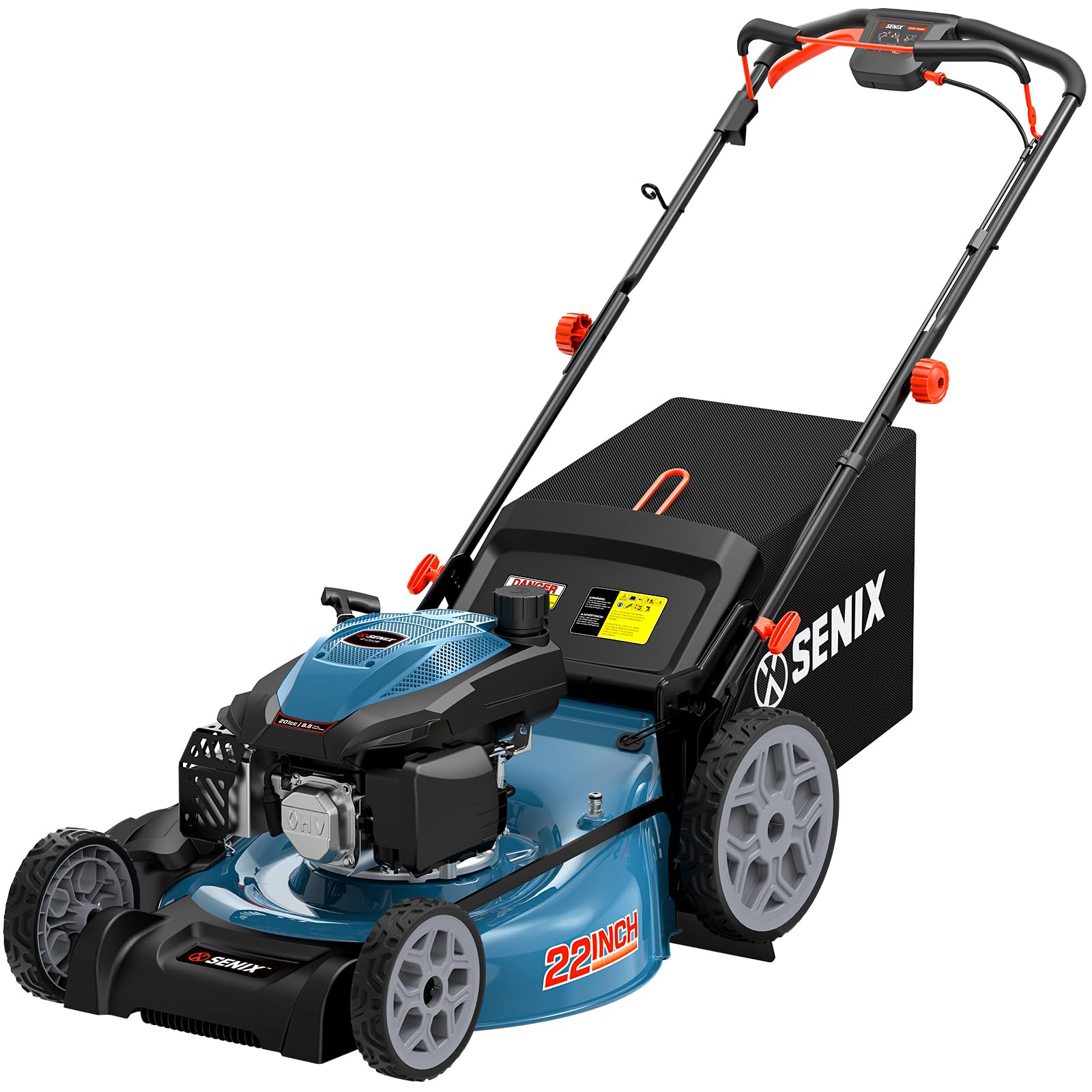
SENIX 22-Inch Self-Propelled

SENIX 22-Inch Self-Propelled

Most lawns

Our Score 8.0/10
Check Price

Worth Noting

  • Drive belt and wheels are the wear points
  • Assembly directions are thin for first-timers
Drive
Rear-wheel, variable speed
Engine
201cc 4-cycle OHV
Weight
79 lb
Cutting Width
22 inches
Read the full review

Twenty-two inches of deck, rear-wheel drive, and a speed you can vary: that is what a self-propelled mower for a real lawn needs, and this SENIX is the only mower here that puts all three together without turning into a 96-pound problem. What struck us across this whole group is how much weight, not power, separated the mowers that felt good from the ones that felt like work.

It is our pick for most yards, and the 79-pound figure is most of the reason. That is the lightest of the big-deck self-propelled mowers here, against 89 pounds for the BILT HARD and nearly 96 for the YARDMAX, and the difference shows up every Saturday morning when the mower comes out of a shed, gets turned at the end of forty rows, and goes back in. Rear-wheel drive puts the pull where the weight sits, which is exactly where you want it heading uphill with a full bagger.

The kit is complete enough to save a second order: engine oil, a mulch plug, a discharge chute, and a 19-gallon bagger all come in the box. Six height settings run from 1.25 to 4 inches, the highest top setting in the group, and one lever moves all four wheels at once. Eleven-inch rear wheels and 8-inch fronts carry the deck over roots and rough ground without scalping. The two-year limited warranty covers residential use, and it is worth registering on the day the mower arrives instead of filing the card in a drawer.

Bottom line: This is the one we recommend to most people with a real lawn: a 22-inch deck, rear-wheel drive, variable speed, and 79 pounds that do not fight you.

4

YARDMAX YG2860 22-Inch CVT

YARDMAX YG2860 22-Inch CVT

Big flat lawns

Our Score 8.0/10
Check Price

Worth Noting

  • 95.7 pounds, the heaviest mower here
  • Self-propelled drive can quit, leaving a very heavy push mower
Drive
Front-wheel, 6-speed CVT
Engine
201cc 4-cycle OHV
Weight
95.7 lb
Cutting Width
22 inches
Read the full review

The lever on the right of the handlebar is the whole argument for this mower. YARDMAX's continuously variable transmission walks through six speeds, so you match the mower to your stride instead of matching your stride to the mower, and on a long, flat, open lawn that lever is worth more than another inch of deck. It is why this is the mower we point at big properties.

Front-wheel drive is the trade. The pull comes from the smaller wheels, which makes the YARDMAX easy to pivot at the end of a row and less sure-footed climbing a slope with a full bagger — the front tires break loose first, and when they do you are pushing. On level ground you will never notice the difference, so this is a mower for a wide, flat yard rather than a hillside.

Two details we appreciated more than we expected to: a cleanout port on the deck that takes a garden hose, so washing out the underside does not mean tipping the mower on its side, and a single lever that sets cutting height across all four wheels. The spiked rubber tires are there for loose or sandy ground, the automatic choke means no priming, and the residential warranty runs two years.

Bottom line: Buy this for a long, flat lawn where you want to set the pace yourself — the six-speed lever is worth the extra weight, and the front-wheel drive is the price of it.

5

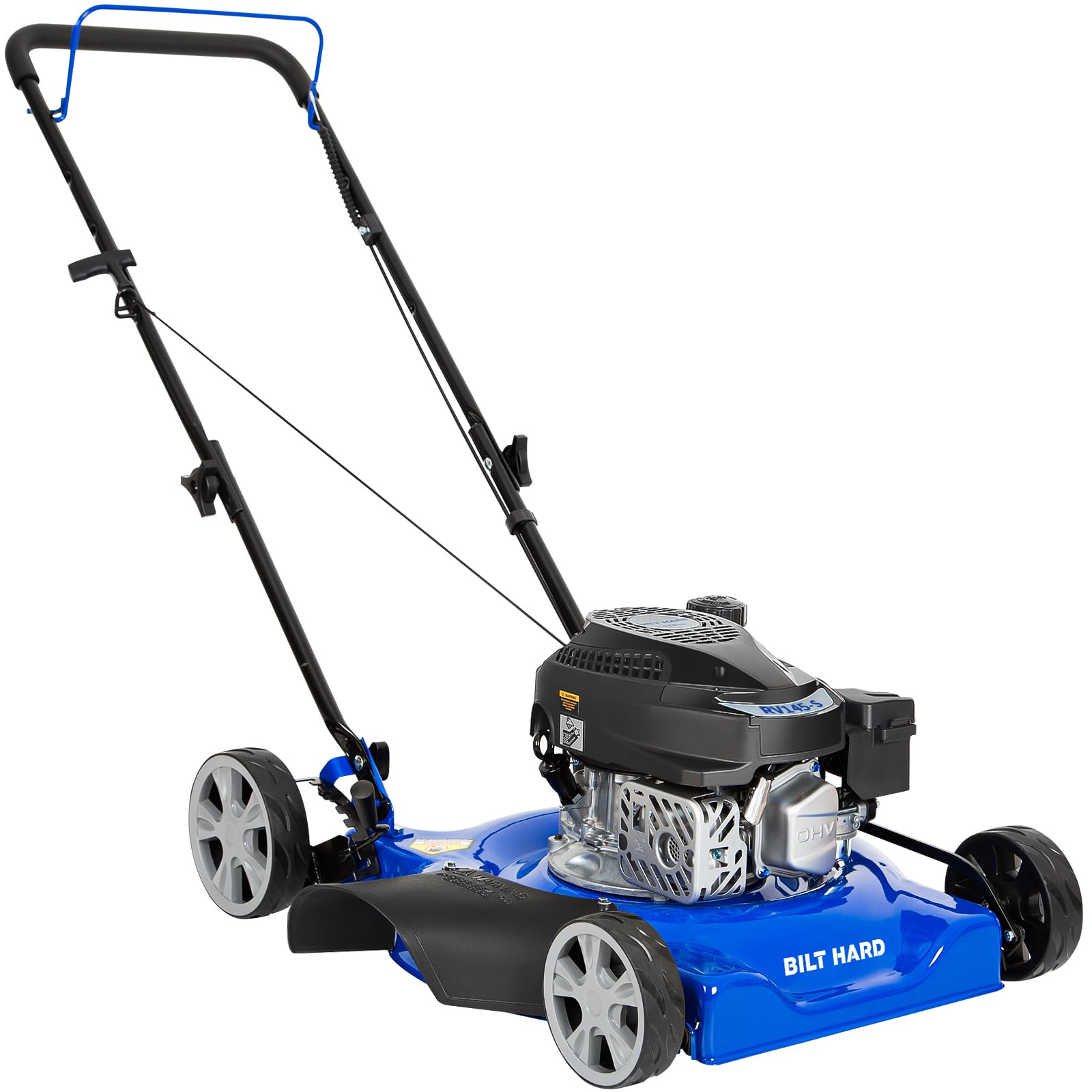
BILT HARD 20-Inch Push

BILT HARD 20-Inch Push

Low-cut lawns

Our Score 8.0/10
Check Price

Worth Noting

  • Plastic knobs and handle brackets are the weak parts
Engine
144cc, 5.8 ft-lb torque
Weight
51 lb
Cutting Width
20 inches
Cutting Heights
0.7 to 3.2 inches
Read the full review

Seven-tenths of an inch is the lowest cut in this roundup — no other mower here lists a bottom height under 1.2 inches — and if you keep Bermuda, zoysia, or a lawn that gets cut short on purpose, that one figure matters more than deck width. The BILT HARD 20 reaches it with a single lever that moves all four wheels, and the settings step up to 3.2 inches from there.

At 51 pounds it is also the lightest way here to cut a 20-inch swath. That pairing — a wide-ish deck, a genuinely low cut, and a weight you can carry up a ramp — is why we keep coming back to it for a lawn that is a step up from a courtyard but not yet a half acre, especially if you like a short, tidy finish. The 144cc engine carries the same displacement as the 18-inch PowerSmart, so expect it to work a little harder in tall spring grass.

The engine has an auto-choke carburetor with no primer bulb, which is one less thing to fiddle with on a cold morning, and the foam-wrapped handle is angled to keep your wrists neutral on a long pass. One housekeeping note the manual makes a point of: do not tip this mower on its side to clean underneath, because oil migrates into the combustion chamber and the next start is a smoky, stumbling mess.

Bottom line: The pick for a low, tidy cut on a modest lawn: 0.7 inches at the bottom, 51 pounds to carry, and no primer bulb to fuss with.

How We Picked and Tested Gas Mowers

We started with a list of about 30 mowers and narrowed it using specs and owner feedback: deck width, drive type, whether it bags, mulches, and side-discharges, warranty length, and the pattern of complaints about hard starting and parts that rattle loose by year two. Price mattered only as a ratio — what actually comes in the box, like a bag and a discharge chute, against what you pay for it. That left seven mowers, run on the same yards for eight months.

Each one arrived in a box, and I assembled it alone, timing the job and noting whether the hardware matched the manual and whether the levers landed where my hands expected them. In use, I watched the drive control — whether it engaged smoothly or lurched, whether it pulled me up the slope by the driveway or ran away downhill — and I timed a fixed 100-foot run in each gear, plus a full mow of the same yard every few weeks.

Cutting is where they separated. I let a strip of tall fescue go two weeks past due, mowed it at the highest setting, then dropped two notches and went back over it, checking for stragglers, clumping, and scalp marks on the uneven corner by the fence. I also cut wet grass the morning after a rain and again two days later to see which decks clogged and which cleared themselves.

Every session started with a pull count, and I restarted each mower hot after a ten-minute break, which is where the weak ones show themselves. Bolts got checked and tightened monthly, decks scraped, and I kept notes on oil use, new rattles, and anything that felt loose by fall.

How to Choose the Right Gas Lawn Mower

Push or Self-Propelled

Self-propelled is the upgrade that changes ownership, and it costs weight. Push mowers in this class run 51 to 58 pounds; the self-propelled ones run 79 to 96. If your lawn is flat and small, a push mower is genuinely fine and easier to store. Add a slope, a bagger full of wet grass, or a lawn that takes more than about 45 minutes, and the drive earns its keep.

The trade is real, though: those extra 30 pounds show up every time you lift the mower into a truck bed or drag it backwards out of a border. If storage is a shed with a lip at the door, weigh the mower before you fall for the deck size.

Deck Width and Engine Size

An 18-inch deck fits through a gate and around a birdbath; a 22-inch deck covers ground faster and leaves fewer passes. Every extra inch adds width and weight, so measure the narrowest thing the mower has to pass — gate, shed door, the gap beside the air conditioner — before you choose. For an unknown yard, we start at 20 inches and go up only if the gate allows.

Engine size goes with deck size rather than with ambition. The 144cc engines here turn 18 to 20 inches; the 201cc engines are matched to 21 and 22-inch decks. A big deck on a small engine bogs down in tall spring grass, which is exactly when you need the cut to be clean.

Bag, Mulch, or Side Discharge

Three-in-one mowers switch between collecting clippings, chopping them fine, and throwing them out the side. Bagging is what you want for leaves and for the last cut before winter; mulching returns nutrients but struggles in tall, wet grass; side discharge handles rough conditions with the least clogging.

The trap is buying a side-discharge-only mower and discovering in October that it cannot collect leaves. Decide which of the three you will actually use before you shop, and treat the mulch plug and bagger as part of the price — a mower that ships with them saves a second order.

Cutting Height and How You Change It

Range matters less than the bottom setting. Most lawns want 2.5 to 3 inches through summer heat; a setting near an inch is for warm-season grasses kept short, and it is the setting many mowers cannot reach. Just as important is the mechanism: a single lever that moves all four wheels takes seconds, while four separate pins turn a height change into a chore you quietly stop doing.

Build, Warranty, and Year Three

Durability is the honest weak point of this price class, and it is rarely the engine. Wheels, drive belts, plastic knobs, and handle brackets are what fail, so look at those parts on the floor model if you can. Two-year residential warranties are the norm here — register yours on delivery and keep the receipt somewhere you will find it.

We rank parts availability above a longer warranty. A mower that runs perfectly is still useless if a drive belt or a wheel assembly cannot be bought, so check that the brand sells the parts you are likely to need before you commit.

Frequently Asked Questions

Final Verdict

For most lawns, buy the SENIX 22. It cuts a wide stripe, pulls from the rear wheels, lets you pick your walking pace, and at 79 pounds it is the least punishing big-deck self-propelled mower in this group — the one you will still be happy to wheel out in August.

If bagging is the priority and you want to spend less, the BILT HARD 21 does the same three jobs at a fixed pace. If your property is big, flat, and you want to fine-tune speed rather than deck size, the YARDMAX's CVT lever is worth the extra weight.