Fencing & Farm Structures

Best Gas Earth Augers of 2026

A gas earth auger earns its keep in the first ten minutes, or it doesn't. You're standing in a yard with thirty post locations marked in spray paint and a clamshell digger in your hand, and the difference between a machine that bites down through the topsoil and one that skips and chatters across it is the entire afternoon. These augers exist to cut clean, straight, correctly sized holes for fence posts, deck footings, and saplings, fast enough that a two-person job stops feeling like a punishment and starts feeling like a morning's work.

I've dug enough holes by hand to be skeptical of anything promising speed, and here's what nobody tells a first-time buyer: engine size matters less than the bit and the flighting. A strong motor spinning a narrow, caked auger just makes a mess faster. My team spent eight months with nine augers, fencing and setting footings and planting saplings, and the ones that stayed in the truck were the ones that started on the second or third pull after a week in the shed and cut a clean hole without me leaning on them. The picks below are sorted by the ground you actually dig in, not by the spec sheet.

1

Prowoo 72cc Post Hole Digger

Top Pick
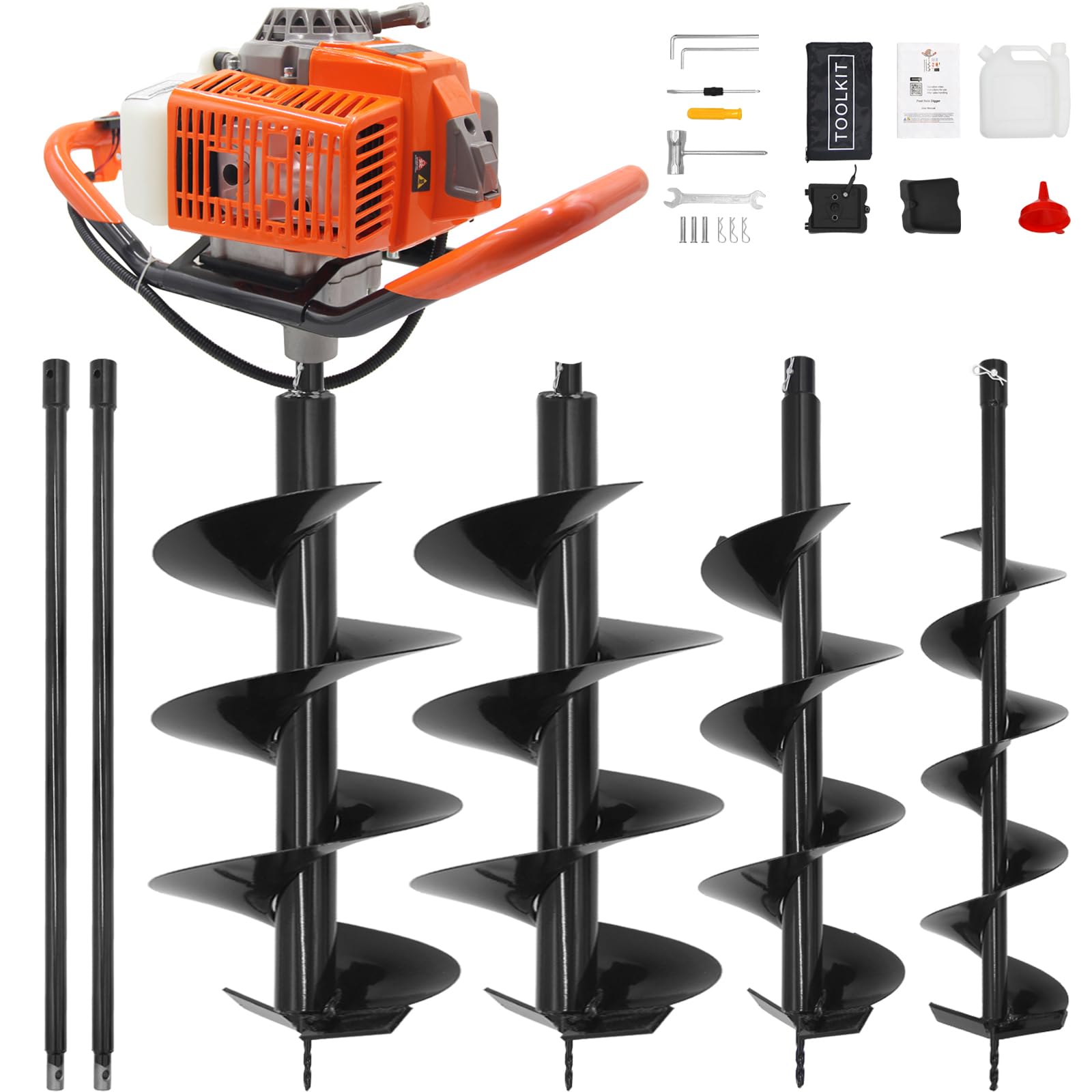
Prowoo 72cc Post Hole Digger

Complete bit kit

Our Score 9.2/10
Check Price

Worth Noting

  • Cutter-blade welds can fail under load
Engine
72cc gasoline
Auger Bits
4 in, 6 in, 12 in
Extensions
2 rods included
Read the full review

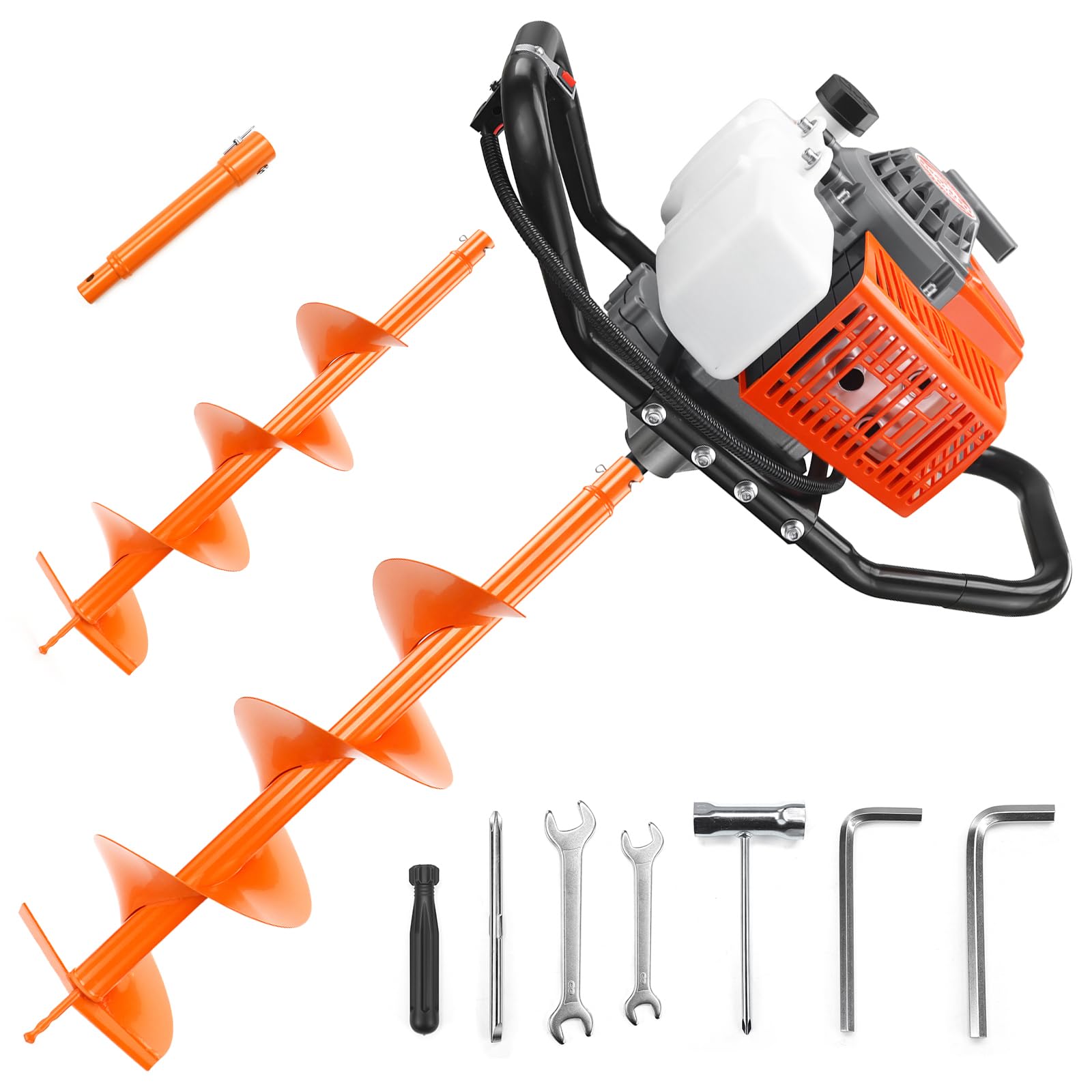
Three bit sizes in one box is the argument for the Prowoo 72cc: a 4-inch auger for saplings and soil work, a 6-inch for posts going into compacted ground, and a 12-inch for deck piers and mailbox posts. Add two extension rods and a full-meter shaft, and you stop shopping the moment a job needs more reach than the standard bit gives.

Where it earns its place is displacement. The 72cc engine is as big as anything in this group, and the extra capacity arrives as torque at part throttle rather than a scream at full, which is exactly what dense, hard-packed clay asks for. We ran it beside the smaller 43cc and 52cc machines and preferred it every time the soil got heavy and the hole count got long. The finger throttle and padded grips fall where your hands already are, so a morning of posts does not leave your forearms aching.

Starting is the fiddly part. Choke, prime, then a set number of pulls in the same order every time, and it rewards the routine with a cold start that needs no swearing and no second can of fuel. For a homeowner with forty posts ahead and no interest in owning two machines, this is the kit that covers the most jobs.

Bottom line: For a first auger and a long list of holes, we recommend the Prowoo: three bits, two rods and enough displacement to keep up in clay.

2

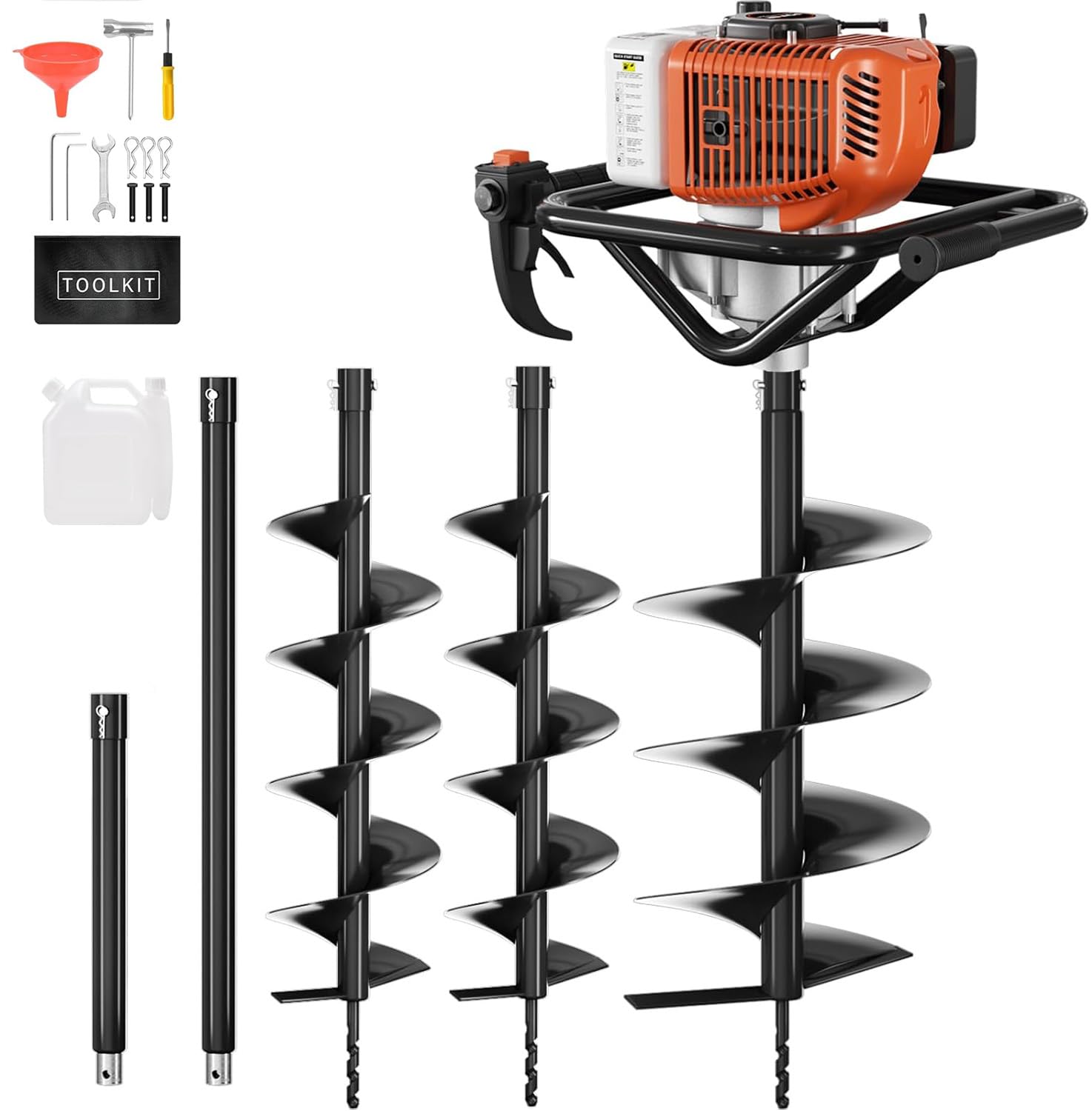
Earthquake E43 43cc Auger

Earthquake E43 43cc Auger

Fence posts in soil

Our Score 9.0/10
Check Price

Worth Noting

  • Costs more than the 72cc kits here
  • Plastic throttle lever feels light-duty
Engine
43cc 2-cycle Viper
Weight
34 lb
Warranty
5-year limited
Auger Bit
8 in, 36 in shaft
Read the full review

A five-year limited warranty is unusual on a gas auger, and it is the main reason the Earthquake E43 is the machine we hand to anyone facing a long fence line. Behind that warranty sits the hardware that earns it: industrial air filtration to keep grit out of the top end, and a ball-bearing, alloy-gear transmission instead of the bushings the cheapest units use. At 34 pounds it stays a one-person tool, and the 36-inch auger with its 8-inch bit lets you drill standing up rather than folding over the handles all afternoon.

The 43cc Viper engine is not the biggest in this group — the 72cc machines here out-displace it — but the 30:1 transmission and the Flex Coil shock absorber on the bit turn that into a steady pull rather than a lunge. The fishtail point starts the hole exactly where you set it, and the anti-vibration foam grips and fingertip throttle keep a run of twenty posts from becoming a wrestling match. In loam and worked clay we found it does what the spec sheet implies: a clean hole at walking pace, with the engine recovering instead of bogging when the flutes load.

Rocky ground is where it stops. The smallest stone stalls the fishtail point, and a ledge turns a two-minute hole into a pry-bar job, so if your soil is more rock than dirt, plan on a bar and a spade working alongside it. On ground that is actually ground, the E43 is the one we reach for first, and the work is uneventful enough that you stop thinking about the machine and start counting posts.

Bottom line: For ordinary soil and a fence line that needs finishing, we recommend the E43: it starts, it digs, and the five-year warranty is the reassurance the cheap imports don't offer.

3

Baotree 72cc Post Hole Digger

Baotree 72cc Post Hole Digger

Fencing and planting

Our Score 8.8/10
Check Price

Worth Noting

  • Heaviest kit here to move between holes
Engine
72cc 2-stroke
Weight
37.6 lb
Auger Bits
6 in and 8 in
Extensions
2 rods included
Read the full review

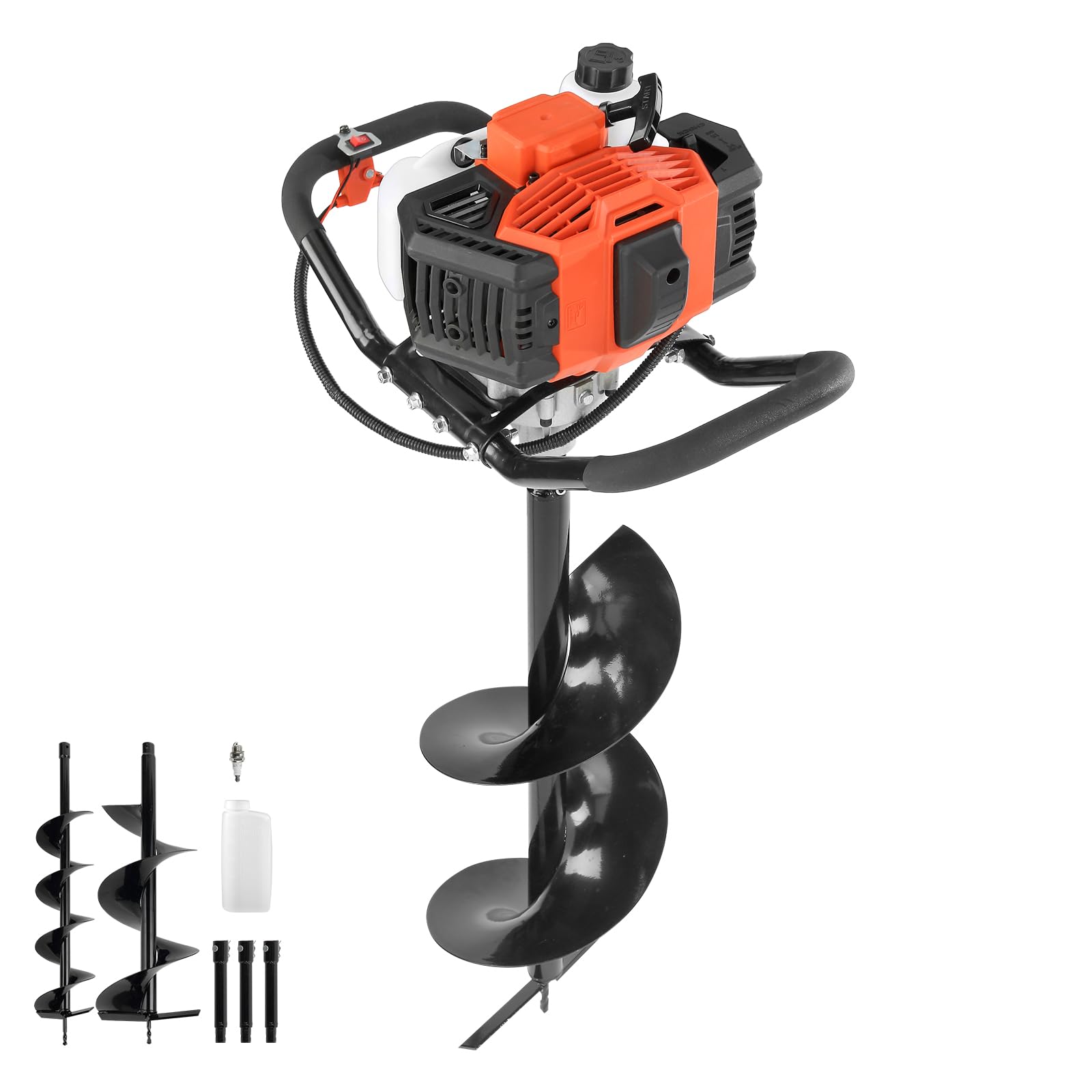
Six and eight inches, with two extension rods, is a sensible kit for fencing: 6 for a post set into compacted soil, 8 for one going in with concrete, and rods to take either down to a proper depth. Baotree does not spend a slot on a 12-inch bit you might use twice a decade, and the kit is tidier for it.

The 72cc engine is more than those two bits need, which is exactly the point. It does not bog when the flutes load with wet clay, it cuts half-inch roots instead of dancing on them, and it keeps its temper in stony soil where the smaller machines stall out. Reliability is the part that impressed us: it fires up when you want it to and does not demand a ritual first.

At 37.6 pounds it is the heaviest kit here, and that is the trade. The mass keeps the head steady on a big bit but makes it a two-hand carry between holes, so if the truck can sit beside the fence line it costs you nothing and if you are hiking it into a back lot, plan on a second person or a cart.

Bottom line: For fence posts and plantings on ground you can drive to, the Baotree is an honest 72cc kit that starts when asked and doesn't bog.

4

NEO-TEC 72cc Earth Auger

NEO-TEC 72cc Earth Auger

Ice and earth

Our Score 8.8/10
Check Price

Worth Noting

  • Not CARB certified, so it can't ship to California
  • Plastic choke cover sits where your body rests
Engine
72cc 2-stroke
Weight
33.2 lb
Auger Bit
8 in plus extension
California Sales
Not CARB certified
Read the full review

The NEO-TEC's party trick is seasonal. The same 72cc powerhead that drills fence posts in July will cut through lake ice in January, and it ships with an 8-inch bit and an 8-inch extension. If you already own both an ice auger and a post hole digger, this replaces two engines with one, and one engine is one fuel can and one maintenance routine.

Bore and torque are why it works in bad ground. Hardpan, caliche and frozen soil are all named territory for a 72cc two-stroke, and the anti-vibration handles and cushioned grips mean the machine does not punish you for using it. The translucent fuel tank is a small thing we appreciated — you can see the level without shaking the machine or pulling the cap.

Two things to know before you order. The pull rope is this model's weak point, so start it with one firm, full-length pull rather than a series of short yanks, and know where the recoil assembly sits before you need it. And the instructions contradict themselves in places, so when the manual and the fuel-mix label on the machine disagree, believe the machine.

Where that leaves the NEO-TEC is a good machine for a specific buyer: someone with ice in winter, dirt in summer, and a long list of holes in each season. If you only ever dig post holes in mild weather, the Earthquake is the better-built tool. One engine doing two jobs is a real convenience, and this is the only machine here that offers it.

Bottom line: Outside California, the NEO-TEC is the one powerhead here that digs post holes all summer and cuts ice all winter.

5

VEVOR 52cc Post Hole Digger

VEVOR 52cc Post Hole Digger

Deep post holes

Our Score 8.4/10
Check Price

Worth Noting

  • No 8-inch bit in the kit
Engine
52cc, 9350 rpm
Weight
34.5 lb
Auger Bits
6 in and 10 in
Extensions
3 rods included
Read the full review

Depth is the argument for the VEVOR 52cc kit. The bit runs 31.5 inches and three extension rods come in the box, so you can chase a post hole past the reach of anything else in this group without changing machines. For fence posts, deck piers and tree planting on the same property, that reach is what you are paying for.

The rest is ordinary but competent: a 52cc engine turning up to 9350 rpm through a ball-bearing gearbox, a starter cord longer than standard so your arm gets more leverage on a cold morning, and a 0.32-gallon tank. What we noticed in clay is that it does not need full throttle to keep the flutes clear — two-thirds is enough and the machine is calmer for it, which matters when you are the one holding the handles. One person can run it, and it is set up that way.

The gap in the kit is the 8-inch bit. You get 6 and 10, and 8 is the size most 4x4 posts want, so you are either going slightly small and packing the soil back or slightly large and pouring more concrete. If your posts are 6-inch, ignore that entirely. For everyone else it is the reason this is a strong second choice rather than the first: excellent reach, right power, one size missing.

Bottom line: Buy the VEVOR 52cc when depth is the whole job — it reaches further than anything else here, provided a 6- or 10-inch hole is what you need.

6

Earthquake Dually 52cc Powerhead

Earthquake Dually 52cc Powerhead

Two-person crews

Our Score 8.4/10
Check Price

Worth Noting

  • Powerhead only
Engine
52cc 2-cycle Viper
Weight
24 lb
Bit Range
2 in to 10 in
Max Torque
62 ft-lb
Read the full review

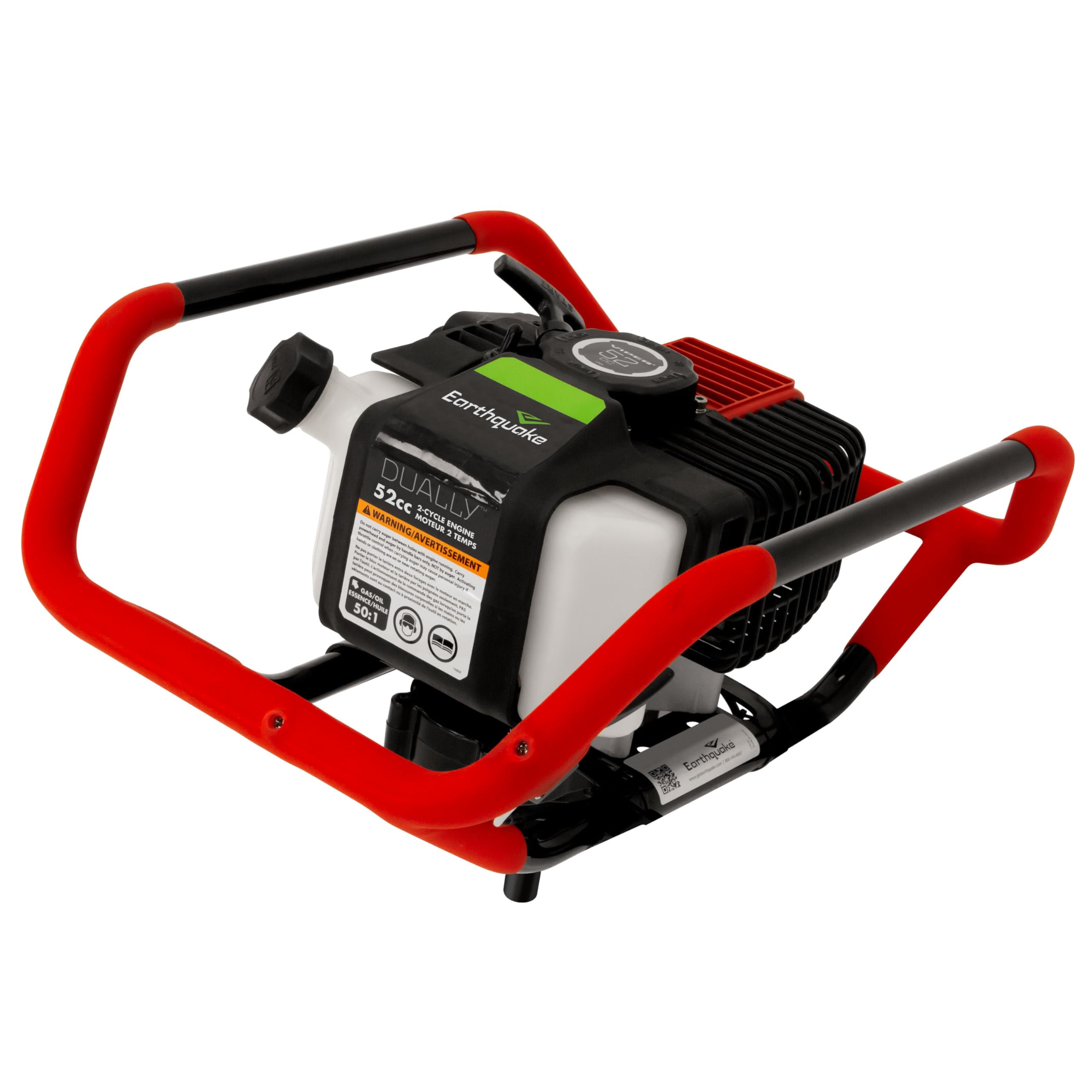
Two throttle controls and handlebars wide enough for four hands make the Dually the auger we hand to a two-person crew. It is a powerhead only, so it takes whatever bit you already own from 2 to 10 inches, and 62 ft-lb of torque is enough to turn a 10-inch auger through heavy clay without the engine falling on its face.

Earthquake builds this one for punishment: a five-bearing transmission, industrial air filtration, and a centrifugal clutch that slips when the bit hits something immovable instead of passing the jolt into your shoulders. At 24 pounds it is the lightest of the full-size machines here, which is the point of a two-person tool — you are not carrying stability around, you are sharing the load. Starting is the variable. It is a prime-and-pull engine that wants a firm, full-length pull, and half-hearted yanks flood it.

The one thing it will not do is back out of trouble: a bit that screws itself into a root comes free with a pry bar and patience rather than a switch, because there is no reverse. On a machine built for two people with a plan, that is a fair trade, and the five-year limited warranty covers the powerhead while you sort the rest out.

Bottom line: For a crew turning wide bits in heavy soil, the Dually is the powerhead we point to — bring your own auger and a second pair of hands.

7

PRIJESSE 72cc Post Hole Digger

PRIJESSE 72cc Post Hole Digger

Wide 12-inch holes

Our Score 8.4/10
Check Price

Worth Noting

  • Auger shafts and clutch can fail under hard use
Engine
72cc gasoline
Auger Bits
4 in, 8 in, 12 in
Extensions
2 x 24 in rods
Read the full review

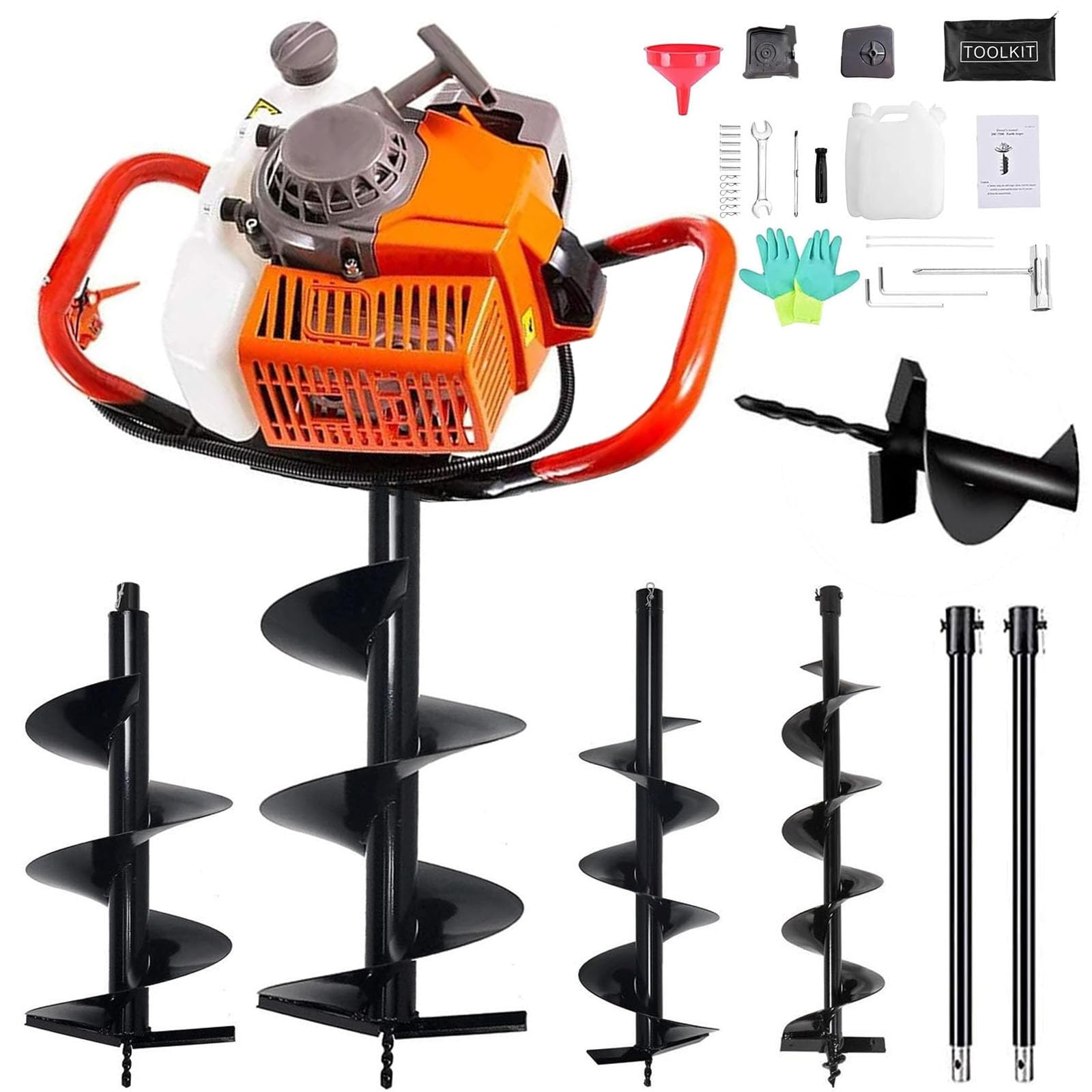
A 12-inch bit is the expensive part of most kits, and the PRIJESSE includes one alongside 4- and 8-inch augers and two 24-inch extension rods. That spread covers mailbox posts, deck piers and a tree pit in a single purchase, which is why the kit is worth a look even though it sits at the low end of the 72cc field.

The engine pulls the 12-inch bit through soft ground and beach sand without complaint, and the two-person handle setup lets a helper take half the torque when the hole gets deep. Where it asks for care is the fasteners. The listing tells you to tighten every screw before the first start, and that is not boilerplate — a loose air-filter bracket is the usual first casualty, so check the bolts after the first hour and again after the first day.

Durability is where the arithmetic gets harder. Bent auger shafts and a clutch that sticks after twenty minutes of work turn up in this kit's history, and the instruction sheet is thin enough that you will be matching parts against the picture. For occasional work — one fence, a run of shrubs, a few trees — it is a lot of hardware for the money. On a contractor's schedule, the savings are not worth the downtime.

Bottom line: When you need a 12-inch hole without paying premium money, the PRIJESSE kit is the value pick — just plan on checking fasteners.

8

XtremepowerUS 55cc Powerhead

XtremepowerUS 55cc Powerhead

Budget powerhead

Our Score 8.0/10
Check Price

Worth Noting

  • No auger bit in the box
  • Plastic throttle housing is the weak point
Engine
55cc 2-stroke, 2.3 hp
Bit Speed
170 rpm
Auger Shaft
0.75 in
Read the full review

A powerhead and nothing else is the offer here: 55cc, 2.3 horsepower, a 0.75-inch shaft and 170 rpm at the bit. If you have augers left over from a dead machine, that is the cheapest route back to digging, and three-quarters of an inch is the common shaft size, so replacement bits are easy to find when you need a different diameter.

It is a light, willing little engine. It primes and pulls into life without drama, and about a quarter throttle keeps a 12-inch bit turning in clay — hold it there and the torque is genuinely surprising for the displacement. It is also small enough to carry in one hand and store on a shelf, which most of this group cannot claim.

The risk is how long it stays that way. Reliability runs uneven on this model, and machines that quit inside the first half hour sit alongside ones that dig season after season. Treat a snag as a stop-and-clear rather than a fight — lift the bit, clear the flutes, start again — and the odds improve considerably.

What you are buying is a way in: 55cc, a standard shaft, and the bottom of this group's price range. Pair it with a good 8-inch bit and it will set a short run of posts and dig planting holes through years of light use. Hand it a hundred holes in a weekend and it will find its limit.

Bottom line: If you already own auger bits and want gas power for a small job, the XtremepowerUS is the least expensive way in; for a full fence, spend more.

How We Chose and Tested These Gas Earth Augers

We started with a shortlist of two dozen augers sold by brands we could source parts and service for, then narrowed it by engine displacement, available bit diameters, weight, warranty, and price until nine were left. Every unit arrived unassembled, so the clock started at the box: we timed how long it took to get the handles and bit mounted and the engine running, and noted whether the manual matched the hardware actually in the bag.

Over eight months we ran them on the same jobs — a long fence line through heavy clay, a set of deck footings in gravelly soil, and a few dozen saplings planted in ground that hadn't been turned in years. Before each hole we started cold, counted pulls, and logged how the engine behaved after sitting a week or two in a shed; a hot restart after a five-minute break counted too, since that's when most of these get fussy.

Once the bit was in the ground, we watched whether the auger pulled itself down or needed body weight on the handles, timed the hole, and noted how it handled roots and buried rock — including how hard it kicked back when it caught. We measured finished holes against the bit to see whether they came out round and clean or smeared and oversized, and we paid attention to who could physically manage the machine: weight, handle spread, vibration through the grips.

At the end of the season we went back over the flighting for wear, listened to the gearbox, and weighed what each auger cost against what came in the box. The ones that held up were the ones still starting easily months later and cutting a straight hole without a fight.

How to Choose Gas Earth Augers

Engine size and the ground you're digging

Sort displacement first, because it decides what the machine can push through. The 43cc and 52cc engines here suit loam, clay that has been worked before, and a homeowner's run of twenty or thirty posts. Step up to 72cc when the soil is unbroken hardpan, caliche or heavy clay that comes up in chunks: the bigger engine holds its rpm when the flutes load instead of stalling halfway down.

More displacement is not free. It adds weight, and it adds kickback when the bit snags. If your soil is soft and your list is short, the smaller engine is the easier tool to live with all afternoon.

Bits, extensions and the depth you actually need

Most fence posts want a 6- or 8-inch hole: 6 inches for a post set in compacted native soil, 8 when the post goes in with concrete. A 4-inch bit is for saplings and soil work, and a 12-inch bit is for deck piers and mailbox posts — genuinely useful, but not something you use on every job.

Depth comes from bit length plus extension rods. A 30-inch bit with no rods gets you a little over two feet; add rods, and enough engine to turn them, and three to four feet is realistic. A long bit, a wide auger and a small engine is the combination that stalls.

Weight, kickback and how many hands

A one-man auger is a one-man auger only in soft ground. The bit is what hits the rock, and the torque it absorbs travels straight into your wrists and shoulders. That is why the two-handled, two-throttle machines exist, and why a 10-inch bit in stony soil wants a second person on the far handle.

Weight splits the same way. Something in the mid-twenties to about 30 pounds is manageable for one person walking a fence line; the mid-thirties and up is a two-hand carry, but it also stays planted when the bit bites. Anti-vibration grips and a fingertip throttle matter more than they sound by the twentieth hole.

Fuel mix, upkeep and the parts you'll need

Every machine here is a two-stroke, and the oil ratio belongs to the engine rather than the brand — it is printed on the fuel cap, the mixing bottle or the manual, and getting it wrong is the quickest route to a scored piston. Mix only what you'll burn in a few weeks and drain the tank before the machine sits for the season, because stale fuel is the usual reason a stored auger refuses to start in spring.

Then look past the engine. A five-year limited warranty is the strongest backing in this group, and a ball-bearing transmission with industrial air filtration is worth more day to day than a few extra cc. Buying a powerhead instead of a kit only makes sense if the shaft size — three-quarters of an inch is the common standard — matches the bits you already own.

Frequently Asked Questions

Final Verdict

The Earthquake E43 is the auger we recommend to most people. It starts, it holds a line, and it carries a five-year limited warranty plus the gearbox and filtration to deserve one — which matters more than a few extra cc once the novelty of a new machine wears off.

If your soil is heavy clay and your list is long, the Prowoo 72cc kit gives you more displacement and three bits for less. If depth is the requirement, the VEVOR 52cc and its three extension rods reach further than either.