Planters & Plant Supports

Best Frost Blankets for Plants of 2026

The first frost warning of the season tends to arrive on a clear, calm night, right when the tomatoes are finally ripe. I've spent more than one of those evenings outside with a flashlight, draping bedsheets over the basil and pinning them down with whatever was in the laundry basket. A real frost blanket does that job without the midnight improvisation, and it buys you weeks of harvest on either end of the season. What separates a good one from a frustrating one is whether it stays put, covers what it claims to, and lets plants breathe underneath.

Weight and fabric matter more than first-time buyers expect: the sheet has to sit tight in a gust without crushing a row of lettuce, and it should drape to the soil line to trap the warmth the ground gives up overnight. Over the past two winters, my team and I have put 14 frost blankets through their paces, from light row covers to zippered jacket-style bags for shrubs. Size and zipper placement decided which ones came back out the next night — the picks below are the ones that never went back in the shed.

1

JUNKOGO Row Cover 7 x 100 ft

Top Pick
JUNKOGO Row Cover 7 x 100 ft

Long vegetable rows

Our Score 9.2/10
Check Price

Worth Noting

  • Seven-foot width needs two runs on wide beds
  • 0.9 oz fabric is light for hard freezes
Material
Non-woven polypropylene
Sheet Size
7 ft x 100 ft
Fabric Weight
0.9 oz/yd²
Read the full review

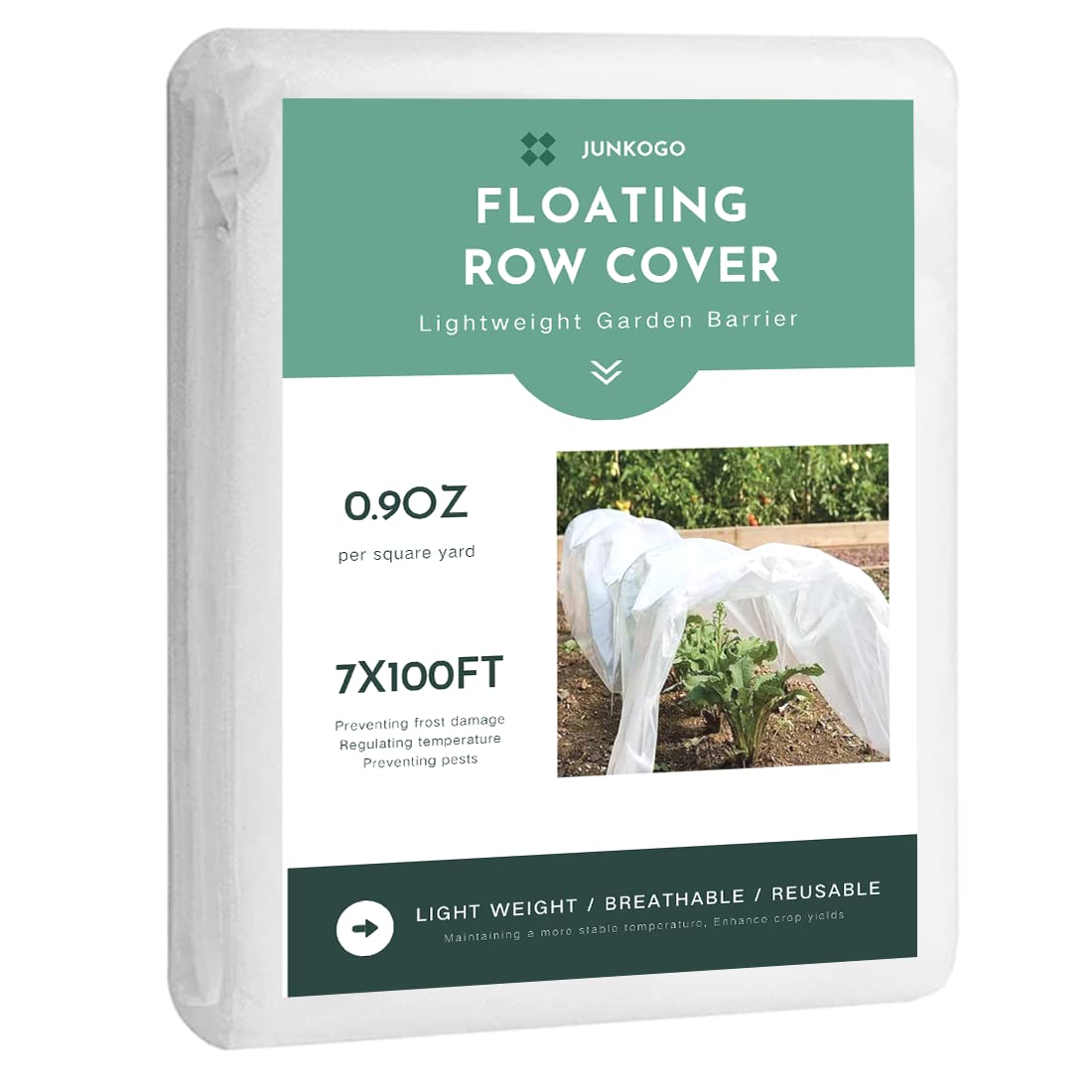
Seven feet wide is the compromise, and it is worth naming first. A four-foot bed still gets a foot and a half of overhang on each side, but anything wider than six feet needs two runs and a seam. What the narrower width buys is length, a hundred feet of it, roughly seven hundred square feet of cover, and for a single long vegetable row that is the better trade. It is our first choice in this group for anyone with a line of tomatoes or a strawberry bed.

The fabric is 0.9 oz non-woven polypropylene, light enough to lay over a hooped row without bowing it, and breathable, so condensation does not build up underneath. It cuts cleanly, which means one roll can become five shorter covers for different beds, and it forgives a rough fold. Anchor it, though: a light cloth with a loose edge is a sail, and wind is the one thing that reliably undoes a cover this thin. Clips onto PVC hoops are the simplest fix.

At a little over three and a half pounds, the whole roll is easy for one person to carry to the far end of the plot and unroll while walking, which sounds trivial until you are doing it at dusk in November. It also has the strongest record here for staying intact season after season, which is unusual for a fabric this light. Just remember that 0.9 oz is a light cover: in a hard freeze, double it or reach for something heavier.

Bottom line: The best choice for long rows and big plots: a hundred feet of light, breathable fabric that holds up better than most covers here.

2

Garutom Frost Cloth 10 x 33 ft

Garutom Frost Cloth 10 x 33 ft

Most garden beds

Our Score 9.0/10
Check Price

Worth Noting

  • A few degrees of protection per layer
Sheet Size
10 ft x 33 ft
UV Treatment
Anti-UV
Fabric Weight
1.1 oz/yd²
Light Transmission
85%
Read the full review

Ten feet by thirty-three feet, in a 1.1 ounce fabric, is the combination we keep coming back to. The width drapes a standard four-foot bed with enough left over on each side to bury, and the weight sits in the useful middle of this group: heavier than the 0.9 oz covers that behave like tissue in wind, lighter than the 1.5 oz fabric that needs a frame to stay off the plants.

It is treated against UV and passes about 85 percent of daylight, which matters on a cold snap that lasts three or four days, when you do not want to choose between frost damage and plants stretching for light. Scissors go through it cleanly. We ran one length over hoops in a raised bed and laid the rest straight over a row of greens, weighting the edges with soil, and both setups stayed where we put them.

That balance is why it earns the top spot. A lighter cover is really a wind and insect barrier that helps a little with frost; this one is a genuine frost blanket, and it does the job without the wrestling match that comes with the heavy fabrics. The honest caveat is that nothing at this weight is a greenhouse. On a night well below freezing you get a few degrees and a windbreak, and you get more of both when the fabric is on a frame rather than lying on the leaves.

Buy one and cut it up. A 33-foot sheet splits into a bed cover, a handful of pot wraps and a short length that lives in the cold frame, and the offcuts are still wide enough to fold double over a shrub when the forecast turns. That flexibility is the part we underrated at first.

Bottom line: The frost blanket we point most gardeners to: 1.1 oz fabric, a 10 x 33 ft sheet and UV treatment, at a price in the middle of this group.

3

KLEWEE Frost Cloth 10 x 50 ft

KLEWEE Frost Cloth 10 x 50 ft

Hard freezes

Our Score 9.0/10
Check Price

Worth Noting

  • Fabric can tear after a season in sun
Material
Spun polypropylene
Sheet Size
10 ft x 50 ft
UV Treatment
UV stabilized
Fabric Weight
1.5 oz/yd²
Read the full review

Picture the forecast you dread: five nights in the mid-twenties, a bed of greens, a banana you have coaxed through two winters and a neighbour's lemon you promised to look after. That is the job this sheet is built for. Ten by fifty feet of 1.5 oz spun polypropylene, UV stabilized, is the heaviest flat sheet in this roundup and the most coverage at that weight.

The weight is reassuring rather than awkward. It has enough body to stay where you lay it, so a line of bricks or a spadeful of soil at the edge takes a minute, and it does not balloon in a breeze the way the thin covers do. It needs support over anything upright: this much fabric laid flat on a hedge will flatten it, so plan on hoops or a simple frame.

Fifty feet covers a 30-foot hooped run with room to spare, and the offcut wraps a shrub or two. Where it is less appealing is a small garden, since this is more cover than two raised beds can use and a sheet this size takes up real shelf space between cold snaps.

For anyone covering a whole plot through a hard freeze, the extra weight and length are worth it, and a single layer here does more than a light cover manages. If your garden is two beds and a few pots, buy the shorter Garutom sheet instead and put the difference toward a second one next year.

Bottom line: The heavy-duty pick for a hard freeze: 1.5 oz fabric in a 10 x 50 ft sheet, enough to cover a whole plot in one go.

4

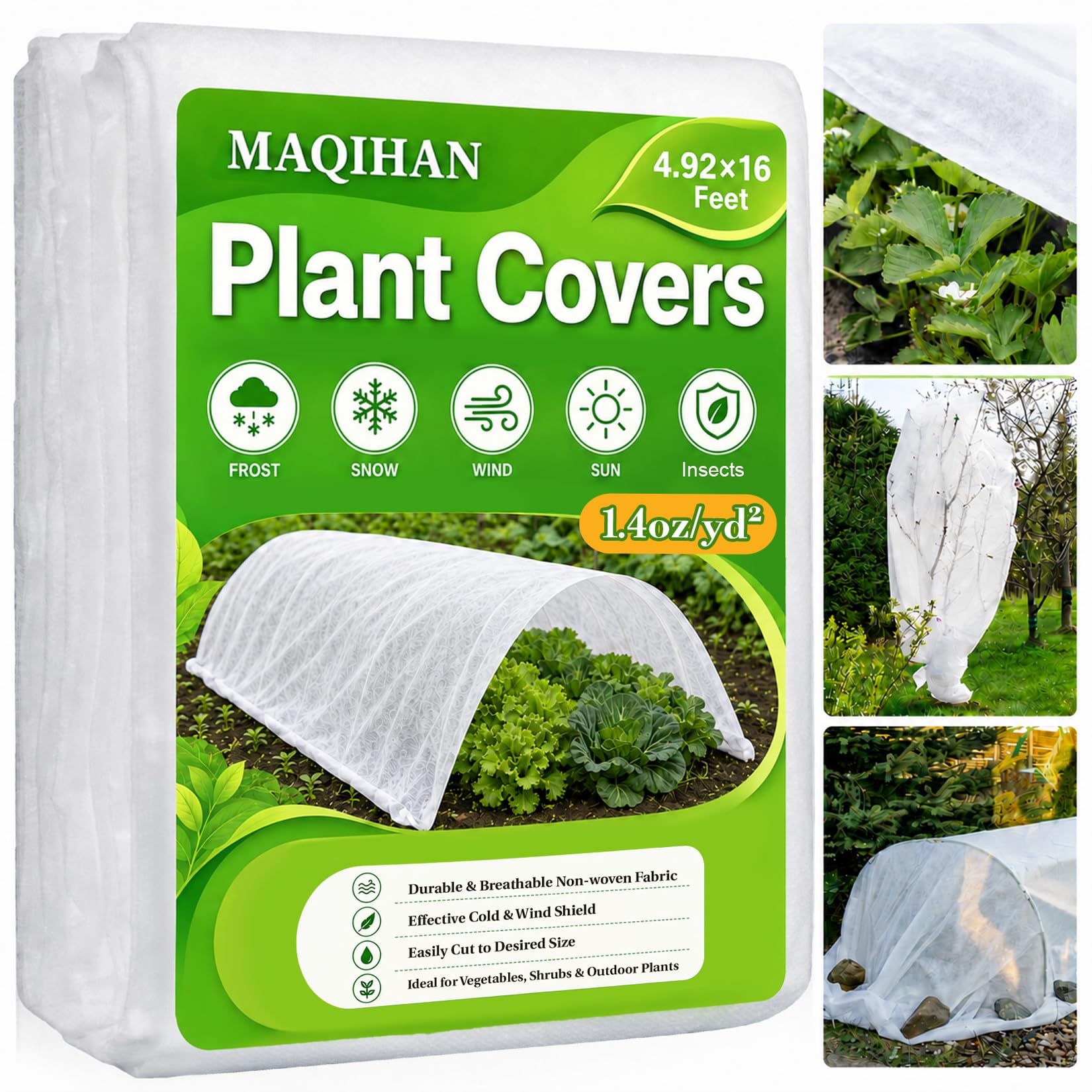
MAQIHAN Frost Cloth 39 x 197 in

MAQIHAN Frost Cloth 39 x 197 in

Small beds

Our Score 9.0/10
Check Price

Worth Noting

  • Length runs out fast on a long bed
Material
Non-woven fabric
Sheet Size
39.3 in x 196.8 in
Fabric Weight
1.4 oz/yd²
Read the full review

This is the smallest roll here, and that is the argument for it. Plenty of gardens are two or three raised beds and a handful of pots, and a hundred-foot roll is a storage problem before it is ever a solution. At 1.4 oz the fabric is also heavier than the big budget sheets in this group, which puts it in a different class when the temperature actually drops.

We noticed the weight first. 1.4 oz has enough body to hold its shape over a planter or a trellis, so it does not need half a brick to keep it down, and it drapes without clinging to wet leaves. Sixteen feet covers a couple of raised beds end to end, or one long planter, and the leftovers cut down for individual pots. Measure before you order, because this roll runs out fast.

Rolled up it is about the size of a sleeping mat and lives on a shelf in the shed rather than in the rafters. That is the unglamorous reason it is the cover we reach for on a marginal night, when the forecast is only a degree or two below and you want something you can get out and put away in the dark.

Bottom line: The right size for a small garden: a short, mid-weight roll that covers a couple of beds without becoming a storage problem.

5

Valibe Row Cover 10 x 30 ft

Valibe Row Cover 10 x 30 ft

Seedlings, low tunnels

Our Score 8.8/10
Check Price

Worth Noting

  • Thin fabric tears in wind and breaks down
Material
Non-woven polypropylene
Sheet Size
10 ft x 30 ft
Fabric Weight
0.9 oz/yd²
Read the full review

The first time we unrolled this over a low tunnel of lettuce, the point of a 0.9 oz fabric became obvious: it settles onto the hoops instead of bearing down on them, and you can lay a length directly over young greens without snapping a stem. Daylight and rain still get through the weave, and for seedlings, low rows and salad crops the light touch is the appeal rather than a compromise.

Ten by thirty feet is a lot of material, and it cuts with household scissors, so one package covers several jobs. Lay it loosely over the plants and weight the edges with soil, stones or staples, or run it over hoops for anything taller. In spring the same fabric works as a germination cover, and through summer it doubles as a bug and bird barrier over brassicas.

What you are buying is a shoulder-season cover: it handles a frosty night and a cold wind, and it will not carry a plant through a hard freeze on its own. Doubling it over a tender shrub is the cheap way to buy a few more degrees from the same sheet, and folding it back into its bag takes a minute when the weather turns.

Bottom line: The light cover we reach for over seedlings and low tunnels: 10 x 30 ft of breathable 0.9 oz fabric that will not crush young growth.

6

YFFSIDMY Frost Cloth 10 x 20 ft

YFFSIDMY Frost Cloth 10 x 20 ft

Mid-size beds

Our Score 8.8/10
Check Price

Worth Noting

  • Light fabric needs support and suits light frost
Coverage
200 sq ft
Sheet Size
10 ft x 20 ft
UV Treatment
UV stabilized
Fabric Weight
0.9 oz/yd²
Read the full review

Ten by twenty feet is close to the footprint of a lot of gardens: 200 square feet, enough to cover a 4 x 8 bed twice over or two ten-foot rows with overhang. That is the size argument, and it is a good one, since it is big enough to be useful and small enough to handle and store without a plan.

What we like beyond the size is that the 0.9 oz fabric is UV stabilized while staying in the budget bracket. UV treatment is the single biggest difference between a cover that comes back for a second winter and one that crumbles, and it is the first thing cheap covers leave out. This one drapes easily, passes light and rain, and takes staples or clips along an edge when you need a firm fixing.

The limitation is the weight. At 0.9 oz this is a light cover, so it wants hoops or some other support over anything upright, and it is not the fabric to buy if your winters sit below freezing for days at a time. Treat it as a shoulder-season and light-frost cover with a UV head start, and it is good value for that job.

Bottom line: A sensible mid-size cover at a budget price: 10 x 20 ft of UV-treated fabric for light frost and shoulder-season nights.

7

MIXC Shrub Jackets 2-Pack

MIXC Shrub Jackets 2-Pack

Shrubs and pots

Our Score 8.6/10
Check Price

Worth Noting

  • Sized for shrubs, not tall trees
Cover Size
47.2 in x 70.8 in
Pack Count
2 covers
Fabric Weight
1.77 oz/yd²
Read the full review

Getting a flat sheet over a potted lemon is a two-person job. The fabric slides, the branches snag it, and by the time you have weighted four corners the whole thing has shifted. The MIXC jackets replace that with a shape: a tube of 1.77 oz fabric, 47.2 by 70.8 inches, that drops over the plant and cinches at the hem.

The front opens on a zip, so the cover goes over the top growth instead of being dragged across it, and the drawstring at the bottom pulls snug around a trunk. The fabric breathes, which means you are not sealing a plant inside a plastic bag, and these are made to stay on through a cold spell rather than come off every morning.

Two covers for roughly what a mid-size sheet costs makes these the pick for shrubs, small trees and a collection of pots. Sizing is the thing to check: they are cut for plants in the waist-to-chest range, and anything taller needs a sheet and a frame. One practical note, since the drawstring is the only thing holding it down: tie it snug, or in a gale the fabric flaps against the branches inside.

Bottom line: The one to buy for shrubs and potted trees: zip-on jackets with a drawstring hem that go on in seconds and stay put.

How We Tested Frost Blankets Through Two Cold Seasons

We started by pulling every frost blanket we could find with a stated fabric weight and a real coverage measurement — no repurposed plastic sheeting, no listings that gave dimensions only in a photo. We filtered by price per square foot, closure type, and whether the sizes matched a standard raised bed or a young tree, then ordered 14: light floating row covers, mid-weight garden blankets, and zippered jacket-style covers for shrubs. Testing ran across two cold seasons, November through March, on raised beds, patio containers, and a few newly planted shrubs.

Most of the work happened at night, which is when frost blankets actually get used. When a dip below 32°F showed up in the forecast, I covered beds with a headlamp on, timing how long one person needed for a 4-by-8-foot raised bed, whether the fabric snagged on stakes, and whether a zipper could be worked with gloves on. Each time, I left one short row of lettuce uncovered as a control, then checked both at sunrise for limp leaves, bent stems, and condensation under the fabric. The ones that protected well dried out fast the next morning; the ones that stayed damp against the leaves were the ones I stopped reaching for.

Back in the garage, I weighed each cover on a kitchen scale and again after a wet night, since a blanket that soaks up water is miserable to drag off a bed. I measured what each one actually covered against its stated size — several ran small enough that they wouldn't reach the soil line on a full-grown row. For durability, I checked seams, hems, and grommets after each season and noted which fabrics tore on the same stakes twice. Value came down to cost per square foot against how many nights a cover survived without a rip.

How to Choose Frost Blankets for Plants

Fabric Weight Is the Number That Matters

The ounces per square yard figure tells you how much fabric sits between your plants and the sky. The 0.9 oz covers here are light row covers: a couple of degrees, a windbreak, an insect barrier, and fabric light enough to lie on seedlings without crushing them. We treat 1.1 to 1.5 oz as the working range for frost, and the 1.77 oz jacket here is heavier still.

The trap is reading any of these as a temperature rating. A claim like down to 28 °F assumes a still, clear night with the fabric held off the plant; add wind, or foliage that is already wet, and you get less. Expect a few degrees from a single layer and double up when the forecast goes lower than you planned for.

Width First, Then Length

The ten-foot width most of these sheets use is not arbitrary: it drapes a four-foot bed with enough overhang on each side to bury or weight, and it covers a six-foot row if you are careful. Seven-foot rolls suit narrower beds and long runs; a jacket replaces a sheet altogether for one upright plant.

Measure the widest thing you need to cover before you buy the biggest roll you can find. A hundred-foot roll is poor value in two small raised beds, and a short roll will strand you halfway down a long row. Scissors go through all of these fabrics, so buy for the widest span and cut the rest down.

Jackets for Shrubs, Sheets for Beds

A flat sheet over a potted tree slides, snags, and needs four weights to hold it down. A drawstring jacket drops over the top, tightens at the hem and stays put, which is why we reach for one whenever the plant is upright and isolated. Sheets still win for beds, rows and anything low and wide, and they are the only sensible option over hoops.

Height is the number to check on a jacket, but width matters just as much: the cover has to clear the widest branch, not the tallest one.

Anchoring Is Half the Job

Wind takes covers off, and a cover that flaps abrades leaves and stems. Soil, stones, bricks, staples and clips all work; hoops or a simple frame keep fabric off the foliage so cold is not conducted straight through wet cloth. On an exposed site, the few minutes spent clipping fabric to hoops buy more than any upgrade in fabric weight.

Reuse Comes Down to UV and Storage

Most of these covers fail in the sun rather than the cold. Non-woven polypropylene breaks down under ultraviolet light, which is why the UV-stabilized fabrics here are the ones with a realistic second winter in them, and why a cover pressed into service as summer shade often does not come back.

Store them dry, out of sunlight and folded loosely rather than compressed. Even the heavier fabrics are a season-or-two purchase for a lot of gardeners, so budget for replacing them rather than expecting a decade of service.

Frequently Asked Questions

Final Verdict

For most gardens the Garutom 10 x 33 ft sheet is the one to buy: the best balance of fabric weight, coverage and price in this group, and it cuts down for everything the main run does not cover. If your beds are long and narrow, the JUNKOGO roll gives you far more length for the money. Facing a week of hard freezes with a lot to cover, go heavier with the KLEWEE. And for a potted tree you would hate to lose, the MIXC jacket beats any sheet.