Outdoor Power Equipment

Best Dethatchers of 2026

Thatch is the layer you don't notice until you drag a rake through it — the matted band of dead stems, runners, and roots sitting between the green blades and the soil. A little is healthy. Too much and water beads off the surface, fertilizer never reaches the roots, and the lawn goes thin and spongy underfoot. Dethatching pulls that layer up so air and moisture can get back down, and the tool you buy should match the lawn: a manual rake for a small yard, an electric scarifier for a suburban lot, something tow-behind for anything bigger.

We spent one full growing season — about eight months, spring green-up through fall cleanup — running 12 dethatchers over the same ground, and the spec sheet turned out to be a poor predictor of just about everything. A machine that pulls beautifully but fills its bag every 40 feet will ruin a Saturday just as fast as one that can't cut through the thatch at all. A couple of the cheaper models embarrassed the expensive competition, too. The picks below are the ones that got both halves right.

1

WEN DT1516

Top Pick
WEN DT1516

Most lawns

Our Score 9.0/10
Check Price

Worth Noting

  • Heavier than most corded machines at 33.7 pounds
  • Plastic housing feels light for the power
Motor
15 amps, up to 3,300 RPM
Weight
33.7 lb
Cutting Path
16 inches
Depth Control
5 positions, +1/4 to -1/2 in.
Read the full review

Two heads come in the box: a 24-tine dethatcher that drags dead grass out of the canopy and a 20-blade scarifier that cuts shallow channels into the soil surface. The five-position lever spans a light quarter-inch rake down to half an inch below grade, which is the range that actually matters — shallow enough for a fall maintenance pass, deep enough to bite into a lawn that has been ignored for years.

That combination is why this is the machine we hand people first. The 15-amp motor turns up to 3,300 RPM across a 16-inch path, and in matted grass it pulls rather than skims; we came away impressed by how much dead material came up in a single pass at the middle depth setting. The automatic overload shutoff is the other thing we appreciated, because it cuts power before a heavy pass cooks the motor.

The bag is where it gives ground. It is small, and on a serious thatch layer it fills in a hurry; we ended up running bagless on the heaviest sections and raking the thatch into rows afterward. That doesn't shift our recommendation for a normal suburban lot, it just means you plan the cleanup rather than the dethatching. The wheels carry the 33.7-pound body, so getting it out of a shed is a one-person job.

Where it earns the top spot is the balance. It isn't the most powerful machine here and it isn't the cheapest, but it pairs a genuine two-head design with a two-year warranty at a price in the middle of the group. If your lawn is a typical suburban spread of established grass and you want one machine to handle the fall work without a second purchase, this is the one we point to.

Bottom line: We recommend the WEN to anyone with a normal-sized lawn: two working heads, a genuinely useful depth range, and enough power to strip a season of thatch without paying for the most powerful machine here.
2

BILT HARD TIA-1002

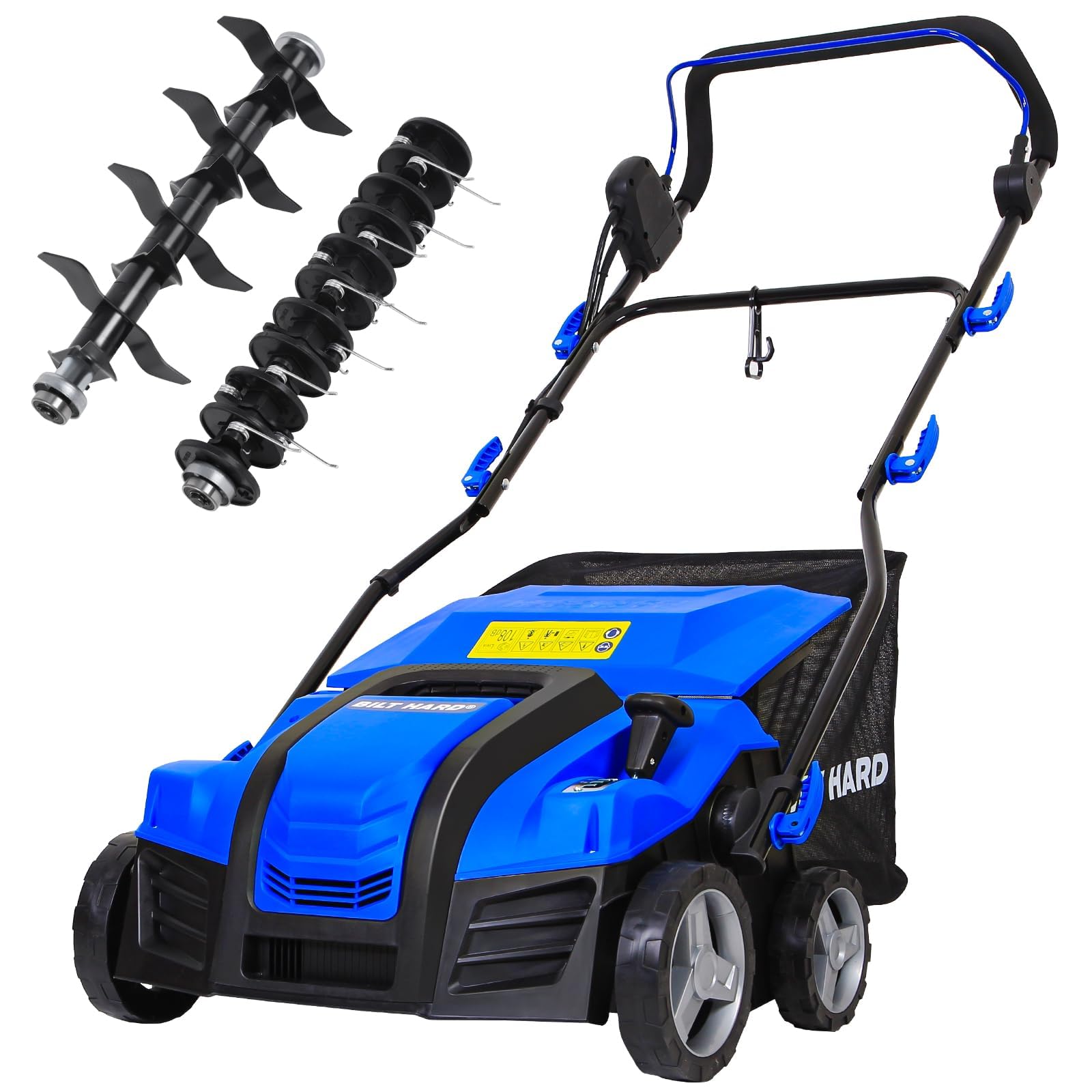
BILT HARD TIA-1002

Tight budgets

Our Score 9.0/10
Check Price

Worth Noting

  • Bag fills quickly under a heavy thatch load
Motor
15 amps, 3,300 RPM
Bag Capacity
14.5 gallons
Cutting Path
16 inches
Depth Control
5 positions, -0.47 to 0.24 in.
Read the full review

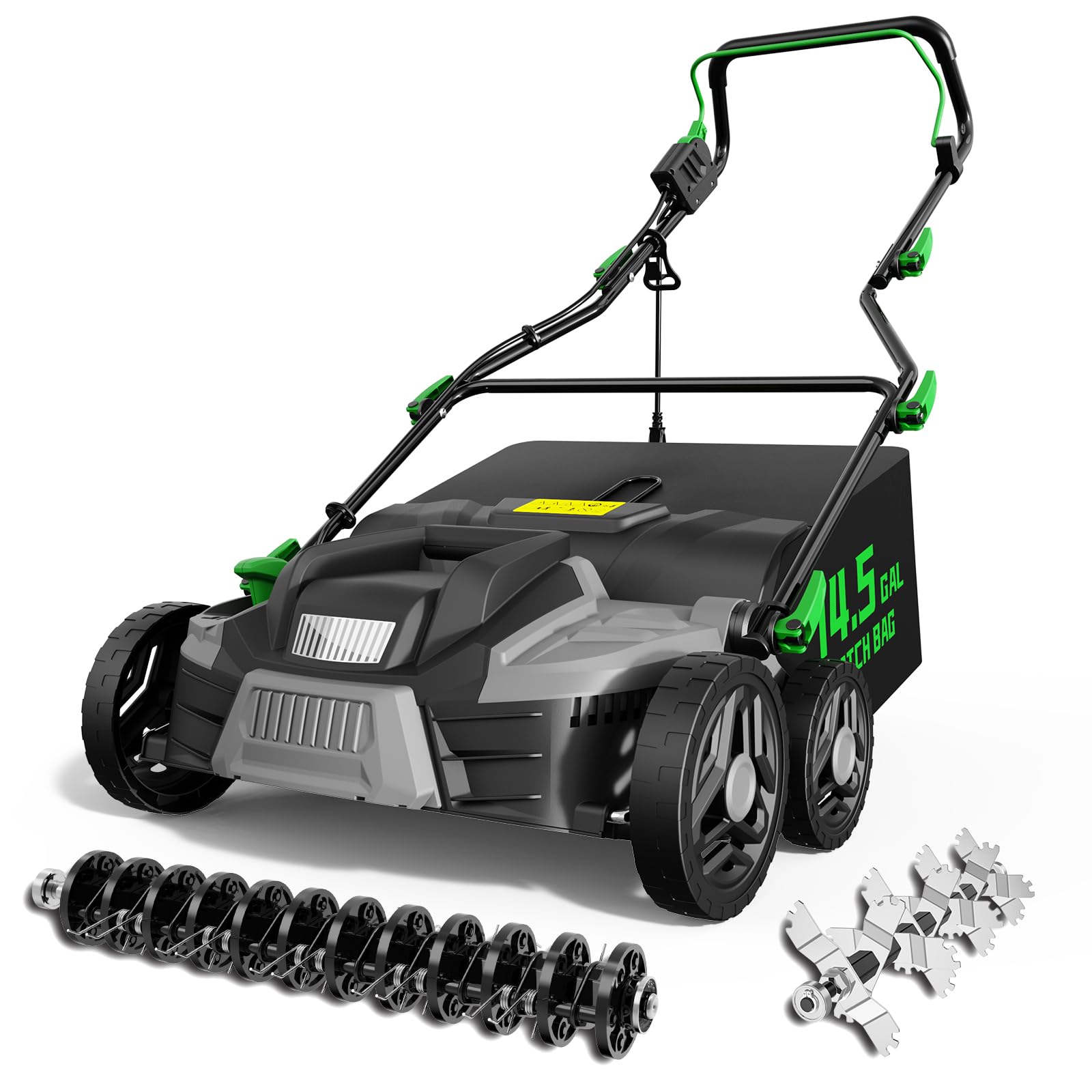
Sixteen inches of working width and a 15-amp motor for the least money in this group is the whole argument for the BILT HARD, and we think it holds up better than the price suggests. The 3,300 RPM motor, 20 spring-steel tines and 16-blade scarifier reel are the same recipe the midrange machines use, the five-position lever runs from light raking to roughly half an inch below grade, and the 14.5-gallon bag is as big as any here.

What the money doesn't buy is refinement. The plastic housing feels its price, and we minded the small front wheels more than the bodywork — rough, uneven ground becomes a matter of steering rather than gliding. None of that gets in the way of the job. It strips thatch, the scarifier reel bites when you drop the lever, and the folding handle and quick-lock knob get it onto a shelf afterward. For a first machine on a quarter acre, that is the right trade.

Bottom line: We point budget buyers here. It does the same 16-inch, 15-amp job as the midrange machines, with a bigger bag than most, for the least money in this group.

3

Greenworks 13-Amp 14-Inch

Greenworks 13-Amp 14-Inch

Small yards

Our Score 9.0/10
Check Price

Worth Noting

  • Bag fills fast on a big thatch load
Motor
13 amps, 3,200 RPM
Weight
28.7 lb
Cutting Path
14 inches
Depth Control
3 positions
Read the full review

Fourteen inches of cutting width sounds like a compromise until you're dethatching a lawn the size of a badminton court with a shed, two beds and a birdbath in the middle of it. The Greenworks is the small-yard machine here, and the narrowness is the point rather than a shortfall: 28.7 pounds, one of the lightest corded models in this group, a 13-amp motor turning 3,200 RPM, and a path that gets between obstacles without three-point turns.

We're fans of the quick-release heads. Swapping the dethatcher reel for the scarifier takes seconds with no tools, and the three-position depth lever is simple enough that you will actually change it rather than leaving it wherever it landed. The trade-off is 13 amps: on a thin layer of thatch it is plenty, but in matted, damp grass the motor works harder, and shorter shallower passes beat one heroic push. For a small lot, that's a fair bargain.

Bottom line: We hand this to small-lot owners: narrow enough to steer around beds, light enough to lift, and simple to switch over to scarifying.

4

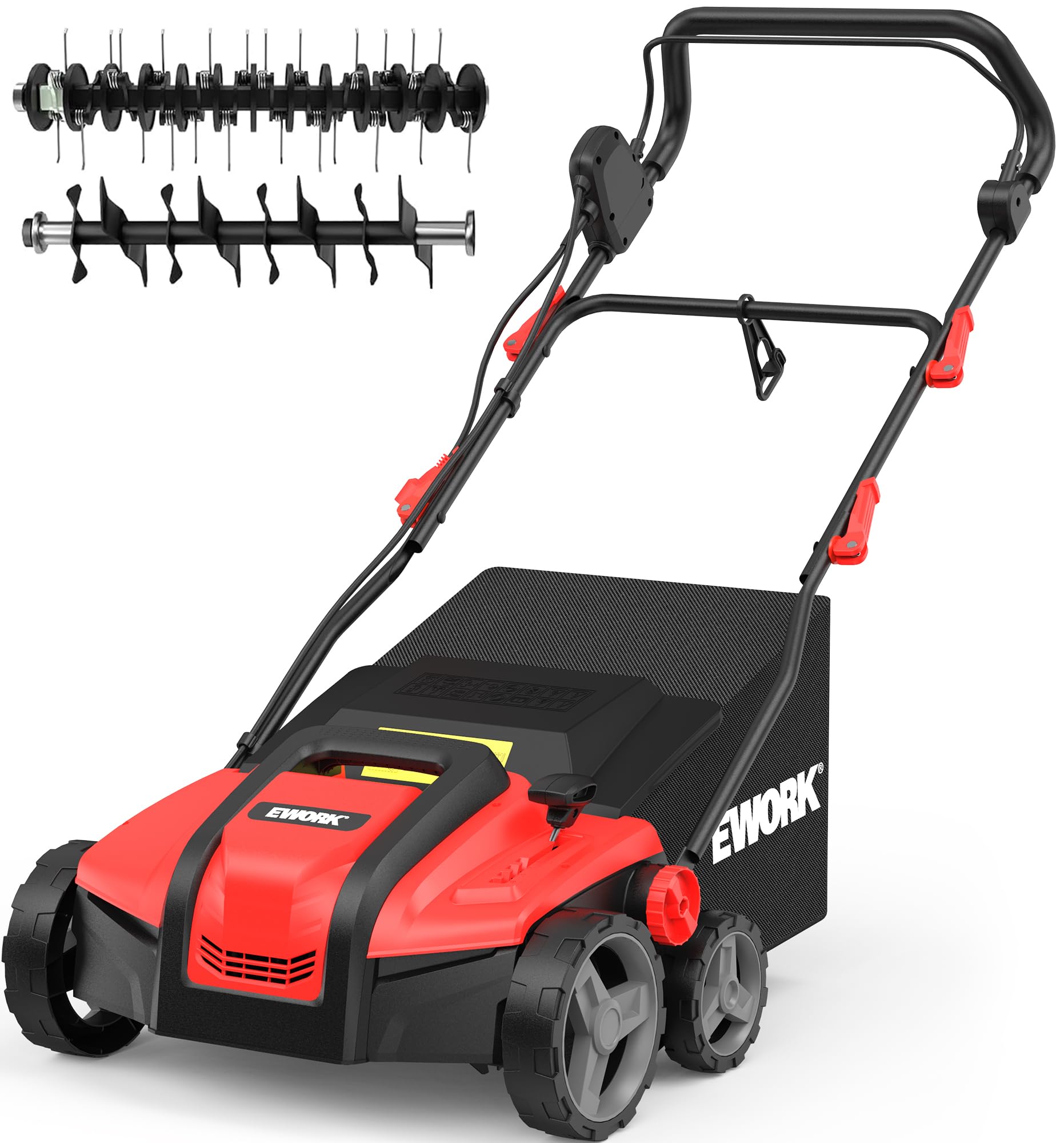
EWORK EK-ALS40A-R

EWORK EK-ALS40A-R

Wide passes

Our Score 9.0/10
Check Price

Worth Noting

  • 12-gallon bag is smaller than the rivals
Motor
15 amps
Warranty
1 year
Bag Capacity
12 gallons
Cutting Path
17 inches
Read the full review

Seventeen inches is the widest walk-behind path in this group, and on a big lawn that extra inch adds up over a few hundred passes. It's a modest advantage rather than a transformation, but it's a real one for a lawn with long, open runs and few obstacles.

The rest of the machine is familiar: a 15-amp motor, five depth positions on one lever, and a tool-free blade change for swapping the dethatching and scarifying reels. It weighs 28.7 pounds and carries a 12-gallon bag, which is noticeably smaller than the 14.5-gallon bags on the 16-inch machines.

The warranty is one year, the shortest in this group, and that is the number that gives us pause. Nothing in the design worries us — a 15-amp corded dethatcher is well-trodden engineering — but a single year of cover puts more of the risk on you than the WEN or the Westinghouse does.

The honest read is that an inch of extra width is a thin reason to give up a second year of warranty. Take this one if you've already decided you want the widest corded machine here and you're buying from a seller with a return policy you trust; otherwise the 16-inch machines are the safer money.

Bottom line: The widest walk-behind here, but a one-year warranty makes it a considered buy rather than the one we point most people to.

5

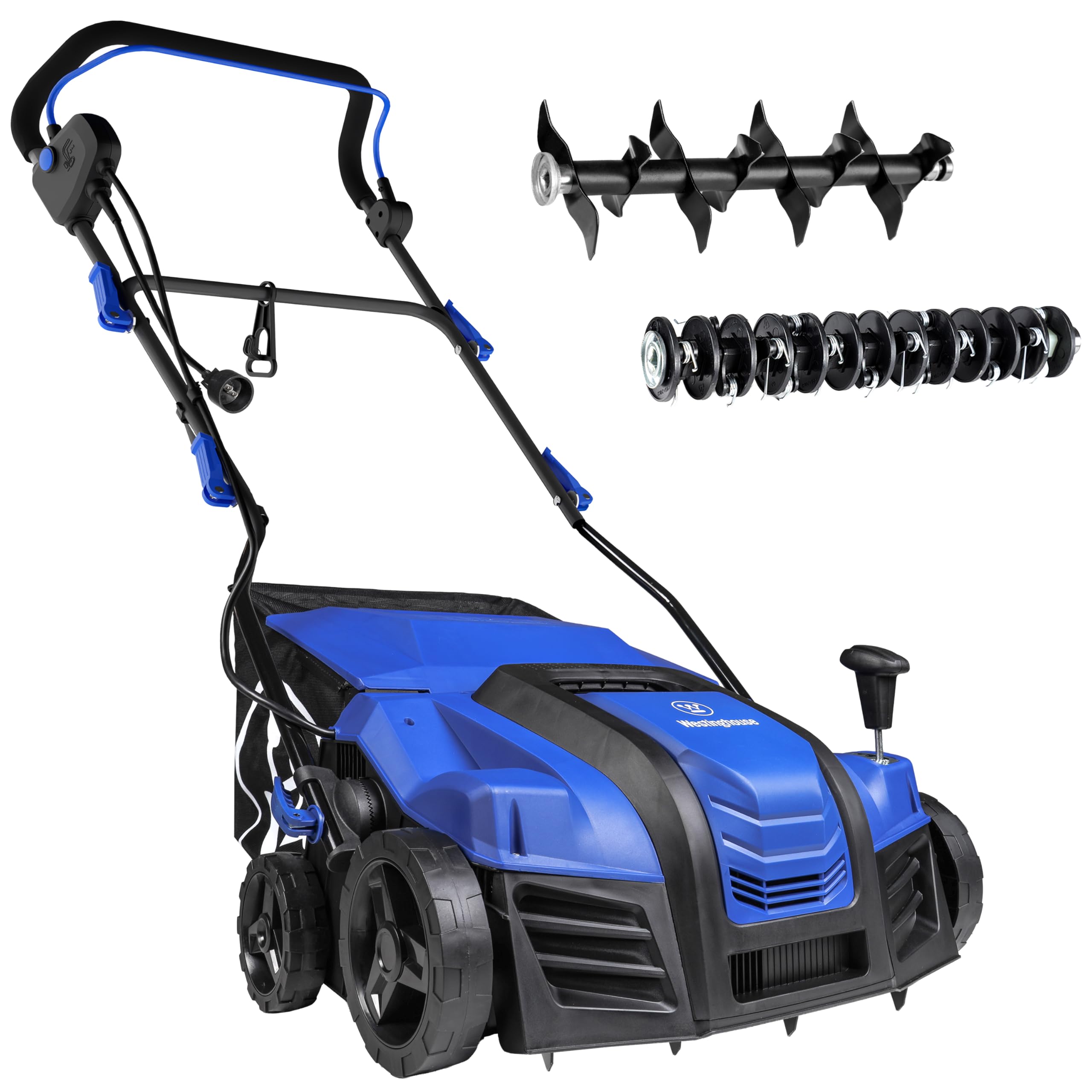
Westinghouse W16ADAC

Westinghouse W16ADAC

Storage and setup

Our Score 8.8/10
Check Price

Worth Noting

  • Not the most powerful 16-inch machine here
Motor
15 amps, up to 3,500 RPM
Weight
29.5 lb
Bag Capacity
14.5 gallons
Cutting Path
16 inches
Read the full review

Westinghouse built this one around the parts of dethatching nobody enjoys: getting it out, getting it going, and putting it away. At 29.5 pounds it is among the lightest corded machines here, the handle folds down, three height positions let you set the bar where your hands want it, and a center carry grip means one person can lift it out of a shed without hugging the dirty end.

The working end is conventional but well chosen. A 15-amp motor spins up to 3,500 RPM across a 16-inch path, 24 spring tines do the raking, and a 20-blade scarifier reel handles compaction. The five-position lever covers a half inch below grade up to a light quarter-inch pass, and the 14.5-gallon bag is as big as any 16-inch bag in this group.

The plastic body won't convince anyone it's a lifetime tool, but the two-year warranty covers the part most likely to fail, and the machine goes together quickly enough that assembly isn't an evening. For a lawn in the quarter-to-half-acre range, we rate a machine you'll actually wheel out of the garage above another half amp of motor you'll never use.

Bottom line: Our pick when the chore itself is the obstacle: light enough to carry, quick to fold away, and holding as much thatch as anything in its size class here.

6

TIECTOWN LM01

TIECTOWN LM01

Heavy thatch

Our Score 8.8/10
Check Price

Worth Noting

  • Bag fills fast and doesn't always catch the thatch
  • Highest price in this group
Motor
15.5 amps peak, 3,600 RPM
Warranty
3 years
Bag Capacity
14.5 gallons
Cutting Path
16 inches
Read the full review

The headline is the motor: 15 amps nominal, 15.5 peak, 3,600 RPM through a 16-inch path, which is the highest figure in this group. Then there is the warranty — three years, the longest here — and that matters more than the amp number when you consider how hard these machines get worked.

We could feel the difference in thick, wet thatch, where the 13-amp machines bog and skip and this one keeps pulling. The five-position lever has separate ranges for the dethatching and scarifying reels, which takes a little reading to get used to, and the quick-release blade system turns a reel swap into a thirty-second job instead of a screwdriver session.

So who is it for? A thick, established lawn that has been neglected, where the extra amperage and the three-year cover earn their keep over several seasons. On a small, tidy lawn you dethatch once a year, the cheaper 16-inch machines do the same work and you will never notice the difference.

It is also the heaviest-hitting version of a familiar layout: a folding handle, a waterproof plug, and a cord clip that stops the cable unplugging itself mid-pass. Those small details are why it stays in the roundup rather than being written off as the expensive one.

Bottom line: The machine we choose when a lawn has been let go: the highest power and the longest warranty here, with a bag that will test your patience.

7

AugFir 48-Inch Tow Behind

AugFir 48-Inch Tow Behind

Riding mowers

Our Score 8.2/10
Check Price

Worth Noting

  • Requires a riding mower to tow it
Tines
20 spring steel
Weight
33.9 lb
Tray Capacity
150 lb
Working Width
48 inches
Read the full review

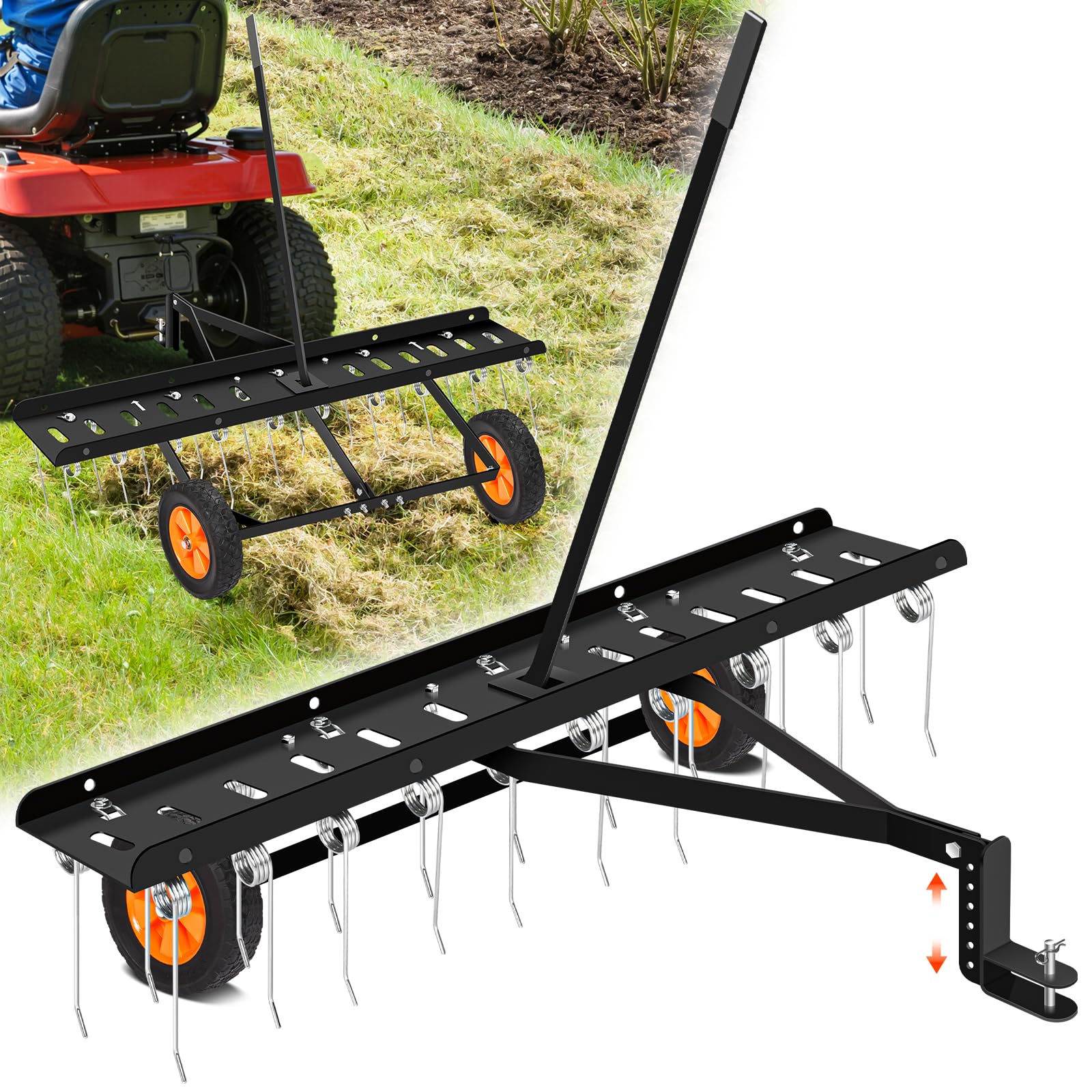
Forty-eight inches of working width and 20 spring-steel tines in two independently flexing rows: that's three times the swath of the walk-behind machines here, towed behind a riding mower rather than pushed. On an acre or more, that is the difference between an afternoon and a fortnight of evenings.

The design suits the setting. Two height settings let you carry the tines over a driveway or gravel, an adjustable hitch lines up with different drawbars, and the 150-pound tray takes weight when the tines need help biting into a matted layer. At 33.9 pounds it hangs on a wall between uses.

The tines are the part to watch. They take the entire load of the pull, and rough ground, exposed roots and half-buried rocks are what shorten their life, so run the mower slowly and raise the tines over gravel. Fixed hitch height won't match every rider either, so line it up against your drawbar before the first run rather than after.

Our take is simple: this is the right tool for a big property with a rider, and the wrong one for a suburban lot where a 16-inch walk-behind finishes the job. It costs less than anything else here, and as a second attachment on a mower you already own, that's a persuasive combination.

Bottom line: This is the one for acreage and a riding mower: three times the width of the walk-behinds, with no motor, cord, or bag to maintain.

8

Greenworks 40V DHF410

Greenworks 40V DHF410

Cord-free work

Our Score 8.0/10
Check Price

Worth Noting

  • Battery and charger not included
Weight
26.5 lb
Cutting Path
14 inches
Power Source
40V battery, tool only
Depth Control
5 positions
Read the full review

Tool only means exactly that: no battery, no charger, just the 26.5-pound machine. If you're already on Greenworks' 40V platform, that's the point — packs from your trimmer and blower will run it, and there's no cord to drag across a lawn, around a tree, or through the bed you're trying to rescue.

The layout follows the corded models: a 14-inch path, five depth positions covering both scarifying and dethatching ranges, and quick-swap reels. It is light enough to carry one-handed up a step, the folded handle stores easily, and the three-year warranty matches the best in this group.

Runtime is the honest limitation. A 40V pack won't clear a large lawn in one go, and the bag fills long before the battery drains, so you'll be stopping either way. On a small lot with a spare pack on the charger, we think that's a fair trade for never thinking about a cable. On half an acre it isn't, and the corded machines here do more work for less.

Bottom line: The cordless pick, and only for small lawns: no cable to manage, but you bring the battery and it won't finish a big yard on one pack.

How We Tested the Best Dethatchers

The shortlist came from spec sheets and a lot of owner reviews, filtered by power source, cutting width, bag capacity, and price; anything that only suited a lawn the size of a postage stamp, or that needed a tractor to pull, was out. Twelve made the cut — manual rakes, corded electric scarifiers, cordless models, and one tow-behind. Each one got assembled from the box on a Saturday morning with a stopwatch running and nobody helping, since setup time and included tools tell you a lot about what the rest of the ownership will feel like.

Then we ran them across three yards for one full growing season, about eight months from spring green-up through fall cleanup: my quarter-acre with heavy shade thatch, a teammate's thicker front lawn with a slope and two buried sprinkler heads, and a small city lot where storage mattered as much as performance. Every machine did a dry pass and a damp pass a day after rain at a normal walking pace, and we watched whether the depth settings actually changed anything, whether it pulled the brown mat up or just skimmed the surface, and how much healthy green grass came along for the ride.

Bag handling got its own routine, because that's where most of a Saturday disappears. We timed how far we got before the bag needed emptying, dumped each load into a bucket and weighed it to see how real-world capacity compared to the stated number, and noted how quickly the bag filled and how easily it came off and went back on when it was heavy. Cordless models ran until the battery died on a lawn we'd deliberately let get shaggy. Durability we checked after every session — tines, belts, wheels, and a close look at the housing — and again at the end of the season, alongside a plain reckoning of whether the cheapest machines did the job as well as the priciest.

How to Choose Dethatchers

Corded, Cordless, or Tow-Behind

Most buyers want a corded walk-behind, and that's where the value sits: a 15-amp corded machine costs a fraction of a battery platform and never runs flat. The catch is the cord itself. You will spend more time thinking about the cable than the lawn if it's tangling around beds and trees, and the distance from your outlet shapes where you start and how far you get.

Cordless makes sense only if you already own the batteries, since most cordless dethatchers are sold tool-only and the pack and charger are part of the real cost. Tow-behind is a different purchase altogether: it earns its keep only with a riding mower and half an acre or more to work.

Match the Width to the Lawn

Width decides how many passes you make, and it is where the biggest differences in this group sit: 14 inches for tight lots with beds and trees, 16 inches for a normal suburban lawn, 48 inches behind a rider. Wider isn't automatically better. A 16-inch machine on a cluttered quarter acre means more steering and more edge trimming, and the extra width rarely pays for itself in a garden full of obstacles. Long, open lawns are the exception where every inch compounds.

Power, Depth, and the Second Head

Amps and RPM tell you how the machine behaves in thick thatch, but the depth lever tells you what it can actually do. Five positions with a range that crosses below grade gives you a light maintenance rake and a real scarifying cut from one machine; three positions usually means a compromise somewhere.

Start shallow whatever you buy. A deep first pass on thin turf tears grass out by the roots rather than lifting dead material, and it's the fastest way to make a lawn look worse for a month. Scarifying is for compaction and surface mat, not for a thatch layer you could mow off.

Plan Around the Bag

Every bag in this class fills fast, because thatch is bulky and these machines pull a lot of it. A 14.5-gallon bag buys more time than a 12-gallon one, but not much, so decide up front whether you're bagging at all. Running bagless and blowing or raking the thatch into rows is faster on a big cleanup and lets you see what you've pulled; bagging keeps the lawn tidier and saves a second pass. Either way, have a tarp or a green bin within reach.

Build, Warranty, and Storage

These machines are mostly plastic over a steel frame, and the parts that fail are the motor and the tines. Overload protection is worth having, because it cuts power before a heavy pass cooks the motor, and a two- or three-year warranty tells you something about the maker's confidence. Check the folded footprint against your storage before you order: a folding handle is the difference between a shelf and a corner of the garage floor.

Frequently Asked Questions

Final Verdict

The WEN DT1516 is what we tell most people to buy: a 16-inch, 15-amp machine with two heads that both work, a depth range that covers maintenance and rescue, and a two-year warranty, at a price in the middle of this group. If the bag stops are what you hate, the Westinghouse holds the same 14.5 gallons in a lighter, easier-to-store body for a little more. And if your lawn comes with a riding mower attached to it, the tow-behind AugFir covers three times the width for less money again.