Soil & Fertilizer

Best Compost Bins of 2026

Composting sounds noble until the kitchen starts to smell like a produce aisle that lost power. A good bin has to do more than hold scraps: it should keep odors in, stay sealed against fruit flies and curious pests, and be small enough to fit where you actually prep food—without looking like a bucket you'd hide in the garage. I've kept a countertop crock on my counter for years, and my team has now spent seven months living with 14 compost bins, from countertop models to outdoor tumblers, to see which ones earn their footprint.

The differences show up in the details: a lid that seals with a soft gasket instead of a loose flap, a size that holds a week of scraps without becoming a science experiment, and corners you can actually wipe clean. Appearance matters too—if it's ugly, you'll banish it to the garage and stop using it. The bins below are the ones that stayed in rotation, not just the ones that looked best on a product page.

1

RED FACTOR Premium Compost Bin

Top Pick
RED FACTOR Premium Compost Bin

Open kitchen counters

Our Score 9.4/10
Check Price

Worth Noting

  • Premium finish costs more than basic bins
Filters
Dual charcoal filters, spare included
Capacity
5 liters
Material
Stainless steel
Dimensions
8.7"L x 7.3"W x 10.8"H
Read the full review

The copper finish is the first thing anyone notices, but the dual charcoal filters are why the RED FACTOR holds its place on a counter where looks matter. The dome lid sits over a stainless steel pail, and the 5-liter body is compact enough to leave room beside a coffee maker. A spare set of filters comes in the box, which is a nicer welcome than most bins offer. The matte copper is the kind of finish that makes guests ask what the container is for before they realize it holds scraps.

We were struck by how much the matte copper reads as a countertop canister rather than a waste bin, and the lid lifts off cleanly for emptying. The dual filters take odor control more seriously than the single-filter bins here, and the stainless body feels solid in the hand. The trade-off is filter upkeep: the spare set eventually runs out, and replacements are part of ownership. If the bin lives in a cabinet, the OXO or Blue Ginkgo makes more sense; if it sits in plain sight, this is the one we reach for.

Bottom line: The RED FACTOR is the one we choose when the bin will sit in plain sight; the copper finish, dual filters, and spare set justify the step up.

2

OXO Good Grips Easy-Clean Compost Bin

OXO Good Grips Easy-Clean Compost Bin

Everyday kitchen scraps

Our Score 9.2/10
Check Price

Worth Noting

  • Lid seal is not airtight
Lid
Stay-open, soft-close
Capacity
1.75 Gal/6.62 L
Material
Plastic
Dimensions
8.3"L x 10.15"W x 12"H
Read the full review

The detail that makes the OXO Easy-Clean worth a permanent spot by the cutting board is the rim that tucks a liner out of sight. The 1.75-gallon body is generous for a countertop bin, and the soft-close lid flips up and stays up while you scrape. The interior is smooth plastic with no inner pail or filter housing to clean around, and the oval footprint leaves room beside a sink. Even the bag looks intentional: the liner disappears under the rim instead of hanging over the side.

In daily use, the stay-open lid is the feature we kept coming back to: you can hold a cutting board with one hand and push scraps in with the other. The bin works without charcoal filters, and that is part of its appeal; there is nothing to buy or replace. The smooth interior wipes out with a soapy cloth, and the oval shape is easy to rinse in a standard sink. We also like that the liner hides under the rim, which makes the bin look tidier than most plastic buckets. It is not the bin for a household that lets scraps sit for a week; empty it every few days and the filter-free design holds up.

Bottom line: For most kitchens, the OXO Easy-Clean is the compost bin we recommend: easy one-handed scraping, a generous 1.75-gallon body, and no filters to buy.

3

Epica Kitchen Compost Bin

Epica Kitchen Compost Bin

Odor-sensitive kitchens

Our Score 9.2/10
Check Price

Worth Noting

  • Lid can need two hands to open
  • Hand-wash only; filter replacements add cost
Capacity
1.3 gallons
Material
Stainless steel
Dimensions
7.16"L x 7.16"W x 11"H
Odor Control
Replaceable charcoal filter
Read the full review

If you want the compost bin to look like a small stainless canister rather than a plastic bucket, the Epica is the one we point to first. The 1.3-gallon body is one molded piece of stainless steel, with a charcoal filter tucked into the lid and a smooth interior that wipes down without seams or an inner pail. The cylindrical shape is narrow enough for a counter edge, and the steel resists scratches and leaks.

The filter does the quiet work here: it sits under the lid and helps with the odors that build up between trips outside. The 1.3-gallon capacity is sized for a few days of peels and coffee grounds in a two-person kitchen, and the wide opening takes a whole cucumber end without a fight. The lid seats securely, so the bin feels closed rather than merely covered. We found the one-piece interior easier to rinse than bins with a separate plastic bucket, because there is no gap for liquid to hide in.

This is the pick we recommend for odor-sensitive kitchens where the bin will be visible. It asks for a little more care than the OXO, but we think the trade is worth it if stainless steel and a charcoal filter are the two things you want most. The filter is replaceable, so this is not a set-and-forget bin; it is the polished one.

Bottom line: Choose the Epica if odor control matters more than one-handed lid operation; its charcoal filter and stainless body earn the space.

4

Blue Ginkgo Kitchen Compost Bin

Blue Ginkgo Kitchen Compost Bin

Small households

Our Score 9.2/10
Check Price

Worth Noting

  • Inner basket handle feels flimsy
Capacity
2.6 liters
Cleaning
Dishwasher-safe
Material
Polypropylene
Dimensions
7.9"L x 7.9"W x 8.6"H
Read the full review

A 0.69-gallon bin sounds too small until you picture it in a one- or two-person kitchen, where a day of peels and coffee grounds is a quick trip to the outdoor pile. The Blue Ginkgo is a compact 2.6-liter square that fits on a counter, under a sink, or even in the fridge when you need scraps to stay cool. The green polypropylene body is light enough to move with one hand, and the square shape tucks into corners better than a round bucket.

The filter-free design is the practical part: the lid seats tightly without a charcoal cartridge, and the smooth interior wipes clean. The inner basket catches scraps and lets liquid drain to the bottom, so emptying is a lift-and-carry job rather than a scrape. It is dishwasher-safe, which makes a weekly reset easier than hand-washing a stainless body. The basket also keeps a wet melon rind from sitting in its own juice until you take it out.

The basket has a small handle, and the square shape uses counter space efficiently. The lid stays put without a latch, which matters in a small kitchen where you are opening it often. We also appreciate that there is no filter to buy; the seal does the work as long as you empty it regularly. The plastic feels sturdier than its light weight suggests.

This is the compact pick we recommend for one or two people, especially if you want no filters to buy. It is not the bin for a family that fills a gallon in a day; the 0.69-gallon capacity is the boundary. Empty it every day or two and the tight lid keeps odors in check.

Bottom line: For a one- or two-person kitchen, the Blue Ginkgo is the compact, filter-free bin we recommend; its draining basket makes emptying neat and quick.

5

Tiyafuro Hanging Compost Bin

Tiyafuro Hanging Compost Bin

Under-sink spaces

Our Score 9.0/10
Check Price

Worth Noting

  • Lid does not reliably stay open
Capacity
2.4 gallons
Material
Polypropylene
Mounting
Hook and adhesive hooks
Dimensions
10.2"L x 6.3"W x 11.6"H
Read the full review

The hook and adhesive hook are the first things to notice: this is a bin you can hang inside a cabinet door rather than give up counter space for. The 2.4-gallon body is larger than most of the countertop bins here, and it can also stand on its own when you want it closer to the cutting board. A hook, two adhesive hooks, and a pack of liners come in the box.

For a small kitchen, this is the space-saving pick we recommend. Hanging it inside a cabinet keeps scraps off the counter but still within reach, and the 2.4-gallon capacity means fewer trips outside than a 1.3-gallon bin. The lid opens on a hinge and the body is light enough to lift down with one hand when it is full. The rectangular shape is narrow enough to fit between shelves and deep enough to take a pile of carrot peels.

The mounting hardware is the useful part, but it also means you need a door or wall that can take the hook without interfering with closing. The larger capacity suits a family that generates a lot of peels, and the included bags let you set it up without a separate shopping trip. It can sit on the counter when you are prepping a big meal and hang out of the way afterward.

Bottom line: If counter space is tight, the Tiyafuro is the hanging bin we recommend; it holds 2.4 gallons and mounts with the included hooks.

6

PERFNIQUE Countertop Compost Bin

PERFNIQUE Countertop Compost Bin

Budget countertop pick

Our Score 9.0/10
Check Price

Worth Noting

  • Filter can work loose in the lid
Filters
Two carbon filters
Capacity
1.3 gallons
Dimensions
7.5"L x 9.9"W x 7.9"H
Inner Pail
Removable plastic pail
Read the full review

The removable plastic pail is the practical reason to choose the PERFNIQUE over a plain metal bucket. The outer body is a cream metal shell with a round shape and a lid that holds two carbon filters; the inner pail has a small handle and lifts out for emptying. The plastic pail also keeps wet scraps from sitting against the metal, which is the difference between a quick rinse and a scrub.

The 1.3-gallon capacity is enough for a few days in a small kitchen, and the two filters are a plus at this end of the group. The lid sits on top rather than latching, so it is easy to lift with one hand. We found the inner pail makes the weekly dump neater than a bag-lined bucket, because you can carry the scraps out without the whole metal shell.

We think this is a strong budget pick for a visible countertop, especially if you want the look of metal without a stainless price. It is not the sturdiest bin here, but the cream finish is the detail that makes it feel more considered than a plain utility bucket. The inner pail is the part to handle carefully when it is full.

Bottom line: The PERFNIQUE is our budget pick for a visible countertop: the cream metal body, removable pail, and two filters make it easy to live with.

7

KIBAGA Kitchen Compost Bin

KIBAGA Kitchen Compost Bin

Tiny kitchens

Our Score 8.8/10
Check Price

Worth Noting

  • Lid vents can let fruit flies in
Handle
Wooden carry handle
Capacity
1.1 gallons
Dimensions
7"L x 7"W x 10.2"H
Odor Control
Charcoal filter compartment
Read the full review

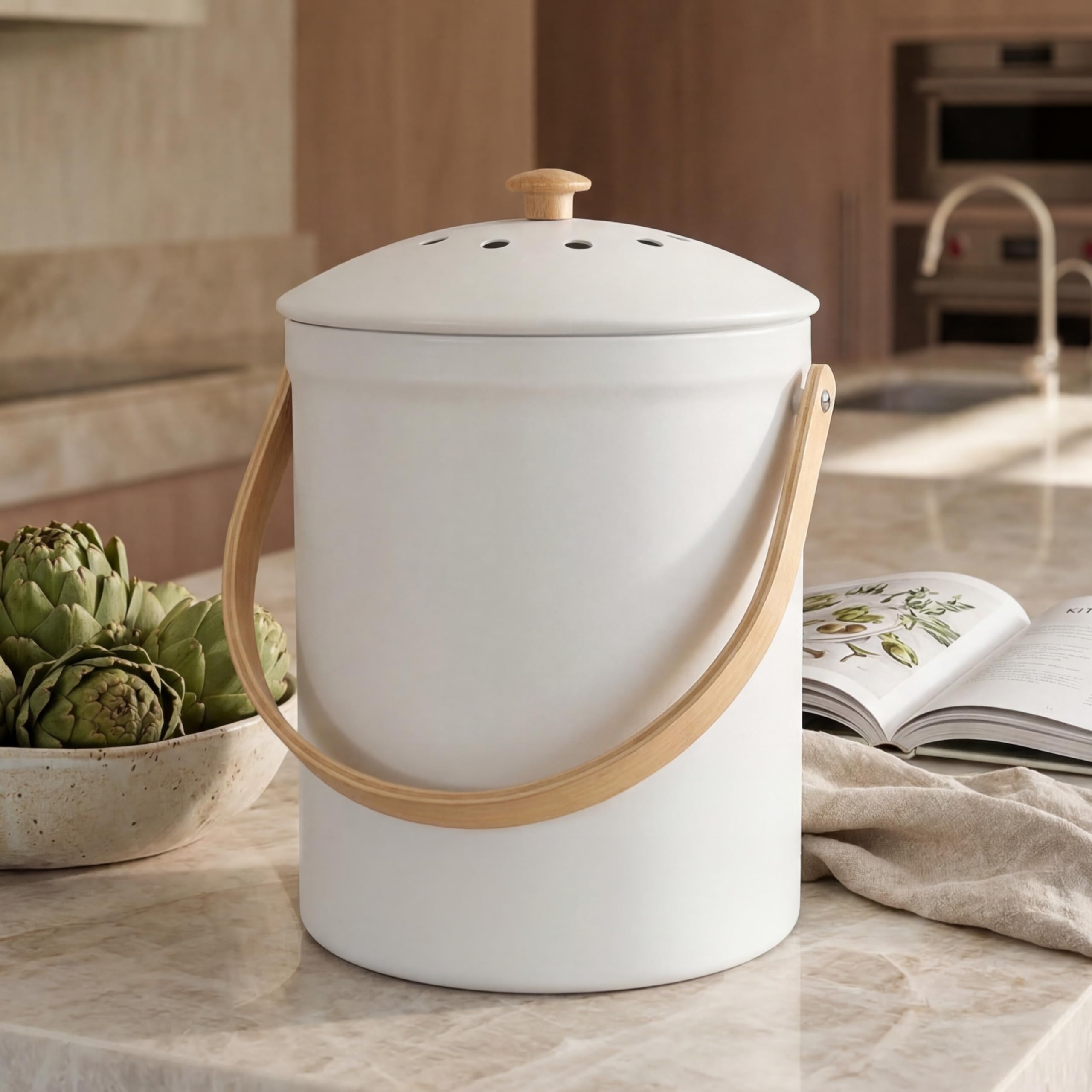
The beige finish and wooden handle make the KIBAGA look more like a kitchen canister than a compost bucket, which is exactly why it earns a spot in a small kitchen. The 1.1-gallon body is compact enough for a narrow counter, and the lid has a charcoal filter compartment plus small air holes. The wooden knob is easy to grip with messy hands, and the round body wipes down without deep corners.

The filter compartment is the main odor tool, and the wooden handle makes the bin easy to carry outside. The 10.2-inch height leaves room under a cabinet, and the round shape is easy to wipe. It is a small-capacity bin, so it suits light prep rather than a big family. We found the size right for a day or two of vegetable scraps, not a week of serious cooking.

The painted finish is the part to watch; a few lids have rusted, so dry the rim after rinsing. The wooden handle and beige finish are still the details that make it feel at home on a counter. The charcoal filter compartment is easy to open, and the air holes keep the lid from turning into a sweaty seal.

This is the compact style pick we recommend for a tiny kitchen or a counter where the bin stays visible. It is not the bin for heavy daily cooking, and the 1.1-gallon capacity is the limit. If you want a larger body with the same furniture-like look, the RED FACTOR is the step up.

Bottom line: The KIBAGA is the compact style pick for a tiny kitchen or a counter where the bin stays visible; its vented charcoal lid handles light scraps.

8

simplehuman Compost Caddy

simplehuman Compost Caddy

simplehuman trash cans

Our Score 8.6/10
Check Price

Worth Noting

  • Docks only to compatible simplehuman cans
Lid
Magnetic soft-seal
Capacity
4 liters
Dimensions
9.6"L x 5.5"W x 8.7"H
Compatibility
simplehuman rectangular or slim liner rim cans
Read the full review

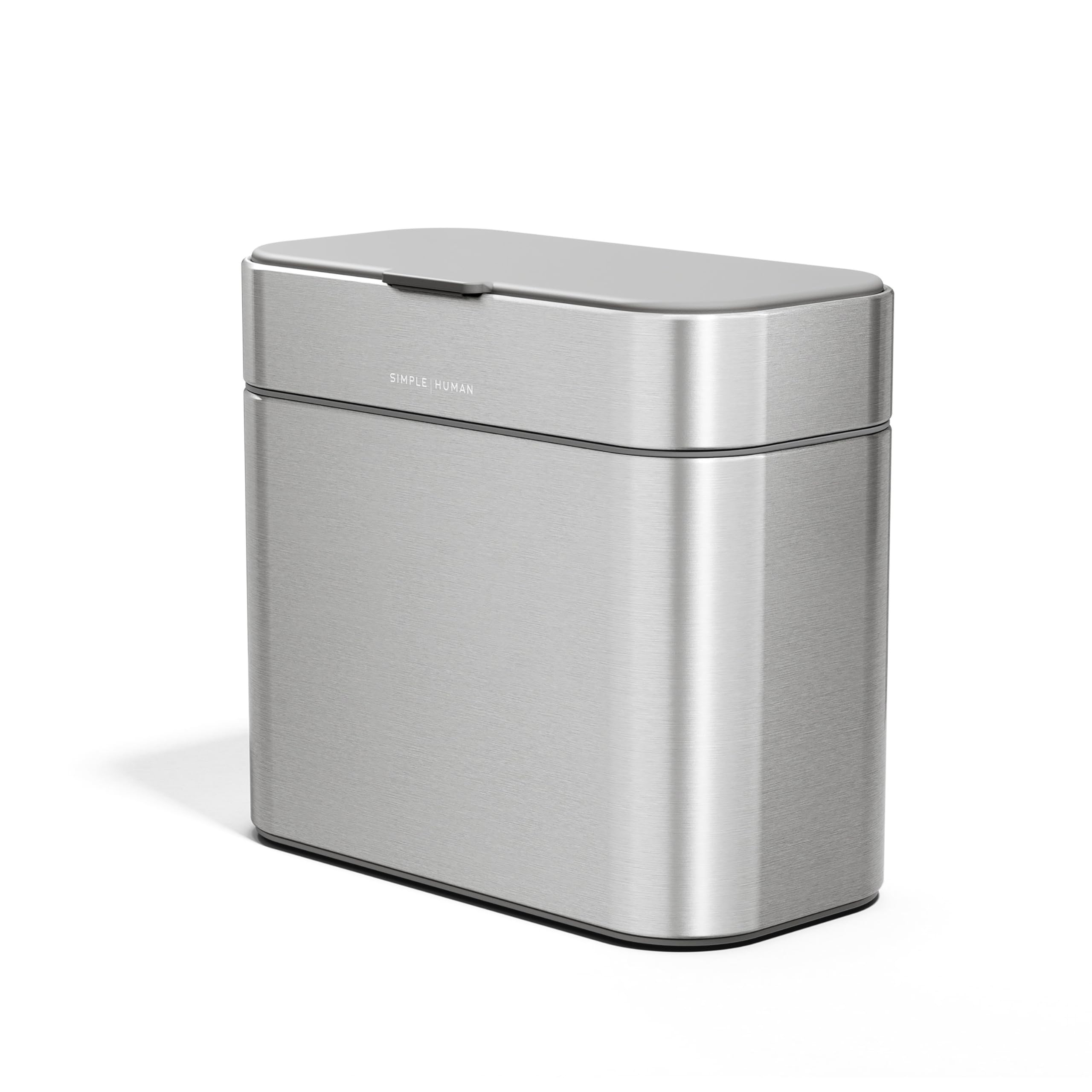
The magnetic dock is the whole idea: if you already own a compatible simplehuman trash can, this caddy turns its side into a compost station. The 4-liter caddy lifts off the dock for prep, has a removable inner bucket, and comes with a 30-pack of custom-fit compostable liners. It is the least bin-like solution here, because it disappears into a can you already own. The brushed stainless finish matches the can instead of competing with it.

On the counter, it holds a day or two of vegetable trim rather than a week of scraps, and the soft-seal lid closes with a magnet instead of a latch. The inner bucket lifts out by its rim, and the included liners fit without a skirt of plastic hanging over the edge. We appreciate the detachable bucket for rinsing, but the lid hinge and custom liners are the long-term watch points. This is a premium add-on for a specific setup, not the default for a kitchen starting from scratch.

Bottom line: The simplehuman caddy is the one to get if you already own a compatible simplehuman can; it turns the side of the bin into a convenient scrap station.

How We Tested Compost Bins

To build the shortlist, I started with bins shoppers could actually live with: countertop crocks, under-sink models, and outdoor tumblers, then filtered by capacity, lid design, material, and replacement-part availability. We landed on 14 units and used each one for seven months, rotating them through the same routine: scraping plates after dinner, adding coffee grounds and eggshells, and emptying when full.

In the kitchen, I checked whether the lid sealed with a gasket or just rested in place by closing it and leaving it overnight with melon rinds; in the morning I noted smell and any fruit flies around the rim. I wiped the interior with a damp cloth and a soft brush, paying attention to corners and lid grooves, and noted whether residue stuck or came away in one pass. Size was judged by how much prep waste each bin held before emptying and whether it fit under the sink, on the counter, or beside the door without blocking traffic. Appearance got a real-world test on my counter, not in a product photo: I noted whether fingerprints, scratches, and stains showed.

For outdoor and garage use, I checked pest resistance by setting bins on the porch and near the garage, watching for gnats, ants, and rodents after adding fruit scraps, and inspecting lid seams and base vents for gaps. Durability came down to hinge action, latch tension, and how the material held up after being left in sun and rain and rinsed repeatedly. Functionality meant the difference between a bin that was easy to open one-handed with scraps in the other hand and one that required a wrestling match.

How to Choose Compost Bins

Match Capacity to Your Prep and Emptying Habit

A countertop bin is a holding tank, not a compost pile, so the right size is the one you can empty before it turns. For one or two people, a 0.69-gallon bin like the Blue Ginkgo is enough for a day or two of peels, and it fits in the fridge if you want scraps to stay cool. Busier kitchens are better served by 1.3 to 1.75 gallons, which buys a few more days between trips. If you cook for a family, the 2.4-gallon Tiyafuro reduces the number of trips outside, but it takes up more room.

Measure the spot before you fall for a shape. A bin that crowds the sink is one you move every time you fill a pot, and a tall bin can block a cabinet door. The footprint matters more than the gallon figure on a narrow counter.

Decide Whether You Want a Filter

Charcoal filters absorb some of the odor that builds between emptyings, but they do not replace regular emptying. The Epica and RED FACTOR put the filter in the lid, which keeps the cartridge out of the scraps and makes replacement straightforward. Filter-free bins like the OXO and Blue Ginkgo rely on a close-fitting lid and prompt trips outside. We lean toward a filter if the bin sits in a living area or if you are sensitive to kitchen smells; otherwise, the simpler bin is easier to live with.

The hidden cost is the filter itself. A replaceable cartridge is an ongoing purchase, so check that spares are available before you commit. A filter that is hard to seat or falls out is worse than no filter at all.

Look at the Lid and Emptying System

The lid is what you touch every time you prep, so operation matters more than the hinge spec. A stay-open lid, like the one on the OXO, lets you scrape with one hand; a secure lid that needs two hands is more deliberate but can be worth it for odor control. An inner pail or basket, as on the Blue Ginkgo and PERFNIQUE, makes emptying cleaner because you carry the scraps rather than the whole shell.

Check how the liner stays put. A rim that tucks the bag out of sight looks neater, while a simple open bucket is easier to rinse. If you hate touching scraps, a removable inner bucket is the feature to prioritize.

Check Materials and the Parts That Fail

Stainless steel resists scratches and wipes down nicely, but it is not automatically tougher. The weak points on these bins are the lid hinge, the handle, and the seam where the metal meets the base. Plastic bins are lighter and quieter, and a removable plastic pail can protect a metal shell from wet scraps. We prefer a simple hinge that feels solid to a long feature list attached to a flimsy lid.

Run a finger around the rim and look at the handle attachment before you buy. Those are the places where a bin starts to leak, crack, or drop its load.

Measure for Placement Before You Buy

Countertop, under-sink, hanging, and docked bins solve different space problems. A countertop bin needs a clear landing zone beside the cutting board; an under-sink bin needs cabinet clearance and a door that closes around the hook. The Tiyafuro hangs from a cabinet door, while the simplehuman caddy only docks on a compatible simplehuman rectangular or slim liner-rim can.

Measure the opening, the door swing, and the height under the shelf. If you plan to hang a bin, make sure the door still closes and the bin clears the shelf when you lift it out.

Frequently Asked Questions

Final Verdict

Start with the OXO Good Grips Easy-Clean if you want the simplest everyday bin: the stay-open lid, bag-tucking rim, and smooth interior make prep and cleanup easy, and there are no filters to buy. If odors are the deciding issue, the Epica's charcoal filter and stainless body are worth the extra care. For a compatible simplehuman trash can, the caddy is the one that disappears into your existing setup; otherwise, the Blue Ginkgo is the compact filter-free choice.