Hatching Time Formex SnapLock
Top Pick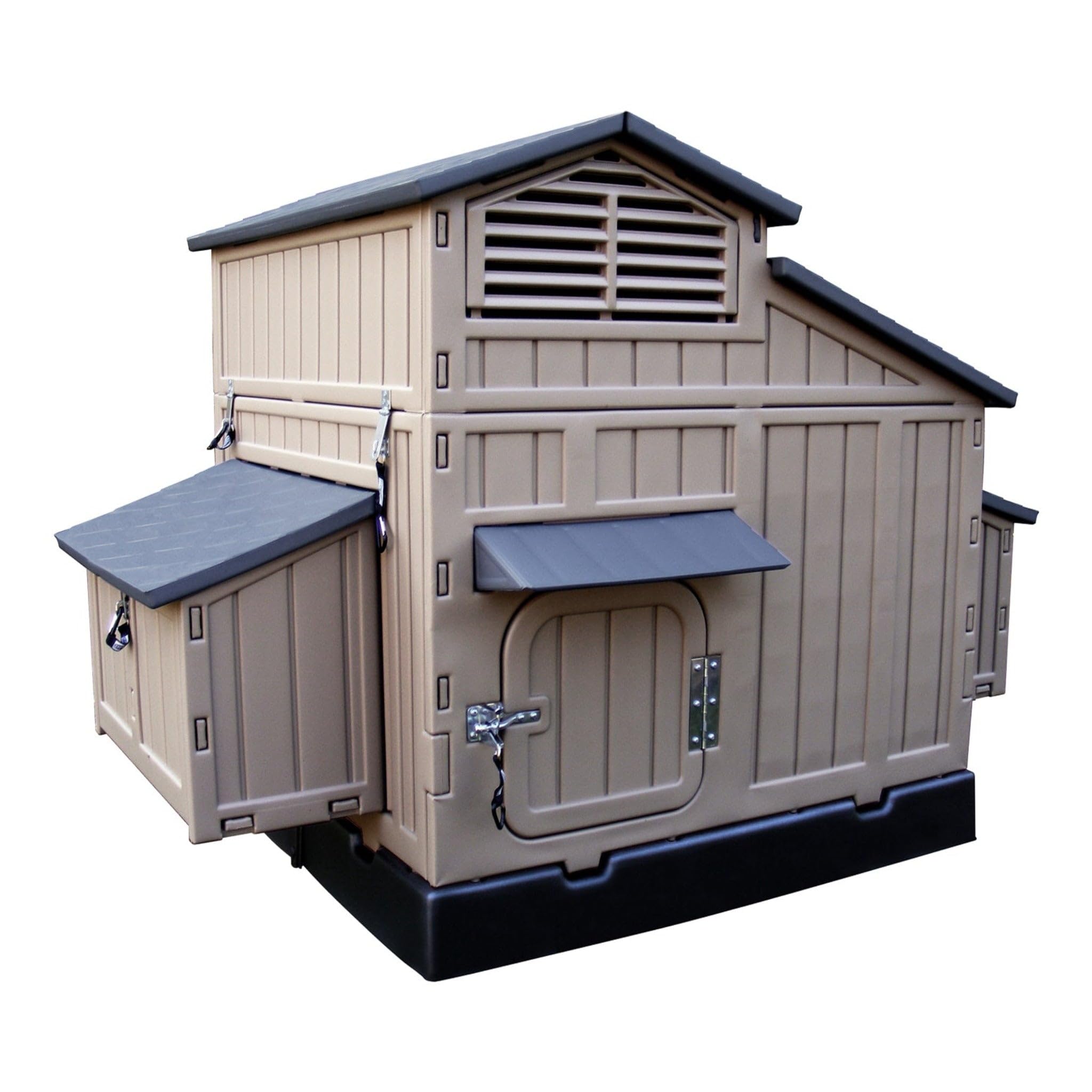
What We Like
- Snaps together with no tools
- Double-wall plastic resists rot and rust
- Pull-out tray and four nest boxes
Worth Noting
- Priciest coop in this roundup
- Run is sold separately
- Capacity
- 4-6 large hens
- Cleaning
- Pull-out litter tray
- Material
- Double-wall polyethylene
- Footprint
- 64 x 39 x 42 in
Read the full review
This is the priciest coop in the roundup, and it's still the one we recommend first to most backyard keepers. The Formex SnapLock is molded double-wall polyethylene rather than wood or steel, which takes rot and rust out of the equation entirely — the two failures that end most coops in a wet climate. Ours has taken a full season of weather and a hose-down, and it still looks the way it did the day it went together.
Snapped together is literal. The panels lock into one another with no tools, and the whole box goes up in an afternoon. More useful is that it comes apart again: at 65 pounds, with no fasteners to strip, it moves house with you. Give it a level base all the same — rigid panels don't forgive a slope.
The interior is where the money shows. Four nest boxes with dividers you can lift out when a broody hen wants the space, a pull-out litter tray, and adjustable vents for the shoulder seasons. Cleaning a wooden coop is a scraper, a mask and an hour; here it's a tray, a hose, and ten minutes, and we stopped dreading the job by the second week.
Know what it isn't. This is a hen house, not a run — four to six large hens and no more, and the run is a separate purchase. If you want to walk in and stand up, look at the PawHut; if there's a dozen birds in your future, this is the wrong shape. For the small flock it's built for, it's the least work you can buy.
Bottom line: For four to six hens, this is the coop we recommend first: no-tool assembly, a tray you can hose out, and plastic that won't rot or rust.