Poultry & Livestock

Best Calf Bottles of 2026

A hungry calf does not care that you’re still screwing the nipple onto the bottle. What you need is a calf bottle that goes together without a fight, holds a full feed, and doesn’t leave a puddle in the pen. The differences show up fast: a cap that leaks at the threads, a seam that splits after a few washings, a nipple too stiff for a young calf, or a box missing the spare parts you counted on. A good one turns feeding into a quick chore; a bad one makes a mess.

I’ve fed calves before daylight and after dinner, so I notice design details. Over three months, we tested 16 calf bottles across those feeds, weighing quality, function, ease of use, design, leaks, durability, the buying experience, and what arrived in the box. Some looked fine until the second washing; others earned a permanent spot on the rack. The picks below held up when a calf was hungry and I was in a hurry.

1

BESS 2-Quart Calf Bottle

Top Pick
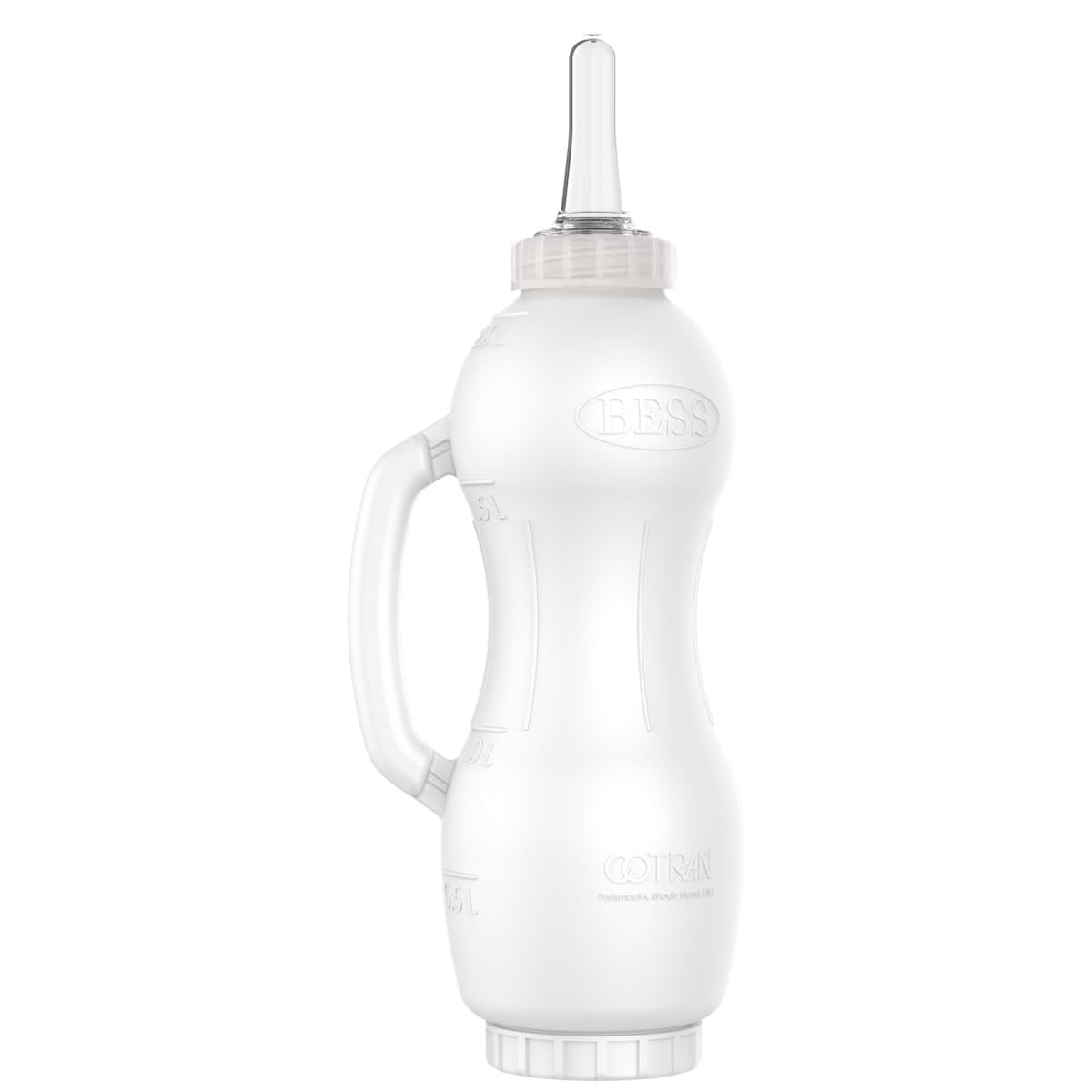
BESS 2-Quart Calf Bottle

Everyday calf feeding

Our Score 9.0/10
Check Price

Worth Noting

  • More parts to keep track of than a simple bottle
Nipple
Clear silicone
Capacity
2 quarts
Bottle Material
High-density polyethylene
Special Feature
Leak-free insert; bottom cap
Read the full review

A clear silicone nipple and a leak-free insert are the two details that make the BESS our top pick. They solve different problems: the insert keeps milk from running out until the calf actually suckles, and the clear nipple lets you watch the flow instead of guessing from the calf's expression. The 2-quart body is the right size for a standard feed, and the whole package feels purpose-built for the job.

The round high-density polyethylene body is the quieter advantage. Its shape resists pulling inward when a calf suckles hard, and BESS builds this one to stay rigid rather than collapsing under suction. A bottle that holds its shape makes the feed less fiddly, especially when you are moving from calf to calf. The screw-on neck ring also keeps the nipple seated while the calf pulls.

Cleaning is straightforward: the nipple unscrews, and the bottom cap gives you a second opening to reach through. We like that the clear nipple shows whether a slow drinker is actually getting milk, because that is the moment when a bottle earns its keep. Seat the insert firmly before you fill, and the routine is simple.

Bottom line: For most calf feeders, the BESS is the bottle we recommend: the leak-free insert and clear nipple make a 2-quart feed easier to control.

2

Little Giant 3-Quart Calf Bottle

Little Giant 3-Quart Calf Bottle

Larger feed volumes

Our Score 8.8/10
Check Price

Worth Noting

  • Heavier when full than a 2-quart bottle
Capacity
3 quarts
Bottle Body
Clear
Nipple Material
Pliable rubber
Nipple Attachment
Snap-on
Read the full review

Three quarts is the reason to look at this Little Giant. Most calf feeds sit around 2 quarts, so the extra capacity suits bigger calves, split feedings, or anyone who would rather mix a little extra than run short. It is a bottle with headroom, not a different feeding system.

We recommend it as the larger-capacity pick because the clear body and pliable rubber nipple make that extra volume easy to manage. You can see the level without pulling the bottle away from the calf, and the snap-on top seats with a firm push. The clear body and secure top do the rest of the work.

The rubber nipple is made with a formula that stays pliable and resists cracking, which matters if the bottle lives in a bucket between feeds. The clear body also makes it easy to catch a bottle that was not rinsed properly before the next calf. If you want the most capacity in this group, this is the one.

Bottom line: Choose this Little Giant when a standard 2-quart feed is not enough: the clear 3-quart body gives bigger calves and busier feedings more room.

3

Miller 9312 Calf Bottle

Miller 9312 Calf Bottle

Budget feeding

Our Score 8.8/10
Check Price

Worth Noting

  • Bottle body can pull in under hard suction
Nipple
Screw-on vented
Capacity
2 quarts
Empty Weight
7.84 oz
Bottle Material
Polycarbonate-free
Read the full review

The Miller 9312 is a plain, screw-on calf bottle, and that is exactly how we treat it in this group. There is no clear nipple, no insert, and no extra cap to keep track of, just a 2-quart body with a threaded nipple. For a lot of feeders, that simplicity is the whole appeal.

The screw-on nipple is the part we appreciate most. It stays put when a calf pulls, and the screw threads make it simple to remove for cleaning. The body is polycarbonate-free and light enough to carry with one hand when empty. If you already have a bucket routine and just need a reliable 2-quart nurse, this one slots in without fuss.

We rank it as the budget pick because it does the basic job with no extra parts to manage. In a herd where bottles get knocked around and replaced, that simplicity is easy to live with. It is the bottle we hand to someone who wants a screw-on nipple and no learning curve.

Bottom line: When you want a straightforward 2-quart screw-on bottle and nothing extra, the Miller is the budget choice we recommend.

4

E-Z Nurse 2-Quart Calf Set

E-Z Nurse 2-Quart Calf Set

Strong suckers

Our Score 8.6/10
Check Price

Worth Noting

  • Premium price compared with simpler bottles here
Nipple
Natural rubber
Capacity
2 quarts
Empty Weight
7.04 oz
Included Components
Bottle, nipple and cap
Read the full review

A natural rubber nipple with a reinforced chew-resistant tip is what sets the E-Z Nurse apart. The 2-quart set includes the bottle, nipple, and cap, and the rubber is all-natural with no synthetics or latex. That is a different construction from the softer silicone and rubber nipples on the other bottles here.

We recommend it for strong suckers and for anyone who wants a complete set with a cap. If a calf gnaws the nipple or pulls hard enough to wear through softer rubber, the reinforced tip is the feature that earns the premium. The cap protects the nipple between feeds, which is a small thing until the bottle rides in a truck bed.

This is a set to buy for the nipple rather than the bottle count. We also check that the nipple and cap are in the box before filling it, because a set missing either is no use when a calf is hungry. If you want the toughest nipple in this group, the E-Z Nurse is the one; if you just need a spare bottle, the simpler bottles here will do.

Bottom line: For hard-sucking calves, the E-Z Nurse is the pick: its reinforced natural rubber nipple and complete 2-quart set are built for tougher use.

5

Lixit 2-Quart Nursing Bottle

Lixit 2-Quart Nursing Bottle

Measuring intake

Our Score 8.6/10
Check Price

Worth Noting

  • No clear nipple or leak-free insert
Nipple
Vented rubber
Capacity
2 quarts
Empty Weight
8 oz
Bottle Material
BPA-free plastic
Read the full review

Measurement markers on the side of the Lixit are the detail that makes it useful beyond the basics. You can see how much a calf has taken without pouring the remainder into a measuring cup, and the 2-quart body is light enough to carry two at once when empty.

We keep this one in the budget discussion because it covers the essentials: a BPA-free bottle, a screw-on neck ring, and a natural-feeling rubber nipple. The deep molded finger grips are a small but welcome touch when the bottle is wet. It is the one we choose for simple measuring and spare capacity, not for a feature-heavy feeding setup.

The screw-on ring is the part that matters for security: it holds the nipple down while the calf pulls, and the nipple comes off for cleaning. For a starter bottle or a spare to keep in the barn, that is enough.

Bottom line: The Lixit is our budget pick for simple 2-quart feeds, with measurement marks that make intake easy to track.

6

Coburn Braden Start Nurser

Coburn Braden Start Nurser

Weaning transition

Our Score 8.4/10
Check Price

Worth Noting

  • Assembly required before first use
Material
BPA-free
Nipple Flow
Slow
Empty Weight
9.6 oz
Included Components
Bottle, nipple, strap and cap
Read the full review

The Coburn Braden Start Nurser arrives with a strap and cap, which makes it the most transition-minded bottle here. The cap covers the nipple between feeds, and the strap gives you a way to keep the bottle with your gear.

The slow-flow nipple is aimed at calves making the move off a bottle, and that is where this one makes sense. A slower draw can help a calf that nurses too fast, and the BPA-free body is simple to clean. It is a starter nurser, not a bottle you buy for the biggest single feed of the day.

The gap is capacity: Coburn does not state a quart size, so measure the bottle before you mix a full 2-quart feed. That uncertainty is why we treat it as a niche pick rather than a daily driver. If you already have a standard bottle and want a weaning aid, the strap and cap give it a role.

We put it in also-consider because it solves a narrower problem well: a calf that is ready to step down from full bottle feeding. For that job, the strap and cap are genuinely useful, and the slow-flow nipple fits the plan. For a calf that still needs a full 2-quart feed every day, choose one of the bottles with a stated capacity instead.

Bottom line: The Coburn is a narrow weaning pick: the strap, cap, and slow-flow nipple help a calf step down from bottle feeding, but measure its capacity first.

7

Peach Teats Nursing Bottle

Peach Teats Nursing Bottle

Gulping calves

Our Score 8.2/10
Check Price

Worth Noting

  • Slow flow suits gulpers, not fast feeds
Flow
Slow
Nipple
Peach Teat threaded
Capacity
2 liters
Included Components
Bottle, cap and nipple
Read the full review

A slow-flow teat is the point of the Peach Teats bottle, and it is why we recommend this one for gulping calves. If a calf drains a bottle too fast or coughs through a feed, the threaded Peach Teat gives a more controlled draw than a wide-open rubber nipple. The 2-liter body holds a little more than a standard 2-quart feed, so there is room to mix without filling right to the neck.

The teat is replaceable, which is a real advantage when the nipple is the part that wears out, and the threaded fitting gives you a secure connection. The bottle is a standard shape, so it fits the same cleaning routine as the rest of your calf gear. We treat the vent as the part to check: if milk weeps from the air valve, reseat the nipple and keep the bottle more upright before the next feed.

That vent check is the only fuss we have found. Keep the bottle upright and reseat the teat if it weeps; that is a small habit, not a reason to avoid it. For the calf that gulps, the slower draw is the whole reason to choose it.

Bottom line: For a calf that gulps, the Peach Teats slow-flow nipple is the one we reach for; keep the vent upright and the teat seated.

How We Tested the Best Calf Bottles

We started by comparing capacities, nipple styles, materials, replacement-part availability, and what each bottle came with, then ordered 16 models that covered the range of designs a calf raiser is likely to see. Testing ran for three months, through morning and late-night feedings, so every bottle saw warm milk replacer, hurried assembly, washing, and the occasional drop onto concrete.

At each feed, we filled the bottle, screwed on the cap and nipple with wet hands, shook it, and hung it on the rack to watch for drips at the threads and nipple base. We noted whether the calf had to work too hard for the milk, whether the nipple collapsed, and how easy it was to attach parts one-handed while holding a hungry calf with the other arm. We also checked how clearly the measurements read after washing and whether the handle or shape made filling easier.

After every feed, we washed each bottle and checked seams, caps, and nipples for splits, stretching, or fading markings. We dropped filled bottles from waist height onto concrete, squeezed the plastic to judge quality, and kept track of which ones developed leaks first. On arrival, we compared the contents against the listing and noted missing nipples, caps, or instructions, plus how easy the order and return process felt. The bottles that lasted were the ones that stayed leak-free, rinsed clean, and arrived complete.

How to Choose Calf Bottles

Match capacity to the feed, not the biggest number

A 2-quart bottle is the standard starting point for a single calf feed, and it is the size we reach for most often. Step up to 3 quarts only when you are feeding bigger calves, splitting a larger volume, or want room to mix without filling to the neck. A full 3-quart bottle is heavier and bulkier to handle, so the extra room only helps if you need it.

A 2-liter bottle falls between those marks, so check the markings before you assume it matches your usual feed. The BESS and the Miller are both straightforward 2-quart choices; the Little Giant is the one to choose when you deliberately want more headroom.

Let the nipple match the calf's suck

A slow-flow teat is the right tool for a calf that gulps or coughs through a feed; the Peach Teats bottle is built around that job. A clear silicone nipple, like the one on the BESS, helps you see whether milk is moving without pulling the bottle away. If a calf chews or pulls hard, a natural rubber nipple with a reinforced tip is worth considering.

The wrong match shows up as milk running too fast, the calf backing off, or the bottle body pulling inward. If the body dents while the calf nurses, check the vent and the nipple seat before the next feed.

Check the fit between nipple and bottle

Screw-on nipples are secure and usually easier to replace; snap-on tops are quicker but need a firm seat before you tip the bottle. Whichever you choose, make sure the nipple, ring, and cap are all present before the first feed. A bottle that leaks at the neck or vent is usually telling you the nipple is cross-threaded, not seated, or too loose.

Fix that before you blame the calf. A bottle that is not put together properly will drip no matter how good the nipple is.

Plan for cleaning and carrying

A round body with a removable nipple is easier to empty and scrub than a square bottle with tight corners. Clear bodies let you spot milk left from the last feed, and a bottom cap gives you another way to reach the inside. Empty weight matters if you carry several bottles at once; a light 2-quart bottle is easier to manage than a full 3-quart one.

The best bottle is the one you can clean and fill without dreading the routine. If a bottle has extra parts, decide now where they will dry so they do not go missing between feeds.

Frequently Asked Questions

Final Verdict

Most calf feeders should start with the BESS. The leak-free insert and clear silicone nipple turn a 2-quart feed into something you can watch and control, and the round body resists the collapse that makes simple bottles frustrating.

If your calves need more volume, the Little Giant 3-quart is the better buy; its clear body makes the larger fill easy to manage.