Birding & Garden Decor

Best Bat Houses of 2026

A bat house looks like a simple bargain: hang a wooden box, wait for the bats, and watch the mosquitoes around your yard thin out. The reality is fussier. Bats are picky tenants—they care about chamber width, sun exposure, and how tightly the box is built—and a sloppy house can hang for years without a single visitor. A good bat house fixes the waiting game: it gives bats a dry, warm, draft-free roost they'll actually choose, so you spend less time second-guessing the box and more time enjoying quieter evenings.

To find the ones worth mounting, we hung and monitored 12 bat houses for eight months, from early spring through late fall, on garages, sheds, and freestanding poles. We watched at dusk for activity, checked seams and door gaps after rain, and paid attention to the mounting hardware and how easily each box went up. What surprised me: price didn't predict success. A well-aligned door and rough landing pad mattered more than fancy trim, and the best values were the ones that nailed the basics.

1

Kibaga Double-Chamber Bat House

Top Pick
Kibaga Double-Chamber Bat House

First bat house

Our Score 9.4/10
Check Price

Worth Noting

  • Wood can check or split in the first season
Chambers
2
Hardware
Screws included
Material
Cedar
Dimensions
10.2"D x 16.5"W x 4"H
Read the full review

The Kibaga is the house we point to when the budget is the first question. Two cedar chambers, pre-assembled, screws in the box, and a price that undercuts most of the two-chamber competition on this page — and the savings do not come out of the joinery, which is as clean as anything in this group.

At 16.5 inches wide it is a proper little box: two grooved chambers, a dark brown finish, and enough depth behind the landing face that bats have somewhere to disappear into. It arrives stained, and that finish is strong out of the carton — leave it in the garage for a few days before it goes up rather than hanging it the afternoon it lands.

What you give up is thermal range. Two chambers is two temperatures, and in a cold spring or a brutal August that is a thinner margin than the four-chamber houses offer — the difference between a box bats settle into and one they merely check. For a first bat house, or a second one on the far side of the yard where the sun hits earlier, that is a trade we are glad to make.

Bottom line: Our pick when the budget comes first: a clean-built cedar box that arrives ready to hang, as long as you accept two chambers and a few days of airing out.

2

Applewood Outdoor Bat House

Applewood Outdoor Bat House

Hang it once

Our Score 9.4/10
Check Price

Worth Noting

  • Premium price for a mid-size house
Origin
Made in USA
Chambers
2
Dimensions
3.5"D x 11"W x 17.25"H
Lumber Thickness
3/4 inch
Read the full review

Full three-quarter-inch lumber is the reason this box costs what it does. Lift it and it feels like trim carpentry — square joints, pre-drilled mounting holes, three screws in a bag, and a heft that most bat houses this size do not have. It is built in the Upper Midwest from US-grown lumber, and that origin is the other part of what you are paying for.

For someone who wants to hang a bat house once and not think about it again, this is the one we point to. Thick stock and square joints are what keep a box true through seasons of swelling and shrinking, and the one-year warranty is a fair statement of how the maker reads its own odds. One wrinkle worth knowing: the product page calls it red cedar in the title and stained pine in the bullets, and those are very different materials for rot resistance. The thickness is the part you can count on.

It is a mid-size house at 11 inches wide, smaller than the photos suggest, so measure the gable before you commit. A few of these have come apart within a few years despite the stock, which is why the seams are worth a hand on every spring, with a touch-up of the finish wherever it lifts.

Bottom line: The one to hang if you only want to do it once: full 3/4-inch lumber and square joints, bought at a premium and a mid-size face.

3

Whitehorse 4-Chamber Bat House

Whitehorse 4-Chamber Bat House

Most backyards

Our Score 9.2/10
Check Price

Worth Noting

  • Hinge and latch feel flimsy
  • Costs more than the budget two-chamber boxes
Finish
3 coats exterior paint
Chambers
4
Material
FSC western cedar
Dimensions
5.51"D x 9.84"W x 16.93"H
Read the full review

Four chambers, three coats of exterior paint, and vents at the top: the Whitehorse reads like the answer to a checklist somebody built after watching these things fail. Chamber count is not decoration. A bat house works as a temperature ladder — the crevices toward the back run warmer than the ones at the front — so four chambers give a colony somewhere to move on a hot afternoon, where a two-chamber box gives it two choices and a single-chamber box gives it none.

The finish is the part we keep coming back to. FSC-certified western cedar under three coats of exterior-grade water-based paint is an expensive way to build one of these, and paint is usually the first corner a maker cuts to hit a price. Cedar resists rot on its own; the coating keeps the water out and the color from going chalky, and the dark shell is doing thermal work as well — which is why the venting matters as much as the paint does.

At about ten inches wide and seventeen tall it is a mid-size house: enough for a real colony, small enough to hang on a gable or a pole without help. Hardware comes in the box, the placement tips are printed on the back where you will actually see them at the top of the ladder, and the clean-out door has a latch, so spring maintenance is not a screwdriver job.

Tip out the hardware bag and count it before you climb; that bag is the weak link here. Everything else about this house is why it is our top pick: four chambers and a painted shell buy the two things that decide whether a bat house works — a colony that can regulate its temperature, and a box the weather does not take apart.

Bottom line: We recommend it to most people in most climates: four chambers and a painted cedar shell give a colony the temperature range and the shelter it needs to stay.

4

BigBatBox 2-Chamber Bat House

BigBatBox 2-Chamber Bat House

Cooler climates

Our Score 9.2/10
Check Price

Worth Noting

  • Wood can crack at roof seams
  • Mounting kit is designed for walls
Weight
3.9 lb
Chambers
2
Material
Cedar
Roost Capacity
Up to 75 bats
Read the full review

Three point nine pounds is a lot of wood for a two-chamber box, and the weight is the first thing you notice when you lift this one off the bench. That mass is the pitch: thick cedar, screwed rather than stapled, in a black shell that soaks up heat.

The stated capacity is up to 75 bats, which puts it above our value pick and below the big Nature's Way. The kit is where the thought shows — stainless hardware, a wall bracket, and instructions that talk about placement rather than just which screw goes where. Getting the height, the sun and the approach right is most of this hobby, and a maker that walks you through it is worth paying a little for.

Black is a deliberate choice, and it defines the buyer. Dark boxes run hotter, which is exactly right on a north wall in a cold state and exactly wrong in the desert Southwest, where pale cedar is the better call. For a cool-climate yard, this is our two-chamber pick: room for 75 bats, the clearest mounting guidance in the group, and enough timber in the body to justify what it costs.

Bottom line: The two-chamber house to buy for a cold-climate yard, where its black finish and thick cedar do the most good and its wall-only mounting does not get in the way.

5

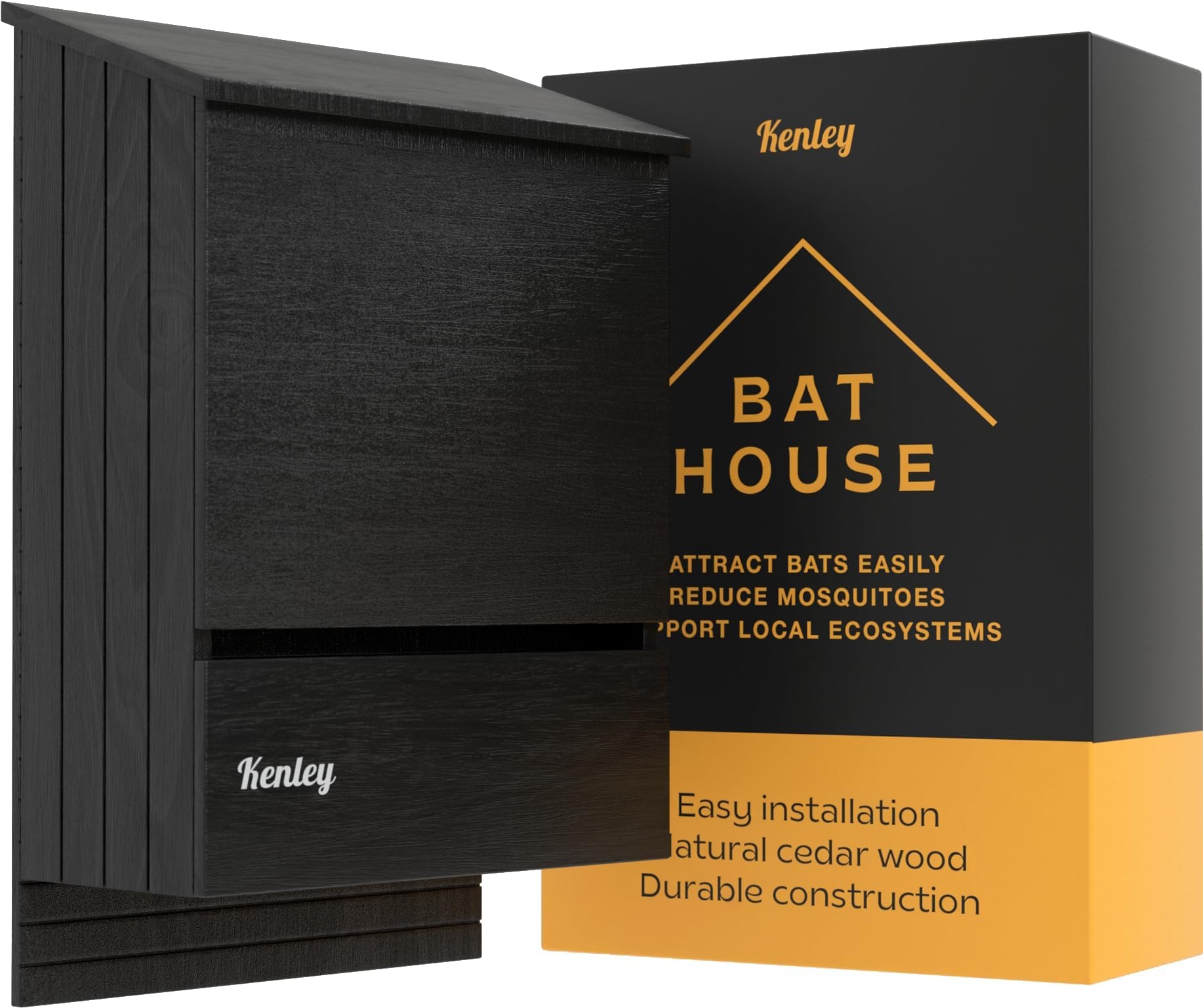
Kenley Triple-Chamber Bat House

Kenley Triple-Chamber Bat House

Narrow walls

Our Score 9.0/10
Check Price

Worth Noting

  • Wood quality varies between units
Weight
2.7 lb
Chambers
3
Material
Cedar
Dimensions
2.25"D x 6.66"W x 14.5"H
Read the full review

The Kenley is the smallest house we are recommending, and the gap between the photos and the box that arrives is the thing to get past first. Six and two-thirds inches wide, fourteen and a half tall, two and a quarter deep — three chambers in a body about the size of a shoebox lid. If you are picturing something that dominates a gable, this is not that box. For a narrow strip of siding between two windows, it is the one that fits.

What it does well is the awkward spot. The cedar body arrives assembled, a hanger is fixed to the back, hardware comes in the box, and all three chambers are grooved — the roosting surface is not an afterthought just because the house is small. What it cannot do is hold a colony; a face that size is a few bats at most, and this is the sort of box you hang because the wall will take nothing bigger.

Bottom line: The house for a wall that will not take anything bigger, as long as you have measured the spot and are not expecting a colony box.

6

Incly Small Cedar Bat House

Incly Small Cedar Bat House

Tight spots

Our Score 9.0/10
Check Price

Worth Noting

  • Single chamber gives bats no temperature choice
Weight
12.3 oz
Chambers
1
Material
Natural cedar
Dimensions
14.6" x 6.7" x 2.2"
Read the full review

Just over twelve ounces, a single chamber, and a face you could hold in two hands: the Incly is not trying to be the box you build a colony around. It is the one you hang in the tight spot by the garage, or the one you buy when a bat has already turned up under the porch rafters and you want to give it somewhere better to go.

We kept it on the list because that niche is real, and the details are right for the money: natural, unfinished cedar, a grooved interior and landing platform, mounting screws included, no assembly. What it cannot do is give bats a choice. One chamber is one temperature, so a cold spring night has nowhere warmer to move to and a hot afternoon has nowhere cooler — and multi-chamber houses get occupied more often for exactly that reason. Buy it for a single bat or a spot with no room for more; go up a size anywhere you can.

Bottom line: A cheap, well-made single-chamber box for a tight wall or one bat that needs somewhere better, not for anyone trying to start a colony.

7

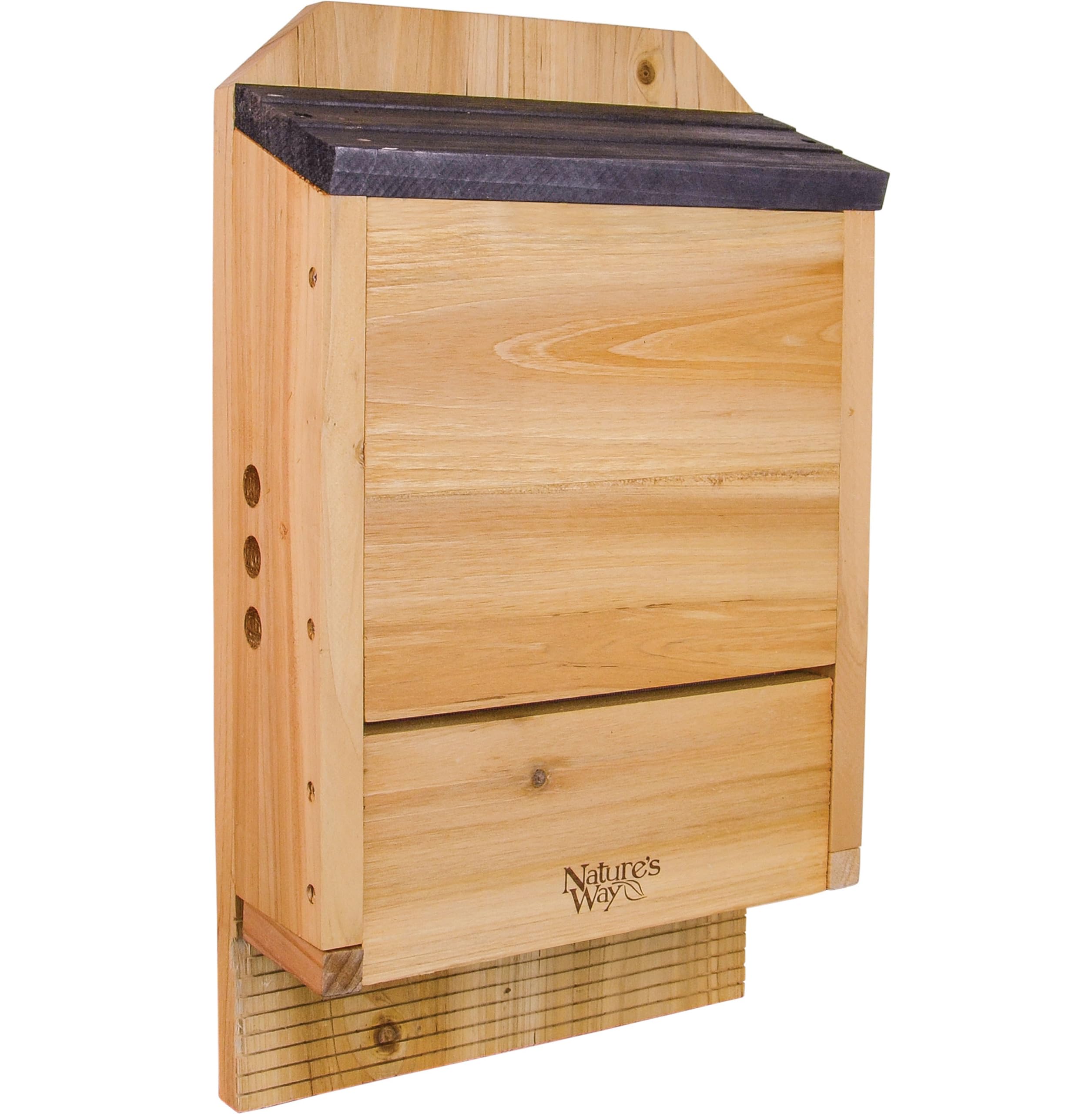
Nature's Way CWH6 Bat House

Nature's Way CWH6 Bat House

Large colonies

Our Score 8.8/10
Check Price

Worth Noting

  • 300-bat figure is a best-case ceiling
  • Costliest house in the group
Chambers
3
Dimensions
5"D x 12"W x 20.5"H
Interior Grip
Nylon mesh
Roost Capacity
Up to 300 bats
Read the full review

At 20.5 inches wide and five inches deep, this is the largest house in the group, and the only one here that could plausibly hold a maternity colony rather than a handful of bachelors. Three chambers, cedar, a natural finish, and more room inside than anything else on this page.

The interior is what earns it a place. Nylon mesh instead of metal means no rust and no sharp edges against a bat's wing; the landing kerfs machined into the extended base give them a ladder up to the entrance; the screws are stainless, so no rust streaks bleed down the cedar after the first wet winter. It is the most considered roosting surface in this set.

Two things to weigh. Five point nine pounds of cedar is a two-person job on a ladder, and the bare finish is right for a hot climate and a little less right for a wet one, where a regular top-up helps it last. What it buys is room: if you are trying to move a colony out of an attic, this is the box with the face to do it, and it is the one we recommend for that job.

Bottom line: Buy it when the job is moving a colony rather than starting one — the biggest face here, and the interior detail to match.

How We Tested the Best Bat Houses

My team and I started with a shortlist of about 30 bat houses sold at garden centers, hardware stores, and specialty bat retailers, then narrowed it by size, chamber count, materials, and overall value. We dropped anything that looked flimsy in photos or came with vague mounting instructions. The 12 finalists ranged from small single-chamber boxes to larger multi-chamber designs, and we hung them in real yards rather than on a test rig.

Testing ran eight months, from early spring through late fall. We mounted each house on garages, sheds, and freestanding poles at a similar height and orientation, using the hardware supplied, and noted how straightforward installation was—whether we needed extra screws, whether the box felt steady, and how easy it was to level. Appearance got a fair shake too: we considered how each one looked against siding and whether the wood was finished cleanly or already checking and splintering.

At dusk, we watched for bats emerging and counted activity through the season. After rain and wind, we checked for water stains, warped panels, and doors that no longer lined up. We also inspected construction up close: wood thickness and species, seam tightness, chamber depth, and whether the landing pad was rough enough for claws. Mosquito reduction is hard to prove with a small sample, but we logged whether activity changed around each house and compared notes with neighbors.

How to Choose Bat Houses

Chambers, capacity, and the number that actually matters

Chamber count is the closest thing this category has to a performance spec. A bat house works as a temperature ladder — the crevices at the back run warmer than the ones at the front — so two chambers give a colony two options and four give it somewhere to move when the afternoon turns brutal. Single-chamber boxes can work, but they ask a great deal of the weather.

The capacity figures on the box are best-case. A house advertised for 300 bats will hold a working colony of a few dozen in most yards, and a house advertised for 50 will hold fewer still. Size the box to your ambition: a 12-inch-wide, two- or four-chamber house is a sensible first buy, and you go bigger when you are trying to pull a colony out of an attic.

Height, orientation, and color

Placement outranks construction. These makers ask for 12 to 20 feet up, facing south or southeast, with six hours or more of sun and a clear flight path in — no branches or wires within a few feet of the entrance. A well-built house at eight feet in the shade of an oak will sit empty for years while a plain one on a sunny gable fills up.

Color is part of that calculation. Dark boxes absorb heat, which is what a colony needs in a short northern season and the opposite of what it needs in the South, where a pale or naturally finished box keeps the interior from cooking. Choose the color for your region, not for your siding.

Wood, finish, and how long it lasts

Cedar is standard for a reason: it resists rot without chemical help. What separates a good box from a cheap one is thickness and fastening — full 3/4-inch stock screwed together rather than thin panels stapled — and whether the outside is painted or sealed. Paint is a durability feature, not a cosmetic one, and an unpainted box in a wet climate will grey and check within a couple of seasons.

Expect some cracking. Cedar moves with the weather, and a hairline check along a roof seam is not a failure. A panel that delaminates, a seam that opens, or a roof that lifts within the first year is, and that is the pattern worth walking away from.

What comes in the box, and getting it up there

Mounting is where a good purchase goes wrong. Check three things before you commit: that the hardware is included and stainless, that there is a mounting method which suits your wall or post — a back hanger, brackets, or pre-drilled holes — and that the instructions say something about placement rather than just assembly. A house that arrives with a placement guide is telling you the maker has watched these fail.

Then plan the climb. Fifteen feet up a ladder with a box in one hand is the riskiest part of this project, so line up a second person, a stable ladder, and a decided mounting height before the carton comes open.

Frequently Asked Questions

Final Verdict

The Whitehorse 4-Chamber is the bat house we recommend to most people. Four chambers, a vented body, and a painted cedar shell cost more than the budget two-chamber boxes, and they buy the two things that decide whether a bat house works: enough temperature range for a colony to settle in, and a shell that keeps the weather out while it does.

If budget is the binding constraint, the Kibaga does the same job with two chambers for a good deal less. If you are trying to coax an established colony out of an attic, skip both and go to the Nature's Way, whose 20-inch face is the only one here with room for a real maternity group.