Outdoor Power Equipment

Best String Trimmer of 2026

Every string trimmer carries a tradeoff. Gas gives you the muscle to chew through waist-high weeds, then makes you yank a starter cord and nurse a sore shoulder for the privilege. Battery models fire up instantly and quietly, and then ask you to keep one eye on the charge indicator. Corded ones never run out of power and never let you escape the reach of an outlet. The right pick comes down to which set of annoyances you're willing to live with, and the only honest way to find out is to hold one against a fence line for twenty minutes.

I spent the past eight months with 10 trimmers — gas, battery, and a couple of corded holdouts — and the things that separated them rarely showed up on the spec sheet. A head that feeds new line without a fight matters more than a fraction of a volt, and a few ounces of weight you don't notice in the store becomes very noticeable by the second battery. What you're actually buying is a tool that starts without drama, doesn't wear your arms out, and trims a clean edge along the driveway instead of shredding it. A few earned a permanent spot in my shed; here's how they sorted out.

1

HEYWORK 20V

Top Pick
HEYWORK 20V

Budget starter kit

Our Score 9.4/10
Check Price

Worth Noting

  • Long-term support is less established
Weight
6.3 lb
Power Source
20V battery
Cutting Width
12 in.
Included Spools
8 pre-wound
Read the full review

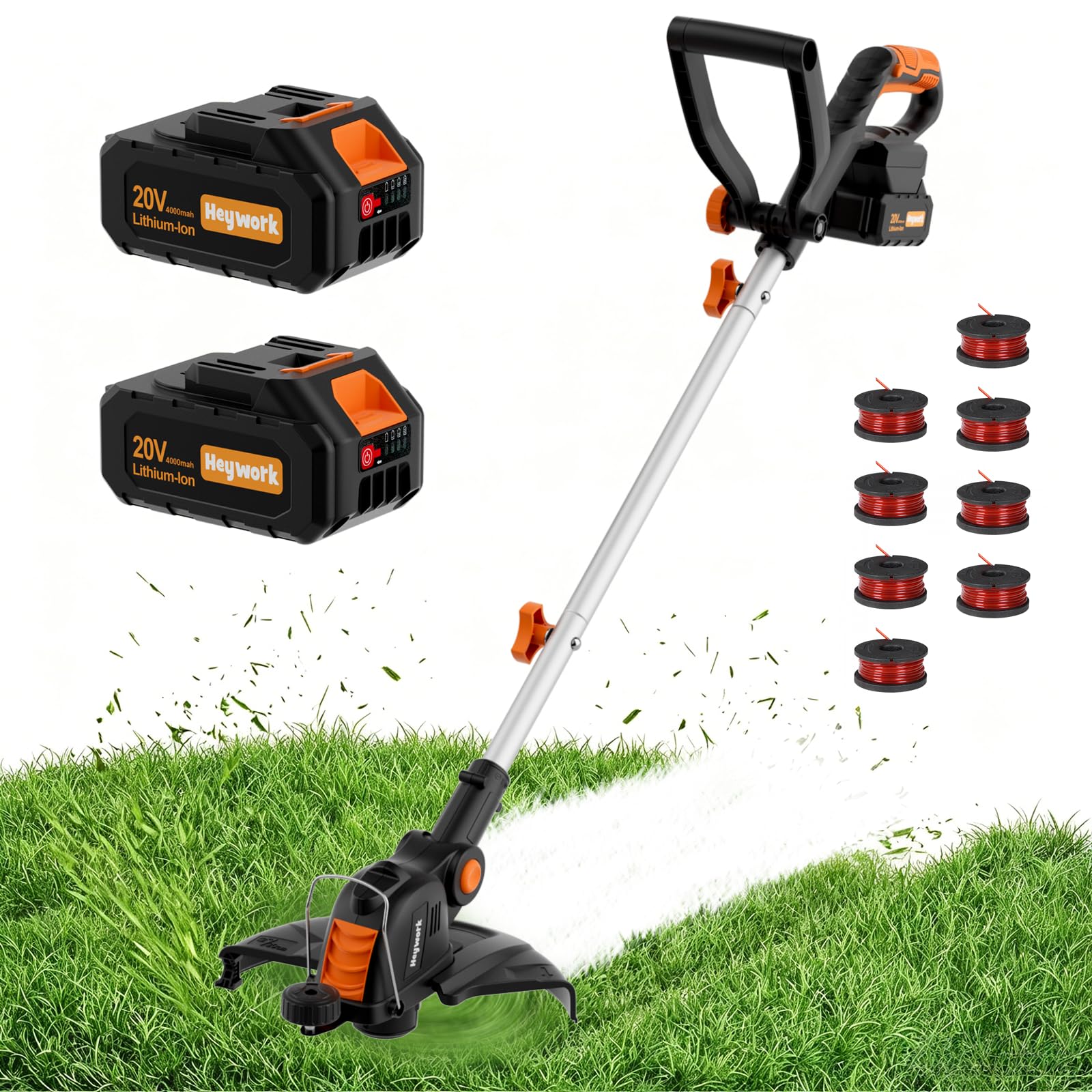
The HEYWORK kit is unusually complete for a budget cordless trimmer: two 4.0Ah batteries, a charger, and eight pre-wound spools. That combination is the reason it earns a place on this list. You can keep one battery on the charger and one in the tool, and the spare spools mean fewer interruptions when the line runs out.

The 12-inch cut, 8,000-rpm motor, and 6.3-pound build are typical for the class, and the trim-to-edge design is straightforward. We like the automatic feed for quick jobs; it removes the bump-and-curse routine.

What we cannot do is vouch for the long-term support the way we can for BLACK+DECKER or CRAFTSMAN. The brand is less familiar, and replacement parts may be harder to find down the road.

For a cabin, a small rental, or a second trimmer for light jobs, the two 4.0Ah packs make it a sensible budget choice. If you need one machine to clear a large lot every week, the better-known brands are the safer bet.

Bottom line: The HEYWORK kit is a smart budget choice for light trimming, with two batteries and eight spools that keep you working.

2

CRAFTSMAN V20 CMCST901M1

CRAFTSMAN V20 CMCST901M1

Long cordless runtime

Our Score 9.2/10
Check Price

Worth Noting

  • One battery in the kit
Runtime
Up to 63 min
Power Source
20V battery
Cutting Width
13 in.
Battery Capacity
4.0 Ah
Read the full review

A 4.0Ah battery and a 13-inch cut are the right ingredients for a cordless trimmer that finishes a normal yard without a recharge, and CRAFTSMAN rates this kit at up to 63 minutes. We like that margin because it changes how you work: you can edge the walk, trim around the beds, and still have power for the back fence without watching the gauge. The turn-to-edge conversion is simple, and the adjustable handle helps you find a comfortable working height.

The longer pack makes the most of the 20V motor. The kit includes the battery and charger, and the 13-inch swath covers ground faster than the 12-inch budget models. We did find the edging button sits low on the shaft, so switching modes means reaching down rather than flicking a control by your thumb.

That low button is a small annoyance, not a dealbreaker. What gives us pause is the shorter track record: this is a newer model, and long-term durability is still an open question. For the money, though, the runtime and complete kit are compelling. If you want a cordless trimmer that can finish a normal yard on one charge and you do not need the widest swath, this is the value pick we point to.

Bottom line: Choose the CRAFTSMAN if runtime and a complete 4.0Ah kit matter more to you than the deepest track record in this group.

3

BLACK+DECKER LST136 40V

BLACK+DECKER LST136 40V

All-around yard care

Our Score 8.8/10
Check Price

Worth Noting

  • Line can break in dense growth
Weight
7.8 lb
Line Feed
Automatic
Power Source
40V battery
Cutting Width
13 in.
Read the full review

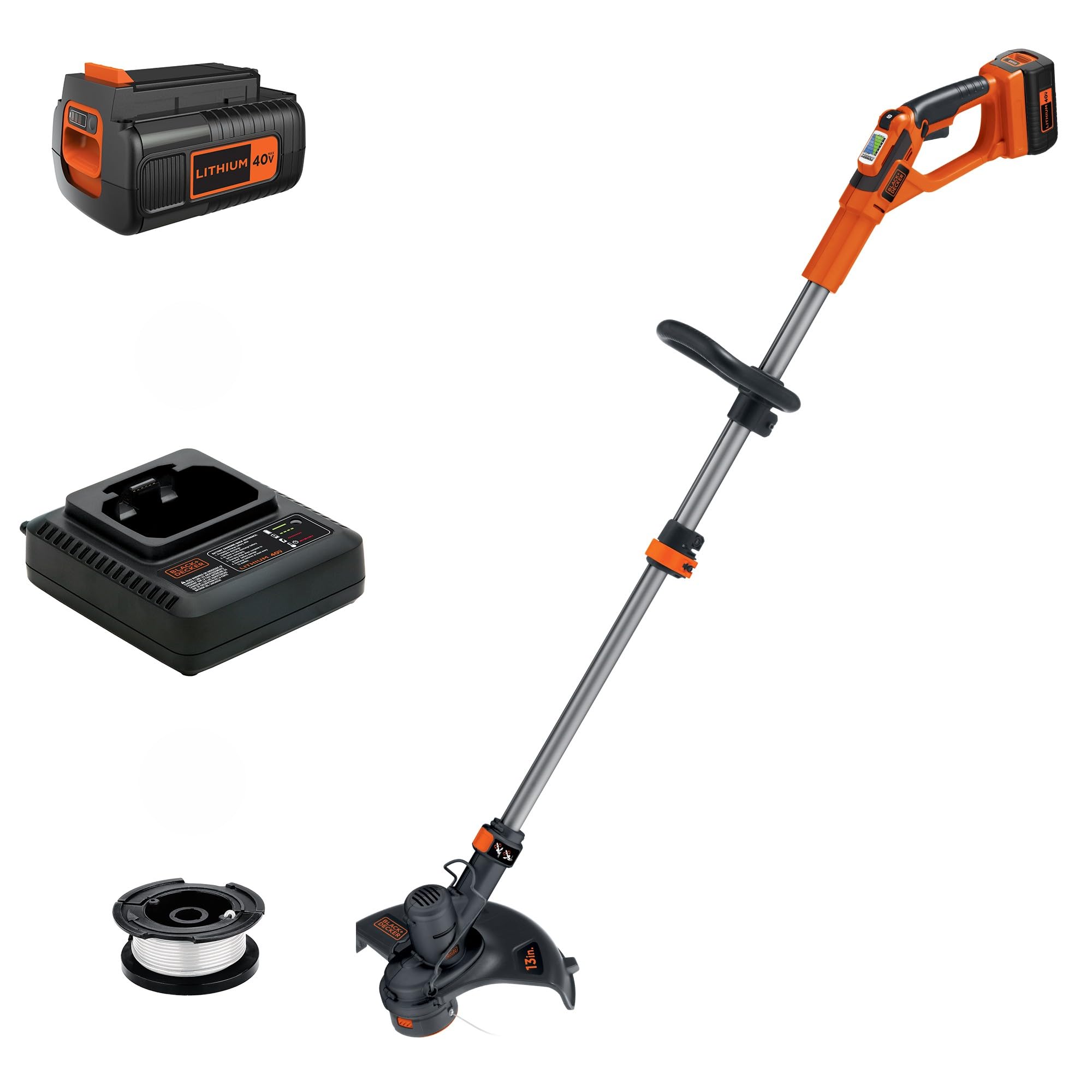
The 40-volt battery and 13-inch cutting swath put the LST136 in the sweet spot for a suburban yard: enough muscle for thick grass along a fence, not so much tool that you dread carrying it. At 7.8 pounds, it is light enough to swing through a long edge line, and the 8,500-rpm head gives it more bite than the 20-volt trimmers here. We especially like the PowerCommand dial, which lets you choose maximum power for a tough patch or maximum runtime for the easy stretches.

Automatic feed is the other daily-use win. The head pays out line without bumping, so you keep moving, and the spool is straightforward to reload when it runs dry. The included fast charger restores the pack in two hours or less.

The compromise is the two-year warranty, which is shorter than we like on a trimmer at this end of the cordless group. We still recommend it because the combination of power, low weight, and simple line management is the most complete here. For a yard with a mix of clean edging and the occasional overgrown strip, this is the trimmer we hand to a friend first.

Bottom line: We recommend the LST136 as the best all-around cordless trimmer here because it pairs real cutting power with low weight and straightforward line feed.

4

Husqvarna 130L

Husqvarna 130L

Heavy growth

Our Score 8.8/10
Check Price

Worth Noting

  • Fuel mixing and engine upkeep
Engine
28 cc
Weight
12.2 lb
Line Feed
Rapid Replace head
Cutting Width
18 in.
Read the full review

The 130L is the gas answer for a property where the growth does not wait for a dry weekend. Its 28cc engine and 18-inch cut give it a clear advantage in tall weeds and rough fence lines compared with the battery trimmers here. The Rapid Replace head is easy to load, and the Smart Start and air purge are designed to take some of the drama out of getting a two-stroke running.

We also appreciate the LowVib handle, which helps on a long session. At 12.2 pounds, this is a two-handed tool; you will feel it across your shoulders after an hour, especially on a slope. The reward is the ability to refuel and keep going without waiting on a charger.

A gas trimmer is not the easy default. Starting can be temperamental, and the 130L is heavier and more demanding than a battery model. We rank it as the gas pick, not the all-around pick. If your trimming is a weekly cleanup around a small lawn, a battery model is simpler; if you are clearing a fence line of saplings every spring, the 130L earns its keep.

Bottom line: For dense growth and unlimited refueling, the Husqvarna 130L is the gas trimmer we trust, as long as you accept its weight and upkeep.

5

BLACK+DECKER LST300

BLACK+DECKER LST300

Light trimming

Our Score 8.8/10
Check Price

Worth Noting

  • Two-year warranty is short
Weight
5.7 lb
Line Feed
Automatic
Power Source
20V battery
Cutting Width
12 in.
Read the full review

The LST300 is the trimmer we reach for when the job is a quick edge and a pass around the mailbox, not a field of weeds. At 5.7 pounds, it is easy to carry and control, and the adjustable handle and height let you set it up for a shorter or taller user. The 12-inch cut and 6,200-rpm motor are modest, but they are enough for thin grass and regular lawn edges.

Automatic feed and the trim-to-edge conversion keep the routine simple. We like that there is no bumping and no cord to drag, and the battery and charger are included.

The single 2.0Ah pack is the catch. It is a short-session battery, and if your trimming takes more than a few minutes, keep a second pack charged. The motor also loses enthusiasm in tall, wet grass. This is a light-duty tool, and we do not ask it to clear a fence line.

For a courtyard, a townhouse patch, or an older gardener who wants less weight, it makes sense. If you need one trimmer for a larger lot, the CRAFTSMAN or LST136 is the better buy.

Bottom line: The LST300 is the light-duty pick for a small yard, where its low weight and automatic feed make quick edging easy.

6

WORX WG163

WORX WG163

Sidewalk edging

Our Score 8.6/10
Check Price

Worth Noting

  • Build and spool durability are uneven
Weight
5.5 lb
Head Tilt
90°
Power Source
20V battery
Cutting Width
12 in.
Read the full review

The WG163 is the trimmer here with a proper wheeled edger setup, and that is the reason to pick it. The rubberized wheels and 90-degree tilting head let the tool ride along a sidewalk or driveway edge instead of you freehanding the line. We like that for the weekly detail work that makes a lawn look finished.

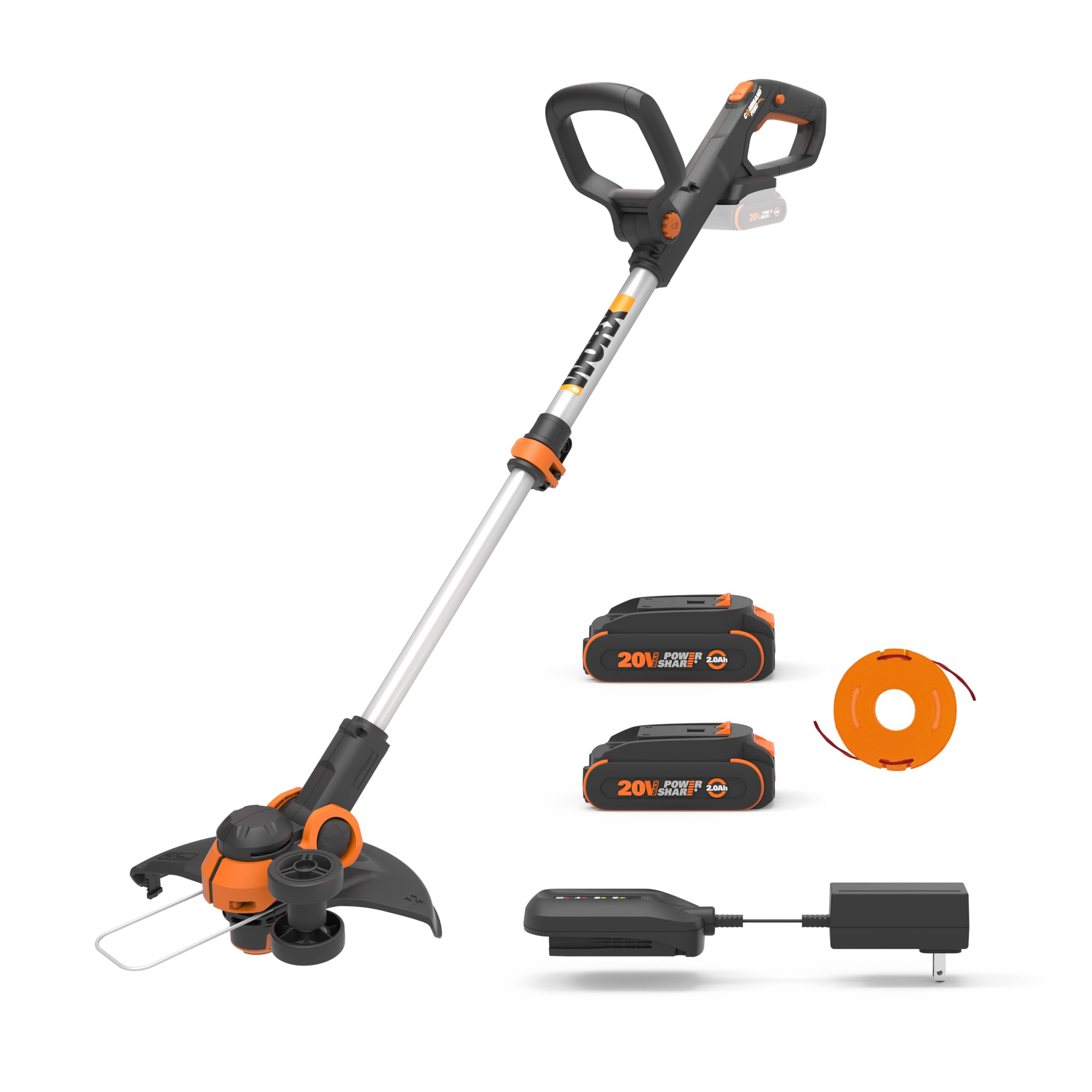
At 5.5 pounds, it is the lightest full-size trimmer in this group, and the two included 20V batteries are a genuine convenience: one runs while the other charges. The push-button command feed is easier than bumping the head, and the adjustable spacer guard helps keep line away from plants and siding.

The catch is cutting power. The 12-inch head and 7,600-rpm motor are fine for lawn edges and thin weeds, but thick growth takes patience. We rank the WORX as the edging specialist, not the all-around choice. For a yard defined by sidewalks and beds, it is the easiest of these to use; for a pasture edge, choose more power.

Bottom line: The WORX is our choice for tidy sidewalk edges, and the two included batteries keep the trimmer running while one charges.

7

KOMASTY 20V Folding

KOMASTY 20V Folding

Tight storage

Our Score 8.4/10
Check Price

Worth Noting

  • 12-inch cut limits big jobs
Storage
Folds 180°
Batteries
Two 2.0Ah
Power Source
20V battery
Cutting Width
12 in.
Read the full review

The KOMASTY's trick is the shaft: it folds 180 degrees in three positions, so the trimmer can stand vertically in a corner of a garage or shed instead of sprawling across the floor. We like that for a townhouse or a workshop that has to share space with a car. The head and 9,500-rpm motor are set up for light trimming and edging, and the pivoting head makes the switch without a second tool.

Two 2.0Ah batteries are included, and together they are rated for 30 minutes of run time. That is the number to take seriously: 30 minutes is enough for a courtyard or a small front yard, not a half-acre. The automatic feed saves time, and having a second pack means you can keep working while the first one charges, provided you plan the charge break.

For its size, the folding design is the reason to choose it. A trimmer that disappears onto a shelf is easier to live with in a small house, and the low-speed control is friendly around beds. If you need to clear heavy weeds or cover a large lot, this is not the machine; if storage is the constraint, it solves the problem neatly.

Bottom line: The KOMASTY is the trimmer to get when storage is tight, thanks to a shaft that folds down small and two batteries that share the load.

8

Greenworks 60V ST60L254

Greenworks 60V ST60L254

Overgrown lots

Our Score 8.4/10
Check Price

Worth Noting

  • No spare battery in the kit
  • Durability is uneven
Weight
11.2 lb
Runtime
Up to 65 min
Power Source
60V battery
Cutting Width
16 in.
Read the full review

Sixteen inches is a lot of trimmer to swing, and the Greenworks 60V is the widest cordless model here. That extra swath is why it earns a place for overgrown lots: fewer passes along a fence line, and the brushless motor has the torque to keep the line moving in tall grass. The 0.095-inch line and spin-to-load head are a sensible pairing for that job.

We like the reload design; twisting the housing and pulling fresh line takes seconds rather than a wrestling match. The 2.5Ah battery is rated for up to 65 minutes, and a 45-minute recharge is quick for this class. The trade-off is 11.2 pounds, which is heavier than the other cordless picks and can tire your shoulders on a slope.

For flat, rough ground, the weight buys real cutting capacity. For a small, tidy yard, it is more tool than you need. We rank it as the heavy-growth cordless alternative: if you want the lightest possible trimmer, the WORX or LST300 is easier; if you have a ditch line that gets away from you, this is the one that keeps up.

Bottom line: The Greenworks 60V is worth the extra weight if you cut tall, thick growth and want a wide 16-inch swath.

How We Tested the Best String Trimmers

We built the shortlist by reading through specs, price tiers, and the complaints owners leave after a season or two — hard starts, heads that jam, batteries that fade. From that pool we brought in 10 trimmers and ran them for eight months, from the first flush of spring growth through leaf drop, so each one saw both thick wet grass and dry late-summer weeds.

Testing happened where trimmers actually live: along the fence line of my quarter-acre yard, around a mailbox and shed, edging a concrete driveway, and on a colleague's much smaller lawn where a heavy unit gets old fast. We weighed every trimmer on a kitchen scale, then again with a battery or a full tank, and ran a full edging session to see how that number translated into arm fatigue. Heads got refilled by hand and timed, since a spool change that takes two minutes in the driveway takes considerably longer when you're irritated. Battery models ran continuously until they died, with the clock going, and we noted whether the cutoff was gradual or a sudden stop.

For cutting performance, we ran each trimmer through the same overgrown patch and checked whether it sliced cleanly or battered the grass into submission. Reliability got tested the unglamorous way: units were left out overnight, restarted after sitting idle for two weeks, and bumped against fence posts to see what rattled loose. Value came down to whether a battery and charger were in the box and what replacement line costs, because a cheap trimmer with expensive spools isn't cheap for long.

How to Choose the Right String Trimmer

Choose the power source you can live with

Corded electric is the simplest route when your work is close to an outlet: power is constant, the tool is usually lighter, and there is no battery to age out. The tether is the trade-off, and a corded trimmer is a poor fit for a long fence line. Battery models trade that tether for runtime limits and the cost of extra packs; buy into a platform you can share with other tools. Gas still makes sense for heavy growth far from power, but it brings fuel mixing, starting routine, and engine upkeep.

Match the cut to the growth

Cutting width is not a score. A 12-inch head is easier to control around beds and narrow gates; a 13- to 16-inch cordless model covers more ground; an 18-inch gas trimmer is for wide, rough areas. Wider cuts add weight and can make a trimmer clumsy in tight corners. The same logic applies to power: a high-rpm motor helps in thick stems, but line diameter and technique matter too. If your grass is mostly thin and regular, spend the weight savings on a better battery or a more comfortable handle.

Treat runtime as a battery-count question

Battery capacity, charge time, and the number of packs in the kit matter more than a single runtime claim. A 4.0Ah pack usually gives you a longer session than a 2.0Ah pack, but a second battery can be more useful than a bigger one if the charger is slow. Look at the whole kit: one pack and a two-hour charger means a break in the middle of the job; two packs let you rotate. If you already own tools on a battery platform, staying within it is often the best value.

Weight and balance decide whether you finish

A trimmer you can lift is not necessarily one you can control. A 5.5-pound model is easy to swing around beds; a 12.2-pound gas unit is a two-handed tool for rough ground. Check the handle adjustment and shaft length before you buy, especially if two people will use it. A shoulder strap can help with a heavy machine, but it does not fix a poorly balanced one. We pay attention to where the battery sits, because that is often what makes a light trimmer feel nose-heavy.

Line feed, edging, and storage are daily costs

Automatic feed saves time, but it is only useful if the head feeds reliably; a bump head you can control beats an auto head that jams. Reload effort matters too, especially if you cut thick growth often. Edging conversion is worth paying for if you care about crisp sidewalks; wheels and a tilting head make it less fiddly. Finally, think about where the tool lives. A folding shaft or a detachable head can turn a bulky trimmer into something that fits a hook in a small garage.

Frequently Asked Questions

Final Verdict

For most yards, the BLACK+DECKER LST136 is the trimmer we recommend. It has enough 40V power for thick patches, a 13-inch cut for efficient edging, and a 7.8-pound build that does not wear you out before the battery does. The automatic feed keeps the job moving.

If runtime per charge is your priority, the CRAFTSMAN V20 kit is the stronger value, with a 4.0Ah pack and a 63-minute rating. For heavy, overgrown ground, the Husqvarna 130L's 18-inch gas cut is the tool that will not flinch. And if storage is the constraint, the folding KOMASTY earns its place.