Ponds & Water Gardens

Best Pond Water Test Kit of 2026

Pond water can look clear on a Tuesday and have fish gulping at the surface by the weekend, and by then whatever went wrong has usually been building for days. A test kit is the only way to catch that turn early: ammonia creeping up after a heavy feeding, nitrite spiking while a new filter cycles, pH swinging after a hard rain. What a good kit really buys you isn't a number, it's a warning with enough runway to act on it.

We spent four months this spring and summer running 14 kits side by side, from drugstore strips to full liquid drop sets, and the spread was wider than I expected. Strips are genuinely fast, but a color chart read in direct sun will lie to you, and the slower drop kits forgive a lot more. One thing worth knowing before you buy: ammonia and nitrite are what kill fish overnight, so favor kits that measure those well over kits that brag about pH. The picks below fall on both sides of that tradeoff, and I've said plainly which is which.

1

API Pond Master Test Kit

Top Pick
API Pond Master Test Kit

Full pond diagnosis

Our Score 9.2/10
Check Price

Worth Noting

  • Costs more than strip kits
Format
Liquid reagent
Parameters
pH, ammonia, nitrite, phosphate
Test Tubes
4 glass
Tests Per Kit
500+
Read the full review

The first thing we check in a pond kit is whether it tests ammonia, and the API Pond Master is the one here that does it with a liquid reagent rather than a pad. It also covers nitrite, pH, and phosphate, with six bottles, three color cards, and four glass tubes for more than 500 tests. That is a slower ritual than dipping a strip: you measure pond water into a tube, add drops, wait, and match colors. For a new pond or a fish that is off its food, the extra minutes buy a result we trust enough to act on.

This is the kit we reach for when the question is what is wrong with my water rather than is anything roughly off. Ammonia and nitrite are the two readings that can turn a healthy pond into an emergency, and having them in liquid form gives a clearer read than a color pad. Phosphate is a useful extra for algae trouble, although plenty of ponds never need it. The pH test is a color match like the others, so we read it in natural light and take our time.

The kit earns its shelf space because it answers the questions a pond keeper actually has when fish look stressed. The glass tubes need a rinse and a safe spot to dry, but that is a small ritual compared with guessing at a strip. We still reach for it first for a full check and keep the strips for the weeks when nothing seems wrong.

Bottom line: For pond keepers who need a trustworthy answer on ammonia and nitrite, the API Pond Master is the kit we recommend; the liquid tests are the ones we reach for when fish look stressed.

2

API Pond 5-in-1 Test Strips

API Pond 5-in-1 Test Strips

Weekly quick checks

Our Score 9.0/10
Check Price

Worth Noting

  • No ammonia test
Format
Dip-and-read strips
Parameters
pH, nitrite, nitrate, carbonate and general hardness
Tests Per Pack
25
Read the full review

Five parameters in a few seconds is the appeal of the API 5-in-1 strips, and for a weekly glance at a stable pond that speed is genuinely useful. The strip covers pH, nitrite, nitrate, carbonate hardness, and general hardness: a useful spread for watching a pond settle, especially if you already have a liquid kit for the serious questions. We like it as a quick companion for the weeks between full liquid tests.

Reading five pads at once takes a steady hand and decent light, and the nitrite and hardness pads are the ones we double-check. Use the bottle's chart, keep the strip horizontal, and do not guess at a shade; a quick retest is better than acting on a color you are not sure about.

What the API strips do well is keep routine monitoring from becoming a chore. The bottle is easy to keep with the pond gear, the directions are simple, and 25 strips cover months of casual weekly checks. We reach for them between full liquid tests, or when we want to know whether a problem is worth getting the tubes out for. As a supplement, they earn their place.

Bottom line: For quick weekly pH, nitrite, nitrate, and hardness checks, the API 5-in-1 is easy to live with; it is a companion kit for a stable pond.

3

DIPSTIK 7-Way Test Strips

DIPSTIK 7-Way Test Strips

Frequent budget testing

Our Score 9.0/10
Check Price

Worth Noting

  • Color pads can read inconsistently
Format
Dip-and-read strips
Read Time
30 seconds
Parameters
7 parameters
Tests Per Pack
100
Read the full review

A hundred strips in one bottle is the reason to look at the DIPSTIK kit: it turns pond testing into something you can do casually, without rationing strips. The seven pads cover nitrate, nitrite, hardness, pH, carbonate, alkalinity, and chlorine, and the dip-wait-read routine takes about half a minute. We think it is the sensible budget choice for frequent screening, provided you treat the result as a trend rather than a diagnosis.

Our reservation is ammonia. A pond can be in trouble while nitrate and hardness look fine, and these strips do not give you the ammonia reading that tells you whether to change water now. Use it weekly on a pond that is already stable, or as a first look when you are topping up or cleaning the filter. If a number looks wrong, confirm with a liquid test before you act.

The bottle is compact, the strips are easy to store dry, and the pack makes frequent testing easy to afford. That makes it a good fit for a pond keeper who tests regularly and wants a cheap early-warning habit, not for someone who needs a precise diagnosis. We keep it for the routine weeks and reach for the liquid kit when the routine answer looks off.

Bottom line: The DIPSTIK kit is our budget pick for frequent pond screening: 100 fast strips make weekly checks easy, as long as a worrying result gets a liquid confirmation.

4

AQUAVERITY 7-in-1 Test Strips

AQUAVERITY 7-in-1 Test Strips

Small stable ponds

Our Score 8.8/10
Check Price

Worth Noting

  • 60-second read is slower than other strips
Format
Dip-and-read strips
Read Time
60 seconds
Parameters
7-in-1
Tests Per Pack
50
Read the full review

A one-minute test is the promise of the AQUAVERITY 7-in-1 strips, and the simple dip-and-read format is the right idea for a pond you check often. The bottle holds 50 strips, the directions call for a 60-second wait, and the kit is marketed for koi ponds, backyard water features, and freshwater aquariums. That is a familiar pitch; what matters is whether the seven pads give you a readable result without a lot of fuss.

The seven-in-one label promises pH and six other tests, but the exact panel is worth checking on the bottle before you buy if ammonia is a must. Treat it as a general screening strip rather than a complete diagnosis. The instructions are simple, and the format is easy to understand; the catch is that seven pads give you seven chances to misread a shade, so take your time.

We see the AQUAVERITY kit as a low-cost extra bottle for a small, stable pond, not as the first kit for someone who is still learning to read water. The 50-strip count is enough for a season of casual checks, and the simple procedure is easy to keep up with. Buy it if you already have a liquid test for the important parameters and want a quick second look; otherwise put the money toward the API Master.

Bottom line: The AQUAVERITY 7-in-1 is a simple, affordable screening strip for a stable pond, with 50 tests and a one-minute routine that is easy to keep up with.

5

AAwipes 8-in-1 Test Strips

AAwipes 8-in-1 Test Strips

Ammonia strip screening

Our Score 8.6/10
Check Price

Worth Noting

  • Inconsistent readings across pads
Format
Dip-and-read strips
Parameters
8-in-1
Ammonia Test
Ammonia nitrogen pad
Tests Per Pack
150
Read the full review

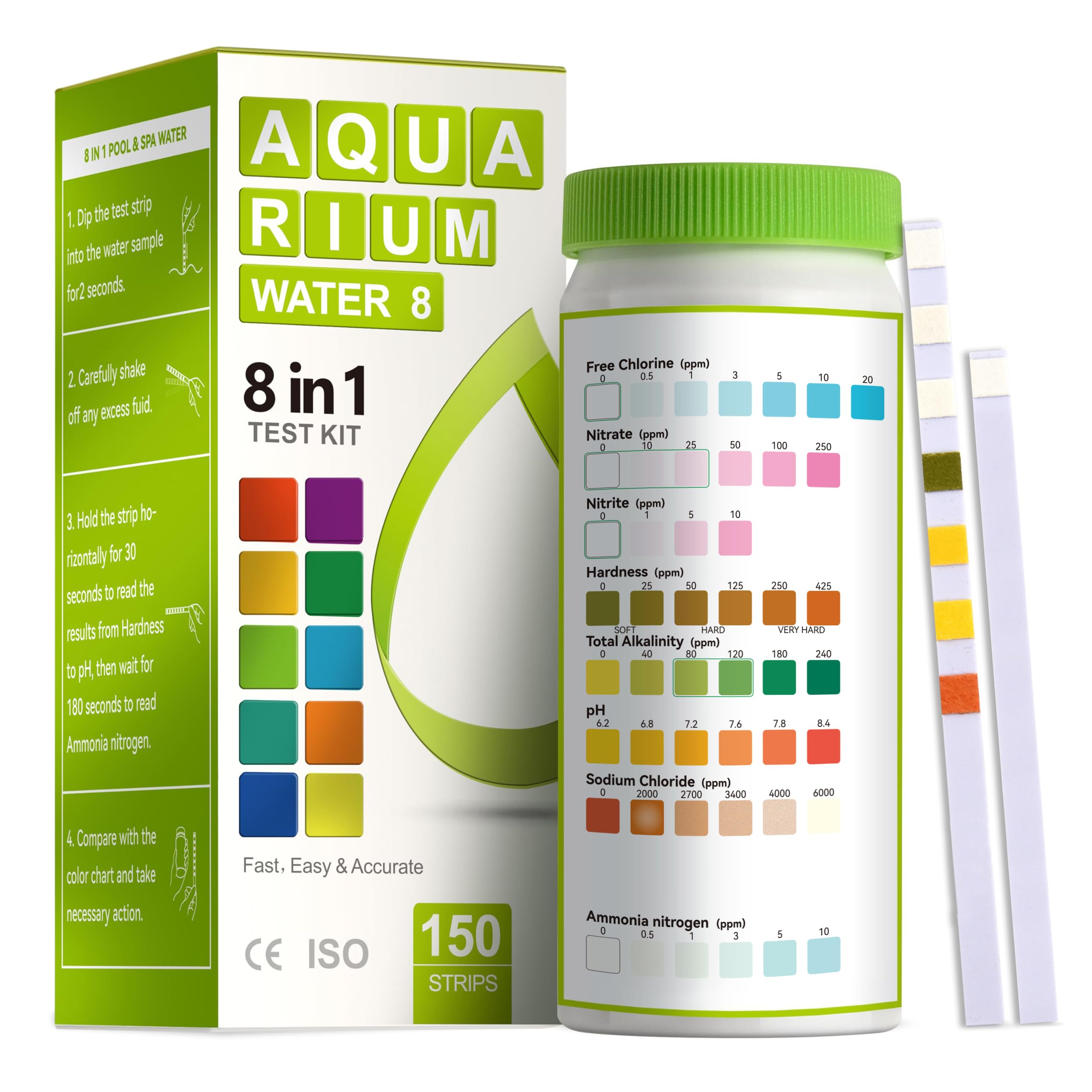
The ammonia pad is what makes the AAwipes kit worth a second look. The API 5-in-1 and DIPSTIK strips leave ammonia out, while this one includes an ammonia nitrogen pad alongside free chlorine, hardness, pH, and the rest of its eight tests. With 150 strips, it is built for people who want to check often without thinking about the cost of each dip. We see it as a screening kit, not a kit to bet the pond on.

We do not make it the only test kit in a koi pond. The ammonia pad is the one we cross-check with a liquid test before changing water or adding treatment; a single pad is a screening result, not a lab report. Use it for a quick weekly look, then confirm anything alarming with the API Master or another liquid ammonia test.

Where it earns a place is convenience and breadth for the money. It covers more parameters than the five-in-one strips, comes in a big bottle, and the two-second dip is easy to fit into a feeding routine. If you already own a liquid kit and want a fast ammonia-inclusive check, this is a practical second bottle; if you are buying your first kit, start with the liquid kit instead.

Bottom line: The AAwipes 8-in-1 is a high-count screening kit with the ammonia pad most budget strips leave out; use it for quick checks between liquid tests.

How We Tested 14 Pond Water Test Kits

We started with roughly 40 kits sold for ponds rather than aquariums, then cut the list by asking a few blunt questions: does it measure ammonia and nitrite, are refills sold separately, is there an expiration date printed on the box, and what does a single test actually cost once you factor in replacements. That narrowed it to 14 kits, which we ran from April through midsummer.

The testing happened where ponds actually are. I sampled my 900-gallon koi pond before and after feeding, a friend's murky wildlife pond that had been green since March, and a 150-gallon stock tank I use for quarantine. We deliberately took readings after a two-day rainstorm, during an algae bloom, and once mid-cycle on a brand-new filter, because those are the moments a kit has to be right.

For accuracy, I spiked a bucket of clean pond water with a measured dose of ammonia to a known level and ran every kit against it, then repeated each sample a day apart to see whether results held steady. For pH, each kit was checked against a bottle of 7.0 reference solution. Two of us read every strip and color card separately, first in open sun and then under a shade tree, and compared answers to catch charts that were hard to interpret. We timed a full panel from opening the box to writing down results, read the instructions cold with no prior knowledge, and noted which charts were printed on waterproof cards versus paper that smeared when a wet finger touched it.

How to Choose the Right Pond Water Test Kit

Liquid Reagents or Test Strips?

Liquid reagents are the choice for diagnosis. You fill a tube, add drops, wait, and compare a color; the extra steps buy a clearer reading and, in the API Pond Master, tests for ammonia and nitrite that strips often leave out. That matters when a fish is gasping or a new pond is cycling. Strips are for speed and frequency: a 30-second dip lets you check pH and hardness every week without hauling out tubes. We use both. Buy a liquid kit for the questions that change what you do, and keep a strip kit for the routine look that tells you when to use it.

The Parameters That Matter

Ammonia and nitrite come first. They rise quickly in a new pond or after a filter upset, and they can harm fish before the water looks cloudy. pH matters too, but a single number is less useful than a stable range; carbonate hardness helps you understand why pH moves. Phosphate is a useful extra when algae keeps returning, not a daily obsession. If a kit's parameter list does not name ammonia, do not assume it tests for it. For a koi pond or any pond with fish, choose a kit that gives you an ammonia reading you can act on.

Read the Result the Same Way Every Time

Most bad readings come from technique, not chemistry. Follow the wait time exactly, keep the strip flat, read under natural light, and compare against the chart at eye level. Do not touch the pads or let tap water contaminate the tube. We test from the same spot and at roughly the same time of day, because pH can move over a sunny afternoon and a result is only useful against a baseline. Write the numbers down; a pond log turns a few colored squares into a pattern you can see.

Match the Kit to Your Testing Routine

Count how often you will actually test. Weekly checks through the warm season plus a few after storms or water changes add up, and a 25-strip bottle can disappear faster than expected. A 50- or 100-strip pack lowers the cost of a casual habit, but strips degrade if they sit in a hot shed, so do not buy more than you will use before the expiry date. Liquid kits are the opposite: the API Master's 500 tests make the up-front cost easier to justify over years, provided you store the bottles out of sunlight and keep the tubes clean.

Frequently Asked Questions

Final Verdict

Start with the API Pond Master. It is the only kit here that gives us liquid ammonia and nitrite tests, and those are the readings that turn a vague worry about pond health into a decision. The strips have their place: the API 5-in-1 is the easy weekly companion, and the DIPSTIK bottle is the budget way to test often. But if you keep fish and want one kit that can handle a crisis, the Master is the one we recommend.