Garden Tools

Best Pick Mattock of 2026

A mattock is two tools on one handle: a pick that breaks ground and a wide blade that drags the loosened soil back out. That simplicity is exactly why the wrong one is so frustrating. A head heavier than you can swing comfortably turns a ten-minute hole into an afternoon of sore wrists, and a thin handle can split the first time you catch a rock. What a good one fixes is stubborn ground — hardpan, packed clay, a mat of roots, the stump you've been avoiding since spring. It's the tool you reach for when a shovel just skates across the surface.

My own first mattock was a brute I bought for its heft, and I regretted it by the third swing. Over the past six months I've put nine of them through beds of rocky clay, root-bound borders, and one long-overdue stump, and the pattern held every time: handle length and head balance matter more than raw weight. A tool you can swing for an hour beats one that wins the first swing and loses the next fifty. The picks below are the ones that kept swinging.

1

Fiskars Pro IsoCore 14" 2-in-1

Top Pick
Fiskars Pro IsoCore 14" 2-in-1

General garden digging

Our Score 9.6/10
Check Price

Worth Noting

  • Short handle limits deep digging leverage
Handle
Fiberglass and steel
Overall Length
14.13 in
Overall Weight
2 lb
Head Attachment
Riveted forged steel
Read the full review

The 14-inch length is what made this Fiskars our default pick mattock. It is short enough to swing inside a crowded bed, between shrubs, or from a kneeling position, yet the 2-pound tool carries enough head weight to crack hard clay and sever roots. We reached for it far more often than the full-size picks when the job was planting, weeding, or resetting a border.

The IsoCore handle is the part that keeps you swinging. The textured grip and flared end give you a secure hold, and the shock-control construction takes some of the sting out of repeated strikes. We still let the head do the work rather than forcing it, but the handle is a real comfort advantage over a plain wood shaft.

The head is riveted in place, so there is no separate head to reseat or check between swings. The pick end bites into compacted soil, and the hoe side is wide enough to slice through roots and scrape soil out of a planting hole. It is a garden-bed tool first; for opening a new bed in rock-hard ground, the 36-inch Fiskars is the faster choice.

What we appreciate most is the control. You can place a strike close to a plant without feeling like you are swinging a demolition tool, and the short length stores easily on a shelf or in a shed. It sits in the middle of the price range here, which feels fair for the riveted build and comfortable handle.

Bottom line: For most garden digging, we recommend this compact Fiskars first: it breaks roots and clay without the bulk, and the riveted head stays put.

2

Fiskars Pro IsoCore 5 lb Garden Pick

Fiskars Pro IsoCore 5 lb Garden Pick

Heavy clay

Our Score 9.6/10
Check Price

Worth Noting

  • Heavy head tires arms over long sessions
Handle
Rubber grip
Head Type
Pick and flat blade
Head Weight
5 lb
Overall Length
36 in
Read the full review

The 5-pound head is the whole argument for this full-size Fiskars. It lands with enough force to crack compacted clay and drive through a mat of roots, and the 36-inch handle gives you the swing speed to use that weight. In ground where the compact pick bounced, this one kept digging.

We think it is the right choice for a serious vegetable bed or a yard full of rocky soil, but it is not the tool we hand to someone who wants to weed a perennial border. The long handle gives you reach and leverage, and the rubberized grip and shock-control construction make repeated swings more comfortable than a bare wood handle. It is still a big tool, and you need room to swing it.

The riveted head is a big part of the appeal. There is no detachable head to work loose, and the flat blade on the back side chops through roots rather than just loosening them. The pick point is sharp enough to start a hole in hardpan, and the weight keeps it driving after the first strike.

We prefer this one for opening new ground, trenching, and pulling stumps, not for finishing a bed or working around delicate plants. If your digging is mostly small holes and tight beds, the 14-inch model is easier to live with. When the ground is the problem, the extra weight is the solution.

Bottom line: When the ground is hard clay and roots, we step up to this 36-inch Fiskars: the 5-pound head does the breaking, and the long handle saves your back.

3

Haliaeetus 15" Stainless Steel Mattock

Haliaeetus 15" Stainless Steel Mattock

Tight beds

Our Score 9.4/10
Check Price

Worth Noting

  • Wood handle needs occasional oiling
Handle
Wood
Head Material
Stainless steel
Overall Length
15 in
Overall Weight
1.63 lb
Read the full review

A wood handle changes the feel of a pick mattock. The Haliaeetus pairs a 15-inch wooden grip with a stainless steel dual head, and the result is a compact tool that feels more like a hand tool than a mini pickaxe. It is the one we reach for when the bed is close to the house and we want control more than brute force.

We like it for tight beds and edging because the short length lets you work close to plants without a long handle banging into branches. The stainless head resists corrosion and cleans up easily, and the 0.74 kg weight is light enough to use one-handed in soft soil. The pick point still bites into clay, but this is not the tool for driving through big rock.

The head is attached with dual rivets, and that is a secure arrangement for a compact mattock. The blade edges are thick and tapered, so they hold up to soil and small roots without feeling fragile. The wooden handle fits the hand well and gives you a direct feel for what the head is doing.

The finish is a nice bonus: the stainless shines, and the wood looks good enough to hang by the door. We were surprised by how often we picked it up for small jobs because it is so easy to control. It is a garden tool, not a collector's piece, but it is a pleasant one to use.

Bottom line: The Haliaeetus is the compact mattock we choose when we want a warm wood handle and a stainless head for beds, edges, and small holes.

4

Berry&Bird 14.9" Garden Mattock

Berry&Bird 14.9" Garden Mattock

Compact garden work

Our Score 9.4/10
Check Price

Worth Noting

  • Wood handle needs occasional oiling
Handle
Ash wood
Head Material
Stainless steel
Overall Length
14.9 in
Overall Weight
14.1 oz
Read the full review

The ash handle and stainless head give the Berry&Bird a traditional garden-tool look that stands out among the fiberglass handles here. It is 14.9 inches long and weighs just over 14 ounces, so it feels more like a heavy hand tool than a small pickaxe. We noticed the balance first: the head is compact, and the handle puts the weight right where you want it.

The dual head has a pick on one side and an adze on the other. The pick is handy for teasing rocks out of a bed and breaking small roots; the adze side slices and pries. We found the flat side useful for lifting the edge of a landscaping rock or cutting a weed root without disturbing the plants around it.

The stainless steel head resists rust and cleans up nicely, and the ash handle has a warm, traditional feel. The tool is happiest in soil and small roots; it is not the one for driving through rocky ground. The head is attached with dual rivets, which gives it a secure feel in use.

We recommend it to gardeners who want a compact, traditional-looking mattock for beds and borders, with a warm handle and a head that stays put. What we like most is the narrow pick point: it lets you work around established plants with a precision the bigger tools cannot match. The stainless finish also makes it easy to spot in a crowded shed.

Bottom line: We recommend the Berry&Bird to gardeners who want a compact, traditional-looking mattock for beds and borders, with a warm ash handle and a stainless head.

5

KINJOEK 15" Pick Mattock (2-Pack)

KINJOEK 15" Pick Mattock (2-Pack)

Shared garden work

Our Score 9.2/10
Check Price

Worth Noting

  • Short handles limit leverage
Handle
Plastic-coated fiberglass
Pack Count
2 tools
Head Weight
1.5 lb
Overall Length
15 in
Read the full review

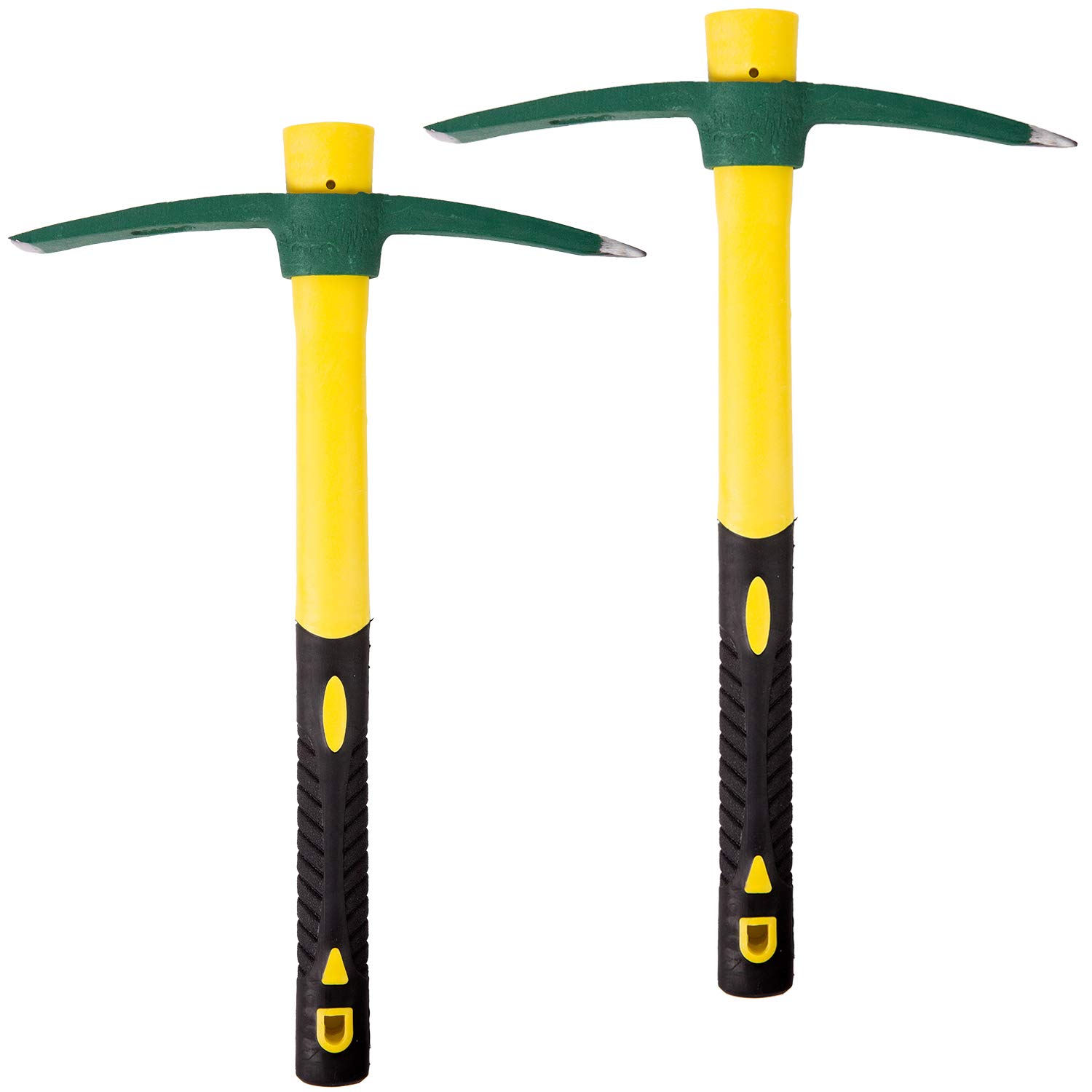
The two-pack is the reason to look at the KINJOEK. You get two 15-inch pick mattocks with fiberglass handles, which is useful when one person is breaking beds and another is chasing weeds along a fence. We kept one by the raised beds and one in the shed, and that alone made it more convenient than a single premium tool.

Each mattock is light enough to swing with one hand in soft soil, and the 1.5-pound head still bites into clay and small roots. The 15-inch handle is the same compact format as the single compact picks here, so it works in tight beds and stores easily. The rubberized grip is comfortable, and the fiberglass handle does not mind being left outside.

The heads are detachable for storage and transport, so seat them firmly and check the fit before each session. A loose head is the one thing that makes a cheap mattock frustrating; once seated, these tools feel solid for garden work. The fiberglass handles are easy to wipe down, and the compact size makes them simple to store.

For a household that shares tools, the duplication is the feature. You can leave one by the back beds and one in the garage, or hand one to a helper without stopping your own work. It is not the pick for a solo gardener who wants one heirloom tool, but it is a sensible way to keep two diggers moving.

Bottom line: If two people dig together, the KINJOEK two-pack is the practical buy: two capable 15-inch mattocks, each with a light head and a weather-ready handle.

6

KEILEOHO 15" Pick Mattock Hoe

KEILEOHO 15" Pick Mattock Hoe

Light garden jobs

Our Score 9.2/10
Check Price

Worth Noting

  • Short handle limits leverage
  • Light head is slow in hard clay
Handle
Rubber
Head Material
Forged steel
Overall Length
15 in
Overall Weight
1 lb
Read the full review

At about a pound, the KEILEOHO is the lightest mattock in this group. That makes it easy to carry to a raised bed or pack for a camping trip, and it is the one we hand to someone who finds a full-size pick intimidating. The rubber handle is comfortable, and the 15-inch length keeps the tool close to your body.

The forged steel head has a pick and a 1.57-inch cutting edge, which is enough for loosening soil, digging weeds, and making small planting holes. The rubber grip stays comfortable, and the short handle keeps the tool handy in a crowded bed. It is a light-duty tool, and it makes no apology for that.

We treat it as a light garden tool and an occasional camp mattock. It is not a replacement for a full-size mattock, but it is a useful second tool for a small bed, a flower border, or a campsite. The price is low, and the build is honest for what it is.

What we appreciate is the ease: you can grab it for a five-minute weeding job without hauling out a heavy pick. The compact size makes it easy to stash in a shed or a truck bed, and the rubber grip wipes clean after muddy work. That is a real convenience in a garden where the big tools stay put.

Bottom line: We recommend the KEILEOHO for light garden jobs and small beds: it is easy to swing, easy to carry, and a handy second mattock.

7

Truper 5 lb Heavy-Duty Pick Mattock

Truper 5 lb Heavy-Duty Pick Mattock

Full-size value

Our Score 9.0/10
Check Price

Worth Noting

  • Long handle needs clear swing space
Grip
Non-slip rubber
Head Weight
5 lb
Head Material
Forged carbon steel
Overall Length
36 in
Read the full review

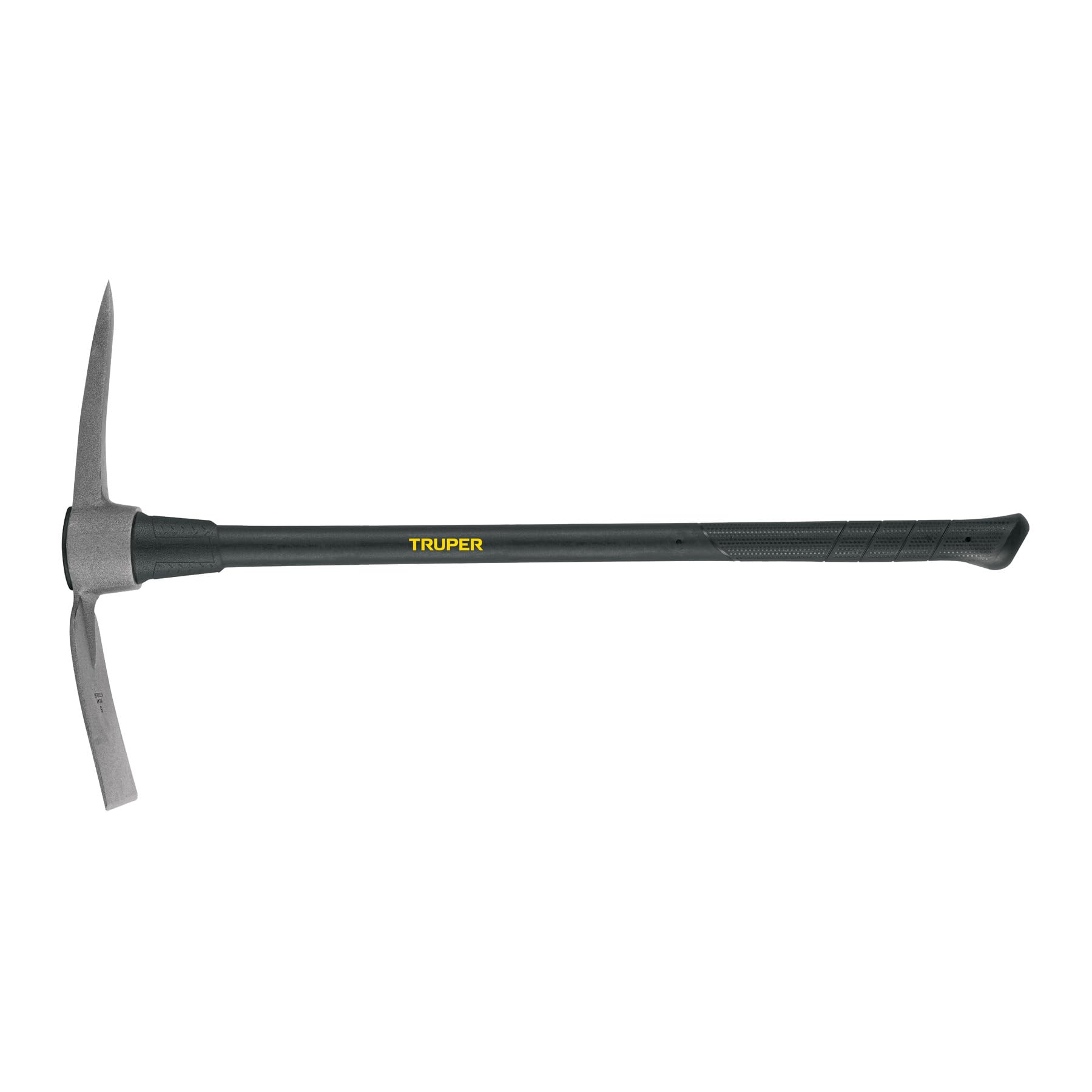
The Truper makes its case on the value of a full-size forged mattock: a 5-pound head, a 36-inch handle, and a rubber grip, without the premium tag of the Fiskars. It is the tool we reach for when the ground is hard and we do not want to baby the edge.

The pointed pick is sharp out of the package, and the flat mattock cutter slices through roots and scrapes soil out of a trench. We found the 5-pound head heavy enough to break compacted clay but still manageable on a long swing. The rubber grip stays secure when your hands are muddy, and the handle is easy to wipe down after a wet session.

It earns its place for the gardener who wants one heavy tool for clay, roots, and rocky patches and does not need the extra shock-control engineering. The head is not riveted, so seat it firmly and check it before each session; a loose head is the one thing that turns a full-size mattock into a chore. The simple build is easy to trust.

There is not much finesse here, and that is fine. The long handle gives you the reach to work standing up, the flat blade is wide enough for roots, and the whole tool feels like it will take a beating. For a tool that lives in a shed and gets used on the worst ground, that simplicity is the point.

Bottom line: If you want a full-size forged mattock without the premium price, the Truper is the one we point to; it hits hard and keeps the swing simple.

8

Nohovu 36" Pick Mattock

Nohovu 36" Pick Mattock

Rocky soil

Our Score 9.0/10
Check Price

Worth Noting

  • 7.8-pound build tires you over long sessions
  • Long handle needs clear swing space
Handle
Fiberglass
Overall Length
36 in
Overall Weight
7.8 lb
Flat Blade Width
4.3 in
Read the full review

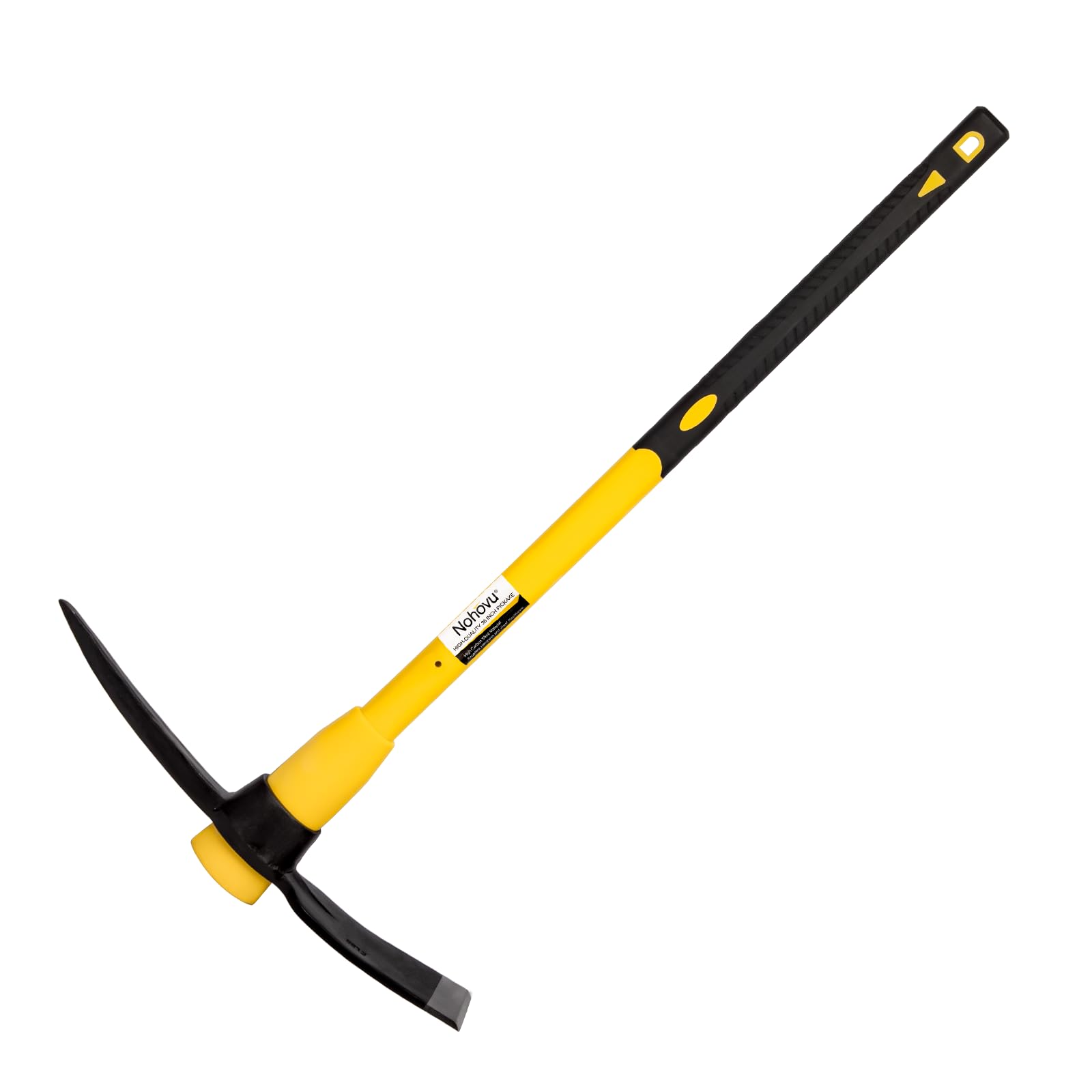
At 7.8 pounds, the Nohovu is not a tool you toss in a tote bag. That weight is the point: it gives the pick enough momentum to break rocky soil and thick roots without you forcing every swing. The 36-inch handle adds reach and swing speed, so the tool does more of the work than your shoulders.

The fiberglass handle is built with a shock-absorbing structure, and we noticed the difference on repeated strikes. It takes the edge off the vibration that usually travels up a pick and leaves your hands buzzing. No handle makes a 7.8-pound tool feel light, but this one is easier to keep swinging than a bare shaft.

The dual head has a pointed pick and a 4.3-inch flat blade. The pick is the part for shale and hardpan; the flat blade is wide enough to cut roots, scrape soil, and pry small rocks. We found the flat side especially useful for clearing a trench after the pick had broken the ground.

We keep it for opening rough ground, trenching, or clearing rock. The long handle gives you the reach to work standing up, and the weight is there to be used. For raised beds and small planting holes, the compact Fiskars is the easier tool; this one is for the rough end of the yard.

Bottom line: For rocky ground and long digging sessions, the Nohovu's 36-inch shock-absorbing handle and 7.8-pound build make it the heavy-duty pick we reach for.

How We Tested the Best Pick Mattocks

We started by gathering every mattock sold as a working digging tool rather than a decorative garden prop, then narrowed the field by head weight, handle material, and handle length. Anything with a head that already wobbled in the box or a handle thinner than my thumb got cut. That left nine mattocks, which we used for six months on a quarter-acre lot of packed clay and glacial rock, in root-bound beds, and on a stump that had already defeated two shovels.

Each mattock dug the same twelve-inch test hole in that clay, and we counted swings and clocked the time, since effectiveness on paper and effectiveness in hard ground are different things. We also drove each one into a buried rock and an old root to see whether the head stayed tight or began to twist. Because handle size drew the most complaints from buyers, every tool passed between a 5-foot-4 tester and a 6-foot-2 one, and we noted where each handle put the swing — long for reach and leverage, short for control in a crowded bed.

For durability, we deliberately overstruck a log with each handle, the way you do when you're tired and miss, then checked for splintering, cracking, and a loosened eye. After every session we tried to twist the head by hand and looked at the blade edge for rolling or chipping. Each mattock got weighed on a kitchen scale and swung for a full hour, because the gap between a three-pound head and a five-pound one only shows up around swing forty. We switched ends constantly, pick for breaking and blade for scooping, to see which tools genuinely replaced a shovel and pry bar. Price counted too, but only against performance: a mid-priced mattock that stayed tight beat a heavier, costlier one that didn't.

How to Choose the Right Pick Mattock

Handle length decides where the tool works

Compact pick mattocks run around 14 to 15 inches, while full-size models run about 36 inches. The short tool wins in raised beds, between shrubs, and anywhere a long handle bangs into branches; the long tool gives you reach, swing speed, and leverage for deep holes and hard ground. A 15-inch mattock is not a scaled-down toy, but it is also not the tool for opening a new bed in compacted clay. Choose the short handle for control and storage, the long handle for repeated heavy digging.

Match head weight to the ground and your stamina

Head weight is a trade-off between impact and fatigue. The 1- to 2-pound compact heads here are easy to swing and precise in beds, but they need more strokes in hard clay. A 5-pound head does more of the breaking for you, and the 7- to 8-pound full-size picks add momentum for rocky ground, at the cost of arm fatigue. We think most gardeners are best served by a 1.5- to 2-pound mattock for beds and a 5-pound tool for serious digging; the 7.8-pound Nohovu is for the roughest ground.

Check the head attachment before you swing

A riveted head is the simplest security: there is no separate head to reseat, and the Fiskars models use that arrangement. Many compact mattocks ship with a detachable head, which makes storage easy but adds a check before every session. Seat the head firmly and confirm it does not slide on the handle; if it works loose, stop and reseat it. We treat a loose head as a safety issue, not a minor annoyance. Fiberglass handles resist weather and require little care; wood feels warmer but needs occasional oiling.

Pick the head shape for your soil

The pointed pick is for breaking hardpan, clay, and small rock; the flat adze or mattock blade is for cutting roots, scraping soil, and prying. A wider flat blade moves more soil and slices roots, while a narrow one concentrates force in rock. Stainless resists rust; forged carbon steel is the usual choice for heavy impact. If your ground is mostly soil and roots, a compact pick-and-adze is enough. If it is shale, hard clay, and old stumps, choose a heavier forged head with a broad flat blade.

Frequently Asked Questions

Final Verdict

For most gardeners, the Fiskars Pro IsoCore 14-inch 2-in-1 is the pick mattock we recommend first. It has enough head weight to break roots and clay, a short enough handle to control in beds, and a riveted head that removes the loosening worry of detachable designs.

Step up to the 36-inch Fiskars 5-pound pick when you are opening heavy ground all day, or choose the Truper if you want a full-size forged mattock with a simpler build. The compact wood-handled picks are for tighter beds and lighter work, not for replacing a full-size digging tool.