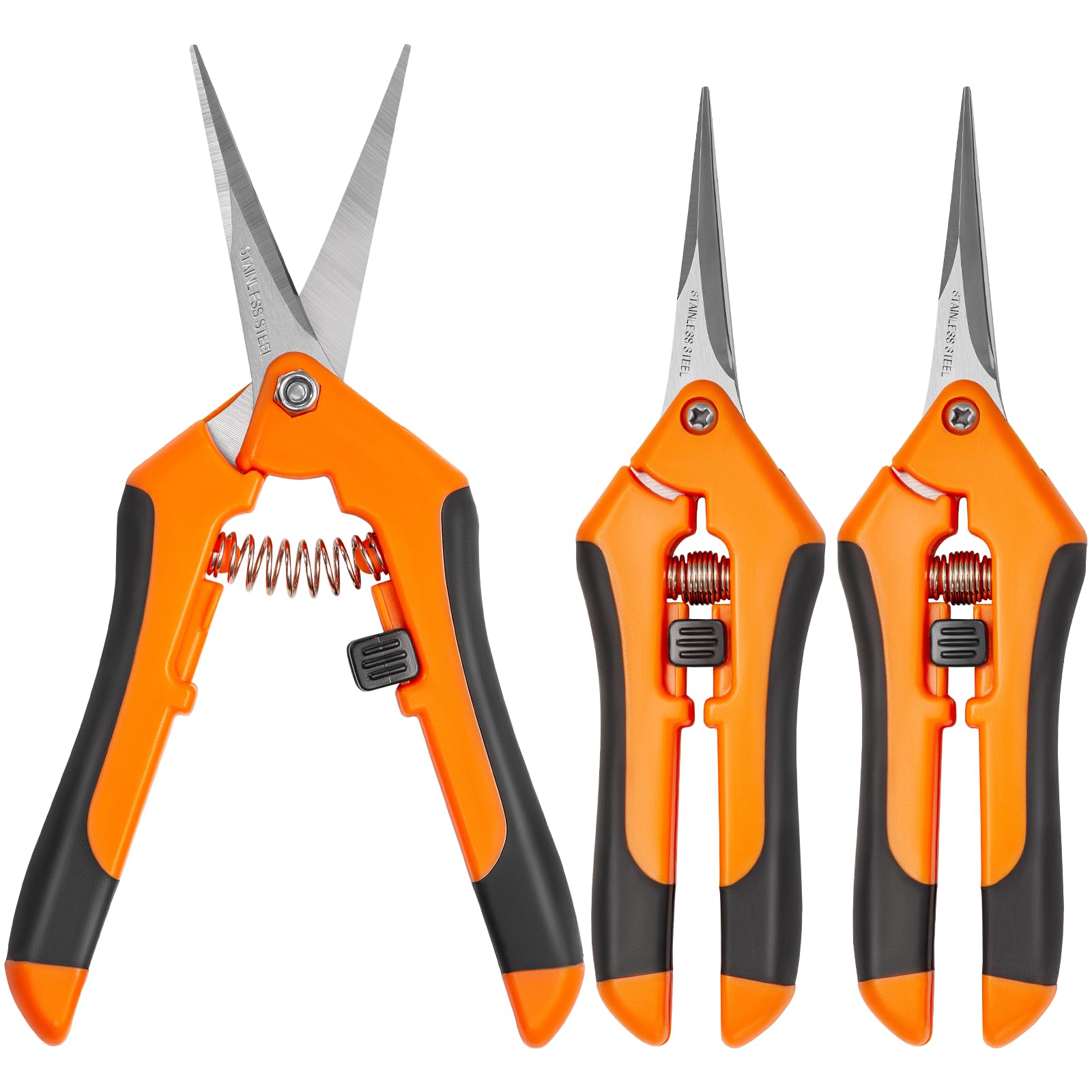
Garden Tools

Best Gardening Scissors of 2026

The moment you find out your garden scissors are bad is quiet and annoying: you're deadheading a rose, you squeeze, and the stem bends instead of separating. A good pair does the opposite — it bites in and lets go in one clean snip, so the plant heals faster and your hand doesn't ache an hour later. That's really all these tools are asked to do, and somehow a remarkable number of them can't manage it.

Here's what I wish someone had told me years ago: bypass blades slice like scissors, while anvil blades chop against a flat plate. For anything alive — stems, herbs, suckers, vines — you want bypass; anvil designs bruise the tissue unless the edge is perfect. Since early spring I've kept 14 pairs in rotation, moving between the raised beds, the kitchen counter, and my back pocket, and the differences in sharpness, lock design, and how each one fits a hand after a hundred cuts are not subtle. The ones worth your money are below.

1

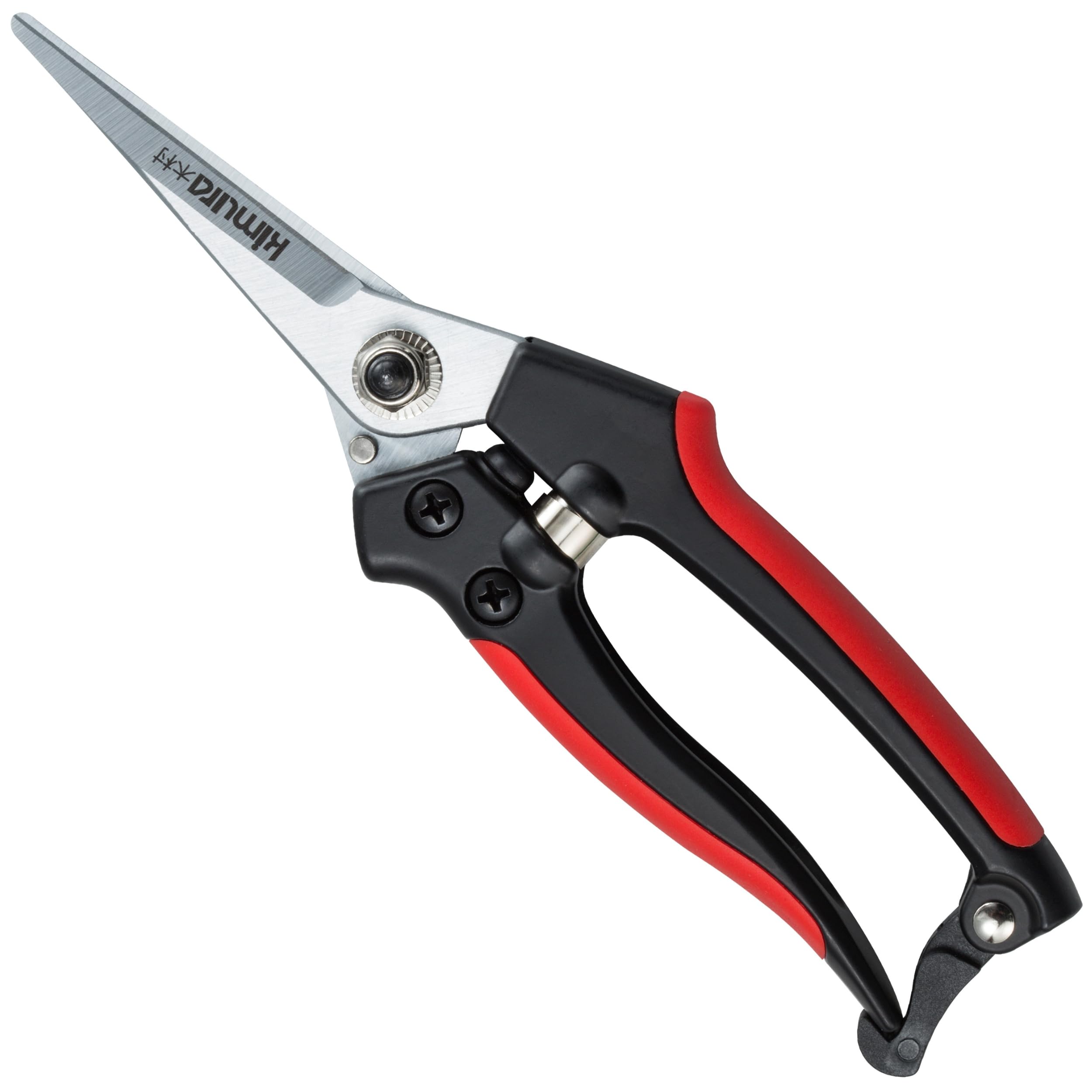
Kimura 8" Pro Pruning Scissors

Top Pick
Kimura 8" Pro Pruning Scissors

Everyday trimming

Our Score 9.6/10
Check Price

Worth Noting

  • 15 millimeter cutting ceiling rules out woody growth
Size
8.2 inches
Cutting Width
15 millimeters
Blade Material
Japanese Hi-Carbon SK5 steel
Handle Material
Vinyl-coated aluminum
Read the full review

The figure that got our attention is 59 HRC, the hardness Kimura heat-treats its Japanese SK5 blades to, because it explains what you notice on the first cut: a narrow blade that passes through a green stem without crushing the end of it. We used these on spent blooms, herb clumps, and leggy houseplants, and the cut stayed clean out at the tip, which is exactly where cheaper snips start to tear.

What makes them the pick rather than just a good snip is everything around the blade. The aluminum handles are light enough to forget in an apron pocket, the vinyl coating holds when your hands are wet, and the PTFE coating keeps sap from welding the blades together halfway through a bunch of basil. The latch looks after itself, too: bring the handles together and it closes, and a squeeze releases it, so there's no thumb catch to hunt for while your other hand is holding the stem.

It also covers ground that usually takes two tools — the micro-tip snip for deadheading and the small bypass pruner for green stems. Carrying one pair into the garden instead of two is the kind of convenience you stop noticing after a week and then miss on the day you leave them indoors.

Bottom line: The pair we recommend to almost everyone: sharp enough for herbs and light stems, light in the hand, and the latch releases with a squeeze rather than a fumbled thumb catch.
2

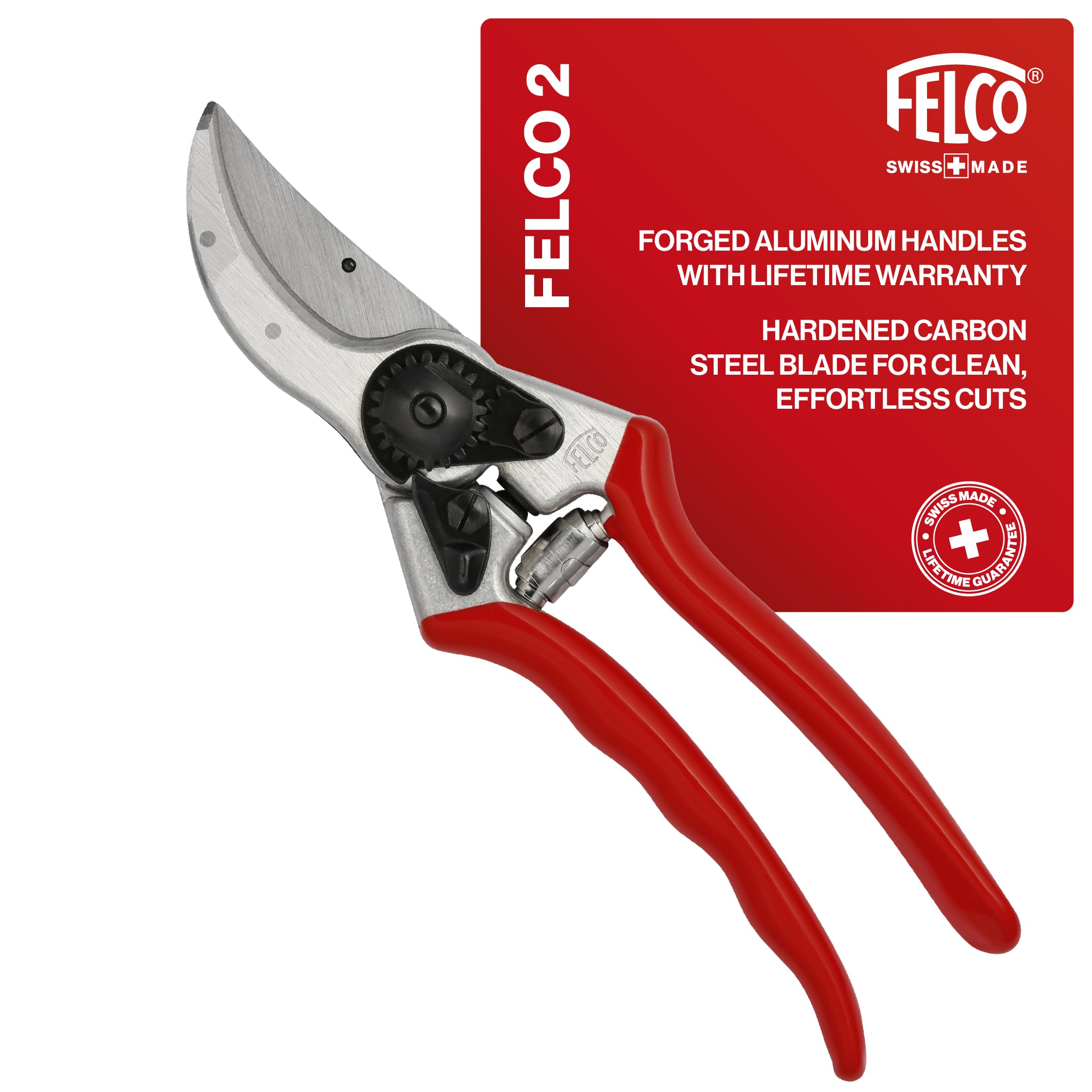
Felco F2 Pruning Shears

Felco F2 Pruning Shears

Long-term pruning

Our Score 9.6/10
Check Price

Worth Noting

  • Right-handed configuration only
Weight
8.8 oz
Blade Length
2 inches
Cutting Capacity
1 inch
Hand Orientation
Right
Read the full review

The F2 is the pruner in this group you buy as equipment rather than a consumable. Forged aluminum handles, a two-inch hardened carbon steel blade, a one-inch cutting capacity, 8.8 ounces in the hand — none of which explains the price until you reach the line about replaceable parts.

Every component can be replaced or sharpened, which turns a purchase into upkeep. That's the argument: the blade, the spring, the bumpers all come apart and go back together, so the money goes in once and the tool stays in service. For anyone who prunes enough to wear out a cheaper pair every few seasons, it works out cheaper over time and gives you a better tool while it does.

In the hand it's a lovely thing. The angled head keeps your wrist straighter through a low cut, the non-slip coating stays put in the wet, and the blade leaves a flat cut that closes over instead of a crushed stem. At 8.8 ounces it's among the lightest full-size pruners here, which matters more than the spec suggests after an hour.

The price is the highest in this group, and that's the honest sticking point. If money is the deciding vote, the Corona does one-inch forged work for considerably less — you give up the spares catalogue rather than the cutting. If you're buying the last pruner you intend to own, this is where that money goes.

Bottom line: Buy it if you want a pruner you maintain instead of replace — the blade, spring, and bumpers all come apart, so one purchase keeps working season after season.

3

Corona BP 3180D Bypass Pruner

Corona BP 3180D Bypass Pruner

Thick, woody stems

Our Score 9.4/10
Check Price

Worth Noting

  • Bare steel head needs drying and oiling
Weight
13.6 oz
Warranty
Limited lifetime
Construction
Forged steel
Cutting Capacity
1 inch
Read the full review

The BP 3180D is the old-fashioned option and unapologetic about it: a forged steel body, a one-inch bypass head, contoured non-slip handles, and a sap groove cut into the plate. It's 8.5 inches long and 13.6 ounces, which makes it the heaviest pruner here by a clear margin.

That weight is doing a job. On a green branch near its rated inch, the mass of the head carries the blade through instead of leaving your wrist to do all the work, and the forged handles don't flex the way stamped ones can. There's a limited lifetime warranty behind it as well, which matters on a tool built this heavily.

For shrubs, roses, and the woody stems that stop a 5/8-inch pruner cold, this is the tool we hand over. The handles open wide, which is welcome in gloves and less so in small hands — if yours are on the small side, the Decerk or the Kimura will feel like less of a stretch.

Bottom line: For anyone cutting woody stems and roses, the forged one-inch head gives you the momentum to get through them cleanly, as long as you look after the steel.

4

Decerk 8.5" Bypass Pruner

Decerk 8.5" Bypass Pruner

Aching hands

Our Score 9.4/10
Check Price

Worth Noting

  • Three-quarter inch cutting ceiling
Size
8.5 inches
Blade Type
Bypass
Cutting Width
20 millimeters
Blade Material
Titanium-coated SK5 steel
Read the full review

The Decerk is an 8.5-inch bypass pruner with a titanium-coated SK5 blade, anodized aluminum handles under a rubber overmold, and a 20-millimeter cutting width. What it's really selling, though, is the squeeze.

Two details do the work. The handle geometry puts more of your hand into each cut than a straight-handled pruner manages, so a stem that takes real effort elsewhere goes through here with less. And the safety catch is a thumb slide you can work with the hand already holding the pruner, which means you can lock it or open it while your other hand keeps a branch out of the way.

We hand this one to anyone who tells us their grip isn't what it was: at 8.8 ounces it's light enough for a long session, the rubber holds when your hands are damp, and the blade arrives sharp enough to shave a green stem. It's the pruner here we reach for when there's a lot of cutting and not much patience.

Bottom line: The easiest squeeze in this group for gardeners whose grip tires quickly, with a thumb catch you can work one-handed and a blade that arrives genuinely sharp.

5

Kynup Bypass Pruning Shears

Kynup Bypass Pruning Shears

A spare pair

Our Score 9.4/10
Check Price

Worth Noting

  • Lock is hard to set and can slip
Length
8.67 inches
Weight
8.5 oz
Blade Material
SK5 high-carbon steel
Cutting Capacity
1 inch
Read the full review

The Kynup arrives with a spare return spring in the box, which is either thoughtful or an admission. We lean thoughtful: a spring is the part that fails first on a bypass pruner, and having one on the shelf turns a broken tool into a five-minute fix.

What you're buying beyond that is a one-inch cutting capacity near the bottom of this group's price range. The SK5 blade is coated and sharp, the handles are rubber overmolded, and at 8.5 ounces the whole pruner disappears in a pocket. The red handles are a small thing that stops being small the first time you set them down in the grass.

Kynup bills it as left-handed friendly, and the ambidextrous handle shape at least doesn't fight you the way a molded right-handed grip does. The grip runs on the narrow side, which is comfortable in a medium hand and cramped in a very large one.

Where it earns its place is as the second pruner — the one that lives in the shed, the car, or the plot, where a more expensive tool would make you wince every time it went missing. It cuts cleanly at a capacity the Fiskars can't match, and if it walks off you replace it without a second thought.

Bottom line: A one-inch bypass pruner that costs very little and cuts cleanly, which makes it the pair to leave in the shed, the car, or the plot.

6

Fiskars Bypass Pruning Shears

Fiskars Bypass Pruning Shears

Budget bypass pruning

Our Score 9.2/10
Check Price

Worth Noting

  • Latch can stick or fail to hold shut
  • 5/8 inch capacity limits it to green stems
Blade Coating
Low-friction coating
Blade Material
Alloy steel
Cutting Capacity
0.63 inches
Hand Orientation
Ambidextrous
Read the full review

Fiskars' bypass pruner is the plainest tool in this group and the one that asks the least of you: an all-steel body, a 5/8-inch bypass head, a low-friction blade coating, and a sap groove worked into the plate so sticky stems don't gum up the action. It's also listed as ambidextrous, which is rarer here than you might expect — the Felco, for one, is a right-handed tool.

We think of it as the pair to buy twice rather than the one to pass down: one for the shed, one for the kitchen drawer. The blade takes a clean bite on green stems up to its rated 5/8 inch, and the non-slip handles are shaped so a long session doesn't leave your palm sore. Steel handles and a steel head mean it feels like a tool rather than a toy, and the lifetime warranty covers the parts that wear.

Set against the cheaper Kynup, you're paying for the ambidextrous shape, the warranty, and a small head that gets into a crowded rose bush without shredding the stems around the one you're cutting.

Bottom line: Buy it if you want a plain, ambidextrous bypass pruner that handles everyday trimming and comes with a lifetime warranty standing behind it.

7

VIVOSUN 6.5" Pruning Snips

VIVOSUN 6.5" Pruning Snips

Herbs and houseplants

Our Score 9.2/10
Check Price

Worth Noting

  • Plastic lock slide can be stiff and flimsy
Length
6.5 inches
Blade Edge
Straight
Blade Length
2.1 inches
Blade Material
Stainless steel
Read the full review

At 6.5 inches and around 2.5 ounces, the VIVOSUN snips feel closer to a good pair of kitchen scissors than to a pruner, and that's the point. The stainless blades run 2.1 inches and taper to a fine tip, so you can put the point between two stems and take one without bruising its neighbor.

Precision is the reason to own them. Cutting a handful of basil, deadheading a petunia, or trimming a leggy pothos is quicker with these than with a bypass pruner whose head is too fat to get in. The spring opens the blades for you between cuts, and the sideways lock keeps them shut in a drawer.

The build is light — you notice you're holding these only because they're bright orange — and the stainless has stayed free of rust in our use. Sharp blades on a light frame are the right combination for a hundred small cuts and the wrong one for anything you have to lean on.

Buy a pair for the kitchen windowsill, the greenhouse shelf, and the pocket of your garden bag rather than as the last snips you'll own. For anything with bark on it, use a bypass pruner; for everything softer, this is the least expensive precision in the group.

Bottom line: The cheapest way to get a genuinely precise tip for herbs, houseplants, and deadheading, as long as you treat them as a light-duty tool.

8

GROWNEER 6.5" Snips, 3 Pack

GROWNEER 6.5" Snips, 3 Pack

Keeping one everywhere

Our Score 9.2/10
Check Price

Worth Noting

  • Plastic lock slide loosens with use
Length
6.5 inches
Blade Edge
Straight
Pack Count
3
Blade Material
Stainless steel
Read the full review

A three-pack is the right answer for a tool this easy to lose, and that's the whole reason the GROWNEER set earns a place here. Three 6.5-inch snips with straight stainless blades, spring-open action, rubber grips, and blade guards, priced so that leaving one outdoors overnight isn't a catastrophe.

Placement is the feature. Ours went one to the kitchen for herbs, one to the greenhouse shelf, and one to the car, and the effect is that you stop hunting and start snipping. That's worth more than a marginal upgrade on a single pair that's never where you left it.

Be clear-eyed about what they are: light, sharp, and not built to be the last snips you buy. The pivot screw wants a check now and then — snug it up and the blades come back together — and the blades are for stems and leaves, not for anything with real bark.

Bottom line: Three sharp little snips in one pack, so there's a pair within reach wherever you garden — and losing one doesn't end the season.

How We Chose and Tested the Best Garden Scissors

We started with a shortlist of about 40 pairs and narrowed it by reading specs and owner reviews, favoring bypass blades, comfortable handle geometry, replaceable parts, and locks that didn't look like an afterthought. Fourteen made the cut, from micro-tip snips to full-size pruners, and they spent five months in rotation from the first spring cleanup into late summer — in raised beds, on the kitchen counter beside the herb pot, and clipped to a pocket during quick walks around the yard.

Sharpness and cutting performance got the hardest jobs. Every pair went through the same round: a wet green stem, a woody deadheading cut, a length of jute twine, and a loosely held strip of newspaper, since a blade that drags instead of bites will tear the paper. We noted whether stems came away clean or bruised and whether anything slipped toward the pivot mid-cut. Then we simply used them for weeks — cutting back last season's growth, opening soil bags, snipping wire ties off new plants, and harvesting herbs and cherry tomatoes.

Ease of use came down to small things: whether the spring opened the blades fully on its own, whether I could get them on and off with muddy gloves, and whether a pair worked as well in my left hand as my right. We opened and closed every locking mechanism one-handed, carried each pair loose in a pocket to see if a lock drifted, and checked that it snapped shut when we wanted it to. Size mattered more than expected — larger hands will feel cramped on micro-tips. After five months of wet work, one accidental overnight stay outside, and a few drops onto the patio, we checked pivots for rust and wobble and springs for fatigue. Value was just what each pair still did well at the end.

How to Choose Gardening Scissors

Bypass Pruners and Straight Snips Do Different Jobs

Two tools get sold under the same name. A bypass pruner has a curved blade that slices past a flat hook, which leaves a clean cut on live wood; a straight-edged snip works like scissors and is the better tool for anything soft — herbs, flower stems, seedlings, houseplants. We reach for a snip most days and a bypass pruner when there's bark involved.

If you're buying one tool to cover the most ground, a bypass pruner between 3/4 inch and a full inch is the safer bet. If your pruning is mostly deadheading and harvesting, a micro-tip snip will do the finer work better than any pruner can.

Read Cutting Capacity as a Ceiling

Capacity is the largest stem a tool will take, and it's the figure worth comparing rather than blade length. Across this set it runs from 15 millimeters on the Kimura to a full inch on the Corona, the Felco, and the Kynup.

Those ratings assume green wood. A dry, dense branch of the same diameter takes real force, and a pruner rated at an inch will often want two hands for it. Match the ceiling to your thickest regular cut, not your once-a-year one.

The Lock Is the Part You'll Touch Most

The latch is where inexpensive pruners fail first, and it's the part you work every thirty seconds. A thumb slide can be stiff; a self-closing catch like the Kimura's releases when you squeeze the handles; the Decerk's catch works with the hand already holding the tool.

If you cut one-handed — up a ladder, holding a branch aside with the other hand — pay for a catch you can work without your second hand. A latch that won't hold the blades shut is also a latch that lets them open in a bag.

Fit, Weight, and Which Hand

Pruners here run from about 8.5 to 13.6 ounces, and the difference shows up at the end of an hour rather than the start. Handle span matters as much: wide-opening handles suit gloved hands and feel like a stretch in small ones.

Handedness is the detail most shoppers miss. The Felco F2 as listed is a right-handed tool, while the Fiskars and the Kynup are ambidextrous. Check that line on the listing before you order, because it isn't something you can adjust to.

Steel, Coatings, and Replacement Parts

Most blades here are SK5 or alloy steel. What separates them over years is how they're finished and whether they can be renewed: titanium, PTFE, and non-stick coatings shed sap, a sap groove does the same job mechanically, and a bare forged head will spot unless you dry and oil it.

Replaceable parts are the other route entirely. The Felco's blade, spring, and bumpers come apart, which is why it costs what it does and why a single purchase can stay in service.

Frequently Asked Questions

Final Verdict

After working through the whole set, the Kimura is the pair we recommend first. It makes the cuts most gardeners actually make — spent blooms, herbs, seedlings, thin green stems — cleanly, and the self-closing latch means it's safe to drop in a pocket between jobs.

Two exceptions are worth knowing. If woody stems are part of your regular round, the Corona's forged one-inch head does work the Kimura can't. And if you prefer to maintain a tool rather than replace it, the Felco's replaceable parts turn its price into a one-time cost.