Pest & Weed Control

Best Mosquito Fogger of 2026

The best part of a summer evening is the ten minutes before dinner, when the deck is still warm and the light goes gold — and that's precisely when the mosquitoes show up. A fogger is the tool that buys those minutes back: it throws a cloud of insecticide into the bushes, under the deck, and along the fence line where mosquitoes wait out the day, knocking them down before you carry the plates outside. I've hosted enough cookouts that ended with everyone slapping their own ankles to have opinions about which machines actually deliver.

Since spring, my team and I have run nine foggers through real evenings — weeknight dinners, a birthday party, and plenty of nights I just wanted to sit outside in shorts. Here's what nobody prints on the box: coverage claims assume dead-still air, so a light breeze can strip a plume before it ever reaches the hedges, and the scent lingers far longer than you'd guess. The picks below earned their place on effectiveness first and everything else second.

1

Raid Yard Guard Outdoor Fogger

Top Pick
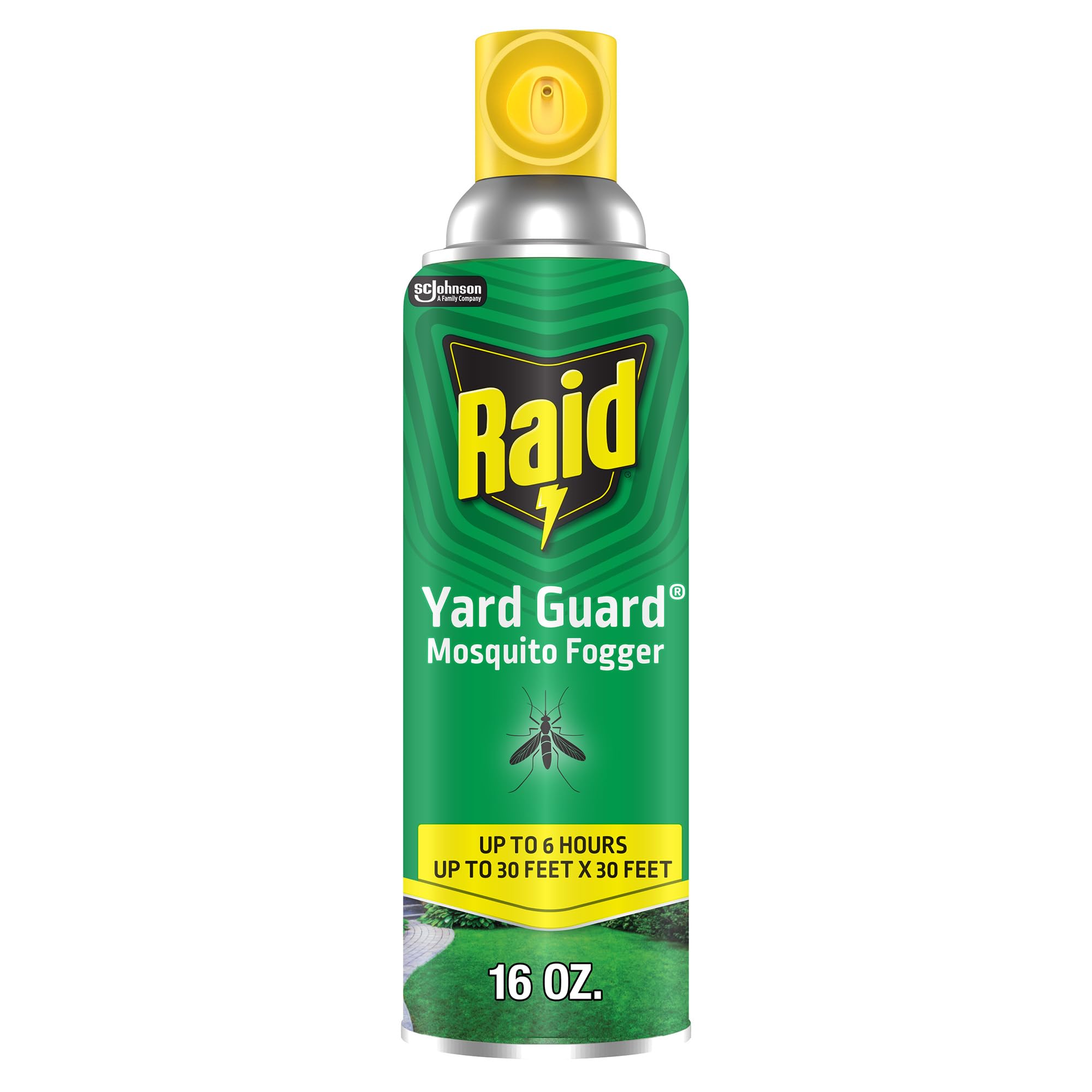
Raid Yard Guard Outdoor Fogger

Patios and decks

Our Score 9.2/10
Check Price

Worth Noting

  • One can treats one area once
Form
Aerosol
Size
16 oz
Coverage
Up to 30 x 30 sq ft
Protection
Up to 6 hours
Read the full review

Thirty by thirty feet is the figure that decides whether this is your fogger, and for most backyards it's the right amount: a patio, a deck, the grass in front of a camper. One can covers that footprint in a single lap — around the seating, under the table, along the edge of the shrubs — with nothing to assemble and nothing to plug in. That simplicity is why we reach for this one more often than anything else here.

Mosquitoes go down on contact, and the same spray is labeled for flies, gnats, small flying moths, wasps, and hornets, which makes it the can to grab when something with a stinger is working the grill. The scent is light and gone quickly, so the yard doesn't announce that it's been sprayed.

Six hours is the label's figure, and we treat it as a ceiling. On a still evening the area stays comfortable through dinner; a breeze off open ground thins the fog and cuts that window short. One 16-ounce can is one treatment for one area — there's no half-can waiting for Sunday unless you're disciplined about it — which is where a three-pack starts to look sensible.

Nothing here needs a learning curve, and that's the appeal. If your outdoor space is a rental patio you treat on Friday nights, this is the whole answer. If you're clearing an acre, it's a supplement to a machine rather than a replacement for one.

Bottom line: Our patio default: one can, one lap, a 30 x 30 foot area cleared in minutes, and nothing to assemble or refuel.

2

Cutter Backyard Bug Control Fogger

Cutter Backyard Bug Control Fogger

Repeat treatments

Our Score 9.0/10
Check Price

Worth Noting

  • Contact kill only, so each gathering needs its own pass
Pack
3 cans, 16 ounces each
Reapplication
No more than once per day
Coverage Per Can
1,200 cubic feet
Active Ingredients
Phenothrin (0.20%), Tetamethrin (0.20%)
Read the full review

Three cans change how you spray. With a single can you ration: a burst along the hedge, another under the table, then a pause while you decide whether the far corner is worth the last of it. With this pack we treat the patio and the tree line in one go and still put a can back on the shelf, and that's the real argument for buying in multiples.

Coverage is listed per can as 1,200 cubic feet, and the label helpfully spells that out as a block of air 8 by 10 by 15 feet. Note that it's a volume rather than a footprint — this is a patio, a fire-pit corner, a patch of open air, not a lawn measure. Inside that space it kills on contact and keeps working for a while after, taking mosquitoes, gnats, flies, wasps, and flying moths with it.

Our reservation is the nozzle. A fogger that spits a jet instead of a mist is no use against mosquitoes, since you can't chase them down one at a time, and these cans don't always fog the way they should. Shake it hard and fire a test burst into empty air before you commit to the seating area; if it comes out as a stream, set that can aside and try the next one rather than soaking the patio for nothing.

The label is more forthcoming than most, too: phenothrin and tetramethrin at 0.20 percent each, an EPA registration, and a clear limit of one treatment a day per area. What it won't do is last — this is contact kill, not a barrier — so the next cookout gets its own pass. Three cans also store in a cabinet where a propane machine won't fit.

Bottom line: Buy the three-pack if rationing a single can sounds tiresome: a contact killer that handles mosquitoes, gnats, and wasps, with a spare for next weekend.

3

OFF! Backyard Pretreat Fogger

OFF! Backyard Pretreat Fogger

Pretreating a party

Our Score 9.0/10
Check Price

Worth Noting

  • Protection often ends well before six hours
Pack
2 cans, 16 ounces each
Coverage
Up to 30 x 30 ft
Protection
Up to 6 hours
Item Weight
1.27 lb
Read the full review

The useful word on this label is pretreat. This is a can for the hour before people arrive, not for swatting mid-barbecue: spray the seating area and the grass around it, put the can away, and the space is ready by the time the first guest walks out. Coverage is up to 30 by 30 feet, the same footprint the Raid can claims, which suits a patio and the strip of lawn beyond it.

Consistency is where it slips behind the other two aerosols. The mist isn't always a mist — some cans put out a fine fog that hangs under the shrubs, others sputter — and the six-hour figure on the label reads as a ceiling rather than a promise, with mosquitoes drifting back well before it on a breezy evening. When it lands, though, it lands: the yard is clear, and the scent is the lightest of the three.

It's also the broadest can of the group on paper: mosquitoes, flies, non-biting gnats, small flying moths, wasps, and multi-colored Asian lady beetles. If those beetles have been clustering on warm siding, this is the can labeled for them, which is more than the others here can say.

Two 16-ounce cans take up little shelf space, and one handles a single patio treatment. That makes it a can for a plan rather than a workhorse — the pick when the goal is one comfortable evening on the deck rather than a season-long campaign.

Bottom line: For the hour before a cookout, this is the can to hand over: a light mist over the seating area and the least aggressive scent of the aerosols here.

4

Black Flag Propane Insect Fogger

Black Flag Propane Insect Fogger

Whole-yard treatments

Our Score 8.8/10
Check Price

Worth Noting

  • Propane canister and insecticide sold separately
  • Heavier and bulkier than an aerosol can
Weight
3.7 lb
Warranty
1 year
Fog Reach
10-foot cone
Power Source
Propane
Read the full review

An aerosol can is a single evening's purchase; this is a machine you keep. It runs on a tall propane canister rather than a cord or a battery, so it goes wherever the mosquitoes are — the far fence line, the fire pit, the corner where the lawn meets the woods. The 10-foot cone of odorless fog is the difference that matters: a can lays a wet band you walk along, while a propane machine pushes fog into the air where mosquitoes actually fly and lets it settle into the shrubs.

Fog in minutes and clear for hours is the manufacturer's line, and our experience runs close to it. Light it, let the element heat until the output steadies, then walk the perimeter while the fog rolls off the nozzle — one pass along a hedge and around a fire pit, and we were done, with nothing to wipe down afterward. What we appreciate most is that the equipment stays. You refill the insecticide and swap the canister, so the part that costs real money isn't in the trash after a barbecue.

There's more ritual here than with a can. The element has to come up to heat before the fog runs clean, the trigger rewards a slow and even hand, and a breezy evening will carry your fog over the fence before it does anything for the people sitting under it. None of that is hard, but it is a process, and a can of aerosol asks nothing of you but a shake.

For a fenced yard, a tree line, or a property where the mosquitoes return every July, the process is worth it. A single patio, or a balcony with two chairs on it, is not the job this was built for.

Bottom line: The most capable fogger here: cordless propane, a genuine fog cone, and a machine you refill instead of throw away — the pick for a yard rather than a patio.

How We Tested Mosquito Foggers After Dark

We started by pulling every fogger we could find from the major brands, then cut the list by tank size, adjustable nozzles, claimed coverage, and price. Nine machines made the final cut, and they've been in rotation since spring — six months of real evenings rather than one afternoon in a driveway.

Testing happened at dusk, when the biting is worst. Each fogger ran the same route: the fence line, under the deck, and into the shrubs at the edge of a half-acre yard that backs up to woods, with a second round on a small city patio to see how they handled tighter spaces. We watched the plume first — whether it came out thick and low or thinned into mist the breeze carried off, and how long it held together on a windy night versus a still one.

Then we sat in it. After each treatment we spent 30 minutes on the patio in shorts and counted bites, and walked the same path through tall grass counting landings on a white shirt — the most honest effectiveness measure we found. To judge duration, we repeated the sit-down at 24 and 48 hours without re-fogging. Spray performance was checked mid-job: sputtering nozzles, drips down the side, clogs between fills, plus setup time out of the box and whether I could start a fill one-handed in the dark. Scent got noted at application and again an hour later, on the patio and on clothes.

Safety ran through every session — each label's re-entry time, the dog and kids kept off the grass until it passed, controls that could be locked off between uses. Value came down to cost per treatment rather than sticker price.

How to Choose the Right Mosquito Fogger

Read the coverage figure before you compare it

Foggers quote coverage two different ways, and the numbers don't translate. Propane machines are rated in square feet of ground: a lot, a fence line, a whole back garden. Aerosol cans often quote cubic feet of treated air, and a can rated at 1,200 cubic feet is filling a box of air the size of a large patio room rather than covering the lawn beneath it.

Decide which measure you're looking at, then decide what you're treating. A seating area and a strip of grass around it is a can's job. A property edge with a hedge line and a tree canopy is a machine's job, and no number of cans substitutes cleanly.

Can or machine: the running-cost question

One can treats one area one time, so a household that fogs every weekend works through a can a weekend. A propane fogger is a bigger purchase plus consumables, insecticide and a canister, but the equipment stays and the refills are the running cost. If you treat a patio a handful of times a summer, the cans win on simplicity. If you're out there every week from May to September, the machine is the cheaper habit and the better fog.

A multi-pack is the sensible middle. We keep three cans precisely so we're not rationing the last of one across a whole patio, and that's the practical difference between a pack and a single can.

What the protection window really means

Hours of protection is a best case measured in still air. Wind, sun, and how open the space is all cut into it, and mosquitoes fly in from the neighbor's untended yard as readily as they hatch in yours. We treat the label figure as a ceiling and spray close to the hour we plan to be outside rather than in the morning.

The label is also the limit on how often you can top up. The Cutter cans cap treatment at once a day per area, so a second pass before a late dinner isn't on the table. Plan the timing rather than planning to re-spray.

Technique, wind, and where the fog lands

Fog that drifts over the fence is money in the air. Spray with the wind at your back and start at the far end of the area so you walk out of your own fog rather than through it. Pay attention to the sheltered spots — under a raised deck, along the foundation, inside the shrub line — because that's where mosquitoes sit out the heat of the day.

On a gusty evening no fogger earns its keep, and doubling the dose doesn't fix it. Pick another night.

The safety routine that isn't optional

Every product here is for outdoor use. Get people, pets, and food inside or covered before you start, keep the nozzle well away from grills, fire pits, and pilot lights, and stay out of the treated area until the fog has cleared.

With a propane unit, follow the lighting sequence in the instructions and let it settle before you expect clean output. If a fogger flares or sputters, shut it off and let it cool rather than working the trigger harder.

Frequently Asked Questions

Final Verdict

If the yard is the reason you're shopping, buy the Black Flag propane fogger. It's the most capable of these four — a real fog cone across a whole property instead of a seating area, no cord to chase, and a machine you refill rather than a can you finish in one evening. The extra kit and the warm-up are what that reach costs.

For a patio, a deck, or a tailgate, the Raid Yard Guard does the same job with none of the setup, and the Cutter three-pack is what to keep in the garage if you want to spray freely without rationing. You don't need both a machine and a case of cans unless the property is big enough to justify it.