Pest & Weed Control

Best Gopher Traps of 2026

A gopher can undo a season of gardening in a weekend. One morning the beans are fine; the next there are fresh mounds across the bed and a tunnel running under the fence. I've pulled enough wilted seedlings to know that the right trap isn't about revenge—it's about ending the damage quickly, before the colony spreads. The right trap does that with a strong spring, a trigger that fires when it should, and a set that doesn't require excavating half the yard.

Over the past five months, my team and I tested 12 gopher traps in active tunnels along vegetable beds, a lawn edge, and around fruit trees. The first surprise was that visibility matters more underground than above—you need to find the trap again and see whether it has fired. We also noted how much soil each design moved, how easy the trigger was to set by feel, and whether the spring still snapped after weeks in damp soil. Below are the traps that caught gophers, held up, and didn't make the job harder than it already was.

1

Cinch Gopher Trap Kit

Top Pick
Cinch Gopher Trap Kit

Most yards

Our Score 8.6/10
Check Price

Worth Noting

  • Medium body won't fit narrow mole tunnels
  • Small steel parts rust between seasons
Size
Medium
Material
Alloy steel
Trap Style
Dig-in jaw trap
Traps Per Pack
3
Read the full review

The Cinch asks more of you before it catches anything. There's no probe-and-drop here: you open the run with a trowel, ream it until a flat steel body sits level, and then arm a jaw trap with a spring that would take a finger without apologising. In a bed you've spent three years building, that first part is the price of admission.

What the digging buys is the best-built trap in this group. Three alloy-steel units from an Oregon shop that has been making them since 1909, jaws that close down through the run rather than skidding off it, and a trigger we trust more than any other here: it lets go with a snap you can feel, instead of the mushy creep that leaves you wondering whether a trap is even live. Set flat in a fresh tunnel, it doesn't need a second chance.

The trade is real, though. Compare it with the GopherHawk, which goes in through a thumb-width opening, and the decision comes down to what you're protecting: a lawn you want left alone, or a trap that sits heavier, strikes harder and asks for a trowel first. For a yard with two or three live runs and soil you're willing to open, it's the one we reach for.

Bottom line: For most yards this is the trap we point people to: three heavy-duty steel units, a sharp trigger and the best build here. You do have to dig to set them.
2

GET GOPHERS Trap 3-Pack

GET GOPHERS Trap 3-Pack

Pocket gophers

Our Score 8.4/10
Check Price

Worth Noting

  • Three traps cover three runs, not a whole yard
Material
Stainless steel
Dimensions
5.5 x 2.5 x 1.5 in
Bait Required
None
Traps Per Pack
3
Read the full review

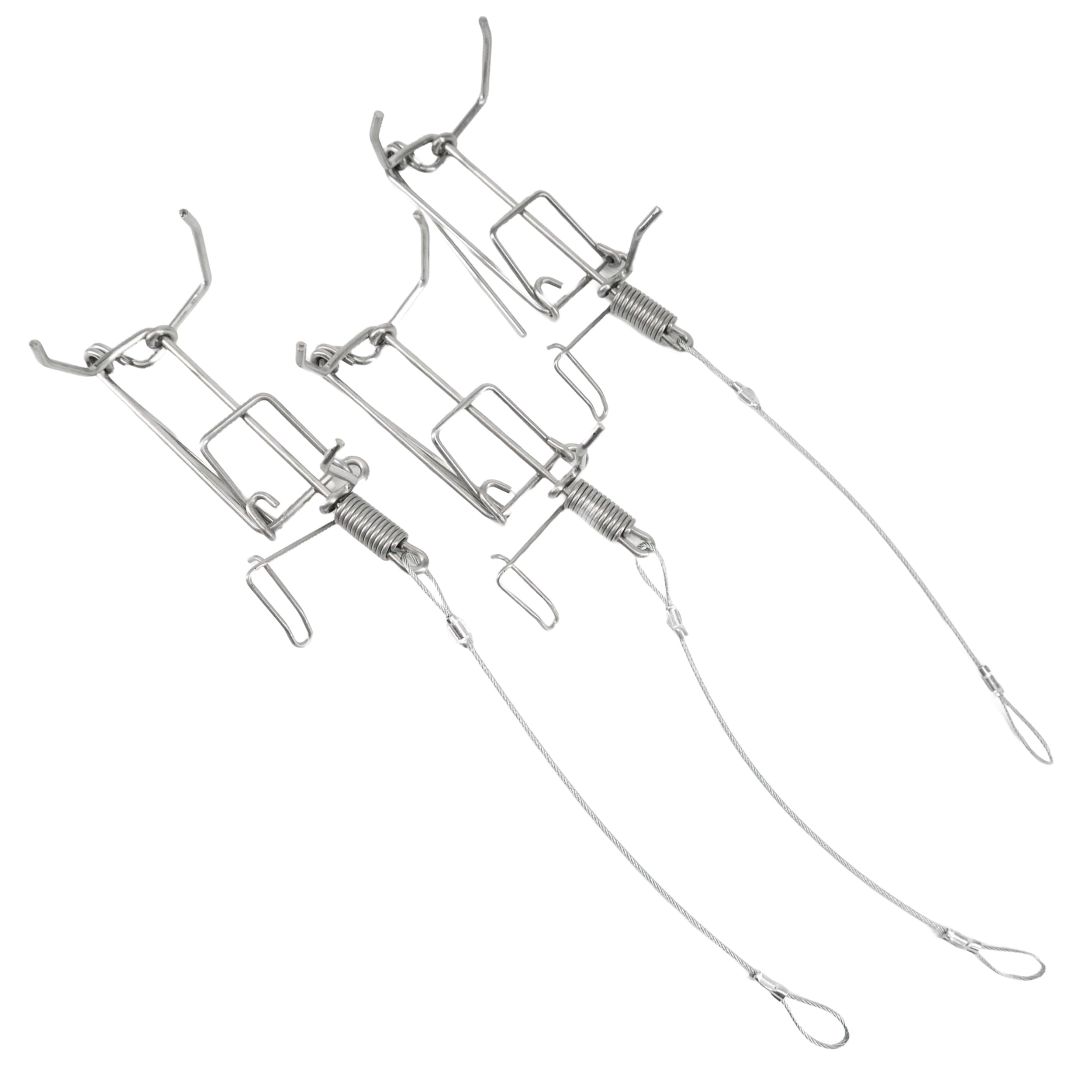
Stainless steel, a five-and-a-half-inch body and three to a pack: this one is built for pocket gophers and not much else. The size is the point. At two and a half inches across it seats inside runs that a full-size jaw trap has to be forced into, and stainless comes out of wet soil looking the way it went in — which is more than the plain steel traps here can say.

Three traps is the right number for a garden with a couple of live runs, and there's nothing to bait or refresh between checks, so a week of neglect costs you nothing. The one thing to plan for is losing one: a five-inch stainless body disappears into dark soil, so mark every set with a flag or a stake. For a raised bed or a suburban lot with tight pocket gopher laterals, this is the set that fits the shape of the problem.

Bottom line: Built for pocket gopher runs and not much else: stainless, compact and easy to seat where a full-size jaw trap won't go. Three traps cover three runs, no more.

3

DK-1 Gopher Traps, 6-Pack

DK-1 Gopher Traps, 6-Pack

Large properties

Our Score 8.2/10
Check Price

Worth Noting

  • Long jaws won't fit small gopher holes
Material
Steel
Dimensions
10 x 3 x 3 in
Trap Style
Dig-in jaw trap
Traps Per Pack
6
Read the full review

Six spring-steel jaw traps make the DK-1 the volume buy of this group, and the cheapest way here to put several traps in the ground at once. One per active run, a spare behind the seat of the truck, no agonising over whether to leave a set in for another week.

Mechanically they're traditional: two long jaws, a hook, and a spring you wind by hand. Set in a properly opened run they are brutally effective, and the trigger plate can be set fine enough to fire on a light nudge. We treat them as a tool for someone who has done this before. The spring is the strongest here and the jaws close with real force, so set the trap on the ground, both hands clear of the jaw path, and never with your face over it.

Two practical notes. Plain steel in damp soil rusts, which a wipe of oil at the end of the season slows rather than stops. And buy six rather than two, because the whole value here is having a trap in every run you know about at the same time.

Bottom line: The volume answer for a property with more runs than patience: six steel jaw traps that bite hard and rust fast. Buy them knowing they're a working set, not an heirloom.

4

SWISSINNO SuperCat Trap

SWISSINNO SuperCat Trap

First-time trappers

Our Score 8.2/10
Check Price

Worth Noting

  • Hole punch sold as an optional kit
  • Plastic body won't survive rocky ground
Trigger
Dual-sided, both directions
Material
Plastic
Dimensions
8.78 x 3.74 x 2.32 in
Traps Per Pack
2
Read the full review

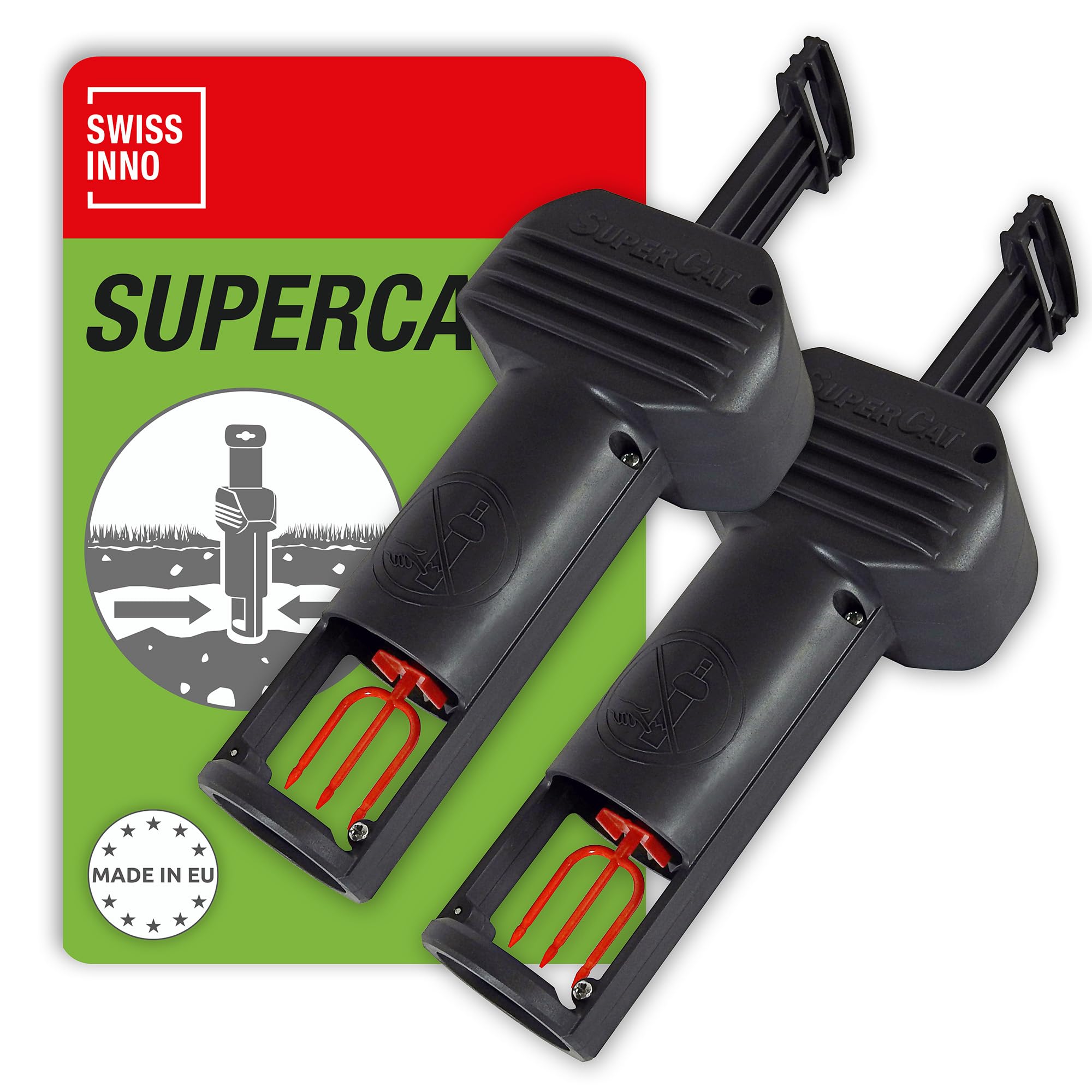
We can arm the SuperCat with two fingers, which isn't true of any other trap here. A light lever takes it to full tension with barely any force, an indicator shows whether it's live or spent, and the trigger is enclosed inside the body rather than left out in the soil and daylight. Setting one means cutting a clean hole, sliding the body in flush with the run, and closing the opening so no light gets in.

It fires from both directions, which matters more than it sounds. Runs bend and fork, and you can't always tell which way a gopher will come; a trap that works from either end is one you stop resetting every morning. Nearly nine inches long, the body wants a straight stretch of run with room to lie flat.

Plastic has one obvious advantage underground: it doesn't rust, and it doesn't mind being hosed off between sets. It also won't take the prying of a rocky bed the way steel does, and that's the calculation. In soft, clean soil it's the set we hand to a first-timer — the arming lever is that forgiving.

Bottom line: The trap we hand someone who has never set one: a light lever, an enclosed two-way trigger and a plastic body that won't rust. Rough, rocky ground is where it gives way.

5

GopherHawk Trapping Set

GopherHawk Trapping Set

No-dig yards

Our Score 8.0/10
Check Price

Worth Noting

  • Thin frame bends after repeated catches
Included
Trap, wedge and probe tool
Material
Alloy steel
Set Method
Probe and insert, no digging
Traps Per Set
1
Read the full review

A steel rod, a plastic wedge and a trap that goes into the ground the way a plug goes into a socket — the GopherHawk is the most established no-dig design here, and we like it for exactly what it spares you. Probe six to ten inches off a fresh mound, feel the rod drop as it breaks into the run, widen the hole just enough for the body, and the trap slides in from above. Your turf keeps its shape, and you can see from across the yard whether it has fired.

It's fast when it's clean. The spring is heavy, the trigger sits exposed to soil, and those two facts explain most of what goes wrong: grit in the trigger stops it releasing, and setting it in hard, dry ground takes real force. The fix is simple and worth doing before every set — unwind the spring past the yellow mark and rinse the trigger under running water.

What it won't do is last like a steel jaw trap. The frame is thin enough that a gopher working around the body rather than through it can bend it out of shape, and a bent frame seats badly the next time. Against that, a thumb-width hole in a bed you'd rather not tear up is a strong argument, and one live run under a prized shrub is exactly the case where this one earns its place.

Bottom line: Buy it if you refuse to dig: the probe finds the run and the trap slides in from above. Keep the trigger clean and expect the frame to take a beating.

6

Blackhole Trap

Blackhole Trap

Small yards

Our Score 8.0/10
Check Price

Worth Noting

  • One trap per purchase
Material
Plastic
Set Method
Tunnel-shaped, laid in line with the run
Target Species
Gophers, moles, voles, mice
Traps Per Pack
1
Read the full review

The Blackhole is the least expensive trap in this group, and it looks it: a black plastic tube with a spring-loaded arm inside, light enough to carry three in one hand. One trap per purchase, which is worth saying plainly — one unit covers one run, and gophers rarely work alone.

It works like a short section of tunnel. You open the run, lay the tube in line with it, and the gopher walks in to the arm. Because the body sits inside the run, the trigger is shielded from soil and daylight, and plastic shrugs off wet ground that would have a steel trap rusting by spring. It also carries the broadest label here — gophers, moles, voles, rats, mice — which tells you it's sized for the middle of that range rather than tuned to one animal.

Where it earns attention is a small yard and a first attempt. The low price makes buying two an easy call, and reloading after a catch is quick once you've done it once. The failure to watch for is a trap that never goes off: plastic mechanisms can stiffen in cold, wet soil, so work the arm by hand before each set and check it again after a hard rain.

Bottom line: A sensible first trap for a small yard: cheap enough to buy two, simple to reload, and plastic so it won't rust. One per purchase, so plan accordingly.

How We Tested (and Kept Testing) Gopher Traps

We started with a shortlist of traps sold for residential gardens, then narrowed it by tunnel style, setting method, materials, and the amount of excavation each one demanded. Price mattered, but only as one part of value: a cheap trap that bent after one season wasn't a bargain. We ended up with 12 traps and set them over five months in active gopher tunnels along vegetable beds, a lawn edge, and around fruit trees.

Each trap went into a fresh tunnel in the same way I would use it at home: I cleared enough soil to open the run, set the trigger by feel, and marked the spot so I could check it without disturbing the tunnel. We recorded how long setup took, how much soil had to be moved for a digging-free set, and whether the trap was easy to see again on a morning check. Trigger operation got close attention—some fired with a light touch, some needed a firm nudge, and a few false-tripped before a gopher ever arrived.

Then came the waiting and the counting. We checked traps morning and evening, noted every catch, and kept setting the same designs after rain and irrigation to see how they held up. We looked for bent frames, rusted springs, weak snap after repeated use, and triggers that drifted out of adjustment. At the end, we weighed cost against catches and seasons of service, because the best trap is the one that kills quickly, stays usable, and doesn't make you rebuild the bed every time you set it.

How to Choose Gopher Traps

Find the run, not the mound

The mound is what a gopher leaves behind; the run is where it lives. A fresh mound means an active tunnel, but the tunnel itself usually passes a few inches below and to one side of the plug. Probe with a slim rod a hand's width out from the mound, or in the gap between two mounds, and set where the rod drops away suddenly and then slides forward. A probe that stops dead has found a root.

If you can't locate a run in two or three tries around a mound, move twenty feet and start again rather than setting in hope. A trap in the wrong place catches nothing and teaches you nothing.

Decide how much ground you'll open

Every trap here belongs to one of two families. Probe-and-insert designs like the GopherHawk go in through a hole the width of your thumb, which is what you want under a lawn or a prized bed. Dig-in jaw traps like the Cinch and the DK-1 need the run opened, reamed and levelled before they'll fire, and they repay that with heavier construction and a harder strike.

Our rule of thumb: if the gophers are under turf you'd rather keep, probe. If they're in a vegetable plot, a field edge or a bank you don't have to look at, dig and take the stronger trap.

Match the trap to the tunnel you actually have

Gophers dig to their own size, and a trap that doesn't sit flat and level in the run either won't trigger or won't fit at all. This is the most common reason a perfectly good trap fails. Compare the listed trap dimensions with the hole you open, and read the sizing guide where the maker publishes one — Cinch does, and it's worth the two minutes before you order.

Narrow, shallow laterals and mole runs take a smaller body; wide main runs suit a full-size jaw trap. When you're between sizes, go smaller: a trap that seats properly beats a trap with more reach.

Triggers, springs and the part that bites back

A gopher has to push a plate or a lever to fire the trap, and sensitivity is where cheap designs give themselves away. A trigger that needs a hard shove gets walked around; one left open to soil and moisture jams. Enclosed, dual-sided triggers like the SuperCat's are the most forgiving on both counts, and worth paying for if you're setting traps in wet ground.

The spring is the other half of the question. Strong springs catch hard and hurt hands, so arm a trap with it resting on the ground, both hands clear of the jaw path, and your face back.

Buy for the number of runs, not the number of gophers

One gopher usually means several runs. Two traps per active tunnel, set back to back and facing opposite directions, plus a spare, is the working minimum for a yard with a genuine problem — which is the argument for multipacks. Cost per trap falls fast and you stop rationing traps across runs you already know are live.

Keep a note of where each set is. A stainless body in dark soil is genuinely hard to find again, and a trap you've lost is a trap that isn't working.

Frequently Asked Questions

Final Verdict

If you have gophers in a lawn or a bed and you're willing to open the run with a trowel, buy the Cinch. Three heavy steel traps, the best build in this group and a trigger that fires when it should — that's the one we reach for on a real problem.

If digging is off the table, the GopherHawk does the same job through a thumb-width hole, provided you keep its trigger clean. And if your problem is narrow pocket gopher laterals in wet ground, the stainless GET GOPHERS set seats where the big jaws simply won't go.