Garden Tools

Best Manual Lawn Aerators of 2026

Manual aeration sounds like the frugal, quiet, no-trailer answer to a compacted lawn — until the tines come up plugged solid, or you spend twenty minutes bouncing on a step bar that barely dimples the grass. The difference between one that works and one that fights you isn't effort; it's tine geometry, weight, and whether the tool clears itself as you go. A good one pulls real cores, drops them without you prying with a stick, and gets water and fertilizer down to the roots instead of letting them run off the surface.

I've spent the past six months putting ten of them through spring green-up, a dry July that turned my clay to concrete, and the soft ground after a heavy rain. The good ones stayed planted when I leaned on them and pulled deep plugs wet or dry; others clogged, bent, or wore me out by the third pass. Everything below earned its spot on sturdiness and value first — the rest comes down to which lawn you've got.

1

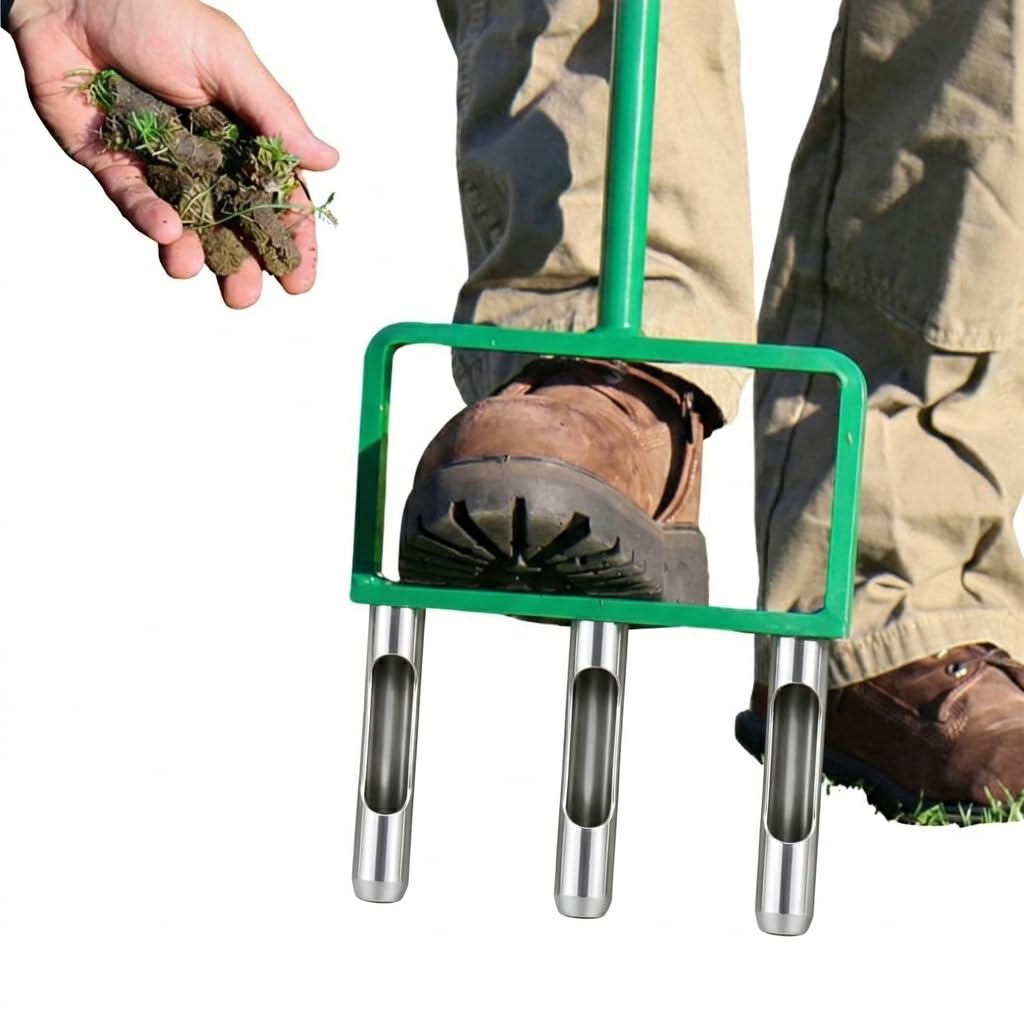
Xuperace 3-Tine Core Aerator

Top Pick
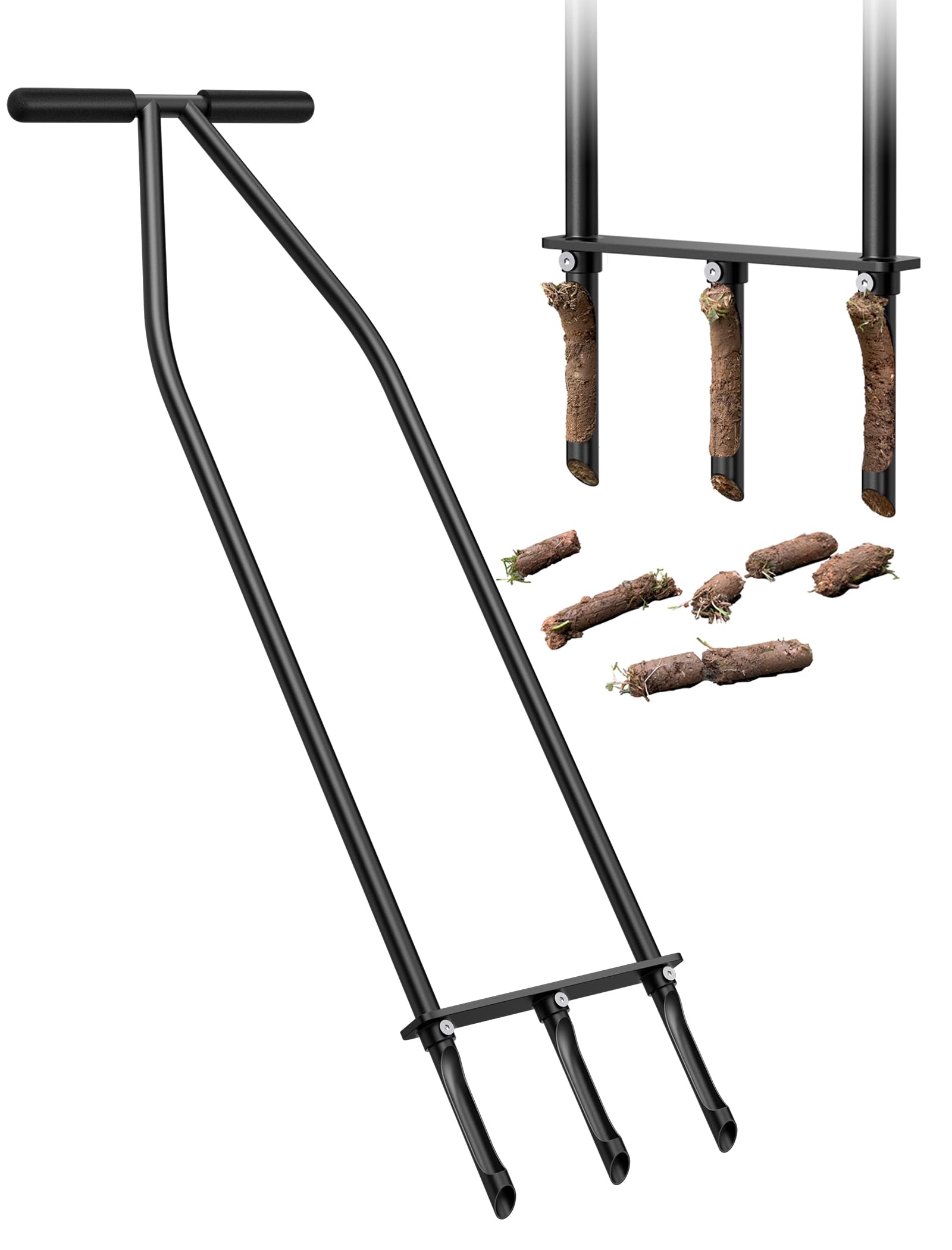
Xuperace 3-Tine Core Aerator

Hard, dry ground

Our Score 9.0/10
Check Price

Worth Noting

  • Tine screws need periodic re-tightening
Tines
3 hollow, middle removable
Weight
5.91 lb
Plug Ejection
Side-eject
Overall Length
42 inches
Read the full review

The middle tine unscrews, and that's the detail that sells this one to anyone with hard ground. Three hollow tines lift more plug per push than two, but in baked summer clay three points can stall at the surface; take the centre one out and the tool goes back to biting. It's a two-minute change you make once and leave alone until the weather turns.

Side ejection is the other half of the appeal. The tine tips are formed so the plug leaves sideways rather than being pushed up through the barrel, which is what keeps the tool working through a clay session instead of stopping every third push to dig a tine clear. Against our top pick it gives up an inch of handle height and a little finish, and it gives up far less money.

At 42 inches and 5.91 pounds it sits in the same working range as the Landzie, with a footplate that leaves your knee free to travel. What impressed us most across a session was how little maintenance it asked for between passes — no bucket, no screwdriver, no clearing.

Bottom line: Buy this if your ground is hard enough to stall three tines — the middle one unscrews, the plugs exit sideways, and you keep the difference in price for seed.
2

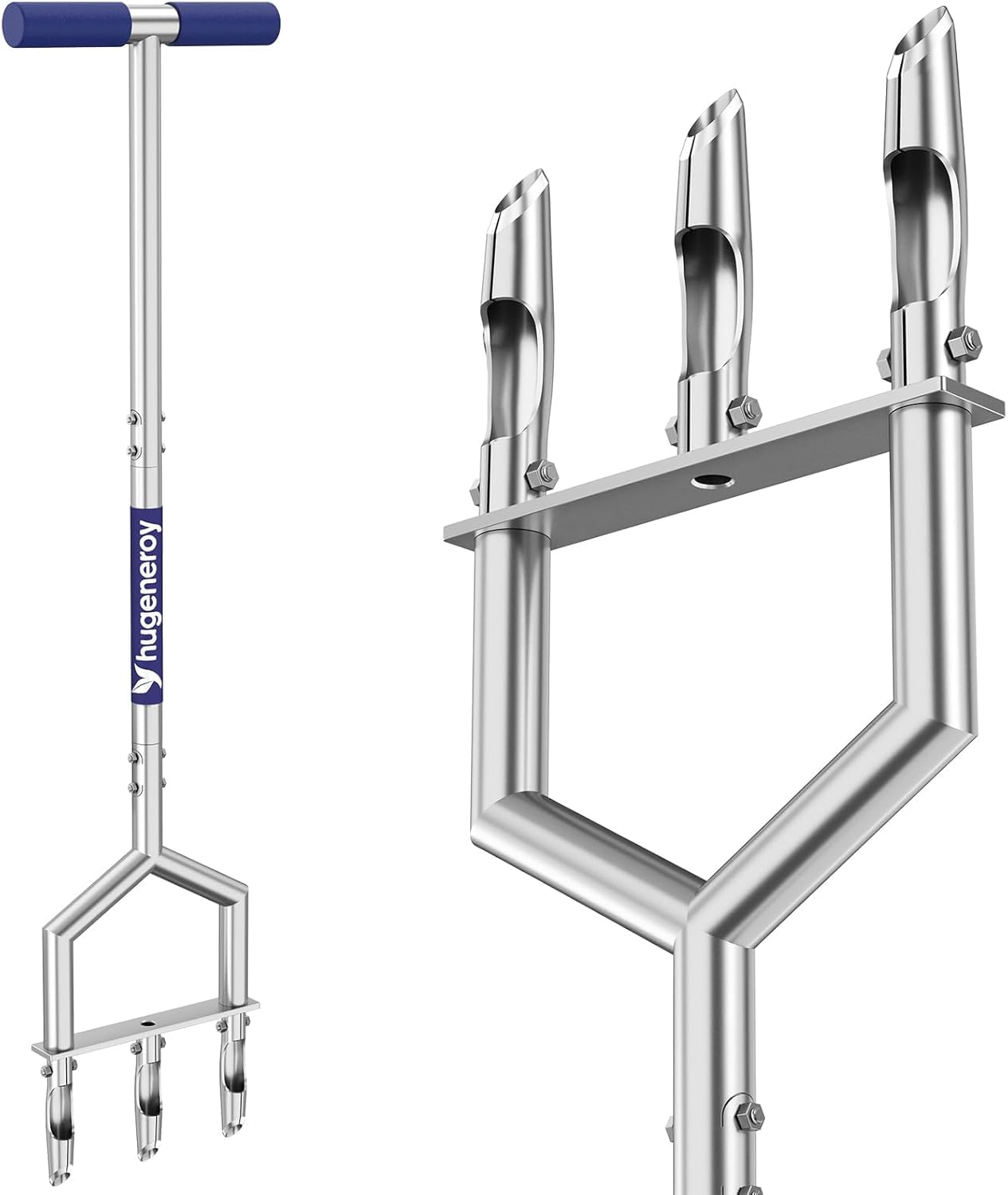
hugeneroy Hollow Tine Core Aerator

hugeneroy Hollow Tine Core Aerator

Clay soil

Our Score 9.0/10
Check Price

Worth Noting

Tines
3 hollow steel
Weight
3.52 lb
Assembly
Tools included
Tip Inserts
Teflon wedges
Read the full review

Clay is where most hollow tines give up, and this one is aimed straight at it: three tempered steel tines with a Teflon wedge inside each tip, so the plug lets go instead of welding itself into the barrel. The frame is steel, the grip is cushioned and wide enough for gloves, and at 3.52 pounds it's light enough to carry round the yard without thinking about it.

Three holes at a time is the right count for a tool this light. A two-tine fork feels endless by comparison, and four tines in anything but loam turns into a wrestling match. Assembly takes minutes with the tools in the box, and the whole thing hoses clean.

Where it lands: a well-built corer at a mid-set price, and the one to hand anyone fighting clay without the budget for our top pick. The connecting bolt and nut are the smallest pieces of the assembly, so check them for snugness before each session — cheap insurance on a tool that otherwise feels like it will outlast the lawn.

Bottom line: A light three-tine corer with Teflon-tipped barrels that let go of clay plugs — the value pick if our top choice is out of reach.

3

Colwelt Wide-Spike Aerator

Colwelt Wide-Spike Aerator

Compacted spots

Our Score 9.0/10
Check Price

Worth Noting

  • Holes close back up
Spikes
4 extra-wide steel
Weight
4.31 lb
Foot Plate
Wide
Overall Height
38 inches
Read the full review

Four spikes, each noticeably thicker than the 2.3-inch pins common on these tools, set into a foot plate wide enough for both boots. The Colwelt is built to be stepped on hard, and the steel frame has the heft to take it: 4.31 pounds, rust-resistant, on a 38-inch handle.

Solid pins push soil aside instead of lifting it out, so there's nothing to clog and nothing to clear — you step, you rock it back, you move on. The trade is the shape of what's left behind: a punched channel rather than an extracted core. Use it to open a compacted patch before seed, or on the strip where the mower parks.

At the low end of this set's prices, this is the tool to hand someone prepping a small, hard patch who doesn't want to think about maintenance. It assembles in minutes, stores against a wall, and takes a boot without drama — the sort of thing that lives in the shed for a decade and gets used twice a year.

Bottom line: Four thick spikes and a wide foot plate make this the tool for punching open a hard patch before seed, at the low end of this set's prices.

4

Landzie Hollow Tine Core Aerator

Landzie Hollow Tine Core Aerator

Whole-yard coring

Our Score 8.8/10
Check Price

Worth Noting

  • Premium price among the corers here
  • 5.6 pounds to lift on every push
Weight
5.6 lb
Assembly
None required
Tine Type
Hollow, side-ejecting
Overall Length
42.38 inches
Read the full review

The Landzie comes out of the box in one piece, handle already on the fork, and that's the first thing that makes it easy to live with. What earns it the top spot here is the business end: the hollow tines are beveled and open down the side, so a plug slides free as you lift instead of wedging itself in the barrel. That one design choice is the difference between a corer you use every fall and one that ends up behind the shed.

At 42 inches the handle puts your hands at roughly shovel height, and the crossbar takes a boot without flexing. It's 5.6 pounds of steel — heavier than the budget corers here, which you feel around the fiftieth push, and which you also feel driving into hard ground. That's the trade, and we'll take it.

Aerating is still labor. A small lawn takes an afternoon of stepping, lifting and resetting, and in dry ground every tool on this page struggles; soak the lawn the day before and the same work goes twice as fast. Where this one separates itself is clay and loam that smear, the soils where straight tubes pack solid after a dozen plugs. The side openings keep working.

So the money goes to reliability and height rather than speed. If your lawn is fenced, dotted with sprinkler heads, or simply too awkward for a rental machine, this is the corer that makes the manual route make sense. If it's two patchy strips by the driveway, something lighter and cheaper will do the same job.

Bottom line: The manual aerator we recommend first: it arrives ready to use, stands tall enough to spare your back, and its open-sided tines keep pulling plugs when other corers pack solid.

5

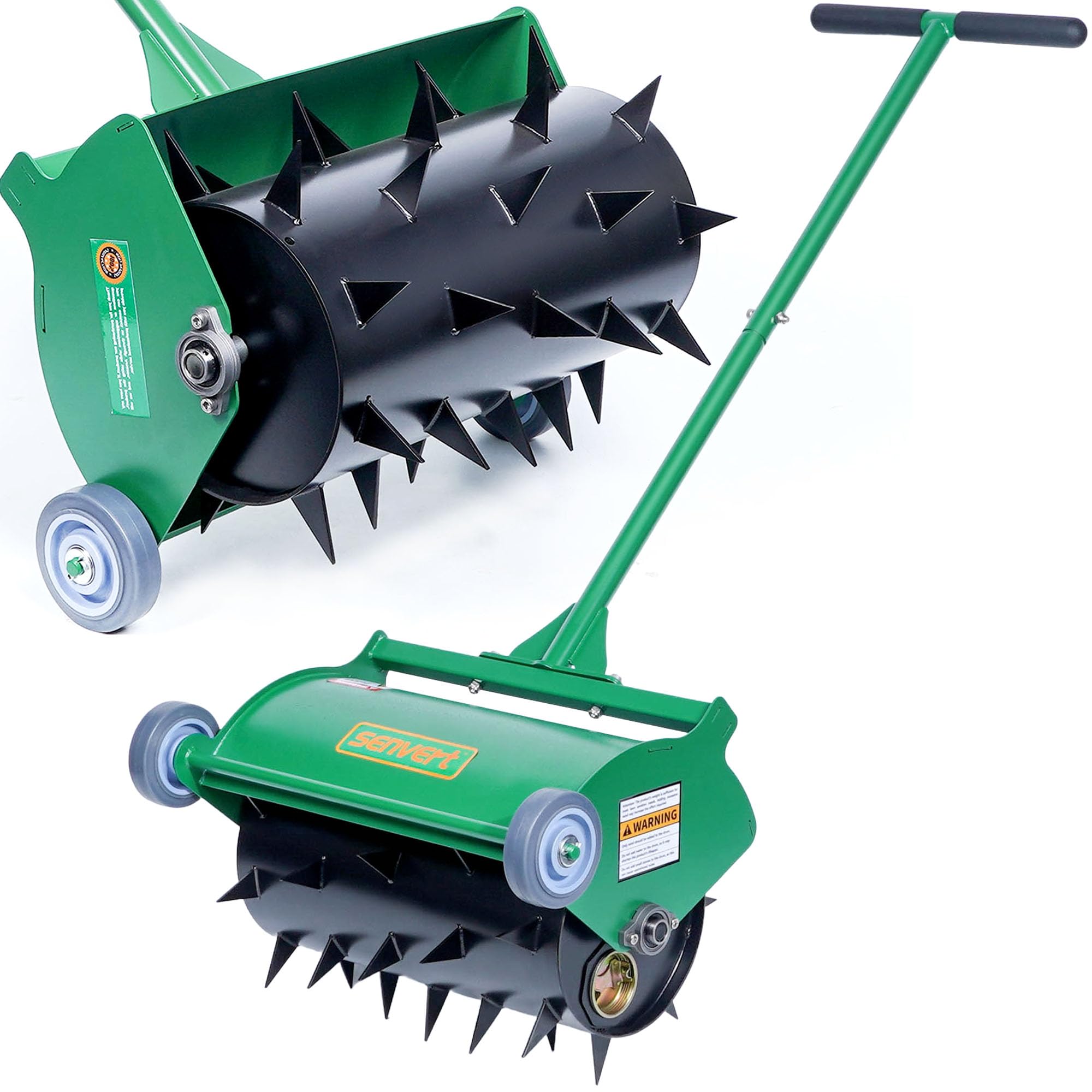
SENVERT Rolling Lawn Aerator

SENVERT Rolling Lawn Aerator

Larger lawns

Our Score 8.8/10
Check Price

Worth Noting

  • Heavy and reluctant to turn once ballasted
Aeration Type
Rolling spikes
Overall Height
49 inches
Auxiliary Wheels
Yes
Ballast Capacity
Up to 55 pounds
Read the full review

Rolling aerators trade your arms for your legs, and this one makes the most of the exchange: the drum takes sand or gravel through a covered opening, and ballast turns your own weight into spike pressure. It's a spike tool rather than a corer — it punches holes instead of lifting plugs — and for a lawn big enough that step-and-pull work would eat a whole weekend, that's the right trade to make.

The handle runs 49 inches, tall enough for most users, and the pair of auxiliary wheels lets you roll it to the shed without spiking the path on the way. Empty it weighs around 32 pounds, which one person can manage; loaded toward its 55-pound capacity it isn't something you lift.

In use it covers ground at walking pace and opens the surface without tearing turf, so you can follow with seed the same afternoon. The low point is turning: a full drum resists, and you learn to plan long straight runs rather than fussy zigzags.

Bottom line: A sand-ballasted roller for the lawn that's too big to core by hand and too small to justify hiring a machine.

6

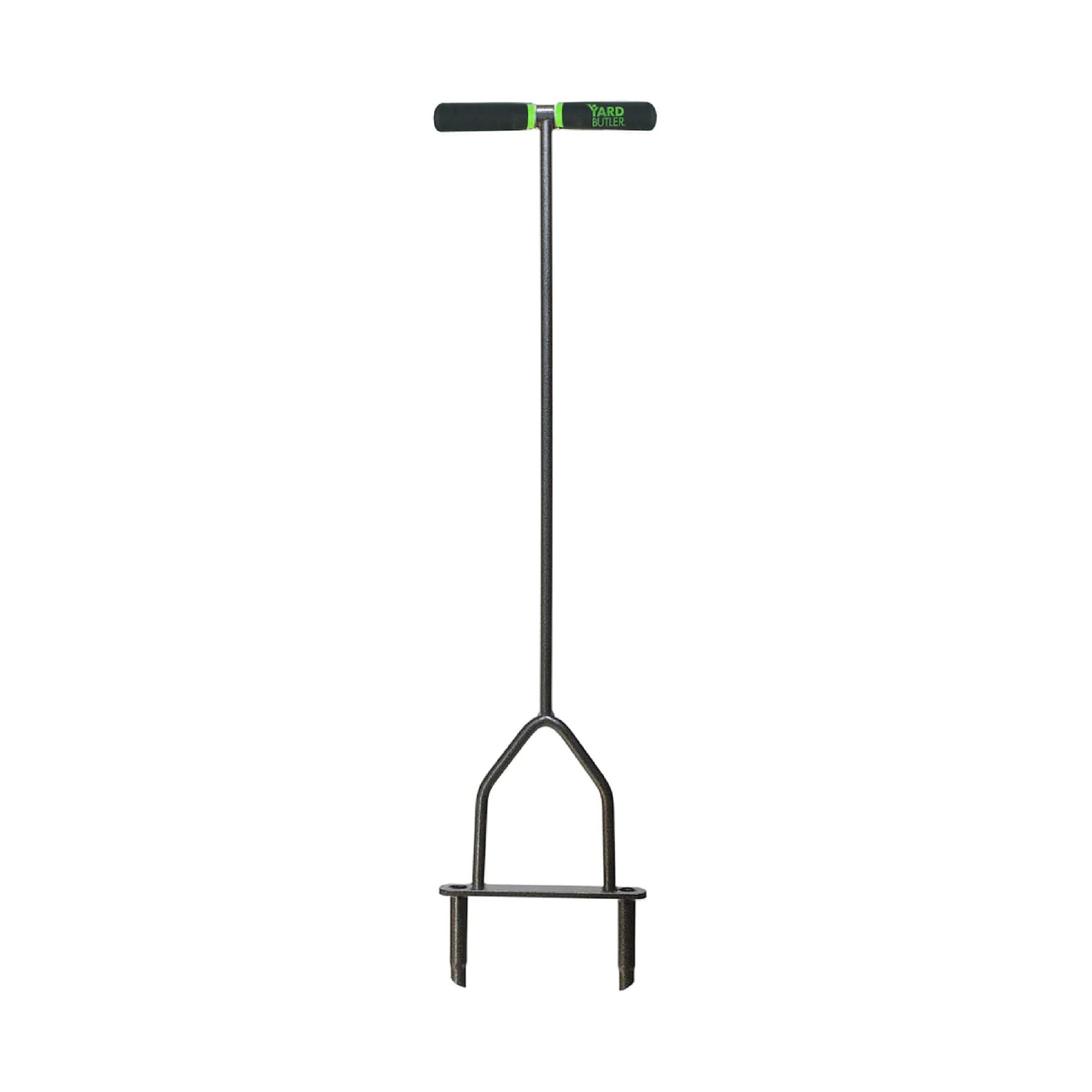
Yard Butler ID-6C Coring Aerator

Yard Butler ID-6C Coring Aerator

Budget coring

Our Score 8.6/10
Check Price

Worth Noting

  • Shorter handle than the 42-inch corers
Tines
2 hollow coring plugs
Weight
1.77 lb
Foot Bar
Full-width
Overall Length
38 inches
Read the full review

At 1.77 pounds, this is the corer you pick up with two fingers and hang on a nail afterward. Light doesn't mean flimsy: the powder-coated fork and cushioned grips take a boot without complaint, and the 38-inch handle keeps you out of the stoop that makes aerating miserable.

Two plugs per push is the catch, and so is what happens between pushes. It drives in easily, particularly after a good rain, and the foot bar gives real leverage — but the cores don't always let go on their own, and part of the session goes to clearing them. Keep a bucket of water at your feet and dip the tines every few pushes: wet ground plus wet tines makes plugs slide out, and the rhythm carries you along.

For the money, this is the corer to try first on a small lawn that needs opening up. It's slower than the Landzie and lacks the Xuperace's third tine, but it's the lightest thing here, the easiest to store, and it does pull proper plugs.

Bottom line: Light, inexpensive and genuinely effective after rain, this is the corer for a small lawn and a gardener who doesn't mind clearing a plug or two.

7

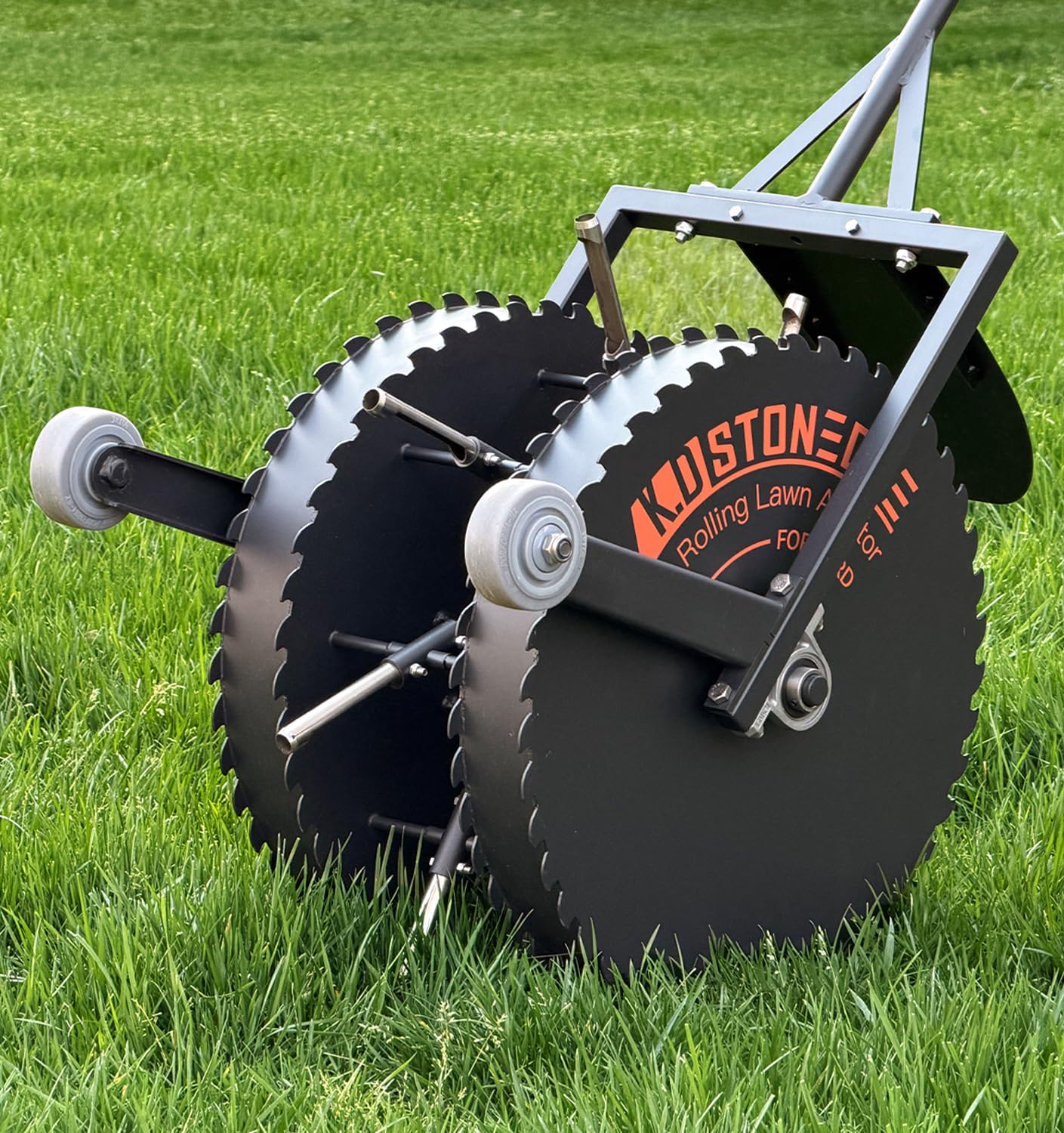
K.D STONEDGE Rolling Coring Aerator

K.D STONEDGE Rolling Coring Aerator

Standing coring

Our Score 8.6/10
Check Price

Worth Noting

  • Hard to turn at the end of a pass when ballasted
Weight
43.7 lb
Ballast
Sand-filled side drums
Aeration Type
Rolling hollow-tine
Overall Length
60 inches
Read the full review

The sand is the first thing to know about. Weight goes in through two side drums, and filling them is the fiddliest part of owning this tool — a small opening, a lot of sand, and more patience than the aerating itself asks for. Once they're full, the thing rolls with real authority.

That weight is what makes it work. A rotary corer relies on mass to drive hollow tines in and lever them back out, and this leaves the closest thing to a machine's plug pattern you'll get without a motor: a run of holes at walking pace, evenly spaced. It's also the priciest tool here and 43.7 pounds before a grain of ballast.

It wants a run-up. The tines need steady speed to bite, so short choppy passes waste the drum, and moist soil is non-negotiable — in dry clay it skates and packs. Get those conditions right on a property with a lot of ground to cover and the filling chore stops feeling like a chore.

Bottom line: A rolling corer that pulls real plugs at walking pace — worth the money and the sand-filling chore if machine-like coverage on a smallholding is what you're after.

8

Walensee 15-Spike Aerator

Walensee 15-Spike Aerator

Spot touch-ups

Our Score 8.4/10
Check Price

Worth Noting

  • Slim spikes leave narrow holes that close as soil settles
  • Handle sits low at 34.6 inches
Spikes
15 iron, 2.8 inches
Weight
4.49 lb
Handle Length
34.6 inches
Read the full review

Fifteen spikes across one frame cover a wider strip than aerator shoes and never need strapping to your boots. The handle runs 34.6 inches and the whole tool weighs 4.49 pounds, so it's a one-hand carry from garage to lawn and it hangs flat against a wall.

The spikes are 2.8 inches long and slim, and slim points push soil aside rather than lifting it out. That makes this a tool for getting water and fertilizer down into a dry, patchy square before you overseed — you step, you rock it back, you move on, and nothing clogs because nothing is hollow.

Assembly takes minutes with the hardware in the box, a spare set of spikes comes with it, and the frame is sturdier than the price suggests. We treat it as the touch-up tool: thin spots, the ground by the patio, the strip where the dog runs. For a whole lawn you want tines that lift.

Bottom line: Fifteen spikes and a 34.6-inch handle make quick work of patchy, compacted spots; this is a touch-up tool, not a whole-yard corer.

9

Briliantwerk Lawn Aerator Shoes

Briliantwerk Lawn Aerator Shoes

Cheap coverage

Our Score 8.2/10
Check Price

Worth Noting

  • Slowest coverage of anything here
Weight
2.03 lb
Fastening
Hook-and-loop straps
Spike Lengths
2 inches and 1.5 inches
Fits Shoe Sizes
US 5 to 14
Read the full review

Aerator shoes are the least glamorous way to aerate a lawn, and this pair doesn't pretend otherwise: two plates, hook-and-loop straps, rows of 2-inch spikes. You strap them over your boots, walk the lawn, and take them off again. The work lands entirely in your calves and your patience.

For a townhouse yard or a lawn you can cross in fifty steps, that's a fair trade — and it's the cheapest entry into aeration in this set, well under any handled tool here. It's also the slowest by a wide margin. Spikes this short and this closely packed punch a lot of shallow holes, which is good for water and seed and very little use against deep compaction.

The straps adjust to cover US 5 to 14, a second set of 1.5-inch spikes swaps in for screeding or working a leveling rake, and assembly is a matter of tightening the nuts firmly. Do that before the first use and check them afterwards, rinse the plates, and dry them before they go in the shed — a wet pair spots with rust, and one loose point ruins a session.

Bottom line: The cheapest way to get spikes into turf: strap them on, walk the lawn, and accept that your calves will do the complaining.

How We Tested Manual Aerators on Lawns That Weren't Perfect

We started with every manual aerator we could find and cut the ones that only punch holes — spike-style tools that press the soil tighter rather than lifting cores out of it. From what was left, we filtered by hollow-tine count and diameter, whether replacement tines were sold separately, listed weight, handle height, and working width, then weighed each price against what a weekend rental of a powered core aerator costs. Ten of them were bought at retail so nobody could send us a tuned-up unit.

Each one went to work on real grass over roughly six months, beginning at spring green-up. I ran every aerator over the same marked ten-foot square on a wet April morning, again on dry compacted clay in July, and once more after two days of rain, counting passes and timing each run so a slow tool couldn't hide behind a small patch. I also worked each one into a neighbor's softer loam and the hard strip along my driveway to see how the same tines behaved in different soil.

Plugs were the tell. We watched whether cores slid out of the tines on their own or had to be poked free with a stick, and whether they scattered or clumped into mud balls that stuck to the tool. Every aerator was weighed on a luggage scale and carried one-handed across the yard, then hung in a shed to see whether its footprint and handle height made sense in storage. To judge absorption, I watered those same squares afterward and watched whether the water pooled or sank in. At the end of the season we checked tines for bent alignment, welds for cracks, and the finish for rust after leaving two of them outside through a week of rain.

How to Choose Manual Lawn Aerators

Coring and spiking do different jobs

Hollow tines lift a plug of soil out and leave an open hole, which is what actually relieves compaction and gives roots somewhere to go. Solid spikes push soil aside instead, opening a channel that can close again as the lawn is watered. Spiking is faster, cheaper and perfectly good before overseeding or after a soak; coring is the fix when a screwdriver won't go into the lawn.

The trap is the label. Plenty of spike tools are sold as aerators, and no amount of stepping will make one pull a plug. If water pools on your lawn or the turf feels spongy underfoot, buy tines that lift.

Match the tool to the lawn you have

Working a half acre with a step-and-pull fork is a young person's project. Two or three tines on a long handle suit small, fenced, sprinkler-dotted lawns and tight edges; a ballasted roller covers open ground at walking pace; strap-on spikes are for patches, and for spending the least.

Measure the lawn before you choose. A tool sized for the ground you actually own beats one sized for the ground in the video, and the awkward corners are usually where a manual tool wins outright.

Aerating is a wet-day job

Every tool here needs soft ground, and the difference between a steady afternoon's work and an afternoon of swearing is a lawn watered deeply the day before. Test with a screwdriver: if it pushes in easily, the tines will too. Dry clay is where barrels pack solid and handles get abused, so water, wait, and start in the shadiest corner.

Handle height, foot plates and your back

Handles here run from about 34 inches to 42. A 42-inch tool keeps most adults upright, while the shorter ones suit shorter users or brief sessions and leave taller gardeners stooping. A wide foot plate or bar lets you drive the tool with a boot instead of your arms, which matters more than an extra inch of handle.

Weight cuts both ways. Heavier tools go into hard ground and lift heavier on every push; our 5.6-pound top pick is about the limit of what feels reasonable across a whole lawn, and the 1.77-pound budget corer is the other end of that trade.

Clogging is the thing you notice first

Straight barrels pack with damp clay within a few plugs, and after that you're pushing a solid rod into the lawn. Beveled tips, open-sided tines and Teflon inserts all exist to make the plug let go, and in heavy soil that design matters more than tine count.

A bucket of water beside you helps any of them: dip the tines every few pushes and the cores slide out. Leave the plugs where they fall — they crumble back into the surface within a few mowings.

Frequently Asked Questions

Final Verdict

The Landzie is the manual aerator we recommend first: it arrives assembled, stands tall enough to save your back, and its open-sided tines keep pulling plugs when other corers have packed solid. If your ground is hard enough to stall three tines, or a premium hand tool is more than you want to spend, the Xuperace — whose middle tine unscrews when the going gets tough — is the smarter buy.

And if the lawn is simply too big for step-and-pull work, the SENVERT roller is the one to load with sand and walk.