Outdoor Power Equipment

Best Leaf Blowers of 2026

A crisp Saturday in October is not the time to find out your leaf blower can't move wet oak leaves. The right one turns a weekend of raking into a 20-minute job; the wrong one leaves you wrestling a cord, nursing a dead battery, or apologizing to the neighbors. Over the past eight months, I've put 12 leaf blowers through their paces on my half-acre lot and a friend's postage-stamp city yard, judging power, weight, and whether the price actually matches the performance.

Effectiveness isn't just about raw blower speed — it's whether the thing clears pine needles, grass clippings, and damp leaves without scattering them back at your shins. Battery life matters more than the box claims, especially if you let leaves pile up for a month, and size becomes a real issue in a crowded garage. The picks below are the ones that earned their spot, whether you're clearing a quarter-acre or just a patio.

1

Vibogen 21V Cordless

Top Pick
Vibogen 21V Cordless

Tired arms

Our Score 9.4/10
Check Price

Worth Noting

  • 420 CFM won't shift wet leaves
Weight
2 lb
Airflow
420 CFM
Air Speed
150 MPH
Batteries
2 × 21V 4.0Ah
Read the full review

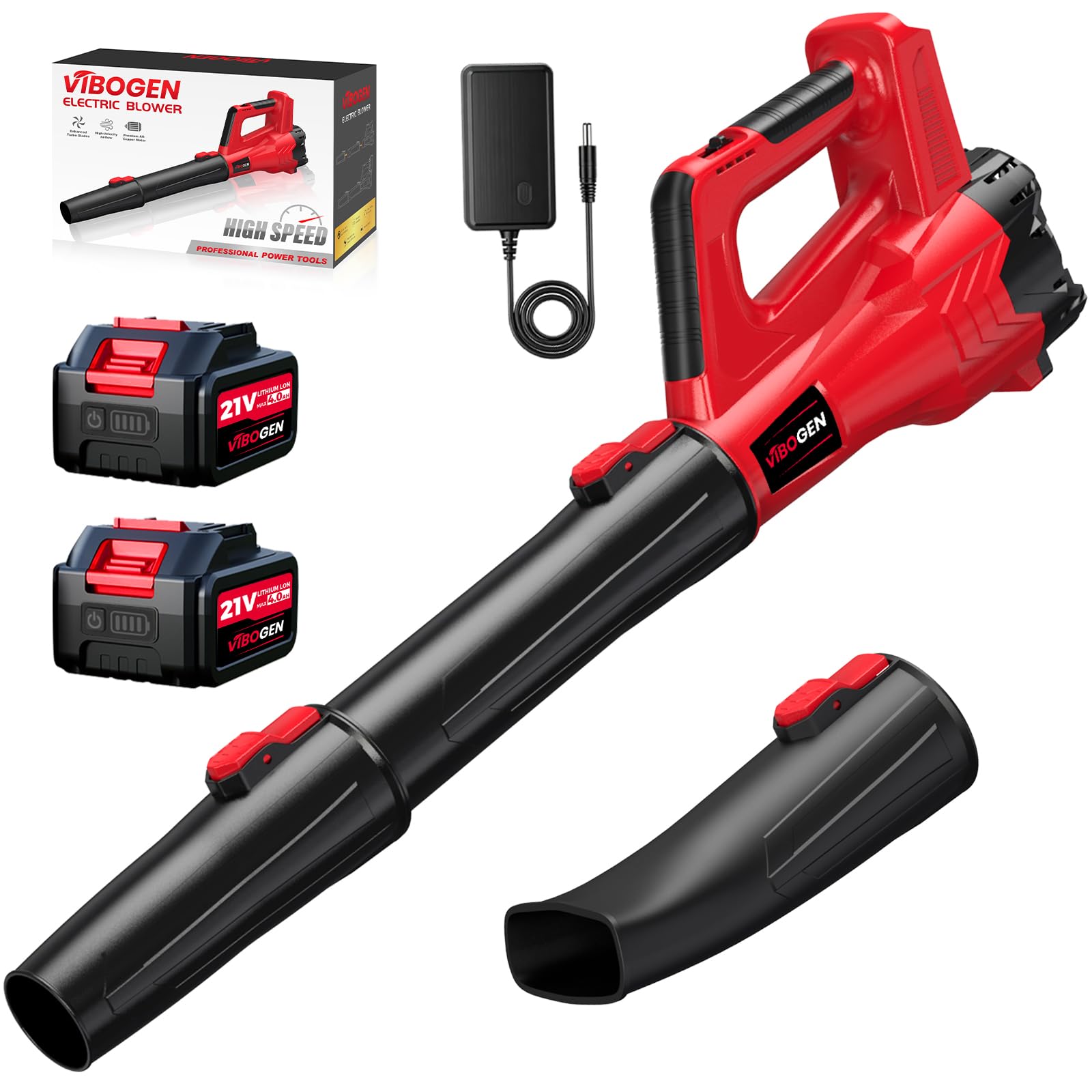
Two pounds is the number that matters here. The Vibogen is listed at 2 pounds — well over a pound lighter than the next blower down in this group, and close to three lighter than the heaviest — in a 31-inch body with a 21V motor, a battery charge indicator and an extension nozzle.

That isn't a footnote. The reason most blowers end up parked in the garage is that they're tiring to hold out at arm's length, and this is the one we point at anyone with shoulder trouble, a small patio, or a long flight of steps to clear. 420 CFM and 150 MPH is mid-pack airflow: plenty for dry leaves on concrete, not much use against a wet mat.

Two 21V 4.0Ah packs and a charger come in the box and it's rated at 75 dB, which is quiet enough to use without feeling like the whole street is listening. How it holds up over three or four seasons is the open question with a newer name like this, so we'd treat it as a light-duty tool for daily tidying rather than a leaf-season workhorse.

Bottom line: The lightest blower here by a wide margin, and the one to hand someone who finds two-handed yard work a chore.

2

Black+Decker LB700 Corded

Black+Decker LB700 Corded

Patios and driveways

Our Score 9.2/10
Check Price

Worth Noting

  • 180 CFM is the least airflow here
Motor
7 amp
Weight
4.4 lb
Airflow
180 CFM
Air Speed
180 MPH
Read the full review

There is still no cheaper way into real blowing power than a cord. The LB700 is a 7-amp handheld that never needs charging: plug it into an outdoor outlet and work until the job is done. For a city lot, a townhouse patio, or a garage-and-driveway routine, we think that beats every battery blower on this page.

At 4.4 pounds it's light enough to run one-handed along a fence line, and the built-in cord retention clip is a small thing that earns its keep — the plug stays seated when you pull the blower sideways instead of popping out mid-sweep. Decks, walkways, gutter lines and the strip of grass by the curb are its territory; pine needles and dry leaves disappear in a couple of passes.

The cord is the catch, and it's worth planning for rather than discovering. None comes in the box, and whatever you buy sets your working radius, so a 50-foot 12-gauge outdoor cord is the sensible pairing for a 7-amp tool — long enough to reach the back fence, thick enough not to sag under the load. Coil it on a hook by the door and the whole ritual takes ten seconds.

Bottom line: Buy this if every corner of your yard reaches an outlet; it's the least fuss and the least money for dry leaves on hard ground.

3

EGO Power+ LB8803-2

EGO Power+ LB8803-2

Wet, heavy leaves

Our Score 9.2/10
Check Price

Worth Noting

  • Turbo drains a 4.0Ah pack fast
  • Loud at full power
Airflow
880 CFM
Warranty
5 years
Air Speed
200 MPH
Batteries
2 × 56V 4.0Ah
Read the full review

880 CFM and 200 MPH in turbo mode is the biggest airflow number in this roundup, and it's the one to reach for when the leaves have been rained on and glued to the grass for a week. The turbine-style fan keeps that output smooth rather than surging, which matters more than the peak figure when you're pushing a wet pile rather than chasing a dry one across concrete.

The rest of the design is built for control. A dial sets cruise control anywhere from 270 to 700 CFM, the digital display tracks battery charge and cruise-lock in real time, and the handheld body runs 39 inches with the tapered and spread nozzles included. EGO also states a five-year tool warranty, the longest anyone offers in this group.

Turbo is thirsty, and that's the honest trade. EGO's 90-minute figure is a low-speed number; open it up for wet leaves and a 4.0Ah pack goes quickly, which is exactly why there are two in the box. We treat this as a sessions blower — a couple of passes, swap the pack, finish — and on a big lot with heavy fall debris that rhythm is worth the premium over the mid-price models here.

Bottom line: For big, wet, late-season cleanups this is the most capable blower here, provided you accept the charging rhythm it demands.

4

Laapee 650 CFM Cordless

Laapee 650 CFM Cordless

All-round yard work

Our Score 8.8/10
Check Price

Worth Noting

  • Advertised runtime is 30 minutes at low speed
Airflow
650 CFM
Air Speed
80–180 MPH
Batteries
2 × 20V 4.0Ah
Speed Settings
6
Read the full review

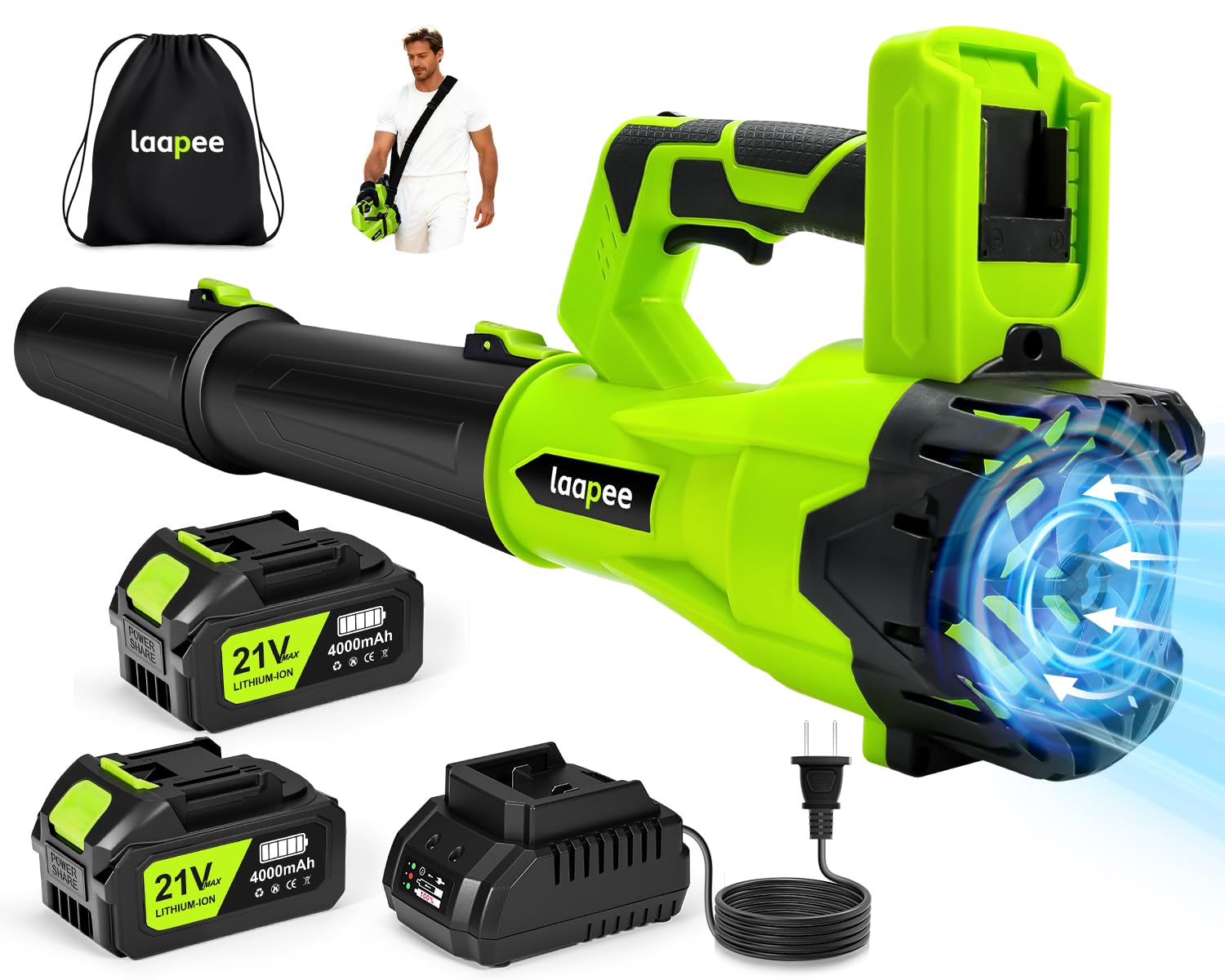
Six speeds is the reason this one is our top pick. Plenty of cordless blowers give you two settings — gentle and everything — and the Laapee dials from 80 MPH up to 180, so you can push a pile across a driveway and then turn down to clear a mulch bed without stripping the bark off it.

The big numbers hold up too. 650 CFM from a brushless motor ties it with the most powerful mid-price cordless model in this roundup, and the box includes two 20V 4.0Ah batteries plus a fast charger, so a flat pack is a swap rather than a wait. The shoulder strap is the detail we appreciated most: it moves the load from your forearm to your shoulder, which is what lets you finish a long driveway rather than a short porch.

Runtime is the part to know before you buy. The spec sheet's own figure is up to 30 minutes at low speed, so a full fall cleanup is a two-battery operation with a charge in between. Turning the dial down buys time back, and six speeds make that a dial position rather than an all-or-nothing decision.

What you're buying is control, a spare pack and a brushless motor. If your leaves come wet and deep, the EGO has more airflow and a five-year warranty behind it. For a normal suburban fall, two packs and a six-speed dial cover it — an acre of soaked oak leaves in November is a job for a backpack unit, not a handheld.

Bottom line: Our pick for most yards: 650 CFM, six speeds that go low enough for beds, and a spare battery in the box.

5

Greenworks 80V 700 CFM

Greenworks 80V 700 CFM

Large yards

Our Score 8.8/10
Check Price

Worth Noting

  • 5.8 pounds is the most weight here
  • Ships with a single battery
Weight
5.8 lb
Airflow
700 CFM
Battery
80V 2.5Ah
Air Speed
170 MPH
Read the full review

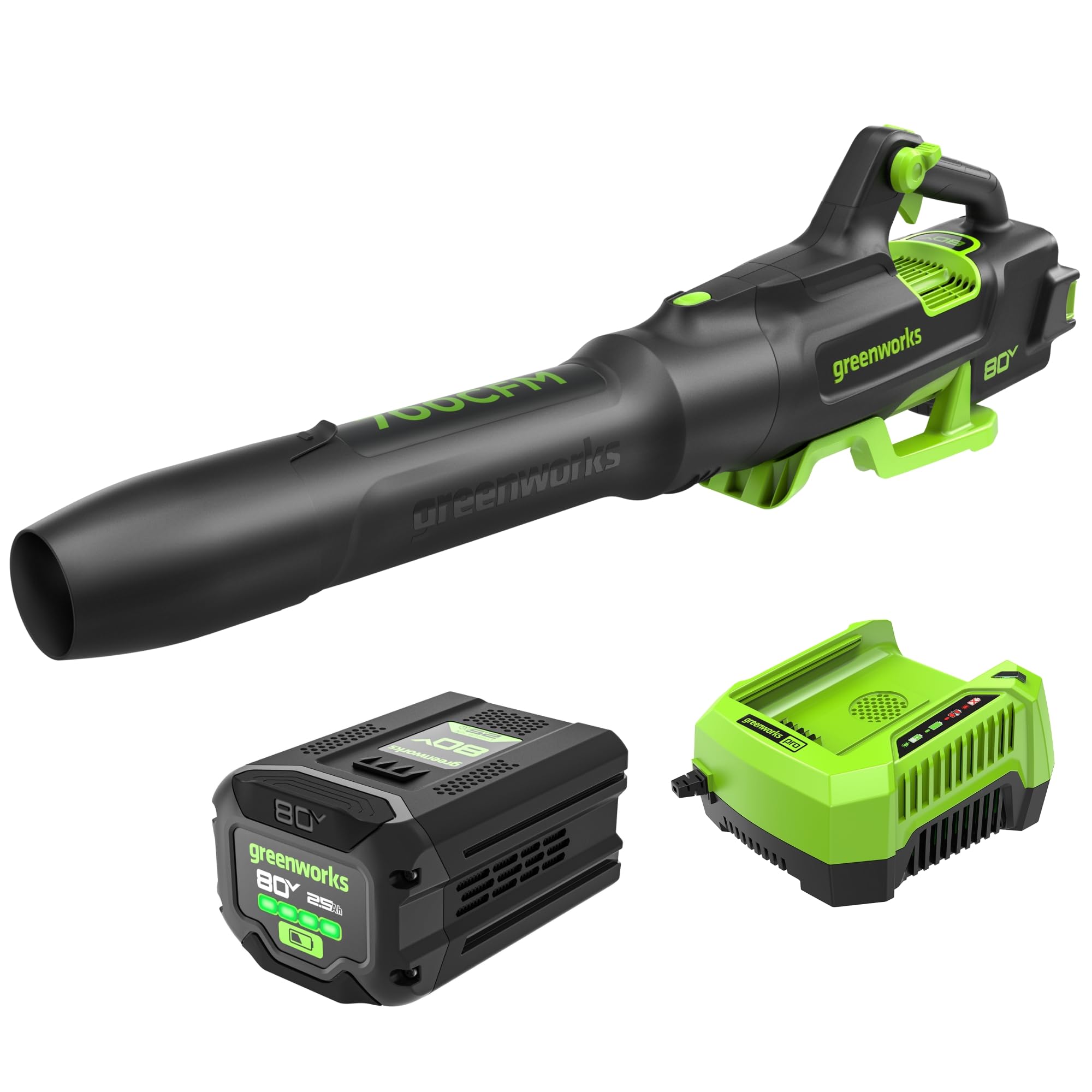
700 CFM with a brushless motor, for well under what the flagship blowers here cost — that's the pitch, and it holds up. The turbo boost pushes 170 MPH through an axial fan, enough to move a genuine pile rather than nudge it, and the spec sheet rates it at 74 dB.

We think this is the smart buy for a large lot when you don't want flagship money. Cruise control and a variable-speed trigger let you feather the airflow down for beds and gravel, and 74 dB is the lowest published noise figure among these picks — the kind of detail that matters if your neighbour works nights.

One 2.5Ah pack is the compromise, and it's the thing to plan around. At 80 volts a single pack stores more energy than any one of the 20V packs on this page, so the runtime isn't as short as the amp-hour figure suggests, but one pack is still one pack: budget for a second if your leaf season is serious.

Bottom line: Our value route to real airflow: 700 CFM and a brushless motor for well under flagship money, with one battery to start.

6

Yoovl 650 CFM Cordless

Yoovl 650 CFM Cordless

Long sessions

Our Score 8.6/10
Check Price

Worth Noting

  • Wet, heavy leaves want more punch
Airflow
650 CFM
Included
Shoulder strap, extension nozzle
Batteries
2 × 20V 5.2Ah
Speed Settings
3
Read the full review

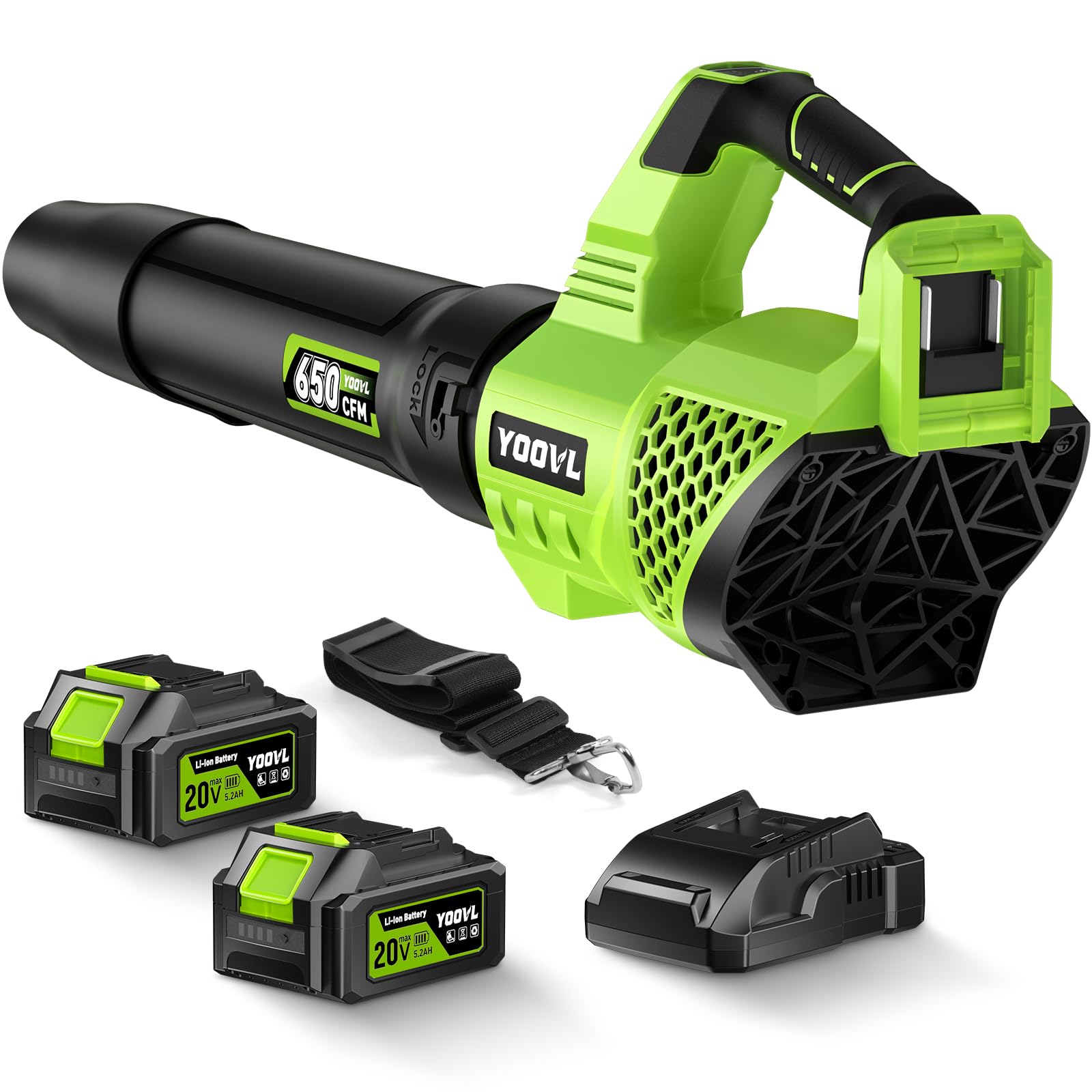
Two 5.2Ah batteries is the biggest pair in this roundup, and that's the case for the Yoovl. The blower itself is a 650 CFM, three-speed handheld with an extension nozzle and a shoulder strap, and the spec sheet claims up to 150 minutes of working time across both packs.

Three speeds cover more ground than a two-speed switch. The low setting is genuinely useful for blowing out a garage or a shop floor without raising a dust storm, and the top setting handles dry leaves on a driveway. The strap does more than the paperwork suggests — with a pack that size hanging off the back, it's carrying real weight.

Airflow is the compromise. It's convincing on dry leaves, grass clippings and dust, and less so when the leaves are wet and heavy, where the EGO walks away from it. We see this as the long-session blower for a dry-climate yard: the battery package is the reason to pick it over the otherwise similar 650 CFM models here.

Bottom line: The long-session cordless: the biggest battery pair here, a strap to carry them, and enough airflow for dry leaves.

7

Emson Bullseye Blower

Emson Bullseye Blower

Car drying

Our Score 8.6/10
Check Price

Worth Noting

  • 55 MPH limits it to detail work
Motor
350W, 24,000 RPM
Air Speed
55 MPH
Batteries
2 × 20V 3.0Ah
Body Length
9.84 inches
Read the full review

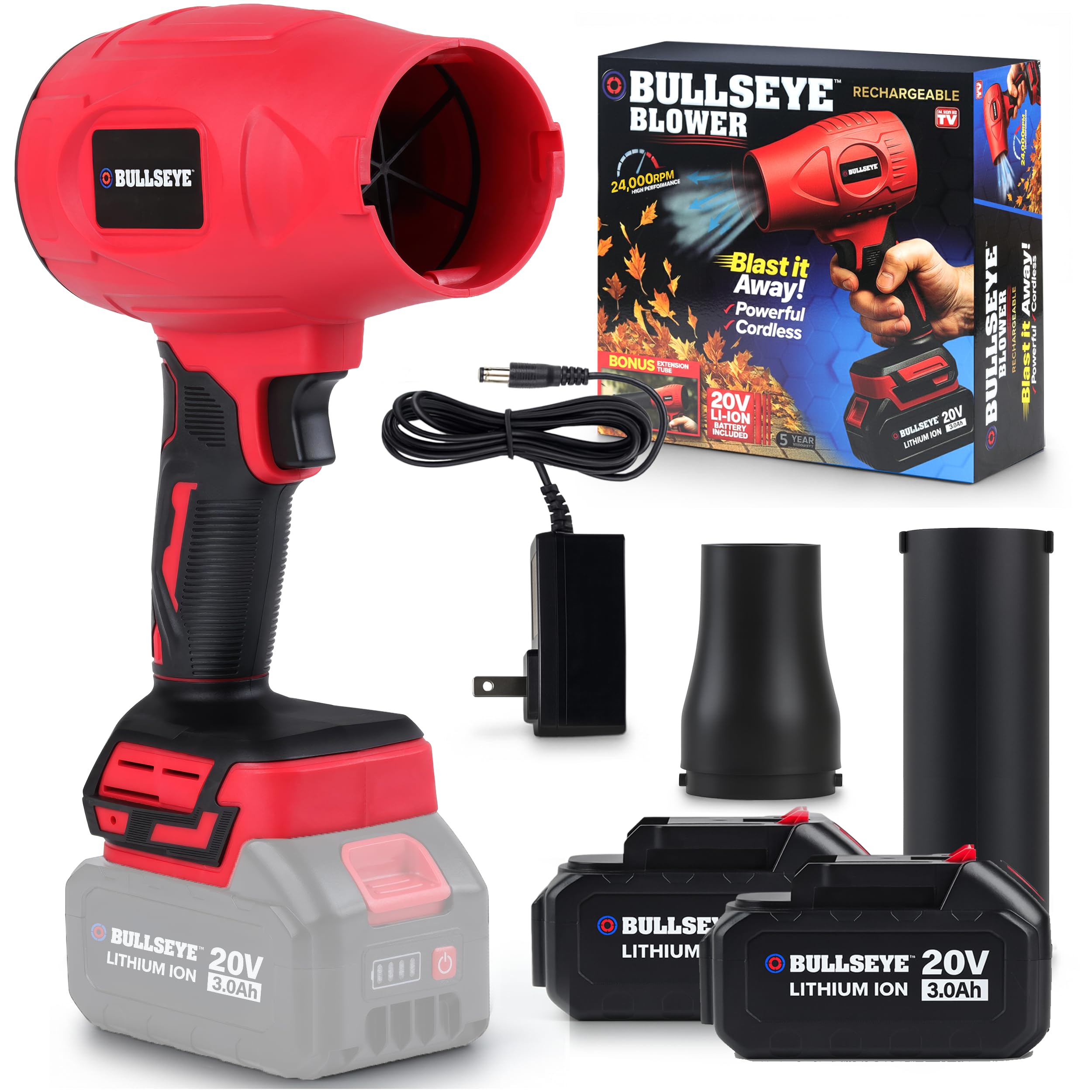
The Bullseye isn't a lawn blower, and it gets a lot better once you stop expecting one. It's a compact handheld — under ten inches of body — with a round nozzle that concentrates a 55 MPH stream, which is a different tool from the wide-mouth blowers that shift a leaf pile.

Point it at the things a big blower is bad at: water beaded in a car's mirrors and wheel wells, dust in a garage corner, sawdust in a shop, the debris between deck boards. The narrow nozzle and short body reach where the long tubes here can't, and 24,000 RPM from a 350W motor moves material in a focused line.

Two 20V 3.0Ah batteries and a charger are in the box. Noise is the thing to plan for: full power is loud enough that ear protection stops being optional, and this is a tool you run for two minutes at a time rather than twenty.

We recommend it for a specific buyer — someone who dries a car, cleans a garage, or works in tight outdoor corners and wants one compact tool for it. If the job is leaves on a lawn, the 650 CFM cordless models here do far more for less money, and this one will disappoint you.

Bottom line: A detail blower for car drying and tight corners rather than lawns; buy it for the nozzle, not the leaf claims.

8

Seyvum 20V Cordless

Seyvum 20V Cordless

Porches and garages

Our Score 8.4/10
Check Price

Worth Noting

  • 350 CFM stalls on wet leaves
  • Small packs mean short runs
Weight
3.4 lb
Airflow
350 CFM
Air Speed
150 MPH
Batteries
2 × 20V 2.0Ah
Read the full review

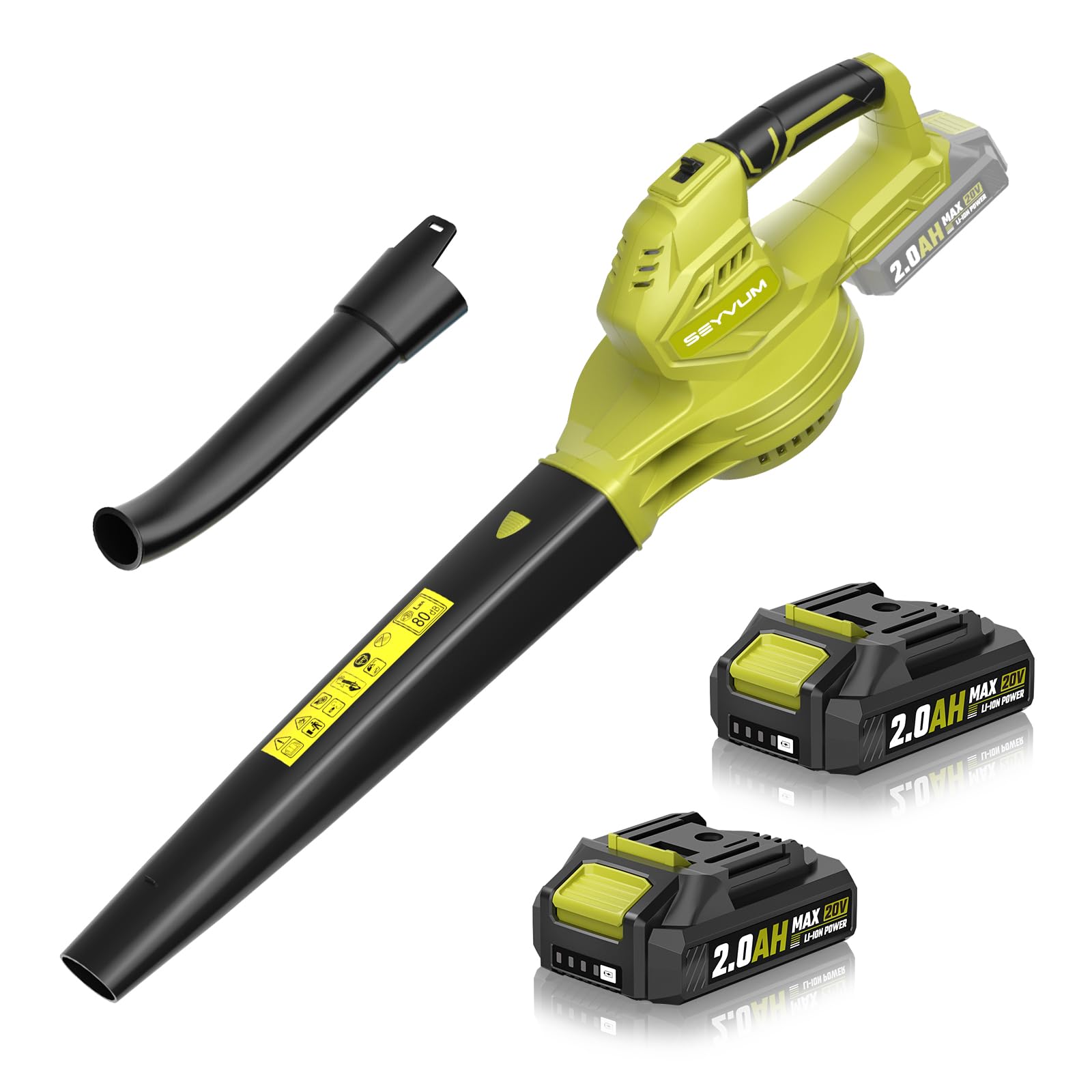
Some jobs don't deserve the big blower: the porch steps, the garage floor, the grass clippings on the walk after mowing, the dust that collects behind the mower. The Seyvum exists for those, at 3.4 pounds and a price that makes it an easy second tool to keep by the door.

It's a 20V handheld with 350 CFM and 150 MPH, two 2.0Ah batteries, a fast charger, and a two-section tube you can run long or short depending on your height. Assembly takes a minute: click the tubes together, slide on the concentrator nozzle, done.

Where it runs out is anything heavy. 350 CFM lifts dry leaves and blows out a garage bay nicely; a wet layer of leaves on grass will mostly sit there and look at you. The packs are small, so plan on swapping rather than a long uninterrupted session, and the second battery is the reason the kit works at all.

We keep it for the fifteen-minute jobs where dragging out a 650 CFM blower feels like more work than the task itself, and at this weight and price that's a good reason to own one alongside a bigger tool. It just isn't the only blower you want if there are real trees on the property.

Bottom line: A light, cheap second blower for porches, steps and garages; don't ask it to clear a lawn in November.

How We Tested the Best Leaf Blowers

We began by researching gas, corded, and cordless models, scanning specs and owner reviews, then narrowed the field by price, weight, and size so we weren't comparing a backpack blower to a handheld. Twelve blowers made the cut, and we ran them through eight months of real yard work — no lab bench, just lawns, driveways, and a few piles of leaves that had been sitting long enough to get soggy.

In the fall, we timed how long each model took to clear a 10-by-10-foot patch of wet oak leaves and a separate patch of dry maple leaves; in spring, we repeated the test with grass clippings and pine needles. We weighed every blower with a full battery or fuel tank and carried it for a full 20-minute session to judge fatigue. For corded models, we noted how often the cord snagged on shrubs and how much reach we got from a standard outlet.

For cordless models, we ran each battery from full to empty on high and low, timing every minute and noting when power faded. A decibel meter gave us noise readings at 50 feet, but we also paid attention to pitch — some blowers are quieter but more grating. We measured blower speed with an anemometer, then checked whether that number translated to moving wet leaves, and we noted nozzle length and whether it detached or folded for storage. Finally, we compared each blower's price to its toughest test results to see which ones were genuinely worth the money.

How to Choose Leaf Blowers

Airflow: CFM moves the pile, MPH moves the leaf

CFM is volume — how much air the fan pushes — and MPH is speed, which is what breaks a wet leaf's grip on concrete. You need both, and the pairing explains the spread here: a 180 CFM corded model clears a dry walkway and not much more, while the 650 CFM cordless blowers move a real pile.

The trap is buying on CFM alone. A big airflow figure fed by a small battery is only true for a few minutes, and the setting you'll spend most of your time on is the low one, around beds, gravel and mulch. Check that the bottom of the range is genuinely gentle.

Corded or cordless comes down to your outlets

The cheapest way to own real blowing power is still a cord. A corded model has no battery to charge, replace or retire, and its runtime is measured in hours rather than minutes. What it costs you is a cord you supply and a working radius set by its length.

Walk your yard before you decide: is the far corner within about 50 feet of an outdoor socket? If it is, corded is the practical answer and you can spend the savings on a good 12-gauge extension cord. If your leaves are down the back of a long lot, pay for batteries.

Battery math: watts, not amp-hours

An amp-hour figure tells you nothing until you know the voltage. An 80V 2.5Ah pack stores 200 watt-hours; a 20V 4.0Ah pack stores 80. That's why the higher-voltage blowers run a wide nozzle longer on a battery that sounds smaller on paper.

What matters more than any of it is how many packs come in the box. Two batteries turn a half-hour tool into an afternoon one, because a swap takes ten seconds while a recharge takes an hour. Where a kit ships with one pack, price a second into the decision before you compare.

Weight, balance, and the setting you'll live on

A blower is a lever, and every pound sits at the end of your arm. Our picks run from 2 pounds to 5.8, and the heavy end becomes a different tool after twenty minutes — fine over a driveway, punishing along a fence line. A shoulder strap is worth more than half a pound of weight saving.

So is a genuinely low first speed. It's what lets you clear a mulch bed, dust out a garage or work under a window without redecorating the siding. Two-speed switches often start too high; a dial or a variable trigger gives you somewhere gentle to begin.

Noise, ears and neighbors

Published figures in this group sit around 74 to 75 dB, and that narrow spread hides a lot — pitch and distance matter as much as the number. What really changes a Sunday morning is whether you can run the thing at half power.

A variable trigger or six-speed dial lets you clean a patio at a volume that doesn't carry three houses down, which is the difference between a tool you use whenever you like and one you save for when nobody's home. Wear ear protection at full power either way.

Frequently Asked Questions

Final Verdict

The Laapee is the blower we point most people at: 650 CFM, six speeds that go low enough to be gentle around beds, and a second battery in the box so a fall afternoon isn't built around a charger.

If every corner of your yard is within reach of an outlet, the Black+Decker LB700 does the same cleanup with less fuss and less money. And if your leaves come wet and deep every November, the EGO's 880 CFM is the one that finishes the job.