Planters & Plant Supports

Best Indoor Plant Stands of 2026

A plant stand that wobbles is worse than no stand at all—especially when it's holding a pot you've babied for years. I've watched cheap stands bow under a heavy ceramic planter and wrestled with instructions that seemed written for a different product entirely. The right indoor plant stand fixes both problems: it lifts your plants to the light, makes a corner look intentional, and holds weight without drama. It also shouldn't cost more than the plant it holds.

Over eight months, my team and I tested 12 indoor plant stands, from slim bamboo risers to multi-tier metal shelves. We assembled each one solo, timed how long it took, and noted where the instructions lost us. We loaded shelves with pots of different sizes and weights, nudged them to check for wobble, and lived with each stand in living rooms, bedrooms, and a steamy bathroom to see how the finish held up. We also compared price to materials and measured footprints to make sure a stand fits the space you have, not just the plant you bought.

1

TREEZITEK Tall Metal Stand

Top Pick
TREEZITEK Tall Metal Stand

One heavy pot

Our Score 9.6/10
Check Price

Worth Noting

  • Holds one pot and nothing else
Height
18.9 inches
Material
Solid iron
Top Diameter
11.8 inches
Load Capacity
100 lb
Read the full review

18.9 inches is the figure that earns this stand first place here. That height lifts a heavy pot off the floor and toward the light from a low window, and the 11.8-inch top ring is wide enough for the sort of ceramic planter you can barely lift once it is full. It is the stand we recommend first because it does the plain job — hold a big pot safely at the right height — on a frame that does not wobble and has nothing to adjust.

The frame is solid iron tube rather than hollow pipe, 5.31 pounds of it, and the weight is the point. It sits flat, it does not skate when you knock it with a watering can, and the three double legs keep the base planted on a wood floor. The feet curve instead of ending in points, so nothing scratches when you shift it. Assembly takes minutes with the Allen wrench in the box, and the screw sockets are welded into the frame rather than cut into thin tube — a small thing that tells you where the money went.

One thing to check before ordering: a saucer much wider than the 11.8-inch ring will overhang, and a big planter on a stand this size starts to look top-heavy. Keep the pot inside the ring and it reads as furniture rather than a plinth.

Bottom line: Our default for a single heavy pot: it holds the weight, sits flat on the floor, and never makes us nervous.

2

Sophia Mills Mid Century Stand

Sophia Mills Mid Century Stand

Large statement pots

Our Score 9.6/10
Check Price

Worth Noting

  • Priciest single-pot stand in this set
  • Dark brown reads redder than the photos
Finish
Oil-rubbed dark brown
Material
Solid acacia
Load Capacity
150 lb
Adjustable Width
8 to 12 inches
Read the full review

An adjustable stand sounds like a stand that shifts, and for the first minute this one does. The two acacia halves slide to any width between 8 and 12 inches and lock with a single screw; until a pot's weight settles on them there is a slight rock. Load it and the movement stops. That is the trade for a stand that still fits when the plant is repotted into something two sizes bigger.

What we think of it comes down to this: it is the best-looking stand in this group, and the only one that follows a plant through two or three pot sizes. The wood is solid acacia, oil-rubbed rather than stained, with a mid-century profile that does not fight the rest of a room, and it is rated to 150 pounds — far past anything one pot can weigh.

Two honest notes. It is the priciest stand here, and the dark brown carries a red undertone the photographs play down; if you picture warm walnut, expect something closer to mahogany. Neither changes the recommendation where the stand is meant to be seen, which is exactly the room this one is for.

Bottom line: We point to this one when the pot is 8 to 12 inches wide and the room deserves real wood rather than another black metal frame.

3

Simple Trending 3-Tier Metal

Simple Trending 3-Tier Metal

Hanging and vertical

Our Score 9.4/10
Check Price

Worth Noting

  • The 15-pot figure assumes small pots
Levels
3
Material
Steel
Dimensions
45 x 13 x 64 inches
Hanging Rod
29 to 45 inches
Read the full review

The rod across the top is what puts this stand in a different category from the rest of these. It slides from 29 to 45 inches with blocks at both ends, so a pothos or a string of pearls hangs from it instead of trailing off a shelf edge and getting caught in the vacuum. For a small apartment with a lot of plants and not much floor, this is the one we choose.

Below the rod it is three steel tiers in a 13-inch-deep footprint, painted and finished to shrug off a humid room. It arrives as a lot of parts and goes together with the tools in the box; the frame is thin-walled, which is why it takes up so little room and why it wants balancing across the shelves rather than loading at one end.

Height is the number to check before you order. The frame runs 64 inches tall, which is fine against a wall and awkward under a low window or a sloped ceiling. Give it that clearance and you get three tiers plus a hanging bar on a footprint only 13 inches deep.

Bottom line: We reach for this when floor space is the constraint: three tiers plus a rod for the trailing plants nothing else here carries.

4

Uneedem Wood Plant Stool

Uneedem Wood Plant Stool

One big plant

Our Score 9.4/10
Check Price

Worth Noting

  • Holds one pot and nothing else
Height
20.5 inches
Material
Lacquered wood
Top Diameter
11 inches
Load Capacity
100 lb
Read the full review

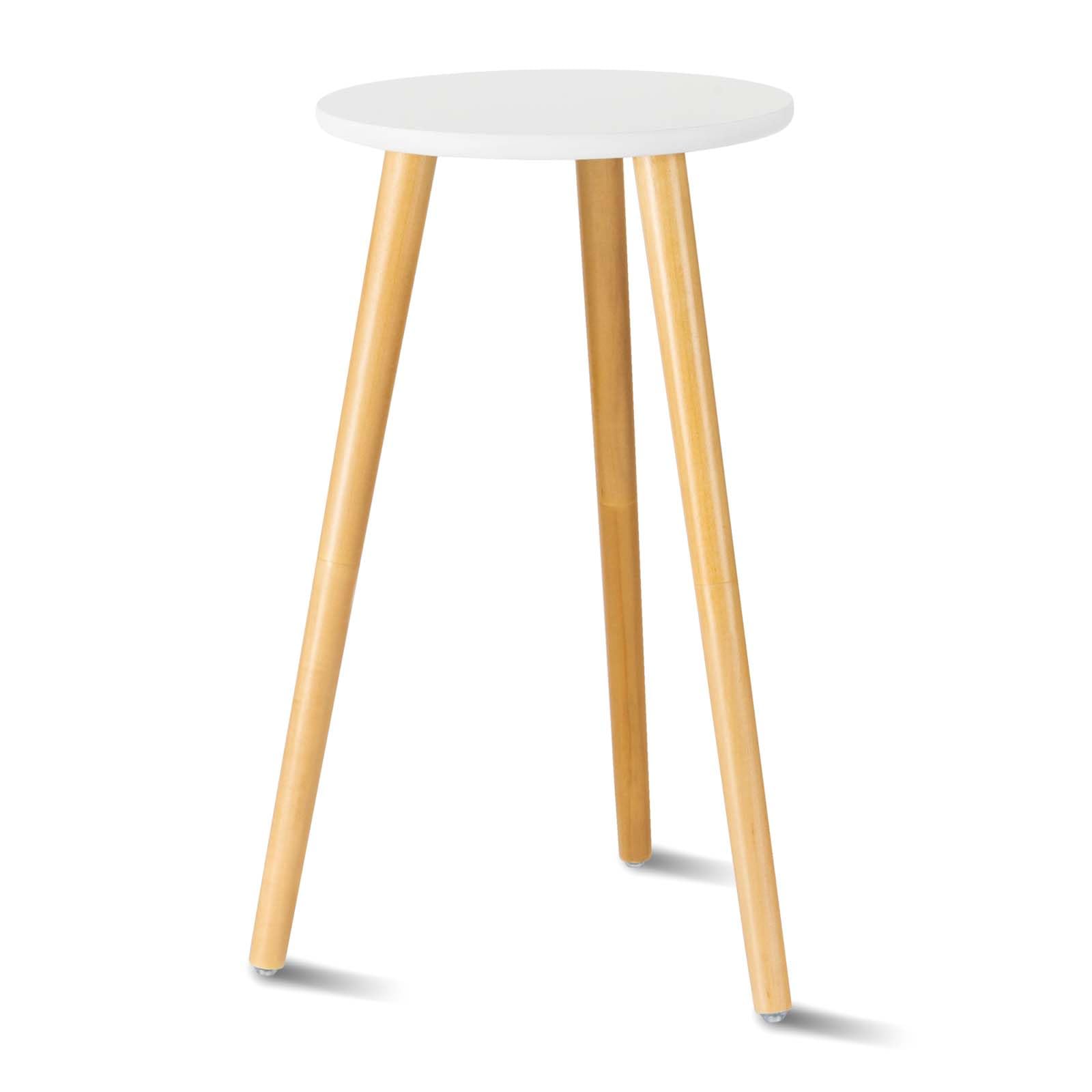
If you own exactly one big plant and no windowsill wide enough to hold it, the answer is usually a stool. Three legs screw into the underside of an 11-inch round top with no tools at all, and there is nothing to adjust afterward — no hardware bag, no levelling, no leaflet to lose.

At 20.5 inches the top lands where you actually look at a monstera or a fiddle leaf rather than down onto it, and the lacquered finish wipes clean when a saucer overflows. It is rated to 100 pounds, and the same stool comes in 16.5- and 8.9-inch versions if you want the look under a smaller pot.

What keeps it on the list is how little it asks of you: a small, well-made piece of furniture that happens to hold a plant, and one that works as a side table when the plant graduates to something bigger. A tall plant on a light three-legged stool is a top-heavy pair, though, so give it a spot out of the traffic rather than the middle of a hallway.

Bottom line: A plain, well-made stool we keep recommending because it puts one big pot at the height you want to look at it.

5

Uneedem 10-Tier Wood Rack

Uneedem 10-Tier Wood Rack

Growing collections

Our Score 9.2/10
Check Price

Worth Noting

  • Needs 34 inches of clear wall
  • Light build suits small to medium pots
Shelves
10
Material
Carbonized wood
Dimensions
34 x 11.6 x 47 inches
Load Capacity
150 lb
Read the full review

Ten shelves is hard to picture until the rack is against a wall. Stood up, this one runs 34 inches wide, 47 inches tall and a little over a foot deep, and it holds around eleven pots — with the middle bay left open so a tall plant stands tall instead of being wedged under a shelf. A macrame hanger comes in the box for a trailing pot.

It assembles from slotted wood and plastic triangle connectors, with a mallet, gloves and a few small gardening tools included. The carbonized finish is matte and dry to the touch rather than varnished, which we preferred: it takes a damp cloth without streaking, and it does not show marks the way a glossy shelf does.

Where it earns its place is capacity for the money. Eleven pots against a wall footprint a foot deep is more display than anything else here at the price, and the open middle bay means it does not force every plant into the same pot height. Set the ceramics on the bottom two shelves and the light pots up top — at 9.6 pounds the frame is steadier with the mass near the floor.

Bottom line: Ten shelves and a hanging bay for the price of a couple of nice pots — our pick when the collection has outgrown the windowsill.

6

Bamworld 3-Tier Ladder

Bamworld 3-Tier Ladder

Small pots, boho

Our Score 9.2/10
Check Price

Worth Noting

  • Fits small pots only
  • Outdoor life is shorter than indoor
Pots
More than 7
Levels
3
Material
Carbonized eucalyptus
Load Capacity
150 lb
Read the full review

Seven pots sounds generous until the frame is on the floor. This is a compact A-frame in three rungs of carbonized eucalyptus, and it is happiest with the four- and five-inch nursery pots that otherwise line up along a windowsill. The ladder shape is the appeal: each rung steps back from the one below it, so nothing shades the pot behind.

It goes together without a single screw. The pieces slot into one another and a rubber mallet comes in the box, along with gloves and a couple of small tools. The mallet is not a gimmick — the joints want a firm tap to seat, and we found that building it on a flat floor is what keeps the frame square.

The wood is carbonized at 570°F, which in practice means it shrugs off a wet saucer and does not stain the way bare pine does. Capacity is 150 pounds, and the whole thing weighs under seven, so it lifts with one hand when you want to sweep underneath.

What we came back to is the shape: three stepped rungs suit a boho corner where a black metal rack would feel wrong, and the price of entry is the lowest here. Go in knowing you are buying a home for small pots, not a plant tower.

Bottom line: The least expensive way into a tiered display here, and a lovely one — provided every pot you own is small.

7

LOYAL TIGER 2-Tier Metal

LOYAL TIGER 2-Tier Metal

Budget two-tier

Our Score 9.2/10
Check Price

Worth Noting

  • Powder coat chips at the joints
Levels
2
Material
Powder-coated iron
Dimensions
11.99 x 12 x 27.2 inches
Load Capacity
100 lb
Read the full review

Two rings at two heights, 27.2 inches off the floor, roughly a foot across: this is the plainest shape here, and the least expensive way to get a pair of plants off the ground. It is a three-leg pedestal in black iron, and from across a room it reads as a small piece of architecture rather than a shelf.

The two levels do more for a pair of plants than a single stand can — a fern below and something upright above it, both near eye level — and the frame is rated to 100 pounds while staying light enough to move with one hand. We assembled ours with the bolts and key in the box and nothing else.

The finish is where it asks for care. The powder coat chips at the joints where the legs meet the rings, and indoors that is cosmetic; outdoors it is where rust begins. In a bright, humid room, dry the frame after watering and it stays black.

It stays on the list because two tiers for less than most single stands here is a genuinely useful thing, and we still think it looks better than its position on the page suggests. This is the budget answer, not the compromise answer.

Bottom line: Two plants off the floor for the least money here; we keep it indoors, where the finish holds up best.

8

AZERPIAN 5-Tier Corner Rack

AZERPIAN 5-Tier Corner Rack

Dead corners

Our Score 9.0/10
Check Price

Worth Noting

  • Shelves are narrower than they look in photos
Frame
Painted metal
Levels
5
Shelves
MDF
Dimensions
23.54 x 23.54 x 41.85 inches
Read the full review

A corner is where a plant stand usually goes to be forgotten, and this one is shaped for exactly that spot: two wings fanning out from the wall on a 23.54-inch square footprint, 41.85 inches tall, with five shelves of different widths so nothing lines up in a row.

We think it is the best corner filler in this group. The frame is steel and the shelves are MDF in a rustic brown that reads as wood from across the room, and the tiered wings mean five plants occupy a space where a straight shelf would hold two. Medium pots sit on it without complaint; the heaviest ceramic belongs on the lowest tier, where the load has the least leverage.

Assembly is the part that costs you an evening. The instructions are the weak point — the diagram is small and the orientation is not always clear — so build from the finished photo and leave the frame loose until every shelf is in place. Do that and it squares up fine, which is more than the leaflet suggests.

Bottom line: For a dead corner that needs filling rather than one plant that needs lifting, this is the shape we choose.

How We Tested Indoor Plant Stands

We started by scanning the market for indoor plant stands in a range of materials—wood, metal, bamboo—and filtered the list by footprint, height, weight capacity, and price so we had options for small apartments and larger living rooms. From that shortlist, we brought in 12 stands and spent eight months with them.

Assembly was the first test. I put each stand together alone, using only the included instructions and tools, and timed the process from opening the box to the last tightened screw. I noted when a step was vague, when holes didn’t line up, and whether the stand felt solid immediately or needed a second pair of hands.

Then we loaded them up. We filled pots with moist soil and set them on every shelf and tier—small succulents up to a 10-inch ceramic monstera pot—and gave each stand a gentle nudge to see if it rocked or flexed. For metal stands, we placed them in a bathroom with a running shower for a month and checked weekly for rust spots. We also ran a hand over welds and joints, looked for uneven paint or rough edges, and noted whether the stand’s stated capacity felt honest.

Finally, we lived with each stand in real rooms—beside a sofa, in a bedroom corner, on a sunporch—and watched how it looked with our own pots and furniture. We compared what each stand cost against how it was built and how stable it felt, because a cheap stand that wobbles is no bargain.

How to Choose Indoor Plant Stands

Measure the pot and the saucer, not the plant

Nearly every disappointment with a plant stand comes down to a pot that did not fit. Measure across the widest point of the pot, then add the saucer — a big planter with a lip and a drip tray needs a surface wider than the pot itself. A single-pot stand gives you one number to check, and the ring on our top pick is 11.8 inches across.

Tiered racks are harder. Shelf width, shelf depth and the clearance between shelves all count, and a fixed gap will not take the pot you already own. The adjustable Sophia Mills, which slides between 8 and 12 inches, is the one design here that grows with the plant when it is repotted.

Capacity is a total, so decide where the weight sits

A 100- or 150-pound rating is generous for houseplants, so the number matters less than where the mass ends up. On a tiered rack, put the ceramics and the wet soil on the bottom two shelves and the light pots up top: a light frame loaded at head height is a frame that rocks when you walk past it.

On a single pedestal, the stand's own weight is what stops it skating across the floor. If two stands cost roughly the same and one weighs twice as much, that difference shows up in daily life more than any other specification on the page.

Height follows the window

Stand height is a light decision, not a style decision. An 18.9-inch pedestal or a 20.5-inch stool lifts a pot toward the lower half of a window; a 27-inch two-tier brings the upper plant closer to the glass; a 47-inch rack fills the whole window bay and shades whatever stands beside it.

Measure from the floor to the sill, subtract the height of the pot itself, and you have the stand height you want. If the answer comes out under a foot, buy a shorter stand rather than a taller plant — a plant stretching toward glass it can never reach goes leggy.

Wood or metal, and what each asks of you

Wood — carbonized eucalyptus, acacia, lacquered pine — is warmer in a room and forgives a knock, and it asks that you do not leave water standing on it: use saucers, water at the sink, and wipe spills before they soak in. Metal is thinner, easier to wipe and cheap to make tall; powder-coated iron is fine indoors and rusts where the coating chips, usually at the joints.

MDF shelves, like the ones on our corner rack, are sealed enough for a saucer but not for a puddle. For a bathroom or a bright humid room, choose metal. For a living room where the stand gets looked at, wood earns its price.

Assembly is part of the purchase

Assembly ranges from three legs and no tools to a slotted wooden rack with dozens of parts and a mallet. The pattern we have noticed: metal stands go together with bolts in a few minutes, wooden tiered racks take an evening, and corner units live or die on their instruction sheet.

Whatever you buy, start every screw before tightening any, lay the parts out in the order the diagram shows, and build it where it will stand. A loaded rack is miserable to move once the pots are on.

Frequently Asked Questions

Final Verdict

The TREEZITEK is the stand we point most people to, and the reason is boring in the best way: one heavy pot, one good window, 18.9 inches of solid iron that does not flinch under a ceramic planter. Buy it if your plant collection is one plant.

If your pots are plural, the Uneedem ten-tier gives more display per inch of wall than anything else here, provided you can spare 34 inches. And where the room matters as much as the plant, the Sophia Mills is the one that looks like furniture rather than equipment.