Pest & Weed Control

Best Heavy-Duty Weed Barrier Fabric of 2026

Every weed barrier makes the same promise and hides the same compromise: it keeps the weeds down, and it quietly decides whether rain ever reaches your soil. I've lifted fabric that turned a planting bed into a shallow pond, and I've lifted fabric that let so much light through I might as well have laid down nothing at all. The right one blocks weed seed, drains like a sieve, and stays put through a season of mulch bags, wheelbarrows, and dogs cutting corners.

My team and I have spent the past eight months with 12 heavy-duty fabrics working in vegetable beds, under a gravel path, and on a slope that washes out every spring. Differences showed up within weeks. The thickness number on the label is what most shoppers compare, and it's the easiest one to misread — fabric sold by "mil" is often quoting a coating, while weight per square yard tells you how much polypropylene you're actually getting. The picks below are the ones that held.

1

DeWitt Pro-5 Weed Barrier

Top Pick
DeWitt Pro-5 Weed Barrier

Large garden rows

Our Score 9.2/10
Check Price

Worth Noting

  • Premium price for a large roll
Roll Size
5 x 250 ft
Roll Weight
45.8 lb
Fabric Weight
5 oz
Alignment Stripes
Every 12 in
Read the full review

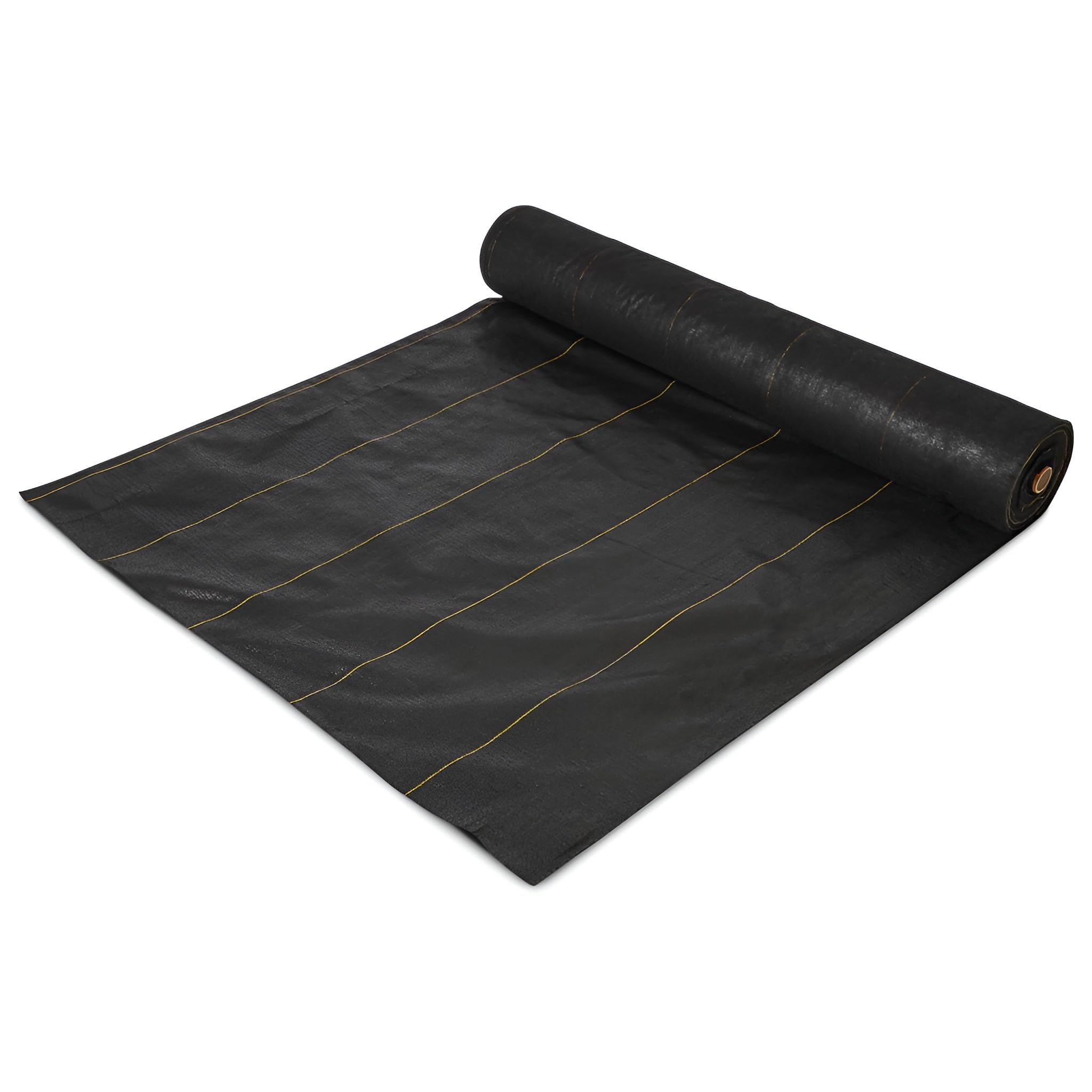
Five ounces of woven polypropylene is the figure that separates the DeWitt Pro-5 from the lighter rolls here, and the 5-by-250-foot roll turns that weight into long, seam-light runs. We unrolled it across a working width and the fabric held its shape instead of bunching. Once it is down, it feels like ground cover rather than a sheet.

We think it's the best default for anyone treating weed barrier as a long-term installation: commercial rows, a driveway base, or a bed you do not want to revisit. The gold stripes every 12 inches are more useful than they sound, keeping plant rows straight without a string line, and the woven surface takes staples without tearing out.

The trade-off is handling. At 45.8 pounds, the roll is awkward to carry through a gate and wants a helper on a windy day. The 5-foot width is also more than a small bed needs, so measure first; a narrower roll saves wrestling.

Against the ECOgardener, the Pro-5 is the heavier, longer roll for bigger jobs; against the Sunbelt, it is the tougher fabric for heavier work. If your project is a single home bed, the smaller roll is easier to live with. For a long border or a traffic area, the fewer seams and thicker hand of the Pro-5 are the reasons we keep it at the top.

Bottom line: We recommend the DeWitt Pro-5 as the heavy-duty default for long rows, driveways, and any install where you want the fewest seams and the toughest woven fabric.

2

ECOgardener 5oz Landscape Fabric

ECOgardener 5oz Landscape Fabric

Home garden beds

Our Score 9.2/10
Check Price

Worth Noting

  • Weeds can find poorly overlapped seams
Roll Size
4 x 100 ft
Roll Weight
5 lb
Construction
Two-layer needle punch
Fabric Weight
5 oz
Read the full review

The ECOgardener is our pick for the home bed you will actually finish in a weekend: a 5-ounce, 4-by-100-foot roll that is heavy enough to block light but light enough to carry through a gate at 5 pounds. We like that it does not turn a small planting job into a construction project.

The two-layer needle-punch construction gives it a felt-like surface that cuts cleanly with scissors and holds staples well. The printed lines are a small thing that saves time when you are setting out vegetables or shrubs, and the 4-foot width is easy to center between beds without folding.

Water and air move through it, which is what you want around established plants; the fabric is not a substitute for mulch or gravel over the top. The 4-foot width also makes it easy to keep a clean edge along a border, and the 100-foot length covers a bed without leaving a big partial roll to store.

It sits below the Pro-5 on sheer toughness and below the Sunbelt on total coverage, but it is the easier roll to handle for a bed refresh. The 5-pound roll is the detail that matters if you are carrying it through a side yard by yourself.

Bottom line: We like the ECOgardener best for home beds: a 5-ounce roll that blocks light without turning a weekend planting job into a wrestling match.

3

DeWitt Sunbelt Weed Barrier

DeWitt Sunbelt Weed Barrier

Long garden runs

Our Score 9.2/10
Check Price

Worth Noting

  • Water can pool on flat, compacted ground
Roll Size
4 x 300 ft
Roll Weight
29.4 lb
Fabric Weight
3.2 oz
Alignment Stripes
Every 12 in
Read the full review

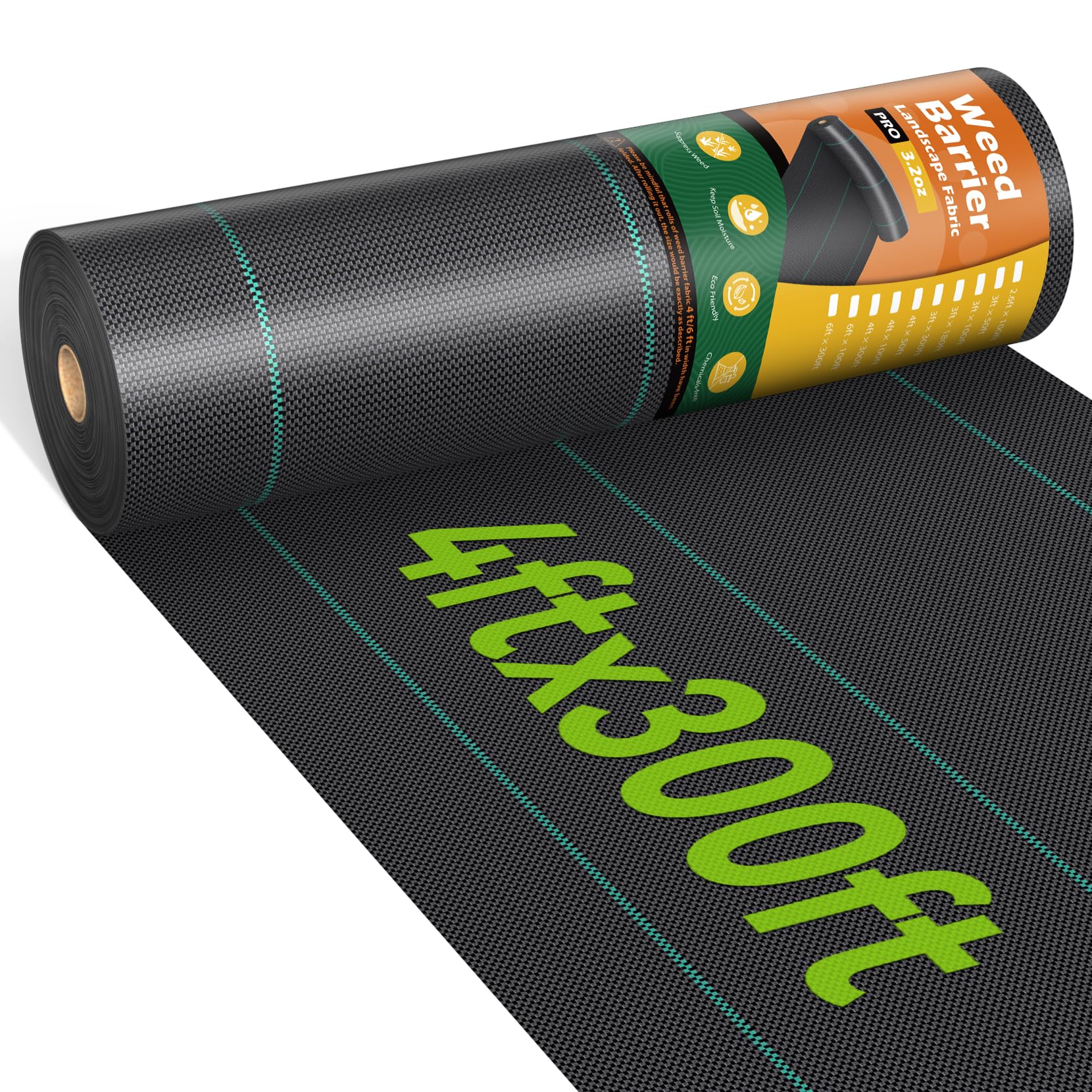
A 4-by-300-foot roll is a statement of intent: this is the DeWitt Sunbelt, and it is built for long garden rows, orchard aisles, or a fence line where stopping to splice another roll is the enemy. The 3.2-ounce woven fabric is lighter than the Pro-5, and at 29.4 pounds the roll is still a deliberate lift, but it covers a lot of ground in one pass.

The golden stripes every 12 inches are the feature we used most, because they turn a long run into a series of visible rows. The woven polypropylene lets air and water move through, and it takes staples without tearing out. It is not the fabric for a sharp gravel base; that is where the heavier 5-ounce rolls earn their keep.

The lighter weight makes the roll easier to manage than the Pro-5, but it also means less margin under aggressive foot traffic. The 3.2-ounce fabric is happiest under mulch or in a garden row, not as a standalone driveway surface.

We reach for the Sunbelt when coverage and speed matter more than maximum toughness. It is the long-row workhorse of this group, and the 12-inch stripes are what keep a 300-foot run from turning into guesswork.

Bottom line: We reach for the DeWitt Sunbelt when a long garden row needs coverage fast, and we accept a lighter fabric to get it.

4

VIVOSUN Weed Barrier Fabric

VIVOSUN Weed Barrier Fabric

Small beds

Our Score 9.2/10
Check Price

Worth Noting

  • Three-foot width means more seams
  • Can rip under sharp loads
Roll Size
3 x 50 ft
Guide Lines
Every foot
Construction
Dual-layer needle punch
Fabric Weight
5 oz
Read the full review

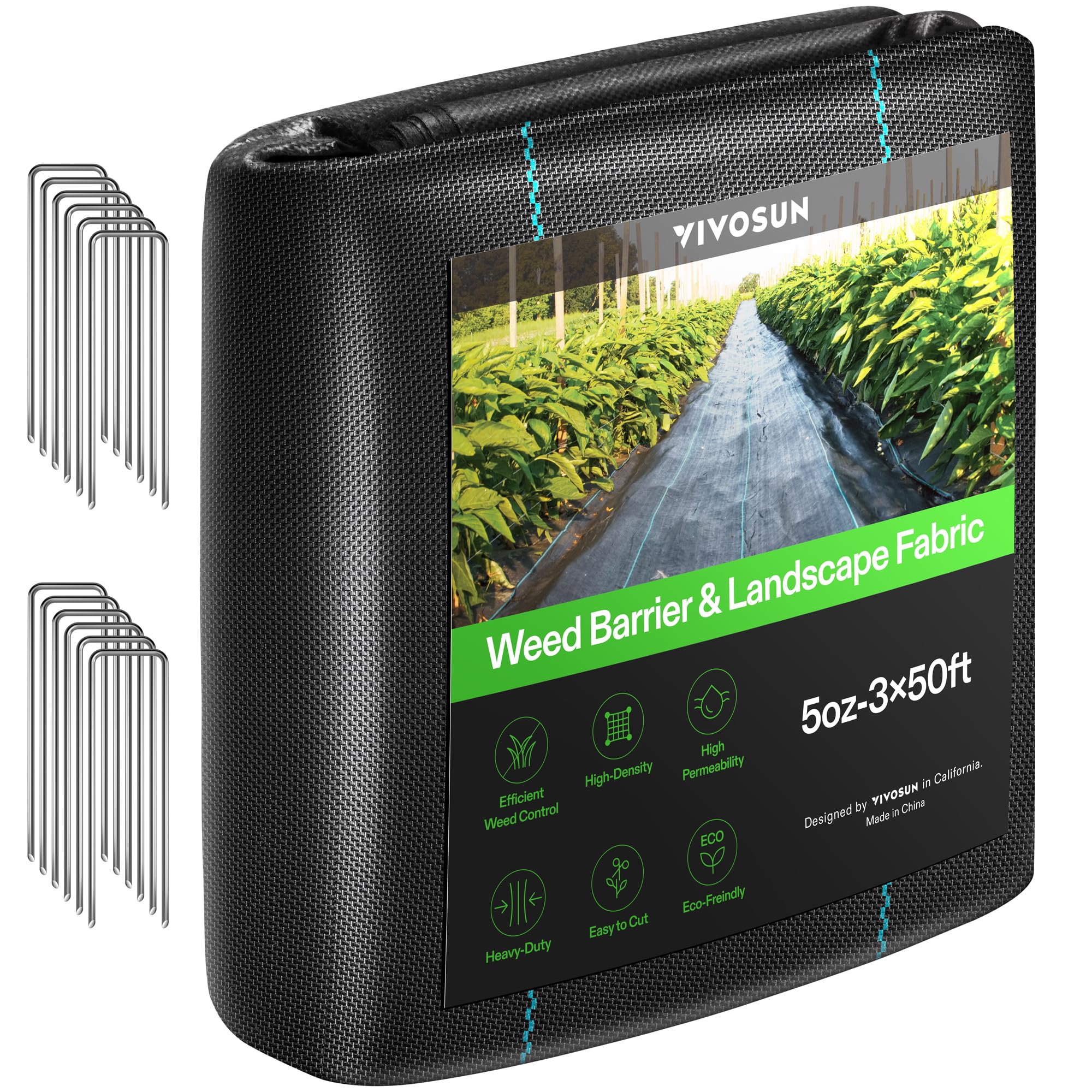
VIVOSUN's 5-ounce roll is a dual-layer needle-punched fabric, and the construction is the interesting part: a felt-like layer bonded to a woven backing, with green guide lines every foot. The 3-by-50-foot size is small, but the fabric is aimed at drainage, with a permeability claim several times that of a traditional woven cover.

We think it is the best small-bed roll here when drainage is the worry. Around established shrubs or in a raised bed that stays wet, the double layer lets water move instead of sheeting off. The 5-ounce weight also gives it more body than the thin budget rolls.

The catch is that it is a trim roll for a bed, not a field. The fabric has less margin than the heavier woven rolls, so prep the ground before you lay it. It is not the roll for a driveway.

Against the ECOgardener, the VIVOSUN is smaller and more drainage-focused; against the Pro-5, it is a trimmer roll for a bed rather than a field. The green lines every foot are genuinely useful for square-foot planting, which is a nicer detail than a vague easy-install claim.

Bottom line: We recommend the VIVOSUN roll for small, damp beds where drainage matters more than covering a lot of ground.

5

Happybuy Driveway Fabric

Happybuy Driveway Fabric

Wide driveways

Our Score 9.0/10
Check Price

Worth Noting

  • Edges can fray without a clean cut
  • Exposed fabric can break down in sun
Material
Woven polypropylene
Roll Size
13 x 108 ft
Fabric Weight
5 oz
Tensile Strength
600 lb
Read the full review

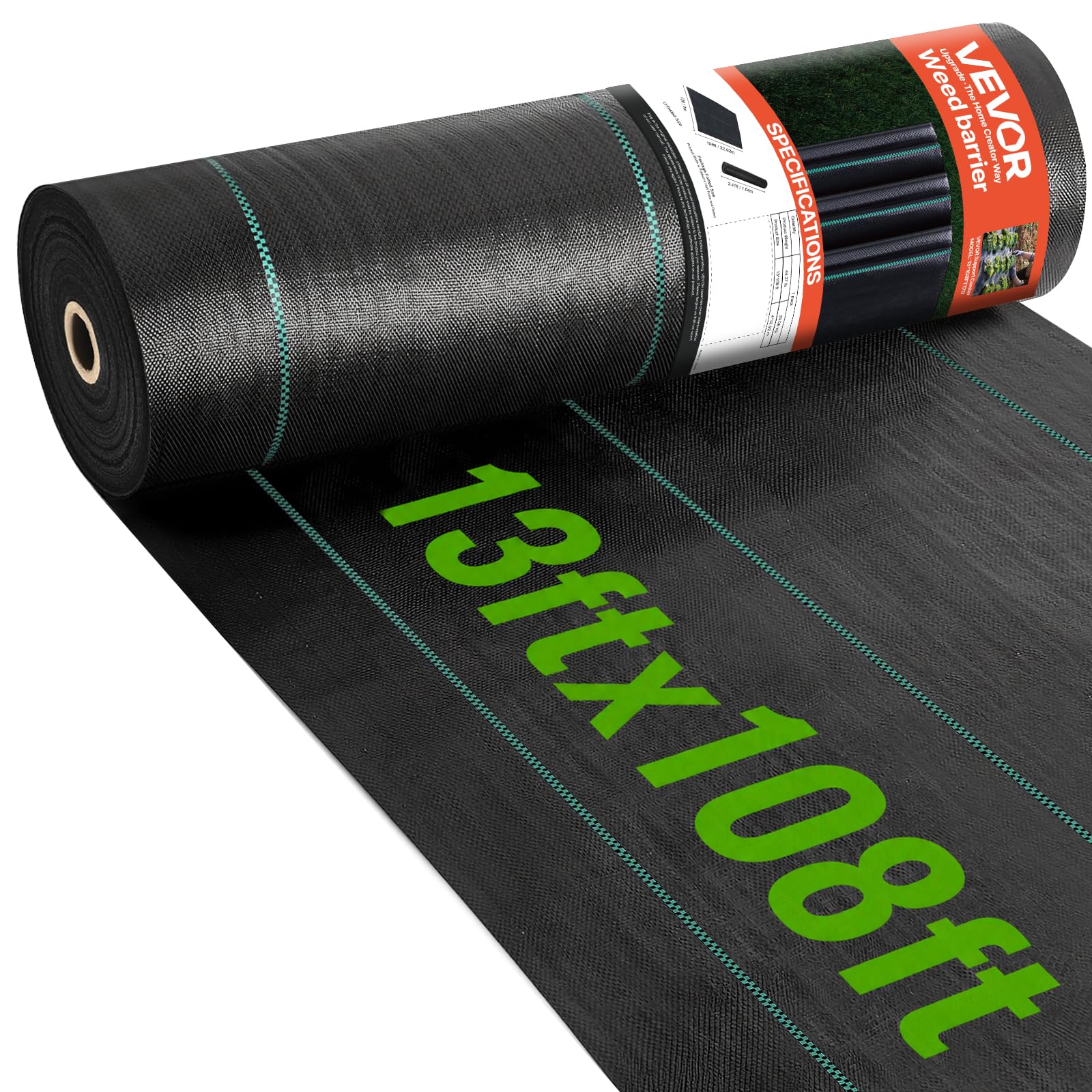
Thirteen feet of width is the reason to look at the Happybuy roll: a 13-by-108-foot sheet covers 1,415 square feet, which means fewer seams across a driveway apron or a wide gravel pad. The 5-ounce woven polypropylene is rated to 600 pounds of tensile strength, and the scale of the roll is genuinely useful for a big flat area.

We like it for projects where the fabric will be covered and loaded: under gravel, a driveway base, or a stabilization layer. The wide sheet rolls out fast, and the ability to cut it down means you can trim around posts and edges. It is not a precision garden fabric; the width is the point.

This is the best wide-coverage roll in this group, but it comes with a condition: keep it covered. Gravel, mulch, or pavement should go on top; this is not a leave-it-exposed fabric. That is not a reason to avoid it for a driveway; it is a reason to finish the job.

Against the Pro-5, the Happybuy gives you much more width and coverage for a different kind of work. For a garden bed, it is overkill and awkward to handle; for a broad driveway, the fewer seams are worth the trade.

Bottom line: We recommend the Happybuy roll for wide driveways and gravel pads, where its 13-foot width saves seams and time.

6

EXTRAEASY Landscape Fabric

EXTRAEASY Landscape Fabric

Narrow paths

Our Score 9.0/10
Check Price

Worth Noting

  • Edges can fray when cut
Material
Woven polypropylene
Warranty
One year
Roll Size
17 in x 50 ft
Fabric Weight
3.2 oz
Read the full review

The EXTRAEASY roll is the narrow specialist here: 17 inches wide and 50 feet long, it is the fabric we reach for when the bed is a path, a row, or a strip between raised boxes. The 3.2-ounce woven polypropylene is heavier than its small size suggests, and the narrow width means less cutting and less waste in tight spots.

It rolls out easily and cuts with scissors, and the 50-foot length is enough to line a couple of narrow runs without dragging a big bolt around. The one-year warranty is a modest safety net, but the fabric is not the one to choose for a wide bed; you will be seaming every 17 inches, and that is a lot of overlap to secure.

For a garden path or a row of vegetables, the narrow width is the feature, not a compromise. It lets you work between plants without burying the whole bed. Keep it covered with mulch or gravel, and use staples at the ends; a narrow strip catches wind more easily than a wide sheet.

We like it as a problem-solver rather than a whole-garden roll. If your project is a long, narrow strip, the EXTRAEASY is the one that will not leave you fighting a 4-foot sheet in a 17-inch space.

Bottom line: We keep the EXTRAEASY roll for narrow paths and rows, where its 17-inch width is an advantage rather than a limitation.

7

GardenMate Weed Control Fabric

GardenMate Weed Control Fabric

Wide short beds

Our Score 9.0/10
Check Price

Worth Noting

  • Short 33-foot length limits coverage
Material
Polypropylene
Roll Size
6 x 33 ft
Fabric Weight
100 g/m²
UV Protection
UV stabilized
Read the full review

Six feet wide and 33 feet long, the GardenMate roll is shaped for a wide but shallow bed: a front border, a raised bed, or a quick cover over a small area. The 100 g/m² woven polypropylene is UV-stabilized, and the 6-foot width cuts down the number of seams across a bed.

It is one of the least expensive rolls here, and the value is real if your project is small. The fabric is light enough to carry and cut, and the width lets you cover a bed in one pass. It is not a heavy-duty roll in the sense of the 5-ounce fabrics; it is a value cover for a bed that will be mulched.

The weave is not the tightest in this group, and that shows up in two ways: water can run off a slope before it soaks in, and the fabric can feel loose compared with the premium rolls. On flat ground with mulch over it, those are minor. On a slope, plan the drainage before you lay it.

The 6-foot width can be awkward in a narrow bed. Measure the run before you order; this is a roll for a compact shape, not a whole garden.

We recommend the GardenMate for a small, wide bed where the budget is tight and the fabric will be covered. For a long row or a traffic area, the Sunbelt or Pro-5 is the better buy. The 6-foot width is the reason to choose it over a cheaper narrow roll, even though the roll is short.

Bottom line: We like the GardenMate roll for a small, wide bed, where its 6-foot width cuts seams and the short length still fits.

8

Petgrow Weed Barrier Fabric

Petgrow Weed Barrier Fabric

Midrange beds

Our Score 9.0/10
Check Price

Worth Noting

  • Water can run off on slopes
Roll Size
4 x 100 ft
Roll Weight
6.5 lb
Construction
Needle-punched
UV Protection
UV stabilized
Read the full review

The Petgrow roll is a 4-by-100-foot needle-punched fabric with a 5-year UV-stabilized claim, and the surface has a fibrous, felt-like hand rather than the slick finish of a woven tarp. That matters when you are cutting around plants: it grips the soil a little better and does not slide around as you position it.

It is aimed at erosion control as well as weed blocking, and the fabric lets air and water through while holding soil in place. The 6.5-pound roll is manageable for one person, and the 4-foot width is a sensible middle ground for beds and borders.

We think it is a sensible midrange choice for raised beds and borders, with one caveat: the fabric can fray when cut with scissors. A hot knife or a quick pass with a torch gives cleaner openings, and that small extra step keeps the edges from shedding.

Against the ECOgardener, the Petgrow is similar in size but a little more oriented toward erosion; against the Pro-5, it is lighter and less expensive. It is not the roll for a gravel driveway, where the heavier woven fabrics are more convincing.

Bottom line: We think the Petgrow roll is a sensible midrange choice for raised beds and borders, where its needle-punched surface and 4-foot width suit the job.

9

LAVEVE Heavy Duty Weed Barrier

LAVEVE Heavy Duty Weed Barrier

Budget beds

Our Score 8.8/10
Check Price

Worth Noting

  • Edges can fray after cutting
Material
Woven polypropylene
Roll Size
4 x 50 ft (2-pack)
Guide Lines
Green
Total Coverage
4 x 100 ft total
Read the full review

The LAVEVE pack is two 4-by-50-foot rolls, which adds up to the same 4-by-100-foot working area as several single rolls here. The woven polypropylene has green guide lines, and the two-roll format is easier to store and carry than one long bolt.

At the budget end of this group, it is the roll we choose when the bed is small and the budget is tight. It cuts easily, and the 4-foot width is manageable between shrubs. The trade-off is that the fabric is not as dense or as forgiving as the 5-ounce premium rolls; it wants mulch or gravel over it and a careful overlap.

The pack's hardware is not something to count on; buy extra landscape staples and plan to secure the ends yourself. On a slope, that prep is the difference between a tidy bed and fabric that lifts.

Weed control is decent when the fabric is covered and the seams are tight, but this is not the roll for a high-traffic driveway or a site where sharp gravel will move underfoot. The 4.4 rating fits that story: a useful budget fabric with a shorter expected life than the top picks.

We recommend the LAVEVE for a first bed, a rental garden, or a quick refresh where the fabric will be covered and the budget matters. For a long-term install, spend more on the Pro-5 or the ECOgardener. The two-roll pack is also easier to store between weekends, which is a practical win for a small shed.

Bottom line: We see the LAVEVE two-pack as the budget pick for small beds that will be covered, not for driveways or heavy traffic.

10

iropro Weed Barrier Fabric

iropro Weed Barrier Fabric

Large-area value

Our Score 8.8/10
Check Price

Worth Noting

  • Lighter fabric can tear under sharp loads
Material
Woven polypropylene
Roll Size
4 x 300 ft
Roll Weight
23.8 lb
Fabric Weight
3.2 oz
Read the full review

Four feet by 300 feet for a midrange price makes the iropro the value roll of the large-format group. At 23.8 pounds it is lighter than the DeWitt Pro-5 and easier to get off the truck, and the 3.2-ounce woven polypropylene is aimed at long fence lines, garden rows, and underlayment jobs where you want one continuous run.

The fabric cuts easily and rolls out flat, and the 300-foot length is the real feature: you can cover a long border without splicing. It is not as dense as the 5-ounce rolls, so it is happiest under mulch or gravel rather than exposed to foot traffic.

The trade-off is consistency. The lighter woven fabric wants a clean cut; a hot knife or sharp scissors keeps the edges tidy. On a driveway with sharp gravel, it needs a double layer or a heavier backing. For a garden row, those are manageable conditions.

We recommend the iropro when the job is large and the budget is not. It is the roll to buy for a long row or a fence line where coverage matters more than maximum toughness. If the fabric will be walked on or loaded, the Pro-5 is the safer default.

Bottom line: We recommend the iropro roll for large garden rows on a budget, where the 300-foot length matters more than maximum toughness.

How We Tested 12 Heavy-Duty Landscape Fabrics

We started with spec sheets for more than 40 fabrics and cut anything that read like a tarp: no stated weight per square yard, no perforations, or rolls so narrow you'd be seaming every few feet. That left 12 to test, a mix of woven and spun-bonded rolls, all sold as heavy duty.

Every roll went into the ground in early spring and stayed there through the season. I installed each one solo with a timer running, so I know how long a 50-foot run took to unroll, square, and pin, and whether it fought me at the corners. I counted the stakes that came in the box and compared that to what the run actually needed, since a fabric that ships with six pins for 150 square feet isn't finished. Thickness got checked with calipers at three points on every roll, and I dragged loaded wheelbarrows across each one to see whether it stretched, tore, or slid out from under the mulch.

Water was the test I trusted most. I poured a quart onto each fabric and timed how long it took to disappear, then checked the soil underneath after a heavy rain to see whether the bed was still drinking. In fall I peeled back a corner of every roll and counted what had rooted beneath it, then looked at the cut edges for fraying and bleaching. I also priced each roll per square foot including stakes, because the cheap ones get expensive once you buy hardware.

How to Choose the Right Heavy-Duty Weed Barrier Fabric

Start with fabric weight and construction

A 5-ounce woven fabric is the safer choice for a driveway base, a gravel path, or anywhere the fabric will take foot traffic and shifting stone. A 3.2-ounce woven roll is lighter and easier to handle for garden rows that will be mulched. Needle-punched nonwoven fabrics feel more like felt and suit beds and borders, while woven fabrics resist pulling and tearing better under load.

Choose width and roll length around seams

Every seam is a place where weeds can find an edge and water can slow down. A 4-foot roll is the common middle ground for beds, a 13-foot roll cuts seams on a driveway, and a 17-inch roll is the right tool for a narrow path. Measure the actual width of the bed or drive before you order; a roll that is too wide is harder to handle than two neat passes.

Plan for water, not just weeds

Weed fabric blocks light, but it still has to let water reach the soil. Woven and needle-punched fabrics are designed to pass water; plastic sheeting is not. On flat, compacted ground, even a permeable fabric can let water pool before it soaks in. Break up the crust, slope the base slightly, and keep the fabric covered so the surface does not seal over.

Finish the edges and cover the fabric

Cut edges are the weak point. A sharp knife or a hot knife gives a cleaner line than pulling the fabric apart, and a 6-inch overlap at seams gives you something to secure. Use landscape staples along the edges and seams, then cover the fabric with mulch, gravel, or pavement. Exposed fabric takes sun and foot traffic directly, and that is where it breaks down first.

Frequently Asked Questions

Final Verdict

We recommend the DeWitt Pro-5 as the default for heavy-duty work: 5-ounce woven fabric, a 250-foot run, and enough weight to stay put under gravel or foot traffic. It is the roll we choose when the install is meant to last and the seams are the enemy.

If your project is a home bed rather than a long row, the ECOgardener is easier to handle. The Sunbelt covers more ground when the budget is tighter, and the EXTRAEASY is the narrow-strip specialist. The right choice changes with width and coverage, not just weight.