Greenhouses & Hydroponics

Best Grow Tents of 2026

Most grow tents don't fail dramatically. They fail at the seams—slowly leaking light, snagging zippers, sagging under the weight of a carbon filter. A tent that does its job should disappear into your routine: you zip it shut, the light stays in, and the only thing you think about is watering. That's what you're really paying for—a stable environment that protects your plants from light pollution, pests, and temperature swings.

Over the past eight months, I've set up a dozen grow tents—from compact 2x2s to a 4x8 that took over the garage—some solo in twenty minutes, others with a friend and a lot of swearing. Ventilation matters more than the spec sheet lets on; a tent with poorly placed ports will fight your inline fan all day. The pattern is clear: thick material, smooth zippers, and a sturdy frame are worth the extra cost. Value isn't just the sticker price—it's how many grows you get before something breaks, and the picks below reflect that.

1

AC Infinity CLOUDLAB 844

Top Pick
AC Infinity CLOUDLAB 844

Main 4x4 grow

Our Score 9.4/10
Check Price

Worth Noting

  • Most expensive tent in this roundup
  • Corner stitching can pull during a rough first setup
Frame
1 in. steel poles
Canvas
2000D Oxford
Footprint
48" x 48" x 80"
Max Hanging Load
150 lb
Read the full review

Two figures decided this for us: 2000D canvas and one-inch steel poles. Nothing else in this roundup gets past 1680D, and thinner frames flex when you hang a carbon filter off a top bar. Set the CLOUDLAB 844 up and it feels like equipment rather than a bag over a frame — the poles seat with a solid click and the canvas stays taut when you pull the door shut.

The detail we appreciated most is the front zipper flap, a second layer of canvas over the teeth. That seam is where tents in this group eventually leak, and covering it costs the maker almost nothing. The controller plate with its lightproof cable passthrough is the other small thing that turns out to matter: the fan controller lives inside, its cord leaves through a sealed grommet, and nothing glows at 2 a.m.

Light can still find the zipper if you zip carelessly. The fix is technique rather than warranty: run a finger along the flap so the canvas covers the teeth before you finish the pull. Beyond that, 150 pounds of hanging capacity is enough for a large LED, a filter, and a circulation fan, and the extra hanging bars mean you aren't fighting for space on two rails.

Assembly rewards patience. Lift the canvas over the frame instead of dragging it, get the base square on the floor, and the corners line up. Do that and it's a tent you stop thinking about, which is the highest compliment an enclosure can earn.

Bottom line: We point most people to this one: the thickest canvas and sturdiest frame here, with a zipper flap that makes the light seal a matter of care rather than luck.
2

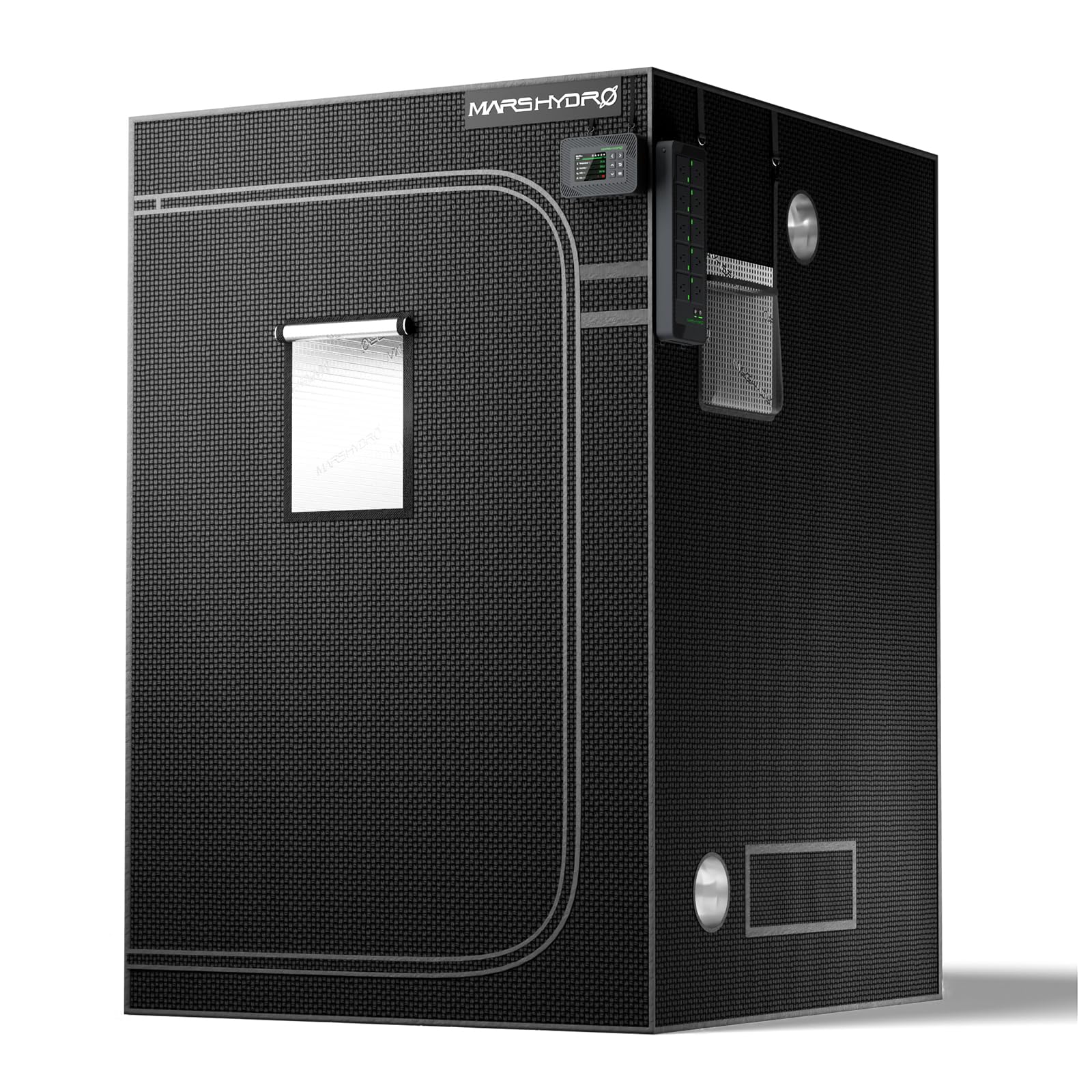
Mars Hydro 4x4

Mars Hydro 4x4

Value 4x4 grow

Our Score 9.2/10
Check Price

Worth Noting

  • Hardware fit and finish trail the top pick
Canvas
1680D Oxford
Zipper
Dual metal with light-blocking flap
Footprint
48" x 48" x 80"
Max Hanging Load
154.3 lb
Read the full review

Mars Hydro builds the same 48 by 48 by 80 box as our top pick, in 1680D canvas rather than 2000D, and asks noticeably less for it. That's the trade in one line.

What surprised us is how little the step down costs in daily use. The dual zippers run on a double black lining, and the flap over the stitching carries an extra strip of shade cloth — a smart place to spend money, because that's exactly where pinholes start on a cheaper tent. The frame snaps together with corner adapters, no tools needed, and one person can manage it on a clear floor.

Seventy kilos of hanging capacity covers a big LED and a filter, and the double-layer observation window lets you check plants without opening the door and dumping the humidity. Reaching the back corners takes some contortion through the front door, so load plants from the back forward when you set it up.

What you keep is the footprint, the reflective lining, and the light-blocking flap that decide how the tent actually performs. That's why it's the 4x4 we suggest when someone wants the size without premium money.

Bottom line: If the budget doesn't stretch to our top pick, this is the 4x4 we point you to: 1680D canvas, a light-blocking zipper flap, and 70 kg of hanging capacity.

3

Spider Farmer 4x4

Spider Farmer 4x4

Gear-heavy 4x4

Our Score 9.2/10
Check Price

Worth Noting

  • Zipper can jam if the flap catches the teeth
Canvas
1680D Oxford
Footprint
48" x 48" x 80"
Viewing Window
11.8" x 15.7"
Max Hanging Load
150 lb
Read the full review

The feature we keep coming back to is the least glamorous one: a cable pass-through port with controller hooks beside it. In a 4x4 crowded with a bar light, an exhaust fan, and a circulation fan, cords leaving through a sealed grommet instead of an open duct port is the difference between a light-tight tent and a glowing one.

The rest of the build sits close to the top pick's: 1680D Oxford with diamond mylar, dual stitching behind the zipper, and hardened steel poles rated to 150 pounds. The observation window measures 11.8 by 15.7 inches, wide enough to read a hygrometer through it, and the floor tray lifts out for cleaning.

Zippers are the weak link, as they are on most tents here. The sliders run smooth while the flap stays clear, but catch the canvas in the teeth and the top of the run stops closing properly — one jammed pull can cost you the last few inches of seal. Zip slowly for the first week and it behaves.

It sits between our top pick and the Mars Hydro on price, and it's the one we reach for when the plan is to hang a lot: light, filter, fan, and a controller, all with somewhere to live. The tool bag and controller lanyard are small extras we didn't expect to use and did.

Bottom line: Buy this one if your 4x4 will be crowded with gear: the sealed pass-through, controller hooks, and 150-pound rating keep the inside organized and light-tight.

4

zazzy 4x4

zazzy 4x4

First 4x4

Our Score 9.0/10
Check Price

Worth Noting

  • 600D canvas is the thinnest in this roundup
Frame
Alloy steel
Canvas
600D mylar
Footprint
48" x 48" x 78"
Max Hanging Load
110 lb
Read the full review

If this is your first 4x4, the zazzy gets you the footprint without asking you to buy premium canvas. It's 48 by 48 by 78 on an alloy steel frame, with metal corners and adjustable connectors that tighten onto the poles.

What we like is where the savings landed. The frame is metal rather than plastic-cornered, the connectors grip instead of wobbling, and the floor tray comes out for cleaning. What you give up is canvas weight — 600D here against 1680D and 2000D above — and with it some resistance to pinholes and a little temperature buffering. For a first or second grow that's a fair trade.

Two inches matter more than they sound. At 78 inches tall this sits two inches under the other 4x4s here, and that's two inches less distance between your light and the canopy before you run out of headroom on a stretching plant. Grow trained, shorter plants and you'll never notice; plan on tall sativas and you will.

Expect a little glow around the door zipper at this price, and seat the flap every time you close it. On frame quality for the money, we haven't found a 4x4 here that beats it.

Bottom line: The cheapest way here into a real 4x4: a steel frame, metal corners, and 110 pounds of hanging capacity that covers a normal light-and-filter setup.

5

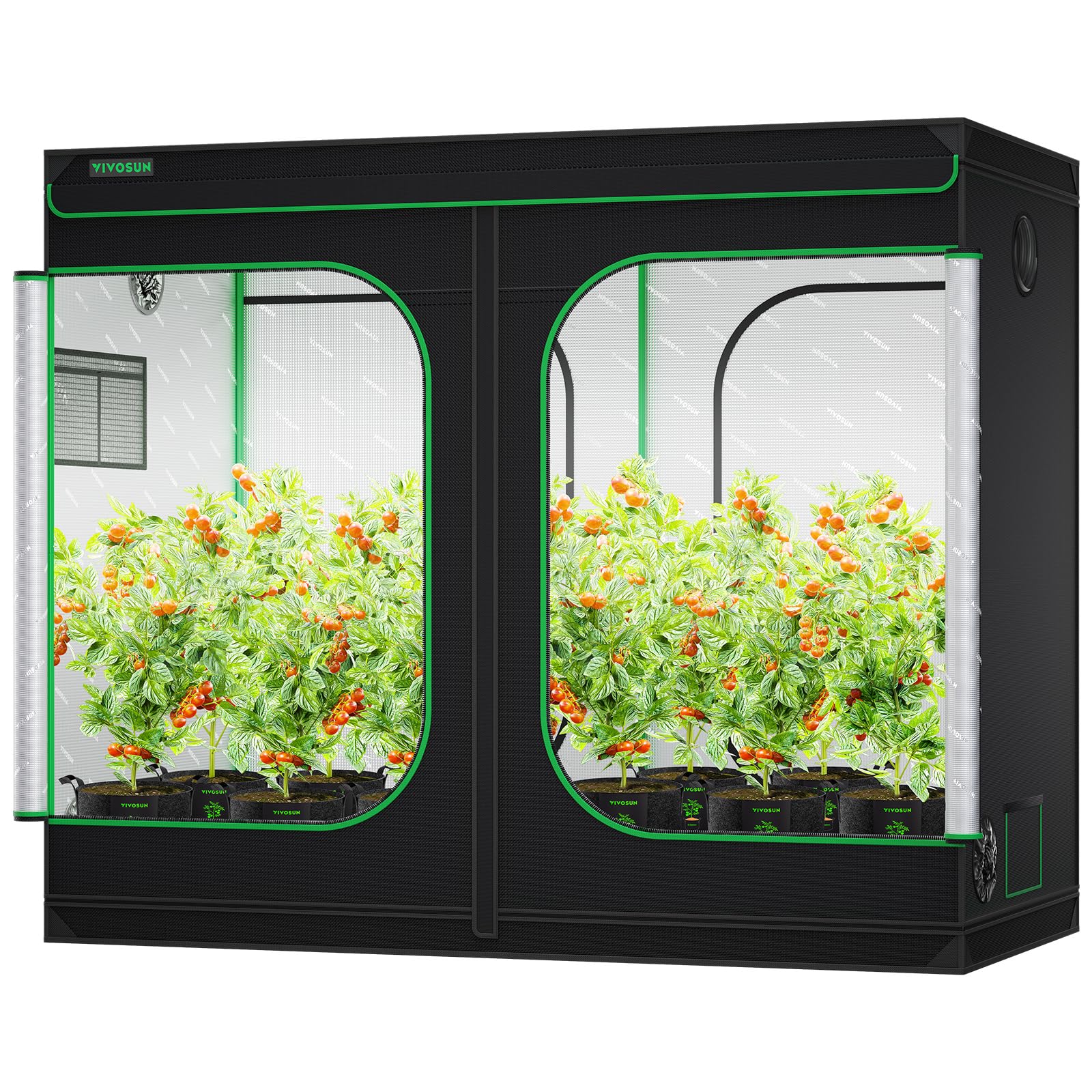
VIVOSUN S848 4x8

VIVOSUN S848 4x8

Large plant counts

Our Score 9.0/10
Check Price

Worth Noting

  • 100 lb capacity is the lowest among the big tents
  • Zippers need the flap seated carefully
Canvas
1680D Oxford
Footprint
96" x 48" x 80"
Chamber Volume
6.04 cubic meters
Max Hanging Load
100 lb
Read the full review

Eight feet is a lot of wall. Walk the room with a tape before anything else: the S848 measures 96 by 48 by 80 inches, and you want clearance at one end for ducting and room in front for a door that opens wide. In a spare bedroom it eats a wall; in a garage it's the best use of one.

Given the space, it does the job of two 4x4s in one enclosure, with the same hexagon-pattern mylar and 1680D Oxford as our smaller VIVOSUN pick. The 400g inner layer and the PE reinforcement are the parts we care about: that's what holds heat and stops a pinhole turning into a tear.

The viewing window saves unzipping the whole front to look in, the detachable canvas comes off the frame for cleaning, and the duct ports are spread along the sides so an exhaust run doesn't have to cross the tent. Hang from more than one top bar — across eight feet, a single rail carrying a filter, a fan, and a bar light is the load that matters.

Working the back is the daily reality of a tent this size: you reach in from the front and the side openings, so keep a walkway clear at one end rather than pushing it flush into a corner. Set it up that way and eight feet of tent is a pleasure rather than a chore.

Bottom line: For a serious plant count, this gives you eight feet of length and 80 inches of height in one enclosure instead of two, provided you have the wall for it.

6

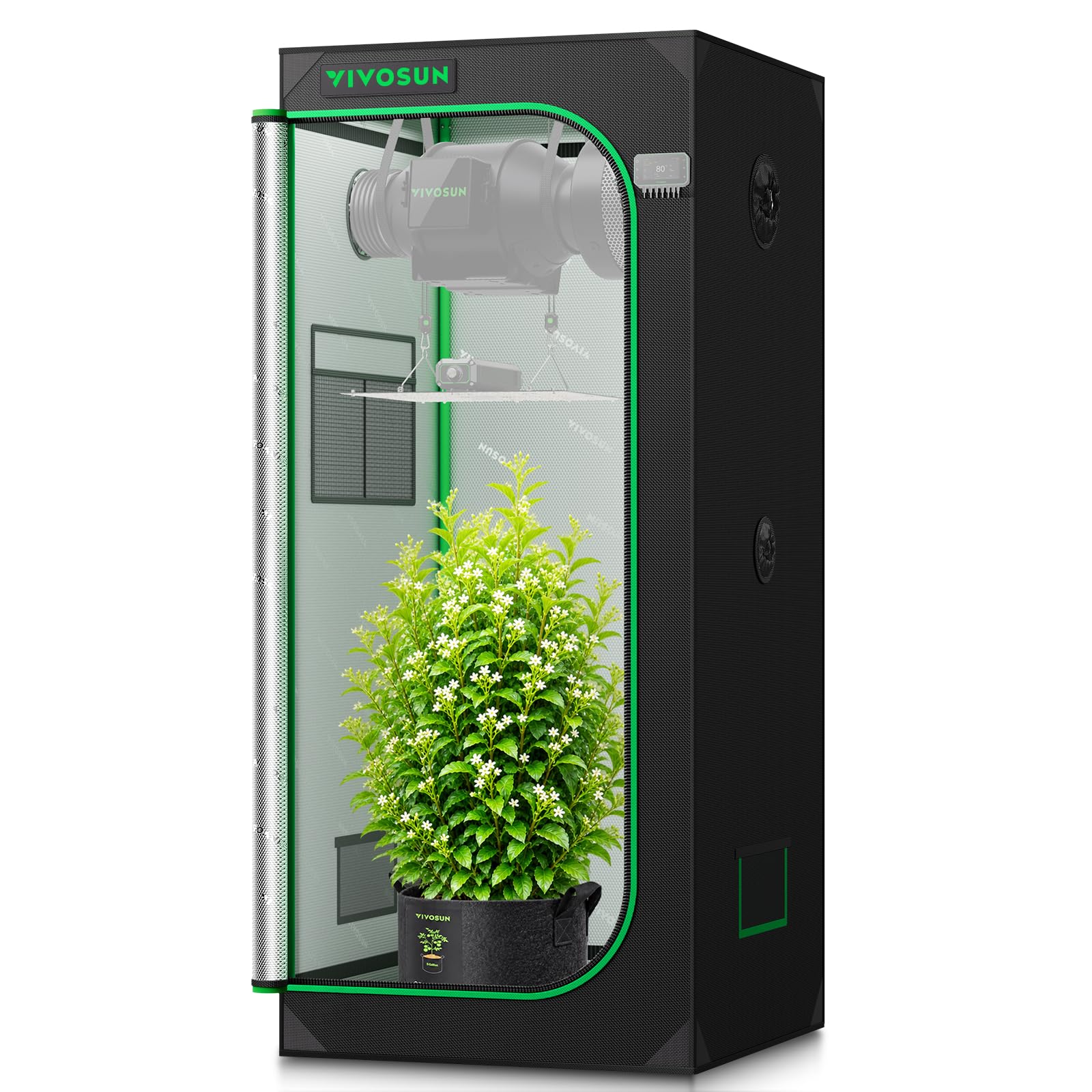
VIVOSUN 28x28x63

VIVOSUN 28x28x63

Closets and corners

Our Score 9.0/10
Check Price

Worth Noting

  • Little room beyond one large plant
  • Small volume heats quickly under strong light
Frame
Metal
Canvas
1680D Oxford
Capacity
784 liters
Footprint
28" x 28" x 63"
Read the full review

Sixty-three inches of height is the number that decides whether this works for you. A compact LED takes a few inches off the top, the light needs clearance above the canopy, and what's left suits trained, short plants — herbs, lettuce, autoflowers, a scrog. It does not suit a tall sativa in a big pot.

The build is the same family as our 4x8 pick: 1680D Oxford, hexagon-pattern mylar, a metal frame, a viewing window, and a detachable canvas. In a 28-inch square that's more canvas than the job strictly requires, and we're glad of it — the smaller the tent, the more a single reflective wall is doing the work.

The chamber is 784 liters, and it fills faster than 28 inches sounds. One large plant in a big pot, or a handful of small ones, is the realistic ceiling; add a small circulation fan and watch temperature, because a sealed 2x2 heats up quickly under a strong light.

It goes up without tools and comes down again if you need the closet back, which is more than we can say for the 4x8. For a rental, a spare closet, or the corner of a room you share with other people, that reversibility is half the appeal.

Bottom line: For a closet or a corner, this is the small tent we point to: 28 inches square, 63 inches of height, and the same 1680D canvas as our big pick.

7

ATOUR 48x24x60

ATOUR 48x24x60

Narrow spaces

Our Score 8.8/10
Check Price

Worth Noting

  • 60-inch height caps what you can flower
Frame
Metal
Canvas
600D polyester
Footprint
48" x 24" x 60"
Chamber Volume
40 cubic feet
Read the full review

A 24-inch-deep tent is a corridor: you reach everything from the front, and the back wall is never more than arm's length away. For a hallway, a narrow spare wall, or a closet, that's the shape that works. The ATOUR measures 48 by 24 by 60, on a metal frame, with 600D reflective polyester.

Sixty inches of height sets the ceiling on what you can finish in it. Seedlings, vegetative plants, and short-flowering varieties handle it; anything that stretches before it flowers ends up pressed against the light. We think of this as a propagation and early-veg tent that can also finish a compact crop.

The 40-cubic-foot chamber holds a couple of plants and a small fan without feeling cramped, and the observation window means you aren't unzipping to look. The lining is 600D rather than the 1680D on the bigger picks, so handle it carefully around the zipper and the seams.

The honest summary: it's the least expensive way here into a metal-framed, reflective tent with a floor tray, and it does that job. Decide whether 60 inches suits your plants before you decide whether it suits your room.

Bottom line: The narrow-space tent we recommend: 48 by 24 by 60 on a metal frame with a floor tray, at the lowest price in this roundup.

How We Tested the Best Grow Tents

To build our shortlist, we started with the tents that show up again and again in grower forums and retailer reviews, then filtered by material thickness, pole diameter, port layout, and price. We ended up with 12 tents, from 2x2 footprints to 4x8, and tested each for eight months in real growing spaces—basements, spare bedrooms, and one garage. We started every assembly solo, timing how long it took and noting when we had to call for a second pair of hands. Then we loaded each frame with a carbon filter and LED fixture to see if it sagged, shook the frame to check sturdiness, and zipped and unzipped every door daily to catch snags or stuck pulls.

For light leakage, we turned off the room lights, climbed inside with a flashlight, and inspected every seam, zipper, and duct port from the outside, then ran a full 12/12 light cycle and checked again during the dark period. Ventilation got the same treatment: we installed an inline fan and filter, then watched how well the tent held negative pressure, whether the ports lined up with our ducting, and if airflow stalled in corners. Over eight months, we noted wear at stress points—seam tears, zipper failures, fabric thinning—and compared each tent's price to the features and lifespan we actually got. The tents that rose to the top were the ones that stayed sturdy, sealed tight, and went up without a fight.

How to Choose Grow Tents

Measure the wall, then the canopy

Tent dimensions are outside dimensions. The frame and canvas sit inside those figures, so a 4x4 leaves a little less than four feet of usable width, and a 4x8 needs a full eight feet of wall plus clearance at one end for ducting. Tape the footprint on the floor and add a few inches on every side you need to reach through.

Height is the figure people under-weight. Every inch above the canopy is headroom for a plant that stretches and clearance for the light, and going from a 60-inch tent to an 80-inch one costs far less than replacing a tent that ran out of room in week six. Choosing between short and tall, take the tall one.

Canvas weight and the light seal

Denier is the weight of the fabric. 600D is the lightest canvas here, 1680D is the common midrange, and 2000D is the heaviest. Thicker canvas resists pinholes, hangs straighter, and buffers temperature a little better, which is why the tents we rate highest on durability are also the heaviest.

Denier doesn't seal a tent, though — the zipper flap and the stitching behind it do. A 600D tent with a proper flap and double stitching keeps more light in than a heavy canvas with a bare zipper. If the budget only stretches to one, spend it on the seal.

Zippers, ports, and the parts you touch daily

The zipper is the most-used component in a tent and the one most likely to fail. Look for a flap that covers the teeth, and prefer a viewing window so you aren't opening the door every evening to read a hygrometer and dumping the humidity you built up.

Then count the openings against your gear: one duct port for exhaust, one for intake, and a sealed pass-through for cables. Ports in the wrong places force duct runs across the tent, and a cable leaving through an open port is a light leak with a cord in it.

Load ratings and where the frame gives

Hanging capacity across these tents runs from 100 to 150 pounds, and it goes fast: a large LED, a carbon filter, and an inline fan add up, with the filter usually the heaviest single item. Add the numbers before you order, then spread the weight across more than one top bar rather than loading a single rail.

Pole diameter matters as much as the rating. One-inch steel poles with metal corner adapters hold their shape under load; thinner poles with plastic corners flex and eventually crack. Build the frame where the tent will live, because a dressed 4x8 doesn't move again.

Frequently Asked Questions

Final Verdict

For most people the AC Infinity CLOUDLAB 844 is the tent to buy. The 2000D canvas, one-inch poles, and layered zipper flap answer the three things that go wrong with cheaper tents: tears, sagging frames, and light at the seams.

If the budget is tighter, the Mars Hydro 4x4 gives you a real 1680D enclosure with a proper light-blocking flap for less. Growing in a closet or a rented room, take the VIVOSUN 28x28x63 — and if you have eight feet of wall to spare, the S848 turns it into one grow instead of two.