Seeds & Plants

Best Grass Seed for High-Traffic Lawns of 2026

There's a strip of dirt in my backyard I've started calling the dog's highway — bare, compacted, and muddy for two days after every rain. High-traffic grass seed is designed for exactly that strip: tougher turf species and faster-sprouting varieties blended so a lawn can absorb feet, paws, and mower wheels without going bald. The problem is that the words "high traffic" on a bag tell you almost nothing about what actually comes up, how thick it fills in, or whether it's still there next spring.

So I stopped reading the banners and started reading the back of the bag, then seeded the same kind of worn patches in my own yard and compared notes with my team on twelve different blends across a full growing season. The first thing any new buyer should know: a bag that sprouts in five days is usually leaning on annual ryegrass, which looks fantastic until the first hard freeze kills it. What you want is a high percentage of turf-type tall fescue and perennial ryegrass — and a label that lists purity and germination separately, because those numbers are where cheap seed hides. The blends that held up to real wear are below.

1

Scotts High Traffic Mix

Top Pick
Scotts High Traffic Mix

High-traffic lawns

Our Score 8.6/10
Check Price

Worth Noting

  • Premium price for the coverage
  • Low drought resistance
Sun Exposure
Full sun to light shade
Traffic Rating
High durability; self-repairs
New Lawn Coverage
930 sq. ft.
Overseeding Coverage
2,800 sq. ft.
Read the full review

The high-traffic label on this Scotts mix is not decoration. It is formulated around wear and self-repair, with root-building nutrition to push a thicker stand, and that is exactly the brief for a lawn used as a shortcut, a play surface, and a dog run. The 5.6-pound bag covers 930 square feet as a new lawn or 2,800 square feet when overseeding, which puts it in the moderate-overseeding class rather than whole-yard renovation. For the way most of us actually reseed—thinning middle, worn path, a few bare patches—that is a sensible size.

We kept coming back to the coverage math when comparing it with the small bags here. A three-pound bag is handy for spot work, but this one gives you enough to do a real overseeding pass without opening a second bag halfway through. The full-sun-to-light-shade range also covers the typical front-lawn situation; it is not a shade mix, so deep tree cover is a different purchase.

Germination is the part to manage. The seed can come up quickly and thick, but the growth is uneven enough in practice that soil contact and steady moisture matter more than the calendar on the bag. Water lightly and often, keep the surface from drying, and do not let a hot afternoon undo a week of good watering.

The practical move is to put it down at the overseeding rate and hit the worn paths a second time. That is a narrower brief than 'any high-traffic lawn,' but it is the brief this mix was built for.

Bottom line: For a sunny family lawn that takes daily foot traffic, this is the high-traffic mix we recommend first—it is built around self-repair and root strength, not just a fast green-up.

2

Jonathan Green Heavy Traffic

Jonathan Green Heavy Traffic

Pet areas

Our Score 8.6/10
Check Price

Worth Noting

  • Small bag limits full-lawn use
Traffic Use
High-traffic lawns
Sun Exposure
Full sun to partial shade
New Lawn Coverage
600 sq. ft.
Overseeding Coverage
1,200 sq. ft.
Read the full review

A three-pound bag is the right unit for the gate strip, the kennel run, or the mud patch where kids cut the corner. It covers 600 square feet as a new lawn or 1,200 square feet when overseeding, so you can reseed a trouble zone without opening a 25-pound sack. Jonathan Green aims this mix at backyards, sports fields, curb strips, and anywhere children, pets, or athletes put aggressive wear on the turf.

What we like is how specific that brief is. This is not a general-purpose bag with a traffic badge added; the mix is built for a uniform, dense texture, and the full-sun-to-partial-shade range makes it useful in the messy edges of a yard as well as the open middle. The dark-green color is a bonus, but the wear tolerance is the purchase. For a pet area, the smaller bag is easier to store and less likely to sit half-used in the garage.

The catch is consistency. Some patches fill in quickly; others need a second seeding, so this is not a set-and-forget bag. Where the wear is concentrated, though, the targeted approach earns its keep.

Bottom line: We keep this small bag for the places wear shows up first: gate strips, kennel runs, and backyards where pets and kids tear at the turf.

3

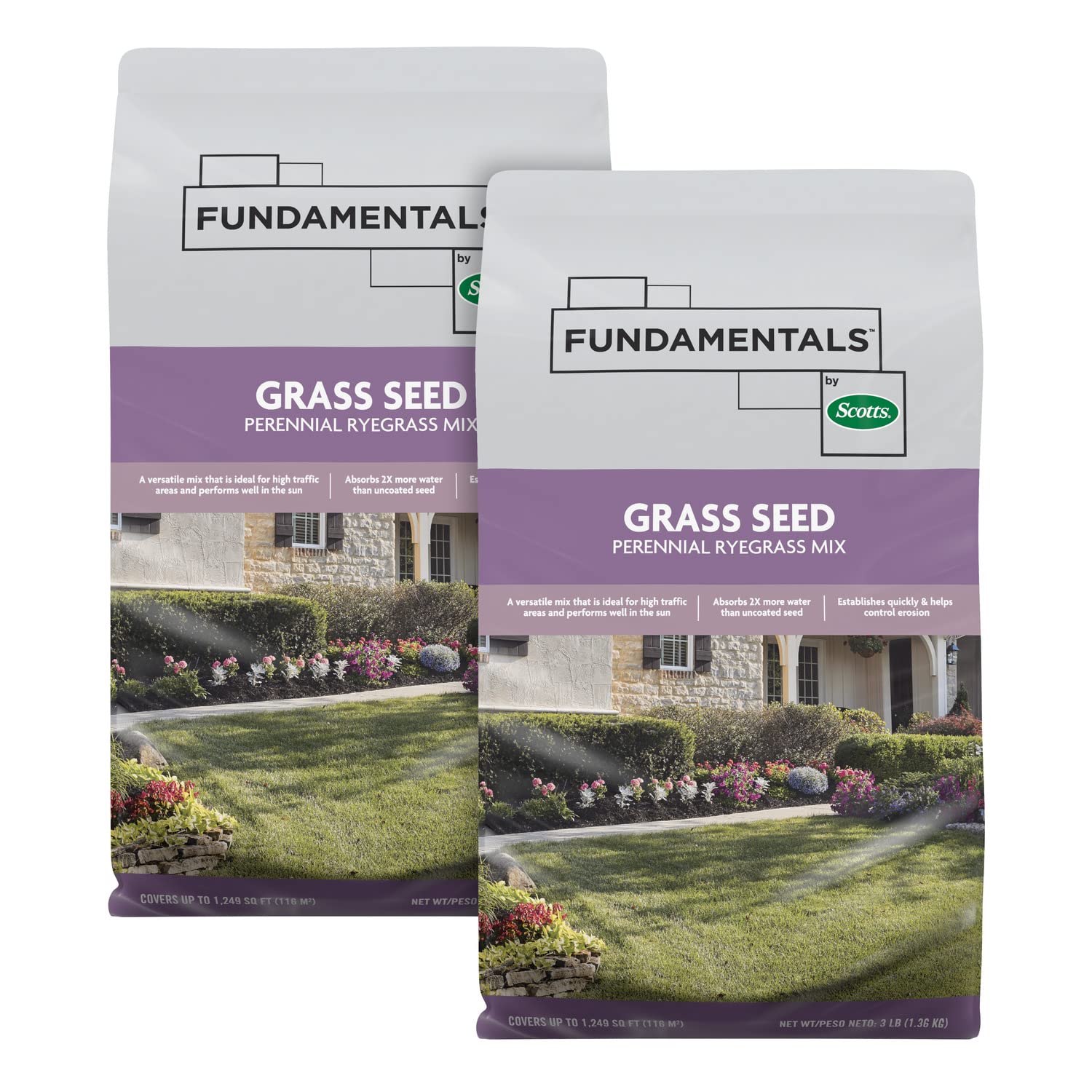
Scotts Fundamentals Ryegrass

Scotts Fundamentals Ryegrass

Quick cover

Our Score 8.6/10
Check Price

Worth Noting

  • Limited 375 sq ft new-lawn coverage
Grass Type
Perennial ryegrass mix
Sun Exposure
Full sun
New Lawn Coverage
375 sq. ft.
Overseeding Coverage
1,249 sq. ft.
Read the full review

Perennial ryegrass is the quick-cover tool in this group, and Fundamentals is aimed squarely at sunny, high-traffic areas. The seed is coated to absorb more water, which is meant to help it get through the first dry spell, and the 3-pound bag covers 375 square feet as a new lawn or 1,249 square feet when overseeding.

We choose it when speed matters more than a forever lawn. It establishes quickly and helps hold soil while slower grasses come in, and the full-sun positioning makes it a good fit for a hot curb strip or a worn sunny path. The coating is not a substitute for watering, but it does give the seed a better start in a dry week.

The trade-off is heat. This is a cool-season ryegrass, and it can thin out when summer turns brutal, so it works best as a quick nurse crop or a small-area overseed rather than the only grass on a baking slope. For a fast green-up in a sunny, busy spot, it earns its place.

Bottom line: We reach for this perennial ryegrass when a sunny bare patch needs cover before weeds move in; it is the quickest option in this group.

4

Jonathan Green Black Beauty Ultra

Jonathan Green Black Beauty Ultra

Large properties

Our Score 8.6/10
Check Price

Worth Noting

  • Large upfront bag commitment
Grass Types
Fescue, Kentucky bluegrass, ryegrass
Germination Time
7 to 14 days
New Lawn Coverage
5,000 sq. ft.
Overseeding Coverage
10,000 sq. ft.
Read the full review

The 25-pound bag is the first thing you notice, and the coverage follows: 5,000 square feet as a new lawn, 10,000 square feet when overseeding. That makes Black Beauty Ultra the bulk pick in this group, the one for a large property or a full renovation rather than a patch by the driveway. It is also a blend—tall fescue, Kentucky bluegrass, and ryegrass—so it is trying to combine toughness with a finer lawn texture.

Jonathan Green leans on deep roots and a waxy leaf coating to explain its drought tolerance, and the mix is rated for full sun to partial shade. The dark-green color is the cosmetic payoff; the deeper roots are the practical one for a lawn that has to survive summer. The 7-to-14-day germination window is competitive with the faster mixes here.

We recommend it for the person with more ground than time to baby it. One big bag simplifies a large overseeding job, and the blend is more forgiving of mixed sun than a straight ryegrass. The caveat is that durability is less certain than drought tolerance: some stands hold through wear, while others thin out, so give worn paths a second pass and keep expectations realistic.

Bottom line: For a large property that needs one big bag, we recommend this 25-pound mix: deep-rooted turf, dark color, and enough seed to overseed up to 10,000 square feet.

5

X-Seed Kentucky 31

X-Seed Kentucky 31

Hot, dry sites

Our Score 8.4/10
Check Price

Worth Noting

  • Limited to 1,000 sq ft per bag
Coverage
Up to 1,000 sq. ft.
Grass Type
Kentucky 31 tall fescue
Seed Coating
Moisture-coated
Sun Exposure
Sun or shade
Read the full review

The moisture coating is the reason to look at this X-Seed bag for a hot, exposed lawn. The Kentucky 31 tall fescue is designed to absorb and hold water, and the mix is positioned for high-traffic areas, sun or shade, with drought tolerance. A 5-pound bag covers up to 1,000 square feet, so it sits between the small spot bags and the bulk picks.

Kentucky 31 is the rugged end of tall fescue: tough and hard to kill once it is up. The coating helps during establishment, and the drought tolerance is the useful part for a curb strip or a slope that dries out fast. It will not give you the fine, dense carpet of a premium turf blend, but it is a practical choice for ground that takes both feet and sun.

We reach for it when water is the limiting factor. The caveat is seed quality: some bags perform well, others arrive old or thin, so buy fresh and sow promptly rather than stockpiling. Give it steady moisture through establishment and it has a fair shot.

Bottom line: This is the one we want on hot, dry, high-traffic ground, where the moisture coating and drought-tolerant tall fescue matter more than a fast green-up.

6

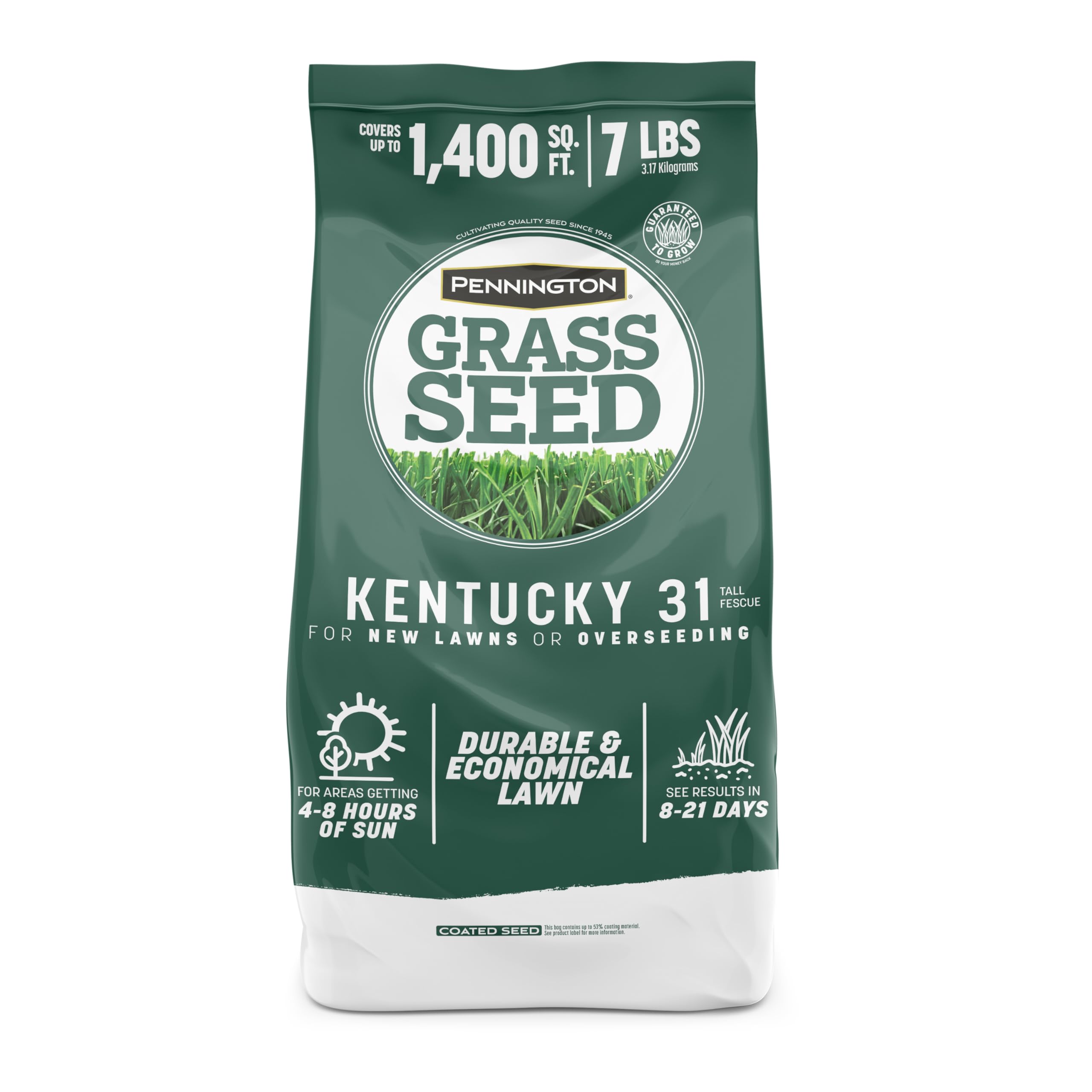
Pennington Kentucky 31

Pennington Kentucky 31

Large lawns

Our Score 8.2/10
Check Price

Worth Noting

  • Germination can be uneven
Coverage
Up to 4,000 sq. ft.
Grass Type
Kentucky 31 tall fescue
Sun Exposure
Full sun to medium shade
Germination Time
8 to 21 days
Read the full review

Seven pounds for up to 4,000 square feet is one of the best coverage-to-weight ratios in this group. That coverage comes from a Kentucky 31 tall fescue that is pitched at hot summers, heavy rain, and foot traffic. If you are overseeding a big sunny lawn and want the bag to go far, this is the value pick we point to.

Kentucky 31 is a coarser, tougher tall fescue than the premium turf types, and that is part of the appeal for a busy yard. It holds up under foot traffic, germinates in 8 to 21 days under the right conditions, and handles full sun to medium shade. The look is more utilitarian than velvet, but for a family lawn that gets used, that is not a bad trade.

The risk is consistency in the bag itself. Some lots bring weed seed, and the gap between a great bag and a poor one can be wide. Prep matters more than usual: loosen the surface, keep moisture steady, and plan to overseed thin spots after the first pass.

Bottom line: For a large, sunny lawn, this is the value pick we point to: seven pounds covers up to 4,000 square feet and holds up to foot traffic.

How We Tested High-Traffic Grass Seed

We started by pulling every high-traffic blend we could find at garden centers and from online sellers, then narrowed the field to twelve based on the seed tag: species mix, percent purity, germination rate, and how much of the bag's weight was coating rather than seed. Bags padded with fertilizer or mulch coating got priced out per square foot of actual seed, since a ten-pound bag that's half coating covers a lot less lawn than it looks like it will.

Each blend went into its own marked-off section of lawn that gets real abuse — the fence line where the dog runs, a corner the kids cut through on the way to the driveway, and thin spots we roughed up with a rake and overseeded. We watered on the same schedule, then staked one-foot squares in every patch and counted seedlings at seven, fourteen, and twenty-one days to see which blends came up fast and evenly, and which ones left us staring at bare dirt while weeds moved in.

For the rest of the season we mowed weekly at the same height and walked the patches daily, noting how quickly each one knitted together enough to hide soil, whether the color read deep green or washed-out yellow by midsummer, and how the blades held up after a few weeks of foot traffic. We also tracked what else sprouted — a bag that claims almost no weed seed but delivers crabgrass by August is not a bargain at any price. The blends that made the list germinated reliably, thickened up under wear, and were still dense in late fall.

How to Choose the Right Grass Seed for High-Traffic Lawns

Start with wear tolerance

Traffic tolerance is about recovery, not just survival. A lawn that gets used hard needs grass that tillers or spreads back into worn spots, and tall fescue's deep roots give it an advantage in summer. Perennial ryegrass establishes faster but is shorter-lived; Kentucky bluegrass spreads well but is slower to start. Scotts High Traffic Mix leans on self-repair, while Jonathan Green Heavy Traffic aims at the same job for smaller, concentrated wear zones. Look for an explicit high-traffic claim or a tall fescue blend, and do not assume a pretty green bag is tough.

Match the mix to sun and summer water

Sun is the first filter. Most high-traffic mixes are full-sun products that tolerate light shade, not shade specialists. If your lawn gets less than four hours of direct sun, a high-traffic bag is the wrong tool no matter how durable the grass. Summer water is the second filter: Scotts High Traffic is rated low for drought resistance, while X-Seed's moisture-coated Kentucky 31 is aimed at drier ground. Choose the mix that matches your exposure and your willingness to irrigate, then use the traffic rating to narrow the list.

Read coverage at the right rate

Bag weight tells you almost nothing until you read the rate. Every product here lists a new-lawn coverage and an overseeding coverage, and the overseeding number is usually two to four times larger. A 25-pound bag of Jonathan Green Black Beauty Ultra covers 5,000 square feet new or 10,000 overseeding; a 3-pound bag of Jonathan Green Heavy Traffic covers 600 or 1,200. Measure your lawn, divide by the overseeding rate, and add a little extra for the worn paths. Buying by bag size alone is how people end up one bag short.

Plan the first three weeks

Germination is mostly a moisture job. Tall fescue and perennial ryegrass usually show up in one to three weeks, but the surface has to stay damp without turning into mud. Light, frequent watering beats a daily soak that runs off. Keep foot traffic off until the new blades are tall enough to mow, and give bare spots a second pass rather than assuming the first seeding failed. Coated seed helps, but it does not rescue seed that dries out on a hot afternoon.

Watch seed purity and bag freshness

Seed purity matters more in a high-traffic lawn because a thin stand invites weeds. No bag is a weed-control program, and some mixes bring more weed seed than others. Buy from a source that moves inventory, check the bag for a recent test date where available, and store leftovers cool and dry. If a bag has been open since last season, use it on a rough patch rather than a show lawn. A dense, well-fed stand is still the best defense.

Frequently Asked Questions

Final Verdict

For most high-traffic lawns, Scotts High Traffic Mix is the pick we stand behind: it is built around self-repair, and its overseeding coverage is enough for a moderate yard. If you are seeding a large sunny lawn on a tighter budget, Pennington Kentucky 31 covers far more ground; for a concentrated pet or gate area, Jonathan Green Heavy Traffic is the better size.