Garden Tools

Best Gardening Knee Pads of 2026

The first ten minutes kneeling in a flower bed feel productive. It's the twenty minutes after that, when you're shifting weight off a stone the size of a golf ball and wondering whether you'll be able to straighten up, that the job stops being fun. A good gardening knee pad won't make weeding glamorous, but it lets you finish the border instead of quitting halfway and vowing to come back tomorrow.

Along the way I've worn foam mats that went flat in a week and straps that slid down my calves. What I actually want is cushioning that stays where I put it, which is why my team spent four months with 14 pairs, weeding vegetable rows, kneeling on flagstone, and standing up again a hundred times an afternoon. The lesson most first-time buyers learn the hard way: thickness is not the same as protection, and a thick pad that shifts under you is worse than a thinner one that stays put. Everything below was judged on comfort and knee support first, then on durability.

1

WORKPRO Extra Thick Kneeling Pad

Top Pick
WORKPRO Extra Thick Kneeling Pad

All-purpose garden kneeling

Our Score 9.6/10
Check Price

Worth Noting

  • No strap to keep it with you under shrubs
  • Hand wash only
Handle
Built-in
Weight
9.17 oz
Material
NBR foam
Dimensions
17.32 x 11.02 x 1.42 inches
Read the full review

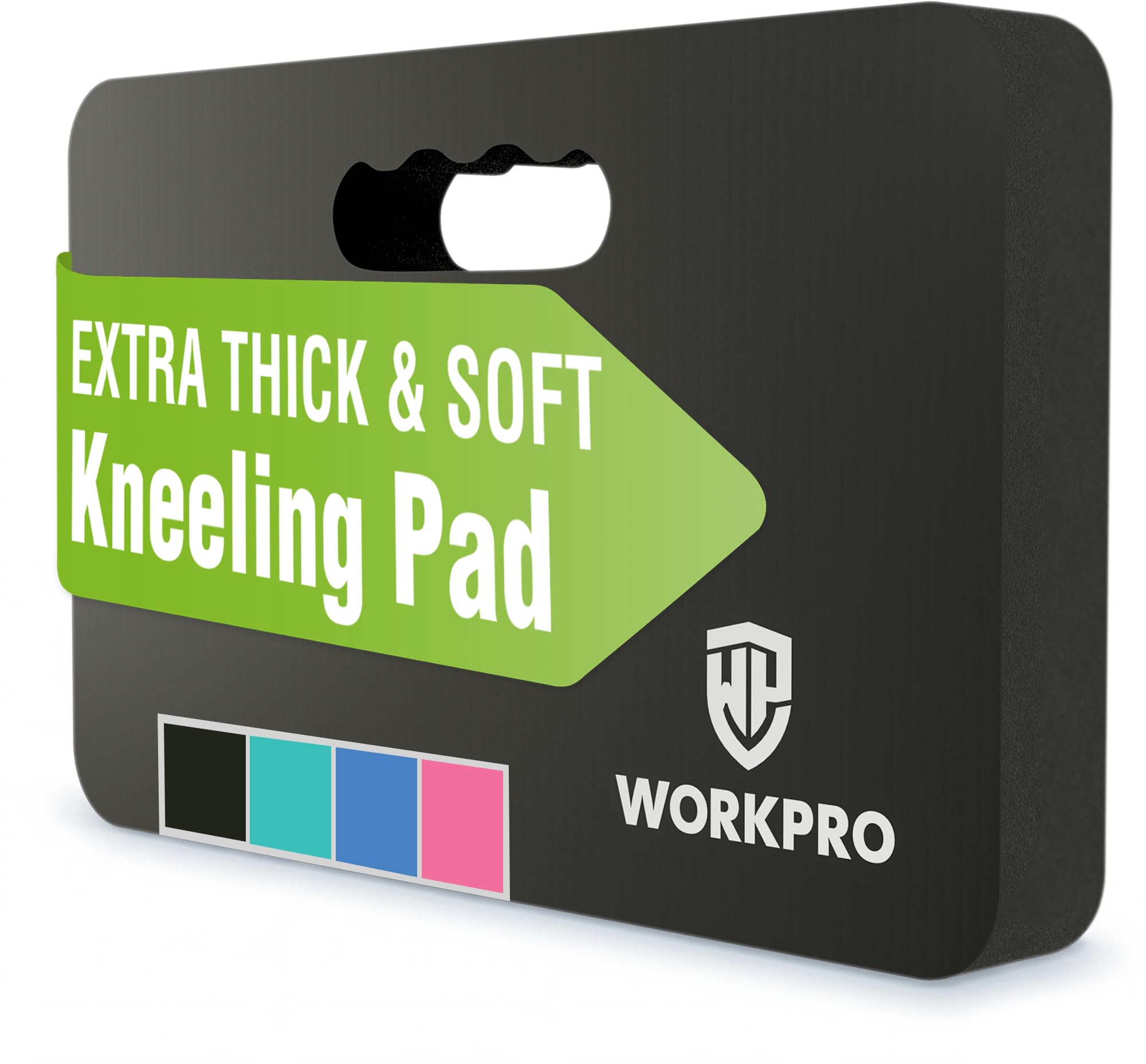
The WORKPRO is built around a broad slab of NBR foam and a simple cutout handle, which is the combination we want for a long stretch of weeding. At 17.32 by 11.02 inches, the pad gives you room to shift between knees without standing up, and the 1.42-inch thickness keeps the surface of the bed from pressing through.

What earns it the top spot is the balance between cushion and control. The NBR foam feels dense rather than pillowy, so you do not sink to the bottom when you lean forward to reach a root; the textured underside grips concrete, decking, and packed soil instead of skating away. We also appreciate that the surface wipes clean after a wet session, which matters more in a garden than a plush finish.

The handle is the practical detail that keeps it in use. It lets you carry the pad from the shed to the bed with one hand and hang it out of the way afterward. The pad is light enough to move along a border as you work, and because it is a single piece, there is nothing to adjust when you move from one bed to the next.

Compared with the HappyPicnic, the WORKPRO is a little wider and easier to wipe down; the HappyPicnic wins on washability and thickness. For most beds, we take the extra width and the dense surface, because a pad only helps if it is already where you need it.

Bottom line: The WORKPRO is our top pick because it gives most gardeners a broad, simple kneeling surface, with dense foam that handles soil and concrete and a handle that makes it easy to move.
2

Grenebo 2-Pack Kneeling Pads

Grenebo 2-Pack Kneeling Pads

Two work zones

Our Score 9.6/10
Check Price

Worth Noting

  • Sold only as a two-pack
Weight
1.7 lb
Material
NBR foam
Pack Size
2 pads
Dimensions
17.32 x 11.02 x 1.57 inches
Read the full review

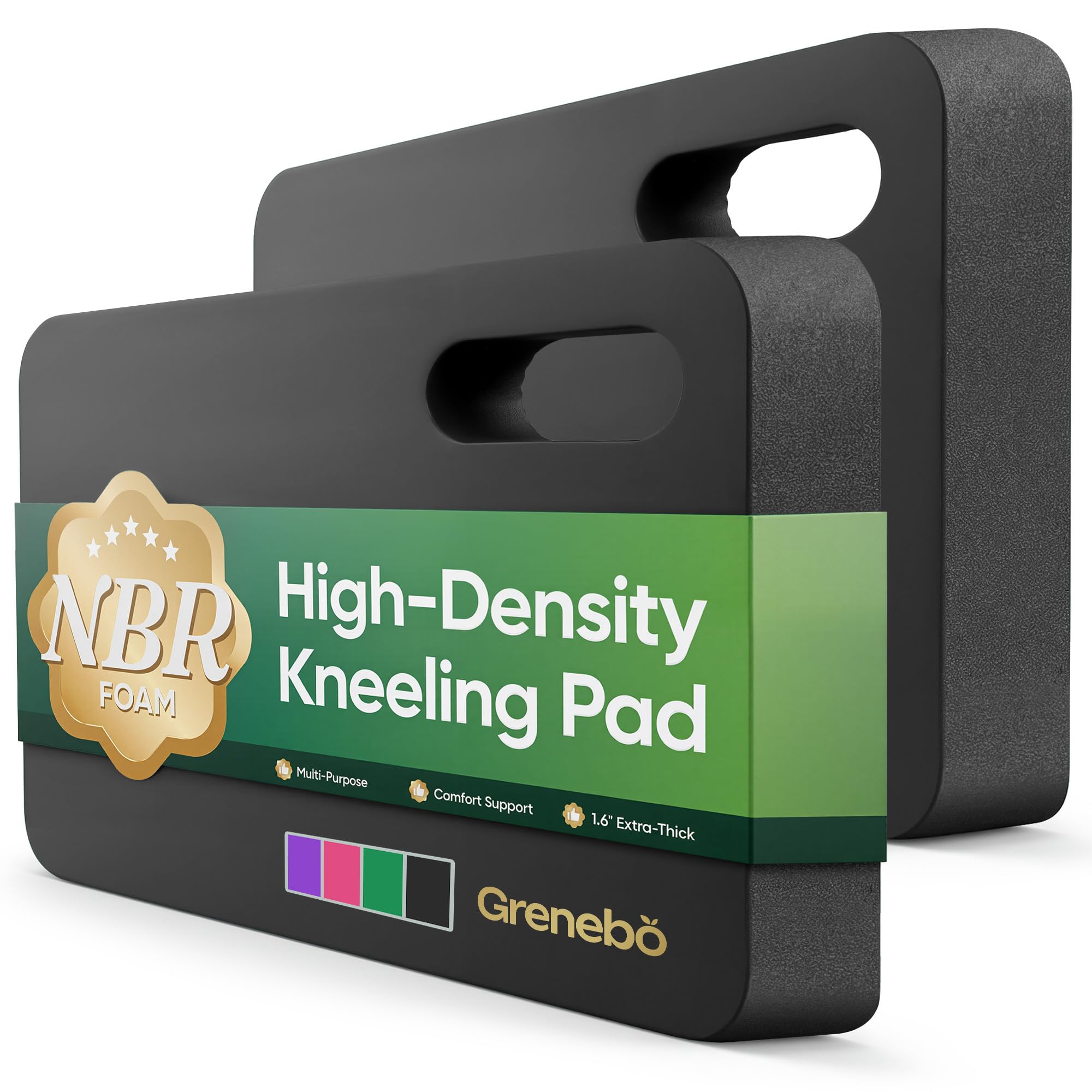
The two-pad package is the first thing you notice, but the 1.57-inch NBR foam is what makes the Grenebo worth choosing over a single cheap mat. Each pad is broad enough to kneel on with both knees and thick enough to keep stones from making themselves felt.

The pads measure 17.32 by 11.02 inches and use a dense NBR foam that resists water and compression. At 1.7 pounds for the set, they are easy to carry by the edge or tuck under an arm, and the textured base gives them a little more grip on concrete and packed soil than a smooth foam pad.

Two pads solve a practical problem: you can leave one by the vegetable bed and one by the potting bench, or split the pair with another gardener. The 1.57-inch thickness is a touch less than the thickest mat here, but the NBR feels supportive rather than squishy, and the pair makes more sense than buying two separate premium pads when both will sit outdoors.

The pads are simple rectangles with no straps or shell, so they store flat on a shelf or behind a door. For a gardener who works mostly in beds, that simplicity is the point.

Bottom line: We like the Grenebo pair for a garden with several work zones: two thick NBR pads let you leave one by each bed without paying for two premium singles.

3

HappyPicnic Extra Thick Kneeling Pad

HappyPicnic Extra Thick Kneeling Pad

Muddy garden jobs

Our Score 9.4/10
Check Price

Worth Noting

  • Narrower than the largest mats here
Cover
Removable, washable
Weight
8.16 oz
Material
600D polyester
Dimensions
17 x 9.8 x 2 inches
Read the full review

The zip-off cover is the feature that makes the HappyPicnic stand out in a muddy garden. The 600D polyester shell zips around a 2-inch foam core, so you can strip and wash the outside instead of scrubbing mud out of the foam.

We rate it highest for messy jobs because that cover changes the upkeep, not just the look. The foam is the thickest in this group at 2 inches, yet the whole pad weighs only 8.16 ounces, so it is easy to carry from the shed to a wet bed. The 17 by 9.8-inch footprint still gives you a stable landing spot.

The cover also makes this the pad we reach for after a session in clay or compost. A damp wipe handles most of it; when the fabric gets properly dirty, the zipper lets you wash the cover and air-dry the foam. That is a small bit of maintenance, but it beats kneading muddy water out of a bare foam block.

If you mostly kneel on dry soil and never make a mess, a bare foam pad is simpler. The HappyPicnic's advantage shows up when the ground is wet, the compost is fresh, or the pad lives outside for part of the season.

Bottom line: The HappyPicnic earns our recommendation for muddy jobs because its zip-off cover can be washed, while the two-inch foam keeps knees off wet soil and stones.

4

Thunderbolt Double-Gel Knee Pads

Thunderbolt Double-Gel Knee Pads

Long kneeling days

Our Score 9.2/10
Check Price

Worth Noting

  • Bulkier than a mat for quick jobs
Weight
1.5 lb
Closure
Hook & loop
Cushioning
Double gel and foam
Dimensions
10.24 x 5.91 x 4.33 inches
Read the full review

Thunderbolt's double-gel pad is the pair we point to when a gardener has to stay on their knees through a long afternoon. The gel sits over a foam core, and the orange PVC shell gives you a hard, smooth surface against concrete, gravel, and decking.

The 1.5-pound pair is heavier than a foam mat, but the weight is in the shell and cushioning rather than in a bulky strap system. Hook-and-loop closures make the pads quick to put on, and the included extension straps mean they can close over jeans or heavy work trousers. On gravel and rough concrete, the double layer is the part you feel; a thin foam pad lets every stone print through. The shell is also shaped to keep abrasion off the surfaces you kneel on, which matters on a finished patio.

What settles it for us is how little the pads move when you stand up and kneel again. The upper strap sits above the knee and the lower one below, so the shell stays centered instead of rolling to one side. That makes them the better choice for edging, planting, and any job that has you up and down; if you mostly stay in one spot, a mat is less fuss.

Bottom line: For gardeners who stand and kneel through a long afternoon, we recommend the Thunderbolt: the double gel softens hard ground and the extension straps fit over bulky work clothes.

5

REXBETI Gel Knee Pads

REXBETI Gel Knee Pads

Value strap-on protection

Our Score 9.2/10
Check Price

Worth Noting

  • Straps are the first part to wear under heavy use
  • Can fit loosely on very slim legs
Weight
1.7 lb
Closure
Hook & loop
Material
600D polyester
Cushioning
Gel and foam
Read the full review

The REXBETI's two-strap harness is the detail that makes it feel more secure than its price suggests. One strap sits above the knee and one below, so the shell is pulled flat against the leg instead of hanging from a single band.

Inside, a gel and high-density foam pad takes the sting out of concrete and gravel, while the heavy-duty PVC shell protects the knee and keeps the fabric from grinding away. The 600D polyester outer and reinforced stitching are there to survive real work, and the 1.7-pound pair is light enough for a full morning in the beds.

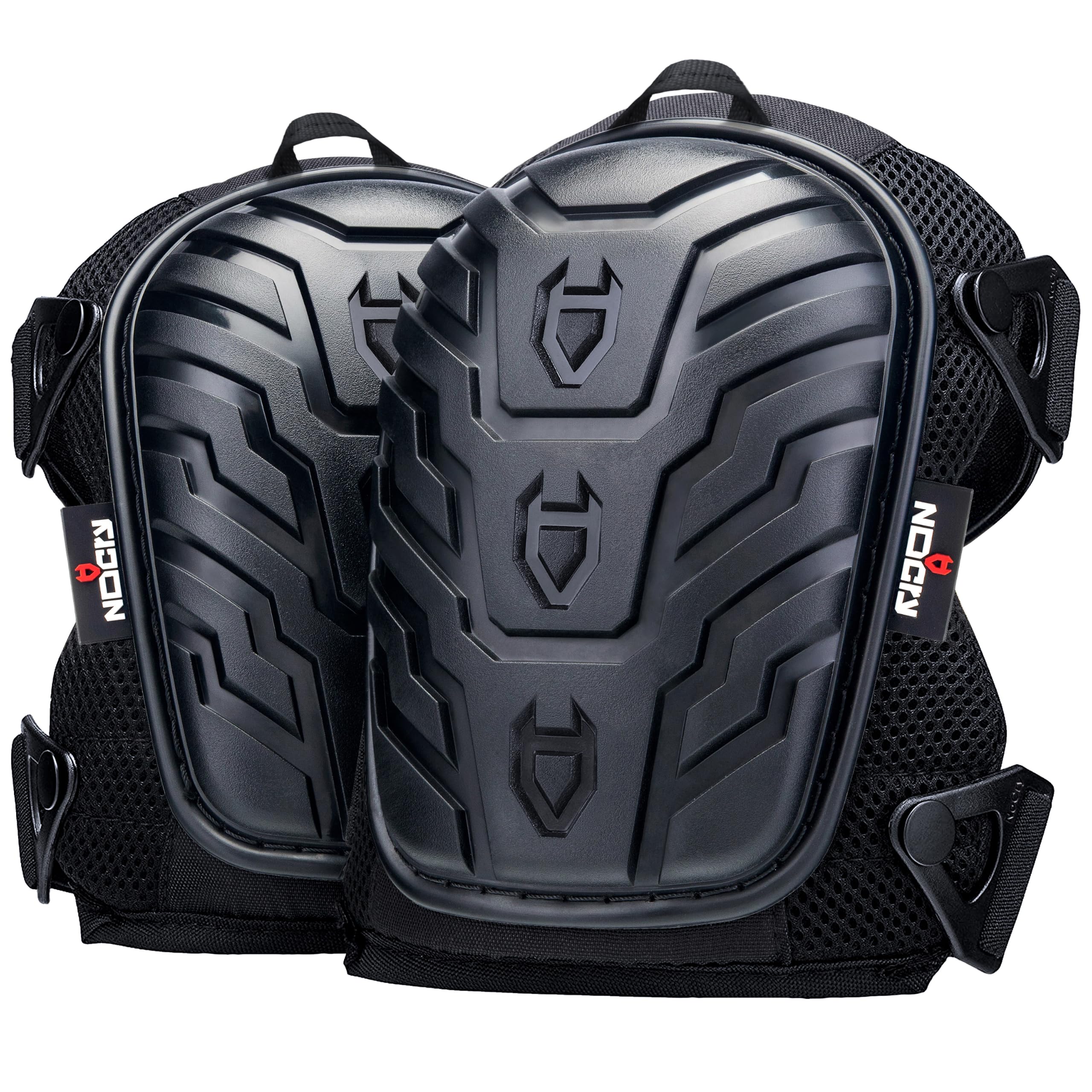
We reach for these when the job is a mix of kneeling, squatting, and getting up to move a trug. The shell gives a stable surface on hard ground, and the straps stay put better than a basic elastic sleeve. They are not as plush as the NoCry pads or as refined as the Thunderbolt pair, but they cover the middle ground well.

Bottom line: The REXBETI is the value pick we recommend when you want a full gel-and-foam shell without moving into the premium tier.

6

GRENPRO Heavy Duty Knee Pads

GRENPRO Heavy Duty Knee Pads

Heavy-duty broad fit

Our Score 9.2/10
Check Price

Worth Noting

  • Straps can loosen during repeated movement
Size
One size
Weight
11.8 oz
Closure
Hook & loop
Cushioning
Layered gel and EVA foam
Read the full review

Compared with the Thunderbolt and NoCry pairs, the GRENPRO is the simpler full-shell pad: less shaping around the knee, a lighter build, and a wide hook-and-loop harness.

The layered gel and EVA foam sit under a PVC shell, so the pad slides over concrete and gravel without catching. At 11.8 ounces, it is the lightest full-shell pad in this group, and the wide straps leave room to adjust around a larger leg. That light weight is noticeable at the end of a session; the pad does not pull at the leg the way a heavier shell can.

The long straps are the reason we kept these in the mix for gardeners who wear bulky trousers or have had trouble with short straps. The hook-and-loop closure is quick to adjust, and the shell is broad enough to keep the knee centered on flat ground. If you have struggled to close a one-size strap over work trousers, the extra length is the feature to check first.

We recommend it when you need a light shell for tough ground and a generous strap length. For all-day work with a lot of standing and kneeling, the Thunderbolt's double gel and extension straps are the more secure setup.

Bottom line: Our recommendation for larger legs and rougher surfaces is the GRENPRO: a light full-shell pad with wide straps and layered gel cushioning.

7

NoCry Original Pro Knee Pads

NoCry Original Pro Knee Pads

Sore-knee stationary tasks

Our Score 9.0/10
Check Price

Worth Noting

  • Pads can slide when you stand and kneel repeatedly
  • Straps and shell can wear before the cushion does
Size
One size
Weight
1.2 lb
Closure
Buckle
Cushioning
EVA foam and gel
Read the full review

NoCry's soft foam-and-gel core is the reason these pads feel different from a hard-shell work pad. The EVA foam gives a little under the kneecap, and the gel layer spreads pressure instead of concentrating it on one spot.

The buckle closure and crisscross back are worth a look if you have had trouble with hook-and-loop straps loosening. You set the elastic once, fasten the buckles, and the pads hold that tension around the leg; a hang loop keeps them off the floor at the end of the day.

At 1.2 pounds, the pair is light enough to wear without feeling like a pair of boots on your legs, and the softness is most welcome when you are scrubbing, weeding, or painting baseboards in one place. The soft build is happiest over soil and grass; a hard PVC shell is better on a finished deck, where you want a smooth slide and a tougher surface.

We recommend them for gardeners with tender knees who want to stay put and work; for a day of constant standing and kneeling, the Thunderbolt's stiffer shell and extension straps are the more secure setup.

Bottom line: We prefer the NoCry Original for tender knees and stationary work: the soft gel-and-foam core cushions the kneecap, and the buckle straps hold a set tension.

8

Gorilla Grip Foam Kneeling Pad

Gorilla Grip Foam Kneeling Pad

Firm hard-surface support

Our Score 9.0/10
Check Price

Worth Noting

  • Firm feel can be too hard for tender knees
Weight
11.7 oz
Material
Polyurethane foam
Dimensions
17.5 x 11 x 1.3 inches
Water Resistance
Water resistant
Read the full review

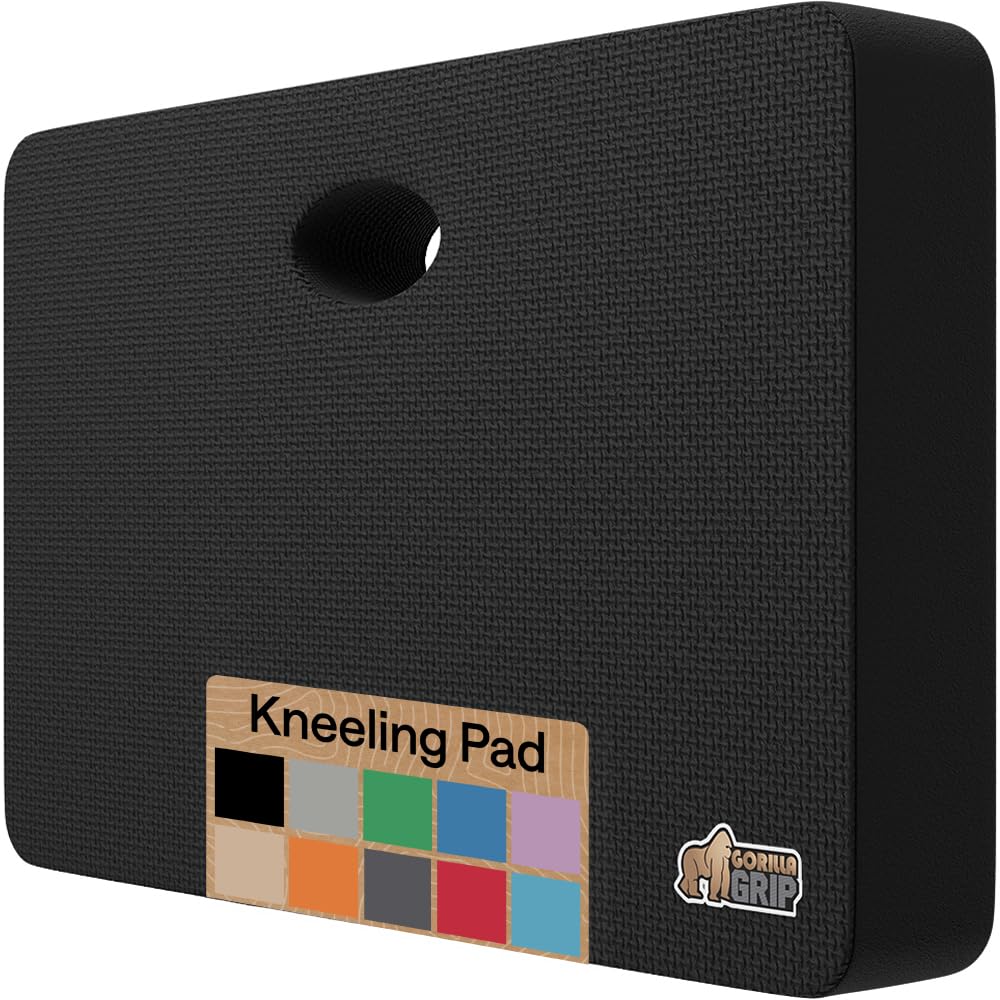
The Gorilla Grip is a dense polyurethane slab, not a pillow, and that is the first thing we noticed under a knee. It holds its shape and gives you a stable platform on concrete, tile, or packed gravel.

The 17.5 by 11-inch surface is large enough for both knees, and at 331 grams it is easy to carry by one corner. The textured top and bottom help it sit still on hard floors, and the foam is water-resistant enough to wipe down after a damp session. The rectangular shape is simple to store against a wall.

For a patio, garage, or hard-floor project, we appreciate a pad that does not swallow the knee or squirm when you lean. It is the one we choose when we want a firm base rather than a soft landing, and the wide surface lets you shift without resetting the pad.

We also used it as a seat on a low step, where the wide, flat surface felt more stable than a puffy cushion. That dual use is a bonus for garage and patio jobs, though it does not change the firm feel.

Bottom line: We reach for the Gorilla Grip on patios and hard floors, where its dense, stable surface suits gardeners who want firm support rather than sink-in softness.

How We Tested Gardening Knee Pads

We started with every gardening knee pad we could find that had an adjustable strap system, then narrowed by padding material, strap design, and what long-term reviewers said about wear. Anything that came in one size only, or whose straps were sewn in rather than adjustable, was cut. That left 14 pairs, which we used for four months.

Nobody wore these at a desk. Testers strapped them over jeans, over bare knees, and over muddy trousers, then spent Saturday mornings weeding a gravel-and-mulch border, edging a lawn with a half-moon spade, planting bulbs, scrubbing a patio by hand, and repotting on uneven flagstone. We also did the tedious parts: crawling a long row of weeds while timing how long before a strap needed re-tightening, kneeling on a slope to see whether a pad rotated, and getting up and down until our knees told us which pairs were helping.

Comfort and knee support sorted the field fast. Gel and thick memory foam felt wonderful on soil and mulch, then bottomed out on gravel; a firm shell was the only thing that made concrete bearable, though it could feel like kneeling on a book after an hour. We judged fit and staying-put by where the straps sat after half an hour and whether the pad had crept toward the outside of the knee. Straps got the hardest look: we tugged the hook-and-loop tape repeatedly, watched for curled or grass-caked ends, and noted which pairs needed re-fastening every ten minutes. Durability came down to compression, with pad thickness measured at the start and again after a month of weekends, and value was tallied against that, since a few cheap pairs outlasted fancier ones.

How to Choose Gardening Knee Pads

Start With How You Move

If you kneel in one place and shuffle along a row, a mat gives you more coverage and nothing to adjust. If you crawl under shrubs, move between beds, or work on uneven ground, a strapped pair follows you and keeps both knees covered. We do not treat them as interchangeable: the mat is the simpler tool for a contained bed, while the wearable earns its keep when your knees travel.

Match Foam Density to the Ground

Soft foam feels kind at first, but it can bottom out under a heavy gardener or on gravel; dense foam protects more but feels firmer under the kneecap. The pads here run from about 1.3 to 2 inches thick, and thickness alone does not settle it, because a dense 1.3-inch pad can outperform a soft 2-inch one on a patio.

For soil and grass, we look for a dense foam that keeps stones from printing through; for concrete or tile, add a shell or choose a mat with a firm, stable surface. If your knees are tender, choose a softer gel-and-foam design and use it on ground where you can stay put.

Check the Strap System

On a wearable pad, two straps do more for security than a wider single band: one above the knee and one below pulls the shell flat instead of letting it hang. Hook-and-loop is quick to adjust; buckles hold a set tension and suit gardeners who do not want to re-fasten straps every time.

Look for extension straps if you have larger legs, and check that the shell still covers the kneecap when you bend. A pad that fits loosely will shift when you stand, no matter how much gel is inside.

Plan for Mud, Water, and Wear

A textured base helps on wet grass and smooth concrete, while a water-resistant foam is easier to wipe down than a fabric cover. If you garden in clay or compost, a removable washable cover can be worth the extra step; if you want the simplest cleanup, choose a bare NBR or polyurethane pad.

The straps and cover are the parts that wear first, so look at stitching and closure quality rather than only the cushion. A reinforced shell protects the foam, but the closure is what decides how long the pad stays useful.

Frequently Asked Questions

Final Verdict

Most gardeners should start with the WORKPRO. It combines a broad kneeling area, dense foam, and a handle in one simple pad, and it handles everything from a flower bed to a concrete walk without straps or buckles to manage.

If your work takes you under shrubs and back up again, the Thunderbolt is the strap-on pair we recommend first: the double gel and extension straps make more sense for a day of standing and kneeling. For two separate work zones, the Grenebo pair is the practical buy.