Garden Tools

Best Garden Tillers of 2026

The first spring I tried to turn a patch of lawn into a vegetable bed, I spent two weekends with a spade and a rented tiller that bucked like a shopping cart with a bad wheel. A good garden tiller fixes that exact misery: it breaks up compacted soil, folds in compost, and turns a backbreaking job into an afternoon's work. The catch is that the machines with enough power to chew through clay are often heavy, loud, and stubborn to steer—so the best tiller for you depends on how much muscle you're willing to trade for how much ground you need to break.

Over the past nine months, my team and I put seven tillers through a full season of bed prep, weed control, and a few ill-advised attempts at rocky ground. We cared as much about weight, control, and value as raw power, because a tiller you can't lift out of a truck bed or maneuver around a raised bed is one you'll stop using. The picks below are the ones that actually made the work easier.

1

Sun Joe TJ604E

Top Pick
Sun Joe TJ604E

Most home gardens

Our Score 9.2/10
Check Price

Worth Noting

  • Corded; needs an outdoor extension cord
Motor
13.5 amp
Weight
27.1 lb
Tilling Depth
Up to 8 in.
Tilling Width
Up to 16 in.
Read the full review

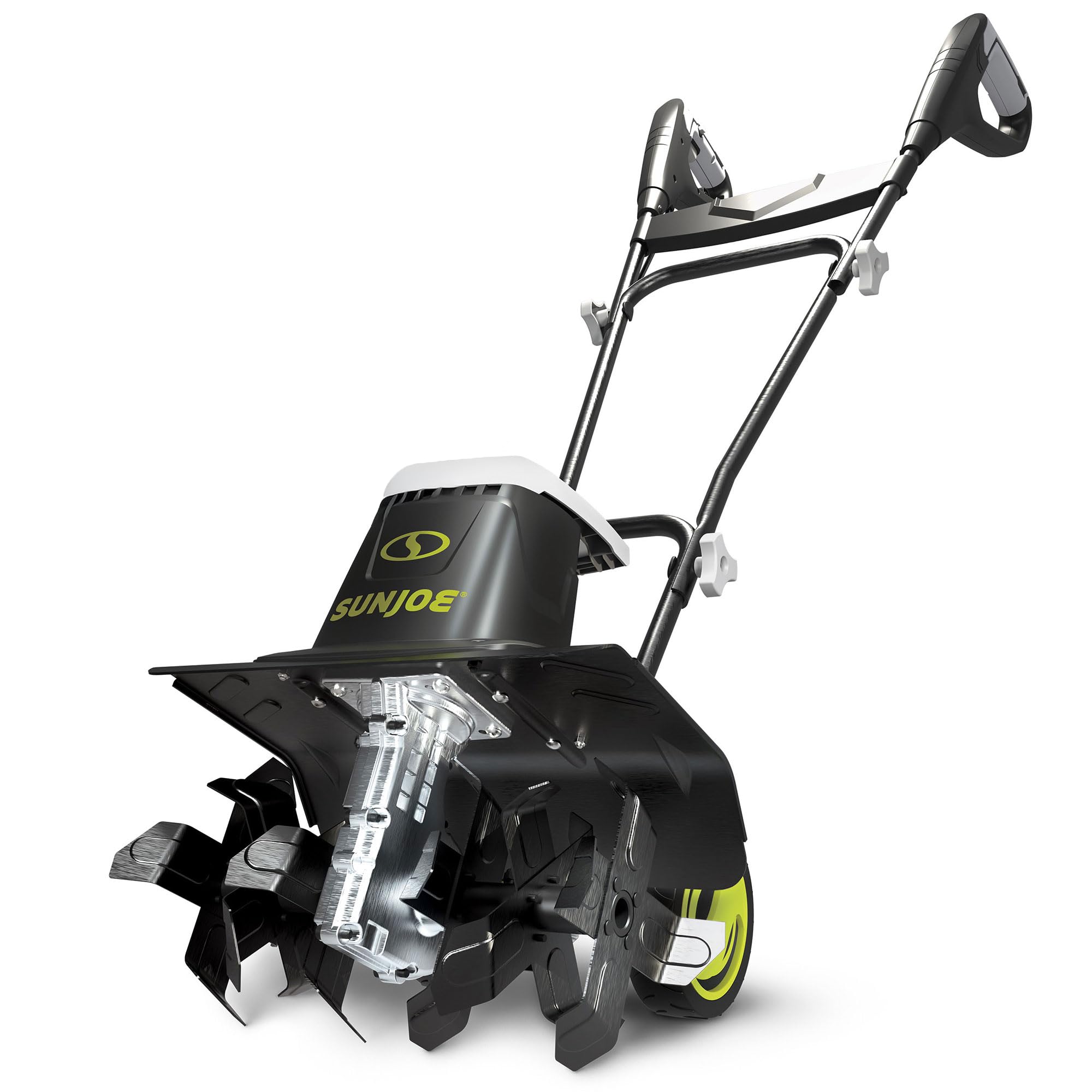
A 16-inch cut and six steel tines are the first things that recommend the Sun Joe TJ604E, but the 13.5-amp motor is what makes them work. In beds that had gone a season without attention, the tines kept biting when smaller electrics started to chatter. That combination is why this is the tiller we recommend first for most home gardeners.

The rest of the machine is set up for real gardens: a folding handle, a 27.1-pound body, and three wheel positions that let you set the tines for transport or working depth. We found it easy to roll to the bed and easy to tip back when we needed to reposition. The six tines leave a finer seedbed than the four-tine budget machines, with fewer clods to break up by hand.

On baked clay the nose can hop. Slowing down and making a second crosswise pass settled it for us. It is not a rear-tine gas tiller for breaking new ground, but it will renovate a bed that has been worked before, and the 16-inch width means fewer passes than a 14-inch machine.

If your garden is within reach of an outlet, this is the one we point to first. The LawnMaster TE1216M goes an inch deeper for less money, and the gas Earthquake is the tool for untouched ground, but neither matches this combination of width, power, and price.

Bottom line: Our default for most home gardeners: a 16-inch cut, six steel tines, and enough power for compacted beds.

2

BILT HARD 14-Inch Electric

BILT HARD 14-Inch Electric

Small garden plots

Our Score 9.2/10
Check Price

Worth Noting

  • Two wheel positions limit depth control
Motor
10 amp
Weight
18 lb
Tilling Depth
8.7 in.
Tilling Width
14 in.
Read the full review

The first thing we noticed was how little effort it took to carry this tiller from the shed: just under 18 pounds, with handles that fold down. That matters if your garden is behind the house and your storage is a narrow shelf.

For a small plot and a tight budget, this is the corded tiller we recommend. The 10-amp motor turns four steel tines across a 14-inch width and up to 8.7 inches deep. It is not the most powerful corded model here, so we treat it as a tool for beds that have been worked before, not for opening new ground.

The two-position wheels are simple to set, and the folding handle makes it easy to hang on a wall or tuck into a corner. In loose soil the lighter build is an advantage because it is easy to control; in hard clay you will feel the missing amps. The four tines leave a coarser finish than the six-tine Sun Joe, but a second pass smooths it out.

The 14-inch cut also means more passes than a 16-inch machine. For a few raised beds or a small vegetable patch, that is a fair trade for the lower weight and lower cost.

Bottom line: For small beds and tight storage, this is the budget corded tiller: light, foldable, and easy to handle.

3

LawnMaster TE1216M

LawnMaster TE1216M

Deep corded passes

Our Score 9.0/10
Check Price

Worth Noting

  • Lighter build can bounce on hard, dry soil
Motor
12 amp
Warranty
2-year limited
Tilling Depth
9 in.
Tilling Width
16 in.
Read the full review

Nine inches of tilling depth is the number that stands out on the LawnMaster TE1216M. That is deeper than our top pick, and the 16-inch width means it covers the same ground in a pass. The 12-amp motor is the concession: it has less grunt than the Sun Joe's 13.5-amp unit.

We think it is the best corded value here. The two-stage gearbox and mechanical clutch give it a more controlled feel in tough soil, and the two-year limited warranty is the longest on any corded model in this group. If you want to break a bed deeper without spending more, this is the one.

Long grass is the bigger annoyance: it wraps the tines if you let it get ahead of you. Keeping the plot mowed low and taking a slower first pass makes it behave. The three-position wheels are easy to set, and the machine is simple to store.

The depth and warranty make it the practical choice for a gardener who wants to work a bed down rather than just scratch the surface. The mechanical clutch also gives you a margin of protection when a root or rock stops the tines, and the 16-inch cut is easy to line up along a row.

Bottom line: It goes an inch deeper than our top pick, carries a two-year warranty, and costs less; that makes it the corded value pick.

4

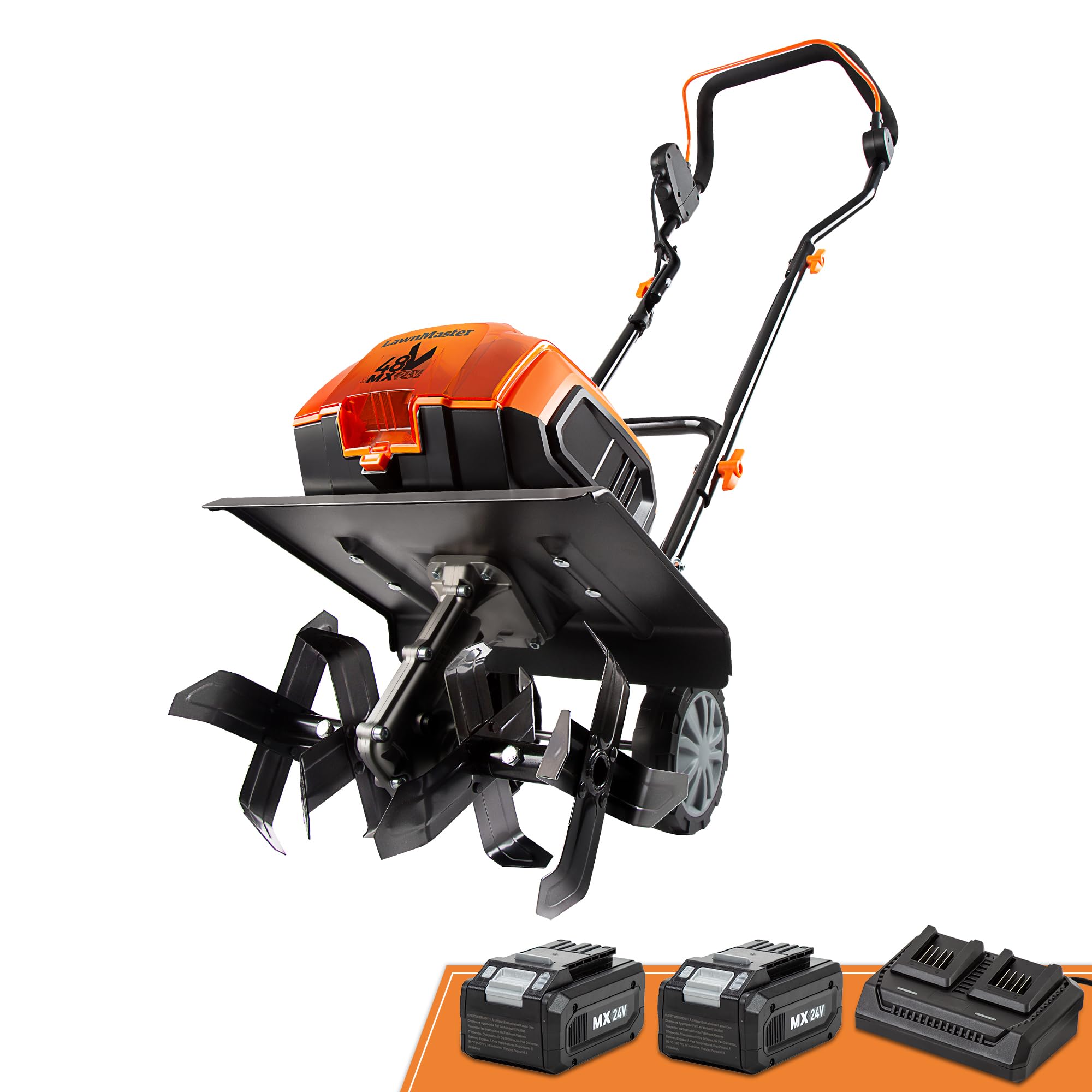
LawnMaster CLTE4814

LawnMaster CLTE4814

Larger cordless plots

Our Score 9.0/10
Check Price

Worth Noting

  • Premium price relative to corded models
Battery
2 x 24V 4.0Ah
Runtime
35 min
Tilling Depth
9 in.
Tilling Width
14.5 in.
Read the full review

A cordless tiller only makes sense if it can work a real bed, not just a flower pot. At 14.5 inches wide and 9 inches deep, the LawnMaster CLTE4814 has the footprint of a serious corded machine, minus the cord.

The 48V MAX system uses two 24V 4.0Ah packs and a dual-port charger, and the brushless motor turns four steel blades at 180 rpm. The stated runtime is 35 minutes. That is enough for a few beds, not a full afternoon, so the charger matters as much as the battery.

The slower, wider blade set leaves a rougher seedbed than the 360-rpm mini tillers, and the 14.5-inch cut is still narrower than a 16-inch corded model. Those are the trade-offs for cordless convenience. The upside is that you can work beds far from an outlet without dragging a cord through the tomatoes.

We recommend it for medium to large beds where the width and depth justify the cordless convenience. The lack of a cord also makes it easier to work around fences and beds without a clear path to the house. If your garden is a few raised beds and a border, this is the tiller that will keep up.

Bottom line: For bigger beds away from an outlet, this is the cordless tiller we recommend, with a 14.5-inch cut and 9-inch depth.

5

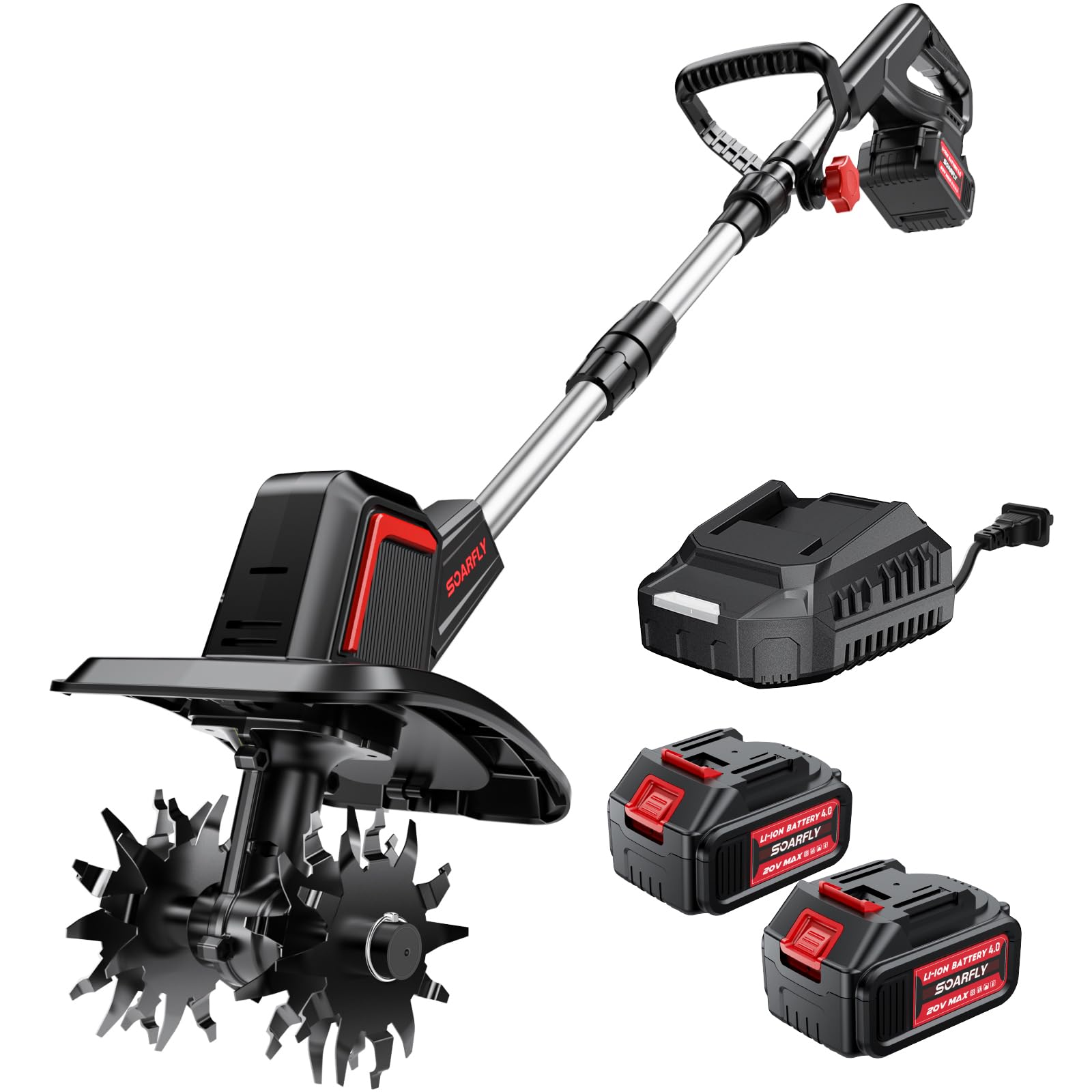
SOARFLY 9-Inch Cordless

SOARFLY 9-Inch Cordless

Tight raised beds

Our Score 9.0/10
Check Price

Worth Noting

  • Narrow 9-inch cut requires more passes
Weight
15.2 lb
Battery
2 x 4.0Ah
Tilling Depth
6.6 in.
Tilling Width
9 in.
Read the full review

Nine inches sounds narrow until you are standing between two raised beds with a 16-inch tiller that will not fit. That is where the SOARFLY earns its place: a compact cordless cultivator that slips between rows and starts without a cord to manage.

The 9-inch width and 6.6-inch depth are matched to beds that have already been worked. A 360-rpm motor turns the tines, and the two 4.0Ah batteries are the real convenience: keep one on the charger and swap when the first pack runs down. The height-adjustable handle and auxiliary grip make it easier to steer than a bare top-handle tool.

This is not a sod-buster. In hard, compacted ground it will skitter and take small bites, and roots can wrap the tines. Use it for repeat cultivation, mixing compost, and keeping raised beds loose, and it makes much more sense.

The 6.9 kg body is light enough to carry with one hand, and the adjustable handle height is the detail that makes it usable for a taller gardener; most mini tillers make you stoop. If you need to break new ground, go for a corded 13.5-amp machine or the gas Earthquake. If you need to keep beds working, this is the one we reach for.

Bottom line: The compact cordless cultivator we reach for in raised beds and tight rows, with two batteries to keep it moving.

6

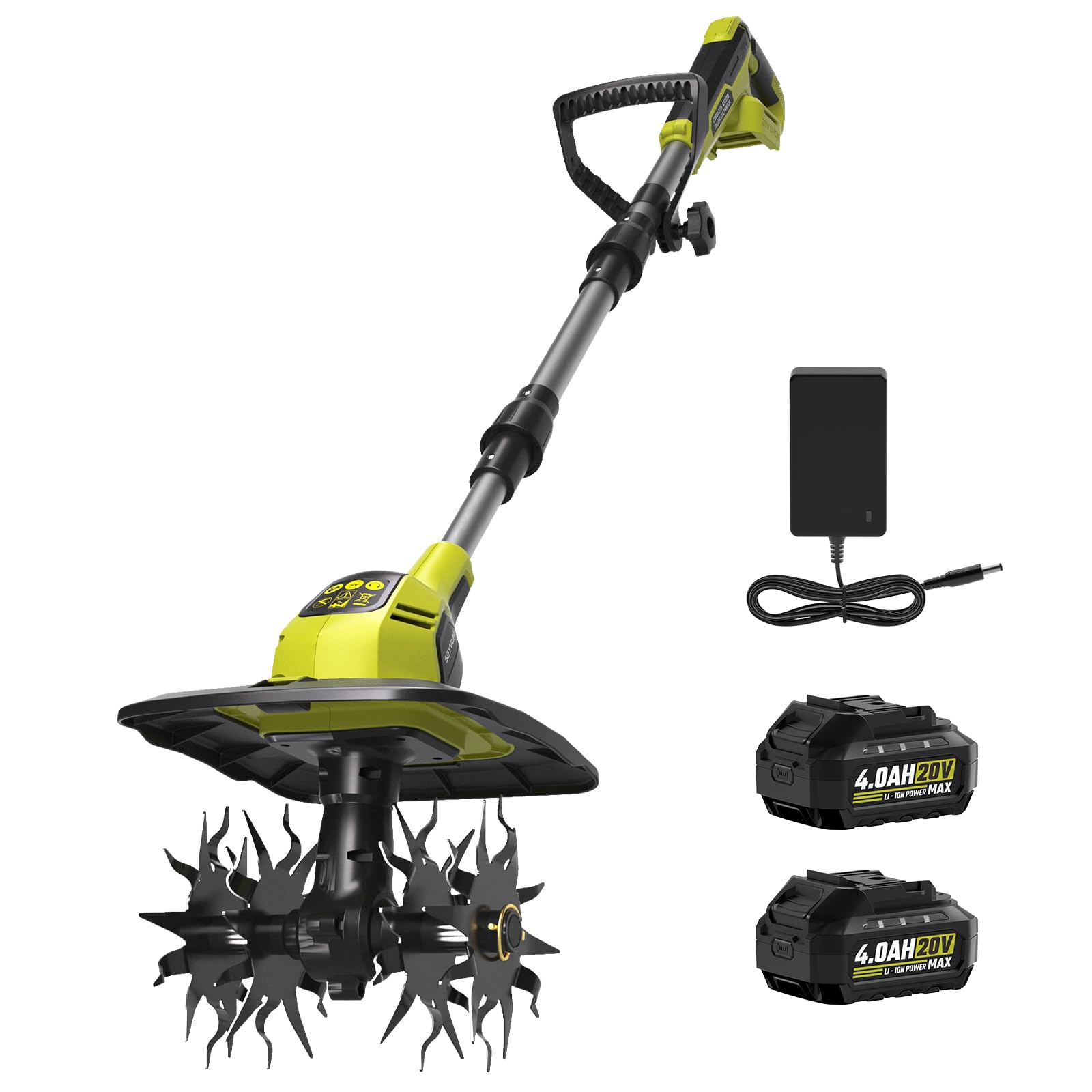
SEYVUM 9-Inch Cordless

SEYVUM 9-Inch Cordless

Brushless tight beds

Our Score 9.0/10
Check Price

Worth Noting

  • 9-inch cut requires more passes
Battery
2 x 4.0Ah
Warranty
18 months
Tilling Depth
7 in.
Tilling Width
9 in.
Read the full review

The brushless motor is the reason this SEYVUM is on our list. It has fewer wearing parts than a brushed motor, and the package includes an 18-month warranty, which is longer than most compact cordless tillers here.

The 9-inch width and 7-inch depth put it in the same tight-bed class as the SOARFLY, but the SEYVUM goes a little deeper. Two 4.0Ah batteries are included, and the stated runtime is 50 minutes. The four sets of 12-tooth steel blades are meant to chop clods rather than just scratch the surface.

The 50-minute runtime is not an all-day number. For a few raised beds or a small plot, that is workable; for a large garden, the clock becomes the constraint. The narrow frame is the point when you are working between rows.

We see it as the compact cordless for a buyer who values the brushless motor and the longer warranty. It is not the fastest way to till a big plot, but it is a sensible size for raised beds and tight paths, and the 7-inch depth is enough to turn compost into a bed without reaching for a shovel. The warranty gives it an edge over the other 9-inch machines here.

Bottom line: The compact cordless choice for a buyer who values a brushless motor and an 18-month warranty more than a wide cut.

7

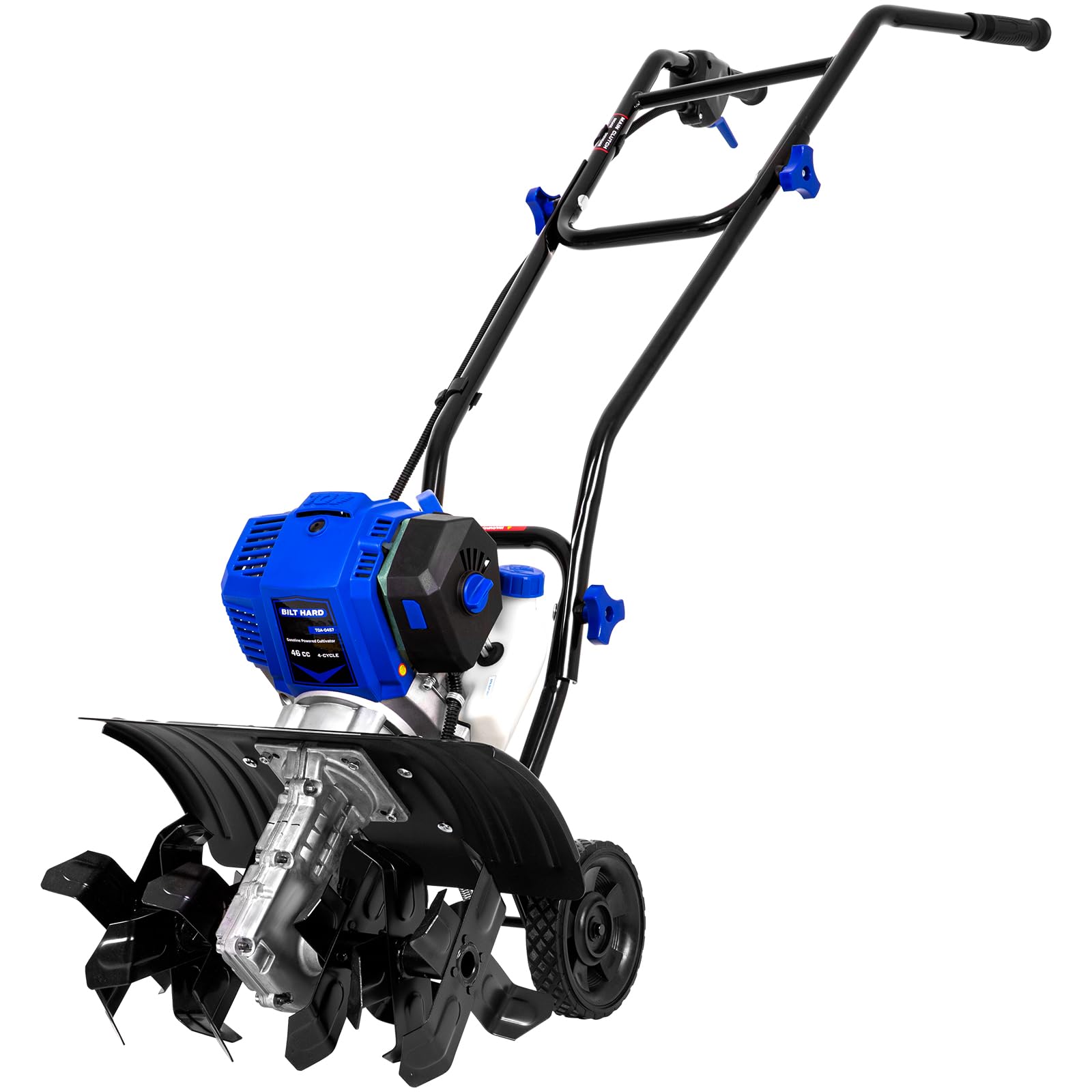
BILT HARD 46cc Gas

BILT HARD 46cc Gas

Remote garden plots

Our Score 8.8/10
Check Price

Worth Noting

  • 7.84-inch depth limits new-ground work
Power
1.9 hp
Engine
46cc 4-cycle
Tilling Depth
Up to 7.84 in.
Tilling Width
16 in.
Read the full review

A gas tiller earns its keep when the garden is far from the house and the extension cord will not reach. The BILT HARD 46cc is the affordable way into that category: a 16-inch cut, a four-cycle engine, and no oil to mix into the fuel.

The 46cc engine is smaller than the Earthquake's 209cc unit. It has working and transport wheel positions, and the cushioned grips are comfortable for longer passes. The 250-rpm blade speed is slower than the electric mini tillers, so do not expect a fine seedbed in one pass.

We recommend it as the gas value pick for a gardener who wants fuel power without paying premium gas money. It covers 16 inches at a time, and the four-cycle engine keeps refueling simple. If your ground is rocky clay that has never been turned, the Earthquake is the better tool.

The adjustable wheels roll it to the plot and then drop to a working position without tools. The 16-inch cut is the same as the premium gas model, which is the main reason it makes sense. For a plot that needs occasional loosening and sits beyond a cord, that is a sensible compromise. It is not a machine for a market garden, but it is a lot of gas tiller for the money.

Bottom line: A 16-inch gas tiller for plots beyond the cord's reach, without the premium price of the heavy rear-tine machines.

8

Earthquake Victory 39381

Earthquake Victory 39381

Tough new ground

Our Score 8.6/10
Check Price

Worth Noting

  • Reverse cable can fail early
Engine
209cc Viper
Weight
154 lb
Tilling Depth
Up to 10 in.
Tilling Width
16 in.
Read the full review

The first time the counter-rotating tines caught a mat of grass and pulled the machine down into the dirt instead of skating over it, we understood why rear-tine gas tillers still exist. The Earthquake Victory does not fight the ground so much as chew it.

A 209cc Viper engine drives a cast-iron transmission with bronze gears, and the machine is rated to till 16 inches wide and up to 10 inches deep. Instant reverse lets you back out of a corner without shifting, and the three-position handlebar can be set for one- or two-handed control. The drag stake is what keeps it from running away from you.

We recommend it for ground that has never been worked, or for clay and rock that has defeated smaller electrics. It is the gas tiller we choose when the plot is big and the soil is mean. The 154-pound build is the price of that traction: moving it between plots is a two-person job or a ramp.

The five-year limited warranty is the reassurance here, and the instant reverse is genuinely useful around fences. It is a lot of machine for a small plot, but for a large one it earns the space.

Bottom line: Counter-rotating tines, 10-inch depth, and 154 pounds of traction make this the gas tiller for ground that has never been broken.

How We Tested the Best Garden Tillers

We started by narrowing the field to seven tillers that spanned gas and electric, front-tine and rear-tine, and the sizes sold for home gardens rather than farm plots. I read spec sheets and owner reviews, then ruled out models that were impossible to assemble, had parts that were routinely out of stock, or cost far more than the work they could reasonably save.

Testing ran from early spring through late fall—nine months—on my half-acre vegetable plot and a neighbor's community garden bed with heavy clay. We used each tiller for first-pass bed prep, mixing in compost, breaking new ground where lawn had been, and shallow cultivating between rows of established tomatoes and peppers. We noted how quickly each machine chewed through a 20-foot row, whether it jumped or dug in on hardpan, and how much hand-clearing the tines required after a pass.

Ease of use got its own set of chores: starting cold, turning at the end of a row, maneuvering around fence posts, and wheeling it back into the shed. We weighed each tiller on a bathroom scale and lifted it into and out of a pickup bed, because weight matters most when you're alone and already tired. For value, we tracked fuel or battery use, maintenance needs, and whether the machine felt like it would survive more than a season or two.

We also judged functionality by the small stuff—whether the depth stake adjusted without tools, whether the handles folded for storage, whether the tines clogged with roots and vines. A few ill-advised passes over rocky ground told us which machines had the power to push through and which ones we'd rather leave in the shed.

How to Choose Garden Tillers

Start With the Ground

If your beds have been worked before, a 9- to 14-inch electric cultivator can keep them loose and mix in compost. If you are opening sod, clay, or ground that has not been turned in years, a rear-tine gas tiller or a high-amp corded model is the more honest tool. We look at the soil first because a machine that is too small for the job will bounce and stall, no matter how many features it lists.

Match Width and Depth to the Bed

Measure the narrowest gap you need to work through before you fall for a 16-inch cut. A 16-inch machine is faster in open ground; a 9-inch cultivator is better between raised beds and rows. Depth matters just as much: 6 to 8 inches is enough for repeat cultivation, while 9 to 10 inches is what you want for breaking new ground. The trap is buying width you cannot use; a narrow tiller that fits beats a wide one that stays in the shed.

Choose Corded, Battery, or Gas

Corded electric gives you constant power and the least maintenance, but only if an outdoor outlet is within reach and you can keep the cord behind you. Battery tillers trade runtime for freedom; two packs make a small plot workable, while a big plot will outlast them. Gas is the choice for remote ground and heavy soil, with fuel, oil, and storage as the ongoing cost. We prioritize reach and runtime over a small difference in motor size.

Weigh Handling and Storage

A 15- to 27-pound electric tiller is easy to carry and store; a 154-pound rear-tine gas machine is not. Check the folding handle, the wheel positions, and the space you actually have. We also look at the controls: a safety switch you can hold comfortably and a wheel setting that changes depth without tools matter more than a long feature list. If you garden in raised beds, a compact machine you can lift is worth more than extra power.

Think About Tines and Upkeep

Steel tines are the wear part, and long grass and roots will wrap them if you let the plot get ahead of you. Cut long grass low before tilling, and clear the tines with the machine off and unplugged. Four tines are fine for light beds; six tines leave a finer finish in heavier soil. A longer warranty is worth noticing on a corded machine, and it matters even more on a gas tiller with more parts to service.

Frequently Asked Questions

Final Verdict

For most home gardeners, the Sun Joe TJ604E is the one to buy: 16 inches of cut, six steel tines, and enough power for compacted beds. If the ground has never been broken or is heavy clay, the Earthquake Victory is the better tool. If the garden is far from an outlet, the LawnMaster CLTE4814 is the cordless choice; the corded LawnMaster TE1216M is the value play when 9-inch depth matters more than power.