Garden Tools

Best Garden Spades of 2026

A garden spade is one of those tools you only think about when it fails—usually halfway through a planting hole, with a root or a rock in the way. The blade buckles, the handle flexes, or the socket starts to wobble, and suddenly a ten-minute job has turned into a wrestling match. I've spent enough springs abusing cheap spades in my own beds to know that the difference between a tool that digs and one that makes digging easier comes down to steel, geometry, and how the handle is joined to the blade. A good spade fixes all of that: it cuts cleanly, transfers your effort into the soil rather than your wrists, and stays solid season after season.

Over the past eight months, my team and I put 14 spades through the kind of work most gardeners actually do: planting shrubs, turning beds, edging, lifting root balls, and prying out the occasional rock. We dug in wet spring soil and baked summer clay, wore gloves, and left a couple out in the rain by accident. The best ones shared a blade that stayed sharp, a handle that didn't flex under load, and a socket that never loosened; the rest either dulled fast, wobbled, or made every hole feel like a fight. Value mattered too—not the cheapest spade, but the one that won't need replacing after two seasons, which is exactly what the picks below deliver.

1

Spear Head Spade SHFD3

Top Pick
Spear Head Spade SHFD3

Rocky, rooty soil

Our Score 9.6/10
Check Price

Worth Noting

  • 40-inch shaft is short for tall gardeners
Handle
Steel-reinforced fiberglass D-grip
Blade Size
9 x 11 inches
Blade Material
Hardened carbon-manganese steel
Overall Length
40 inches
Read the full review

Rocky, root-bound ground is where most spades give up, and it is where this one separates itself. The blade tapers to a spear point, so it works into the gaps between stones instead of jamming flat against them, and the footrests are bent forward so your weight lands where the blade will actually go. We came to it expecting a marketing gimmick and finished up treating it as the tool we reach for first in a new bed.

The rest is a set of decisions that add up: a steel-reinforced fiberglass shaft that keeps the tool light without the flex of wood, a D-grip wide enough for a gloved hand, and a blade of hardened carbon-manganese steel measuring 9 by 11 inches on a 40-inch shaft. The maker says the epoxy coating wears back as you dig to expose fresh steel at the edge. We are skeptical of any self-sharpening claim, but it held a usable edge through everything we put in front of it, including roots that would have turned a cheap spade aside.

Edging is the job it does least well. A point does not pare a straight border line the way a square blade does, so if a crisp lawn edge is your main job, the HANTOP below is the better tool. For digging holes, lifting transplants, and cutting a trench, it covers more ground than anything else here; the premium is the only thing left to think about.

Bottom line: For most gardeners this is the spade to buy: a light, sharp, pointed blade that gets through rocky, root-bound soil with less effort than the rest.

2

Fiskars 46" Transplanting Spade

Fiskars 46" Transplanting Spade

Deep narrow holes

Our Score 9.4/10
Check Price

Worth Noting

  • Shaft can flex in heavy clay or gravel
Blade
Welded 14-gauge steel, sharpened edge
Handle
Steel D-handle, teardrop shaft
Warranty
Full lifetime
Overall Length
46 inches
Read the full review

The Fiskars is the cheapest spade here and the only one carrying a full lifetime warranty, which is an odd pair of facts for a tool made almost entirely of steel. Head and shaft are welded into one piece, so there is no socket to work loose and no pin to lose in the beds, and the blade arrives sharpened, which means it bites into a planting hole rather than skating across the surface.

Where it shines is the narrow, deep hole. A slim blade set between two established shrubs goes down without levering half the bed out with it, and the oversized D-handle gives a gloved hand and a boot somewhere to work from. We liked the teardrop shaft more than we expected to; it sits in the palm differently from the round tubing on most steel spades, and an afternoon of trenching made that obvious.

It is a planting spade more than a digging spade. For bulbs, perennials, and setting shrubs, that narrow head is an advantage rather than a compromise, and the welded build removes the part that usually fails first. As a first spade for someone who plants more than they excavate, it is hard to argue with.

Bottom line: For planting between established plants and digging deep, narrow holes, this is the steel spade we trust, and it is the only one here with a lifetime warranty.

3

HANTOP 43" Sawtooth Spade

HANTOP 43" Sawtooth Spade

Crisp lawn edges

Our Score 9.4/10
Check Price

Worth Noting

  • 4.5 pounds is a lot to swing all afternoon
Blade
1050MN steel, sawtooth edge
Handle
Fiberglass with PP grip
Weight
4.5 lb
Overall Length
43 inches
Read the full review

A sawtooth edge looks like a gimmick until you cut a border with it. The teeth grab turf and small roots instead of skating over them, and the square, flat head holds a straight line in a way a pointed blade cannot. Of the five spades here, this is the one we take out when the job is a clean edge rather than a hole.

The rest of the tool supports that work. The fiberglass shaft shrugs off weather, the PP grip stays put in a wet hand, and the widened footplates give both boots a platform to push from, which is the detail you appreciate the first time you drive it through sod with your whole weight behind it. The 1050MN steel head is a solid plate, not a pressed shell, and it feels like one.

The teeth do make sharpening fussier: you work a file around the notches instead of running it along one clean bevel. We think that is a fair trade for a border that stays crisp through a season, and anyone who edges twice a year will hardly notice the difference.

Bottom line: If a crisp border line is the job you care about most, this is the spade to buy, and nothing else here edges turf as cleanly.

4

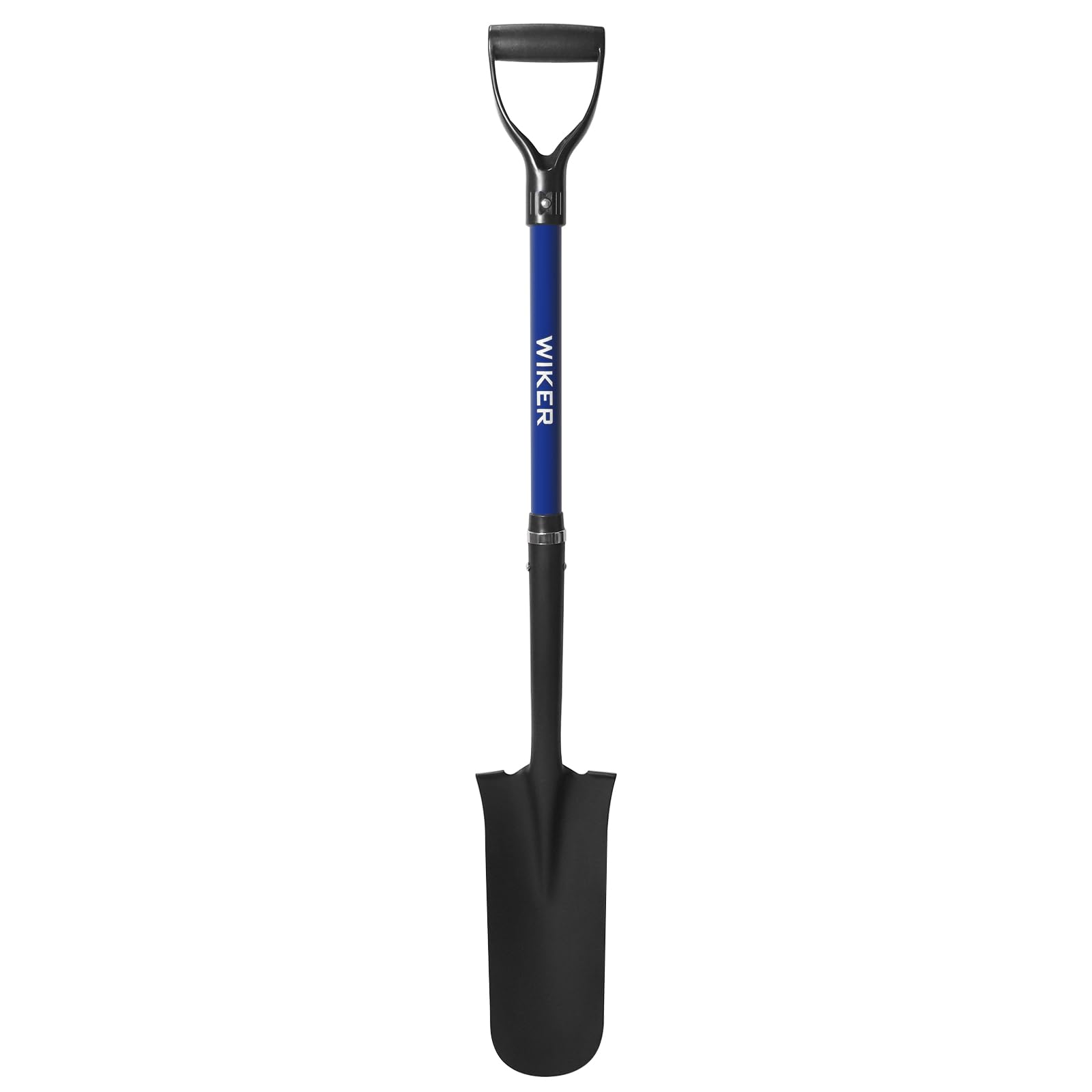
WIKER 45" Drain Spade

WIKER 45" Drain Spade

Narrow trenching

Our Score 9.2/10
Check Price

Worth Noting

  • Narrow head moves little soil per scoop
Blade
Manganese steel, 3-layer coating
Head Width
5 inches
Blade Length
14.4 inches
Overall Length
45 inches
Read the full review

Five inches of blade is either exactly what you need or the reason to look elsewhere. This is a drain spade: a narrow 14.4-inch blade on a 45-inch fiberglass shaft, slim enough to slide between perennials, down the side of a fence post, or along a line you are cutting for a drip system without taking a barrow of soil with it.

It is the tool we reach for when a full-width spade is simply too clumsy. The manganese-steel head carries three coats of corrosion-resistant finish, which matters for a tool that gets put away damp, and the shaft is light enough to carry one-handed along with a bag of bulbs. The joint felt tight and the grip solid when we handled it, with no rattle anywhere along the shaft.

The maker backs it with a lifetime warranty, which is more reassurance than most narrow spades carry. For post holes, bulbs, and drip-line trenches it is a precise, light tool that does not fight you, and the coating should see it through a few seasons of being left out in the rain.

Bottom line: Buy this narrow drain spade for trenching, bulbs, and post holes between plants, and leave it in the shed when the job is moving soil in bulk.

5

VNIMTI 45" Wood-Handle Spade

VNIMTI 45" Wood-Handle Spade

Light planting days

Our Score 9.0/10
Check Price

Worth Noting

  • Edge can arrive blunt and need filing
Handle
Wood with steel D-grip
Weight
3 lb
Blade Material
Alloy steel
Overall Length
45 inches
Read the full review

The handle is wood, and that tells you most of what this spade is for. A wooden shaft is warmer and quieter in the hands than fiberglass or steel, and at 3 pounds this is the lightest spade here, light enough to carry around the plot and swing without thinking about it. It is the one to pick if a full steel spade leaves your shoulders sore.

The 45-inch narrow blade is built for transplanting: it slips under a root ball and lifts rather than chops, and the corrugated footplates run long enough to take a boot on either side, so left- and right-footed diggers both get a platform. The steel D-grip is ordinary in the best way, with nothing to adjust and nothing to work loose.

For all that, it is a light-duty tool, and the wooden shaft is what decides it. Feeding a spade into clay or prying at a shrub's root ball asks wood to do steel's job; buy this one for planting beds, bulbs, and small transplants, and keep a fiberglass or steel spade for the heavy work. As a second spade for gentle jobs it makes sense; as your only spade in rough ground, it does not.

Bottom line: A light, inexpensive spade for planting beds and small transplants, as long as you keep it away from clay and stubborn roots.

How We Chose and Tested Garden Spades

We began by comparing specs and owner reviews for more than two dozen spades, then narrowed the field to 14 based on blade shape, handle material, stated weight, and price. That shortlist intentionally mixed traditional forged spades with stamped blades and both D- and T-handles, so we could judge whether the extra cost bought real quality.

For eight months, those 14 lived by my back door and went into the garden three or four times a week. We used them to dig 12-inch planting holes in clay, edge beds, lift shrubs, and pry rocks. Each time, we noted how easily the blade entered the soil, whether soil clung to it, how much downward force we needed on the step, and whether roots or stones stopped the cut. We also paid attention to how each one felt after an hour—handle diameter with gloves, balance, and whether the grip rubbed.

Durability got its own set of abuses: we chopped through roots, levered out rocks, and left each spade outside overnight after watering. Every few weeks we checked the handle-to-blade socket for wobble, ran a thumb along the edge for nicks or rolled spots, and looked for cracks, rust, or loose rivets. We tracked whether a spade needed sharpening to keep performing and whether its price felt justified by the construction and finish. The ones that rose to the top did the boring work without drama—no flex, no loosening, no sudden blunting—and made digging feel like less of a fight.

How to Choose Garden Spades

Blade shape decides the job

Three profiles cover most garden work, and buying the wrong one is the most common way to end up with a tool that fights you. A square, flat blade cuts a straight border and slices turf cleanly. A pointed blade works into rocky or root-filled ground where a flat edge stalls. A narrow drain spade goes deep between plants without disturbing the bed around it.

Width matters as much as shape. A wide head looks efficient but is clumsy in a crowded border, and a narrow one is the wrong tool for moving a bed's worth of soil. Match the blade to the job you do most weeks, not the one you do once a year.

Length and handle: fit the tool to you

Handle length is where most buyers guess, and it is the difference between a spade that saves your back and one that makes you stoop. With the blade resting on the ground, the top of the D-grip should land around hip height; if it sits much lower, you are bending into every push. Our picks run from 40 to 46 inches, and the taller you are, the more a longer shaft earns its keep.

Shaft material is the second choice. Wood is warm and light but the first to give way under load, fiberglass saves weight with little flex, and steel is the most rigid and the heaviest thing you will swing all afternoon.

Footrests and a sharp edge do the work

You do not need a heavier spade to get through hard ground; you need the force to arrive in the right place. Wide, flat footrests spread the pressure so a boot does not slide off, and rests bent forward push the blade down and ahead rather than straight into your instep.

A sharpened bevel matters just as much, because a blunt spade bounces off clay that a sharp one bites into. If a new tool arrives dull, ten minutes with a flat file along the bevel changes it completely, and a spade that has hung in the shed for years deserves the same treatment before the season starts.

What actually breaks

Blades rarely fail. The joint between head and shaft does, and a welded one-piece head and shaft has no socket to work loose. A wooden shaft is the component to watch if you pry sideways at a root or use the blade as a lever. A spade is built to cut and lift soil straight up; side-loading is what bends sockets and snaps handles, and no warranty argument survives the story of how it happened.

Frequently Asked Questions

Final Verdict

If you dig in real ground, full of clay, stones, and roots, the Spear Head Spade is the one to buy. Its pointed, sharpened blade finds a way into ground where a flat edge stalls, and the light fiberglass shaft means you can keep going after the first hole.

Change the job and the answer changes. For a crisp border edge, take the HANTOP and its sawtooth square blade. For planting between established shrubs, take the Fiskars, which slips into a narrow hole and comes with a lifetime warranty behind it.