Birding & Garden Decor

Best Garden Pedestals of 2026

A garden pedestal is the rare purchase you only notice when it fails. Raised on a good one, a planter, urn, or birdbath sits at eye level, clear of wet soil and easy to see from the kitchen window — and the base underneath does all the quiet structural work. That's where the tradeoff lives: heavy stone and cast bases shrug off wind but take two people to shift for mowing, while lighter resin and metal ones move easily and then wobble in a July thunderstorm. What you're actually buying is a base that keeps the thing on top upright, at the height you want, through a full season of weather.

I learned that the hard way, with a top-heavy birdbath that spent one windy spring leaning against a fence. Since then I measure before I admire. Over the past eight months, my team and I have lived with 12 garden pedestals in lawns, gravel borders, and on paver patios, and the trick that saves the most returns is boringly simple: measure the bottom of your planter or birdbath first, because a base half an inch too narrow is a base that tips. The picks below earned their spots.

1

MOCOME 18-Inch Column Pedestal

Top Pick
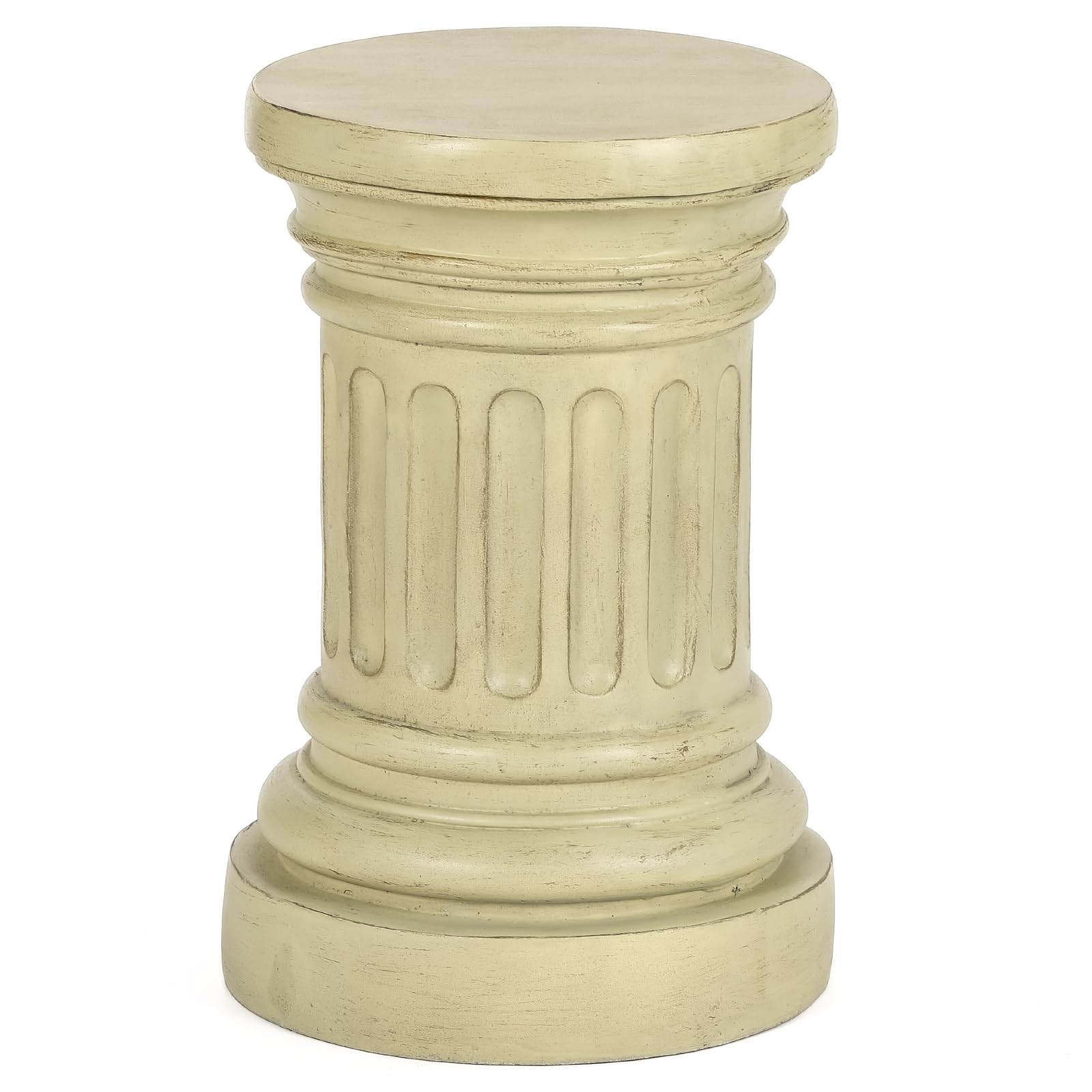
MOCOME 18-Inch Column Pedestal

Statues and urns

Our Score 9.6/10
Check Price

Worth Noting

  • Fifteen pounds to lift and reposition
  • Classical fluting won't suit a modern scheme
Height
18 in
Weight
15.4 lb
Material
Magnesium oxide
Base Footprint
12 x 12 in
Read the full review

Eighteen inches is the number that decides this one. A knee-high statue or a squat urn set straight on the ground is something you look down at; lifted onto this column, the top of the piece lands in your line of sight from a patio chair. Underneath it is a fluted Roman column cast in magnesium oxide, 12 inches square at the base and at the top, and it is the pedestal we recommend first.

Magnesium oxide is why we rate it above the resin plinths here. It's cast dense rather than blown hollow the way a lot of decorative resin is, it won't rust, and 15.4 pounds is enough to sit through a gust without a stake or a bag of sand. We carried it between three spots before settling on one: heavy enough to feel planted, light enough to move without help.

The 12-inch top is the quiet advantage. A broad urn, a bucket planter or a statue with a wide base sits fully supported instead of perched, so nothing about the arrangement looks accidental. The finish runs warm, closer to sand than to bright white, with fluting that draws shadow lines in sunlight, and it takes exterior paint if the tone fights your stone.

What it doesn't do is decorate on its own. This is a good column, not a sculpture, and the classical detailing will look out of place in a gravel-and-steel modern garden. For a formal bed, a rose arch or a pair either side of a door, that plainness is the point.

Bottom line: We recommend this one first: 18 inches of weatherproof cast column that puts a statue or urn at eye level and stays put in wind.

2

Design Toscano Medium Classic Plinth

Design Toscano Medium Classic Plinth

Small classic displays

Our Score 9.2/10
Check Price

Worth Noting

  • Light nine-pound body can shift in a gust
Design
Swags and scrolls
Levels
1
Weight
9 lb
Material
Resin
Read the full review

Set this next to the Roman column and the first thing you notice is scale. The medium plinth is a compact piece of carving rather than a column, and it isn't the base to buy if you're picturing a full-size figure on top of it. What it does well is ornament: swags and scrolls cast in a stone-grey resin, with detail that reads as old garden statuary from a few steps away.

That trade works if you scale the piece to it. We like it under a small bronze-effect figure, a pot of geraniums or a fern by a doorway, something that wants a bit of lift rather than a monument. At nine pounds it's the one you can pick up with one hand and shift when you mow, which sounds trivial until you've rearranged the same border twice in a season.

The return window runs sixty days, with return shipping on you. That's long enough to stand the plinth in its real spot with your statue on top before you commit, and standing it in the actual place is the only size test that means anything.

Bottom line: We recommend it for a small statue or a doorway pot where the carved detail does the work, not for a full-size figure.

3

Design Toscano Column of Maenads

Design Toscano Column of Maenads

Formal focal points

Our Score 8.8/10
Check Price

Worth Noting

  • 9-inch depth limits the statue bases it takes
  • Most expensive of the four picks
Design
Three maenads column
Height
28.5 in
Weight
15 lb
Material
Cast stone resin
Read the full review

Twenty-eight and a half inches tall and ringed with three carved maenads, the followers of Dionysus, this is the one pedestal here that is a piece of sculpture in its own right. It is also the most expensive thing in the group and the only pick that lifts a statue to the height a formal garden expects.

We like it where the plinth is meant to be seen: the end of a path, either side of a gate, under a piece that deserves a processional approach. What it isn't is neutral. Three carved figures compete with whatever stands on top, so pair it with a simple urn or a dark bronze rather than another ornate statue.

Two things to check before ordering. The base measures 12.5 inches across and 9 inches deep, so a piece with a deep or rectangular footprint will overhang, which makes the top surface measurement worth confirming with the seller first. And fifteen pounds at that height is stable on a level footing but not immovable, so set it on a paver rather than bare soil and treat it as a fixture rather than something you shift to mow around.

Bottom line: We reach for this one when the plinth itself belongs in the composition and the statue needs to be seen from across the garden.

4

Echo Valley Serpentine Pedestal

Echo Valley Serpentine Pedestal

Gazing globes

Our Score 8.4/10
Check Price

Worth Noting

  • Base can crack where it meets the column
  • Top can arrive out of level
Finish
Stone-look grey
Weight
4 lb
Material
Polystone resin
Globe Fit
10 in gazing globe
Read the full review

A ten-inch gazing globe and a sundial are the two things this column is built for, and it's the only base in this group specified for them. The serpentine swirl is cast in polystone with a grey wash that reads as weathered stone from a few feet away, and it's the least expensive of our picks.

The top lands low, closer to the plants than to eye level, so a globe on it reads as an accent in a border rather than a centrepiece. That's the honest boundary of what this one does. If you want the globe visible from the kitchen window, the 18-inch column is the better buy. For a bed you walk past and look down into, the low profile is genuinely right, and the grey wash means it looks like stone rather than painted plastic.

Four pounds is the number that matters after that. Glass on a light base in an exposed spot is how gazing globes get broken, so choose a sheltered position, set it on firm level ground, and use the hollow base, which takes gravel and is the cheapest ballast you'll ever buy. Do that and it's steady; skip it on a windy corner and you're gambling with the globe.

Bottom line: The right base for a ten-inch gazing globe or sundial, provided you ballast the hollow base and keep it out of the wind.

How We Tested the Best Garden Pedestals

We built the shortlist by pulling every pedestal sold at the major home and garden retailers, then cutting anything with an unstated load rating, a top plate too narrow to hold a standard planter, or hardware that buyer reviews repeatedly described as stripping or rusting within a season. That left 12 pieces across stone, cast aluminum, iron, resin, and wood, from low resin plinths to heavy cast-stone columns.

Each one went into a real yard and stayed there for the full eight months, through a summer of thunderstorms and the first hard freezes. We set them on three surfaces — level pavers, a slope of lawn, and a gravel border — because a base that's rock solid on concrete can rock on soft ground. Then we loaded them, with a heavy ceramic planter on some and a filled birdbath on others, and watched whether the top plate flexed, whether the column rocked, and how much the whole thing shifted when someone clipped it with a knee.

Stability got the most attention. I pushed each pedestal from the top edge and recorded how far the base lifted, and I mowed around all of them twice a month to see which ones had to be dragged clear and which could be nudged with one hand. Compatibility we checked with a tape measure, comparing every top plate and footprint against the actual bottoms of the pots and baths we own, and noting which models shipped with adapters or pre-drilled mounting holes. For appearance and durability, we photographed each piece at the start, at four months, and at the end, tracking faded finishes, rust blooms, chalky resin, and joints that worked loose.

Weight we logged the literal way, on a scale, before installation — then noted who could move each one alone. At the end we asked whether the price felt fair next to what the pedestal actually did, since a cheap one that survives two seasons is better value than a costly one that chips the first time you reposition it.

How to Choose Garden Pedestals

Height and top surface, decided first

A pedestal exists to change the height at which you meet a piece. A small figure, a birdbath or a pot of herbs wants about a foot of lift; a full-length statue or a big urn wants closer to two feet or more. Stand where you'll actually see it, a kitchen window, a patio chair or the path you walk each evening, and work backwards from there.

The trap is the top. Measure the base of the piece rather than its widest point, then compare that with the plinth's top surface: an overhanging statue looks unstable and gives the wind something to grab. Words like large and medium describe a maker's range, not a height, so buy from published measurements. Our 18-inch column is a good illustration of the sweet spot for a garden statue.

Weight, footprint and wind

A plinth that weighs four pounds moves easily and tips easily; one that weighs fifteen stays where you put it. In an exposed garden that difference decides the purchase, especially when there's glass on top. Weight isn't only about mass either, because a hollow base you can fill with gravel gives you stability you add after the fact, which is exactly how the Echo Valley is meant to be used.

Footprint matters as much as mass. A wide base on level ground resists a shove; a narrow one on soft soil rocks, and a rocking casting is how cracks begin. If your spot catches wind, choose the heavier column or anchor the light one.

Materials and what a few winters do

Everything here is a cast decorative base rather than poured concrete, and the differences show up around the third or fourth year. Painted resin is the lightest and cheapest to make; cast stone resin mixes crushed stone into the resin for a heavier, more stone-like body; magnesium oxide is cast dense and is the most weather-tough of the group; polystone sits between resin and stone.

What goes wrong is usually at an edge, where the plinth met a wheelbarrow, or in the finish, which can chalk and fade in strong sun. Plain castings take a coat of exterior paint when the colour goes off. Set any of them on gravel or a paver rather than bare soil so frost doesn't heave the base out of level.

How much the plinth itself should show

You look at the pedestal twelve months a year and at the statue for the same twelve, so decide whether the base should disappear or join the composition. Fluted columns and plain blocks recede and let the piece on top carry the bed; swag-and-scroll carving and figurative columns are ornament in their own right and compete with a fussy statue.

Match the period, then match the setting: a carved caryatid column wants a formal axis or a doorway, a plain column works almost anywhere, and a stone-look globe base belongs in a border where it's seen close up. The lighter castings also come indoors for an entryway or porch without much fuss.

Frequently Asked Questions

Final Verdict

Start with the MOCOME column. Eighteen inches puts a statue or an urn where you actually look at it, the cast magnesium oxide is built for years outdoors, and 15.4 pounds means it stays where you set it. If a gazing globe is the whole plan, the Echo Valley is the one specified for it, as long as you ballast the base with gravel and keep it out of the wind. If you need height above all, the maenads column gives you 28 inches and a sculpture along with it.