Seeds & Plants

Best Fruit Seeds of 2026

A seed packet is a small bet on the future: you press something into damp soil and trust a plant will show up weeks later. The failure mode is brutal and silent — a tray of bare mix three weeks on, with no way to know whether you watered wrong or the seeds were dead on arrival. That gap between the photo on the packet and what comes up is the whole game. Good seed closes it: strong germination, honest labeling, and enough seed per packet that one thin row doesn't cost you the season.

First-time growers learn the hard way that the days-to-maturity figure on the back is optimistic in most climates, and that seed count matters as much as germination — ten seeds that all sprout beat fifty that don't. Over the past seven months, my team and I grew out 18 packets of fruit seeds — tomatoes, melons, strawberries, citrus, a few tropical experiments — on windowsills, in raised beds, and in patio pots. The picks below are the ones that earned a second season.

1

Organo Republic 55-Variety Pack

Top Pick
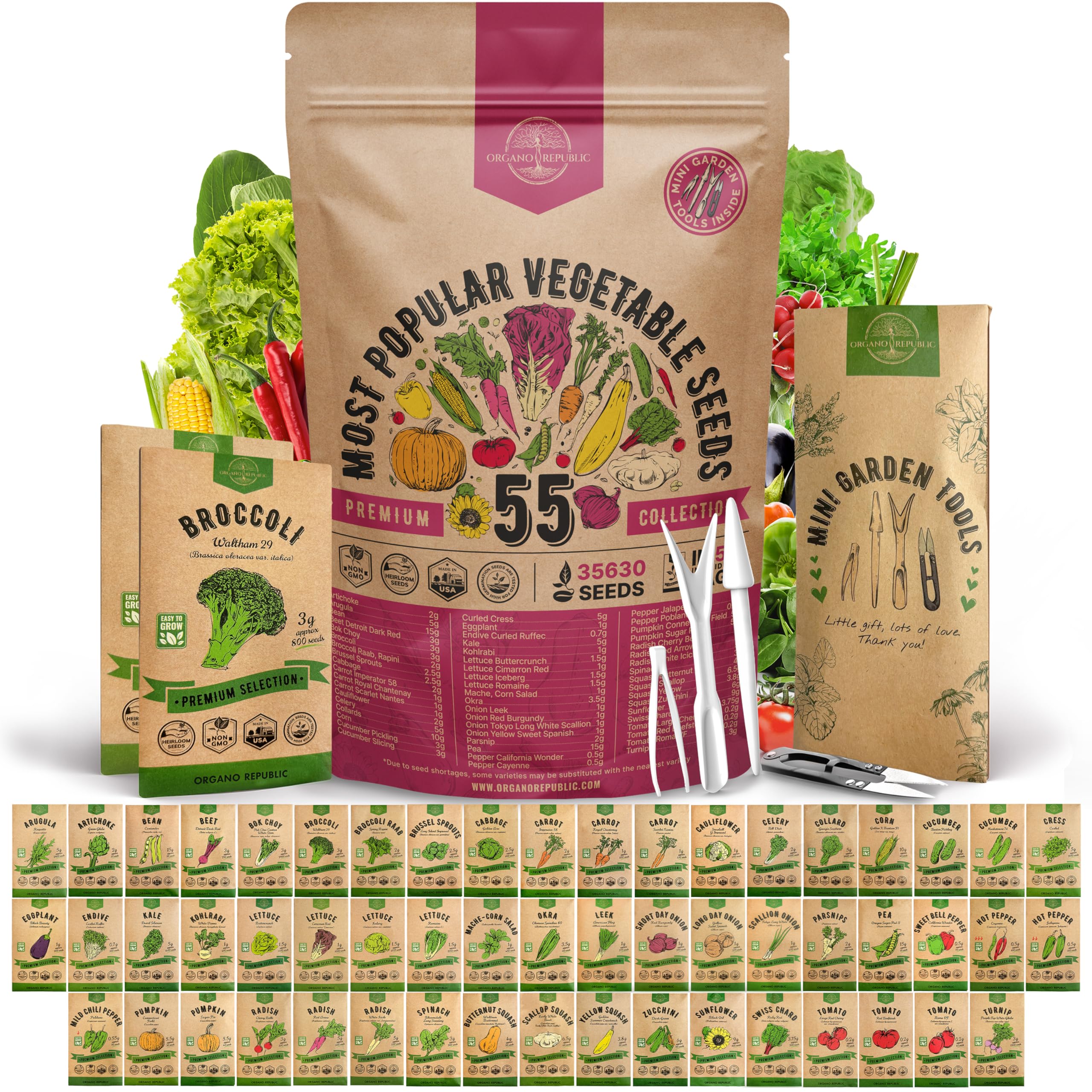
Organo Republic 55-Variety Pack

Full garden

Our Score 9.2/10
Check Price

Worth Noting

  • Germination varies from variety to variety
Seeds
35,600+
Packaging
Waterproof resealable bag
Varieties
55
Packet Format
55 individual packets
Read the full review

Fifty-five separate packets inside one waterproof resealable bag is the detail that decided this for us. Each variety is sealed and labeled on its own, so you open what you're sowing this week and everything else stays dry — no torn envelopes shedding seed into the bottom of a toolbox.

Then there's the volume. At 35,600-plus seeds across 55 varieties, the pack gives you enough of each to sow a row, thin to the strongest seedlings, and still have a second attempt in reserve if a late frost takes the first. That reserve is what separates a working garden pack from a sampler, and it's the main reason we rank this one first.

The range is practical rather than exotic: the 55 most popular vegetable varieties, with a handful of fruiting crops counted in alongside the greens, roots and herbs that fill out a bed. If you came hunting specifically for fruit, read the list closely before ordering — packs like this are vegetable-led, and the fruit is a slice of the whole rather than the point of it.

What tips it for a first garden is the framing. It's sold as a complete kit with guidance running from sowing to harvest, and the varieties are the everyday crops a household actually eats rather than collector's curiosities. The 90%-plus germination figure on the label is a claim about the seller's own testing, not a promise about your windowsill, but it's the right kind of thing to be publishing.

Bottom line: We made this our top pick because one bag covers a whole garden: 55 labeled packets, 35,600-plus seeds and guidance that makes a first season feel manageable.
2

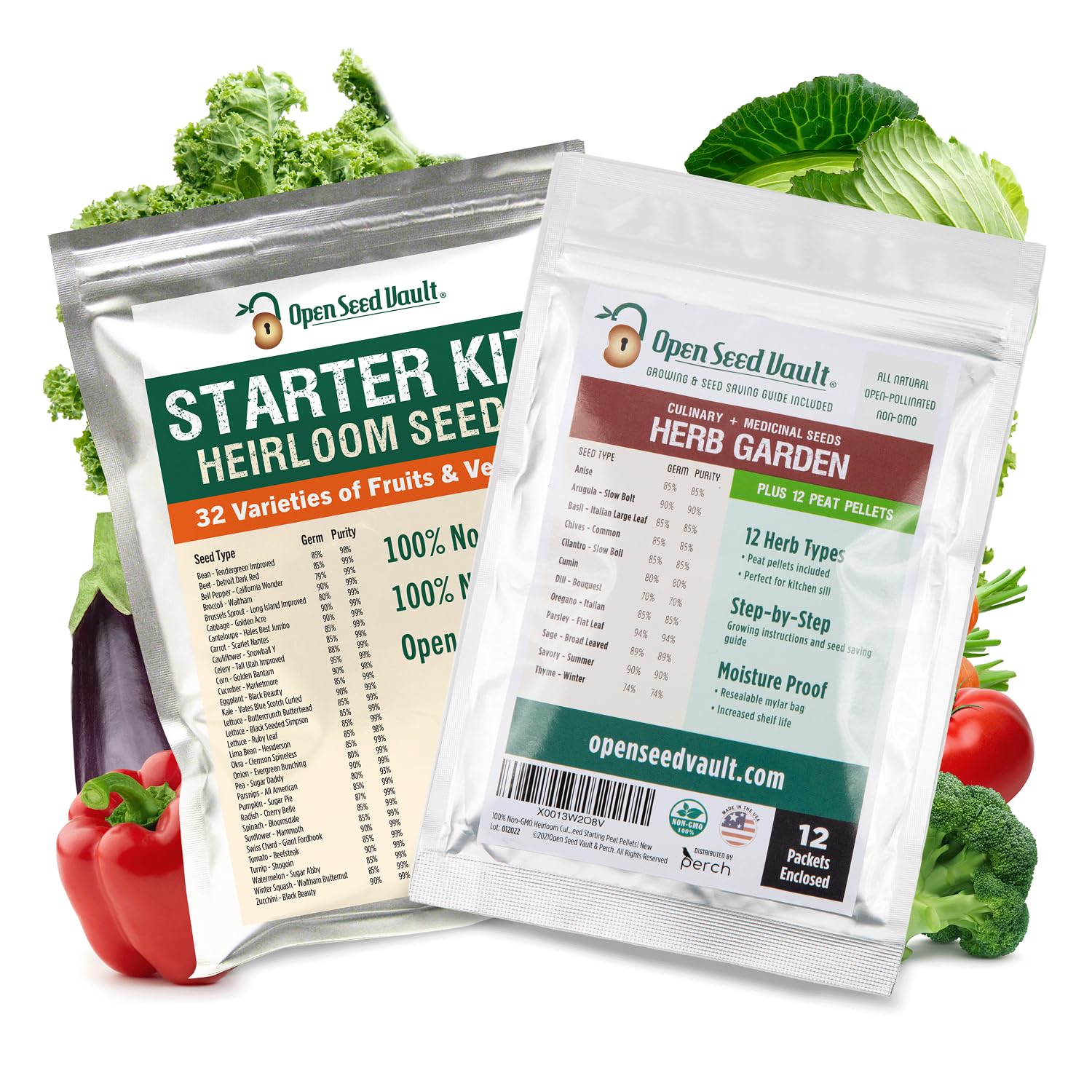
Open Seed Vault 44-Pack

Open Seed Vault 44-Pack

Seed saving

Our Score 9.2/10
Check Price

Worth Noting

  • Small packets for the larger crops
Seeds
15,000+
Seed Type
Open-pollinated heirloom
Varieties
44
Packet Format
44 separate packs
Read the full review

Open-pollinated seed is the whole reason to choose this one over the larger packs here. Everything in the 44 is heirloom and non-hybrid, so a dried bean from this summer's row can go back into the ground next spring — a one-off purchase that slowly turns into a seed library of your own.

The list itself is sensible rather than showy: vegetables, herbs and a few fruiting crops, all in a bag you can carry in one hand. Nothing in it is a novelty you'll plant once and never eat. We had the whole thing spread out and sorted by bed in about ten minutes, which is the kind of small practicality that decides whether a seed pack gets used or forgotten on a shelf.

Saving seed is a skill, not a button. You have to keep two varieties of the same species apart so they don't cross, let the pods or fruit finish fully on the plant, and dry what you collect before it goes back in the bag. Buy this for the variety and treat the saving as something you grow into over a couple of seasons.

Where it earns its keep is insurance. A crop that fails in a cold June is a disappointment rather than a lost year when there are forty-odd other packets in the bag, and the flat, compact packaging means the whole vault lives on a shelf instead of colonizing a drawer.

Bottom line: If you want to stop buying bean seed every spring, this is the pack we point you to: open-pollinated heirlooms you can save from.

3

Survival Essentials 100-Variety Vault

Survival Essentials 100-Variety Vault

Widest variety

Our Score 9.2/10
Check Price

Worth Noting

  • No printed planting guide in the box
  • Highest upfront cost of the picks here
Seeds
17,500
Season
Year-round
Seed Type
Heirloom, non-hybrid
Varieties
100
Read the full review

One hundred varieties is a different proposition from a starter pack. This vault covers vegetables, culinary and medicinal herbs and a run of microgreens, which makes it less a season's plan than a catalog you work through over several years.

It's also the one pack in this group where germination is a strength rather than a question mark. Things come up, and they come up thick enough that thinning becomes the chore — which is what the higher outlay buys you. A long list of varieties that never sprouts is just a list.

So is it worth it? If you're the gardener who wants to try a hundred things — three kinds of melon to see which one likes your soil, peppers you've only met in restaurants — yes, and the breadth is the economy, because one purchase covers several seasons of experimenting. If all you want is tomatoes, beans and a decent lettuce, a smaller pack serves you better and leaves room in the budget for compost.

The microgreens selection is the sleeper. A tray on a windowsill gives you something to cut while the rest of the garden is still catching up, and it's the part of the vault that earns its place in the months when nothing else is producing.

Bottom line: The deepest catalog here and the surest germination of the set — worth the higher outlay only if you'll actually grow a wide range.

4

Organo Republic 25-Variety Summer Pack

Organo Republic 25-Variety Summer Pack

Small plots

Our Score 9.2/10
Check Price

Worth Noting

  • Warm-season varieties only
Seeds
1,875+
Extras
Desiccant bag, mini tools
Varieties
25
Packet Format
25 labeled packets
Read the full review

Twenty-five packets is the right size for a garden measured in pots and a couple of raised beds. It's the smallest total seed count here, and the only pack on this page you can plausibly finish in a season — which matters, because half-used seed goes quietly stale in a drawer and takes your enthusiasm with it.

The extras are where this one surprises you. A desiccant sachet for the opened packets and a small tool set sound like filler until you're sowing basil into a yogurt pot with nothing but a pencil. It's also the pack here that gifts well: the whole thing reads as a starter kit rather than a bulk order, which is not something you can say about a hundred-variety vault.

Small-space growing is where it shines. The packets are sized for succession sowing — a few lettuce now, a few more in three weeks — and the lineup suits containers, raised beds and hydroponic trays where a bag of 35,000 seeds would be absurd. If your whole garden is a balcony, this is the one that fits it.

The varieties are the popular ones, so you're not gambling on a novelty you'll never eat. Sow a packet, eat the thinnings, and come back next year knowing exactly what your space wants.

Bottom line: We like it for a garden measured in pots and two raised beds: 25 warm-season packets you can actually finish before they go stale.

5

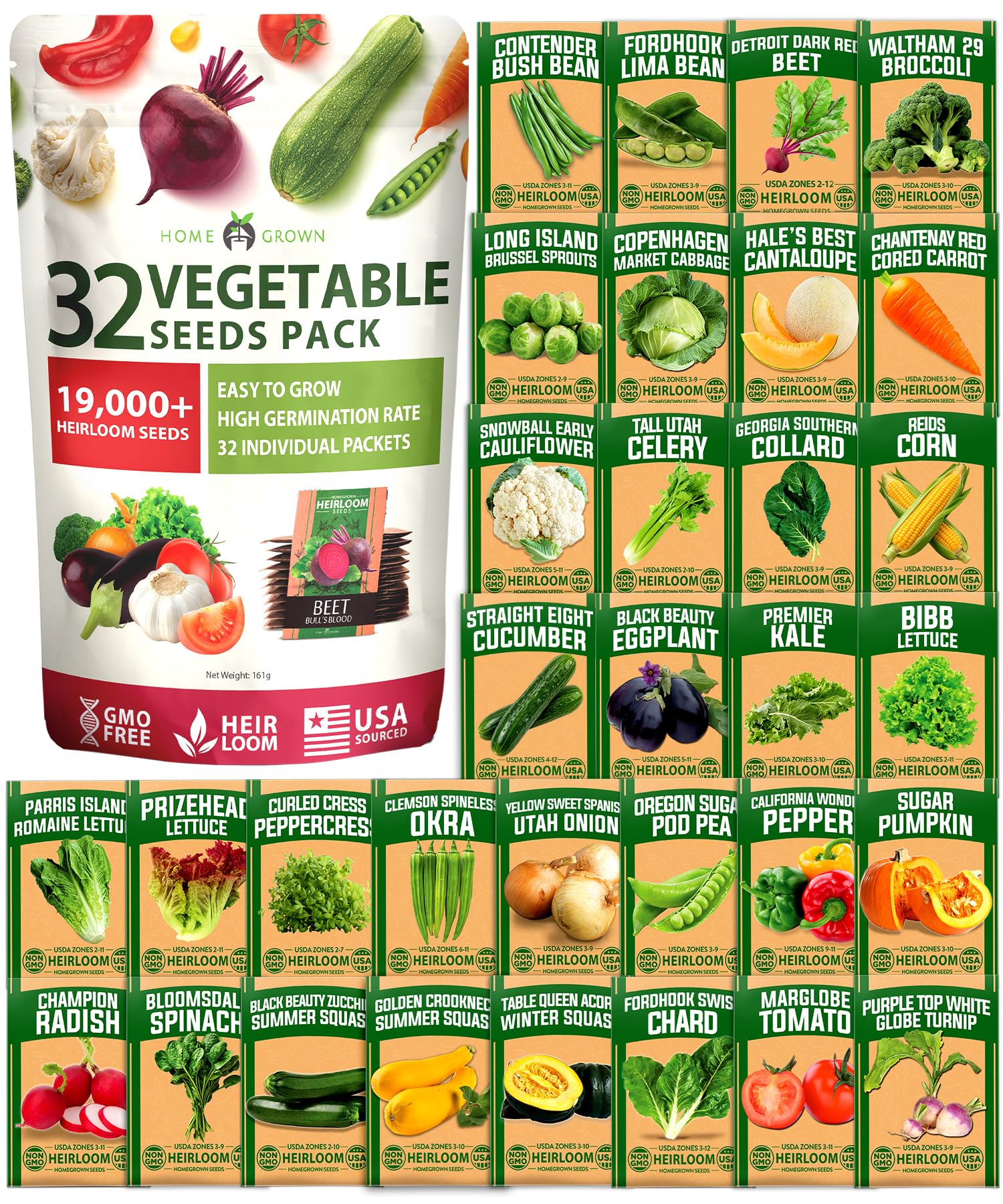
HOME GROWN 32-Variety Vault

HOME GROWN 32-Variety Vault

Long-term storage

Our Score 8.4/10
Check Price

Worth Noting

  • Uneven seed counts between pouches
Seeds
19,000+
Packaging
Waterproof mylar pouches
Varieties
32
Growing Guide
Online download
Read the full review

This is the most divided pack in the group, and we won't pretend otherwise. Seedlings move fast when they move at all — nothing else here sprouts with as much urgency — but there's a real chance a variety or two does nothing, and the gap between those two outcomes is wider than anywhere else on this page.

The numbers behind it are genuinely attractive: 32 varieties and 19,000-plus seeds, packed in waterproof resealable mylar pouches rather than paper. For a gardener sowing a large plot who can afford to over-sow, that combination of volume and weather-proof storage is hard to argue with.

The mylar is the detail we keep coming back to, and it's the best storage of anything here. Paper packets pull moisture in a shed or a garage, and a vault bought partly for keeping is only as good as its packaging. With the online grow guide alongside, this is a pack built for putting seed by rather than for one enthusiastic spring.

Sow it thick the first year, keep a note of what came up, and the second season gets a good deal more predictable.

Bottom line: Buy it for volume and storage if you can shrug off a failure or two — nothing here sprouts faster, and nothing here is less predictable.

How We Grew Out 18 Packets of Fruit Seeds

We built the shortlist from seed catalogs, nursery racks, and specialty growers, then filtered on the unglamorous details: the germination percentage printed on the packet, the packed-for date, seed count against price, and how many fruit varieties a single seller actually carried. Anything that showed up without a lot number or a stated germination rate was cut before sowing. That left 18 packets — annuals like tomatoes and melons, perennials like strawberries, and a few citrus and tropical types most people end up growing as houseplants.

Testing ran seven months, from late-winter indoor sowing through the end of the harvest. Every packet got a pre-test first: 10 seeds on a damp paper towel inside a zip bag, set on top of the fridge and counted every morning for three weeks, which gave us a clean germination number before soil complicated the picture. The rest went into cell trays on a south-facing windowsill, where I tallied new sprouts daily through day 21 and noted how quickly the first true leaves appeared, since that tells you more about a variety's real speed than the packet does.

From there, seedlings were thinned and moved to raised beds and patio pots. We tracked how many made it to transplant, whether the fruit came true to the packet's description in shape and color, and what each plant produced in weight across the season. We also counted the seeds in every packet — a couple ran short of the number printed on the front — and kept notes on how far one packet stretched across succession sowings. The leftover seed is in the fridge; we'll sow it next spring and update these picks if anything changes.

How to Choose Fruit Seeds

What a fruit seed pack actually contains

Almost every variety pack sold this way is vegetable-led, with fruiting crops making up a slice rather than the bulk. That's how a kitchen garden works — the tomato is a fruit, and it's also the thing you'll harvest most of. If you want strawberries, raspberries or tree fruit, buy those as plants or dedicated packets, because no mixed vault here is built around them.

Before ordering, count how many of the listed varieties you will actually plant this year. Fewer than a dozen means the pack is bigger than your garden, and the rest goes stale in a drawer.

Divide the seed count by the variety count

A headline of tens of thousands of seeds sounds enormous until it's spread across 55 or 100 varieties. Do the division: the per-variety figure decides whether you can sow a row, thin it, and still have seed for a second attempt after a frost. Some packs pair generous totals with modest per-crop counts, and others the reverse.

If you grow one bed of six things, per-variety depth matters far more than the total. If you want to try dozens of crops once each, breadth wins and the total is almost beside the point.

Germination is the one number nobody controls

Seed is a living thing with a shelf life, and how it was stored before it reached you matters as much as the variety. Buy from a seller who publishes a tested germination figure, then accept that there's a gap between that claim and your windowsill.

First-season sowing should be deliberately wasteful: two seeds where you want one plant, a few spare cells of anything you're keen on. Keep the trays warm and evenly damp, and don't diagnose your own technique until the seed has had a fair run at it.

Packets, labels and what arrives in the box

Individual labeled packets are worth more than they sound. They let you sow one crop without opening the others, keep the leftovers identified, and see at a glance what's been used. Loose mixed seed in one bag saves packaging and costs you the ability to plan a bed.

Label the tray as well as the packet — a wooden stick and a pencil is enough, because two weeks later the seedlings all look alike. And open the bag when it lands: a torn or empty pouch is worth raising straight away rather than discovering in May.

Heirloom, hybrid, and whether you'll save seed

Open-pollinated and heirloom varieties come back true from saved seed, which is where the survival-vault framing comes from. Hybrids grow uniformly, but you can't reliably save from them. If saving appeals, start with beans, peas, lettuce and tomatoes — self-pollinating or easy to isolate — and keep two varieties of the same species apart if you want the seed to stay true.

If you just want dinner, buy for flavour and habit and don't pay extra for genetics you won't use.

Frequently Asked Questions

Final Verdict

Our pick is the Organo Republic 55-variety pack. Fifty-five labeled packets, 35,600-plus seeds and a beginner-friendly spread make it the one bag that carries a whole season without leaving you short of anything you actually want to eat.

Choose the Open Seed Vault 44-pack instead if saving seed from your best plants is the plan — open-pollinated varieties are the ones worth keeping. And if your garden is two beds and a few pots, buy the 25-variety summer pack: it's the size you'll finish.