Fencing & Farm Structures

Best Chicken Wire of 2026

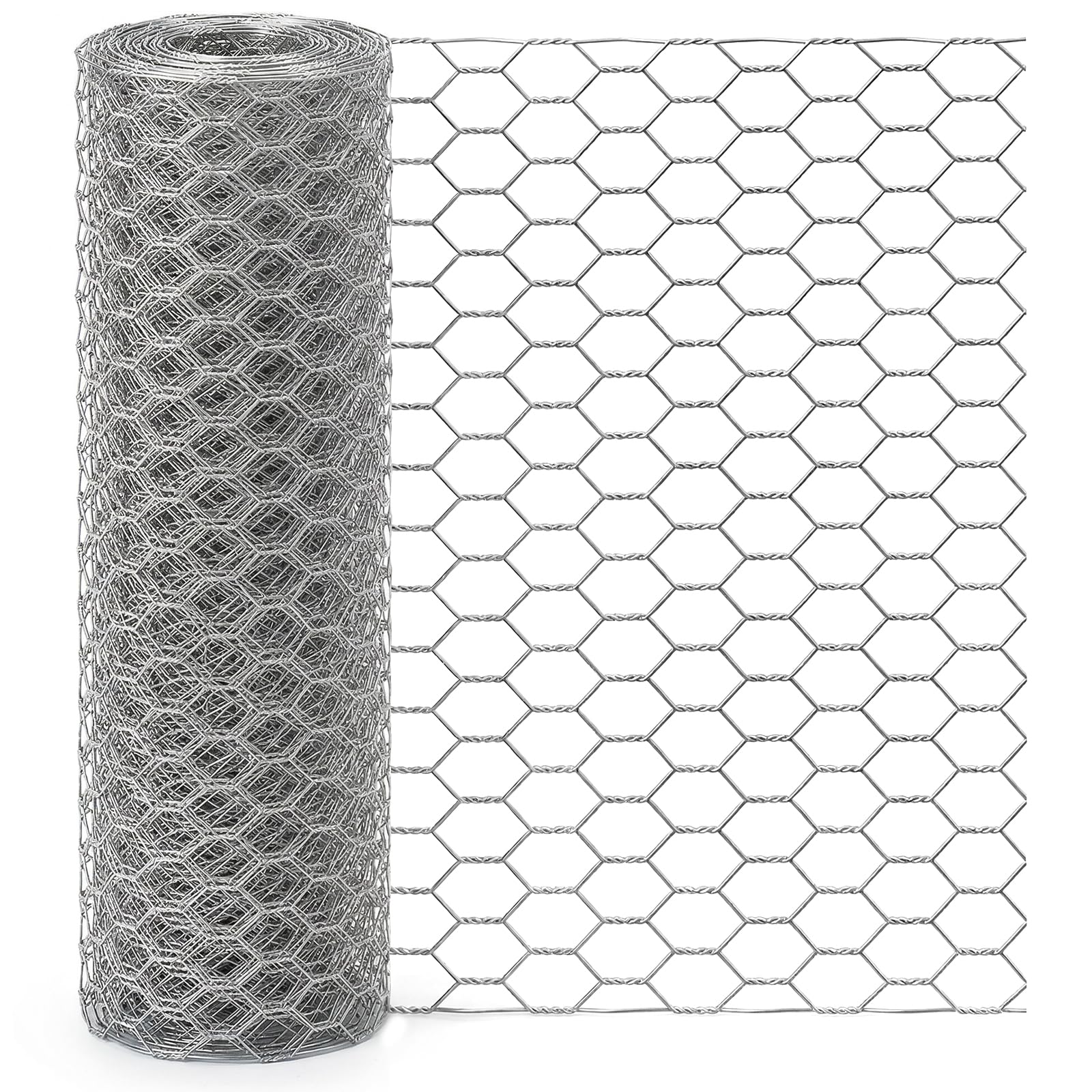
Chicken wire is the cheapest fencing on the shelf, and that price hides a tradeoff: thin wire woven into hexagons is soft enough to bend by hand, which is exactly why it sags under a raccoon, rusts through at the soil line, and lets a determined hen push a gap open at the bottom. What a good roll actually buys you isn't brute strength — it's consistency: even hexagons, wire that doesn't kink when you unroll it, and a galvanized coating that survives a season pressed against damp soil.

Cheap wire is a false economy — you pay twice, once at the register and again in staples and lost afternoons. My team and I worked through 15 rolls over the past four months on coop runs, garden borders, and tree guards, paying attention to how each one unrolled, how it cut, and whether it stayed tight once something leaned on it. The failures showed up fast: kinks that never flattened out, hexagons that stretched into diamonds, cut ends sharp enough to bite through a thin glove. The rolls below are the ones that held.

1

YARDGARD 1 Inch Poultry Netting

Top Pick
YARDGARD 1 Inch Poultry Netting

Coop runs

Our Score 9.4/10
Check Price

Worth Noting

  • 1-inch mesh will not hold chicks or small birds
Material
Galvanized steel
Roll Size
12 in x 150 ft
Wire Gauge
20 gauge
Mesh Opening
1 inch hex
Read the full review

Twenty gauge is the number that makes this the roll we recommend first. It is the heaviest uncoated wire in this group, and the difference shows the moment you bend a length around a corner post: the panel keeps the shape you give it instead of springing back into a coil. The 1-inch hex is the classic poultry weave — open enough to see a whole run at a glance, tight enough that a grown hen or a rabbit turns around at it.

The footage is the other half of the argument. Twelve inches by 150 feet works out to about 150 square feet of mesh, more coverage than any other roll here and enough for a long boundary or a coop run with spares left over. Twelve inches is narrow, though, and that is the trade: a three-foot barrier takes three stacked courses, three times the tying off, and a lot of seams to keep straight. For tree guards, coop panels, and wrapping, the narrow strip is exactly the right shape.

Two things to know before you order. The 1-inch mesh is a hen-and-rabbit weave, so chicks walk straight through it and a finer roll is the answer if you are brooding. And 20-gauge wire is stiff enough to whip when it comes off the coil — gloves are not optional.

Bottom line: This is the roll we reach for when the fence has to last: the heaviest wire here, a classic 1-inch poultry weave, and enough footage for a whole run.

2

Fabulas Chicken Wire Fencing Mesh

Fabulas Chicken Wire Fencing Mesh

Wide garden beds

Our Score 9.2/10
Check Price

Worth Noting

  • 60 feet runs out on a long fence line
Included
Gloves, cutters, mending wire
Material
Galvanized steel
Roll Size
17 in x 60 ft
Mesh Opening
0.6 x 1 inch hex
Read the full review

The box is the first thing you notice: wire cutters, nitrile gloves, and a coil of mending wire come with the roll. It sounds like padding until you are standing at the fence line with nothing to cut with. The cutters alone save a hardware-store run, and the gloves matter because every cut end in this category bites.

Seventeen inches is the widest roll in this group, and the width is what earns it a place. A three-foot barrier takes two stacked courses instead of three, with half as many seams to line up and tie. The wire is cuttable and spliceable too, so corners and gate openings do not end as a knot of offcuts. For a couple of raised beds or a short run, this is the roll we hand people.

One measurement is worth checking before you wrap a whole bed. The listing describes the opening as 0.6 by 1 inch rather than a single hex size, which is fine for keeping rabbits off vegetables but vague if you need a specific aperture to hold small birds. Measure a sample first.

Bottom line: Buy it for the width and the box: 17 inches means fewer stacked courses, and the cutters and gloves save a hardware-store trip.

3

Mklsit Green Coated Chicken Wire

Mklsit Green Coated Chicken Wire

Garden edging

Our Score 9.2/10
Check Price

Worth Noting

  • Only about 26 feet per roll
  • Stiff coated wire resists tight curves
Coating
Green PVC over galvanized iron
Roll Size
15.7 in x 315 in
Mesh Opening
1 x 0.63 inch
Wire Diameter
0.9 mm
Read the full review

Green PVC over galvanized iron does something a silver roll cannot: set against stems, boxwood, or a tomato trellis, it reads as shadow rather than fence. From a few feet away the wire simply stops announcing itself, and the coating seals the zinc away from rain at the same time.

The core is 0.9 mm, the thickest wire listed in this group, and with the plastic on top it holds a shape better than the 0.6 mm galvanized rolls. The 0.63-inch opening is the tightest here too, which is what you want if small birds are the problem rather than hens. Cut ends are blunter and bulkier than bare wire, so snips beat scissors.

This is the roll for the parts of a garden you actually look at: a bed border, a trellis panel, a wreath, the arch at a wedding. We rate the coating worth paying for whenever the wire is meant to disappear, and the tight weave is a real bonus for bed protection.

Bottom line: We point gardeners here when the wire has to disappear into a planting: the green coating hides it, and the thick 0.9 mm core keeps a tidy edge.

4

TOYPOPOR Chicken Wire

TOYPOPOR Chicken Wire

Long bed borders

Our Score 9.2/10
Check Price

Worth Noting

  • Too light to stand without staking
  • Hex opening is not published in the listing
Material
Galvanized steel
Roll Size
16 in x 82 ft
Item Weight
4.56 lb
Wire Diameter
0.6 mm
Read the full review

Eighty-two feet is the longest galvanized roll in this group, and at 16 inches wide it is the one we unroll first for a row of raised beds. Cut it into panels and there is enough for four or five beds with wire left over for a compost lid or a tree guard. At just over two kilograms it is light enough to carry around the plot in one hand while you work.

The wire is the compromise. At 0.6 mm it is the same light gauge as most of the rolls here, and it behaves like it: shape it around a bed and it holds long enough to tie off, but it will not carry a straight line between posts set far apart. Treat it as skin over a frame rather than the fence itself.

The listing also does not publish the hex opening, which matters if you are containing chicks rather than excluding rabbits. Ask before you order, or choose a roll that states its aperture.

Bottom line: Eighty-two feet of galvanized mesh panels several raised beds without a second order, provided you give it stakes to hold a line.

5

vensovo Galvanized Chicken Wire Mesh

vensovo Galvanized Chicken Wire Mesh

Craft projects

Our Score 9.0/10
Check Price

Worth Noting

  • 13 feet will not fence anything large
  • Thin wire sags without staking
Material
Hot-dipped galvanized steel
Roll Size
13.7 in x 157 in
Item Weight
14.4 oz
Mesh Opening
0.8 inch hex
Read the full review

Thirteen feet of wire is not a fence, and pretending otherwise is how people end up ordering twice. What this roll does well is everything small: sun catchers, the mesh cage around a mosquito dunk, a collar of wire protecting a shrub the rabbits keep pruning. At 14.4 ounces we carried it to the kitchen table one-handed and cut it with snips.

The 0.8-inch hex is tighter than the 1-inch weaves here, which makes it the better choice for small birds and for wrapping bulbs. Hot-dipped galvanizing is the right finish for anything that stays outside. Outdoors, though, plan on stakes: this is a light wire, and a run strung between two points sags and curls on its own.

Bottom line: Small, light, and cheap enough to keep a roll in the shed: the right buy for craft work and spot protection, not for fencing a run.

6

Miuwauer Chicken Wire with Zip Ties

Miuwauer Chicken Wire with Zip Ties

Budget coverage

Our Score 9.0/10
Check Price

Worth Noting

  • Galvanizing gives out in wet ground
  • 1.38-inch openings will not hold chicks
Included
100 zip ties
Roll Size
13.7 in x 393.7 in
Mesh Opening
0.8 x 1.38 inch
Wire Diameter
0.6 mm
Read the full review

A hundred zip ties ship with this roll, which is not the gimmick it sounds like — ties are what actually hold a panel to a post, and most rolls here leave you to buy them. It is also one of the least expensive rolls in the group, and just under 33 feet of mesh is enough to skirt a decent-sized run or wrap a row of shrubs.

The mesh is 0.8 by 1.38 inch on 0.6 mm wire, the coarsest opening here. That is fine for turning rabbits away and keeping hens where they belong; it is not a chick mesh, and small birds find the gaps.

Corrosion is the caveat, and it decides where this roll goes. Where the wire sits in wet ground or stays damp under grass, the galvanizing is the part that gives out first, so put it on seasonal jobs — a winter of bulb protection, a trellis, a temporary pen — and spend the difference on heavier galvanizing where the fence has to stand for years.

Bottom line: A hundred zip ties and a low price make this the roll for temporary pens and seasonal jobs, where a fence only has to last a season.

How We Tested Chicken Wire, and Where It Failed

We started by sorting every roll we could find by mesh opening, wire gauge, roll length, and coating — plain galvanized, vinyl-wrapped, or the vague rust-resistant label that tells you nothing — and dropped any with a torn selvage or a gauge listed only as heavy duty. That left 15 rolls, which we ran for four months across a backyard coop run, three raised beds, a chain-link gate patch, two young apple trees, and a compost bin lid.

Each one got unrolled by hand on the grass to see whether it lay flat or corkscrewed, and we timed how long one person needed to stretch a 10-foot run. Then we cut with tin snips and watched the cut edge: good wire keeps its hexagons, cheap wire unravels into a tangle of loose ends. Gloves went on after the first round of nicks.

Sturdiness got tested at the bottom of the fence, where it matters. We stapled runs to wood, pushed on the middle with a flat palm to see how far it bowed, and worked a wedge under the base the way a digging predator would. A sample of each roll sat against wet soil and got watered every few days; we checked at four, eight, and twelve weeks for the white bloom that comes before flaking.

Value we figured per usable linear foot rather than per roll, since a crimped or tangled end can cost you a couple of feet. The highest scorers were the rolls that still felt tight after four months of weather, animals leaning on them, and the occasional weed-whacker nick.

How to Choose the Right Chicken Wire

Start With the Mesh Opening

Chicken wire is a size-specific tool. A 1-inch hex, the classic poultry weave, holds grown hens and turns rabbits away from a vegetable bed. Chicks, pullets, and small songbirds walk straight through it.

So match the aperture to the smallest animal in the equation, not the average one. The rolls here run from 1 inch down to about 0.63 inch; if brooding or small-bird protection is the point, buy the tighter weave even though it is slower to work with.

Gauge Is What You Are Paying For

Wire thickness is the difference between a panel that keeps its line and one that kinks the first time something leans on it. The heaviest uncoated wire in this group is 20-gauge; most of the rest list 0.6 mm, which is springier, lighter, and much easier to snip.

Heavier wire holds a bend around a corner post and resists being pushed open. Lighter wire cuts and shapes faster, which is why it suits craft work and short-lived barriers. Whichever you buy, plan on support: no chicken wire in this category stands up on its own.

Width Times Length, Not Length Alone

Sellers lead with footage because it sounds generous, but a 12-inch roll of 150 feet and a 17-inch roll of 60 feet cover very different amounts of fence. Multiply the two: 12 inches by 150 feet is roughly 150 square feet, while the wider roll covers around 85.

Then think in courses. A three-foot barrier in 12-inch wire takes three stacked runs and two extra seams per post. We count seams before we count footage — if you want fewer joins, buy wider; if you want distance, buy longer.

Galvanized or Green-Coated

Bare galvanized is the working default: cheaper per foot, see-through, and the zinc does the corrosion work. Green PVC seals that zinc away from weather and vanishes against foliage, which is why it turns up in borders, trellises, and floral work.

The trade is a stiffer roll and a bulkier cut end. Neither finish makes the wire predator-proof, but where a fence sits in wet ground or stays damp under grass, the coated roll is the safer bet for the years ahead.

Ties, Cutters, and Sharp Ends

Budget for fastenings, because they are half the install. Zip ties are quick on posts, galvanized staples are firmer on timber, and mending wire splices two rolls into one continuous run.

A couple of rolls here ship with something genuinely useful: the Miuwauer includes 100 zip ties, and the Fabulas comes with cutters, gloves, and mending wire. That is worth weighing when prices sit close. Wear gloves regardless — the cut ends bite.

Frequently Asked Questions

Final Verdict

We recommend the YARDGARD roll to most people because the wire itself is the best here: 20-gauge holds a bend instead of kinking, the 1-inch hex is the right weave for hens and rabbits, and 150 feet covers a real run rather than a sample. Its 12-inch width is the trade, and it means stacking courses for a tall fence.

If seams are what you want to avoid, the Fabulas roll is 17 inches wide and arrives with cutters and gloves — the better buy for a couple of raised beds. For a fence that has to vanish into planting, the green-coated Mklsit is the one to reach for.