Garden Tools

Best Bulb Planters of 2026

A bulb planter looks like a one-job tool: push, twist, pull, drop. The job gets harder when you're kneeling in clay, trying to lever out a plug that won't let go while a bag of tulips waits beside you. A good planter cuts a clean, deep hole, releases the soil plug without a fight, and stays sturdy under your weight; a bad one bends, jams, and scatters dirt down your sleeves. The right one turns planting into a steady rhythm, so you spend less time wrestling the tool and more time getting bulbs into the ground.

Over the past eight months, I've planted with 14 bulb planters, from fall daffodil and tulip sessions to spring bed cleanup and a few alliums that needed moving. My team also tried them in raised beds and a community garden plot, because a tool that only works in perfect loam isn't much use. Price surprised me: the keepers were easy on the wrists, resisted clogging in wet soil, and stayed useful beyond one bulb size. The picks below are the ones that made the work feel less like a chore.

1

Sukiise Hand Dibber

Top Pick
Sukiise Hand Dibber

Small bulbs

Our Score 9.4/10
Check Price

Worth Noting

  • Not for large bulbs or heavy clay
Length
10 inches
Weight
3.2 oz
Material
Stainless steel
Depth Marks
Engraved
Read the full review

Not every bulb wants a two-inch hole. For crocus, muscari, and seedlings, a narrow dibber makes more sense, and the Sukiise is the one we keep by the seed packets. The 10-inch stainless shaft has a comfortable T-handle, weighs only 3.2 ounces, and is marked with depth measurements, so you can push, rock, and drop without a ruler in your other hand.

The narrow shaft makes a slit rather than a plug. That is an advantage in a crowded bed where you want to slip a bulb between perennials without lifting a scoop of soil. It is also easy to clean and light enough to carry in a pocket. We noticed the depth marks are the useful part: they keep a row of small bulbs consistent, which is harder with an unmarked stick.

It is the precise, low-effort option for small bulbs, seedlings, and tight spots, and the one we choose when the job is fiddly rather than big. The depth marks and light shaft make it easy to keep a row consistent, even when you are working between established plants.

Bottom line: For small bulbs, seedlings, and tight planting spots, we reach for the Sukiise dibber instead of a wide barrel planter.

2

ProPlugger 5-in-1

ProPlugger 5-in-1

Stand-up bulb planting

Our Score 9.2/10
Check Price

Worth Noting

  • Plug can cling in sticky soil
Material
Welded carbon steel
Hole Diameter
2 1/8 inches
Overall Length
34 inches
Working Position
Standing
Read the full review

The ProPlugger earns its place by removing the worst part of bulb planting: the kneeling, twisting, and getting back up. You step on the crossbar, twist the 2 1/8-inch barrel into the soil, and lift a plug while standing; the 34-inch frame and 4-pound welded carbon-steel body give you leverage a handheld planter cannot match. We especially appreciate that it is a full garden tool, not a single-use bulb gadget—the same barrel lifts sod plugs, weeds, and annuals.

Hole size is the number to think about. At 2 1/8 inches across, it is generous for tulips and daffodils and makes short work of a dense bed, but it is more hole than tiny crocus need. In clay, the weight and welded steel are assets; the tool wants a firm twist, not a violent shove. We kept it in the shed for big planting days and sod repairs because it spares backs, not because it is the lightest thing to carry.

The long frame is a fair trade for the posture. It wants room to stand upright, so it is awkward in a crowded border or a raised bed with a wall behind it, and the 4-pound weight is noticeable on a long carry. For a bag of 100 daffodils, a new sod patch, or anyone who feels the ground every time they kneel, the compromise is easy.

Bottom line: For planting a lot of bulbs without kneeling, the ProPlugger is our default: step, twist, and lift a clean plug, with the reach and leverage a handheld tool cannot match.

3

Gardena Bulb Planter

Gardena Bulb Planter

Dedicated handheld planting

Our Score 9.2/10
Check Price

Worth Noting

  • Requires bending or kneeling for every hole
Weight
1.08 lb
Material
Duroplast-coated steel
Depth Guide
Depth scale
Soil Release
Automatic handle release
Read the full review

Dedicated bulb planters live or die on the release, and Gardena's handle-driven dump is the detail that makes this one worth choosing over a bare metal cylinder. You twist the planter into the soil, then open the handle to drop the core; there is no reaching into a clogged tube. We value the depth scale, which lets you set tulips and daffodils at the same level without measuring every hole.

The coated steel body is built for mud and easy cleanup, and the compact size fits in a trug beside a trowel. This is the planter for a prepared border, a front walk, or a mixed bed where you want a neat circle rather than a slit. In soft to average soil it is the tidy choice; in heavy clay, the fixed barrel still needs a firm twist and a clear-out between holes.

The compact size and simple action make it the pick when you want a clean, round hole without dragging out a drill. It is also easy to hand to someone who has never planted bulbs. For a few dozen bulbs in a front bed, that simplicity is the whole point.

Bottom line: For a dedicated handheld planter with a clean release, we pick the Gardena for its automatic soil dump and depth scale.

4

MAXCCINO 2-Inch Auger

MAXCCINO 2-Inch Auger

Fast single holes

Our Score 9.2/10
Check Price

Worth Noting

  • Too wide for tiny bulbs like crocus
  • Fixed size limits larger transplants
Shank
3/8 inch hex
Bit Size
2 x 14.5 inches
Material
Carbon steel
Recommended Drill
18V or higher
Read the full review

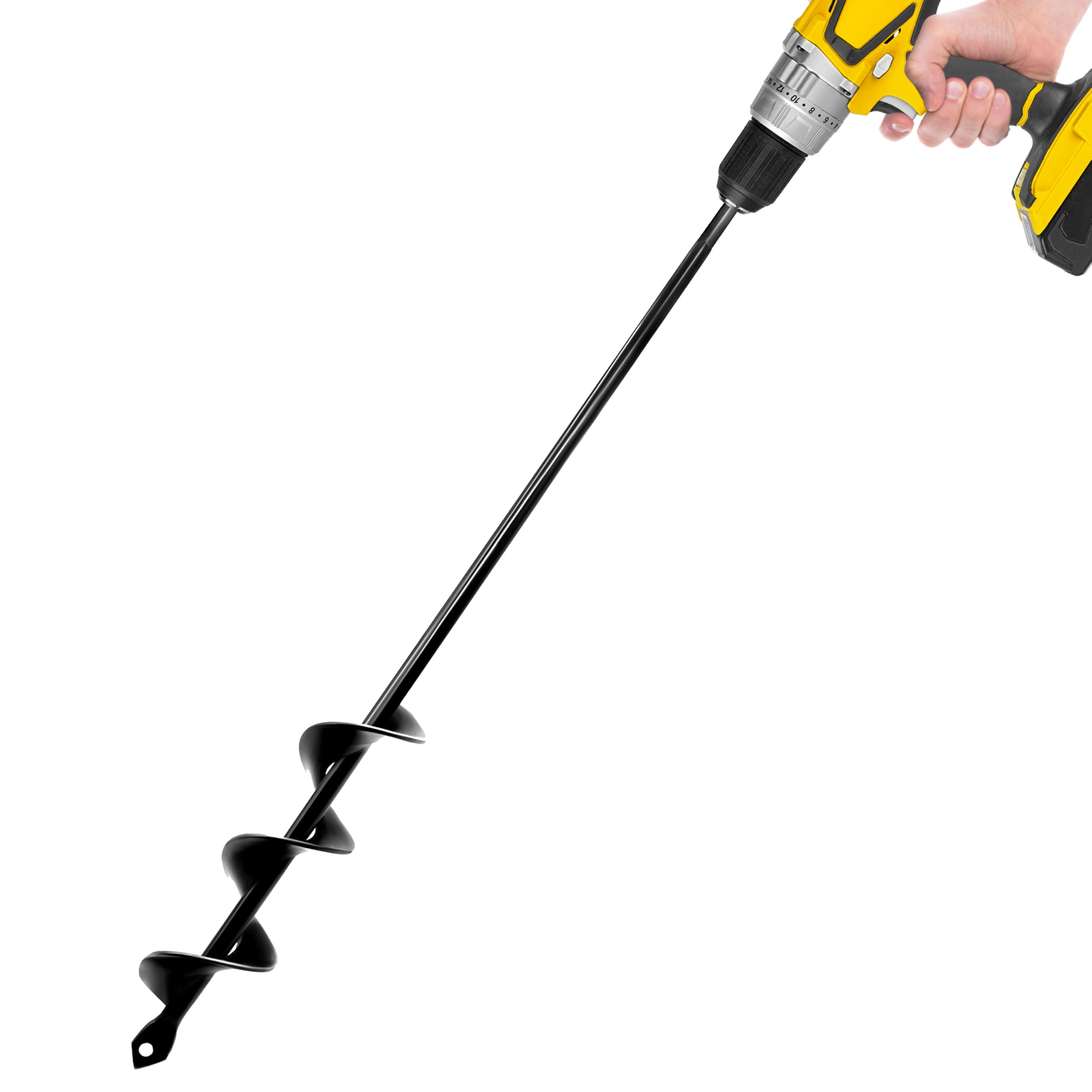
Two inches across is the size that makes the MAXCCINO an easy first auger. It is wide enough for tulips and daffodils without turning the bed into a moonscape, and the 14.5-inch length lets you drill a row while standing. The 3/8-inch non-slip drive fits a standard cordless drill; the maker recommends an 18-volt or higher drill, which is worth taking seriously if yours is a small driver.

We found the single-size approach easier to live with than a set for one job. There is no choosing a bit, no second chuck, and the 2-inch barrel drops a bulb with a little room for roots. In sand or loose loam it is quick; in stiff clay, lift the bit and clear the flutes instead of boring down in one go. The tapered point can wander on a hard crust, so start the hole with a firm hand.

It is not the tool for every job, and the fixed 2-inch barrel is the reason. If you plant a mix of bulbs and bedding plants, the K-Brands set covers more ground. For a focused bulb bed and a drill you already own, this is the one we reach for.

Bottom line: We think the MAXCCINO is the simplest drill-powered bulb planter here: one useful 2-inch size, a standard hex shank, and enough length to save your back.

5

K-Brands 4-Piece Auger Set

K-Brands 4-Piece Auger Set

Drill-powered multi-size holes

Our Score 9.0/10
Check Price

Worth Noting

  • Bigger bits bog down in dense clay
Shank
3/8 inch hex
Material
Alloy steel
Set Includes
Four auger bits
Bit Size Range
1.6 to 3 inches wide
Read the full review

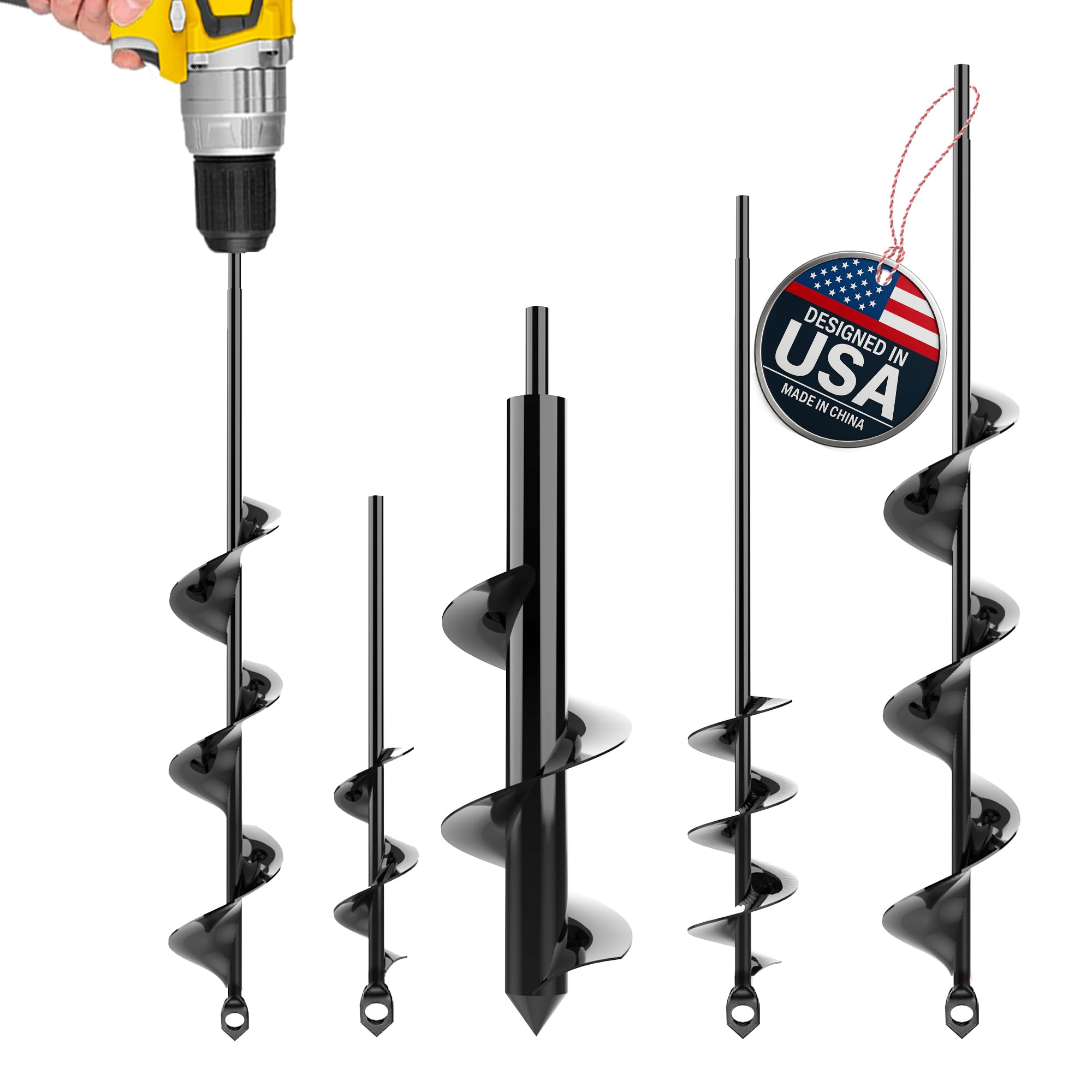
Four bits in one box sounds like overkill until you have a mixed planting list. The K-Brands set runs from a 1.6-inch bit for bulbs to a 3-inch bit for wider transplants, with a 2-inch bit for general planting and a 2.6-inch bit for still bigger holes. All four use a 3/8-inch hex shank, so they drop into the same drill, and the alloy-steel build has enough heft to feel serious in the hand.

We think the set earns its place on range rather than speed alone. The 1.6-inch bit is the one we reach for in a bulb bed; the larger bits make quick work of annuals, small shrubs, and the kind of hole that otherwise needs a shovel. In loose or worked soil the set is quick, and the smaller bit keeps its speed in firmer ground.

The trade-off is storage and redundancy: four bits take more drawer space than one, and most bulb planting will happen with the smallest. But if your garden throws more than bulbs at you, the extra sizes earn their keep. We prefer this set to a single auger for a mixed yard.

Bottom line: If you already own a cordless drill, we recommend this four-size auger set for the widest range of hole sizes here.

6

Berry&Bird 12-Inch Planter

Berry&Bird 12-Inch Planter

Wood-handled dibber

Our Score 9.0/10
Check Price

Worth Noting

  • Barrel clogs in sticky soil
  • Handle can strain under heavy forcing
Handle
Wooden T-handle
Length
12 inches
Weight
6.3 oz
Material
Stainless steel
Read the full review

The wooden T-handle is what sets this Berry&Bird apart. It feels more like a traditional dibber than a hollow bulb planter, with a stainless-steel tip and a 12-inch reach that lets you work into an established bed without kneeling as far. The 6.3-ounce weight is light enough to carry all morning, and the wood is comfortable when you press down.

We like the simple action: push the tip into prepared soil, rock it to open the hole, and drop the bulb. There is no spring, no release, and no plastic to clean. The 12-inch length is the useful part for reaching the back of a border, and the stainless tip wipes clean after a muddy session.

The size is a good middle ground between a pocket dibber and a full hollow planter. It is long enough to reach, narrow enough to place between plants, and the T-handle gives you a place to lean when the soil is firm. We also found the stainless tip easy to wipe clean.

What we appreciate most is the feel in the hand. The wood and stainless construction make it a pleasant tool to use, and it is the one we pick when the bed is already worked and the bulbs are small to medium. For heavy soil or a lot of holes, a tool with more release and a longer handle makes more sense.

Bottom line: For a traditional wooden-handled dibber with a stainless tip and a comfortable T-grip, the Berry&Bird 12-inch planter is our pick for prepared beds.

7

SORANGEUN 16.5-Inch Auger

SORANGEUN 16.5-Inch Auger

Deep holes

Our Score 8.8/10
Check Price

Worth Noting

  • Long shaft can bend in rocky soil
Shank
3/8 inch hex
Weight
16 oz
Bit Size
1.6 x 16.5 inches
Material
Manganese steel
Read the full review

Length is the reason to pick the SORANGEUN. At 16.5 inches, it lets you bore deeper holes without folding down to the soil, and the 1.6-inch diameter is a good match for small to medium bulbs. The 3/8-inch hex shank fits a standard cordless drill, and the manganese-steel shaft has enough weight to feel steady when you start the hole.

We found the extra reach most useful in open beds and sandy soil, where a long bit can drill a row of holes without stopping to clear every few inches. The narrow barrel leaves a tidy hole for bulbs and small plants, and it is easier to place between existing perennials than a wide manual planter.

In clay, the long flutes can load up, so pull the bit out and clear them instead of boring down in one pass. The 16.5-inch length also needs a drill you can control at slow speed; a small driver will feel the leverage.

We think it is the right long-reach bit for a gardener with soft, open ground and a drill that can turn it slowly. If your soil is rocky or you only need shallow bulb holes, a shorter bit is easier to control.

Bottom line: The SORANGEUN's 16.5-inch reach makes it our long auger for deeper bulb holes and stand-up drilling in open, sandy, or loamy soil.

8

Edward Tools Bulb Planter

Edward Tools Bulb Planter

Budget manual planting

Our Score 8.6/10
Check Price

Worth Noting

  • Bends in heavy or rocky soil
Length
9.5 inches
Weight
10.6 oz
Depth Guide
Depth marker
Soil Release
Automatic
Read the full review

The Edward Tools planter is the low-cost way to get two features that matter: a depth marker and an automatic soil release. The 9.5-inch body is easy to carry, the handle opens to drop the plug, and the reinforced steel is meant to handle heavier soil than a stamped bargain tool. It has the shape of a useful bulb planter.

In soft, prepared soil it does the job: push, twist, lift, squeeze, and the plug drops. The depth marker is the feature we rely on for keeping tulips consistent, and the 10.6-ounce weight is easy on the wrist. It is the kind of tool you can leave in a bucket by the back door and grab for a quick session.

For a quick session in prepared soil, it earns its spot in the shed. It is small enough to store easily, simple enough to clean, and the depth marker takes the guesswork out of a short row of bulbs. That is enough for a light-duty planter.

Bottom line: For a light-duty manual planter with a depth marker and automatic release, the Edward Tools is our sensible low-cost choice for a few dozen bulbs in prepared soil.

How We Tested the Best Bulb Planters

I began by reading through specs and owner feedback for dozens of bulb planters, then narrowed the field by barrel depth, handle shape, material, and whether the design seemed likely to release a plug cleanly. We bought 14 models at a range of prices and put them to work rather than judging them on arrival.

Testing ran for eight months, starting with fall bulb planting and continuing into spring bed cleanup. I used each planter for daffodils, tulips, alliums, and small transplants in backyard beds, raised beds, and a community garden plot. That meant clay that fought back after rain, loose sandy loam, and a few rocky patches where a weaker tool would show itself fast.

In each bed, I noted how much force it took to push the barrel to depth, whether the handle flexed under my palm, and whether the tool came up with a full plug or left half the soil behind. I timed plug release, counting how many twists or taps it took to empty the barrel, and watched whether dirt spilled out the side on the way to the hole. After planting, I checked the hole walls: clean and firm, or crumbled enough to need a second pass. Back at the bench, I looked for bent seams, loose handles, scratched finishes, and any sign that wet soil had packed into the barrel. I also used each one beyond its stated job, moving small seedlings and loosening soil around perennials, to see which offered real versatility for the money.

How to Choose Bulb Planters

Manual, standing, or drill-powered

Manual planters come in two useful shapes: a handheld cylinder that pulls a plug, and a long stand-up tool such as the ProPlugger that lets you work from your feet. Drill augers are faster still, but only if you already own a cordless drill with a 3/8-inch chuck and enough torque. We reach for a manual planter for a few dozen bulbs in a prepared border and a drill auger for volume, tight spacing, or a bed that has already been cleared. If your back is the limiting factor, a stand-up tool earns its storage space.

Match the hole to the bulb

Bulb size should set the hole, not the other way around. A 1.6-inch auger or dibber is right for crocus, muscari, and small daffodils; a 2-inch auger suits tulips and larger daffodils; the ProPlugger's 2 1/8-inch barrel is generous for most bulbs but too wide for tiny ones. Depth matters as much as width: a general rule is two to three times the bulb's height, and a depth scale or marked shaft saves measuring every hole. If you plant mixed sizes, a set with more than one bit is easier than switching tools.

Read your soil before you choose

Soil changes the tool more than the product page admits. In sand or loose loam, a simple auger or hollow planter works quickly. In clay, you want weight, a sharp edge, and a way to clear the flutes; the ProPlugger's welded steel and the Gardena's coated barrel are more forgiving than a light stamped planter. Rocky ground is the hardest case: a drill auger can bind or shear, so use a shorter bit and a slow speed, or switch to a manual tool and a trowel for the stones. If your soil is like concrete, improve the bed first.

Release, cleanup, and posture

A hollow planter is only as good as its release. A plug that sticks in the barrel turns a one-motion job into a wrestling match, especially in wet clay. Automatic releases, such as the Gardena's handle dump or the Edward Tools' squeeze handle, are worth paying for if you plant in sticky soil; with a simple tube, tip it over a bucket after every few holes. Posture is the other half: a long handle saves your back, but it needs clearance and storage space. Small dibbers are more precise but ask you to kneel.

Drill compatibility and control

Drill augers fit any standard 3/8-inch chuck, but the drill matters. An 18-volt or higher cordless with a side handle gives you the control to keep the bit from binding; a small drill will stall or twist in your hands. Run the auger at a moderate speed, let the flutes clear, and lift the bit every few inches instead of boring straight down. Check for irrigation lines, fence wires, or utilities before you drill deep near a boundary.

Frequently Asked Questions

Final Verdict

The ProPlugger is our first recommendation because it changes the posture of bulb planting, not just the speed. Step, twist, and lift while standing, and the 2 1/8-inch barrel handles a bed of daffodils or a sod repair without asking you to kneel.

If you want a dedicated handheld planter for a prepared border, the Gardena's automatic release is the tidier choice. If you already own a capable cordless drill, the K-Brands set gives you the widest range of hole sizes here. The right pick follows the job: stand-up for volume, handheld for neat small beds, drill-powered for speed.