Beekeeping

Best Beekeeping Jackets of 2026

A beekeeping jacket has one job, and it comes with a built-in contradiction. The fabric thick enough to turn away a determined bee is usually the fabric that turns a July inspection into a sauna, and the veil that keeps stingers off your face is the same veil that fogs up the second you bend toward a frame. What a good jacket actually buys you is calm — hands that stay unhurried on a frame because you aren't thinking about your wrists.

I've kept hives at the edge of a hayfield for six years, and I've owned jackets that felt fine in April and unbearable by June. This season my team and I wore 12 of them through seven months of inspections, and the differences came down to things no product photo shows: where the zipper ends, how the veil holds its shape, whether the cuffs close up when you reach. Here's the piece of wisdom I'd pass to any first-time buyer — protection fails at the gaps, not through the fabric. The picks below are the ones that got the gaps right.

1

Forest Cotton Bee Jacket

Top Pick
Forest Cotton Bee Jacket

All-round backyard use

Our Score 9.4/10
Check Price

Worth Noting

  • Veil mesh and zipper are long-term weak points
Veil
Detachable fencing veil
Weight
1 lb
Zippers
Brass
Material
100% cotton
Read the full review

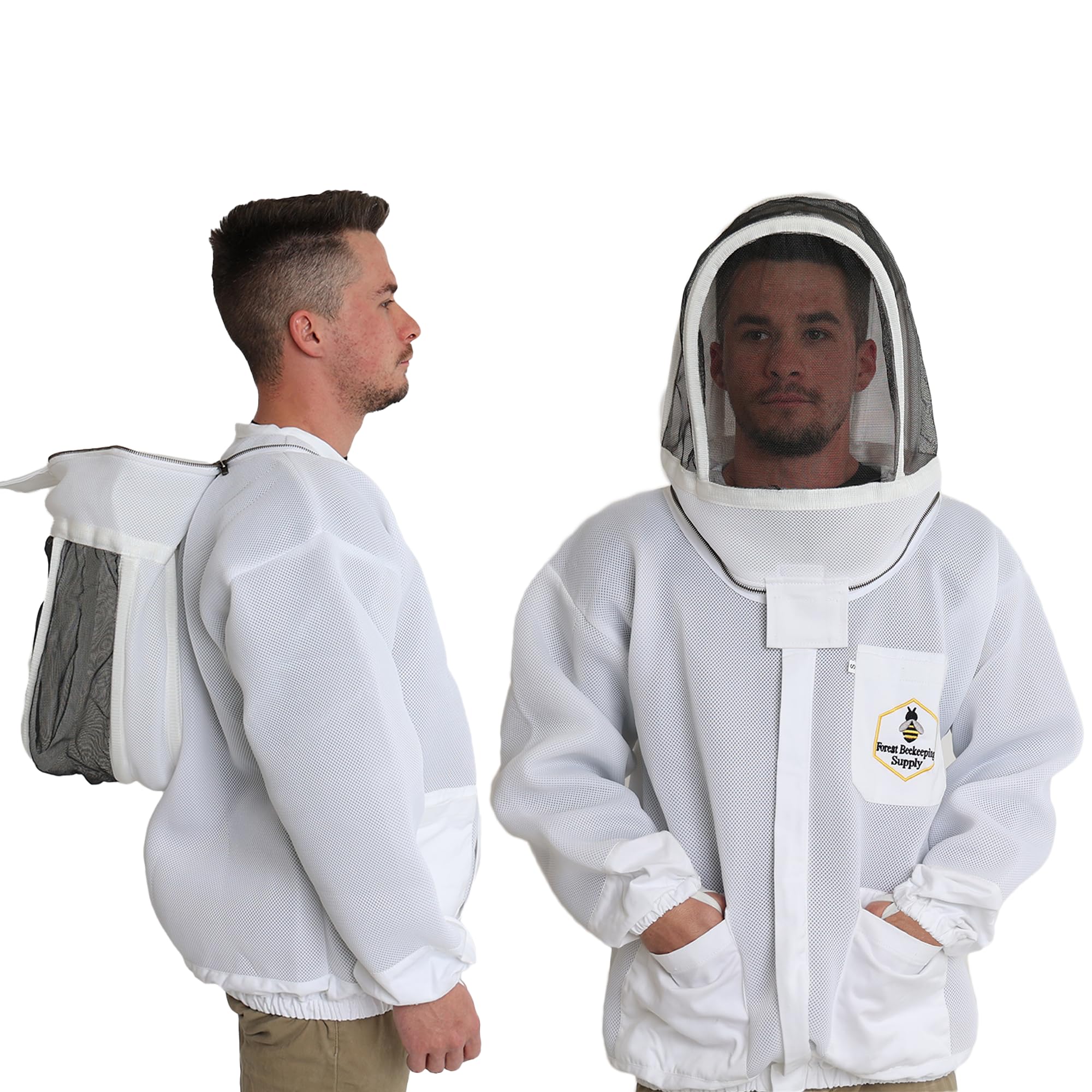
The Forest cotton jacket is the one we recommend first, and not because of a single showy feature. It gets the basics right: a 100% cotton body with enough weight to feel protective, a detachable fencing veil that stays clear, and gloves included so you can suit up without hunting for a second purchase. In our inspections, it was the jacket that needed the least fussing and gave us the fewest excuses to stay out of the hive.

The details are what keep it at the top. Elastic thumb straps anchor the sleeves when you reach for a frame, and the cuffs and waist close down snugly enough that we stopped thinking about gaps. The brass zippers feel substantial, and the listed 1-pound weight means it layers easily over a T-shirt without turning into a tent. It also has enough room for a light hoodie in shoulder season.

The cotton body is the trade-off. In the hottest part of summer, the air-mesh jackets here are noticeably cooler, and we noticed the difference on still afternoons. For three-season backyard work and a hobbyist's few hives, we found the extra substance reassuring rather than burdensome.

Bottom line: Our all-round pick for most backyard beekeepers: substantial cotton, a clear detachable fencing veil, and gloves in the box make the Forest the easiest jacket to recommend.

2

ISIVBPEP Bee Jacket

ISIVBPEP Bee Jacket

Budget spare jacket

Our Score 9.0/10
Check Price

Worth Noting

  • Hand wash only adds upkeep
Care
Hand wash only
Veil
Detachable fencing veil
Closure
Zipper
Material
65% cotton, 35% polyester
Read the full review

This is the jacket that lives folded behind the truck seat. It is not the one we choose for a long day in a defensive apiary, but it is the one we keep as a spare, a second set for a helper, or a first jacket on a tight budget.

For occasional inspections, it does the important things. The detachable fencing veil gives a clear view, the 65% cotton and 35% polyester body has enough weight to feel like a jacket, and the elastic cuffs plus adjustable waist drawstring close the openings that matter. It packs small enough to stay in the truck without taking over the cab.

The zipper is the budget tell. It works, but it feels lighter than the brass and YKK closures on the pricier jackets here, so keep the fabric clear of the teeth and do not force it. The hand-wash-only care is the bigger annoyance; if you want to throw a jacket in the machine after every inspection, this is not the one.

Bottom line: The ISIVBPEP is our budget pick for a spare or a first jacket: light, packable, and sealed at the cuffs and waist, with hand-wash care to accept.

3

Forest Air Mesh Bee Jacket

Forest Air Mesh Bee Jacket

Hot-weather inspections

Our Score 8.8/10
Check Price

Worth Noting

  • Back can ride up when reaching overhead
Veil
Hooded veil
Fabric
Air mesh
Weight Class
Lightweight
Read the full review

When the forecast is miserable and the hive still needs checking, this is the jacket we reach for. The air-mesh fabric moves heat in a way the cotton jacket does not, and the hooded veil gives you a wide enough view to work without feeling boxed in.

What sold us was the airflow through the body, not just the hood. The mesh lets a breeze through on a still day, and the elastic cuffs and hem keep the jacket from ballooning when you bend over a hive. It feels light enough for long summer inspections, and the roomy cut layers over a T-shirt without binding at the shoulders.

Sizing is the thing to get right. The cut can run inconsistent, so go by chest and sleeve measurements rather than the letter on the tag, especially if you plan to layer. The back can also ride up when you reach overhead, which is a small annoyance rather than a dealbreaker for most hobbyists.

Bottom line: For hot-weather inspections, the Forest air-mesh jacket is the breathable pick we prefer, provided you check the size chart before ordering.

4

Brutul Bee 3-Layer Jacket

Brutul Bee 3-Layer Jacket

Ventilated coverage

Our Score 8.8/10
Check Price

Worth Noting

  • Sizing runs inconsistent
Fit
Unisex
Veil
Round veil
Construction
3-layer ventilated
Read the full review

Three layers sounds like overkill until you compare it with a single cotton shell on a hot afternoon. The Brutul's ventilated build gives you more structure than the cheapest mesh jackets, and the round veil holds a wide view without pressing mesh against your face.

The fit is roomy, which we appreciate for layering a light shirt underneath, and the shoulders leave enough room to reach without tugging. Ventilation is the reason it earned a place: air moves through the body, and the round veil keeps your peripheral vision clearer than a tight fencing hood.

This is a strong middle choice for a hot apiary: more coverage than a bare mesh jacket, less fuss than a full suit. The zipper is the part to watch; it can feel stiff and fussy, especially around the hood, so work it slowly and keep the fabric clear. Get the size right and it is an easy jacket to keep in rotation.

Bottom line: The Brutul's three-layer build and round veil make it our ventilated pick for hot apiaries, with a roomy cut that layers easily.

5

Bee Proof 3-Layer Jacket

Bee Proof 3-Layer Jacket

Hot-weather storage

Our Score 8.6/10
Check Price

Worth Noting

  • Veil mesh is less durable than the body
Veil
Removable fencing veil
Weight
2.84 lb
Zippers
YKK
Construction
3-layer mesh
Read the full review

A carrying bag is the kind of accessory you ignore until you are hauling gear between two yards. The Bee Proof jacket comes with one, and it is the detail that makes the jacket easy to keep clean and ready between inspections.

The three-layer mesh is the main event. It breathes well in summer heat, and the removable fencing veil gives a clear view without the mesh sitting against your face. At 2.84 pounds listed, it has more substance than the lightest mesh jackets here, but it still feels airy when you are working.

We reach for it on hot days when storage and visibility matter more than saving every ounce. It is a comfortable jacket with strong sting protection and a useful bag, and it earns its place as a solid alternative rather than the first one we hand a new beekeeper.

Bottom line: The Bee Proof jacket is a comfortable hot-weather option with a handy carry bag; just know the zipper is the part that needs the most care.

6

ZMHBKPS Bee Jacket

ZMHBKPS Bee Jacket

Complete budget set

Our Score 8.6/10
Check Price

Worth Noting

  • Plastic zipper feels basic
  • Sleeves run short
Veil
Fencing veil
Closure
Zipper
Included
Gloves
Read the full review

The gloves are the first thing you notice because they change the value of the package. Instead of buying a veil, jacket, and hand protection separately, you get a fencing veil and a pair of gloves in the box, which makes this an easy set to keep for a helper or a backup.

For occasional hive checks, the jacket does the job. The material feels sturdy enough for calm colonies, the veil gives a clear view, and the design is simple to put on and take off. We found it most useful as a second set or a starter jacket for someone who is not ready to spend on premium hardware.

It is not the jacket for someone who wants premium hardware or a daily apiary jacket. For light use with gentle bees and a helper set, it covers the essentials, and the included gloves save you from buying a separate pair.

Bottom line: The ZMHBKPS is our pick for a complete budget set: the fencing veil and gloves cover the essentials for occasional hive checks without extra gear to buy.

What a Full Season in 12 Jackets Taught Us

We built the shortlist from jackets beekeepers actually recommend to each other, then read through customer reviews hunting for the complaints that repeat: veils that flop against the mouth, zippers that snag at the collar, elastic that stops gripping by midsummer. From roughly 40 candidates we bought 12, a mix of cotton, vented mesh, and three-layer mesh styles across the full price spread, and used them for one season, April through October — about seven months of weekly inspections.

Every jacket went to real hives. We wore them for inspections on 90-degree afternoons, for lifting supers, for a dusk hive move, and over a hoodie in October, noting how far the veil stayed off our faces, whether we could see our own feet, and how much we wanted the thing off after 40 minutes. Fit and sizing were checked the way a shopper would: measured against each size chart, then tried over a t-shirt and again over a jacket. Two of us did get stung, and we recorded exactly where — wrist gap, waist, or through the fabric — because that tells you more about a design than any spec sheet.

For durability, we washed each jacket per the maker's instructions and inspected seams, mesh, and elastic afterward, and we counted how many zip cycles a zipper survived before it snagged, including whether the pull was reachable with gloves on. Value came last: what each jacket cost weighed against how it looked after seven months, not how it looked out of the bag.

How to Choose Beekeeping Jackets

Start With the Veil and Its Seal

A jacket's veil is where protection and visibility meet, and it deserves more attention than the fabric at first glance. A fencing veil gives a broad, square view and usually attaches around the neck; a round veil holds its shape away from the face and can feel less claustrophobic. We care less about the style than about the seal: the veil should attach without gaps and sit far enough from your nose that you are not breathing through mesh. The Forest cotton jacket's detachable fencing veil is a good example of a simple, secure arrangement, while the Brutul's round veil suits beekeepers who dislike mesh near the face. Whichever you choose, check the neck closure and the seam where the veil meets the jacket before the season starts.

Match Breathability to the Season

Beekeeping is hot work, and the jacket that feels protective in April can be miserable in July. Cotton and canvas jackets offer more substance and wind resistance, but they trap heat; air-mesh and three-layer ventilated jackets trade some of that heft for airflow. We reach for the lightweight Forest air-mesh jacket in a heat wave and the cotton Forest jacket for cooler mornings or shoulder-season work. If you keep bees somewhere humid, prioritize a ventilated body and a veil that holds away from your face, then layer a light long-sleeve shirt underneath rather than sizing up for a heavy hoodie.

Fit for Layering, Not for Baggy

Fit is a protective feature, not just a comfort one. You want enough room to reach overhead and layer a light shirt, but not so much loose fabric that the jacket balloons or the veil shifts. Elastic cuffs, a waist drawstring or elastic hem, and thumb straps do most of the sealing work. Sizing varies enough between brands that we ignore the letter on the tag and check chest, shoulder, and sleeve measurements. The ISIVBPEP has a roomy budget cut; the Brutul is also roomy but sizing is inconsistent, so measure before you commit.

Zippers and Seams Decide Longevity

Zippers are the first thing to fail on many jackets, and a failed front closure turns protective gear into a hazard. Look for a covered zipper, a metal or YKK closure where the listing states it, and a backing flap that keeps fabric out of the teeth. We also check the stress points: the neck seam, the cuff elastic, and the veil attachment. Stiff action is not automatically a defect, but it is a warning to test the zipper before the season. Pay more attention to zipper action than to the number of pockets.

Extras That Earn Their Space

Gloves, a carry bag, and a spare veil are not the reason to buy a jacket, but they change how often you use it. Included gloves are handy if they fit; otherwise they end up in a drawer. A carry bag makes a difference if your gear lives in a shed or truck, and a detachable veil is easier to wash and replace. The ISIVBPEP's detachable veil and the Bee Proof jacket's carry bag are good examples of useful extras rather than gimmicks. We prefer a secure cuff and a clear veil to six pockets.

Frequently Asked Questions

Final Verdict

If you want one jacket for most backyard inspections, the Forest cotton jacket is the one we point you to. The substantial cotton, clear detachable veil, and included gloves make it the easiest all-rounder to live with, and it has enough room for a light layer in shoulder season.

When summer heat is the deciding factor, the Forest air-mesh jacket is the better choice; it gives up some substance for airflow that matters on a still afternoon. On a tight budget, the ISIVBPEP works as a spare or first jacket, provided you can live with hand-wash care.